
REVIEW · BERLIN HIGHLIGHTS & HIDDEN GEMS
Berlin Highlights Walking Tour
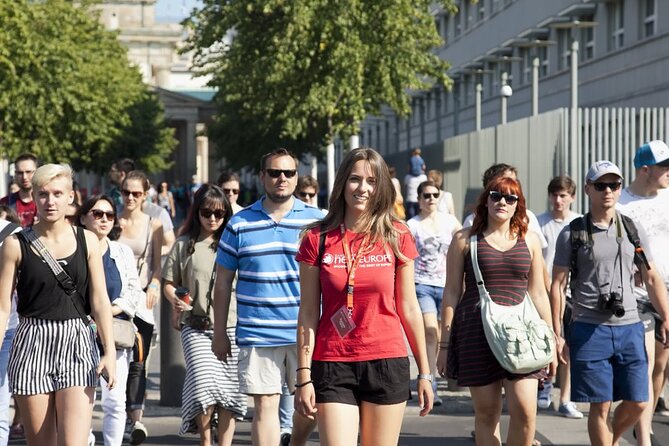
This route hits Berlin’s toughest truths fast. In just about 2 hours, this Berlin highlights walk stacks major landmarks close together, with clear context at each stop so the stories connect instead of blur. I also like that it’s compact enough for a busy day, but the one drawback is that it covers heavy WWII and Holocaust topics back-to-back—pace yourself if you need a break.
You’ll start at Starbucks Pariser Platz 4A and finish at Checkpoint Charlie, guided in English and designed for a small group (max 25). It’s also priced in a way that feels made for getting your bearings fast, with each listed stop marked as admission-ticket free and a mobile ticket for an easy go.
In This Review
- Key things I’d bet on before you book
- A Two-Hour Berlin Hits the Big Names: How This Tour Works
- Start at Brandenburg Gate: The Shortcut to Berlin’s Story
- The Führerbunker Site: Learning from What’s No Longer There
- Holocaust Memorial: How to Read the Space Without Overthinking
- Topography of Terror: Turning History Into Evidence
- Checkpoint Charlie Finish: Cold War Tension at Street Level
- Why This Tight Route Actually Helps You See More
- Price and Value: What $4.81 Buys You (and What It Doesn’t)
- Practical Tips for the Day: Stay Comfortable and Ready for Tone Shifts
- Should You Book This Berlin Highlights Walking Tour?
- FAQ
- How long is the Berlin Highlights Walking Tour?
- Where does the tour start and where does it end?
- What’s included in the price?
- Is the tour offered in English?
- Do I need separate admission tickets for the stops?
- Can I cancel for free if my plans change?
- How large are the groups?
Key things I’d bet on before you book
- A tight, 2-hour route that moves between big-name sites without long transit breaks
- Brandenburg Gate to Checkpoint Charlie as a clean “from unity to division” storyline
- Free-entry stops at every scheduled highlight (per the tour’s site notes)
- Somber WWII coverage including the Holocaust Memorial, Topography of Terror, and the Führerbunker site
- Small-group feel with a stated cap of 25 people
- Fast, on-schedule pacing, with some guides (like Nir) praised for keeping momentum
The big Berlin sights, and a few quieter corners
- Berlin: Discover Berlin Walking Tour★ 4.9 · 5,998 reviews
- Berlin: Hidden Backyards Guided Walking Tour★ 4.8 · 5,360 reviews
- Explore Berlin: See All The Iconic Sights & Some Hidden Gems★ 5.0 · 4,429 reviews
- Berlin: Sights and Highlights Bike Tour with a Local Guide★ 4.8 · 2,698 reviews
A Two-Hour Berlin Hits the Big Names: How This Tour Works
This tour is built for people who don’t want to spend a whole day planning and then still miss the key stops. You’ll cover some of Berlin’s most recognizable landmarks—without needing multiple tickets or complicated transfers between areas.
The format matters. In two hours, you’re not trying to “master” Berlin. You’re getting your bearings and a working timeline. That’s especially useful for Berlin, where neighborhoods, borders, and eras overlap like layers of paper. A guided walk helps you see how the past is still carved into street-level reality.
Also, the pace is practical. One review highlight I kept coming back to was that the tour stays on schedule and still manages to fit a lot of ground. If your time is limited, that’s huge.
Start at Brandenburg Gate: The Shortcut to Berlin’s Story
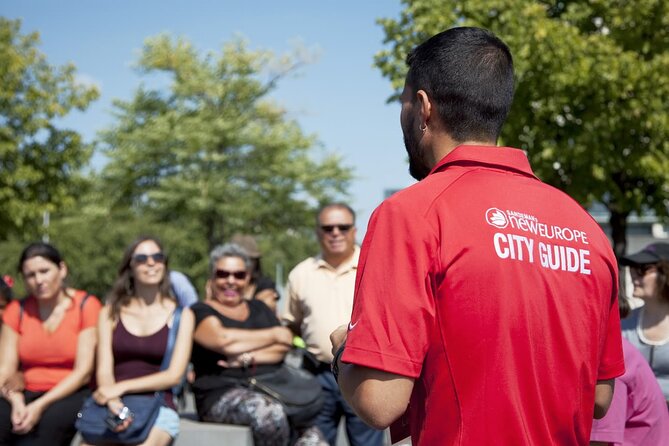
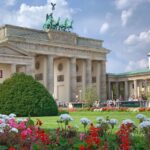
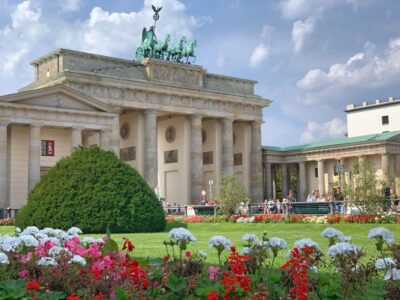
You begin at Brandenburg Gate, one of the city’s most famous neoclassical monuments. It’s the kind of place where you can feel everyone’s camera instinct kick in—but the real value comes from having a guide give you the meaning behind it.
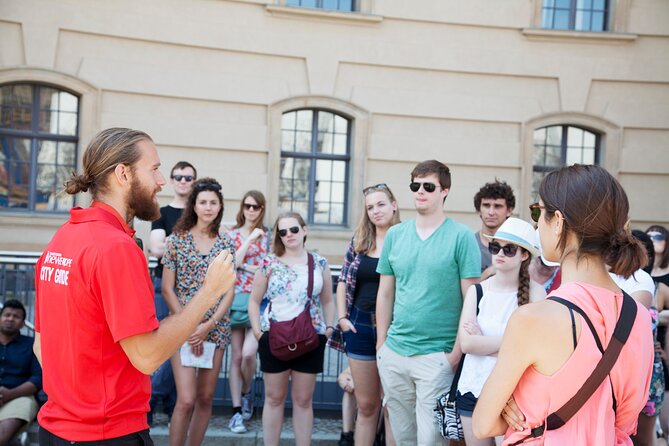
This landmark didn’t just sit there looking pretty. It became a symbol tied to Berlin’s identity and the bigger political swings around it. Your guide’s job here is to translate the stone-and-columns look into a timeline you can actually use later as you move through the city.
What I like about starting here is the contrast it creates. You’re beginning with a symbol people associate with unity and national narrative, then you quickly shift into the darker chapters of 20th-century Berlin. That sequencing helps your brain file things in order instead of treating each stop like a separate postcard.
The Führerbunker Site: Learning from What’s No Longer There
Next is the site connected to the Führerbunker. This is the kind of stop that can feel strange at first, because the bunker itself is no longer visible the way you might imagine from movies.
Instead, the focus is on what happened there during the final days of World War II—and how that “missing” physical structure still matters. A good guide will help you understand the events and why this location is remembered, even without dramatic ruins to stare at.
A practical note: this stop is emotionally heavy. If you prefer lighter storytelling, you might want to mentally prepare for the tone shift. But if you came to Berlin to understand WWII and its aftermath, this is the stop that anchors the timeline in the reality of collapse and terror.
Holocaust Memorial: How to Read the Space Without Overthinking
Then you reach the Memorial to the Murdered Jews of Europe. This memorial is powerful because it doesn’t rely on statues or a single scene. It uses space and movement, pushing you to experience the design as you walk.
Inside the memorial, concrete slabs form corridors and pockets of openness and enclosure. The effect is not meant to be comfortable. Your guide’s role is to help you interpret why that matters—how the layout connects to memory, absence, and the scale of loss.
Here’s the practical way to approach it: don’t rush. Give yourself time to walk at a slow pace through the sections that feel most disorienting. You’ll get more from the memorial by moving deliberately than by taking a quick look for a photo and moving on.
More of Berlin on foot
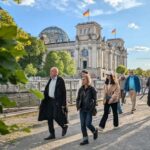

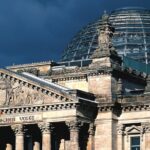
Topography of Terror: Turning History Into Evidence
After the Holocaust Memorial, the tour moves to the Topography of Terror, located on the former site of the Gestapo and SS headquarters. This is where the story becomes more documentary.
If Brandenburg Gate and the memorial are about symbolism, Topography of Terror is about records and context—how the Nazi regime built power, how repression worked, and how atrocity wasn’t random or abstract. It was organized.
One reason this stop works so well on a short walk is that it adds structure to everything you just absorbed. You’re not only hearing emotional storytelling; you’re seeing how the regime operated and left its trace in physical space and materials.
Even if you’ve read about Nazi history before, this site tends to give you a clearer sense of “how” and “where.” That’s what makes it more than just a name on a list.
Checkpoint Charlie Finish: Cold War Tension at Street Level
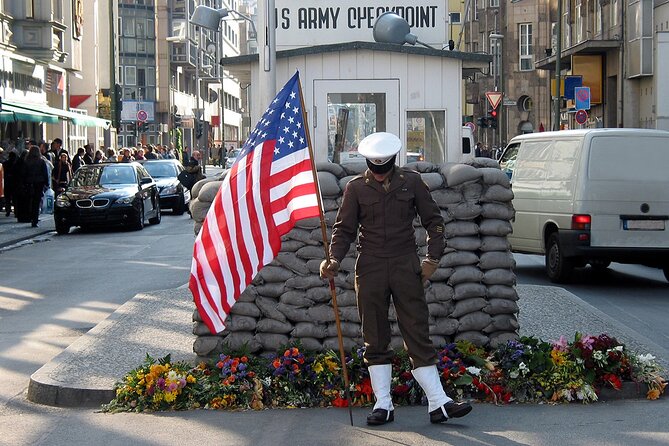
You end at Checkpoint Charlie, one of the most famous border crossings between East and West Berlin during the Cold War. By the time you arrive, the tour’s earlier stops have set up the comparison: unity and division, freedom and control, public monuments and hidden horrors.
This is a great closing point because it’s easy to visualize. You can stand at the checkpoint and connect it to what you’ve learned about how Berlin functioned as a divided city—physically and psychologically.
Guides usually frame this stop with the tense standoffs and the stories of escape attempts that took place here. Those details turn the concept of a border into something you can actually picture, not just read about in a textbook.
If you like tours that end with a strong “I get it now” moment, this one delivers.
Why This Tight Route Actually Helps You See More
Berlin can be a city where you think you’re doing a lot—and then realize you only saw one era or one theme. This walk avoids that trap by concentrating on major WWII and Cold War landmarks that sit near each other.
That’s the main value of the compact route: you’ll cover many sites in a short period without losing the timeline. One key review theme emphasized how the tour hits multiple sites within a few kilometers of the Brandenburg Gate, and that matches what makes the pacing work.
It also fits modern sightseeing reality. You might arrive with plans for other neighborhoods later that day. This tour gives you an orientation base so those later walks make more sense.
Price and Value: What $4.81 Buys You (and What It Doesn’t)
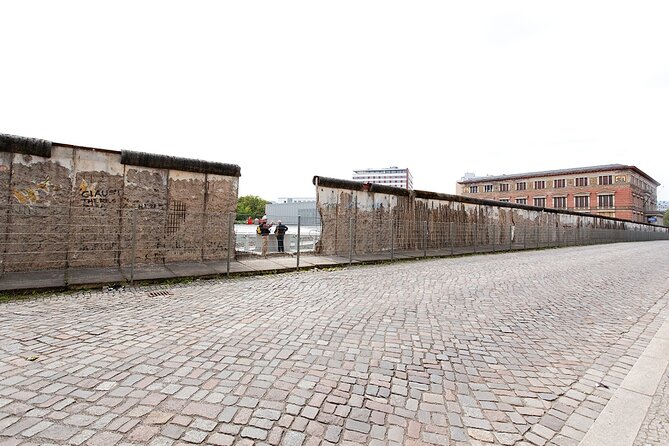
At $4.81 per person, this tour is priced like a budget “orientation pass,” not a premium deep-study seminar. That doesn’t mean it’s low effort—it means it’s built to be accessible.
For me, the value angle is simple: you pay for a local guide and a guided narrative across key sites. You’re not paying for comfort upgrades or extra attractions. You’re paying for something more useful in Berlin: context that helps you connect landmarks across decades.
Also, each scheduled stop is marked as admission ticket free, which keeps your costs predictable. If you’re trying to get a lot of history with minimal add-on fees, that’s exactly the sweet spot this tour appears to target.
What it won’t do: it won’t replace museum time. If you want long, document-by-document study, you’ll still want to add a museum visit separately. But for a first or second day in Berlin, this is a strong “start here” foundation.
Practical Tips for the Day: Stay Comfortable and Ready for Tone Shifts
This is a walk. Even with a 2-hour duration, you’ll be outside and moving between stops. Wear shoes you can walk in without thinking about it 10 minutes in.
Mentally, plan for the emotional arc. You start with a landmark tied to unity symbolism, then shift to the Führerbunker site, the Holocaust Memorial, Topography of Terror, and finally Checkpoint Charlie. That’s a lot of gravity in a short window. Bring your patience for the tone changes, and don’t feel guilty stepping aside for a minute if you need air.
Group size is capped at 25, which is nice because you’ll generally stay part of the flow rather than getting lost in a massive crowd. And English is the stated language, so it should work well for most visitors trying to understand the story in real time.
Should You Book This Berlin Highlights Walking Tour?
Yes—if you want a fast, guided way to connect Brandenburg Gate, WWII and Holocaust remembrance sites, and the Cold War story ending at Checkpoint Charlie. It’s especially worth your time if you’re short on hours, like structured walking tours, and prefer to build understanding through a timeline rather than random stops.
I’d skip it or think twice if you’re traveling with limited stamina for walking, or if you know you’ll struggle with packed, consecutive WWII and Holocaust material. In that case, you may prefer splitting the experiences into smaller chunks on different days.
If you’re coming to Berlin to get oriented and still see the headline sites with meaningful context, this is a good value call.
FAQ
How long is the Berlin Highlights Walking Tour?
The tour lasts about 2 hours.
Where does the tour start and where does it end?
It starts at Starbucks, Pariser Platz 4A, 10117 Berlin, Germany and ends at Checkpoint Charlie, Friedrichstraße 43-45, 10117 Berlin, Germany.
What’s included in the price?
A local guide is included.
Is the tour offered in English?
Yes, the tour is offered in English.
Do I need separate admission tickets for the stops?
The tour’s listed admission for each stop is marked as free.
Can I cancel for free if my plans change?
Yes. You can cancel up to 24 hours in advance for a full refund.
How large are the groups?
The tour has a maximum of 25 travelers.
More Tours in Berlin





More Tour Reviews in Berlin

Berlin's Icons and Its Quiet Corners

Round out your days in Berlin

Berlin Highlights & Hidden Gems, compared.
 ★ 4.9Discover Berlin Walking TourFrom $235,998 reviews
 ★ 4.8Hidden Backyards Guided Walking TourFrom $235,360 reviews
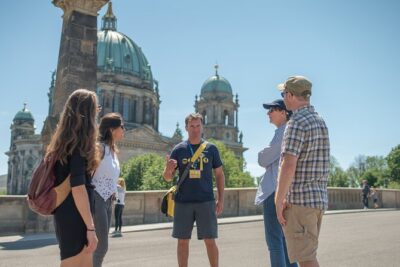 ★ 5.0Explore Berlin: See All The Iconic Sights & Some Hidden GemsFrom $244,429 reviews
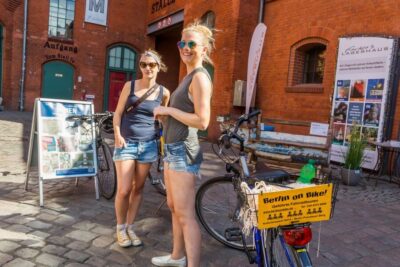 ★ 4.8Sights and Highlights Bike Tour with a Local GuideFrom $412,698 reviews
★ 4.9Explore Berlin: See All The Iconic Sights & Some Hidden GemsFrom $182,018 reviews
★ 4.8Sights and Highlights Bike Tour with a Local GuideFrom $412,698 reviews
★ 4.9Explore Berlin: See All The Iconic Sights & Some Hidden GemsFrom $182,018 reviews
 ★ 5.0Berlin Highlights 3-Hour Bike TourFrom $42948 reviews
★ 4.9Berlin Highlights: 3-Hour Bike TourFrom $37809 reviews
★ 5.0Berlin Highlights 3-Hour Bike TourFrom $42948 reviews
★ 4.9Berlin Highlights: 3-Hour Bike TourFrom $37809 reviews
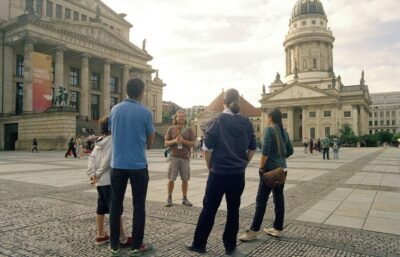 ★ 4.9Berlin Historical Highlights Walking TourFrom $389657 reviews
Browse the lists this tour appears in