
REVIEW · WALKING TOURS
Berlin In A Nutshell: Introductory Group Walking Tour
Berlin clicks into place fast on this walk. You’ll get a clean, guided sweep past top sights with context that turns photos into stories. I love the small-group feel and the way the route links major places like the Fernsehturm and Brandenburg Gate into one timeline. The only real drawback: you cover a lot of ground in 2 hours 45 minutes, so good shoes and moderate stamina matter.
This is an easy-to-find outing that starts at Rotes Rathaus and finishes at Brandenburg Gate. The tour runs in English, uses a mobile ticket, and operates in all weather, so you’ll want to dress for wind and rain. If you get guides like Will (or past guides such as Tom and Gilbert), you should expect lively explanations, plus practical tips for what to do next in Berlin.
In This Review
- Key things I’d watch for
- Getting Oriented from Rotes Rathaus to the Brandenburg Gate
- How the Walking Pace Works (and Why It Matters)
- Berlin TV Tower and Rotes Rathaus: Power in Plain Sight
- Museum Island and Humboldt University: Where Berlin Became a Brain
- Gendarmenmarkt and Checkpoint Charlie: Beauty, Ruins, and the Cold War
- Brandenburg Gate: From WWII to the End of Communism
- Pay-As-You-Wish Reservations: Fair Value and How Much to Reward
- Should You Book This Intro Berlin Tour?
- FAQ
- How long is the Introductory Group Walking Tour?
- Is the tour offered in English?
- Where does the tour start and end?
- Do I need admission tickets for the stops?
- Are food and drinks included?
- What’s the group size?
- Is it a pay-as-you-wish tour?
Key things I’d watch for
- Start-to-finish orientation: You begin at Rotes Rathaus and end at Pariser Platz by Brandenburg Gate, so plan your onward transit.
- Landmarks you recognize fast: Fernsehturm, Museum Island, Humboldt University, Gendarmenmarkt, Checkpoint Charlie, Brandenburg Gate.
- Outside views plus context: Several stops focus on what you can see from the street, then explain the bigger story.
- Cold War and WW2 explained clearly: You’ll connect Cold War sites like Checkpoint Charlie to the fall of communism at Brandenburg Gate.
- A reward-based model: It’s a pay-as-you-wish style tour, with your payment covering reservation and guide time.
- Group size capped (but it can vary): Highlighted as max 15 for a more intimate feel, with an overall activity cap of up to 40.
More of Berlin on foot
- Discover Berlin Half-Day Walking Tour★ 5.0 · 9,624 reviews
- Berlin City walk Government District and Places of Democracy★ 4.7 · 8,467 reviews
- Berlin: Third Reich & Cold War Guided Walking Tour★ 4.9 · 8,378 reviews
- Berlin: Discover Berlin Walking Tour★ 4.9 · 5,998 reviews
Getting Oriented from Rotes Rathaus to the Brandenburg Gate
One of the best reasons to book this tour early in your trip is simple: it teaches you where Berlin’s big ideas show up in the real city. Starting at Rotes Rathaus is smart because you’re in central Berlin, near the kind of streets and transit lines that make it easy to get your bearings. Ending at Brandenburg Gate at Pariser Platz is just as useful, because it leaves you near one of the most walkable, photo-heavy areas for your next move.
In practice, this route helps you understand the map before you start chasing individual museums or neighborhoods. You’ll see how administrative Berlin (the feel of government space), cultural Berlin (Museum Island and the university scene), and historical Berlin (Checkpoint Charlie and the Wall-era story) all sit within a manageable walking loop. Even if you don’t plan to return to every stop, the tour gives you a mental skeleton you can use for the rest of the week.
You’ll also get a clear sense of what Berlin chooses to emphasize. Some stops are about looking at architecture and discussing why it influenced others. Others are about understanding how politics shaped daily life—especially in the Cold War years. When you later visit places on your own, you’re not starting from scratch. You’re adding details to a framework you already have.
How the Walking Pace Works (and Why It Matters)
The total time is about 2 hours 45 minutes, give or take. That’s not a marathon, but it is a true walking tour. You’re moving between landmarks, stopping for explanations, and transitioning from one part of the story to the next without long gaps for wandering.
A key detail: this is an all-weather tour. That means you should think like you’re going out for a long walk around the center of town, not like you’re doing a casual stroll with frequent shelter. If it’s rainy or windy, you’ll appreciate layers and a rain layer you can actually move in.
Physical fitness requirements are described as moderate, which fits the reality of this length and pace. You should be comfortable walking for stretches, standing at corners, and staying with the group. And because the tour ends away from where it starts, I recommend building a little buffer time after it finishes—so you’re not rushed trying to line up your next reservation.
There’s also a group-size reality check. The experience is described as personalized and small-group (up to 15), but the overall activity cap can be up to 40. Either way, you’ll be in a guided group, not a private one-on-one experience. The upside is you still get enough attention to ask questions. The tradeoff is you should expect a set pace rather than a schedule tailored to your interests.
Berlin TV Tower and Rotes Rathaus: Power in Plain Sight
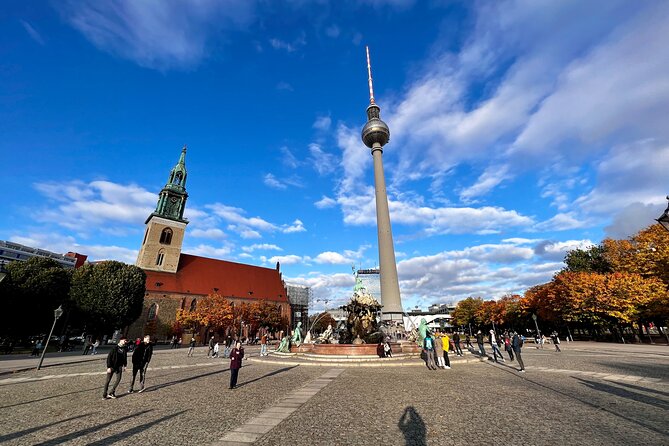
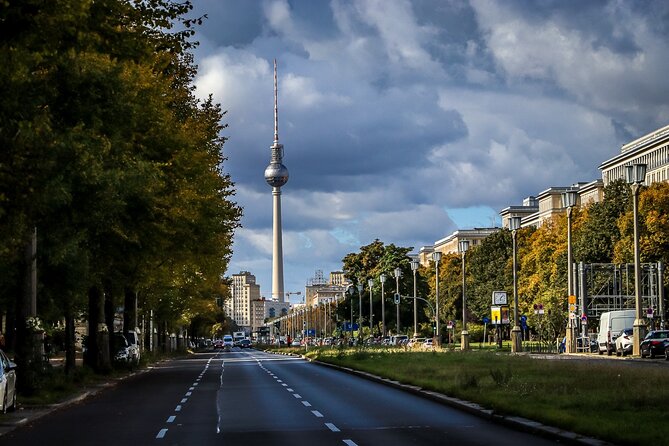
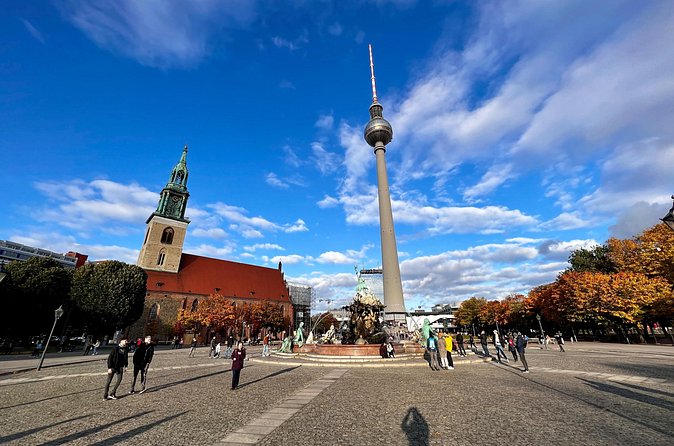
The first stop is the Berlin TV Tower (Fernsehturm), and you’ll see it from the outside. That’s important. You’re not doing a ticketed tower visit here. Instead, you get a quick orientation moment: the kind of landmark that dominates the skyline and signals how Berlin presents itself visually.
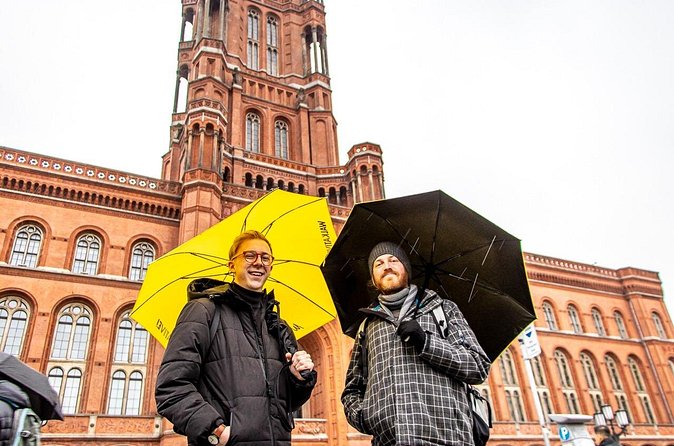
From there, you move to Rotes Rathaus, the Red Town Hall. This is where the tour starts doing its best work: explaining why a building matters beyond its looks. You’ll talk about its importance and how the architecture connects to broader inspirations. If you’ve ever walked past impressive buildings and wondered what you’re supposed to notice, this is that moment. You learn to look at structure and style as signals, not just scenery.
One practical consideration: admission isn’t included for Rotes Rathaus. That’s fine, because the tour focus is the guided walk and street-level context. Still, if your plan includes entering any building at this stop, you’ll need to handle that separately. The value here is the way the guide turns a quick exterior pause into a story you can remember later when you see similar civic architecture elsewhere in Germany.
This early section also sets expectations about the tour tone. It’s not only names-and-dates. You’ll get explanations that help you connect political intent, public space, and how Berlin communicates power in different eras. That’s the kind of groundwork that makes later stops more meaningful.
Museum Island and Humboldt University: Where Berlin Became a Brain
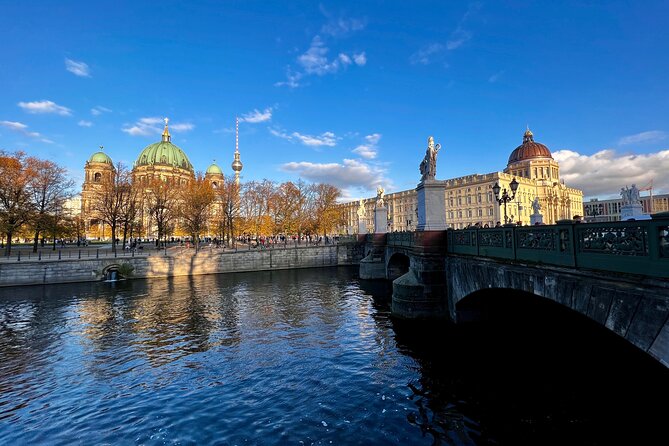
Next comes Museum Island, with a focus on what the area represents and what you can understand from the main landmarks. You’ll hear about the Berlin Cathedral, museums, and the reconstructed Royal Palace. Admission isn’t included here, so the experience stays geared toward interpretation: you’re learning the big picture so that if you choose to return for a museum visit later, you know what you’re looking for.
If you like history but get worn out by lectures, this part has the right balance. It’s timed for a walking tour, so you’re not stuck too long at any one point. Instead, you’re given enough context to make the island feel like a coherent cultural project rather than a cluster of buildings.
Then you head to Humboldt University, and again it’s outside viewing. The guide talks about why it matters—linking it to Prussia, Germany, and world science. This is a smart stop because it shifts the story. Berlin isn’t only politics and conflict; it’s also institutions that shaped research and education.
I like that you learn to see education and science as part of the city’s identity. When you later read about universities, cultural institutions, or German intellectual history, you’ll realize how often Berlin’s major themes were shaped by places like this. Even if you’re not an academic, the tour helps you understand why these buildings matter in the way they attracted attention, resources, and ideas.



Gendarmenmarkt and Checkpoint Charlie: Beauty, Ruins, and the Cold War
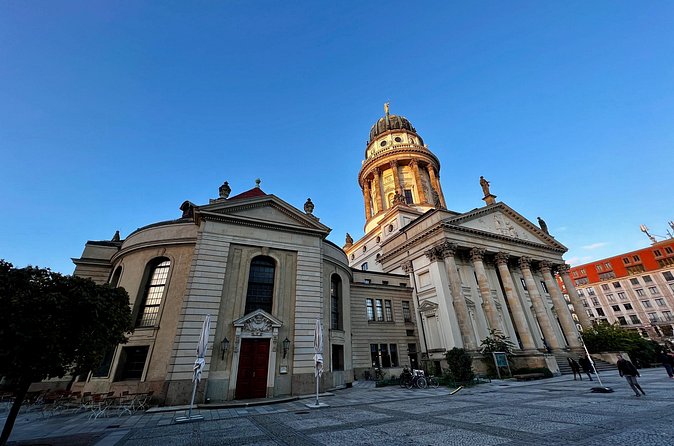
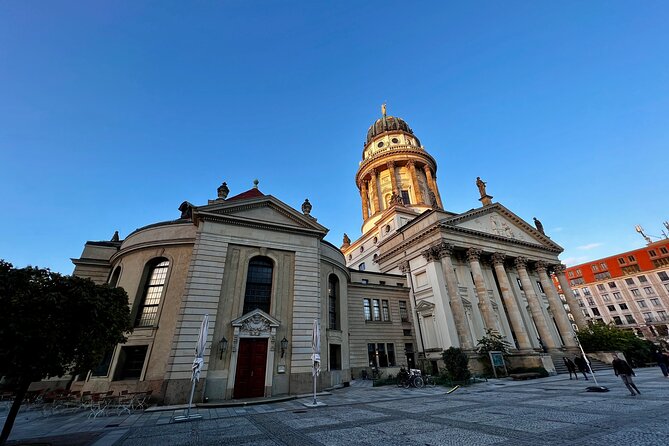
After the cultural stop, you get a change of pace at Gendarmenmarkt. This square is described as one of the prettiest in Berlin, and the tour is built around letting you actually enjoy it while the guide explains the story of the place. When guides pause here, it can feel like a reset button—your brain gets a break from timeline pressure and you get a chance to look around.
Then the mood turns. You move to Checkpoint Charlie, where the guide talks about the Cold War and the Berlin Wall. This is where the tour’s introductory value really shows. You don’t need a deep prior knowledge of Berlin to understand what you’re seeing. The guide connects the physical site to what it represented in daily life—tension, separation, and the human impact of a divided city.
The timing is also good. You’ve already walked through civic and cultural Berlin, so the Cold War section lands with weight. It’s not random tragedy. It’s the political story coming home to a specific street corner. And because admission isn’t involved at this stage, you’re staying focused on meaning rather than ticket logistics.
One thing to keep in mind: Checkpoint Charlie is a famous name, but it can also be visually busy. The tour helps you look past the obvious tourist cues and focus on why the location mattered. That’s the real reason a guided stop here beats a quick photo and a move-on.
Brandenburg Gate: From WWII to the End of Communism
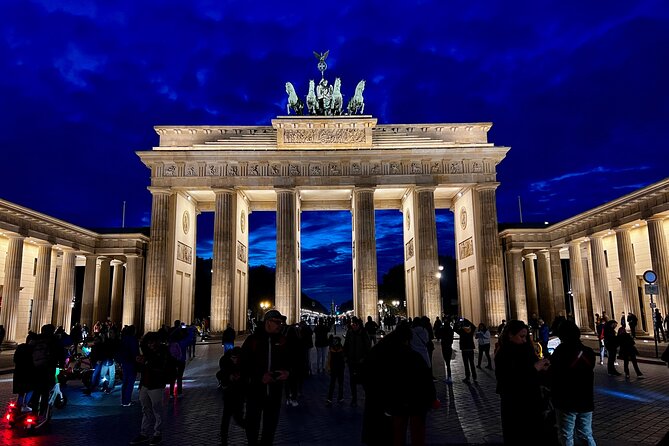
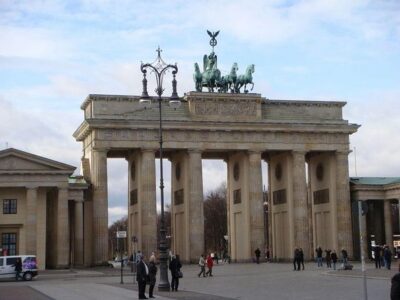
The final landmark is the Brandenburg Gate. The tour guide talks about World War II and the end of communism, which is a powerful way to close the loop. By the time you reach this spot, you’ve already seen the city’s civic institutions, cultural centers, and Cold War sites. That makes this ending feel earned, not just dramatic.
Brandenburg Gate is the kind of location where your brain wants to zoom out. You can’t help it. It’s too iconic. The guide’s job is to provide a narrative you can hold onto: how conflict and division led to a changing political reality, and how Berlin’s story shifts when communism falls. Even if you’ve read headlines before, having the key points tied to one place helps the city click into a clear sequence.
This is also where the route’s finish matters practically. Since you end near Pariser Platz, you’re placed in a central, high-transport zone. That means you can naturally branch into whatever you planned next—museum time, a longer walk, or just time to process what you learned.
I also appreciate that the tour doesn’t pretend the city is only one story. Berlin has layers, and this walk keeps moving between them: architecture, science and culture, then the Cold War, then the political turning point. By the end, you’re not just looking at Berlin—you’re understanding how Berlin was shaped.
Pay-As-You-Wish Reservations: Fair Value and How Much to Reward
This tour works in a pay-as-you-wish style. The info is pretty clear that your payment covers a reservation fee plus the guide’s payment. If you feel your guide did an excellent job—clear explanations, good pacing, helpful context—you’re expected to reward accordingly.
That model can feel confusing at first, so here’s how I think about it in plain terms. You’re paying for a guided, timed experience, then you add extra based on how much value it gave you. For this tour, the value is real: you get an organized route through major landmarks, English commentary, and expert framing that saves you time figuring out what matters.
It’s also a good format if you’re traveling solo or in a small group and want structure without committing to a private tour. If you strongly prefer a smaller, private group, the provider says you can ask, and they’ll organize it for you.
As for guides, the experience has been led by English-speaking professionals such as Will, and other guides like Tom and Gilbert have also received praise. The big takeaway: you’re not getting a vague walk. You’re getting a narrated walk that helps you remember what you saw and why it mattered.
Should You Book This Intro Berlin Tour?
If you’re visiting Berlin for the first time, I think this is a smart early booking. It’s an efficient way to get oriented, learn the major historical through-lines, and see standout sites like Fernsehturm, Museum Island, Humboldt University, Gendarmenmarkt, Checkpoint Charlie, and Brandenburg Gate in one guided sequence.
Book it if you like tours that connect landmarks to context, not just photo stops. It’s also a strong choice if you want a guide to point you toward what to do next—some guides have even shared practical ideas for free museum options after the walk, which is handy when you’re trying to stretch a travel budget.
Skip it if you already know Berlin’s history well and you’re mostly looking for flexible, slow wandering with lots of independent exploration. This tour is a set route with a steady pace. You’ll want a different kind of experience if you’re not comfortable walking for nearly three hours.
FAQ
How long is the Introductory Group Walking Tour?
It runs about 2 hours 45 minutes.
Is the tour offered in English?
Yes, it’s offered in English.
Where does the tour start and end?
You start at Rotes Rathaus (10178 Berlin) and end at Brandenburg Gate, Pariser Platz (10117 Berlin).
Do I need admission tickets for the stops?
Some stops are noted as free (like the TV Tower viewed from outside, and Humboldt University from outside). Admission is noted as not included for places like Rotes Rathaus and Museum Island, so you should plan on separate options if you want to enter anything.
Are food and drinks included?
No. Food and drinks aren’t included.
What’s the group size?
It’s described as a personalized small-group experience with a maximum of 15 people, and the overall activity cap is up to 40 travelers.
Is it a pay-as-you-wish tour?
Yes. Booking joins a general pay-as-you-wish style tour, where your payment covers the reservation fee and the guide’s payment, and you decide how much to reward.
More of Berlin on Foot


More Tours in Berlin


More Tour Reviews in Berlin
Round out your days in Berlin
Walking Tours, compared.
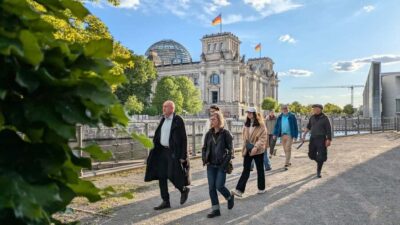 ★ 4.7Berlin City walk Government District and Places of DemocracyFrom $2948,467 reviews
 ★ 4.9Third Reich & Cold War Guided Walking TourFrom $238,378 reviews
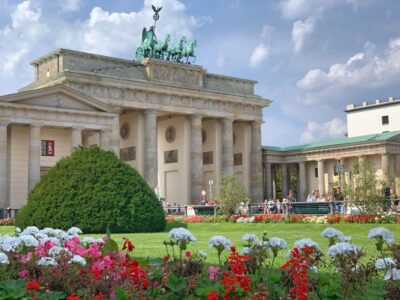 ★ 4.9Discover Berlin Walking TourFrom $235,998 reviews
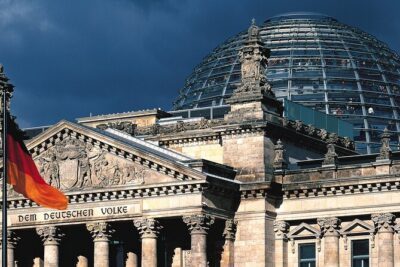 ★ 5.0Berlin’s Best: 2 Hour Walking Tour Third Reich and the Cold WarFrom $245,486 reviews
 ★ 4.8Hidden Backyards Guided Walking TourFrom $235,360 reviews
 ★ 5.0Third Reich Berlin: Hitler and WWII Walking TourFrom $243,301 reviews
 ★ 4.9Third Reich, Hitler, and WWII Walking TourFrom $191,757 reviews
 ★ 4.6Alternative Berlin Walking TourFrom $291,204 reviews
Browse the lists this tour appears in