
REVIEW · BERLIN WALL & COLD WAR
Berlin: Karl-Marx-Allee Tour of Life and Architecture in GDR
Cold War Berlin has a way of getting under your skin. Karl-Marx-Allee turns that history into something you can feel while walking past block after block, built to prove an ideology. It also connects big ideas to messy human stories, from the 1953 uprising to the Stasi’s hidden surveillance network.
I especially love how the tour makes the architecture do the talking. You’ll see socialist classicism up close and learn how the East German government tried to sell everyday life as orderly, modern, and prosperous. I also liked the storytelling style of the guide—Martina comes across as thoughtful, answers curious questions, and doesn’t just march through facts.
One consideration: this is a walking-heavy history experience, and it’s not suitable for children under 10, so plan it as an adult-focused outing.
In This Review
- Key takeaways before you go
- Why Karl-Marx-Allee Feels Like a Cold War Theme Park
- Starting at U Frankfurter Tor: Your First Clue to the GDR Mindset
- Karl-Marx-Allee and Socialist Classicism: Architecture as Propaganda
- The Ruins-to-Boulevard Story: Thousands of Volunteers, Big Dreams, Big Risk
- June 1953 and the Uprising That Almost Toppled the Regime
- Stasi Surveillance: How Fear Hid Behind Cafés and Shops
- Trees, Style Changes, and Why the Street Seemed to Fade After the Wall
- Gentrification Pressure: When Socialist Space Becomes a Housing Battleground
- Film Locations on the Route: The Lives of Others and The Queen’s Gambit
- Ending at U Strausberger Platz: A Quick Reset Point
- Price and Value: $29 for 2 Hours of Real Berlin Context
- Who Should Book This Tour (and Who Might Skip It)
- Should You Book This Karl-Marx-Allee Tour?
- FAQ
- Where does the tour start?
- Where does the tour end?
- How long is the tour?
- What is the tour price?
- What languages are offered?
- Is the tour wheelchair accessible?
- Is it suitable for kids?
- What should I bring?
- Can I cancel or change my plan?
Key takeaways before you go
- Socialist classicism made to impress: huge housing blocks designed to communicate power and stability
- A street built from ruins: post-WWII reconstruction efforts powered by thousands of volunteers
- 1953 uprising context: learn how worker unrest nearly toppled the socialist government
- Stasi surveillance behind the facade: wires and listening points described as part of daily life
- Film locations included: spot places used in The Lives of Others and The Queen’s Gambit
More of the Wall and the divided city
- Berlin’s Best: 2 Hour Walking Tour Third Reich and the Cold War★ 5.0 · 5,486 reviews
- Skip-the-Line: Berlin Wall Museum at Checkpoint Charlie★ 4.1 · 2,041 reviews
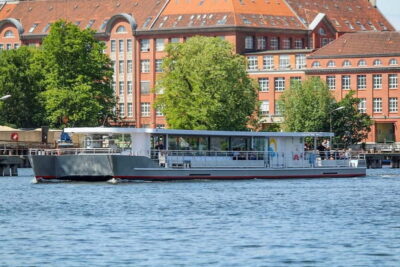
- Berlin: East Side Gallery Spree Cruise in a Solar Catamaran★ 4.1 · 1,086 reviews
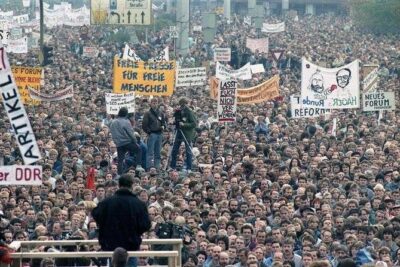
- Cold War, Berlin Wall, Spies and the East Side Gallery★ 5.0 · 1,024 reviews
Why Karl-Marx-Allee Feels Like a Cold War Theme Park
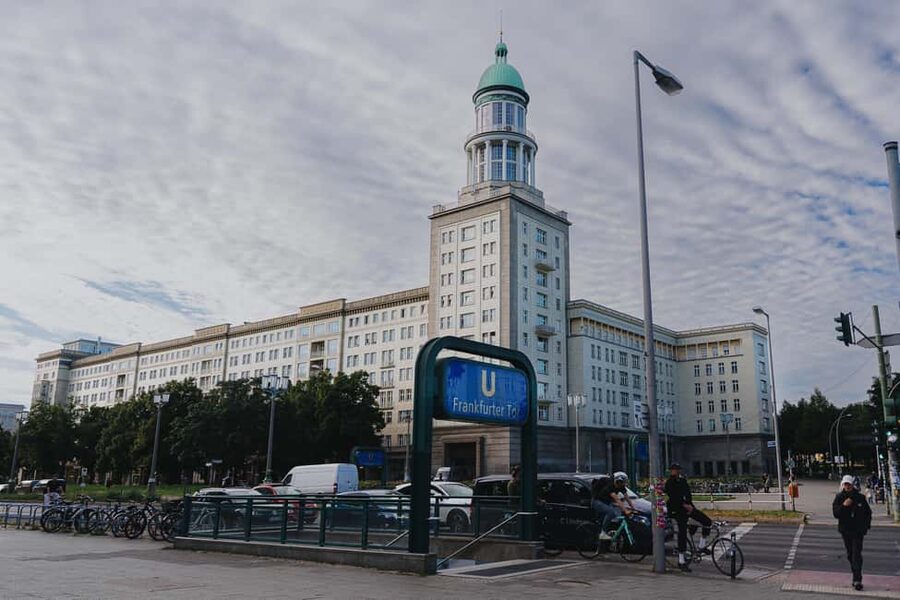
Karl-Marx-Allee is the rare street where the buildings look like a political argument. Standing beside those grand housing blocks, you get that instant sense of scale—the kind that makes you feel small, even if you’re just there for a couple of hours.
What makes the tour worth your time is the balance. It’s not only about architecture looking impressive on a postcard. You also connect those façades to what was happening underneath, including the constant pressure of surveillance and suppression that the public was not meant to see.
Starting at U Frankfurter Tor: Your First Clue to the GDR Mindset
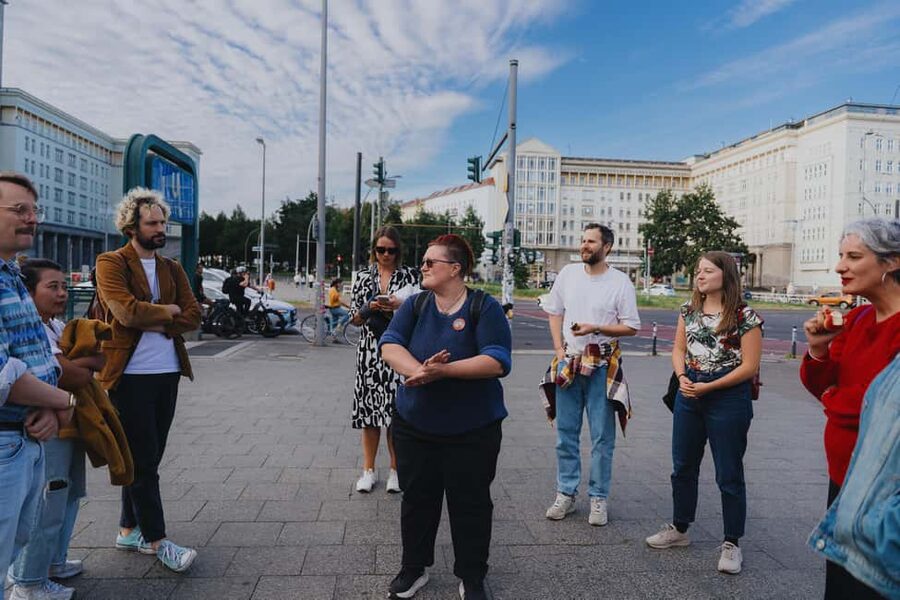
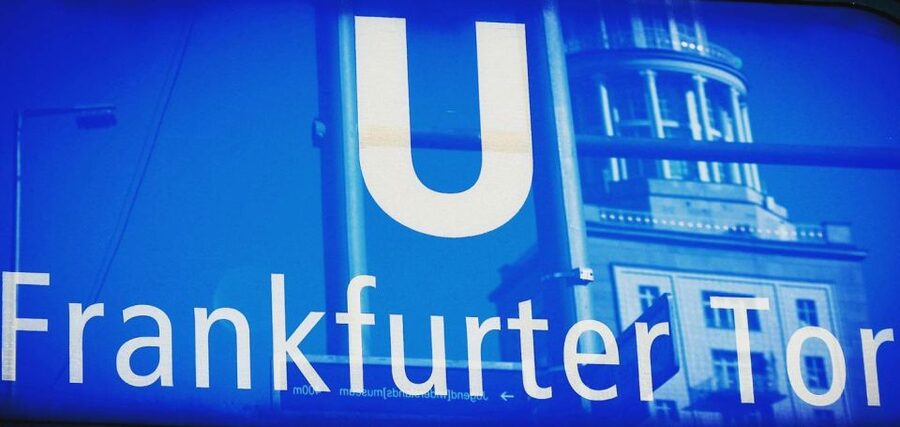
You meet at U Frankfurter Tor, outside the station near the southern tower on the corner of Warschauer Straße and Karl-Marx-Allee. Your guide will be holding an orange umbrella, which helps you spot them fast—important in a city where streets can sprawl and sidewalks can get busy.
This opening moment matters more than you might think. You’re not starting in a random spot; you’re starting where the boulevard’s “this is the future” feeling is on full display. That sets up the tour’s core idea: East Berlin wanted to look certain, even when the system wasn’t.
You also get a useful framing right at the beginning: how Cold War ideology shaped what East Germany built after WWII, and why the choices were intentional rather than just stylistic.
Karl-Marx-Allee and Socialist Classicism: Architecture as Propaganda
The heart of the experience is the walk along Karl-Marx-Allee, guided for about 1.5 hours. The street is often described as the first socialist street in Germany, and you can see why quickly: it’s not modest, it’s not subtle, and it doesn’t try to hide its ambitions.
The style is often called socialist classicism, which in practice means a disciplined, grand look—heavy forms, strong symmetry, and a feeling of permanence. East Germany built these blocks as part of its main national reconstruction effort after WWII, and the scale signals a message: this system will endure, and it will provide.
But the tour also gives you the other layer that makes this street more interesting than a simple architecture stroll. The modernist ideas from the early post-war years show up in the story, and you learn how later leadership rejected older directions and pushed a different idea of what socialist living should look like.
The Ruins-to-Boulevard Story: Thousands of Volunteers, Big Dreams, Big Risk
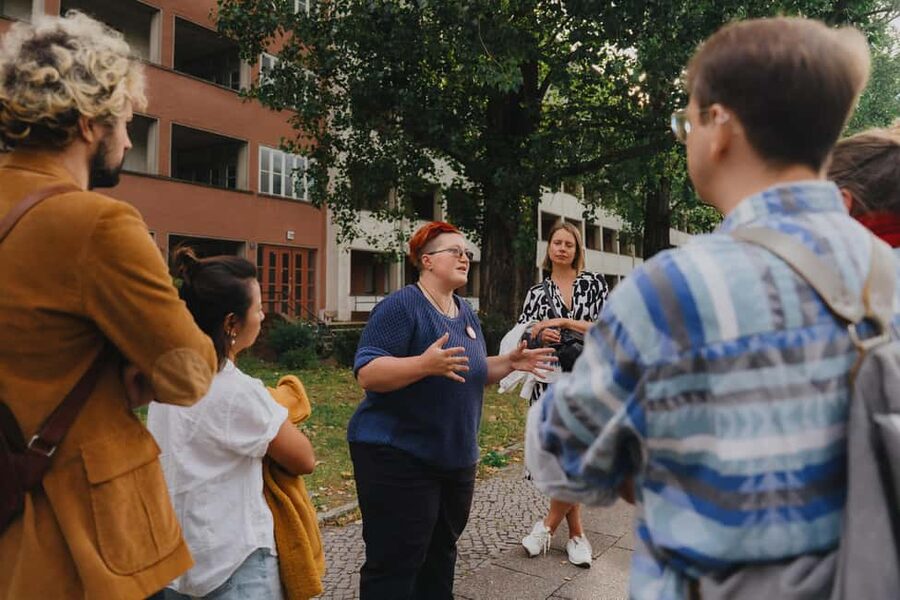
One of my favorite parts of the tour is the way it ties the boulevard back to the devastation of WWII. Karl-Marx-Allee didn’t rise from nothing; it emerged from rubble, rebuilt with the help of thousands of volunteers working day and night.
That detail changes how you see the street. It’s easy to treat these buildings as “just” GDR relics, but the reconstruction effort makes them feel like a human project—full of urgency and idealism. You can almost feel the pressure of rebuilding fast enough to create legitimacy.
Yet the tour also shows you the darker side: construction and consolidation were happening at the same time as political tensions. The grand boulevard isn’t separate from the government’s instability—it’s connected to it.




June 1953 and the Uprising That Almost Toppled the Regime
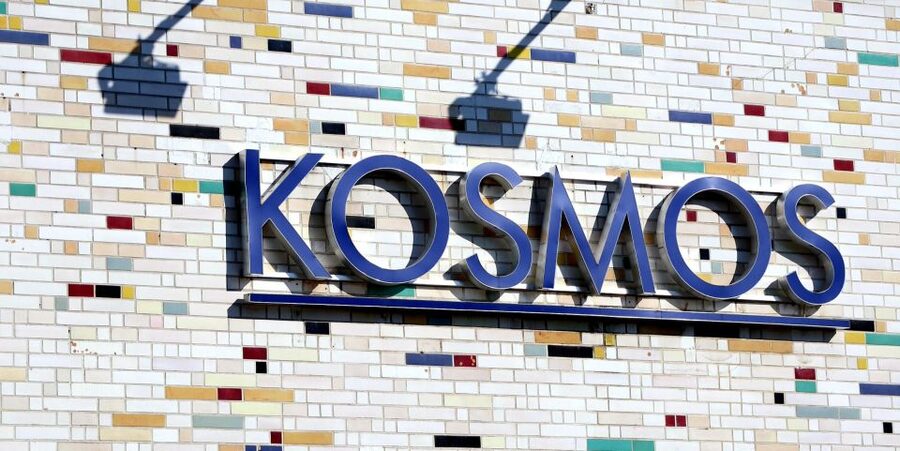
Here’s where the tour tightens into something dramatic. In June 1953, worker unrest turned into a mass uprising that nearly toppled the socialist government, and the story links that moment to the street’s symbolism and purpose.
You learn how a new system tried to prove itself through big construction projects, while ordinary people faced harsh realities. When workers rebelled, it wasn’t random chaos—it was the system hitting its limits.
The benefit for you is context. Instead of treating 1953 like a date in a textbook, you understand it as a stress point: the state needed order, and the street was part of the performance of order. When people pushed back, that performance cracked.
Stasi Surveillance: How Fear Hid Behind Cafés and Shops
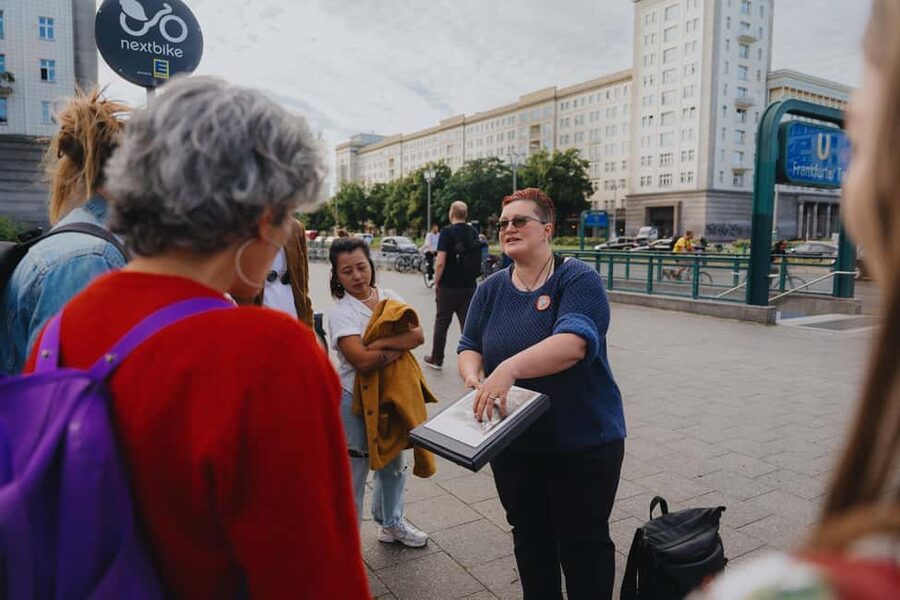
This tour doesn’t sugarcoat the surveillance reality. You’ll hear about wiretaps in flats and listening stations in attics used by the East German secret police, and how this wasn’t supposed to be visible.
That contrast is the point. Karl-Marx-Allee presented the best East Berlin had to offer—cafes, restaurants, and well-stocked shops—creating an image of idyllic life and affluence. But the surveillance network sat behind the scene, turning public normalcy into something controlled.
Walking those blocks, you start reading details differently. Even if the street now feels calmer, you’re invited to imagine the tension that people lived with. For me, this is where the tour earns its emotional weight: it turns architecture into a clue, not a museum piece.
Trees, Style Changes, and Why the Street Seemed to Fade After the Wall
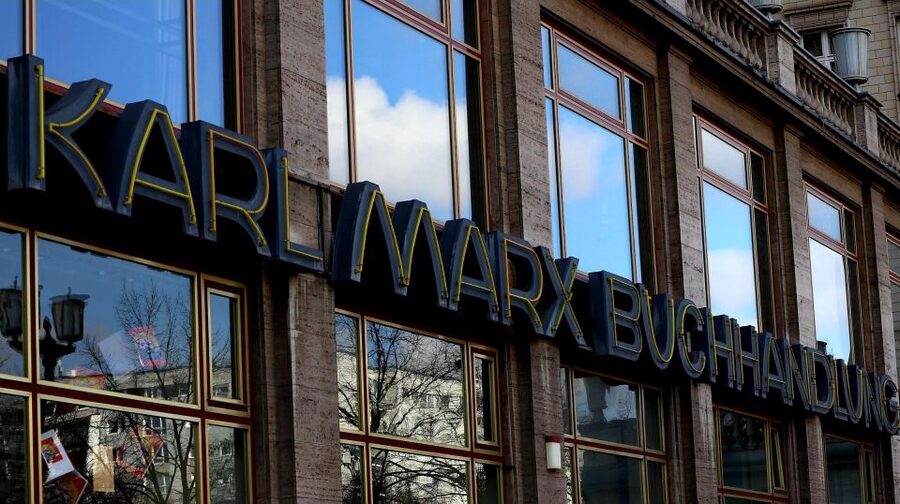
The story continues beyond the 1950s. You learn that earlier architecture ideas were at first visible, then later intentionally hidden away from passersby by fast-growing poplar trees. That’s a striking detail—like the city needed a literal screen to keep people from seeing the wrong message.
Later, the East German regime rejected the previous style and pushed a radically different idea of socialist living. That helps you understand the street as a moving target, shaped by shifting leadership and changing priorities—not a frozen postcard of one moment.
After the fall of the Wall, the boulevard fell into a different kind of spotlight. It left its role as a grand parade boulevard, and it began to look like a curious survival from another era. But Berlin doesn’t let old stories stay quiet for long.
Gentrification Pressure: When Socialist Space Becomes a Housing Battleground

The tour also brings you to the street’s modern-life tension. Not long after reunification, the former Stalinallee attracted real estate attention in a city with a housing crisis. Today, it’s no longer staged for socialist parades—it has become a stage for local community protests against gentrification and rising living costs.
That matters because it connects past and present. This isn’t just history you read about and then leave behind. You’re seeing how political power, housing, and public space still interact—just with different language and different winners.
Film Locations on the Route: The Lives of Others and The Queen’s Gambit
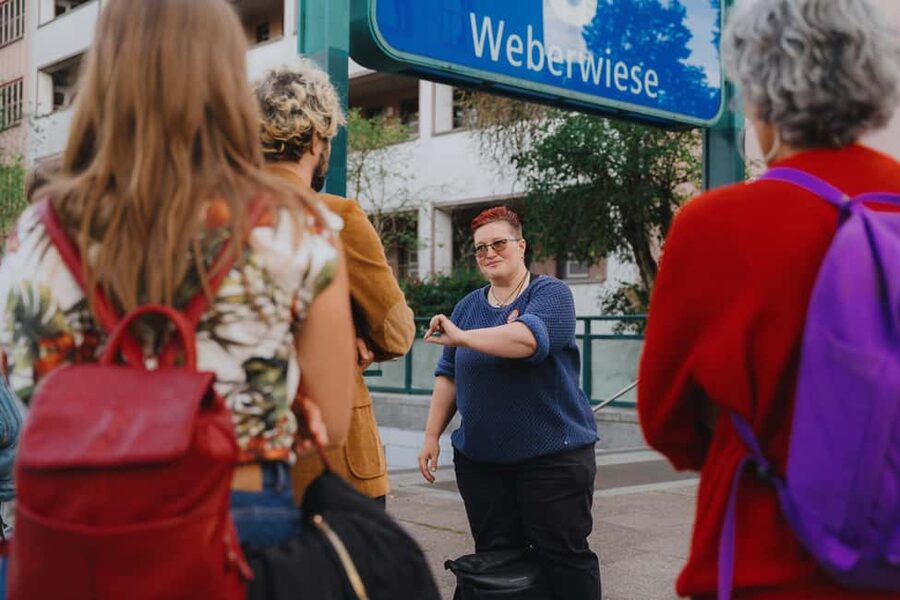
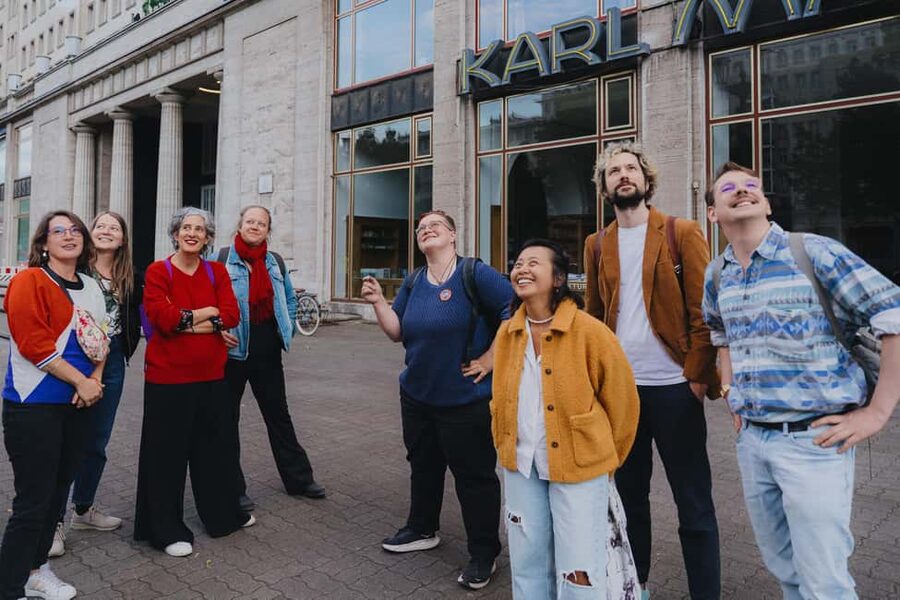
You also get stop-and-look moments tied to film. The tour includes filming locations connected to The Lives of Others and The Queen’s Gambit.
This is a smart add-on for you if you like cinematic history. You’ll often recognize the look of East Berlin from scenes on screen, then you can match those visuals to real corners and building facades. Even when you don’t know every scene, the effect is the same: the city starts playing in your mind like a living set.
Ending at U Strausberger Platz: A Quick Reset Point
The tour finishes at U Strausberger Platz. That ending station gives you an easy transition to the next part of your day, without forcing you to backtrack across the whole boulevard.
Mentally, it’s also a nice close. You’ve walked the street’s main storyline—reconstruction and ideology, 1953 uprising context, Stasi surveillance in everyday life, and what happened after the Wall. By the time you reach the finish point, the architecture feels less like a background and more like evidence.
Price and Value: $29 for 2 Hours of Real Berlin Context
At $29 per person for a 2-hour tour with a live guide, this is good value if you want more than a casual city walk. You’re paying for interpretation: what the buildings mean, how ideology shaped design, and how surveillance worked at the level of daily life.
Two hours is also a practical sweet spot. It’s long enough to cover the main sections of Karl-Marx-Allee and connect the big events to specific places. It’s short enough that you won’t feel like you’re stuck on a single theme for your whole day.
If you’re on a Berlin schedule where you pick only a few guided experiences, this one earns a spot because it gives you a coherent story tied to what you can actually see on the street.
Who Should Book This Tour (and Who Might Skip It)
This tour is a strong match if you like history that you can walk through—especially Cold War Berlin, GDR architecture, and the human side of political systems.
You’ll also likely enjoy it if you’re the type who wants context for what you’re seeing around you, not just dates. The guide’s style (including Martina’s attentive, story-forward approach) is well-suited to curious questions and respectful pacing.
Skip it if you want a relaxed, kid-friendly stroll. It’s not suitable for children under 10, and the content leans into serious topics like the Stasi and political repression.
Should You Book This Karl-Marx-Allee Tour?
Yes, if you want a 2-hour dose of East Berlin that makes the buildings mean something. The best reason to book is the way the tour connects architecture, ideology, the 1953 uprising, and Stasi surveillance into one walk you can remember.
You should probably pass if you’re only interested in sightseeing without heavy context. This experience is designed to make you look, then interpret what you’re looking at.
FAQ
Where does the tour start?
It starts outside U Frankfurter Tor underground station, by the southern tower, on the corner of Warschauer Straße and Karl-Marx-Allee. Look for your guide holding an orange umbrella.
Where does the tour end?
The tour ends at U Strausberger Platz.
How long is the tour?
It lasts about 2 hours total.
What is the tour price?
The price is $29 per person.
What languages are offered?
The tour is available in English and German.
Is the tour wheelchair accessible?
Yes, it is listed as wheelchair accessible.
Is it suitable for kids?
It is not suitable for children under 10.
What should I bring?
You should wear comfortable shoes.
Can I cancel or change my plan?
The tour offers free cancellation up to 24 hours in advance for a full refund, and you can also use reserve now & pay later.
More Tours in Berlin


More Tour Reviews in Berlin
The Wall and the Cold-War City


Round out your days in Berlin
Berlin Wall & Cold War, compared.
 ★ 4.9Third Reich & Cold War Guided Walking TourFrom $238,378 reviews
 ★ 5.0Berlin’s Best: 2 Hour Walking Tour Third Reich and the Cold WarFrom $245,486 reviews
 ★ 4.1Skip-the-Line: Berlin Wall Museum at Checkpoint CharlieFrom $212,041 reviews
 ★ 4.1East Side Gallery Spree Cruise in a Solar CatamaranFrom $281,086 reviews
 ★ 5.0Cold War, Berlin Wall, Spies and the East Side GalleryFrom $181,024 reviews
 ★ 4.8Wall Tour – Fates, Love Stories, and HeroesFrom $282585 reviews
 ★ 4.5THE WALL: asisi Panorama Berlin TicketFrom $16580 reviews
 ★ 4.8The Wall and Third Reich Guided Bike TourFrom $41578 reviews
Browse the lists this tour appears in