
REVIEW · WALKING TOURS
Berlin Walking Tour: Berlin’s Royal Boulevard Unter den Linden
Unter den Linden is Berlin’s power story in motion. This 2-hour English walk links kings, war, and modern memory along one famous boulevard. I like the single-street narrative that makes big events feel connected, and I especially like how the route treats architecture like evidence.
The guide is a big part of the payoff. Morgan’s style is passionate and story-driven, with the walking and talking kept in balance so you can actually follow the thread. One possible drawback: if you are a total newcomer to German history, you may want a little background before you go, because the tour rewards people who already know one or two key facts.
In This Review
- Key highlights before you go
- A boulevard you can read like a timeline
- Route at a glance: from Humboldt Forum to Schinkelplatz
- Stop-by-stop: what each landmark adds to the Prussia-to-modern story
- 1) Humboldt Forum: from royal seat to public culture
- 2) Lustgarten: pleasure garden to rally ground
- 3) Deutsches Historisches Museum (Zeughaus): baroque shells with serious history
- 4) Neue Wache: national memorial and the weight of memory
- 5) Humboldt University: a university, a symbol, and a darker footnote
- 6) Maxim Gorki Theater: progressive theatre with musical roots
- 7) Denkmal General Blücher: Napoleonic victories and Prussian pride
- 8) Friedrichswerdersche Church: the quiet architecture you’ll be glad you didn’t skip
- 9) Schinkelplatz: finishing with Berlin’s architect in full view
- Price and value: what $29.57 buys you in real terms
- The guide experience: why Morgan’s approach changes the whole walk
- Practical pace and comfort for a 2-hour walk
- Who should book this Unter den Linden walk
- Should you book this tour?
Key highlights before you go
- Small group size (max 15) keeps it feel human and lets you ask questions.
- English mobile ticket means less time fussing with paperwork.
- Mostly free stops along the way, with only a couple spots that may cost extra.
- Stop-to-stop storyline that links Prussia, the Nazi era, and Germany’s later memory culture.
- Includes Friedrichswerdersche Church, a quieter win for photo lovers and architecture fans.
More of Berlin on foot
- Discover Berlin Half-Day Walking Tour★ 5.0 · 9,624 reviews
- Berlin City walk Government District and Places of Democracy★ 4.7 · 8,467 reviews
- Berlin: Third Reich & Cold War Guided Walking Tour★ 4.9 · 8,378 reviews
- Berlin: Discover Berlin Walking Tour★ 4.9 · 5,998 reviews
A boulevard you can read like a timeline
Unter den Linden is one of those streets where the buildings do the talking. But it can still feel like a lot if you walk it on your own. On this tour, I like that the route is designed to turn a boulevard into a sequence: power, propaganda, institutions, and remembrance—without making it feel like a lecture.
The tour hits the core of central Berlin, where you can see how eras overwrite each other. You start near the rebuilt palace complex and move toward spaces tied to learning, theatre, military myth, and architecture. The result is a walk that feels designed for the way your brain actually remembers: people, dates, and places that connect.
You’ll also notice how the guide’s storytelling style matters. Morgan is repeatedly described as passionate and an excellent story-teller, and that shows in how the route flows—each stop feels like a piece of a bigger argument about Berlin and Prussia.
Route at a glance: from Humboldt Forum to Schinkelplatz
This walk runs about 2 hours and starts at 11:00 am. The meeting point is at Rekonstruktion des Sanchi-Tores vor Berliner Schloss Am Lustgarten Berliner Dom, 10178 Berlin. The tour ends at Schinkelpl., 10117 Berlin, at Schinkelplatz.
The pacing is built around short stops and quick context. Many locations are free to view on the outside or include free entry as part of the visit plan. Two locations are clearly marked as places where admission is not included, so expect that some entries could depend on what you choose to go inside for.
Also, the group size is limited to 15 people, so you’re not stuck listening while shoulder-to-shoulder. This helps if you want to actually track the story instead of just getting photos.
Stop-by-stop: what each landmark adds to the Prussia-to-modern story
1) Humboldt Forum: from royal seat to public culture
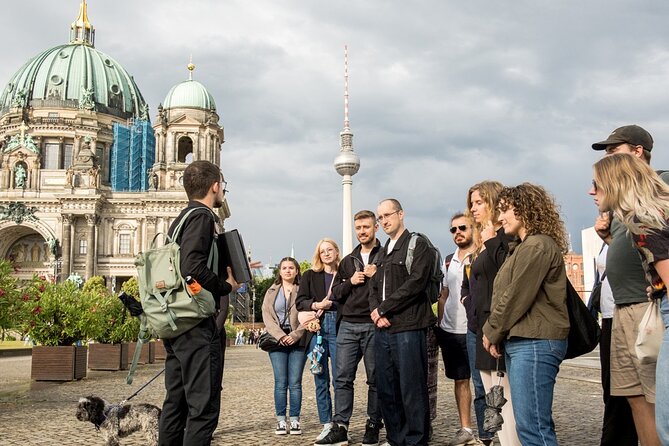
You begin at the baroque façade of the Berlin Palace, now reborn as the Humboldt Forum. The key idea here is transformation: a former seat of Prussian kings turned into a museum and cultural space in modern Berlin.
Even if you don’t plan to go deep into exhibits, the start point sets the tone. It frames the whole tour with a question you’ll keep hearing in different forms: who owned this city’s narratives, and who gets to tell them now? The tour’s plan also notes the visit time as about 15 minutes, with free admission ticket.



2) Lustgarten: pleasure garden to rally ground
Next is Lustgarten, once a royal pleasure garden and later a stage for Nazi rallies. That contrast is hard to miss, and it’s one of the tour’s strengths. It’s not trying to soften anything. Instead, it makes you notice how a “pretty” space can become a tool for mass politics.
This stop is short (about 10 minutes) because the point is quick: the same ground can carry radically different meanings across regimes. You also get time to reset before the museum segment.
3) Deutsches Historisches Museum (Zeughaus): baroque shells with serious history
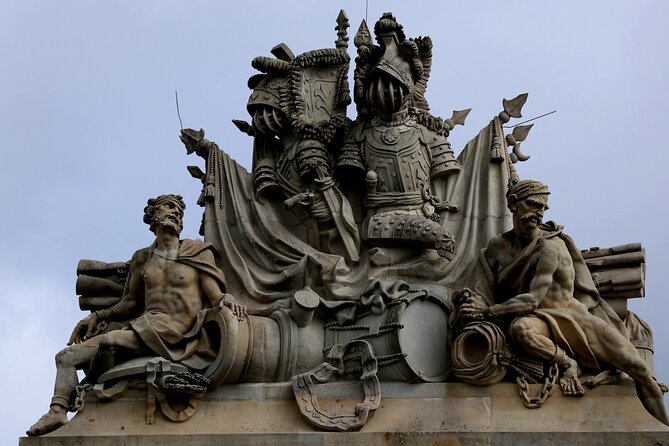
Then you reach the Deutsches Historisches Museum, housed in the Zeughaus (an old arsenal building) and described as one of Europe’s important history museums. The building itself matters here: the plan notes it as one of Berlin’s oldest preserved baroque buildings.
The tour time is around 10 minutes, but the big thing for you to note is entry. Admission at this stop is not included, so if you want to go inside and use the museum time you’ll likely pay the admission fee separately. If you mainly want the exterior story and quick orientation, you can still get a lot from the framing.
4) Neue Wache: national memorial and the weight of memory
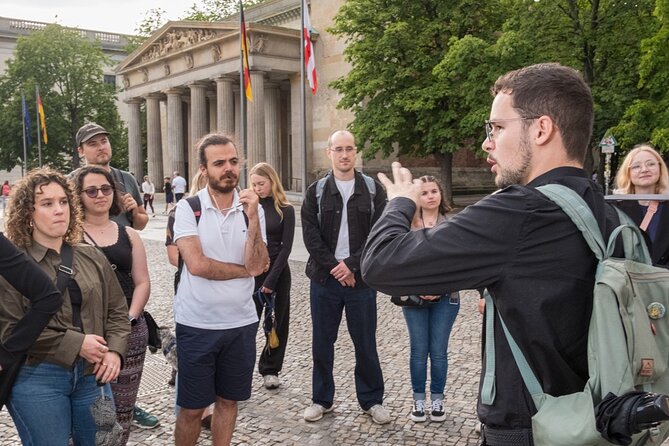
At Neue Wache, you step into a neoclassical guardhouse turned national memorial. This stop focuses on remembrance, honoring victims of war and dictatorship, and it includes Käthe Kollwitz’s sculpture as the emotional core of the site.
This is not a “look and move on” kind of stop. It’s brief in minutes, but it carries a heavy message. If you’ve come for a straightforward royal-and-generals storyline, this is where Berlin reminds you that the 20th century doesn’t stay tidy.
The good news: it’s free as part of the tour plan, so you can spend your money on what matters to you rather than entry fees.
5) Humboldt University: a university, a symbol, and a darker footnote
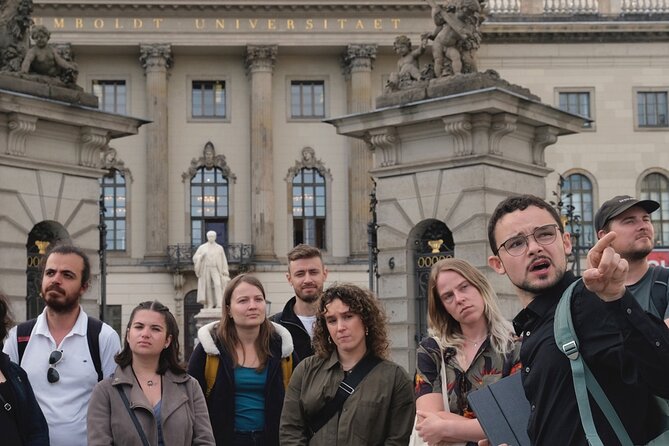
Next is Humboldt University (Humboldt Universitat). The tour connects this place to major figures—Einstein, Marx, and the Grimm Brothers—and also to a dark Nazi-era action: books burned under the Nazis.
This stop is about institutions and control. A university is supposed to represent learning and debate. But the mention of book burning makes clear that power systems also attack knowledge. The tour gives you about 15 minutes here, with free admission ticket.
6) Maxim Gorki Theater: progressive theatre with musical roots
You then reach the Maxim Gorki Theater, described as Berlin’s most progressive theatre. It’s housed in a former building tied to music history: the Sing-Akademie, where Mendelssohn revived Bach’s St. Matthew Passion in 1829.
This is a great stop for anyone who likes culture history, not just political history. It also helps the tour feel less like a single-note chronology. Still, note that admission at this stop is not included, so if you want to go inside you should expect an extra cost.
7) Denkmal General Blücher: Napoleonic victories and Prussian pride
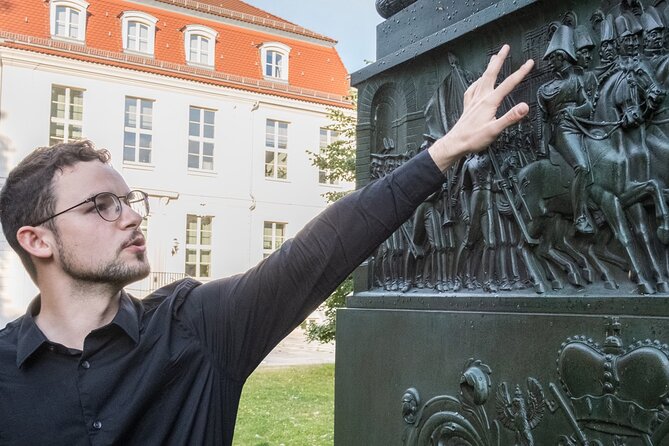
The next stop is Denkmal General Blucher, honoring Field Marshal Blücher, victor of Waterloo, flanked by Generals Yorck and Gneisenau. This is where the tour leans into the Prussian military pride thread.
It’s about how statues create identity. The tour frames this monument as part of the story Berlin tells itself about the Napoleonic Wars through those key figures. You get about 15 minutes, and it’s free.
8) Friedrichswerdersche Church: the quiet architecture you’ll be glad you didn’t skip
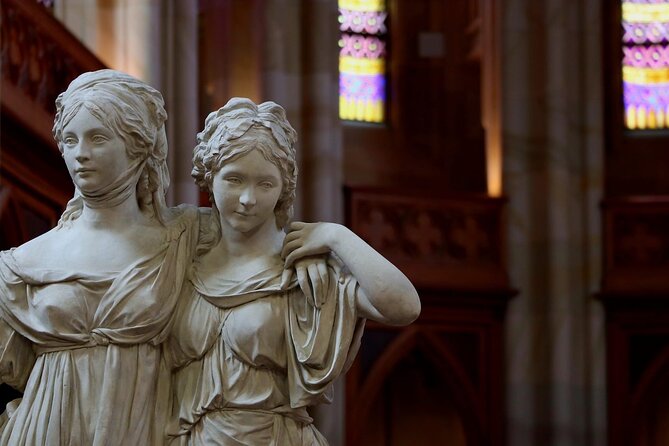
Then comes a stop many people would miss without a guide: Friedrichswerdersche Church. The tour describes it as a hidden-in-plain-sight space by Karl Friedrich Schinkel, with Gothic Revival features and a tranquil feeling suited to looking closely at the 19th-century sculpture.
This church is also listed as included in the experience, so you’re not paying to get the full value of that particular piece of the route. It’s free on the tour plan too, and it’s timed for about 15 minutes. For me, stops like this are the reason a guided walk often beats an app: the guide tells you what to notice and why it matters.
9) Schinkelplatz: finishing with Berlin’s architect in full view
Finally, you end at Schinkelplatz, finishing with a tribute to Berlin’s greatest architect: Schinkel. The area is described as a mix of fine neoclassical buildings and striking contrasts with modern Berlin.
Finishing here works because it reframes everything you saw earlier. You started with a rebuilt royal façade. You end with an architect-centered space that helps explain why Berlin looks the way it does: power, design, and memory all using the built environment.
Price and value: what $29.57 buys you in real terms
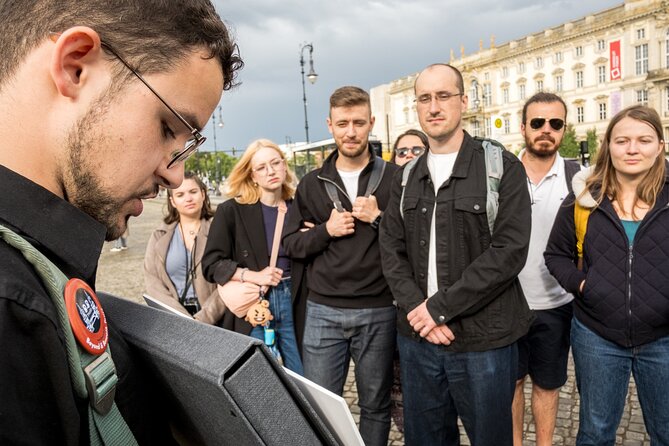
At $29.57 per person, this tour is priced for a short, guide-led history format rather than a museum day. The value is strongest if you care about narrative and context, because so many parts of the route are free to access as part of the tour plan.
Here’s the practical way to think about it:
- You’re paying for the local guide and the connections between stops, not for a stack of paid admissions.
- Some locations (like the Deutsches Historisches Museum and Maxim Gorki Theater) are marked as admission not included, so your total spend can rise if you choose to go inside.
- The small group size helps you keep up with the story, which is the main product you’re buying.
So if you want a walk that feels like a guided “timeline you can see,” this price often makes sense. If you only want museum interiors and aren’t interested in the boulevard storyline, you might get less value.
The guide experience: why Morgan’s approach changes the whole walk
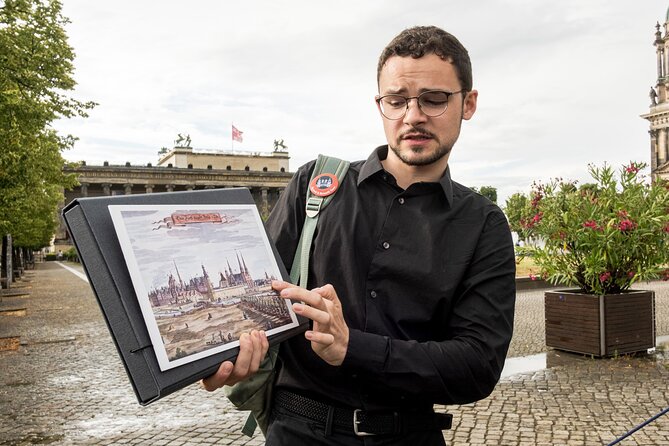
One theme in the best feedback is the guide’s storytelling. Morgan is specifically singled out as passionate, very knowledgeable in the subject, and a strong story-teller. That matters because this tour covers big, emotional themes: Prussian authority, public spaces used for rallies, memorial culture, and how ideas and books can be targeted.
The pacing is also part of the praise: walking and talking are described as nicely balanced. That’s a practical detail for you. A good history walk should keep you from tuning out. When the guide ties individual stops into one overarching narrative, you stop treating each building like a random postcard.
If you like hearing how people and institutions connect, this format is a good match.
Practical pace and comfort for a 2-hour walk
You’re on your feet for about 2 hours. Many stops are quick, and the route is concentrated around central sights. That’s great if you want movement without a whole day commitment.
A few things to plan for:
- Good weather is required. If conditions are poor, the tour can be canceled with an alternative date or a full refund offered.
- Since you’ll be out walking, it helps to wear comfortable shoes and bring water.
- The tour is described as suitable for most people and it allows service animals.
Also, because it’s offered in English and maxes out at 15, you should feel comfortable following along without getting lost in a huge crowd.
Who should book this Unter den Linden walk
This one fits you best if:
- You like history that connects places, not just dates.
- You want to understand how Prussia, Germany’s darker 20th-century chapters, and later memory culture show up in the same central area.
- You enjoy architecture and public spaces as part of the story, including Schinkel-related sites and the church visit.
It may be less ideal if:
- You want a basic first-day “greatest hits” introduction only.
- You’re planning to avoid any sites that might require paid entry beyond what’s included.
Think of it as a focused, narrative-oriented walk for people who want more meaning than a quick overview.
Should you book this tour?
I’d book it if you’re the type who likes your walking tours to make a point. The combination of a small group, an English guide, and a route that connects power, propaganda, remembrance, and culture is exactly what turns Unter den Linden from scenery into a readable story.
If you’re on the fence, a simple test helps: do you want to understand why these places matter beyond their appearance? If yes, this tour is a strong choice. If you only want casual sightseeing with minimal context, you might prefer something lighter.
More of Berlin on Foot

More Tours in Berlin

More Tour Reviews in Berlin
Round out your days in Berlin

Walking Tours, compared.
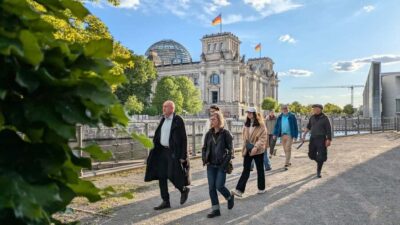 ★ 4.7Berlin City walk Government District and Places of DemocracyFrom $2948,467 reviews
 ★ 4.9Third Reich & Cold War Guided Walking TourFrom $238,378 reviews
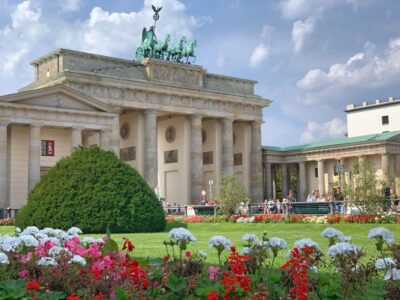 ★ 4.9Discover Berlin Walking TourFrom $235,998 reviews
 ★ 5.0Berlin’s Best: 2 Hour Walking Tour Third Reich and the Cold WarFrom $245,486 reviews
 ★ 4.8Hidden Backyards Guided Walking TourFrom $235,360 reviews
 ★ 5.0Third Reich Berlin: Hitler and WWII Walking TourFrom $243,301 reviews
 ★ 4.9Third Reich, Hitler, and WWII Walking TourFrom $191,757 reviews
 ★ 4.6Alternative Berlin Walking TourFrom $291,204 reviews
Browse the lists this tour appears in