
REVIEW · WALKING TOURS
Berlin Walking Tour with Audioguide on Your Smartphone
Concrete, glass, and coded streets. This Berlin walk is interesting because it pairs offline GPS routing with 24 audio recordings, so you can cover major sites without getting lost or waiting on a group. I like that you can pause for breaks and replay sections when you want details; the main drawback is that it’s fully self-guided, so you’re relying on your phone and your headphones.
The route starts at Pariser Platz and loops back there, hitting the city’s most story-heavy places in about 2 hours on paper. You’ll move from reunification icons (Brandenburg Gate) into darker memory sites (the Holocaust Memorial and Bebelplatz) and then back into culture and viewpoints (Gendarmenmarkt, Museum Island, the TV Tower).
If you want a “walk and listen” overview that’s easy to fit into a day, this is a smart option. Just plan for slower pacing if you stop for photos, quiet reading time, or a coffee stop—this kind of Berlin tour tends to take whatever time you give it.
In This Review
- Key points at a glance
- A Two-Hour Berlin Hit List You Can Control With Your Phone
- How the Smartphone Audio Guide Works (Offline GPS + App Basics)
- Pariser Platz to Brandenburg Gate: Unity History in One Straight Shot
- Reichstag: Berlin’s Democracy Lesson in Glass and Panoramas
- Holocaust Memorial and Bebelplatz: When the Stories Get Heavy
- Führerbunker and Checkpoint Charlie: The Cold War’s Physical Reminders
- Ampelmännchen and the Trabi Stop: East German Culture Details
- Gendarmenmarkt and Unter den Linden: Cathedrals, Opera, and Frederick the Great
- Berlin Cathedral and Museum Island: Art and Archaeology Without a Lecture
- Marx and Engels Forum and Rotes Rathaus: Government History, Then a Red Brick Break
- Television Tower and Alexanderplatz: End With Views and Big-City Energy
- Price and Timing: Is $6.61 Actually Worth It?
- Should You Book This Berlin Smartphone Walking Tour?
- FAQ
- Do I need to bring headphones?
- What devices is the audio guide available on?
- Is the route guided by a person?
- Where does the tour start and end?
- How long is the walk?
- What’s included in the price?
Key points at a glance
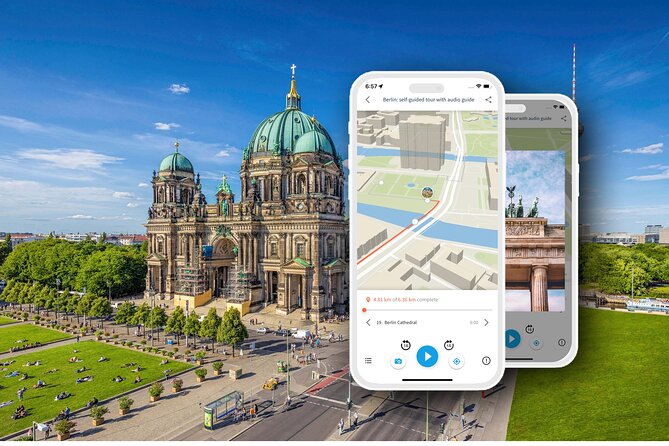
Offline map route helps you stay on track without guessing streets
24 English audio recordings cover the story behind each landmark
You can pause, restart, and control your pace the way a group tour won’t allow
Illustrations help you identify key buildings at a glance
Bring your own headphones since none are included
Expect heavy stops—Berlin does not keep things light here
More of Berlin on foot
- Discover Berlin Half-Day Walking Tour★ 5.0 · 9,624 reviews
- Berlin City walk Government District and Places of Democracy★ 4.7 · 8,467 reviews
- Berlin: Third Reich & Cold War Guided Walking Tour★ 4.9 · 8,378 reviews
- Berlin: Discover Berlin Walking Tour★ 4.9 · 5,998 reviews
A Two-Hour Berlin Hit List You Can Control With Your Phone
For $6.61, you’re not paying for a private guide or a museum ticket. You’re buying something more useful in a city this big: a clear walking loop plus audio context that turns “I recognize the building” into “I get why it matters.” It’s the kind of deal that works best when you want a first-pass orientation and you don’t mind doing the navigating yourself.
The official plan is about 2 hours, but the tour is built for flexibility. You can pause for coffee breaks or linger if something grabs your attention—especially at the memory sites where a little silence can do more than rushing through. The value here is control: you choose what to spend time on.
Also, this is offered in English, and you get a 1-year window to use the tour after purchase. That matters if you’re traveling with a tight schedule or if you want to come back and re-listen after you’ve found your bearings in Berlin.
How the Smartphone Audio Guide Works (Offline GPS + App Basics)
This is a self-guided experience delivered through an app for iPhone and Android. You download the app, activate your purchase, then follow the route using the offline map and GPS on your phone. There’s also a set of illustrations designed to help you recognize the landmarks you’re looking at.
A few practical things to know before you start:
- You need your own headphones (not included).
- You’re responsible for keeping your phone charged and running during the walk.
- The tour time you see during checkout is approximate, since you’re moving at your own pace.
One more tip: because you’re navigating, you’ll get the best results if you start at the meeting point with the app already ready. That way you’re not wrestling with menus while your feet are already moving.
And yes, the tour caps at 20 travelers, but it still feels “solo” in practice because there’s no human guide pacing the group.
Pariser Platz to Brandenburg Gate: Unity History in One Straight Shot
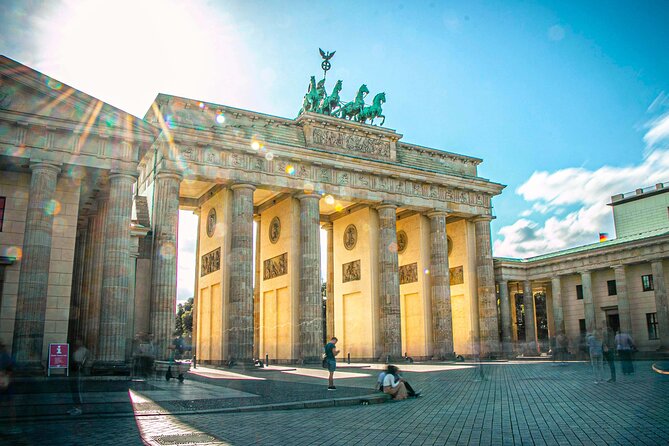
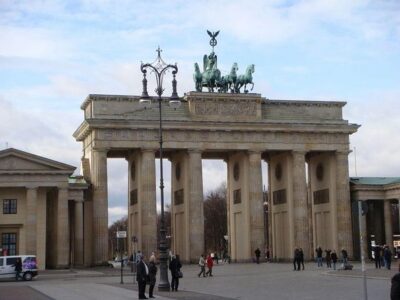
The walk begins at Pariser Platz, where the whole mood of the city shifts toward big symbolism. From here, you’re set up to see the Brandenburg Gate—a neoclassical landmark famous for its columns and the Quadriga statue on top. The audio framing is clear: this gate was once a sign of division, and it now represents reunification.
What I like about doing this early is that Berlin can feel abstract until you anchor it to a few real monuments. Pariser Platz and the Gate are those anchors. You’ll also notice how many nearby buildings and streets seem to orbit the square’s meaning, so the story feels larger than one photo stop.
Both stops are listed as admission-free for your time here, so you’re not paying extra just to get the context and the views from the streets.
Reichstag: Berlin’s Democracy Lesson in Glass and Panoramas
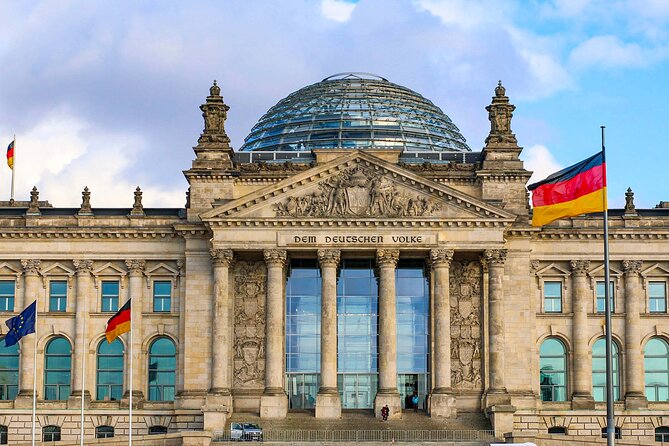
Next up is the Reichstag, Berlin’s parliamentary powerhouse—and for good reason. The audio focuses on the glass dome idea as a symbol of transparency and democracy, and it encourages you to think about how historic government meets modern engineering.
This stop is a good reminder that Berlin doesn’t separate architecture from politics. Even the shape of a building is part of the message. If you’re the type who likes to connect what you see to what it meant at the time, you’ll appreciate how this one is presented.
Like the earlier landmarks, the time block is short, so treat it as a viewpoint-and-perspective stop. If you want extra time for photos, plan to slow down here rather than rushing onward.
More Berlin tours to line up side by side




Holocaust Memorial and Bebelplatz: When the Stories Get Heavy
Two of the most important parts of this route are close in theme, even if they feel different on the ground.
First, the Memorial to the Murdered Jews of Europe: a field of concrete slabs that you walk through, which the audio frames as a place for loss and remembrance. It’s also one of the few sites here that includes a dedicated Information Centre underground, which adds context so you’re not just looking at a form—you’re getting the meaning behind it.
Then comes Bebelplatz, another memory stop with a different kind of focus. The audio points to the underground memorial to the Nazi book burning, which is about intellectual freedom as much as it is about censorship and fear. If you take even a few minutes to watch and read what’s there, this is the part of the walk that can stay with you long after you’re done listening.
One small caution: these stops can easily take longer than the scheduled minutes because they invite quiet attention. If you’re sensitive to intense history, go at a pace that feels right for you. You can always catch the rest of Berlin later—this route still makes sense even if you move slower for a while.
Führerbunker and Checkpoint Charlie: The Cold War’s Physical Reminders

After the memory sites, the walk turns toward Berlin’s more immediate, darker mechanics: power, escape, and surveillance.
The Führerbunker is described as the infamous underground complex where Hitler spent his final days. Today, it’s not a dramatic ruin you climb through—it’s a site with heavy historical weight, described as a parking lot with informational display. That contrast is part of the point: history doesn’t always come with cinematic scenery.
Then you reach Checkpoint Charlie, which is a Cold War relic with a replica of the border crossing and museum details about escape attempts. This is a stop that tends to click for people because it gives you a tangible, recognizable scene. You can look at the place and then understand what it represented in how people tried to leave.
If you want a quick way to understand the Cold War, these two stops do it in sequence: final-days collapse, then the more bureaucratic reality of division and flight.
Ampelmännchen and the Trabi Stop: East German Culture Details
Not every Berlin history lesson is solemn. One of the fun cultural pivots on this route is Ampelmännchen—Berlin’s quirky traffic light figures. The audio connects them to East Germany and explains why they’ve become a symbol of unity. The charm here is that the story is attached to something everyday, almost silly, and very real.
Another unique mention is the Trabant, or Trabi, described as an automotive icon and East German symbol that can be tied to nostalgic city touring. The important thing for you: this walk is still a walking audio route, so don’t assume the Trabi ride is included. Treat it as a story-and-sight moment, and if you want the actual ride experience, you’d have to arrange it separately.
These stops are useful because they keep Berlin from turning into a museum only. They show how people carry identity through objects, even after systems change.
Gendarmenmarkt and Unter den Linden: Cathedrals, Opera, and Frederick the Great
Then the route turns scenic and grand.
At Gendarmenmarkt, you get a symmetrical layout framed by the German and French Cathedrals, with the Schiller Monument as a centerpiece. The audio also points you toward the Konzerthaus, so you’re not just staring at buildings—you’re being nudged toward Berlin’s performing arts culture. If you like architecture that’s almost stage-like in composition, this square is a strong reward.
Next is Unter den Linden, where the audio brings in the equestrian statue of King Friedrich II of Prussia. The tour notes its scale and design and positions it as a dominant feature of the boulevard.
Right around this axis is also the German State Opera stop. The emphasis here is on the neoclassical setting and the long-running tradition of performances—an easy place to shift from politics and memory into art.
One advantage of doing these stops after the heavy sites is mental reset. You’re still in history, but it’s history expressed through culture and city design.
Berlin Cathedral and Museum Island: Art and Archaeology Without a Lecture
The next phase is a classic Berlin culture pairing: a major church exterior plus one of Europe’s densest museum zones.
At Berlin Cathedral, the audio describes it as Baroque in style with an iconic dome, plus the option of panoramic views from the terrace. Even if you don’t go inside, it’s worth slowing down here because the building’s scale is hard to understand from street level alone.
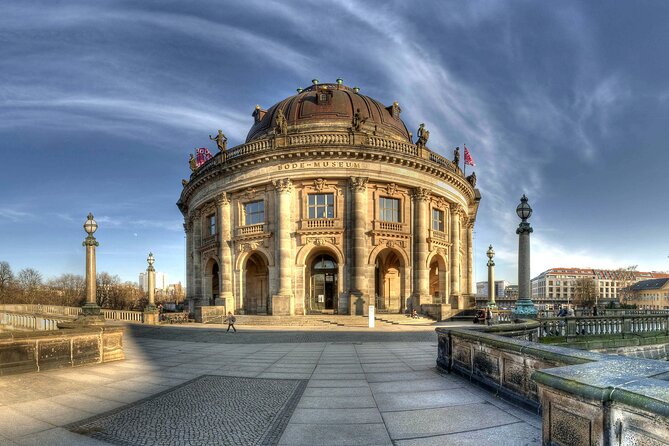
Then you reach Museum Island, listed as a UNESCO World Heritage site. The audio frames it as a cluster of major museums on the Spree, with the tour explicitly calling out the Pergamon Museum and Neues Museum among others. The story angle is simple: you’ll see ancient artifacts, classical art, and archaeological wonders across multiple institutions.
Practical note: museum entry isn’t included. That means if you want indoor time at one or two museums, you’ll need to plan for ticketing and schedule separately. The audio guide can still be great here as an exterior-to-overview companion, but it’s not a replacement for museum time.
Marx and Engels Forum and Rotes Rathaus: Government History, Then a Red Brick Break
Berlin keeps layering its ideology into public spaces.
At the Marx and Engels Forum, the audio describes a park with statues and reliefs, plus remnants of the Berlin Wall. It’s framed as a place that’s both contemplative and calmer than the memorial sites around it. That matters because this is still history you can move through slowly.
Then you head to Red Town Hall (Rotes Rathaus). The audio highlights its distinctive red brick facade and neo-Renaissance look, and it positions it as the city seat of government. The nearby Neptune Fountain is mentioned as a decorative highlight, giving you a quick visual palette cleanser after the more abstract ideological park.
If you like to understand how a city governs itself—literally in stone and brick—these two stops connect well. One is about founders and theory; the other is about the functioning of civic power.
Television Tower and Alexanderplatz: End With Views and Big-City Energy
The final stretch is about perspective and motion.
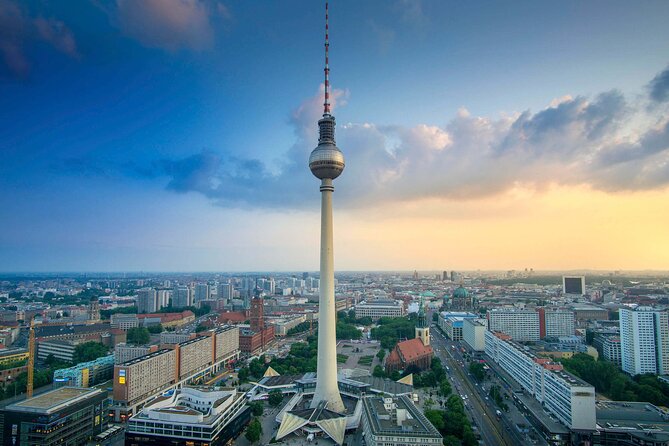
The TV Tower stop calls it a GDR relic with a symbol-like role for unity. The key draw is the observation deck for panoramic views. If you’re someone who likes to see a city from above, plan this as your payoff moment.
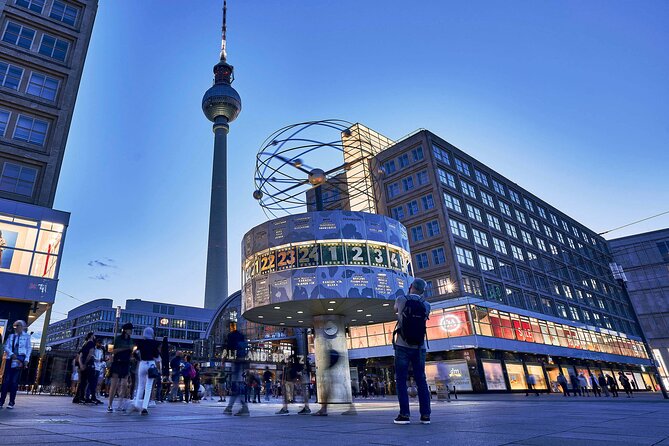
Then the walk finishes at Alexanderplatz, Berlin’s busy square with shops and cafes and the Weltzeituhr clock called out in the audio. It’s also a major transportation hub, which makes it a convenient place to connect onward after the walk ends back at the starting area.
This closing choice is smart because it doesn’t leave you stranded in a quiet residential corner. You’ll end somewhere with options: a meal, public transit, and the chance to keep exploring without switching your brain back into logistics mode.
Price and Timing: Is $6.61 Actually Worth It?
At $6.61, this tour is priced like an app-based add-on, not a premium guided experience. The value comes from four things you do get: the offline GPS map, the 24 audio recordings, the landmark illustrations, and 1-year access so you can repeat or refresh later.
The biggest timing reality is that 2 hours is an estimate. Because the experience is designed for pauses—coffee breaks, photos, and reading time—you may stretch it if you want to actually absorb the places, not just pass them. The good news is you’re not stuck with anyone else’s pace. You control the walking rhythm.
Where it might not fit: if you want a live guide to answer questions, correct misunderstandings, or adapt when you’re short on time. Also, if you know you struggle with app-based navigation, you might find the experience more stressful than worth it.
Should You Book This Berlin Smartphone Walking Tour?
You should book if you want:
- A budget-friendly way to hit major Berlin landmarks in one loop
- An English audio guide you can replay later
- A walk you can pause and restart when photos, coffee, or quiet time take longer than expected
You might skip it if you:
- Strongly prefer a human guide to tell the story
- Don’t like relying on phone navigation and bring-your-own headphones
- Want deep indoor museum time as part of the experience (museum entry isn’t included)
My take: this is a solid “first orientation” tour for Berlin. It’s especially good if you’re trying to get the big connections—reunification, Cold War division, and memory—without paying for a guided tour. Just treat the heavy stops as the center of gravity and plan around them, not through them.
FAQ
Do I need to bring headphones?
Yes. The tour notes that headphones are not included, so you’ll want to bring your own.
What devices is the audio guide available on?
The audio guide app works on both iPhone and Android.
Is the route guided by a person?
No. This is a self-guided tour where you download and activate the audio guide and follow the route using the app map and GPS.
Where does the tour start and end?
The tour starts at Pariser Platz, 10117 Berlin, Germany, and it ends back at the meeting point.
How long is the walk?
The duration is listed as about 2 hours, though it’s described as approximate since you control your pacing.
What’s included in the price?
Included features are the audio guide app access, an offline map with the route for GPS navigation, 24 audio recordings, illustrations to recognize landmarks, and 1 year of access in your chosen language. Transportation, a human guide, smartphone/headphones, food, drinks, and entrance fees/tickets are not included.
More of Berlin on Foot





More Tours in Berlin





More Tour Reviews in Berlin

Round out your days in Berlin

Walking Tours, compared.
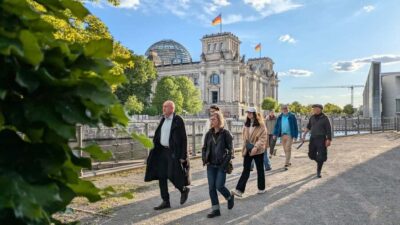 ★ 4.7Berlin City walk Government District and Places of DemocracyFrom $2948,467 reviews
 ★ 4.9Third Reich & Cold War Guided Walking TourFrom $238,378 reviews
 ★ 4.9Discover Berlin Walking TourFrom $235,998 reviews
 ★ 5.0Berlin’s Best: 2 Hour Walking Tour Third Reich and the Cold WarFrom $245,486 reviews
 ★ 4.8Hidden Backyards Guided Walking TourFrom $235,360 reviews
 ★ 5.0Third Reich Berlin: Hitler and WWII Walking TourFrom $243,301 reviews
 ★ 4.9Third Reich, Hitler, and WWII Walking TourFrom $191,757 reviews
 ★ 4.6Alternative Berlin Walking TourFrom $291,204 reviews
Browse the lists this tour appears in