
REVIEW · BERLIN WALL & COLD WAR
Cold War and Berlin Wall Tour in Italian
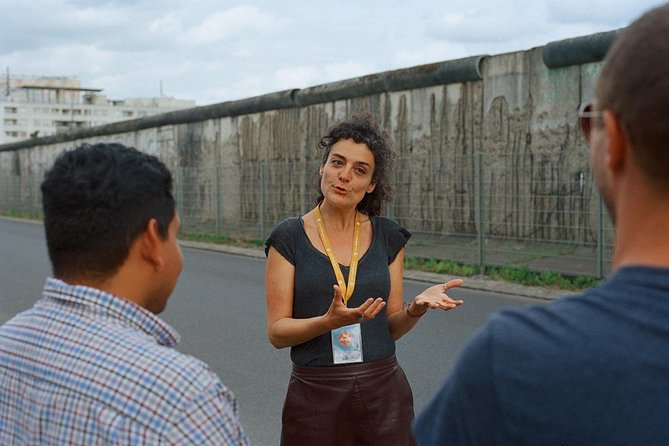
The Wall’s story starts at street level. This tour strings together key Cold War stops in one logical walk, including the Memorial of the Berlin Wall and the East Side Gallery, so you’re not bouncing around the city. I like that the guide keeps things clear in Italian and helps you connect the dots between buildings, politics, and what daily life felt like. One thing to plan for: it’s a set-length city walk, and transportation plus food are not included.
I also like the practical flow. You get a timed route with quick orientation stops and then longer moments where the story really matters. With a maximum of 25 people, it feels like a guided stroll rather than a big crowd shuffle, and the mobile ticket keeps things simple.
If you speak (or understand) Italian only, this is especially handy. One guide named Antonella stands out in the feedback for making the events of 1989 feel personal, not like a history lecture.
In This Review
- Key things I’d underline before you go
- Cold War landmarks, paced for real sightseeing (not just photo stops)
- Potsdamer Platz start: find the blue bicycle and get your bearings
- Berlin-Nordbahnhof: why ghost stations still matter
- Memorial of the Berlin Wall: victims, construction, and escape systems
- Alexanderplatz: GDR architecture and the moments leading to 1989
- Berlin TV Tower (outside): an icon you can interpret
- Karl-Marx-Allee: Stalinist-era beginnings of the GDR
- East Side Gallery: the Wall as a canvas of freedom
- Price and value: what you pay for (and what you don’t)
- Who should book this Cold War and Wall tour in Italian?
- Should you book it? My straight take
- FAQ
- What language is the guide for this Cold War and Berlin Wall tour?
- How long is the tour?
- Where does the tour start and where does it end?
- How do I find the guide at the meeting point?
- Is the ticket mobile?
- Are there admissions included for the stops?
- What’s the group size limit?
- Is transportation and hotel pickup included?
- Can I cancel for a full refund?
Key things I’d underline before you go
- A focused 3.5-hour route that hits multiple Cold War landmarks without you doing the planning
- Berlin-Nordbahnhof and ghost stations explained right where the story happened
- The Wall memorial’s human scale, including victims and escape attempts
- Alexanderplatz and GDR architecture, plus how public events fed into the fall of the Wall
- Karl-Marx-Allee’s Stalinist-era boulevard look and what it signals about the GDR
- East Side Gallery murals, where the Wall becomes a message you can read on foot
More of the Wall and the divided city
- Berlin’s Best: 2 Hour Walking Tour Third Reich and the Cold War★ 5.0 · 5,486 reviews
- Skip-the-Line: Berlin Wall Museum at Checkpoint Charlie★ 4.1 · 2,041 reviews
- Berlin: East Side Gallery Spree Cruise in a Solar Catamaran★ 4.1 · 1,086 reviews
- Cold War, Berlin Wall, Spies and the East Side Gallery★ 5.0 · 1,024 reviews
Cold War landmarks, paced for real sightseeing (not just photo stops)
This tour is built for people who want meaning, not a scavenger hunt. Over about 3 hours 30 minutes, you cover a chain of locations that explain Berlin’s Cold War in the same order that the city itself feels it. That order matters. When you’re walking, the connections land faster: architecture leads to ideology, ideology leads to control, and control leads to desperate attempts to escape.
At $27.87 per person, the value comes from the guide and the time you save. You’re paying for an Italian-speaking interpreter of place, not for transport or admissions. The stops include free entry at each site listed, so your main cost is the experience itself—one structured walk with commentary.
Group size also affects value. With a maximum of 25 travelers, you’re more likely to hear the guide clearly and ask questions if anything doesn’t click. It’s still a walking tour, so you’re moving, but it doesn’t feel like you’re just being herded.
Potsdamer Platz start: find the blue bicycle and get your bearings
The meeting point is straightforward once you know what to look for. You’ll meet at Potsdamer Platz 10 (near the S/U-Bahn Potsdamer Platz). Look for a blue bicycle with the Vive Berlin Tours logo—this is how you spot the group quickly.
Starting at 10:00 am, the timing works well if you want history early and then still have the rest of the day to explore. The tour ends at the East Side Gallery area (Berlin, East Side Gallery, 10243), and the guide will help you figure out which public transport to take next.
Practical tip: since this is a mobile-ticket experience, make sure your phone battery is healthy. You’re not hunting for paper tickets while you’re also trying to match a logo and a bicycle in a busy station zone.
Berlin-Nordbahnhof: why ghost stations still matter
One of the most interesting early stops is Berlin-Nordbahnhof, where your guide talks about the history of ghost stations. Even if you’ve seen photos of sealed-off platforms before, it hits differently when you’re standing in a functioning transit area and hearing how the space was used and abandoned under Cold War rules.
Why this works on a guided walk: you don’t just hear that something was closed. You get the “why” behind it—how borders and surveillance shaped movement, and how infrastructure itself became part of control. This kind of explanation is exactly what turns random buildings into a story you can follow on foot.
The time here is short—around 10 minutes—so treat it like orientation. You’re setting up your understanding for the bigger, more emotional stops that come next.
Memorial of the Berlin Wall: victims, construction, and escape systems
The tour’s centerpiece is the Memorial of the Berlin Wall, where you’ll spend about 50 minutes. This stop is the one that changes your pace. The guide focuses on how it was possible to build the Wall, and it doesn’t shy away from the tragic stories of the victims. You’ll also learn about the systems used to escape, which makes the history feel less abstract and more urgent.
What I like about this approach is that it mixes three layers:
1) how the Wall physically worked,
2) who suffered, and
3) what people tried to do anyway.
That combination helps you understand the scale of the situation without turning it into a “look at the monument” moment. It’s still a memorial space, so you’ll want to act like it—quiet attention beats loud sightseeing.
If you’re the type who enjoys reading plaques, bring that habit here. The guide commentary is strong, but the memorial space also invites you to slow down and absorb details at your own speed.



Alexanderplatz: GDR architecture and the moments leading to 1989
Next you’re at Alexanderplatz, a location that instantly signals that this wasn’t just political theater. The guide explains the German Democratic Republic (GDR) and points out typical architecture, the kind of built environment that tells you what a state wants people to notice.
You’ll also spend about 15 minutes here, which means the goal isn’t “see everything.” It’s more like: understand the setting, then understand the turning point. Your guide connects Alexanderplatz to a major popular manifestation that helped lead to the fall of the Wall.
This is a good stop for people who think history is only about dates. It shows you how public spaces and public pressure matter. On foot, Alexanderplatz also helps you feel how wide the city can look compared to the Wall sites—two Berlin realities, side by side.
Berlin TV Tower (outside): an icon you can interpret
From Alexanderplatz, you’ll get a short break at the Berlin TV Tower. The plan is exterior only, about 10 minutes. The guide explains why this structure was so impressive in the GDR era and notes that it’s still the tallest building in Berlin.
Even if you don’t go inside, the “outside only” piece is smart. A quick orientation from a guided standpoint is often better than trying to cram in an extra ticketed attraction when your time is already tight.
Think of this stop like a visual anchor. When you later look at other Stalinist-era or state-built structures in Berlin, you’ll have a reference point for what the GDR wanted to symbolize.
Karl-Marx-Allee: Stalinist-era beginnings of the GDR
At Karl-Marx-Allee, you’ll walk around Stalinist-era boulevard buildings and learn about the early beginnings of the GDR. You’ll spend around 20 minutes here, which is enough time for the guide to explain how the architecture and the political story fit together.
This is one of those stops where your attention will naturally shift between street-level details and the bigger picture. The guide helps you read those buildings as more than decoration. They’re part of an era that tried to shape how people perceived power, order, and the future.
If you like architecture, this segment will feel rewarding. If you’re not an architecture person, don’t worry—the point isn’t to become an expert. It’s to understand how a state uses public space to influence daily life.
East Side Gallery: the Wall as a canvas of freedom
The final major stop is the East Side Gallery, where you’ll spend about 20 minutes. This is the longest section of the Berlin Wall and the most famous because of its murals—art that became a symbol of freedom.
Here’s what makes the East Side Gallery different from the memorial: it’s still the Wall, but it has been transformed into public expression. That shift is the story in miniature. The guide helps you connect the murals to what the Wall meant before, and what it came to symbolize after.
Practical photo advice: plan on taking pictures, but don’t spend all your time behind your camera. You’ll get more out of the stop if you actually look at the murals and let the commentary guide your eye.
The tour ends in the East Side Gallery area, and your guide can point you to the right public transport to keep your day moving.
Price and value: what you pay for (and what you don’t)
The price—$27.87 per person—is best understood as paying for guided meaning. You get:
- an Italian-speaking guide
- a structured walk with time on each major Cold War site
- free admission at the listed stops
You do not get:
- transportation to and from attractions
- hotel pickup and drop-off
- food and drinks
That last part matters in Berlin. This isn’t a “grab a snack whenever” tour. It’s a concentrated morning or early-day history route. I’d plan a simple snack for yourself (or eat before you go) so you’re not thinking about food during the memorial stop.
Also, because it’s a guided city walk, your comfort depends on your shoes. If you have knee or mobility issues, this might feel like a lot of “moving between points” in a short period. The guide can keep the story flowing, but it’s still outdoors and you are walking.
Who should book this Cold War and Wall tour in Italian?
I’d say book it if you want a Berlin Wall itinerary that makes sense, with interpretation that saves you from piecing everything together yourself. It’s also a strong fit if:
- you prefer history explained while you walk
- you want to cover multiple key sites in one session
- you want the story delivered in Italian, with a guide you can listen to directly
It’s a less perfect match if you want long, independent time inside museums, or if you hate walking between stops with timed segments. This tour is about the route and the commentary, not a slow crawl through every possible archive.
Should you book it? My straight take
Yes, I think you should book this tour if your goal is to understand Berlin’s Cold War story without losing hours to planning. The itinerary is built around the sites that help you read the city: the Wall memorial for the core truth, Alexanderplatz and Karl-Marx-Allee for how power was expressed in architecture, and the East Side Gallery for the message left behind.
Before you commit, check two things: whether you’re comfortable with a 3.5-hour walking format, and whether you can handle providing your own transport and snacks. If those are fine, this is a smart-value way to turn Berlin Wall landmarks from “I’ve seen the photos” into a story that actually clicks.
FAQ
What language is the guide for this Cold War and Berlin Wall tour?
The guide provides commentary in Italian.
How long is the tour?
The tour lasts about 3 hours 30 minutes.
Where does the tour start and where does it end?
It starts at Potsdamer Platz 10, 10785 Berlin (near S/U-Bahn Potsdamer Platz) and ends at the East Side Gallery area, 10243 Berlin.
How do I find the guide at the meeting point?
Look for a blue bicycle by Vive Berlin Tours, along with the tour’s logo flag.
Is the ticket mobile?
Yes, this is a mobile ticket experience.
Are there admissions included for the stops?
The stops listed include free admission tickets.
What’s the group size limit?
The tour has a maximum of 25 travelers.
Is transportation and hotel pickup included?
No. Transportation to and from attractions and hotel pickup/drop-off are not included.
Can I cancel for a full refund?
Yes. You can cancel up to 24 hours in advance for a full refund. Canceling less than 24 hours before start time is not refunded.
More Tours in Berlin


More Tour Reviews in Berlin
The Wall and the Cold-War City

Round out your days in Berlin

Berlin Wall & Cold War, compared.
 ★ 4.9Third Reich & Cold War Guided Walking TourFrom $238,378 reviews
 ★ 5.0Berlin’s Best: 2 Hour Walking Tour Third Reich and the Cold WarFrom $245,486 reviews
 ★ 4.1Skip-the-Line: Berlin Wall Museum at Checkpoint CharlieFrom $212,041 reviews
 ★ 4.1East Side Gallery Spree Cruise in a Solar CatamaranFrom $281,086 reviews
 ★ 5.0Cold War, Berlin Wall, Spies and the East Side GalleryFrom $181,024 reviews
 ★ 4.8Wall Tour – Fates, Love Stories, and HeroesFrom $282585 reviews
 ★ 4.5THE WALL: asisi Panorama Berlin TicketFrom $16580 reviews
 ★ 4.8The Wall and Third Reich Guided Bike TourFrom $41578 reviews
Browse the lists this tour appears in