
REVIEW · BERLIN HIGHLIGHTS & HIDDEN GEMS
Explore Berlin History and Highlights Sightseeing Walking Tour
Berlin history is stacked on top of itself. This walk strings the city’s biggest turning points into one clear route. You’ll cover major landmarks like Brandenburg Gate and the Reichstag, then keep moving through Nazi-era sites, Cold War checkpoints, and back toward the grand civic center around Museum Island.
What I like most is the small-group setup (15 max), which keeps the pace human and the questions welcome. Another big win: the tour hits the big names with expert guided commentary—so you’re not just reading plaques and guessing what matters.
One thing to consider: this is still a walking tour. If your stamina is limited, the time on your feet and the number of stops can be a lot.
In This Review
- Key highlights I’d plan around
- A 3.5-hour route that connects Berlin’s eras
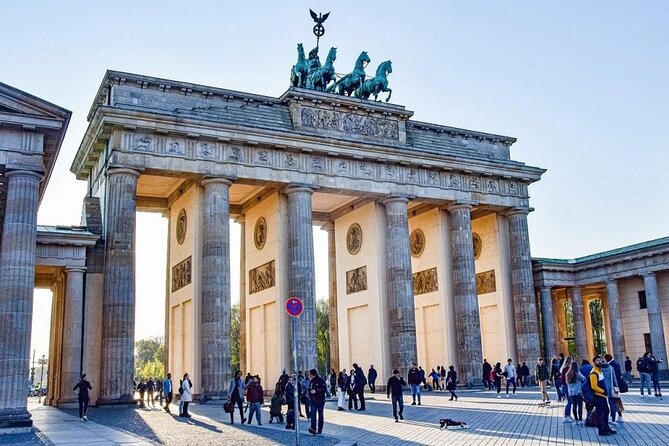
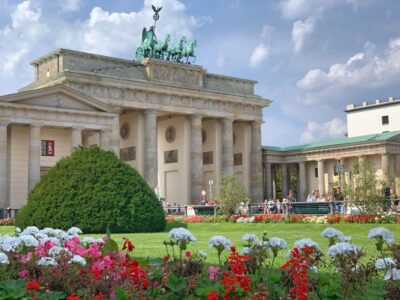
- Brandenburg Gate: the postcard, plus the stories behind it
- Reichstag Building: power, catastrophe, and Cold War stakes
- Holocaust Memorial: a place where the details matter
- Fuhrerbunker: where history turns into a grim shadow
- Bundesministerium der Finanzen: from Nazi HQ to Cold War history
- Topography of Terror: the Nazi machine meets the memorial effort
- Checkpoint Charlie: Cold War symbolism you can still feel
- Gendarmenmarkt and Bebelplatz: symmetry, then the warning of 1933
- Unter den Linden and Museum Island: finish in the grand civic core
- How the guides change the experience (and what to look for)
- Price and value: what $32.58 buys you
- Logistics that matter on a walking history tour
- Should you book this Berlin History and Highlights walking tour?
- FAQ
- How long is the Explore Berlin History and Highlights Sightseeing Walking Tour?
- Where does the tour start and what time?
- Where does the tour end?
- What language is the tour offered in?
- How big is the group?
- Is this a walking tour?
- Are admission tickets included for the sites on the route?
- Is it flexible to cancel if plans change?
Key highlights I’d plan around
- 15-person maximum group keeps it interactive and easier to hear at each stop
- Start at Brandenburger Tor at 10:00am and finish on Museum Island for an easy next step
- All the stops focus on turning points, from imperial Berlin to WWII to the Cold War
- Free admission listed for each stop, so you can spend your money on Berlin, not tickets
- Guides like Aurel, Rhys, Cairan, Eugen, Al, Steve, Paul, and Aaron bring stories in a way that sticks, including extra context and Q&A
The big Berlin sights, and a few quieter corners
- Berlin: Discover Berlin Walking Tour★ 4.9 · 5,998 reviews
- Berlin: Hidden Backyards Guided Walking Tour★ 4.8 · 5,360 reviews
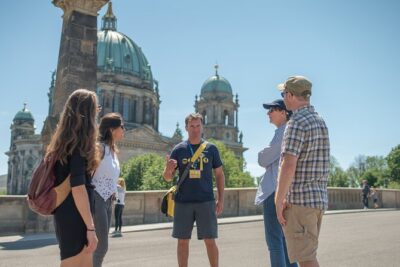
- Explore Berlin: See All The Iconic Sights & Some Hidden Gems★ 5.0 · 4,429 reviews
- Berlin: Sights and Highlights Bike Tour with a Local Guide★ 4.8 · 2,698 reviews
A 3.5-hour route that connects Berlin’s eras

This tour is built for people who want a fast, coherent picture of Berlin without bouncing between random spots. The timing works out to about 3 hours 30 minutes and it’s structured as a sequence of short stops—roughly 15 to 20 minutes each—so you get context without losing the thread.
You’ll start at Wurst 🙂 am Brandenburger Tor on Ebertstraße corner Scheidemannstraße (10117). The official start time is 10:00am, and the tour ends on Museum Island. That end point is handy: after the walk, you’re already in the area where you can keep exploring on your own, whether you want to visit one of the museums or simply wander.
The practical tip: wear good walking shoes. Even on days when Berlin feels walkable, this route still asks for steady effort—standing, reading, and moving on. One traveler experience flagged that their partner couldn’t manage the distance, so if mobility is a question, think carefully before booking.
Brandenburg Gate: the postcard, plus the stories behind it
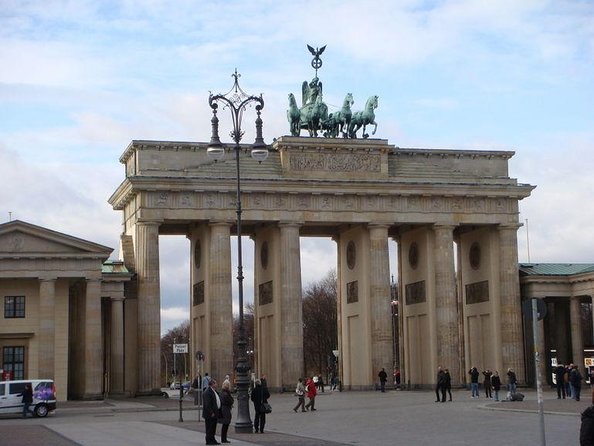
You begin at the obvious star: the Brandenburg Gate. It’s one of the world’s most recognized monuments, but the point of the stop isn’t the photo alone. The guide focuses on what the gate has meant over time and why it keeps returning as a symbol during Berlin’s biggest historical shifts.
Why this stop matters: the gate is a shortcut into Berlin’s political symbolism. You can look at it and feel the drama, but the commentary helps you understand the why. It also sets the tone for the whole walk—Berlin isn’t one story. It’s a stack of competing narratives.
Photo reality check: if you care about crowds, go earlier in the day than 10:00am or later in the day for calmer photos. (This comes up because the gate is busy, and the tour timing usually keeps you in the middle of that.)
Reichstag Building: power, catastrophe, and Cold War stakes
Next up is the Reichstag Building, Berlin’s political showpiece. The stop is timed for a quick but meaningful context lesson: the building’s role during Germany’s imperial period, the infamous fire that followed shortly after Hitler became chancellor, and why it became such a target when the Soviets advanced and took the city at the end of WWII.
What you’ll get here: the guide helps connect the dots between architecture and history. It’s not just what happened, but where the building sat in the chessboard—who wanted control of it, and why.
A small practical note: this stop is short. Don’t expect a slow, museum-level visit. The payoff is the framework you carry to the rest of the tour.
Holocaust Memorial: a place where the details matter
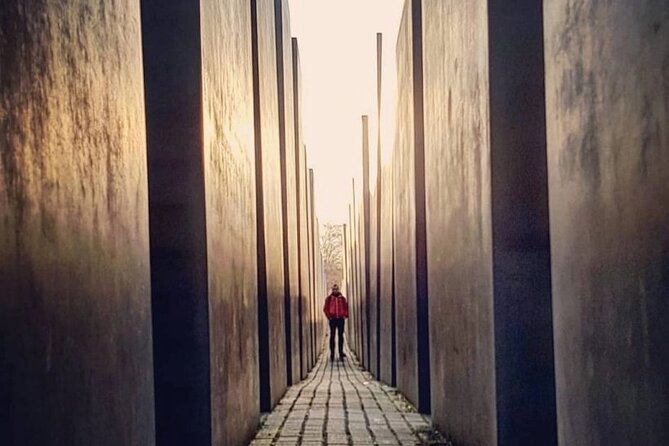
Then you step to the Memorial to the Murdered Jews of Europe. This stop focuses on two things: what the memorial is, and how the construction process relates to the crimes it commemorates.
This is one of those stops where the guide’s tone matters. You’re walking through a carefully designed space, and the commentary helps you understand why the memorial needed to be this way—why it wasn’t just about a monument, but about confronting the mechanism of horror that made the crimes possible.
If you’re the kind of visitor who likes to linger, you may feel a bit rushed. The listed time is around 15 minutes, so plan to do your own extra walk afterward if you want more quiet time.
More of Berlin on foot


Fuhrerbunker: where history turns into a grim shadow
Next is the Fuhrerbunker stop—described in a blunt, memorable way as a former bunker site. The context: the location connects to where Hitler ended his reign, and the bunker sat within what were once the gardens connected to the New Reich’s Chancellery.
This stop can feel surreal, because you’re in an urban environment but talking about a hidden, high-stakes location. The guide’s commentary ties the site to the broader collapse of the Nazi regime and gives you a sense of the physical geography behind the timeline you’ve heard in textbooks.
It’s short, and it’s intense. If you’re sensitive to WWII themes, just know the tour doesn’t shy away from direct historical references.
Bundesministerium der Finanzen: from Nazi HQ to Cold War history
The tour moves to the Bundesministerium der Finanzen, the finance ministry building. The story changes layers right in front of you: it was formerly the Luftwaffe’s headquarters, and after the war it gained major Cold War significance.
This is a great stop for people who like to understand how cities repurpose power. Berlin is full of buildings that outlived the regimes that built them. Here, you’re seeing the afterlife of function—military use, then later political use—plus how Cold War tensions shaped the surrounding story.
Time on this stop is listed at about 15 minutes, so it’s best treated as a focused chapter rather than a full read-through.
Topography of Terror: the Nazi machine meets the memorial effort
Then comes Topography of Terror, at the site of former headquarters of the SS, Gestapo, and SD. The commentary covers both the Nazi-era role of the site and how post-war Berlin worked to memorialize it.
This stop has one big value: it ties the abstract horror of Nazi institutions to actual places in the city. You’ll likely leave with a stronger grasp of how those organizations operated—and how the city later decided what should be remembered and shown.
If you want more time here, you’ll probably want to return on your own later. On a walking tour with many stops, this is one of those places where your interest may run ahead of the schedule.
Checkpoint Charlie: Cold War symbolism you can still feel
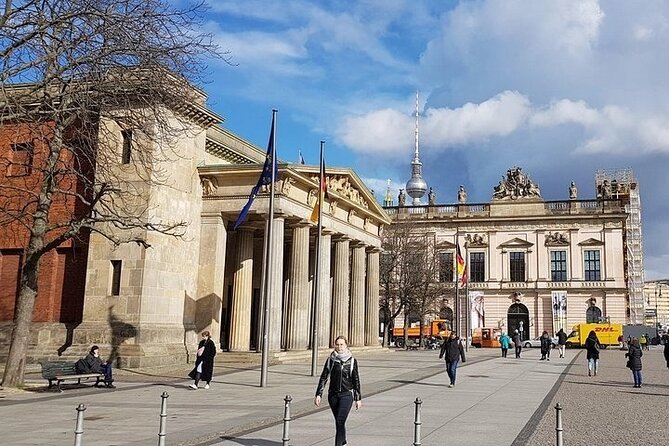
At Checkpoint Charlie, you hit one of the most iconic Cold War locations in Berlin. The tour keeps the focus on what made this checkpoint so meaningful in the daily reality of divided Berlin—and why it became a global symbol.
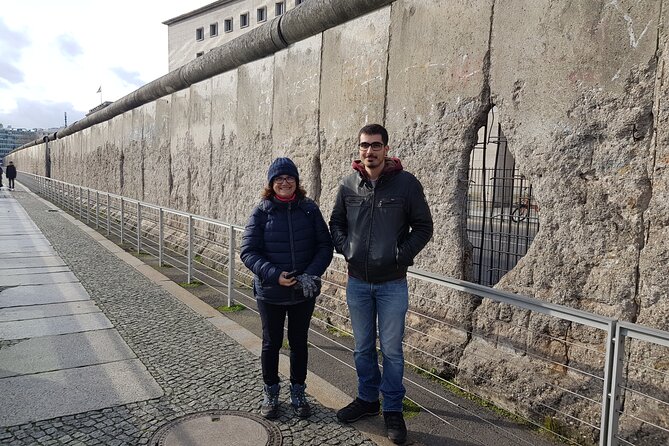
This stop tends to land well because it’s visual. You don’t need a lecture to notice the symbolic weight. The guide’s job is to make the symbolism specific: how checkpoints worked, why the area mattered, and what it represented for East and West.
You’ll have about 20 minutes here, which is enough to build context before you move on.
Gendarmenmarkt and Bebelplatz: symmetry, then the warning of 1933
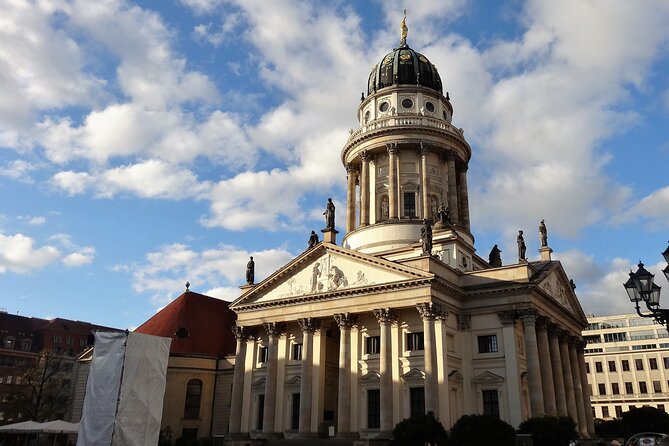
The route then reaches Gendarmenmarkt, known for its dramatic 18th- and 19th-century architecture. This stop is more than beauty; the guide ties the square’s foundation and development to how Berlin grew into its grand civic identity.
Short timing again (about 15 minutes), but it works. You get the “why this looks like this” story without losing momentum.
After that comes Bebelplatz, framed by the grandeur of Frederick the Great’s Prussian capital. The stop includes the story of how the buildings were constructed and also the darker layer: the 1933 Nazi book burning memorial connected to the square’s past.
That contrast is the point. Berlin’s center can be elegant and deadly in the same breath, depending on which chapter you’re standing in.
Unter den Linden and Museum Island: finish in the grand civic core
Next, you stroll along Unter den Linden and you get a bundle of “Berlin’s brain” stops in one leg. The guide points out history connected to Humboldt University and the German History Museum area, plus the Memorial to Victims of War and Tyranny.
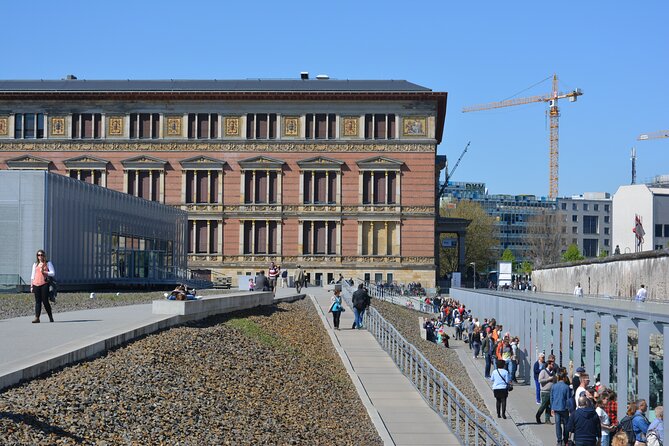
Then the tour crosses onto Museum Island. The finishing zone pulls together a lot: medieval Berlin context, the site of the Stadt Schloss from the 15th century, the Berlin Cathedral, and the fact that the area is now home to five world-class museums.
If you’re trying to decide what to do next, this is a strong ending. You’ve walked into one of the best places to branch off—either to pick a museum based on your interests or to keep strolling for architecture and views.
The tour also looks out toward Alexanderplatz from the eastern side of Museum Island, tying the finish back to the center of post-war East Berlin.
How the guides change the experience (and what to look for)
This kind of tour lives or dies on the guide. The best moments here come from how the stories are told and how the group is handled.
From what I’ve seen in guide styles, this tour can feel like a guided walk with a smart friend who knows the city’s timeline. You’ll hear enthusiasm without chaos. Guides like Aurel, Eugen, Rhys, Cairan, Steve, Paul, Al, and Aaron show up with different delivery styles—some lean more into architectural meaning, some into chronological clarity, and some use visuals (like showing material on an iPad). One guide even used simple exercises that help make the past feel more human, not just historical facts.
Here’s how you can make it work for you:
- Ask questions early. You’ll likely get deeper answers once the guide knows what you care about.
- Watch for the guide’s links between stops. The tour is built to connect, not just list.
Price and value: what $32.58 buys you
At $32.58 per person, this tour is good value because it isn’t just “see landmarks.” You’re paying for a coherent route and interpretation across multiple major periods of Berlin’s history in 3.5 hours.
It’s also a practical spend. The stops listed all show admission ticket free, which matters because Berlin can get expensive when you stack museum tickets, attractions, and transit costs. You’re left with the guide’s time and storytelling as the core cost.
The only real tradeoff is time. Since each stop is relatively short, you aren’t buying deep time at each place. If you want to spend hours at one memorial or one museum, use this tour as your framework, then pick your follow-up.
Logistics that matter on a walking history tour
A few details you should plan around:
- Language: English
- Ticket: mobile ticket
- Group size: max 15 travelers
- Transportation: near public transportation
- Timing: starts 10:00am and finishes in the Museum Island area
- Suitability: most people can participate, but it’s still a walking route
One more practical tip: bring a little snack or at least plan water. A review mentioned bringing snacks because there’s a lot to process. Even if you don’t snack, plan for a mentally heavy morning.
Should you book this Berlin History and Highlights walking tour?
Book it if you want:
- A clear Berlin overview that connects the imperial era, WWII, and the Cold War
- A guided route that helps you understand why these sites matter, not just where they are
- A small-group experience that’s easier to follow than big bus tours
Skip or reconsider if:
- You have limited mobility or stamina. The route involves real walking and multiple short stops where you’ll be standing and moving regularly.
- You want a slow, long-form visit at a single site. This tour is structured for breadth, not hours at one memorial or museum.
If you’re arriving in Berlin and want to orient fast, this is one of the more efficient ways to do it—especially because you finish at Museum Island, where your next choice is simple.
FAQ
How long is the Explore Berlin History and Highlights Sightseeing Walking Tour?
It runs for about 3 hours 30 minutes.
Where does the tour start and what time?
The meeting point is Wurst 🙂 am Brandenburger Tor (Ebertstraße corner Scheidemannstraße, 10117 Berlin). The start time is 10:00am.
Where does the tour end?
The tour ends on Museum Island (listed as 10 Berlin, Germany).
What language is the tour offered in?
The tour is offered in English.
How big is the group?
The tour has a maximum of 15 travelers.
Is this a walking tour?
Yes, it’s a walking tour.
Are admission tickets included for the sites on the route?
The itinerary lists free admission for the stops mentioned.
Is it flexible to cancel if plans change?
Free cancellation is available up to 24 hours before the experience’s start time.
More Tours in Berlin





More Tour Reviews in Berlin

Berlin's Icons and Its Quiet Corners


Round out your days in Berlin

Berlin Highlights & Hidden Gems, compared.
 ★ 4.9Discover Berlin Walking TourFrom $235,998 reviews
 ★ 4.8Hidden Backyards Guided Walking TourFrom $235,360 reviews
 ★ 5.0Explore Berlin: See All The Iconic Sights & Some Hidden GemsFrom $244,429 reviews
 ★ 4.8Sights and Highlights Bike Tour with a Local GuideFrom $412,698 reviews
★ 4.9Explore Berlin: See All The Iconic Sights & Some Hidden GemsFrom $182,018 reviews
★ 4.8Sights and Highlights Bike Tour with a Local GuideFrom $412,698 reviews
★ 4.9Explore Berlin: See All The Iconic Sights & Some Hidden GemsFrom $182,018 reviews
 ★ 5.0Berlin Highlights 3-Hour Bike TourFrom $42948 reviews
★ 4.9Berlin Highlights: 3-Hour Bike TourFrom $37809 reviews
★ 5.0Berlin Highlights 3-Hour Bike TourFrom $42948 reviews
★ 4.9Berlin Highlights: 3-Hour Bike TourFrom $37809 reviews
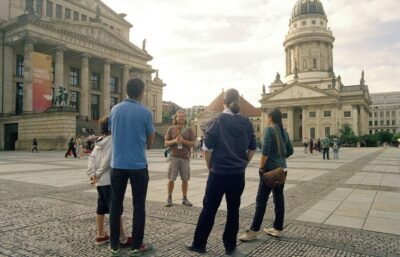 ★ 4.9Berlin Historical Highlights Walking TourFrom $389657 reviews
Browse the lists this tour appears in