
REVIEW · HISTORICAL TOURS
Historic center of Berlin – Tour in Italian
Berlin history, on a human scale. This 3.5-hour small-group walking tour in Italian takes you through the places that shaped Germany’s darkest years and the hard road to reunification. You’ll move from Potsdamer Platz toward Museum Island, with an active guide pointing out what to notice and why it matters.
I like how the route is built around real landmarks you can actually see—Berlin Wall remnants, Checkpoint Charlie, the Brandenburg Gate, and the Holocaust Memorial. I also like that the guide doesn’t just list dates; they tie the buildings to the stories, from Gestapo/SS headquarters to the Nazi book burnings at Bebelplatz. The reviews also mention guides such as Paolo, Giulia, Fabio, Chiara, Elena, and Daniele, praised for being prepared, attentive, and good at answering questions.
One consideration: this is a lot of emotionally heavy material. You’ll be visiting memorials and sites tied to Nazi and Cold War violence, so it helps if you’re ready for reflective stops and a walking pace that keeps moving.
In This Review
- Key highlights at a glance
- A 3.5-Hour Italian Walk Through Berlin’s Big Turning Points
- Price and what $27.91 buys you (and what it doesn’t)
- Where you start and how the tour ends at Pergamon Museum
- Stop-by-stop: Potsdamer Platz to Topography of Terror
- Stop 2: Potsdamer Platz
- Stop 3: Sony Center
- Stop 4: Topography of Terror
- Checkpoint Charlie, Goering’s building, and the Fuhrerbunker site
- Stop 5: Checkpoint Charlie
- Stop 6: Aviation Ministry of Berlin
- Stop 7: Fuhrerbunker
- The Holocaust Memorial and the Reichstag exterior
- Stop 8: Holocaust Memorial (Monument to the Murdered Jews of Europe)
- Stop 9: Reichstag Building (outside only)
- Brandenburg Gate and Unter den Linden: symbolism and war wounds
- Stop 10: Brandenburg Gate
- Stop 11: Unter den Linden
- Bebelplatz, the book-burning memorial, and Humboldt University
- Stop 12: Bebelplatz
- Stop 13: Book Burning Memorial at Bebelplatz
- Stop 14: Humboldt University (Humboldt-Universität)
- Neue Wache and Berliner Dom: memorial art and a major church stop
- Stop 15: Neue Wache
- Stop 16: Berliner Dom
- Museum Island finish: UNESCO setting and a plan for Pergamon Museum
- What makes the guide experience stand out (and what to expect)
- Who should book this Italian center-city history walk?
- Should you book this Historic Center of Berlin Tour in Italian?
- FAQ
- How long is the tour?
- Is the guide speaking Italian?
- How much does the tour cost?
- Where does the tour start and where does it end?
- Is this tour a small group?
- Are museum or attraction tickets included?
- What should I do if I need to cancel?
Key highlights at a glance
- Italian-speaking guide with stop-by-stop explanations that connect landmarks to the bigger story
- Small group size (max 28) for a more focused, less chaotic walk
- Major Cold War + Nazi-era sites, including Checkpoint Charlie and the Holocaust Memorial
- Berlin Wall visibility via an original segment viewpoint at Topography of Terror
- Museum Island finish with practical direction for visiting Pergamon Museum next
More of Berlin's long history, guided
- Berlin: Natural History Museum Entrance Ticket★ 4.6 · 3,382 reviews
- Berlin: 3-Hour World Heritage Cruise to Potsdam★ 4.5 · 1,569 reviews
- Berlin: History of the Third Reich Guided Walking Tour★ 4.7 · 791 reviews
- Berlin: Berlin Charité Guided History Tour★ 4.4 · 660 reviews
A 3.5-Hour Italian Walk Through Berlin’s Big Turning Points
This tour is a focused center-city route that treats Berlin like a living timeline. Instead of bouncing randomly between attractions, you get a guided line through the city’s political shocks: Nazi dictatorship, Cold War division, and reunification-era symbolism.
The best part is how you’re not stuck inside a single museum. You’re outside, seeing scale, street layout, and the way newer architecture sits beside older scars. All weather means you’ll be walking in rain or shine, so pack accordingly and wear shoes that can handle lots of paved surfaces.
Price and what $27.91 buys you (and what it doesn’t)
At about $27.91 per person for a ~3.5-hour guided walk, the value is mostly in the guide time and the structure. This is not a “hop-on hop-off” service and not an all-day museum pass. You’re paying for a guided route through major historical sites while keeping the stops efficient.
Here’s what’s included: local taxes and a local guide. Tickets for the key stops are presented as admission free in the plan you follow, and you’ll use a mobile ticket. What’s not included is the usual stuff—food and drinks, plus transportation to and from attractions. Plan on grabbing a bite on your own before or after.
Also note: the group is capped at 28 people. That size is big enough to feel lively but small enough that you’re not trapped in a moving crowd with no chance to hear.
Where you start and how the tour ends at Pergamon Museum
The tour starts at Potsdamer Platz 10, 10785 Berlin, at the meeting point listed for Vive Berlin Tours. Look for the blue bicycle by Vive Berlin Tours; it’s the visual cue that helps you avoid wandering around the transit hub.
The tour finishes at Pergamon Museum, Bodestraße 1-3, 10178 Berlin. That ending point is smart. Museum Island can eat up your day fast, so ending here with direction helps you decide what to do next instead of guessing.
You’ll also get a small heads-up about visiting the Reichstag dome (how to book) and a more practical wrap-up about Pergamon Museum—mentioned as the famous place with major highlights like the Gate of Babylon and the Pergamon Altar. You’re not getting those entrances inside the walk, but you’re leaving with a game plan.
Stop-by-stop: Potsdamer Platz to Topography of Terror
This is where Berlin’s modern face meets its wartime damage.




Stop 2: Potsdamer Platz
You begin with Potsdamer Platz, one of Berlin’s best-known squares. What makes it a good opener is that it’s a clean starting platform for the story: the guide frames the “before and after” of the city so the rest of the route lands with context.
Practical tip: since it’s a transit-heavy area, expect foot traffic. The guide will keep the group oriented, so don’t drift. Stay close if you want to hear details.
Stop 3: Sony Center
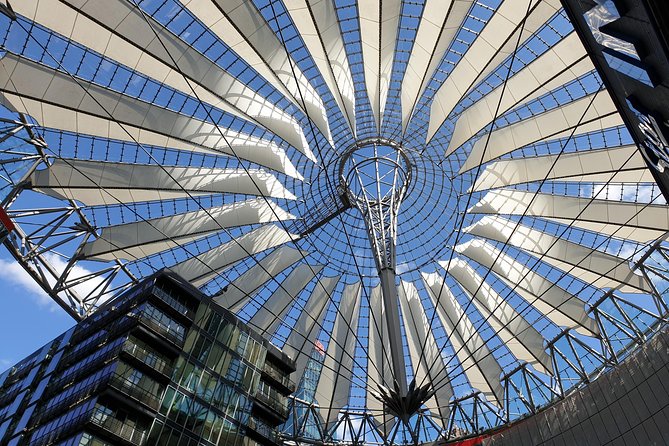
Right after that, the walk swings into contrast with the Sony Center. You’ll step into the building area and see how some remnants of the older square—destroyed in World War II—are preserved and integrated with newer design. It’s a good example of Berlin’s style: reconstruction without pretending nothing happened.
The catch: if you’re expecting a long indoor visit, don’t. This stop is short, so it’s more about noticing architecture choices than spending time in a gallery.
Stop 4: Topography of Terror
Then the tone shifts. At Topography of Terror, the guide connects the memorial space to what happened there: the headquarters of the Gestapo and SS. This stop matters because you’re not just looking at signage—you’re placing the story geographically, right where power operated.
From this area, you can also see broader historical context: buildings such as the former Nazi aviation ministry, Martin Gropius Bau museum, and especially an original segment of the Berlin Wall. That combination makes it one of the route’s most useful stops for understanding how the regime’s footprint overlaps with later Cold War memory.
Checkpoint Charlie, Goering’s building, and the Fuhrerbunker site
Now you move deeper into Cold War geometry and the machinery of the Nazi state.
Stop 5: Checkpoint Charlie
Checkpoint Charlie is often treated like a photo spot. Here, it becomes a teaching moment. The guide explains why it was so intense during the Cold War and how the Berlin Wall reshaped the city.
If you’re sensitive to crowds: this is a popular area. The tour timing is brief, so you’ll see the key points without turning it into a long stand-still.
Stop 6: Aviation Ministry of Berlin
This building is huge and imposing, and the story behind it is exactly why the stop works. The plan notes it was built by the Nazi dictatorship to house the Ministry of Aviation led by Goering. During the Cold War it served as part of the Communist “home of the ministries,” and today it’s used by the Federal Republic.
What I like about this stop is that it shows power recycling. Buildings stay, regimes change, and the same walls can mean very different things depending on who controls them.
Stop 7: Fuhrerbunker
Next is the Fuhrerbunker site, tied to the place where Hitler spent his last days. The guide helps you understand why the place matters and how it looks today—what remains, what’s gone, and why the location still carries weight.
Short stop, big emotion. If you want to read every interpretive sign, you’ll likely run out of time, so listen first, then circle back later if you’re curious.
The Holocaust Memorial and the Reichstag exterior
This section brings Germany’s responsibility into the center of your walking loop.
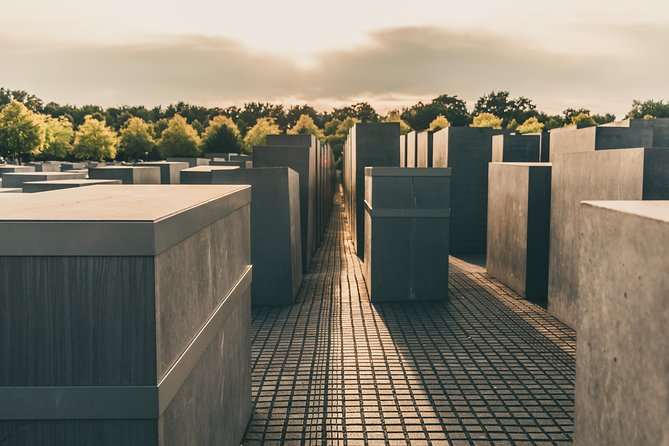
Stop 8: Holocaust Memorial (Monument to the Murdered Jews of Europe)
This is the stop that most clearly turns the tour from “history facts” into “memory.” You’ll be guided through stories tied to the memorial, described as a symbol in Berlin for the greatest crime committed by the German state in the time of Nazism.
Practical consideration: this area can feel physically and emotionally still. If you need a breather, step aside for a minute. The tour plan keeps moving, but you can pause your own pace inside the memorial space.
Stop 9: Reichstag Building (outside only)
The Reichstag is the seat of the German Parliament, and the tour visits it outside. The guide also explains how to book a visit to the dome.
So yes: you get the landmark. No: you’re not being deposited inside the building during this walk. If you want the interior views, plan a separate visit after the tour.
Brandenburg Gate and Unter den Linden: symbolism and war wounds
These stops are about meaning you can photograph, plus layers you might miss if you’re walking alone.
Stop 10: Brandenburg Gate
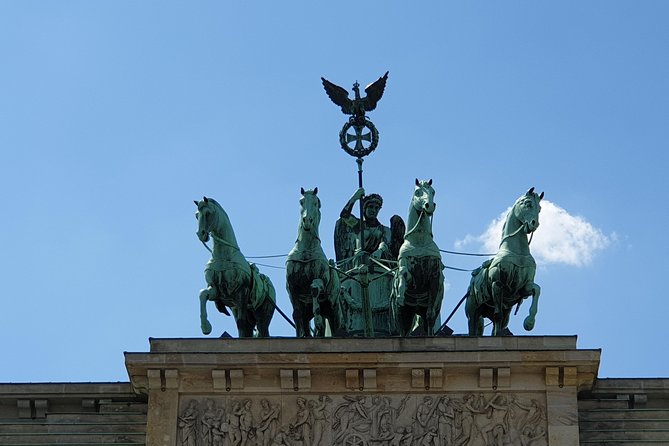
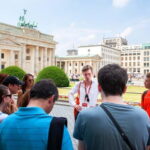
The guide tells the story of the Brandenburg Gate as you see it in front of you. You’ll hear how it shifted from a symbol of a king’s strength to a Cold War emblem and finally a symbol tied to German reunification.
It’s one of Berlin’s most photographed points for a reason: it works from multiple angles and it fits into the wider city story so cleanly.
Stop 11: Unter den Linden
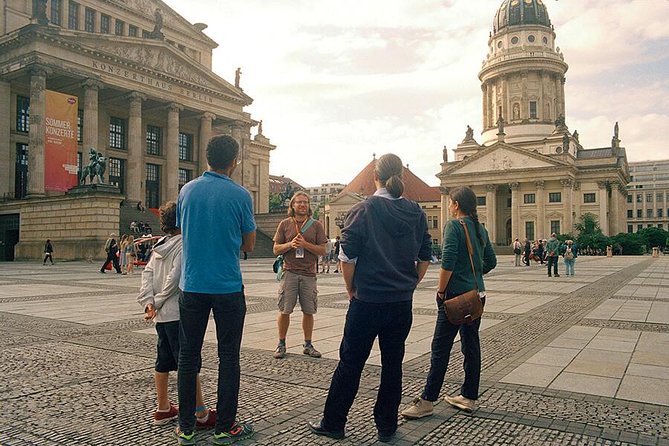
Unter den Linden is the long avenue that historically served as an access road to the emperor’s palace. The guide shows you how to recognize different construction periods and where war left visible wounds in the city fabric.
This is where your “city reading” skills get better. You start seeing buildings like clues, not just backdrops.
Bebelplatz, the book-burning memorial, and Humboldt University
Now Berlin’s story turns cultural: propaganda, education, and what happens when those systems are weaponized.
Stop 12: Bebelplatz
Bebelplatz is introduced as a square connected to the Nazi-era book burning, but also as a setting that includes major institutions: Humboldt University and the Catholic Cathedral. That mix helps you understand the contradiction: a society can look scholarly and orderly while destroying ideas that don’t match its ideology.
Stop 13: Book Burning Memorial at Bebelplatz
Right at the heart of the square, you’ll find the memorial that remembers the famous book burning. The guide’s narration makes the memorial’s purpose land in your head instead of staying as a clever object.
If you’re tempted to rush: slow down here. This is a “read and reflect” kind of stop, even if the group stays in motion.
Stop 14: Humboldt University (Humboldt-Universität)
Then the tour keeps the education theme going by focusing on Humboldt University and notable students. The value here is that it balances what was threatened with what Germany built through learning.
Short time, but useful if you want a foundation before you explore on your own.
Neue Wache and Berliner Dom: memorial art and a major church stop
This pair of sites adds two different kinds of emotional language.
Stop 15: Neue Wache
Neue Wache is described as a memorial rejecting war and its horrors, with a figure of a mother crying her son, a soldier who fell in battle. It’s a direct, human-scale anti-war message placed in a public space.
This stop is brief, but it’s a strong counterweight to the earlier political machinery stops. You feel the human cost.
Stop 16: Berliner Dom
Berliner Dom comes next. The tour frames it as an impressive church built on an imperial idea, with the plan describing it as an equivalent to St. Peter’s for the Lutheran religion. Even without entering, the building’s scale gives you something real to look at after the memorial intensity.
If churches aren’t your thing: you can still enjoy it as architecture and city landmark, but don’t expect a full guided inside visit here.
Museum Island finish: UNESCO setting and a plan for Pergamon Museum
The tour ends on Museum Island, a UNESCO World Heritage site. The guide finishes with directions for continuing your Berlin day in a way that matches your interests.
The finish point also ties into Pergamon Museum, which is singled out as Berlin’s famous museum with major treasures like the Gate of Babylon and the Pergamon Altar. You’ll get explanation on how to visit the museum and which tickets may be the most convenient.
This ending is practical. If you tried to do Pergamon “from scratch” after a long walk, you’d waste time figuring out logistics. You leave with a starting map in your head.
What makes the guide experience stand out (and what to expect)
This tour lives or dies by the guide’s storytelling, and the feedback you provided leans very positive on that. People name guides such as Paolo, Giulia, Fabio, Chiara, Elena, and Daniele, and the praise clusters around preparation, courtesy, attentiveness, and explanations that made the time move fast.
You can also expect the tour format to work like this: the guide checks the group, talks at each stop, and keeps you moving at a pace that fits short visits—5 to 15 minutes per location depending on the site.
One more note: the tour operates in all weather conditions. That means your experience depends on your clothing, not just your guide. Plan layers for Berlin’s temperature swings.
Who should book this Italian center-city history walk?
This is a great fit if you:
- want Italian-language context for major Berlin landmarks without hopping between many different tours
- like learning through the city streets rather than only inside museums
- appreciate a route that balances architecture, politics, and memorials
It may feel intense if you:
- prefer light, mostly entertainment-focused sightseeing
- need lots of time to read in silence at memorials
- want strictly “top attractions” without heavy historical content
Should you book this Historic Center of Berlin Tour in Italian?
If you want a well-structured way to understand Berlin’s modern identity—through the Wall, Cold War hotspots, Nazi-era memory sites, and reunification symbols—this is an easy yes. The price is reasonable for a guided 3.5-hour walk, and the ending at Pergamon/Museum Island helps you keep momentum instead of stalling after the tour.
I’d book it if you’re comfortable with walking and you’re ready for emotionally serious places. I’d pass or pair it with lighter plans if you’re traveling for a short weekend and don’t want your day shaped by memorial stops.
FAQ
How long is the tour?
The tour lasts about 3 hours 30 minutes.
Is the guide speaking Italian?
Yes. The tour is guided by an Italian-speaking guide.
How much does the tour cost?
The price is listed as $27.91 per person.
Where does the tour start and where does it end?
It starts at Potsdamer Platz 10, 10785 Berlin (meeting point at Vive Berlin Tours) and ends at Pergamon Museum, Bodestraße 1-3, 10178 Berlin.
Is this tour a small group?
Yes. The maximum group size is 28 travelers.
Are museum or attraction tickets included?
The plan shows admission as free for the stops included on the route. Food and drinks are not included.
What should I do if I need to cancel?
You can cancel for a full refund if you cancel at least 24 hours before the experience’s start time. If you cancel less than 24 hours before, the amount paid will not be refunded.
More Berlin History


More Tours in Berlin


More Tour Reviews in Berlin
Round out your days in Berlin
Historical Tours, compared.
 ★ 4.6Natural History Museum Entrance TicketFrom $123,382 reviews
 ★ 4.53-Hour World Heritage Cruise to PotsdamFrom $251,569 reviews
 ★ 4.7History of the Third Reich Guided Walking TourFrom $30791 reviews
 ★ 4.4Berlin Charité Guided History TourFrom $28660 reviews
 ★ 4.9Berlin Historical Highlights Walking TourFrom $389657 reviews
 ★ 5.0Berlin Private Complete History All Day Walking TourFrom $253474 reviews
 ★ 4.8Cold War & Berlin Wall History Guided Bike TourFrom $41422 reviews
 ★ 4.5Historic Boat Sightseeing City Center TourFrom $33415 reviews
Browse the lists this tour appears in