
REVIEW · HISTORICAL TOURS
Berlin: Berlin Charité Guided History Tour
Medicine in Berlin has a haunting heartbeat. I really liked the way the stories connect 300 years of medical change to real people like Robert Koch and Rudolf Virchow, and I enjoyed seeing the medical campus ideas brought to life through the tour’s building stops. One drawback: you won’t freely roam the hospital grounds, and you only enter select buildings.
For $28 and about 2 hours, this is a tight, human-scale tour that makes “life and death” feel like part of Berlin’s street-level reality, not just a museum topic. The guide leads in German, and they keep the route moving so you get the key highlights without spending half the day on logistics.
If you like science history with moral weight—progress, suffering, and the uncomfortable chapters too—this one is a good fit. Just know that some entrances are limited by hospital rules, so plan to see most of Charité from outside and focus your questions on what you’re allowed to experience.
In This Review
- Key highlights you’ll care about
- Charité as a story of plagues, breakthroughs, and hard choices
- Meeting at Charité Tower and why the route feels purposeful
- Outside views of Charité Bed House and campus reality checks
- Learning Berlin medical science through major names
- The uncomfortable chapter: doctors and the Nazi regime
- The medicine temple in a backyard: Berlin’s oldest teaching building
- Inside the Animal Anatomical Theatre (TAT): what to plan for
- Price and value: is $28 for 2 hours worth it?
- Who this tour suits best (and who should pick something else)
- Should you book the Berlin Charité Guided History Tour?
- FAQ
- Where is the meeting point for the tour?
- How long is the Berlin Charité Guided History Tour?
- How much does the tour cost?
- Is the tour guided by a live person?
- What language is the tour conducted in?
- Does the tour go inside the Charité Bed House?
- Are the Charité hospital grounds accessible for group tours?
- What is the medicine temple stop?
- Do you visit the Animal Anatomical Theatre (TAT)?
- Can the TAT opening hours change during your visit?
Key highlights you’ll care about

- 300 years of Berlin medicine explained through turning points, not dates
- Nobel-linked names like Koch, Virchow, Behring, and Sauerbruch
- A medicine temple: Berlin’s oldest surviving teaching building, visited inside
- Hospital reality on the streets: Charité landmarks from outside, campus areas not open for group tours
- Animal Anatomical Theatre (TAT) included, with hours that can shift
More guided walks through Berlin
- Berlin: Reichstag, Dome and Government District Guided Tour★ 4.7 · 18,288 reviews
- Berlin: Third Reich & Cold War Guided Walking Tour★ 4.9 · 8,378 reviews
- Berlin: 1-hr Boat Tour with Bilingual Live Guide (DE/EN)★ 4.7 · 5,653 reviews
- Berlin: Hidden Backyards Guided Walking Tour★ 4.8 · 5,360 reviews
Charité as a story of plagues, breakthroughs, and hard choices

What makes this tour hit is the framing. You’re not just looking at old buildings. You’re walking through a medical institution that started with an 18th-century plague house and grew into one of Europe’s most important university hospitals. That timeline matters because it explains why the Charité story keeps coming back to the same big themes: disease, public health, and how medical knowledge spreads.
I also like that the tour doesn’t pretend medicine is purely heroic. The guide covers the darker period when doctors collaborated with the Nazi regime, and it’s handled as a real part of the institution’s past—not a side note. If you care about ethics in science, you’ll probably find this section especially sobering.
And because the tour is short, the guide chooses moments that connect. You hear about famous Berlin scientists and Nobel Prize winners by name and by what they represent in the city’s medical development. That makes the “who” stick, so later when you see these names in books or exhibits, you’ll remember the real places tied to them.
Meeting at Charité Tower and why the route feels purposeful
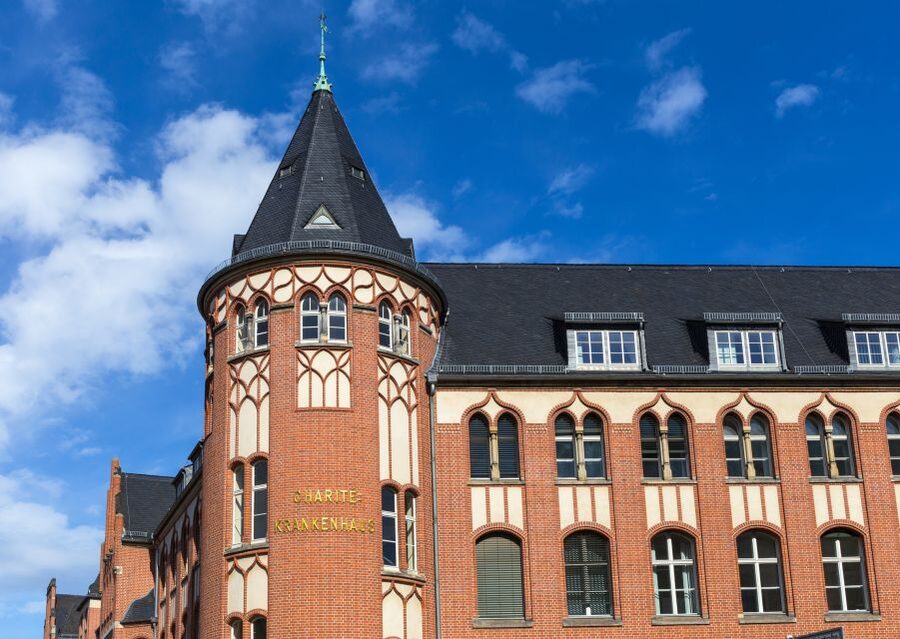
You start at the Charité Tower, at the crossroads of Schumannstraße / Charitéplatz / Charitéstraße. That’s a practical choice because it sets you up right where the medical complex is part of the urban fabric. You don’t begin in a random courtyard; you begin in a place where the scale of the institution is obvious.
From there, the tour moves along Luisenstraße and then across the university campus. This matters because it gives you a sense of how the Charité fits into Berlin’s layout, not just into medical textbooks. Walking these stretches also helps you “read” the area: you start to notice how teaching buildings, hospital buildings, and the surrounding streets all influence each other.
One detail I’d plan around: the tour starts on time. If you show up late, you’ll just miss the opening context, and that first part sets the tone for the rest.
Outside views of Charité Bed House and campus reality checks

A big part of the experience is learning how to look. You’ll view the Charité Bed House from the outside. The tour does not go inside that facility, and that’s intentional. Since it’s still a hospital facility, it has the protective and hygiene rules you’d expect. So instead of pretending you can tour operational spaces, the guide focuses your attention on what you can observe safely.
You’ll also see Charité from outside as you move across the campus area. Here’s the key practical point: the hospital grounds (Charité Campus Mitte) are not accessible for group tours. That means you should expect the walk to feel like a controlled route through public areas, with occasional entrances to specific historic buildings that are open to the tour.
For me, that limitation actually makes sense. You get the historical story without the tour turning into a maze of restricted areas. Still, it’s worth knowing upfront so you don’t feel like you’re paying for a visit that turns out to be mostly exterior sightseeing.
Learning Berlin medical science through major names
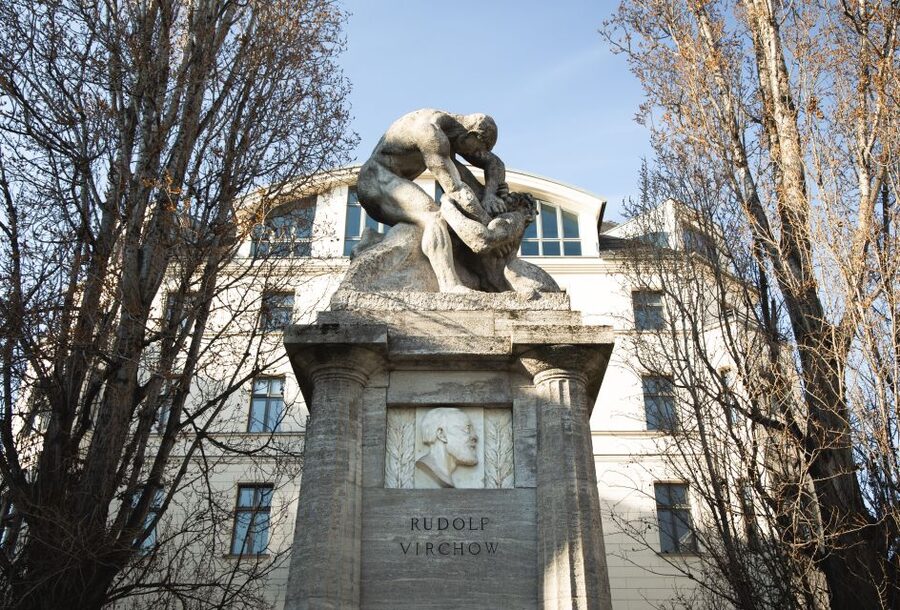
The tour brings up several major figures: Rudolf Virchow, Emil von Behring, Robert Koch, and Ferdinand Sauerbruch. Hearing these names in the context of Berlin’s institutional growth helps you understand why the city became a magnet for medical breakthroughs.
What I like about the way the guide connects these scientists to the institution is that it turns them into more than a list. Even when you don’t catch every detail, you walk away with a clearer sense of the kinds of questions these doctors helped answer—infectious disease, medical practice changes, and the institutional shift toward modern teaching and research.
You’ll also hear interesting facts about Berlin’s sometimes obscure medical history. That’s a big part of the tour’s charm because it isn’t only focused on the globally famous stories. It’s the smaller, stranger details that make the setting feel alive, especially when they tie back to specific buildings you can still see in the area.
And there’s a nice rhythm to how the story moves: the guide starts with the early institutional roots, then layers in the famous names, and finally brings you toward the quieter, older teaching spaces that show you how learning itself evolved over centuries.
More of Berlin's long history, guided




The uncomfortable chapter: doctors and the Nazi regime
One of the most important parts of any medical history tour is the ethical side, and this one includes it directly. The guide discusses the dark times of the institution when doctors collaborated with the Nazi regime.
You don’t need to be a medical student to understand why this matters. Institutions often keep running long after political systems change, and people within those systems make choices. Hearing this part in an actual place tied to hospital and teaching traditions forces you to confront the fact that science is carried out by humans, under pressure, under rules, and sometimes under coercion.
This section can feel heavy, but it also adds value. A tour that covers breakthroughs without acknowledging the harm would feel incomplete. Here, the story stays honest, and that honesty is exactly what makes the overall experience more memorable.
The medicine temple in a backyard: Berlin’s oldest teaching building
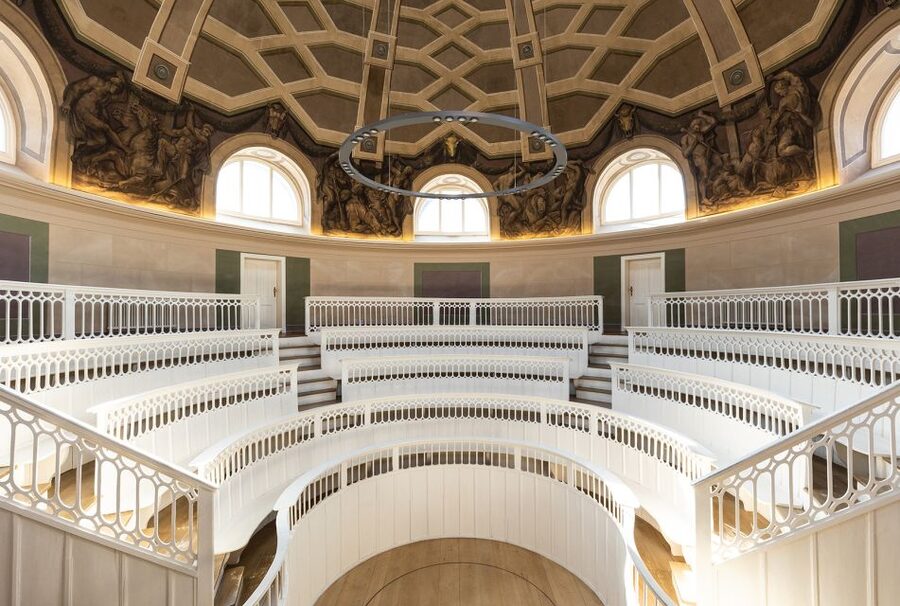
This is one of the standout moments. You’ll visit a mysterious “medicine temple,” described as Berlin’s oldest surviving teaching building, hidden in a backyard. That phrase isn’t just marketing flair. It gives you the feeling that you’re about to see something tucked away from the street, and once you get there, the building itself reinforces the idea of continuity in medical education.
The tour does not include the Charité Bed House interior, but it does take you inside this older teaching building. Because it’s a teaching site that’s survived, it offers a different kind of perspective: the architecture and space remind you that learning medicine has always required rooms designed for instruction, not just treatment.
If you enjoy heritage architecture, focus on the details you can actually access. If you don’t, don’t worry. The guide’s stories help you connect what you’re seeing to how medical training evolved over centuries.
Inside the Animal Anatomical Theatre (TAT): what to plan for
Another highlight is the visit to the Animal Anatomical Theatre (TAT). This is included as part of the route, and it adds a distinct educational flavor to the tour because it connects medicine to anatomy teaching traditions.
There’s one thing to keep in mind: the TAT reserves the right to adjust its opening hours at short notice in the context of closed events. It’s also closed on public holidays. So if your trip lands on a holiday, you may want to think twice about counting on that stop with total certainty.
The good news is that the tour is only two hours long, so even if a specific timing quirk happens, you’ll still have gotten the main through-line: centuries of medical history, the big scientists, the institutional story, and the teaching-building experience.
Price and value: is $28 for 2 hours worth it?
At $28 per person for two hours, the value depends on what you want from a guided tour. If you’re looking for a broad, casual walk with generic facts, you might feel it’s too focused. But if you want a structured story—plague-era roots, famous names, Nobel-linked science, and the Nazi-era ethical chapter—this price-to-content ratio is strong.
The biggest value is that you’re paying for interpretation, not just access. Many of the Charité buildings are visible from outside, but the guide turns those views into a clear timeline. You also get two special inward experiences relative to what’s restricted: the oldest teaching building inside, plus the Animal Anatomical Theatre as scheduled.
So you’re not paying to “wander.” You’re paying to get a guided storyline tied to real sites, in a time window that works even if you’re only in Berlin for a short stay.
Who this tour suits best (and who should pick something else)
This tour fits best if you like history that feels human. You’ll probably enjoy it if you’re interested in medical breakthroughs and also want the darker institutional side made clear. It’s also a good choice if you enjoy learning names like Koch, Virchow, Behring, and Sauerbruch in context rather than as isolated facts.
It may be less ideal if you’re expecting full access to hospital interiors or broad campus wandering. Since Charité Campus Mitte isn’t accessible for group tours, and the Charité Bed House isn’t entered, you’ll mostly be outside with a couple of key indoor stops.
Language matters too. The tour guide is German, so if you need English interpretation, you’ll want to double-check what language options are available on your exact booking.
Should you book the Berlin Charité Guided History Tour?
I’d book it if you want a compact, high-impact walk through one of Berlin’s most consequential medical institutions, with a guide who ties famous doctors to the places you can actually see. The mix of scientific landmarks, teaching-building intrigue, and the honest coverage of Nazi-era collaboration gives it real depth.
Skip it if your top priority is deep access inside active hospital facilities. This tour is designed around what you can safely and legally view, plus a couple of historic interior visits that are appropriate for tours.
If you’re curious about medical history and want it told in a way that’s grounded in Berlin’s streets, this one is a smart use of time. The schedule is short, the focus is sharp, and you’ll leave with a clearer sense of how medicine, education, and ethics shaped the Charité over three centuries.
FAQ
Where is the meeting point for the tour?
You meet in front of the Charité Tower at the crossroads of Schumannstraße / Charitéplatz / Charitéstraße.
How long is the Berlin Charité Guided History Tour?
The duration is 2 hours.
How much does the tour cost?
The price is $28 per person.
Is the tour guided by a live person?
Yes, it’s a guided tour with a live guide.
What language is the tour conducted in?
The tour guide speaks German.
Does the tour go inside the Charité Bed House?
No. The tour does not go inside the Charité Bed House because it is a hospital facility with hygiene and protection regulations.
Are the Charité hospital grounds accessible for group tours?
No. The hospital grounds (Charité Campus Mitte) are not accessible for group tours.
What is the medicine temple stop?
It’s Berlin’s oldest surviving teaching building, hidden in a backyard, and the tour visits it inside.
Do you visit the Animal Anatomical Theatre (TAT)?
Yes, the tour includes a visit to the Animal Anatomical Theatre (TAT).
Can the TAT opening hours change during your visit?
Yes. The TAT reserves the right to adjust opening hours at short notice for closed events, and it is closed on public holidays.
More Guided in Berlin






More Tours in Berlin





More Tour Reviews in Berlin

Round out your days in Berlin


Historical Tours, compared.
 ★ 4.6Natural History Museum Entrance TicketFrom $123,382 reviews
 ★ 4.53-Hour World Heritage Cruise to PotsdamFrom $251,569 reviews
 ★ 4.7History of the Third Reich Guided Walking TourFrom $30791 reviews
 ★ 4.9Berlin Historical Highlights Walking TourFrom $389657 reviews
 ★ 5.0Berlin Private Complete History All Day Walking TourFrom $253474 reviews
 ★ 4.8Cold War & Berlin Wall History Guided Bike TourFrom $41422 reviews
 ★ 4.5Historic Boat Sightseeing City Center TourFrom $33415 reviews
 ★ 5.0Berlin Craft Beer & Cultural Tour With SnackFrom $143343 reviews
Browse the lists this tour appears in