
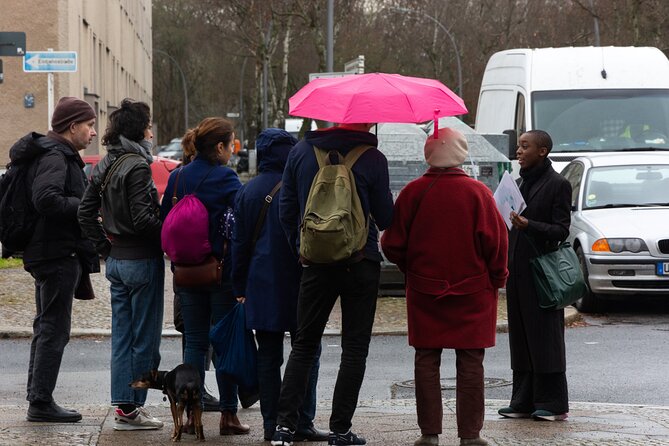
REVIEW · HISTORICAL TOURS
Historical city tour in the African Quarter in Berlin
Berlin’s street names tell a colonial story.
This African Quarter walking tour in north Berlin uses a compact route of 22 streets to unpack how Germany connected to African countries during the colonial era. In about two hours, you follow the logic behind street names, and you get guided answers to questions many people never hear asked in Berlin.
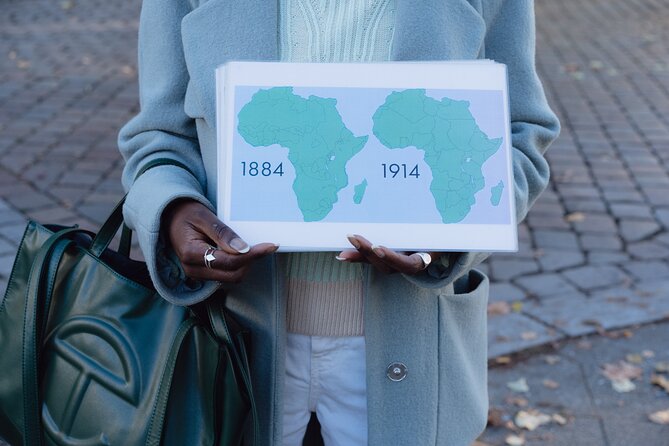
I like that the format is focused and walkable. You spend short, timed moments at each stop, and the tour keeps returning to direct questions, like what Swakopmunder Straße has to do with Berlin or what Germany’s role was in Namibia. I also appreciate the way the Congo Conference gets treated as a real historical event you can visualize, with maps that compare Africa before and after the Berlin conference.
One thing to consider: the subject matter is heavy and politically charged. If you’re looking for an easy, neutral sightseeing stroll, this may feel intense, and the experience runs on good weather, since it’s primarily outdoors.
In This Review
- Key things I’d plan around
- Berlin’s African Quarter turns street signs into questions
- Price and value for a two-hour walking tour
- Where you meet, how long it really lasts, and what the pace feels like
- Stop 1: Swakopmunder Straße and the Namibia connection
- Stop 2: Anna-Mungunda-Allee, Petersallee, and the renaming question
- Stop 3: Manga-Bell-Platz and Gustav Nachtigal’s street-name legacy
- Stop 4: Kongostraße and the 1884 Berlin conference (with maps)
- What this tour does better than a typical “facts only” walk
- Who should book this walking tour
- Should you book Dekoloniale Stadtführung’s African Quarter Tour?
- FAQ
- How long is the African Quarter historical city tour?
- What is the price per person?
- Where does the tour start and end?
- What ticket do I receive?
- How many people are on the tour?
- How far in advance should I book?
- Is the tour dependent on weather?
- What is the cancellation policy?
Key things I’d plan around
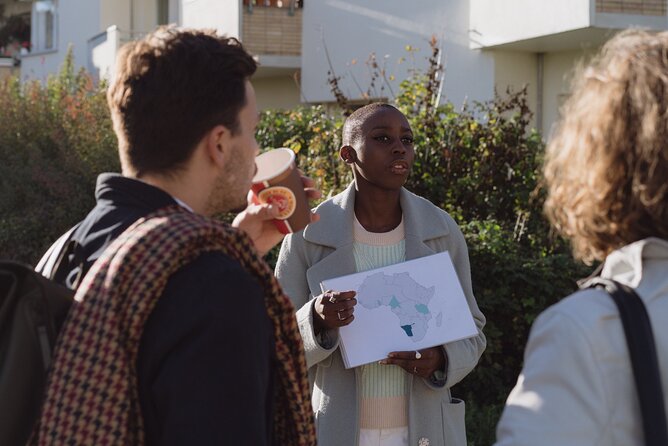
- A 22-street area monument: street names are the “text,” and the guide reads them with you in context
- Four street stops, short on time: each stop is about 5 minutes, so you get perspective without museum pacing
- Germany–Africa connections: you’ll connect dots from Namibia to the naming of Berlin streets
- The 1884 Berlin event: the tour explains what happened in Berlin and why Africa had no representation
- Small group size (max 20): easier conversation than big bus tours, especially on sensitive topics
More Berlin tours to line up side by side
- Berlin: 1-Hour City Tour by Boat with Guaranteed Seating★ 4.3 · 16,993 reviews
- Berlin City walk Government District and Places of Democracy★ 4.7 · 8,467 reviews
- Berlin: City Sightseeing Hop-On Hop-Off Bus Tour★ 4.1 · 4,233 reviews
- Berlin: 1-Hour City Sightseeing Cruise★ 4.4 · 2,210 reviews
Berlin’s African Quarter turns street signs into questions
The African Quarter in north Berlin is an area monument made up of 22 streets. The striking part is the naming pattern. Streets are named after African countries, European cities, and even figures tied to the colonial commissariat era. It’s the kind of detail you normally sprint past.
Here, you slow down and ask why those names landed in Berlin in the first place. The tour’s whole pitch is perspective: it looks at German–African history in a way that’s rarely discussed, and it does it through what’s right in front of you—street names that keep talking long after the original decisions were made.
For me, the best value of this approach is that it makes history practical. You’re not just memorizing facts. You’re learning how a city can record power, ideology, and claims over time—and how naming can feel “official” even when it’s rooted in domination.
And yes, it’s explicitly focused on the colonial period, including the 20th-century angle referenced in the tour framing. That’s useful because it pushes the conversation beyond only the far-away, abstract version of colonialism.
Price and value for a two-hour walking tour
This tour costs $33.57 per person and runs about 2 hours. That price can be hard to judge until you look at what you’re actually paying for: a guided, structured walk with a small cap of 20 travelers, focused stops, and no extra entry cost at the stops.
Each stop is marked as admission ticket free, which matters. You’re not being sent into paid museums between short segments. Instead, you get the history through on-the-street context—short talks, direct questions, and the guide’s explanations tied to the names around you.
Also, the tour uses a mobile ticket. That’s one less friction point on a travel day. And because it’s typically booked about 21 days in advance, I’d treat it like a “reserve it if you care” activity rather than a last-minute impulse.
The strongest signal from the ratings is that the experience works in practice. With a 3.7 rating from 6 reviews, the sample is small, but the top feedback is consistent: people call it a must-do for historical tours in Germany, and they highlight an engaging guide who connects the street-name dots clearly.
Where you meet, how long it really lasts, and what the pace feels like
You start at Swakopmunder Str. 44, 13351 Berlin. The tour ends at Rehberge, 13349 Berlin. Since the end point is not back where you started, plan your next move like a city walk: have your transit figured out or let yourself keep exploring in the area.
The tour is near public transportation, which helps if you’re pairing it with other Berlin plans. The schedule is tight: four stops, each about 5 minutes, so the walking time and the explanation time together make up the full two hours.
This kind of pacing is ideal if you want structure without long waits. It’s also ideal if you’re the type of traveler who likes to cover ground efficiently and come out with a handful of big ideas you can reuse later in the city.
Stop 1: Swakopmunder Straße and the Namibia connection
Stop one is Swakopmunder Straße. The tour asks a simple but powerful question: what does Swakopmund have to do with Berlin?
From there, the focus turns to Germany’s role in Namibia. The tour uses this street name as the entry point into a broader theme: how colonial-era links can surface in everyday urban geography. In other words, this stop isn’t about guessing. It’s about learning why the connection exists and how Germany’s actions connected to places far beyond Germany’s borders.
Practical tip: look at the street sign and treat it like a clue, not trivia. If you go into the walk expecting only “fun facts,” you’ll miss the point. This stop sets the tone: names are evidence.
More of Berlin's long history, guided


Stop 2: Anna-Mungunda-Allee, Petersallee, and the renaming question
Stop two is Anna-Mungunda-Allee. Here, the tour pivots into the question of naming itself—who certain streets were named after, and whether those names should change.
You’ll hear prompts about who Petersallee was named after, and the tour raises a debate-style question: should the street be renamed, and why?
This is one of the reasons I think the African Quarter works so well for travelers who like more than just facts. It gets you thinking about how cities make decisions, how public memory is shaped, and how street names can become part of ongoing conversations rather than sealed-off history.
A consideration: because this segment is framed as a renaming question, it may feel more “present day” than you expect. If you prefer your history tour purely in past tense, keep an open mind—this is history as a living argument.
Stop 3: Manga-Bell-Platz and Gustav Nachtigal’s street-name legacy
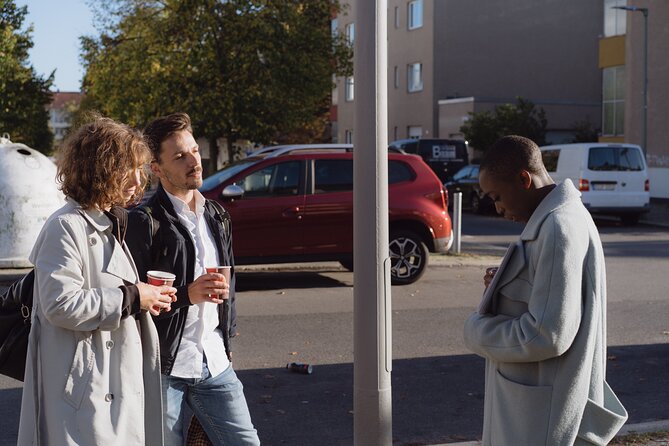
Stop three is Manga-Bell-Platz, and it circles around one name: Gustav Nachtigal.
The tour asks two things: who Gustav Nachtigal was, and why the central square in the African Quarter carries his name. Again, it’s the same method—use a street or square as a gateway to a person and a power story.
What I like here is the specific focus on a “central square.” It’s easier to understand significance when you’re standing at a visible focal point, not just passing a quiet side street. This stop helps connect the idea of naming to how a neighborhood feels and functions.
If you care about interpretation—how people decide what gets honored in public space—this stop is likely to land hardest. It turns a place you might otherwise treat as generic into something you can read.
Stop 4: Kongostraße and the 1884 Berlin conference (with maps)
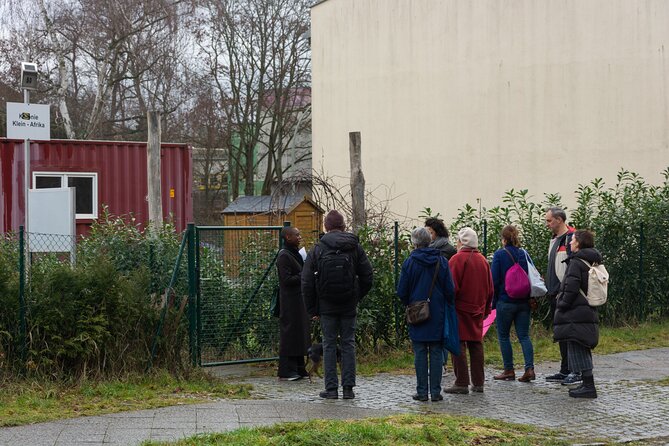
Stop four is Kongostraße. This is where the tour connects street naming to a major historical event: what happened in Berlin in 1884.
The tour frames it through the Congo Conference and highlights a crucial point: why no one from Africa was present. Then you’ll be shown maps of Africa before and after the Berlin conference.
This is a practical way to learn. When you can compare maps, you stop treating history like a vague storyline. You can see how decisions translated into outcomes on a geographic scale.
And it’s also a good reminder of something people often skip: powerful events can happen far from the places affected, and the record of those decisions often shows up later in unexpected places—like street names.
What this tour does better than a typical “facts only” walk
A lot of city history tours do one of two things: they either overwhelm you with dates or they keep it surface-level. This one uses a different lever: it makes the tour questions-driven.
Instead of just telling you what the street names mean, the tour uses prompts that force you to hold two ideas at once:
- Germany’s connection to African countries didn’t stay in the past.
- Public memory can remain embedded in daily life through naming.
That’s why the “African Quarter” concept works so well. You get the city as a classroom, and you learn to read the built environment.
Also, the tour is short enough to feel like a smart primer. Two hours is enough time to leave with clarity, but not so long that you’re stuck indoors or mentally exhausted by the end.
Who should book this walking tour
I’d say this tour is best for you if:
- you like walking city neighborhoods and learning through what you see on the ground
- you want German–African history connected to Berlin street naming
- you enjoy question-based guiding rather than pure lecture
It may not be the best match if you want a light, purely recreational stroll. The tour deals with colonialism and public naming choices, and that can feel emotionally weighty.
On practical fit: most travelers can participate, and service animals are allowed. Since it’s a walking tour, comfortable shoes are the kind of advice I’d give anyone—especially in a city district where you’ll be looking up at signs as much as you’re looking forward.
Should you book Dekoloniale Stadtführung’s African Quarter Tour?
If you’re even moderately curious about why Berlin’s street names look the way they do, I think you’ll get your money’s worth. The price is reasonable for a 2-hour guided walk with a small group, and the stops are admission-free—so you’re paying for interpretation, not add-on costs.
I’d especially recommend it if the idea of the 1884 Berlin conference and the question of who wasn’t present interests you. The fact that the tour pairs that topic with before-and-after maps is exactly the kind of tool that turns abstract events into something you can actually understand.
One caution before you commit: plan for outdoor time and check the weather. Since good weather is required, you’ll feel the difference if you show up on a day you’d rather not walk.
FAQ
How long is the African Quarter historical city tour?
It lasts about 2 hours.
What is the price per person?
The price is $33.57 per person.
Where does the tour start and end?
The tour starts at Swakopmunder Str. 44, 13351 Berlin, Germany and ends at Rehberge, 13349 Berlin.
What ticket do I receive?
You get a mobile ticket.
How many people are on the tour?
The tour has a maximum of 20 travelers.
How far in advance should I book?
On average, it’s booked 21 days in advance.
Is the tour dependent on weather?
Yes. It requires good weather. If it’s canceled due to poor weather, you’ll be offered a different date or a full refund.
What is the cancellation policy?
You can cancel for free up to 24 hours in advance of the experience start time for a full refund. If you cancel less than 24 hours before, the amount paid won’t be refunded.
More City Tours in Berlin


More Tours in Berlin



More Tour Reviews in Berlin

Round out your days in Berlin
Historical Tours, compared.
 ★ 4.6Natural History Museum Entrance TicketFrom $123,382 reviews
 ★ 4.53-Hour World Heritage Cruise to PotsdamFrom $251,569 reviews
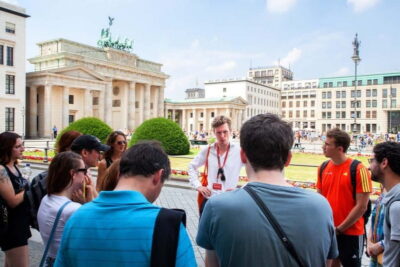 ★ 4.7History of the Third Reich Guided Walking TourFrom $30791 reviews
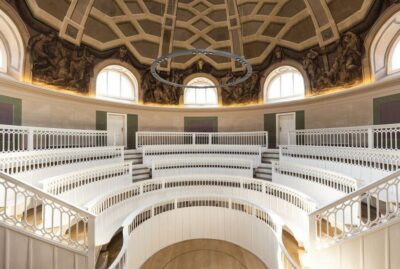 ★ 4.4Berlin Charité Guided History TourFrom $28660 reviews
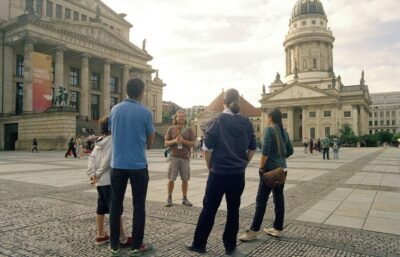 ★ 4.9Berlin Historical Highlights Walking TourFrom $389657 reviews
 ★ 5.0Berlin Private Complete History All Day Walking TourFrom $253474 reviews
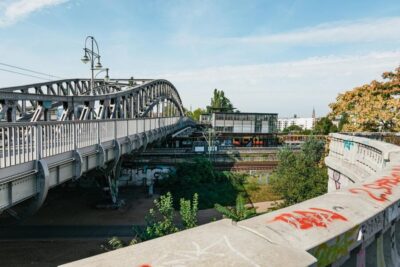 ★ 4.8Cold War & Berlin Wall History Guided Bike TourFrom $41422 reviews
 ★ 4.5Historic Boat Sightseeing City Center TourFrom $33415 reviews
Browse the lists this tour appears in