
REVIEW · BERLIN WALL & COLD WAR
Private Cold War Berlin: Espionage, Berlin Wall, a Divided City
Berlin has a double life: control and hope. This private walking tour strings together the city’s Cold War scars—Wall sites, border crossings, and secret-police rooms—so you understand how Berlin split and how people tried to beat that system. I especially liked the hotel pickup/drop-off and the way the guide turns facts into real human stories. One thing to consider: it’s still a walking tour, and it runs in all weather, so plan for solid time on your feet.
In the past, guides like Tina and Toni have been praised for calm, clear storytelling. And if you need adjustments, ask up front; one reviewer noted the guide accommodated physical limitations. You’ll cover a lot in 3 to 4 hours, but the pace is built around short, focused stops where the history actually happened.
In This Review
- Key things I’d watch for
- Berlin Wall and espionage: why this route works
- Price and what you’re really paying for ($191.44)
- How the 3 to 4 hour walk feels in real life
- Stop 1: Memorial of the Berlin Wall at Bernauer Strasse
- Stop 2: Tränenpalast, the Palace of Tears, and spy crossings
- Stop 3: East Side Gallery and the Wall’s artistic reversal
- Stop 4: Stasi Museum (Stasimuseum) and the mechanics of surveillance
- Stop 5: Checkpoint Charlie and the Cold War stare-down
- Stop 6: Prenzlauer Berg corner sites tied to NKVD and the Stasi
- Stop 7: Alexanderplatz and the 1989 protest moment
- What you’ll learn about espionage (without turning it into a thriller)
- Who this private Cold War Berlin tour suits best
- Should you book Private Cold War Berlin: Espionage, Berlin Wall, a Divided City?
- FAQ
- How long is the tour?
- What’s the price per person?
- Is this a private tour?
- Is hotel pickup and drop-off included?
- What language is the tour offered in?
- Are admission tickets included?
- Does the tour include food or drinks?
- Does it run in bad weather?
- When should I book?
- What’s the cancellation policy?
Key things I’d watch for
- Hotel pickup and drop-off included, which makes the whole plan easier.
- Espionage focus, not just monuments—spies, informants, and border tactics show up at multiple stops.
- Free admissions called out at each listed museum/landmark stop.
- Berlin Wall story arc across the day: escape attempts, border heartbreak, then what came after 1989.
- Private format means it’s just your group, so questions fit the route.
More of the Wall and the divided city
- Berlin’s Best: 2 Hour Walking Tour Third Reich and the Cold War★ 5.0 · 5,486 reviews
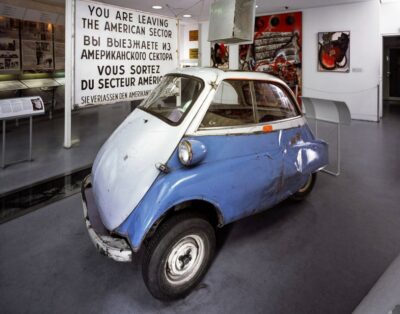
- Skip-the-Line: Berlin Wall Museum at Checkpoint Charlie★ 4.1 · 2,041 reviews
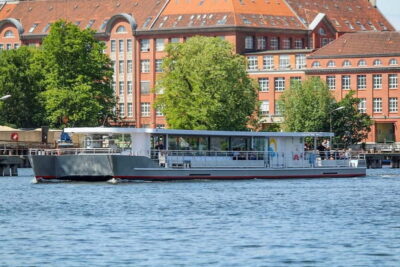
- Berlin: East Side Gallery Spree Cruise in a Solar Catamaran★ 4.1 · 1,086 reviews
- Cold War, Berlin Wall, Spies and the East Side Gallery★ 5.0 · 1,024 reviews
Berlin Wall and espionage: why this route works
Most Berlin “Cold War” tours are either too general or too focused on one neighborhood. This one is structured like a story with different chapters, moving from the Wall’s escape drama to the heartbreak of border processing, then into surveillance and political prisons.
What makes it feel practical is the mix of places:
- Some spots show you the Wall as a physical barrier.
- Others show you the human machine around it—interrogations, monitoring, and controlled movement.
- And then you get a cultural turn at the East Side Gallery, where the same wall turns into public art after reunification.
If you’re a first-time visitor, this kind of route helps you get your bearings fast. If you’ve been to Berlin before, it adds the espionage and border-control angle that many quick itineraries skip.
Price and what you’re really paying for ($191.44)
At about $191.44 per person for 3 to 4 hours, the headline number can look like a splurge—until you break down what’s included. You’re paying for a private, professional guide and hotel pickup/drop-off, which removes the biggest time-waster in Berlin: figuring out where to start and how to get there after multiple stops.
You also get a mobile ticket, and the tour lists group discounts too. Since food and drinks aren’t included, you’re still in control of where you eat. In other words: you’re paying for the guided history and the logistics that keep the day smooth, not for meals or a big bus setup.
How the 3 to 4 hour walk feels in real life
The tour is designed as an active, walking route through several key sites. Most travelers can participate, and it operates in all weather, so bring sensible shoes and a plan for rain or heat.
Here’s the practical way to prep:
- Wear comfortable walking shoes. Several stops are short, but the total time adds up.
- Dress for the weather. The tour runs anyway.
- If anyone in your group has mobility limits, ask about adjustments when you book. One guide was noted for accommodating physical limitations.
Because it’s private, you can also ask questions on the spot without fighting for time with a large group. That’s one reason this format often lands higher than standard group tours.
Stop 1: Memorial of the Berlin Wall at Bernauer Strasse
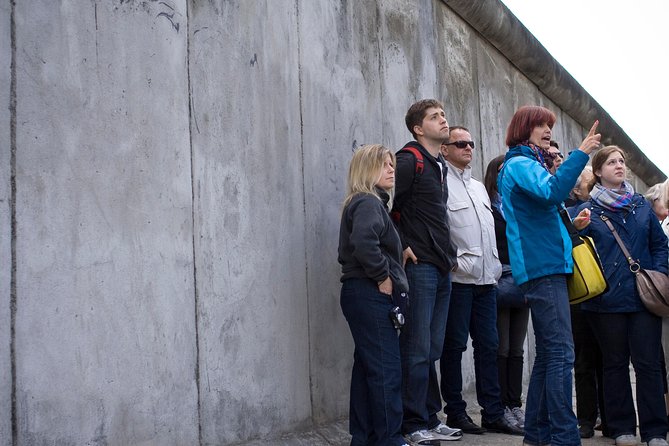
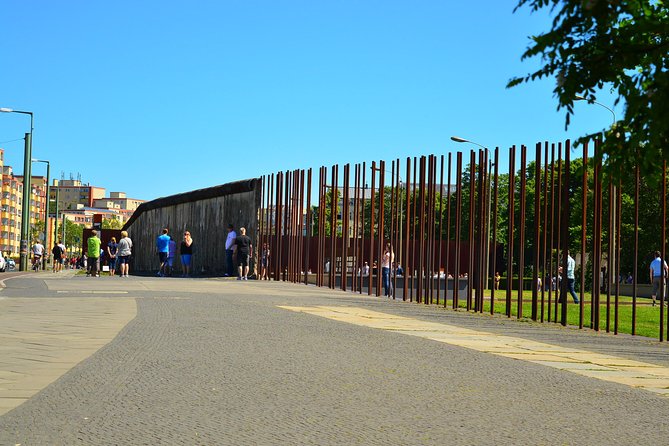
This is the emotional launch point. Bernauer Strasse is tied to the Wall’s most painful reality: families separated, escape attempts under brutal pressure, and the Wall changing daily life into something controlled.
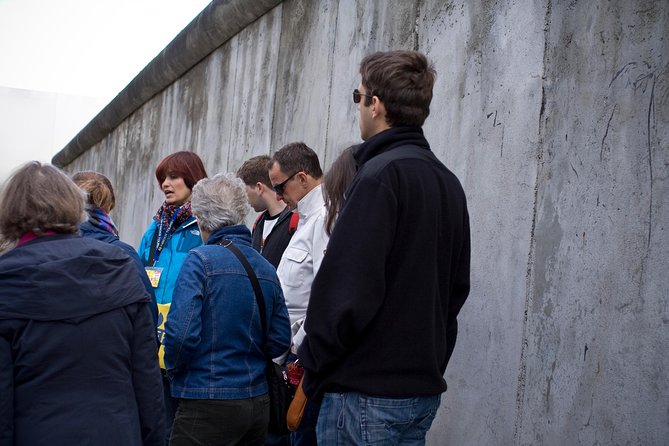
At the Memorial of the Berlin Wall, you’ll see a preserved Wall section alongside the Chapel of Reconciliation. The guide will connect that physical setting to what people tried to do to escape—especially underground tunnel efforts like Tunnel 57 and Tunnel 29. Tunnel 29 is highlighted in the tour as leading 29 people to freedom in 1962, which gives you a concrete example of planning and risk.
What I like about starting here: it anchors everything that follows. When you later hear about border facilities and prisons, you understand the larger system the Wall created. You also get free admission and a shorter time window—about 40 minutes—so you’re not stuck at one site for the whole tour.
Potential drawback: this stop is intense. If you’re sensitive to stories of separation and political persecution, pace yourself and ask the guide to explain at a level your group can handle.
More Berlin tours to line up side by side
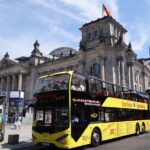
Stop 2: Tränenpalast, the Palace of Tears, and spy crossings
Next comes the Wall’s “processing stage.” Tränenpalast—the Palace of Tears at Friedrichstrasse—was a border crossing point where East Berliners said emotional goodbyes when they crossed into West Berlin.
This stop isn’t just about grief, though. It also ties directly to espionage. The tour notes that Tränenpalast became a hotspot for spies moving between East and West, using tactics to avoid detection. That matters because it shows how border systems weren’t only about stopping people—they were also where intelligence games happened.
Inside today, the building houses a museum focused on:
- Wall and border-control history
- How crossings worked in practice
- Spy networks operating on both sides
If you want one takeaway from this stop, it’s that Cold War control wasn’t only tanks and walls. It was paperwork, checkpoints, and human moments under surveillance. Admission is listed as free here too, and the visit is about 20 minutes—short enough to stay focused, long enough to make the stories stick.
Stop 3: East Side Gallery and the Wall’s artistic reversal
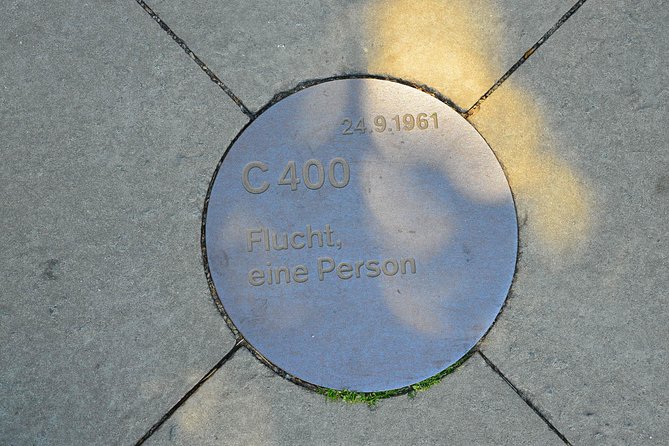
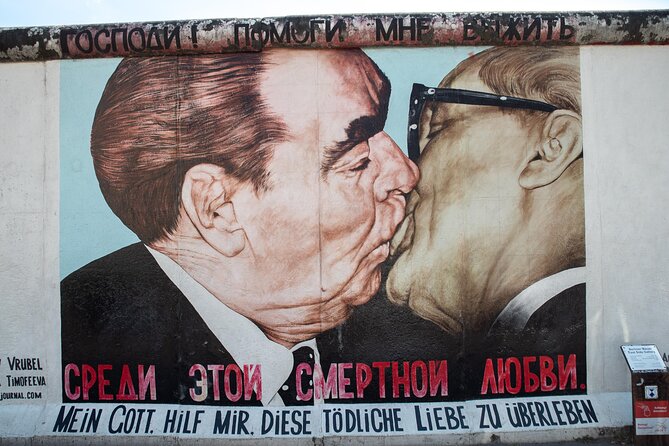
After the heavy border and intelligence content, you get a visible change of tone at the East Side Gallery. This is a stretch of the Berlin Wall turned into an open-air art gallery, about 1.3 kilometers long, where murals appeared after 1989.
The tour explains that artists from around the world painted the remaining Wall sections after the Wall fell. As you walk this area, your guide shares the history behind specific murals and the messages many artists placed on them—often reflecting hope and the shift toward freedom after reunification.
Why I think this stop is valuable even if you’re not an art person: it shows how places evolve. The Wall didn’t just disappear overnight. It was repurposed, argued over, and re-written by public memory.
Time-wise, plan for about 20 minutes. Since the murals are outdoors, you’ll also feel weather more here, so bring a layer if it’s chilly.
Stop 4: Stasi Museum (Stasimuseum) and the mechanics of surveillance
If Bernauer Strasse shows the Wall as a barrier, Stasimuseum shows the control system behind it. The Stasi headquarters—now a museum—reminds you that surveillance in East Germany was not random. It was extensive, organized, and built to shape behavior.
Your guide will walk you through what the network looked like in practice, including hidden cameras, wiretapping, and informants—even everyday citizens used to monitor others. You’ll also hear how this affected families and individuals, including interrogation and harassment.
This is the stop that often changes how you interpret everything else you’ve seen. It reframes the Cold War as a daily intrusion into ordinary life: what you said, who you talked to, and whether you could trust even people close to you.
Admission is listed as free, and the visit is around 25 minutes, which is a good length for a topic this heavy. If your group likes hands-on context, this is probably the most “system” stop on the route.
Stop 5: Checkpoint Charlie and the Cold War stare-down
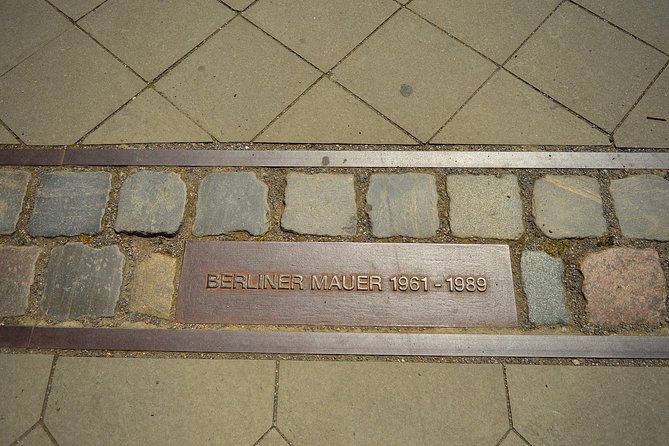
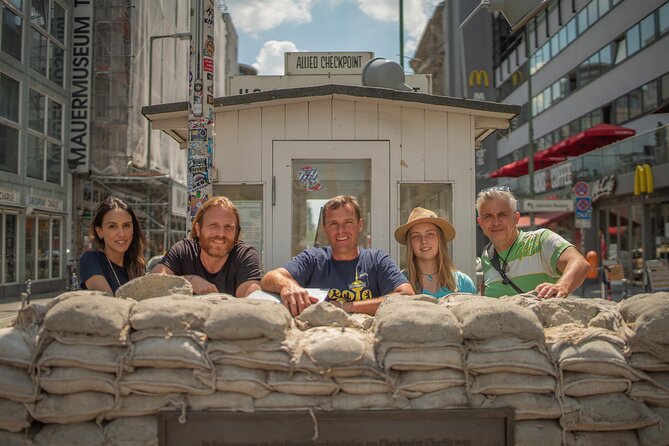
Checkpoint Charlie is Berlin’s best-known border landmark, and the tour uses that recognition wisely. You’ll learn what it meant as a crossing point between East and West Berlin, including why it became a symbol of the Cold War divide.
The guide will also cover tense standoffs between American and Soviet forces, especially tied to the Berlin Crisis of 1961 when the Wall was erected. The point here isn’t to scare you with dramatic reenactment—it’s to show how close the world came to escalation right in the middle of the city.
You’ll also get stories linked to escapes, spy exchanges, and border tensions. And since there’s a museum at the site with exhibits on espionage and Cold War history, you can go deeper there without adding time to the rest of the route.
This stop is about 15 minutes, so it’s more of a structured orientation than a long museum day. Admission is listed as free on the stop, which is a nice value touch.
Stop 6: Prenzlauer Berg corner sites tied to NKVD and the Stasi
Then you move into a different kind of space: prisons and detention. In Prenzlauer Berg, the tour points you to Fröbelstraße corner, tied to both the NKVD prison (initially used by Soviet authorities after WWII) and later the Stasi prison.
The history here is complicated in a useful way. The NKVD detention connects to early post-war control, and then the Stasi taking over shows the continuity of repression under the GDR. The tour explains that prisoners included political detainees, people suspected as spies, and those labeled enemies of the state.
The guide also shares what imprisonment conditions were like and how both Soviet and East German authorities used detention to control dissent. This stop matters because it explains what happens after surveillance: when the system decides someone is a threat, detention is the next step.
The time here is about 15 minutes with free admission noted. It’s enough to understand the pattern without getting lost in one institution’s details.
Stop 7: Alexanderplatz and the 1989 protest moment
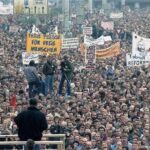
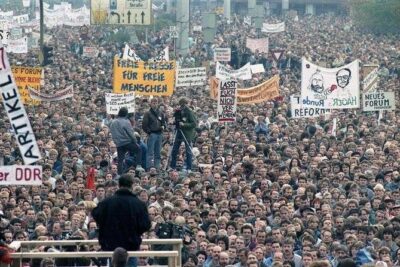
Alexanderplatz gives you the turning point. This stop ties Cold War control to the mass push for change in 1989, when a large protest took place on November 4. The tour notes that over half a million East Berliners gathered to demand change—an event treated as a key moment in the Wall’s fall.
You’ll also see landmarks around Alexanderplatz, including the Television Tower (Fernsehturm) and the Red City Hall tied to GDR leadership. The guide connects the area to Stasi surveillance efforts, and explains why this part of town became both a place of repression and a focal point for peaceful resistance.
I like this ending section because it avoids the trap of ending with only tragedy. Even in a tour full of difficult material, it leaves you with the moment when people refused to keep living inside the system’s rules.
This stop is about 15 minutes, free admission noted. It’s a short finale, so you’ll likely walk out with a clearer timeline than you’d get from simply seeing monuments on your own.
What you’ll learn about espionage (without turning it into a thriller)
This tour’s spy angle is not just name-drops. It connects espionage to physical places you can still see today:
- Tunnel escape attempts show how intelligence and risk-taking intersect with freedom efforts.
- Tränenpalast shows espionage and border control happening at the same boundary.
- StasiMuseum shows the daily monitoring system that fed informants and interrogation.
- Checkpoint Charlie ties it all back to international tensions.
That combination is what makes it feel educational rather than sensational. You’ll walk away understanding that Cold War espionage wasn’t only secret handshakes. It was surveillance infrastructure and border procedures that shaped real life.
And since this is a private tour with a guide who tells stories clearly, you’ll get the context to connect each stop into one coherent picture.
Who this private Cold War Berlin tour suits best
This one fits you if:
- You like history that explains cause-and-effect, not just dates.
- You want a walking route with multiple Cold War stops clustered together.
- You’re interested in both the Berlin Wall story and the espionage/surveillance side.
- You value a private format where questions can fit the pace.
It’s also a good choice for repeat visitors who already know the basics but want the human and intelligence mechanisms that made the division work.
If you want a low-footsteps tour with lots of sitting and long museum time, you might prefer a different format. But if you’re active and willing to walk, this route has strong momentum.
Should you book Private Cold War Berlin: Espionage, Berlin Wall, a Divided City?
I’d book it if your goal is a structured Cold War Berlin experience that blends Wall history with espionage and surveillance, without wasting time on random stops. The hotel pickup/drop-off and the private setup are big value boosters, especially for a 3 to 4 hour day when you want everything to run cleanly.
Skip it or think twice if your group struggles with walking or you dislike emotionally heavy topics. The tour operates in all weather, so be ready for that reality.
For most people who come to Berlin wanting meaning behind the sites, this is a strong pick: you leave with a clearer timeline, a better grasp of how control worked, and a more complete picture of what division cost—and what people did to resist.
FAQ
How long is the tour?
It runs about 3 to 4 hours.
What’s the price per person?
The price is $191.44 per person.
Is this a private tour?
Yes. It’s a private tour/activity, and only your group participates.
Is hotel pickup and drop-off included?
Yes, hotel pickup and hotel drop-off are included.
What language is the tour offered in?
The tour is offered in English.
Are admission tickets included?
Admission tickets are listed as free for the stops, so you won’t be paying for entries at the included sites.
Does the tour include food or drinks?
No. Food and drinks are not included.
Does it run in bad weather?
Yes. It operates in all weather conditions, so dress appropriately.
When should I book?
On average, it’s booked 28 days in advance.
What’s the cancellation policy?
Free cancellation is available up to 24 hours in advance for a full refund.
More City Tours in Berlin
More Tour Reviews in Berlin

The Wall and the Cold-War City

Round out your days in Berlin
Berlin Wall & Cold War, compared.
 ★ 4.9Third Reich & Cold War Guided Walking TourFrom $238,378 reviews
 ★ 5.0Berlin’s Best: 2 Hour Walking Tour Third Reich and the Cold WarFrom $245,486 reviews
 ★ 4.1Skip-the-Line: Berlin Wall Museum at Checkpoint CharlieFrom $212,041 reviews
 ★ 4.1East Side Gallery Spree Cruise in a Solar CatamaranFrom $281,086 reviews
 ★ 5.0Cold War, Berlin Wall, Spies and the East Side GalleryFrom $181,024 reviews
 ★ 4.8Wall Tour – Fates, Love Stories, and HeroesFrom $282585 reviews
 ★ 4.5THE WALL: asisi Panorama Berlin TicketFrom $16580 reviews
 ★ 4.8The Wall and Third Reich Guided Bike TourFrom $41578 reviews
Browse the lists this tour appears in