
REVIEW · PRIVATE
Private Taxi Tour of Berlin East and West and Neighbourhood approx. 4-6h
Berlin’s East-West story fits in one cab. This private taxi route is built around the places that explain how Berlin went from split city to reunified capital, with short photo-and-walk stops so you don’t lose hours in transit. I like that it’s private and comfortable, so you can see a lot without feeling like you’re sprinting between monuments.
Two things I really love: you get a clear narrative thread (politics, rebuilding, and everyday life) while still stopping at visual anchors like the Reichstag dome, Brandenburg Gate, and Gendarmenmarkt. And you’re chauffeured through Berlin’s layout—Spree crossings, boulevards, and transport hubs—so the city starts to make sense fast.
One possible drawback: because the tour is designed to cover a wide arc in just 4–6 hours, some stops are outside-view quick hits, and you’ll want to be proactive about what you want to skip or linger on.
In This Review
- Key Highlights You’ll Want to Know
- Price and what makes this taxi tour feel worth it
- Where the tour starts: Reichstag to Pariser Platz and the Brandenburg Gate
- The government quarter: Parliament glass, the Chancellery, and press-facing architecture
- Unter den Linden: the boulevard walk you’ll never get from a fast metro ride
- Gendarmenmarkt: cathedrals that are really political theater
- Jewish Berlin in view: the New Synagogue and the German Historical Museum
- Hackesche Höfe and Humboldt Forum: the “old Berlin” feeling plus a modern rebuild
- Nikolaiviertel and Schöneberg: two versions of Berlin oldness
- Tiergarten icons: Berlin Zoo, Victory Column, and Schloss Bellevue
- Cold War wiring: Topography of Terror, the Wall traces, and Checkpoint Charlie
- East Side Gallery and Oberbaum Bridge: the Wall turned into a public art timeline
- Berlin’s modern power and architecture: Sony Center, Kulturforum, and Mies
- West Berlin boulevards: Kurfürstendamm, Kaiser Wilhelm Memorial Church, and KaDeWe
- How to make the 4–6 hours work: your skip list matters
- Should you book this Berlin East-West taxi tour?
- FAQ
- How long is the private taxi tour?
- Is pickup included?
- Is the tour private for my group only?
- What language is offered?
- Does the taxi include onboard comfort like WiFi or air conditioning?
- Are child seats available?
Key Highlights You’ll Want to Know
- Private taxi comfort with A/C and WiFi, plus pickup within the central S-Bahn ring
- East meets West through real street geography, not just isolated photo spots
- Short walk-and-look breaks so you can actually read details, not just pass by
- Cold War must-dos like Topography of Terror, Checkpoint Charlie area, and the East Side Gallery
- Signature architecture stops from the Reichstag dome to the Humboldt Forum roof terrace
- Flexible routing based on your must-sees and Berlin traffic
More private tours of Berlin
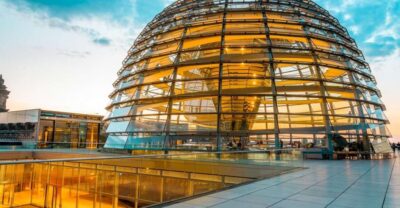
- Berlin: Private Reichstag and Glass Dome Tour★ 4.8 · 2,226 reviews
- Berlin Private Complete History All Day Walking Tour★ 5.0 · 474 reviews
- Private Walking Tour Berlin Third Reich Hitler and World War II★ 5.0 · 360 reviews
- Private Berlin: Iconic Sights and Hidden Gems Walking Tour★ 5.0 · 292 reviews
Price and what makes this taxi tour feel worth it
At about $179.82 per person for roughly 4–6 hours, this is not the cheapest way to do Berlin. But it is often great value if you’re comparing it to the cost of a private guide plus the time sink of figuring out the best transit routing across East and West.
The “worth it” part is the setup: the taxi includes pickup within the S-Bahn ring (around the Brandenburg Gate area), parking fees, and both the taxi ride and the city tour time. That means you spend your energy on the sights instead of negotiating logistics. You also get a mobile ticket, plus WiFi on board in an air-conditioned vehicle—small comforts that matter on a long day.
Where the tour starts: Reichstag to Pariser Platz and the Brandenburg Gate
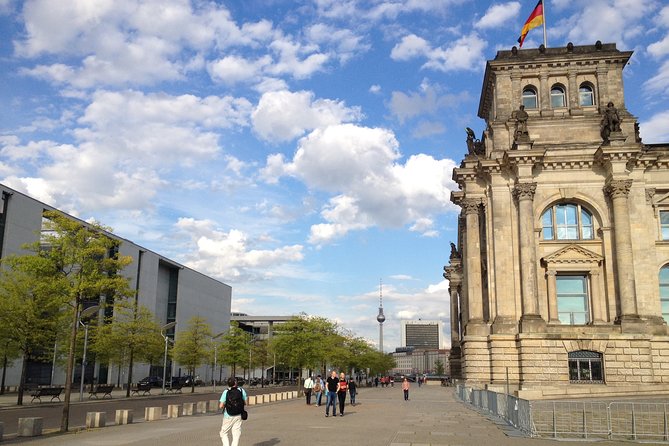
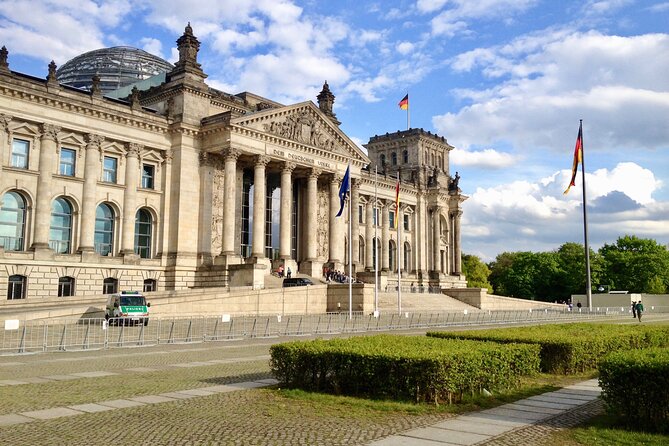
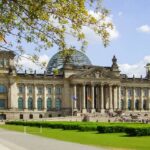
Most Berlin stories start with power, and the route begins with the Reichstag area—one of the city’s best visual reminders that modern Germany grew out of conflict. You’ll get the full symbolism: how the Red Army’s victory flag became part of the building’s story, how West Berlin once treated it with restrictions, and how reunification transformed it into the Bundestag complex with the Reichstag dome and the glass redesign that changed how you see Berlin from above.
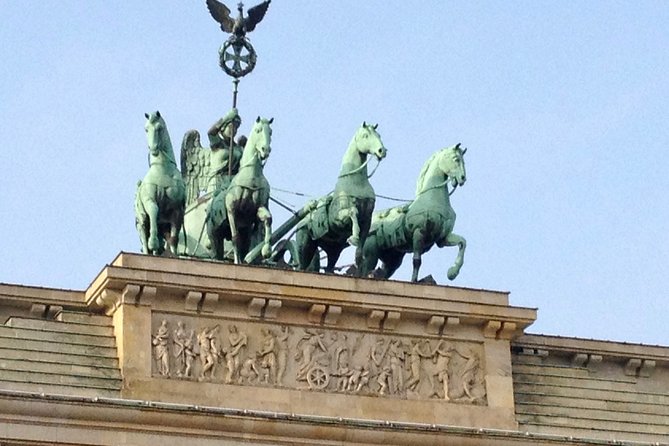
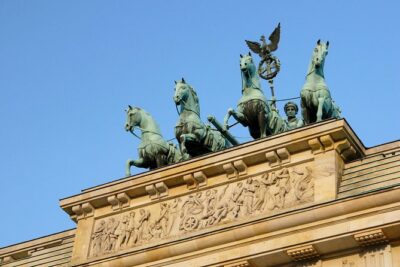
Then you slide into Pariser Platz, with the Brandenburg Gate as the fixed point in a place that once felt oddly isolated. You’ll hear why the surrounding area was rebuilt after the fall of the Wall and how the Hotel Adlon’s fate shaped what stands there today. It’s a great stop for photos, and even better because the narration explains why this gate became an international icon.
Tip: If you want a sharper feeling for the square’s layout, spend a couple minutes walking the edges rather than staying planted in the center. Berlin’s “big set pieces” are all about angles.
The government quarter: Parliament glass, the Chancellery, and press-facing architecture
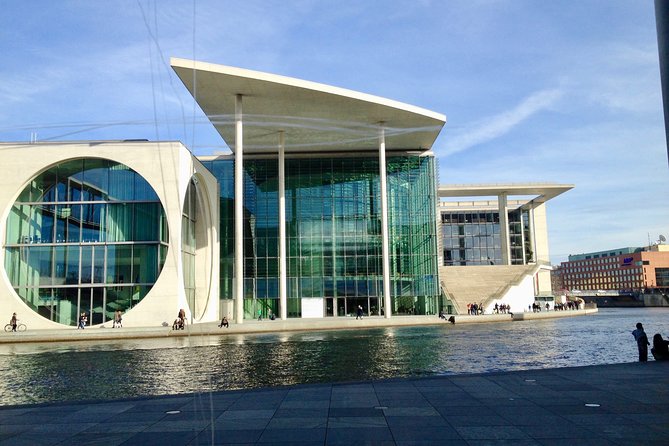
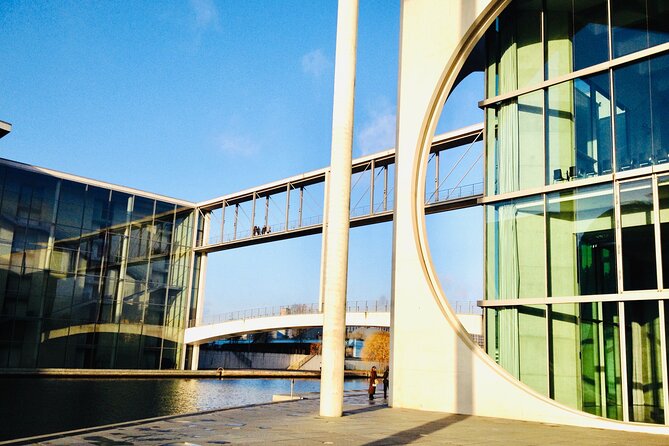
From the Reichstag area, you’ll drive through the rhythm of Berlin’s government zone—buildings meant to look monumental from far away and functional from up close. One highlight is the way you can read parliament as architecture: you’ll see the glass-facing approach to committee life, and how the long parliamentary blocks were designed to be both visible and politically layered.
Next comes the Chancellery zone, where the scale is the point—large office footprints, rotating layers of rooms, and a sense that you’re in a city that can switch between history and administration without warning. You’ll also get the media-facing angle: the facade designed so accredited journalists can view from inside, with reflective blue elements tied to official press rhythm.
Why this matters for your trip: it helps you understand why Berlin feels different from other capitals. It’s not only museums and memorials. It’s the current machine of state, built right on top of scars.
Unter den Linden: the boulevard walk you’ll never get from a fast metro ride
One of the tour’s smartest choices is how it links Unter den Linden to the city’s ideological shifts. You’ll get why this boulevard started as a bridle path and how the linden trees became the branding of the street you still recognize today. Along the way, the guide points out what changed over time—especially the shift from royal residences toward public institutions.
You’ll also hear about key cultural and political anchors clustered around the boulevard: the State Library and Humboldt University area, the State Opera, and the cathedral complex that forms part of the Forum Fridericianum. A standout moment here is the story tied to May 10, 1933, when books considered unacceptable by the Nazi regime were burned on the square—an ugly event made even more striking because it’s described in the context of the surrounding architecture.
Tip: If you like “signs you can read,” this is your section. Look down at the street grid and curb lines—Berlin’s past politics shows up in spacing and sightlines.
Gendarmenmarkt: cathedrals that are really political theater
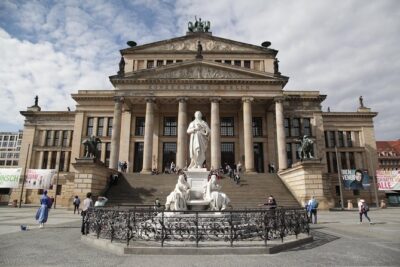
Berlin’s most photogenic squares are rarely the whole story. Gendarmenmarkt is the exception. You’ll stand between two “cathedrals” that are really meetinghouses with cathedral-like towers—one side used as a museum space for German parliamentary history, the other still functioning as a Reformed congregation (with French services on Sundays, plus a small Huguenot museum behind it).
What I like about this stop: it’s pretty, yes. But the narration explains how a square becomes a stage for identity—Prussian influence, French connections, refugees, and state symbolism—without turning the day into one long lecture.
Tip: Go for a slow walk around the perimeter. The facades change feel depending on the angle, and you’ll catch details you’d miss standing still.
Jewish Berlin in view: the New Synagogue and the German Historical Museum
A later stop brings you into one of Berlin’s most important layers: the New Synagogue, with Moorish-style design elements and a golden-domed presence. It’s worth knowing that security is visible and serious, including airport-like checks at the entrance area. If you’re traveling with limited time or you dislike security lines, this is where your pacing matters most—so keep your schedule relaxed.
From there, you’ll visit the German Historical Museum in the former armory building. The big idea here is how the museum evolved: from war-related “implements” and captured items into a broader German history museum after the Wall came down. You’ll also hear about the eerie frescoes tied to death-mask replicas of dying warriors, which makes the courtyard and facade feel heavier than you’d expect.
Hackesche Höfe and Humboldt Forum: the “old Berlin” feeling plus a modern rebuild
This is where the tour turns from power to texture. Die Hackeschen Höfe is a restored Art Nouveau courtyard ensemble where 1908-style mixed-use design comes back to life: workshops and printing-era spaces were turned into today’s shops, but the courtyards still feel like an inner world you can’t get from a quick street crossing. You’ll also spot references to Berlin’s playful culture, including Ampelmännchen themes and porcelain from KPM.
Then you move to the Humboldt Forum, created from the long-empty site that once held a parking lot. The building’s story is the point: the Berlin Palace was burned in the war and then demolished in the East German period, and the reunified era reconstructed the exterior and parts of the interior courtyard. The modern concrete mass is a reminder that this is not a time capsule—it’s a statement about what Berlin decided to rebuild and what it decided to modernize. The roof terrace is a highlight for getting a wider feel for the city center.
Tip: If the weather is good, treat the roof terrace like your “mid-trip reset.” It gives you the city’s scale back.
Nikolaiviertel and Schöneberg: two versions of Berlin oldness
If you want “Old Berlin” without guessing, the route includes Nikolaiviertel, with the Nikolaikirche and the Knoblauchhaus. This section has an intentional reconstruction feel—built in the 1980s with careful replication of older forms. It can surprise you in a good way because it zooms your head out into a more historic Berlin pocket instead of pushing you deeper into 20th-century politics nonstop.
Nearby, you’ll see the Red City Hall area in Schöneberg—where East Berlin’s magistrate once sat in one political system, and West Berlin’s leadership sat in another. The neo-Gothic exterior and the idea of free access to interesting rooms makes it a great “quick culture” add-on when your day is already packed.
Tiergarten icons: Berlin Zoo, Victory Column, and Schloss Bellevue
Berlin’s memorial city also loves symbols, and this stretch delivers them. You’ll hear the Zoo story from the angle of royal hunting grounds—why the fence existed, how Friedrich the Great changed access for Berliners, and how later gardeners shaped views by draining swampy areas. It’s a nice contrast to the Cold War stops because it’s about urban design choices rather than state violence.
Next comes the Victory Column, and the narration helps you understand why this monument has such an odd backstory: its drums and captured cannons from unification wars, the postwar reforestation politics around it, and how Hitler’s obsession with reshaping Berlin interfered with earlier plans. Even if you’re not into monuments, the story makes you look at the column differently.
You’ll also cover the Schloss Bellevue area, the Federal President’s seat, including why it was built for August Ferdinand and how it became politically sensitive in the divided city. This is one of those moments where you realize Berlin doesn’t just remember history—it argues about it.
Cold War wiring: Topography of Terror, the Wall traces, and Checkpoint Charlie
This is the emotional core, and the route handles it in a structured way. You’ll encounter the Berlin House of Representatives area and the preserved Wall trace themes—then move toward Topography of Terror, built on excavation sites tied to Nazi security organs. The open-air feel and the information hall format help you understand the physical layout of persecution rather than treating it like abstract history.
There’s also time for a short look at Wall remnants on Niederkirchnerstraße, described as perforated in spots because it was meant to feel less threatening while still doing its job. The story here is unusually specific: an escape attempt involving a cable car from the former Luftwaffe building, with the Stasi present but not intervening due to their assumptions.
Finally, you’ll reach the Checkpoint Charlie area—where Allied control rules created momentary cracks in the broader standoff. You’ll also hear why October 1961 was so dangerous: tanks appearing on both sides and the world-war risk right next to the everyday reality of guards and passports.
Practical tip: If you hate standing in crowds, this is where you’ll want patience. The big names draw people, and that’s true even when you’re just looking at exterior areas.
East Side Gallery and Oberbaum Bridge: the Wall turned into a public art timeline
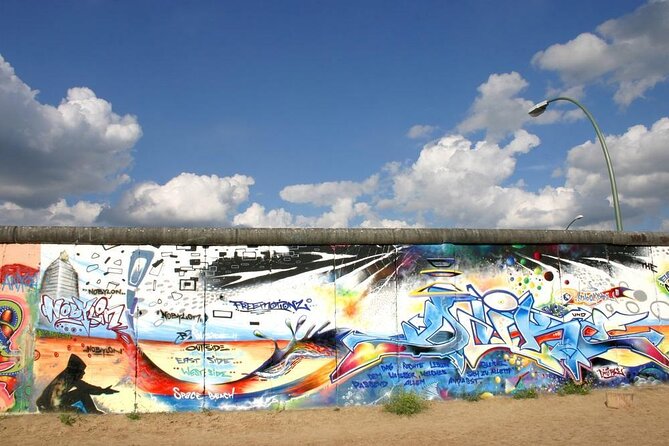
The tour’s East-side highlight is the East Side Gallery, described as the longest surviving Berlin Wall section at about 1600 meters. You’ll hear why this isn’t a simple “front wall” story tied to river positioning and how reunification led to 180 artists painting it after 1990. Scenes tied to the Trabant/Trabi image and the famous Brezhnev-Honecker kiss show how quickly a historic barrier became a canvas for diplomacy and memory.
Then you get the bridge story at Oberbaum Bridge, marked by its medieval towers and customs-border heritage. You’ll see the coats of arms idea—Brandenburg eagle on one side, Berlin bear on the other—and you’ll understand why this crossing became a lively connector rather than a hard border.
Tip: Spend a few minutes on the pedestrian side near where the bridge meets the street. The vibe changes fast as you shift from bridge geometry to street life.
Berlin’s modern power and architecture: Sony Center, Kulturforum, and Mies
A big reason this taxi format works is that you can switch architectural eras without losing time. The route includes the Sony Center on Potsdamer Platz, with its daring glass-and-steel look and the sloping roof designed to feel like it’s floating. You’ll also learn about the listed Hotel Esplanade wing that survived a bombing and was moved, then reimagined so a ballroom could be turned outward again.
From there, you’ll reach the Kulturforum area—where the New State Library, a new National Gallery idea, and surrounding cultural institutions create a deliberate modern counterpart to Museum Island. You’ll hear that debate too: the exterior is often described as barn-like and divides opinion, but the setting makes it easier to see why it’s controversial and why it was designed to be a modern statement.
Then comes one of Berlin’s most iconic modern buildings: the Neue Nationalgalerie by Ludwig Mies van der Rohe. You’ll hear the “no pillars inside” roof idea—one of those architectural choices that looks simple until you think about how galleries are usually built with walls. The tour explains how exhibitions get presented, including how wall solutions and display planning work in this space.
West Berlin boulevards: Kurfürstendamm, Kaiser Wilhelm Memorial Church, and KaDeWe
Berlin’s Western swagger is hard to fake, and the tour gives you the city’s shopping-and-ceremony side with stops that make Ku’damm understandable. You’ll see how Kurfürstendamm connects to the wider stretch known as the Ku’damm and how house-number quirks exist along the way. If you want the “how Berlin shops” feeling, this is the part where the city becomes practical and fun.
You’ll also see the Kaiser Wilhelm Memorial Church area, including the preserved tower and the newer church hall built around it. The narration includes the idea of blue light through thousands of glass stones and the soundproofing approach with a double wall and air gap—helpful context if you’re wondering why it can feel quiet inside even near heavy traffic.
And yes, you’ll get KaDeWe at the end of the Tauentzien stretch—described as the largest single department store on continental Europe, with a gourmet floor where luxury choices include champagne and oysters. Even if you’re not shopping, the scale makes it worth stepping in for perspective.
How to make the 4–6 hours work: your skip list matters
This is the most important practical advice I can give. In a day that spans Reichstag, multiple squares, Wall-linked stops, and West Berlin shopping, you don’t want your plan to be generic.
Before pickup, send the guide a short list:
- your top 5 must-sees
- 3 things you’re happy to skip
- whether you want more photo stops or more walk-ins
One reviewer mentioned wishing they had been able to skip parts like universities and factories for more flexibility on priorities—so I’d treat that as a real hint. Tell the guide what you want more of, because Berlin rewards focus.
Also, if you’re traveling with four people, ask about vehicle size ahead of time. A taxi tour is private, but the comfort level depends on the vehicle used.
Should you book this Berlin East-West taxi tour?
Book it if you’re:
- short on time and want major East and West landmarks tied into one story line
- the type who prefers being driven so you can spend energy on photos, details, and explanations
- curious about the Wall era but also want the “modern Berlin” layers afterward
Skip or modify expectations if you:
- want long museum interiors and deep research. This route is designed for street-level stops and quick context, not a full-day museum crawl.
- hate outside-view pacing. Some sights are necessarily brief because the route prioritizes breadth.
If you want a fast way to get your bearings fast, this taxi tour is one of the better bets in Berlin. You’ll leave with a mental map that connects buildings to the last century’s turning points—and you’ll know where to come back next.
FAQ
How long is the private taxi tour?
It’s approximately 4 to 6 hours, depending on timing, traffic, and how much time you spend at each stop.
Is pickup included?
Pickup is included within the S-Bahn ring, roughly within about 5 km around the center near the Brandenburg Gate area. Pickup outside that area may cost extra.
Is the tour private for my group only?
Yes. This is a private tour/activity, so only your group participates.
What language is offered?
The tour is offered in English.
Does the taxi include onboard comfort like WiFi or air conditioning?
Yes. The vehicle is air-conditioned and there is WiFi on board.
Are child seats available?
Child seats are available for toddlers (six months to three years) and booster seats for older children. A baby seat can also be brought on request.
More Private in Berlin



More Tours in Berlin

More Tour Reviews in Berlin
Round out your days in Berlin
Private, compared.
 ★ 4.8Private Reichstag and Glass Dome TourFrom $2882,226 reviews
 ★ 5.0Berlin Private Complete History All Day Walking TourFrom $253474 reviews
 ★ 5.0Private Walking Tour Berlin Third Reich Hitler and World War IIFrom $192360 reviews
 ★ 5.0Private Berlin: Iconic Sights and Hidden Gems Walking TourFrom $192292 reviews
 ★ 5.0Berlin Private Half-Day Walking Tour: Discover the German Capital’s HistoryFrom $180244 reviews
 ★ 5.0Private Walking Tour: World War 2 and Cold War Sites in BerlinFrom $192230 reviews
 ★ 5.0The History of Berlin: WWII PRIVATE Walking Tour With LocalsFrom $143209 reviews
 ★ 5.0Private Sachsenhausen Concentration Camp tour with trainFrom $338205 reviews