
REVIEW · PRIVATE
Private Taxi Tour of Berlin + Extras – Extended & Relaxed 6-8h
Berlin in one day feels impossible. This private taxi tour in English, guided by Gunter Bauer, gives you air-conditioned comfort and smart, sensitive storytelling at a relaxed pace across Wall sites and power buildings, but it’s intentionally packed so big sights may be shorter than you’d like.
I love that this is truly private: your group gets a taxi-style flow with WiFi on board and stops paced to your questions, not to a rigid bus schedule. I also love how the route blends the grand postcard stops—Brandenburg Gate, Reichstag, Unter den Linden—with the more human-scale places like Checkpoint Charlie and Topography of Terror, where the details matter.
The main trade-off is simple: you’ll see a lot, so if you want long museum time or slow “wander until it feels right” hours, you should plan some standalone time on other days (and lunch will be on your own).
In This Review
- Key things that make this taxi tour work so well
- Private taxi comfort for 6–8 hours in a city of long distances
- Brandenburg Gate, Potsdamer Platz, and Sony Center: the day starts in Berlin’s “parlor”
- Reichstag to Bundeskanzleramt: where Berlin’s politics shows off
- The Cold War “edge” tour: Friedrichstraße, Checkpoint Charlie, and Topography of Terror
- East Berlin’s aftermath: Alexanderplatz, Karl-Marx-Allee, and East Side Gallery
- Kreuzberg’s story has two speeds: old streets and new culture
- Classic squares and museum edges: Unter den Linden, Gendarmenmarkt, and Humboldt Forum
- Alexanderplatz outward: Tiergarten, embassies, Aquarium Berlin, and Zoo Berlin
- Berlin Wall Memorial, Tempelhof, and a final sweep through Treptow and markets
- Should you book this private Berlin taxi tour?
- FAQ
- How long is the Berlin private taxi tour?
- Is the tour private or shared?
- Is pickup included, and where?
- What language is the tour offered in?
- Are there any ticketed stops included?
- What’s included in the taxi ride itself?
Key things that make this taxi tour work so well
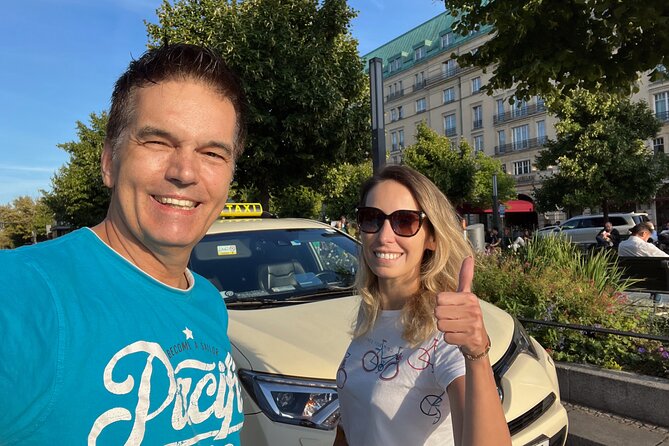
- Gunter Bauer leads in English with a calm, adaptive style that can match what you care about most.
- Private taxi comfort means less transit stress, no line-chasing panic, and an air-conditioned car ready to move you along.
- Wall-and-government contrasts: you’ll jump from Reichstag and Bundestag surroundings to Friedrichstraße escape history and Cold War sites.
- Big sights plus local texture: squares like Gendarmenmarkt mix with neighborhoods like Kreuzberg, plus stops near Markthalle Neun.
- Many stops are outside or free so you keep time for the driving-and-looking rhythm.
- Optional Charlottenburg Castle gives you a classic add-on when you want a longer, ticketed highlight.
More private tours of Berlin
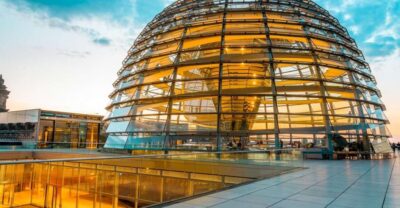
- Berlin: Private Reichstag and Glass Dome Tour★ 4.8 · 2,226 reviews
- Berlin Private Complete History All Day Walking Tour★ 5.0 · 474 reviews
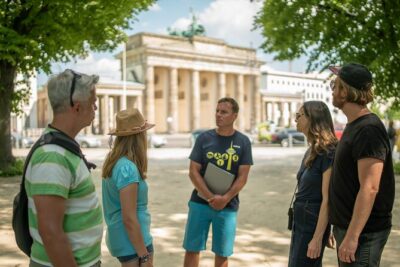
- Private Walking Tour Berlin Third Reich Hitler and World War II★ 5.0 · 360 reviews
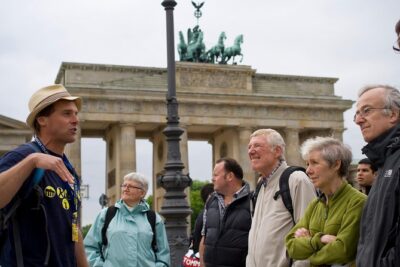
- Private Berlin: Iconic Sights and Hidden Gems Walking Tour★ 5.0 · 292 reviews
Private taxi comfort for 6–8 hours in a city of long distances
Berlin is a city where “quick sightseeing” can turn into staircases, long walks, and lots of tram changes. This format solves that. You’re in a dedicated vehicle with parking fees covered, and the plan is designed for a 6 to 8 hour block starting at 10:30 am.
That matters because Berlin’s best stories often sit far apart from each other: Brandenburg Gate is one world, Bundeskanzleramt is another, and then you’re back into Wall history at Friedrichstraße and Checkpoint Charlie. A taxi loop keeps the day feeling like it has momentum.
Two small practical notes help you enjoy it more:
- You’ll want comfortable shoes anyway, because many stops are still short walks from the curb to the view.
- Lunch is not included, so I recommend you treat that as your flexible “reset” moment, not an afterthought.
Also, if you’re traveling with a toddler, the tour notes child seats for ages roughly 6 months to 3 years (and booster options for older children). Service animals are allowed too.
Brandenburg Gate, Potsdamer Platz, and Sony Center: the day starts in Berlin’s “parlor”
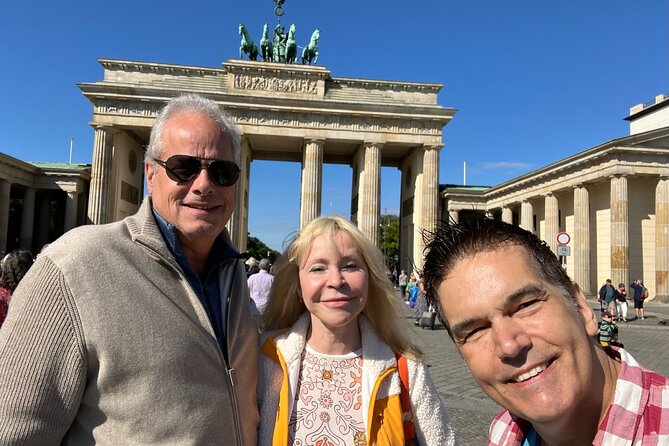
You begin near Pariser Platz and the Brandenburg Gate itself. From the grand side it looks like a single iconic object, but the area’s layers are the point: postwar isolation, Cold War separation, and the way the surroundings were reshaped after reunification. You’re not just seeing a gate. You’re seeing how a nation decided what to rebuild in front of it.
Next comes Potsdamer Platz, with its history swinging between royal planning and modern cross-town traffic. This is where Berlin’s “once was” and “now is” sit almost side by side: Mercedes-era modernity, the Sony Center’s glass-and-steel swagger, and a skyline that feels like it was designed to say, We’re moving forward.
Sony Center is an especially fun stop because of its engineering story: the complex involved moving a listed wing from the old Hotel Esplanade and refitting it so it could survive the redevelopment. It’s one of those Berlin details that makes the modern architecture feel human, not just shiny.
If you’re sensitive to sensory overload, start your day by asking your guide for picture spots with calmer sightlines. The driving helps, but major squares can still be busy.
Reichstag to Bundeskanzleramt: where Berlin’s politics shows off
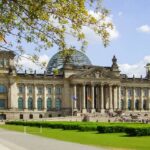
After the classic gate-and-square energy, the tour shifts toward government architecture that’s hard to understand without context. The Reichstag Building is the anchor. You’ll hear why it was so contested historically and how it became the visible symbol of a reunified parliamentary Germany—especially with the dome and the way the public can conceptually “look up” at what happens inside.
Then you move to the parliament work engine: Paul-Löbe-Haus. This is where committee work lives, and the building’s design helps you see how Berlin’s political process is organized—more than just a stage for speeches.
From there, it’s Bundeskanzleramt, the Chancellor’s office. It’s massive in scale—ten floors, hundreds of offices—so the best way to enjoy it is to look for the human details your guide points out, like where the Chancellor’s office sits and how the building’s rotunda works.
You’ll also pass Berlin Central Station (Berlin Hauptbahnhof), often described as Europe’s biggest crossing station. Even if you don’t get lost in the numbers, it’s impressive to see how Berlin built a rail hub that reorganized movement across the city. And since the old West Berlin station Bahnhof Zoo was downgraded, you get a quiet lesson in how transport choices reshape everyday life.
The Cold War “edge” tour: Friedrichstraße, Checkpoint Charlie, and Topography of Terror
This is where the day turns from impressive buildings to lived experience. Around Humboldthafen Bridge, the route is set up to explain how the east-west divide cut through daily geography—and how people tried to cross it anyway.
Then comes Bundespressekonferenz e.V., a modern government press building where the facade visually mirrors the environment around it. It’s a good contrast stop: Cold War secrecy on one side of your day, press visibility on the other.
Invalidenstraße and the nearby ministry area are next, with a heavy backstory. You’ll hear about buildings that served as courts and hospitals in different eras, plus the way Berlin preserves traces—like a piece of sunken Wall treated as public art.
Friedrichstraße and Berlin Friedrichstraße Station are a major focus. This station was the key crossing point during Wall-era division, with barriers, customs controls, and even Stasi observation corridors. The tour’s point here is emotional and practical: why certain stations became escape funnels, and why farewell spaces like the Palace of Tears were so loaded.
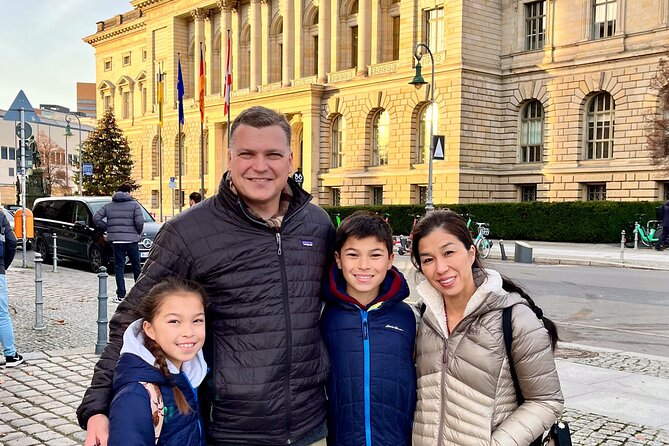
Checkpoint Charlie follows. It’s famous, but it’s more useful when you understand the Allied control context and the global tension that surrounded it early in the Wall period. Even though the area looks touristy now, the guide’s context makes it feel like a hinge in modern history.
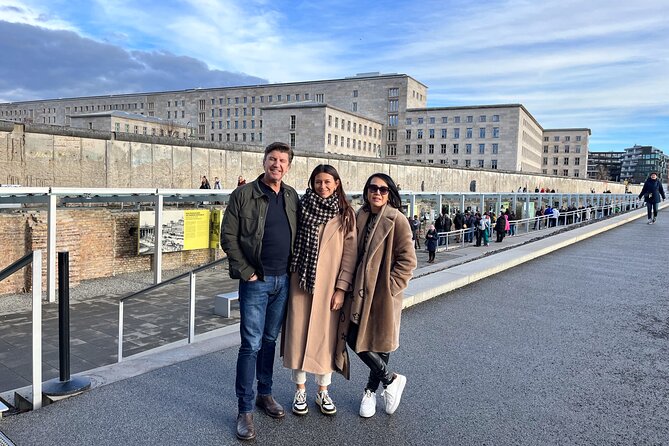
Then you’ll get one of the most meaningful stops of the whole day: Niederkirchnerstraße and Topography of Terror. The “why” is clear on the ground—remaining Wall fragments near the city center, plus an excavation-and-documentation setup that explains what happened in the interrogation spaces of Nazi security organs. If you have limited museum time in Berlin, this is one place where the documentation gives you something you can’t easily recreate on your own.
East Berlin’s aftermath: Alexanderplatz, Karl-Marx-Allee, and East Side Gallery
After the Wall-heavy core, you’ll slide into the postwar East Berlin worldview—first with Alexanderplatz. Here the tour ties the square to older city logic and then to the GDR era’s huge-scale socialist redesign. The television tower becomes the visual proof of engineering ambition, built as a signature of that era’s public image.
Next is Karl-Marx-Allee, including the long, renovated “workers’ palaces” style that grew out of Stalin-Allee. This stop works best when you treat the buildings like documents: who they were meant to impress, and how the June 17, 1953 uprising fits into the story of control and resistance.
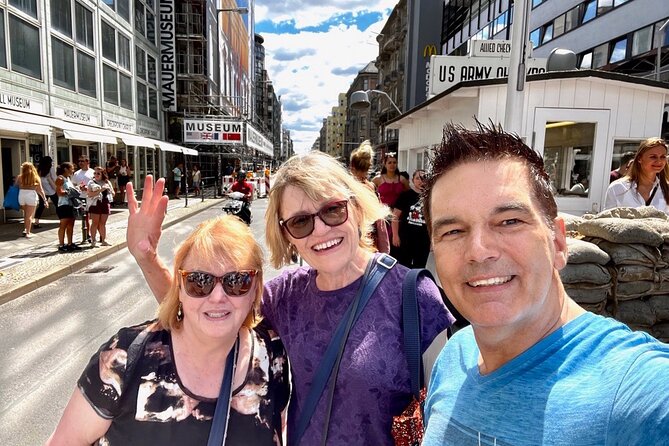
The East Side Gallery caps the East Berlin arc with the Berlin Wall as street-sized art. The location can confuse people because what you’re seeing is a remaining stretch, not the full wall system. Still, the guide’s explanation of the different “behind-the-scenes” layers makes it hit harder: brighter painted images on a surface that once stood for restriction and surveillance.
Crossing the river brings you to Oberbaumbrucke, where the two medieval towers show customs-border logic through their coats of arms. It’s also a great “reorientation” stop: the bridge ties Friedrichshain and Kreuzberg together, and you can look up and down the Spree to understand why Berlin’s waterways mattered for movement and control.
Kreuzberg’s story has two speeds: old streets and new culture
Oranienstraße is where you feel Kreuzberg’s identity tug between historical fabric and planning dreams from the 1960s that never fully happened the way planners imagined. You’ll talk about how alternate culture survived alongside gentrification pressures—and why the street today feels like both past and ongoing change.
Then it’s Kottbusser Tor, with the redevelopment-era housing complex idea and its transformation into Little Istanbul in the visitor imagination. The tour also connects the area to squatter history around the early 1980s, which is a reason so many older buildings were kept and later renovated.
Mariannenplatz and the Bethanien complex bring you to the arts-and-resistance side of Berlin’s newer history. You’ll see how Bethanien fought off demolition plans and became an artists’ house, then evolved again into cultural uses. Theodor Fontaine’s pharmacy is mentioned as well, which is a nice reminder that Berlin’s stories aren’t only political—they’re also medical, literary, and local.
Engelbecken is a short, poignant stop: a place where the Wall’s reach was practically close to what people later returned to as a park. It’s one of those moments where the guide’s “how could it be so near and yet inaccessible” explanation does the real work.
Checkpoint Charlie and the Topography of Terror have already covered major Wall sites, but Niederkirchnerstraße adds a different texture: a perforated Wall area and a look at how Berlin’s center can still contain physical scars. After that, the day shifts again toward cultural anchors like Gropius Bau, where the building’s own history includes being close to Wall-era damage and then rebuilt for major exhibitions.
Classic squares and museum edges: Unter den Linden, Gendarmenmarkt, and Humboldt Forum
Underside of Berlin’s classic postcard scene starts with Unter den Linden. This boulevard’s story is built on purpose—starting as a path and turning into a grand axis lined with palaces, universities, libraries, and opera. Even if you’re not a architecture person, you’ll get a quick lesson on how Berlin’s power centers shaped its walkways.
Russische Botschaft follows, and the size and design are explained as a deliberate display of Soviet influence after the war. Then Gendarmenmarkt arrives—one of Berlin’s most beautiful squares by reputation for a reason. You’ll see the French cathedral and German cathedral meetinghouses (they look like churches, but the tour clarifies what they really are), plus the fact that the French side is still used by a reformed congregation with French services on Sundays.
Bebelplatz gives you the Nazi book-burning reality through a glass-window-on-empty-space concept. Even if you’ve seen photos before, it lands more when you hear what happened here on May 10, 1933.
Neue Wache is another emotional stop: memorial sculpture by Käthe Kollwitz and the shift from guard spectacle to mourning for war and tyranny victims. This stop is less about sightseeing and more about tone-setting for the rest of the day.
Deutsches Historisches Museum rounds out the “big narrative museum” feel. You’ll hear how the building’s role includes weapons and then became a central German history museum after reunification, with external frescoes described as replicas linked to death masks of dying warriors.
Kronprinzenpalais and Kronprinzessinnenpalais sit close to the opera area and add a royal family angle you might not expect in a tour that already covers so much politics. Humboldt Forum then marks the long story of reconstruction: a parking lot once replaced a burned-out palace silhouette, and the forum is now open with a roof terrace highlight while non-European collections take the stage inside.
Stiftung Neue Synagoge Berlin – Centrum Judaicum adds another major layer: Moorish facade details, a golden dome, and the practical reality that the area has serious security. If you want a Berlin tour that doesn’t only cover the Wall, this synagogue stop matters.
From there, Die Hackeschen Hoefe bring you into restored Art Nouveau courtyards where old industrial-use spaces became small shops and galleries. Then Rotes Rathaus gives you the neo-Gothic city hall, with a chance to step inside some interesting rooms for free.
Nikolaiviertel is next, with a city-museum tone at Nikolaikirche and a Biedermeier experience at Knoblauchhaus. It’s the kind of “old Berlin” area that’s partly reconstructed, but the guide’s explanation helps you enjoy it as design and memory, not as a fake time machine.
Alexanderplatz outward: Tiergarten, embassies, Aquarium Berlin, and Zoo Berlin
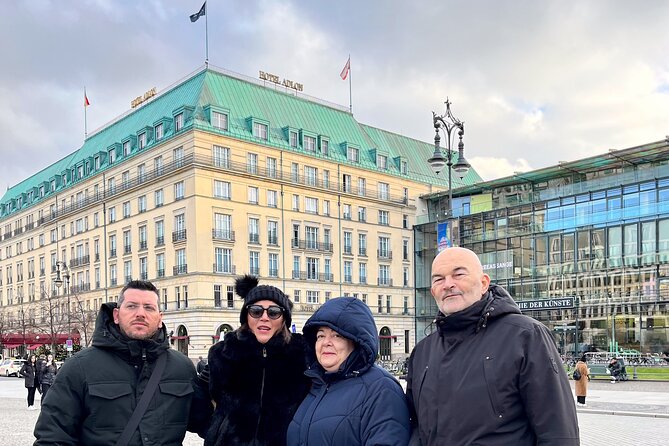
After the city-center squares, the route swings into Tiergarten territory. You’ll hear how it evolved from an electoral hunting ground into a landscaped public space. The guide connects it to historical garden planning and the war damage that forced reforestation.
Bendlerblock becomes the solemn hinge for military resistance—especially around Claus Schenk Graf von Stauffenberg and the July 20, 1944 context. The story is heavier than you expect when you first see the building’s beautiful canal-facing side.
Tiergartenstraße and Landwehrkanal add two different kinds of orientation. Embassy facades show political geography through architecture, while the canal reminds you Berlin is built on water systems: drains, shipping, and navigation routes that shaped city neighborhoods over centuries.
Nordic Embassies – Felleshus is a visual palate shift: a green band that’s described as copper and wooden embassy buildings with shared canteen. Then Aquarium Berlin gives you a lighter, more playful pause near the Dom Aquarée area, including the idea of walking through aquariums and even passing the South Seas tunnel.
Zoo Berlin follows. Even if you don’t pay attention to animal statistics, it helps to know the basics: around 16,000 animals across 1,600 species, and the zoo’s roots traced to the Prussian era. The elephant gate and lion gate are standout exterior cues.
Near Breitscheidplatz and Kaiser Wilhelm Memorial Church, the tour explains why this area’s name gets confused with war memory—and then shows why the church’s preserved tower and modern additions exist the way they do. Theater des Westens and Uhlandstraße pull you into West Berlin’s entertainment-and-shopping feeling, leading toward Kurfürstendamm.
Kurfürstendamm is the west-splendor boulevard story: built on the Champs-Élysées model, later transformed into a retail and flagship strip. Kaufhaus des Westens (KaDeWe) then gets special focus as a luxury department store with a gourmet floor concept—worth it if you like architecture and food culture mixed into one stop.
Wittenbergplatz and Nollendorfplatz add transit-and-social history. The route describes old subway logic and the LGBTQ district history around the area. Kulturforum follows, a museum-planning “counterpart” idea from the 1950s era, with stops like the Philharmonie area and major museums built around it.
You’ll also return near Sony Center for the architectural payoff, then head toward Roomers Berlin Steinplatz and Charlottenburg Palace when the add-on option is selected. Charlottenburg Palace is where the pace can finally slow a little: an hour is listed for it, with interior context and collections noted, plus a reconstructed park side along the Spree.
Berlin Wall Memorial, Tempelhof, and a final sweep through Treptow and markets
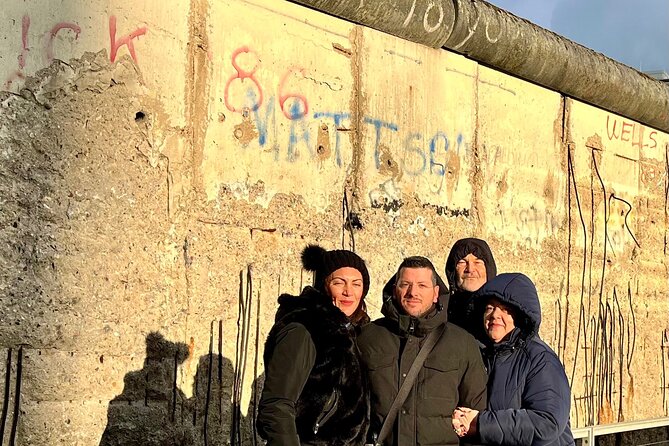
The tour includes time at the Memorial of the Berlin Wall, described as off the main routes, with a documentation center and a watchtower attached to a piece of original wall with death-strip context. This is a “make it real” stop after all the driving explanations.
Then you shift toward Tempelhof, the old airport. The building’s scale—1.3 km front measurement and the big runway-meadow idea—makes the Nazi-era construction context unavoidable. The best way to enjoy Tempelhof is to let it be a living contradiction: huge history, now a park with sheep and kites in the sky.
To round out the West and South Berlin feel, the tour notes a less-covered Kreuzberg angle: Chamissoplatz and the renovated market hall on Marheinekeplatz, plus the idea of the “brave” Kreuzberg side opposite the more famous SO36 reputation.
Finally, you get the Soviet memory side at Sowjetisches Ehrenmal Treptow, with the burial of around 8,000 Soviet soldiers and the sculptural story including a Russian war widow statue and a heroic Soviet soldier rescuing a liberated German child. It’s powerful, and it’s also a reminder that Berlin’s commemorations aren’t just German.
Treptower Park then closes the loop into a more relaxing Berlin view of the Spree, with excursion boats at Treptower Hafen mentioned as an easy way to see Berlin from the water. Warschauer Straße follows for a cultural street feel tied to the RAW repair site history, with art and clubs in old buildings and a note about gentrification pressure.
Markthalle Neun is a strong finish for food-and-life texture: a revived market hall with modern products and lots of specialty snack potential, especially in the evening. Kunstlerhaus Bethanien wraps the cultural side with the Bethanien building’s occupation history, the historic pharmacy of Theodor Fontane again, and a café courtyard moment.
Should you book this private Berlin taxi tour?
Book it if you want a day that mixes Cold War clarity with Berlin’s biggest iconic facades, without having to plan a route of trains, walking transfers, and guesswork. The private format works well for older travelers, first-timers who need orientation fast, and anyone who likes their sightseeing connected to real human decisions—who built what, who controlled it, and why the city looks the way it does now.
Don’t book it if your dream Berlin day is long museum time or slow meandering with no structure at all. This tour is designed to cover a lot of ground and ideas in 6–8 hours, so you’ll want to add separate “linger” time elsewhere.
If you do book, the smart move is to tell Gunter Bauer what you want more of—Wall details, government architecture, neighborhood change in Kreuzberg, or West Berlin shopping culture. This is the one factor that can turn a good overview into a personal Berlin lesson.
FAQ
How long is the Berlin private taxi tour?
The duration is about 6 to 8 hours.
Is the tour private or shared?
It’s private. Only your group participates.
Is pickup included, and where?
Pickup within the S-Bahn ring in downtown is included. Pickup from BER airport or outside the S-Bahn ring costs extra.
What language is the tour offered in?
The tour is offered in English.
Are there any ticketed stops included?
Charlottenburg Palace entrance is included when you book that option. The rest of the stops listed are mostly outside or marked as free.
What’s included in the taxi ride itself?
An air-conditioned vehicle is provided with WiFi on board, parking fees covered, and private transportation. Lunch is not included.
More Private in Berlin



More Tours in Berlin

More Tour Reviews in Berlin
Round out your days in Berlin
Private, compared.
 ★ 4.8Private Reichstag and Glass Dome TourFrom $2882,226 reviews
 ★ 5.0Berlin Private Complete History All Day Walking TourFrom $253474 reviews
 ★ 5.0Private Walking Tour Berlin Third Reich Hitler and World War IIFrom $192360 reviews
 ★ 5.0Private Berlin: Iconic Sights and Hidden Gems Walking TourFrom $192292 reviews
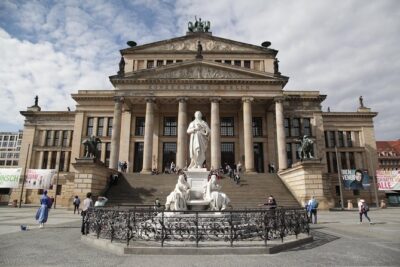 ★ 5.0Berlin Private Half-Day Walking Tour: Discover the German Capital’s HistoryFrom $180244 reviews
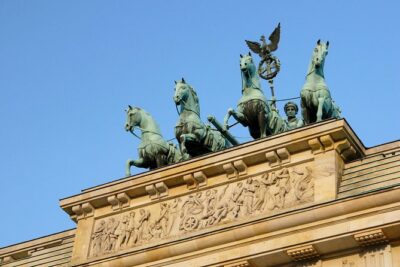 ★ 5.0Private Walking Tour: World War 2 and Cold War Sites in BerlinFrom $192230 reviews
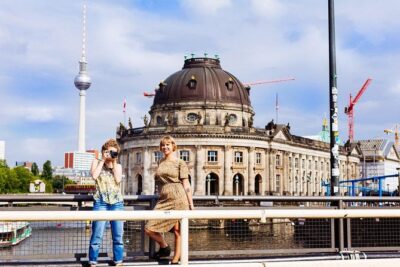 ★ 5.0The History of Berlin: WWII PRIVATE Walking Tour With LocalsFrom $143209 reviews
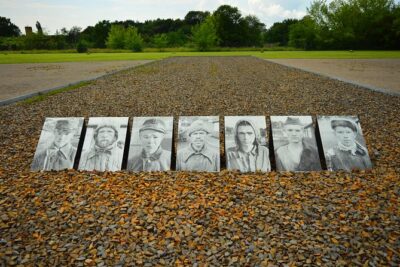 ★ 5.0Private Sachsenhausen Concentration Camp tour with trainFrom $338205 reviews