
REVIEW · PRIVATE
Private Taxi Tour through Berlin East and West and Kiez 4-6h
Berlin feels twice as fast from a taxi window.
I like that you see East and West in one day, instead of choosing one side like most walking tours. I also like the story structure: a guide who mixes architecture, politics, and personal, human detail so the city’s changes make sense. One thing to consider is seating: if you end up in the middle of the back row, your sightlines to tall buildings can be a bit limited.
You’ll ride in a comfortable, higher-up luxury SUV with air conditioning and Wi‑Fi, and you’ll still get small walking breaks at key photo moments. The best value comes from the mix of long driving with short exit-and-look stops, so you don’t waste time schlepping between far-flung sites. The other consideration is language comfort: the guide works in German and English, so if you need Portuguese or another language, you may find translating tiring.
In This Review
- Key points I think you’ll care about
- How a Berlin “taxi tour” keeps the history readable
- West Berlin first: Kurfürstendamm to the Memorial Church
- The wall’s geography: Potsdamer Platz to Brandenburg Gate
- Checkpoint Charlie and Topography of Terror: where the story tightens
- Museum Island and the “rocket science” of views: Humboldt Forum rooftop
- East Berlin icons: Nikolaiviertel, Alexanderplatz, and the rebuilt center
- East Side Gallery and Oberbaumbrücke: modern Berlin built on border ghosts
- Regierungsviertel energy: Reichstag, Chancellery, and the big institutions
- Green stops and big-city comfort: Tiergarten and the zoo area
- City planning reality check: time, stops, and seat comfort
- Price and value: $128 per person for guided routing plus rooftop access
- Who should book this taxi tour
- Should you book it?
- FAQ
- FAQ
- What languages is the guide available in?
- Is this tour private or shared?
- How long is the tour?
- Where does pickup happen for free?
- Can the tour pick up from the airport?
- What’s included in the ticketing for this tour?
- What vehicle will you ride in?
- Are there any walking stops?
- Is food included?
- Is the tour wheelchair accessible?
- What should I bring for the rooftop?
Key points I think you’ll care about
- A private taxi-and-walk format that covers far more ground than a pure walking tour
- East + West planning so the history lands in the right order, not as random stops
- Short, focused exits at major places like Brandenburg Gate and Checkpoint Charlie
- Humboldt Forum rooftop entry included, with a big-city vantage that ties the story together
- Licensed guide who also drives, so the narrative and timing stay smooth
- Great for mixed ages, including kids and grandparents, when you want clear explanations
More private tours of Berlin
- Berlin: Private Reichstag and Glass Dome Tour★ 4.8 · 2,226 reviews
- Berlin Private Complete History All Day Walking Tour★ 5.0 · 474 reviews
- Private Walking Tour Berlin Third Reich Hitler and World War II★ 5.0 · 360 reviews
- Private Berlin: Iconic Sights and Hidden Gems Walking Tour★ 5.0 · 292 reviews
How a Berlin “taxi tour” keeps the history readable
Berlin’s story is complicated on purpose: empires rise and fall, wars smash the center, then the city splits into rival systems. The big win here is that you’re not just sightseeing; you’re getting a route that helps you understand what you’re looking at.
You start with a pickup from your accommodation within the S-Bahn Ring, so you begin close to the action without doing transit logistics first. Then you ride in a luxury SUV (leather seats, AC, and Wi‑Fi) with a higher seating position, which helps you see rooftops and street layouts. From outside, you’re not meant to be a spectacle, so the experience feels more like a private conversation than a parade.
The tour format is also practical for time. Most stops are photo-pass moments, and then you get small walking exits when it matters. That means you can still keep moving even if you’re dealing with Berlin weather, crowds, or just the reality that museum queues can eat your day.
West Berlin first: Kurfürstendamm to the Memorial Church
The tour commonly starts near Hotel am Steinplatz and heads through classic West Berlin icons. This ordering matters because you first see the city’s more “capital-like” West image before you hit the heavy Wall-era geography.
You’ll pass along Kurfürstendamm, Berlin’s former boulevard of prestige and shopping energy. Then the route continues past major landmarks such as the Kaiser Wilhelm Memorial Church, a symbolic structure that’s closely tied to the city’s wartime damage and the way Berlin chose to remember it rather than erase it. Even if you’re not a church person, this stop is useful because it frames Berlin’s “ruins and rebuilding” theme early.
Next come the big West shopping and entertainment zones, including the Europa-Center and KaDeWe area. You get to see how a “modern capital” vibe developed in the West, even while you know the city’s center was largely broken and divided.
If you enjoy understanding how cities brand themselves, the West section gives you that angle fast: wide avenues, monuments, and institutional buildings that say confidence. And you’re not just driving past them; the guide connects them back to the political split and how each side developed differently.
The wall’s geography: Potsdamer Platz to Brandenburg Gate
The Wall story becomes real when you see how Berlin’s “in between” spaces worked. One of the most striking examples is Potsdamer Platz, which is framed as part of the so-called death stripe. Here, the imagery isn’t just symbolic: the area between the front and back barriers was about 80 meters wide, and much of what existed before the war was erased on both sides.
A smart part of the narrative is the way the guide explains what replaced that empty space later. In the 1990s, the area was rebuilt with modern development, including the Sony Center and the Mercedes-Benz Quarter. You can look around and understand why Berlin is so good at reinventing itself: it doesn’t just rebuild; it rebuilds with new meanings layered on top of old destruction.
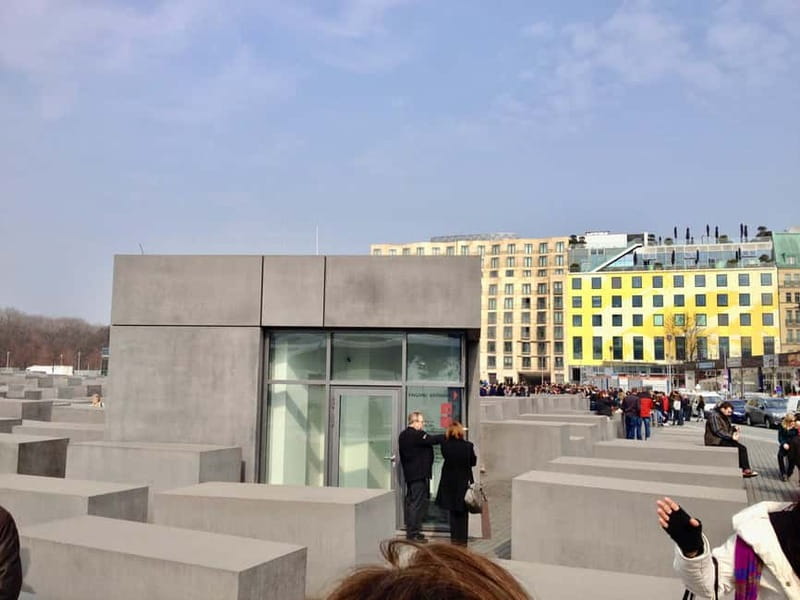
From there, the route pushes north toward Brandenburg Gate, with key remembrance stops timed into the approach. Before you get the Gate, you’ll see the 2711 steles of the Holocaust Memorial, representing the six million murdered Jews of Europe. It’s a heavy moment, but it’s also a useful one because it anchors the rest of the day: you’ll notice how Berlin uses space to tell history, not just to host events.
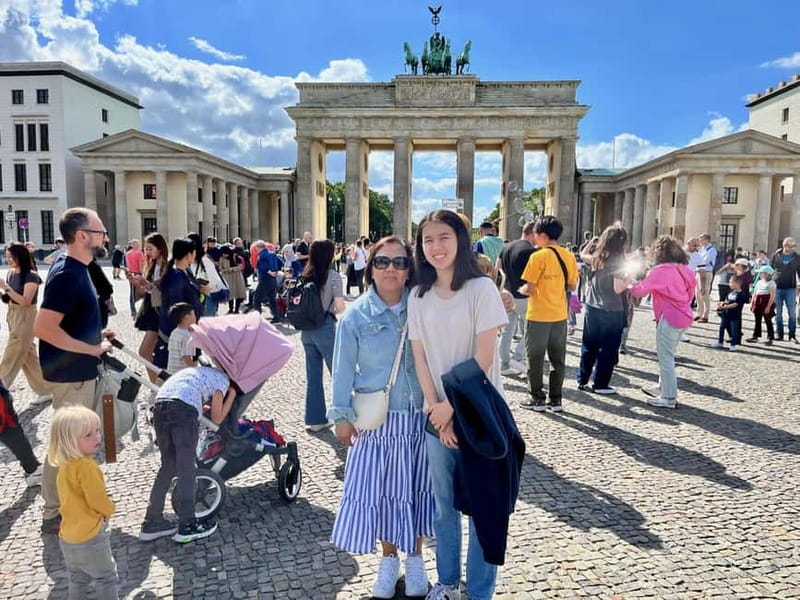
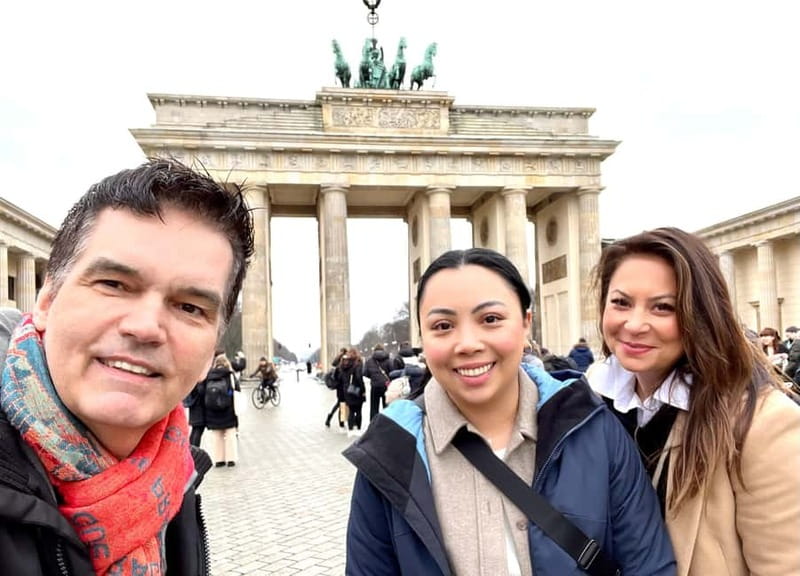
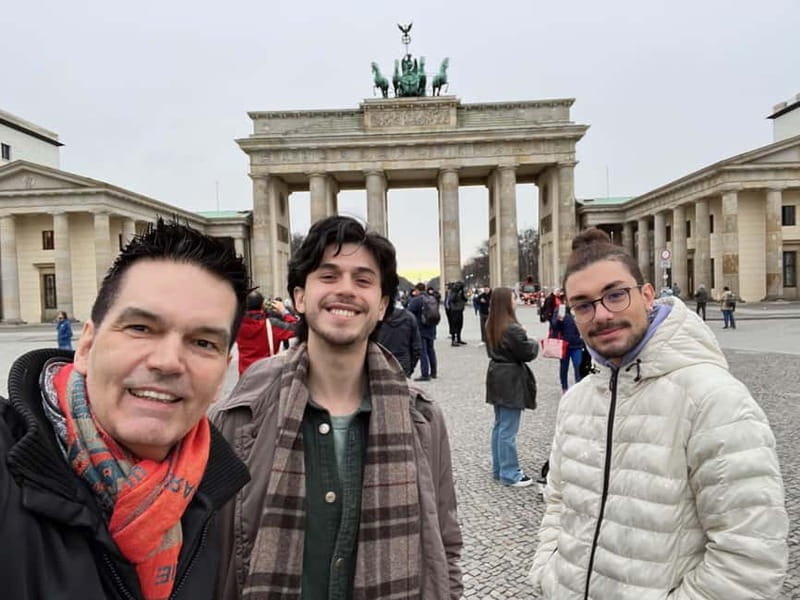
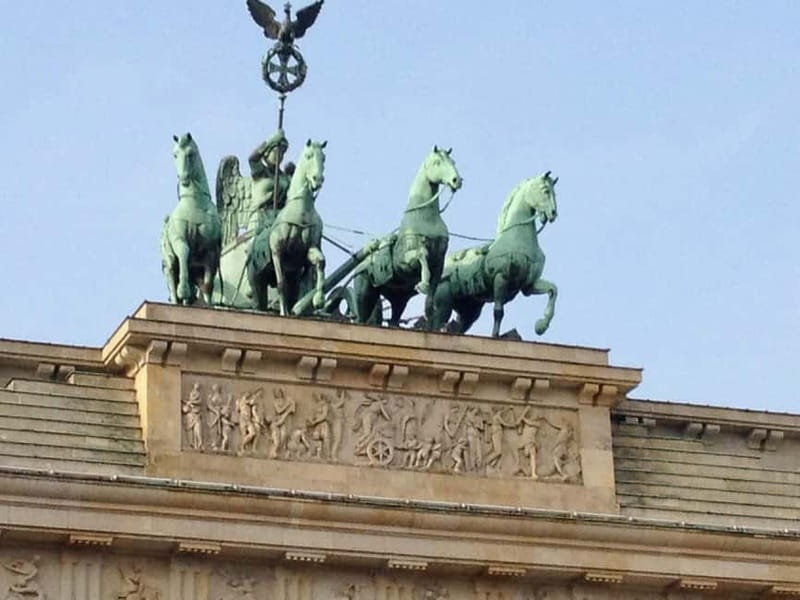
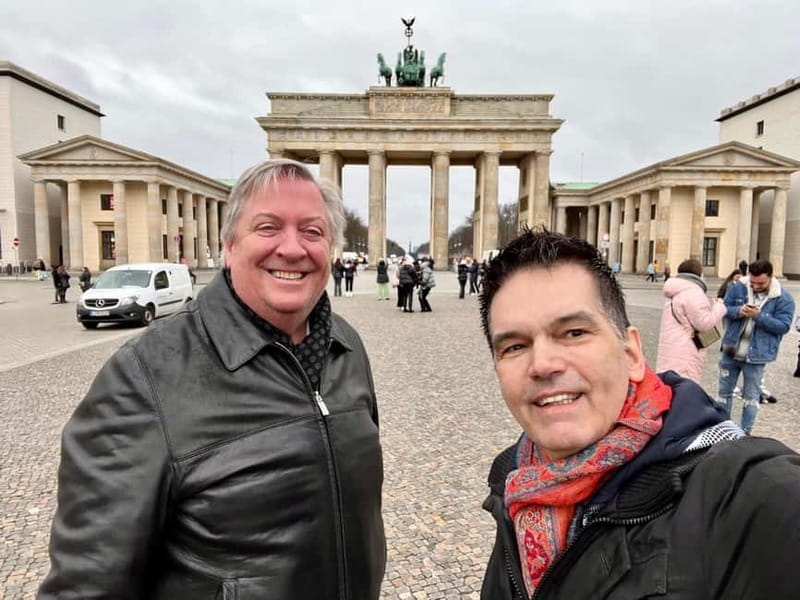
Then, at Brandenburg Gate, the guide adds context beyond the usual postcard explanation. You learn how the Gate functioned as an ancient-city gateway before Berlin’s division, which makes it easier to grasp why the historic core ended up tied to East Berlin’s earlier spread patterns.
Checkpoint Charlie and Topography of Terror: where the story tightens
There’s a point in the tour when the driving stops feeling like sightseeing and starts feeling like walking through the map of a crisis. That’s where places like Topography of Terror and Checkpoint Charlie come in.
At Topography of Terror, you typically get a photo stop and a short guided walk. The guide can connect the buildings and the location to the machinery of terror, which helps you understand why this area is treated as evidence rather than just a monument. It’s one of the stops where “architecture meets accountability” in a way that makes your own photos feel less random.
Then you get a visit to Checkpoint Charlie, including a photo stop plus a short walk. This is the kind of stop that benefits from a driver-guide: you’re not only looking at a point on the Wall timeline, you’re also learning what made the crossing feel impossible and why the city’s daily life got shaped by borders.
One practical note: because these stops involve short walks, wear shoes you can trust. Berlin may look easy on a flat map, but the ground and curb corners add up when you’re doing repeated photo exits.




Museum Island and the “rocket science” of views: Humboldt Forum rooftop
If you care about buildings and city planning, Berlin rewards you with strong visual payoffs. The tour spends time around Museum Island, where the spacing and river-side layout make it easier to see why this area became a cultural heavyweight.
You’ll pass major museum façades and photo-stop around classic names like Bode Museum, Pergamon Museum, and Neues Museum, plus viewpoints around Berlin Cathedral, Lustgarten, and the German Historical Museum area. Even if you don’t go inside, the exterior context helps you understand how Berlin positions knowledge and power next to each other.
The highlight for many people is the included Humboldt Forum rooftop ticket. It’s not just a view for views’ sake. From above, you can look back at the city’s rebuilding logic: different eras, different styles, and a whole lot of intentional contrast. The rooftop is also practical because you’re not stuck in another indoor queue.
Two small tips before the rooftop: plan for wind (jackets help), and bring water. If the weather is messy, an umbrella can save your day when you’re walking between photo stops.
East Berlin icons: Nikolaiviertel, Alexanderplatz, and the rebuilt center
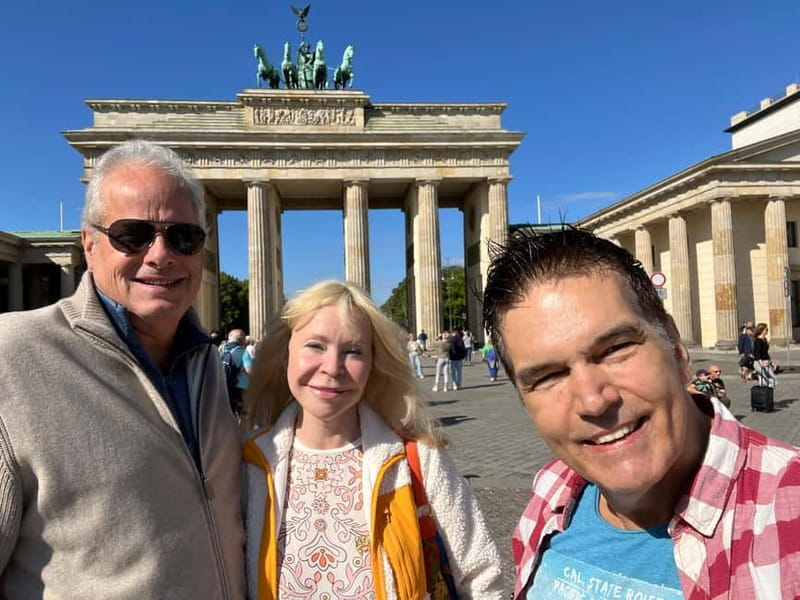
After Brandenburg Gate, the route leans into a different Berlin rhythm. The city doesn’t feel the same once you cross into the story of East Berlin’s development and its later transformation after reunification.
You’ll pass through areas like Nikolaiviertel (including photo stops), then see civic landmarks such as Rotes Rathaus and the TV-tower zone. These are “you can see it from a distance” stops, but they matter because they show how East Berlin built around government visibility and public space.
The tour also threads through university and political symbolism around Humboldt University and nearby historic settings. If you enjoy “how does a city educate its citizens” questions, this part gives you good hints without turning into a lecture.
Then comes the spine of East-era urban design: Karl-Marx-Allee. It’s a street that makes the philosophy of a system visible in concrete. The guide’s job here is to show you not only what the buildings are, but why they got built that way.
Later, you’ll also see Alexanderplatz, Ostbahnhof, and the general shift toward the areas that became more accessible after the Wall fell. Reunification is treated not as a single moment, but as the start of new growth toward the former border—so the driving route helps you feel that change spatially.
East Side Gallery and Oberbaumbrücke: modern Berlin built on border ghosts
This is one of those moments where the city looks free—until you remember what used to be here. You get to stop for the East Side Gallery, typically with a visit and a short guided walk.
The meaning of the Gallery isn’t limited to street art. It’s also about how Berlin repurposed border history into something public, creative, and readable. You can stand near it and understand how “Wall remains” became “Wall transformed,” with new messages layered over old concrete.
Right after, the route often includes scenic views around Oberbaumbrücke and other crossing points. Bridges in Berlin are never just bridges; they’re memory lines. You get a cleaner sense of the river’s role as a boundary, then later as a connector.
Regierungsviertel energy: Reichstag, Chancellery, and the big institutions
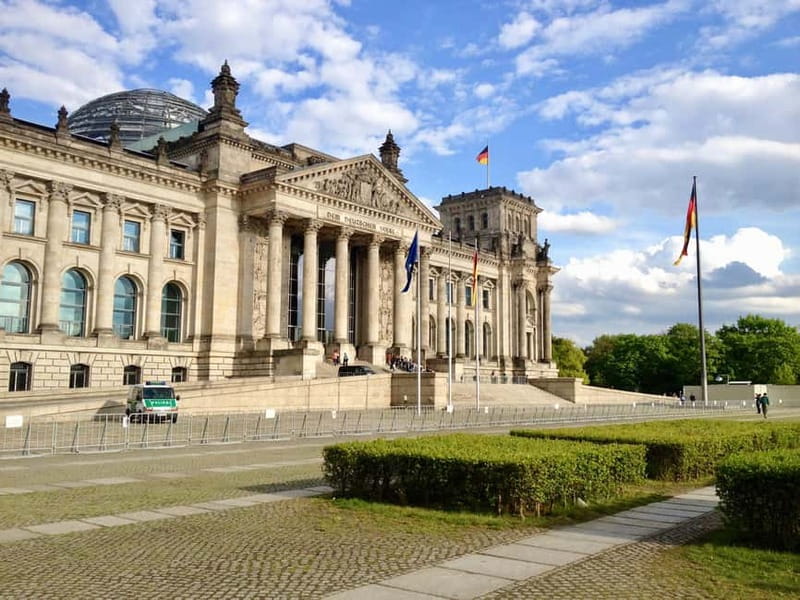
When the tour turns toward the government zone, the tone shifts again. You’ll see major landmarks near the German political center, including stops around the Reichstag area, the German Chancellery, and Paul-Löbe-House.
You’ll also get a photo stop for Hitler’s Bunker (Führerbunker). That stop can feel surreal at first because you’re still in normal city traffic—then the guide’s context makes it clear how close everyday movement can get to catastrophic past events.
Then there’s the Holocaust Memorial area near the end of that broader story chain, followed by more driving past embassies and institutional buildings. It’s a long day segment, but the way the route links memory sites with current governance helps you see Berlin as a place that confronts its past while actively shaping policy now.
Green stops and big-city comfort: Tiergarten and the zoo area
Not every moment needs to be heavy. The tour also includes classic “Berlin air” views such as Tiergarten and the wider central greenery that softens the city’s hard edges. You’ll pass through sections near Landwehrkanal and around Berlin Zoo / Zoologischer Garten Station.
These are useful breaks. They give you visual contrast after dense historical districts, and they also help you keep your energy for the late-day walking moments. The SUV stays the main tool here, letting you shift from open views back to safe, comfortable travel when traffic or weather changes.
City planning reality check: time, stops, and seat comfort
Duration can run from 150 minutes to up to 5 hours, so you should think of this as a flexible “big hit” day rather than a strict timetable like a museum reservation. Most of the time, you’ll be on the move, and then you’ll have short walks at specific sites for photos and context.
Seat choice can matter more than you’d think. One reviewer mentioned that in a sedan taxi setup, a passenger seated in the middle back seat couldn’t see the buildings as well. With an SUV you may have better sightlines, but it’s still smart to request or choose the side seats when possible—especially if you’re tall or you love photography.
Also, remember you’re doing both fast driving and short walking exits. You won’t cover every corner of Berlin like a multi-day stay, but you’ll see a lot of the “story spine” connecting East and West.
Price and value: $128 per person for guided routing plus rooftop access
At around $128 per person, the value comes from three things working together:
First, you’re paying for a licensed guide who is also driving. That means less dead time. You’re not swapping guides or waiting on transit schedules.
Second, the car does the hard work of Berlin’s distances, so you see far more than the typical two-hour highlights version.
Third, you get entry ticket to the Humboldt Forum rooftop, which helps justify part of the cost with a real paid experience and a strong view reward.
If you’re traveling as a small group, this format tends to feel more reasonable than piecing together separate transit, museum entries, and multiple guide pickups. If you’re solo, it’s still a good way to get the “whole city” perspective quickly—just expect that the car does most of the work and the walks are short.
Who should book this taxi tour
This is a strong fit if you want:
- East and West Berlin in one route, with the story in a sensible order
- A guide who can explain buildings and politics in short, understandable pieces
- A comfortable way to see a lot without nonstop walking
- A real highlight payoff at the Humboldt Forum rooftop
It may be less ideal if you need:
- A strict, long museum-only day (this is more street-and-story than “stand in a gallery for hours”)
- A language other than German or English
- Maximum window views from every seat position
Should you book it?
I’d book this tour if your goal is to understand Berlin fast, not just photograph it. The East-to-West routing, the short walks at big memory sites, and the included rooftop access make it feel like a curated day without turning into a rigid script.
If you’re sensitive about language or seating visibility, plan for it: bring your strongest language support tools (or be ready to translate), and aim for a seat with the best views. For families and mixed ages, the guided style seems to land well, and that’s a big deal when you want everyone to leave satisfied.
Overall: if Berlin history is on your list and you’d like it explained clearly from a comfortable car, this is a practical, high-value way to do it.
FAQ
FAQ
What languages is the guide available in?
The live tour guide is available in German and English.
Is this tour private or shared?
It’s a private group experience.
How long is the tour?
The duration is listed as 150 minutes to 5 hours.
Where does pickup happen for free?
Pickup and drop-off are included within the city railway circle (S-Bahn Ring). You can also be picked up from any address in that specified area.
Can the tour pick up from the airport?
Airport transfer is not included, but pickup from the airport may be possible for an extra fee of about 50 euros.
What’s included in the ticketing for this tour?
The tour includes an entry ticket to the Humboldt Forum rooftop.
What vehicle will you ride in?
You ride in a luxury SUV with air conditioning, leather seats, parking fees covered, and Wi‑Fi onboard.
Are there any walking stops?
Yes. There are short walking exits and guided walks at specific points (for example around key historic sites and photo stops).
Is food included?
Food and drinks are not included.
Is the tour wheelchair accessible?
The tour is wheelchair accessible, but the wheelchair should be foldable or small enough to enter the vehicle.
What should I bring for the rooftop?
Bring a jacket (it may be windy on the rooftop), and consider water. An umbrella can help if the weather is bad.
More Private in Berlin





More Tours in Berlin


More Tour Reviews in Berlin
Round out your days in Berlin
Private, compared.
 ★ 4.8Private Reichstag and Glass Dome TourFrom $2882,226 reviews
 ★ 5.0Berlin Private Complete History All Day Walking TourFrom $253474 reviews
 ★ 5.0Private Walking Tour Berlin Third Reich Hitler and World War IIFrom $192360 reviews
 ★ 5.0Private Berlin: Iconic Sights and Hidden Gems Walking TourFrom $192292 reviews
 ★ 5.0Berlin Private Half-Day Walking Tour: Discover the German Capital’s HistoryFrom $180244 reviews
 ★ 5.0Private Walking Tour: World War 2 and Cold War Sites in BerlinFrom $192230 reviews
 ★ 5.0The History of Berlin: WWII PRIVATE Walking Tour With LocalsFrom $143209 reviews
 ★ 5.0Private Sachsenhausen Concentration Camp tour with trainFrom $338205 reviews