
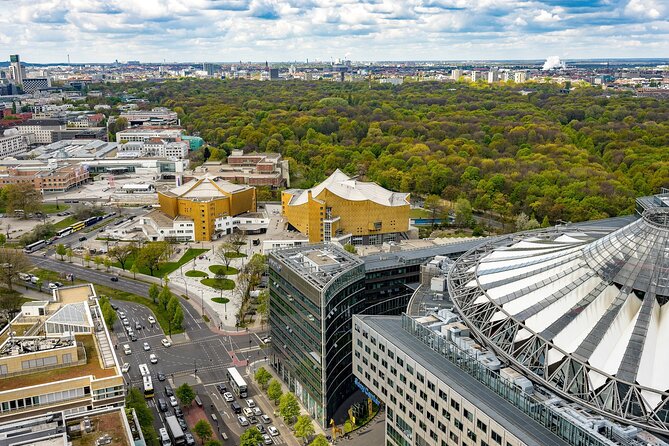
REVIEW · PRIVATE
Private Tour of David Bowie’s West-Berlin
Bowie’s Berlin lives in real streets. This private tour strings together West Berlin in the 1970s using the places referenced in Where are We Now?, then shows you how much the city has changed since. You start at Potsdamer Platz, work your way toward Hansa Studios, hop on the train for the City West area, and end at Bowie’s former home.
I especially love the music-to-city connection: you see why Bowie kept returning to these same corners, from Kaufhaus des Westens to Zoo Station. I also like that your guide, Martin, brings more than fan facts—he ties in architecture and even heavier topics like the Holocaust, while still keeping the walk genuinely fun and personal.
One possible drawback: the time is tight at about 3 hours, so some stops are short and mostly photo-and-context moments rather than long museum-style visits.
In This Review
- Key points to know before you go
- A Bowie map for West Berlin’s biggest eras
- Meet at Deutsche Kinemathek and plan for a 3-hour rhythm
- Potsdamer Platz: where Bowie points and Berlin keeps rewriting itself
- Kaufhaus des Westens (KaDeWe): the shopping stop with real attitude
- Zoo Station and the Christiane F connection
- Hansa Studios: the Berlin Trilogy recording window moment
- Dschungel site near Nürnberger Str. 53: nightlife memory without the club
- Neues Ufer (Anderes Ufer): a nightcap bar stop you can actually imagine
- Bowie’s former home at Hauptstraße 155: the closing moment for fans
- Guide Martin: the difference between a tour and a learning session
- Price and value for a private group of up to 8
- What to expect at each stop, realistically
- Who this tour suits best
- Should you book this Private Tour of David Bowie’s West-Berlin?
- FAQ
- How long is the private tour?
- How much does the tour cost?
- Is this a private tour or a group tour?
- Where does the tour start and end?
- Is the ticket delivered digitally?
- Are admission tickets included for the stops?
- Can I bring a service animal?
Key points to know before you go
- Private group, up to 8 people, with your own guide for a slower, more personal pace
- Martin’s range spans Bowie sites, city design, and even serious historical context
- Hansa Studios + the Berlin Trilogy connection, with photo-friendly stops outside the studio
- Train rides included, so you actually move between neighborhoods the way locals do
- Outdoor memorial culture at Bowie’s former home, where fans leave candles and flowers
More private tours of Berlin
- Berlin: Private Reichstag and Glass Dome Tour★ 4.8 · 2,226 reviews
- Berlin Private Complete History All Day Walking Tour★ 5.0 · 474 reviews
- Private Walking Tour Berlin Third Reich Hitler and World War II★ 5.0 · 360 reviews
- Private Berlin: Iconic Sights and Hidden Gems Walking Tour★ 5.0 · 292 reviews
A Bowie map for West Berlin’s biggest eras
If you’re the kind of person who hears a song and then wants to see the street it’s pointing to, this tour works. The backbone is David Bowie’s 2012 homage, Where are We Now?, which references specific West Berlin locations. The experience turns those mentions into a walk-and-transit route you can picture in your head long after the tour ends.
What makes it more than a trivia stroll is how the city itself takes center stage. West Berlin has gone through massive changes, and the route is built to help you spot that contrast fast. You don’t just learn where Bowie went—you start noticing how Berlin reworked the same ground over time.
You also get a guide who can handle more than one mood. Martin’s style blends light fan energy with broader cultural context, so the tour has real emotional range: from studio windows and shopping stops to the weightier parts of 20th-century Berlin.
Meet at Deutsche Kinemathek and plan for a 3-hour rhythm
The tour starts at Deutsche Kinemathek, Mauerstraße 79 (10117 Berlin). You’ll finish at Hauptstraße 155 (10827 Berlin) near Bowie’s former home. Expect a total length of about 3 hours, and a route that mixes walking with short public-transport train rides.
That timing matters because you’re covering several different parts of West Berlin in one sitting. A few stops are intentionally brief (about 10–20 minutes each), which keeps the flow going but means you should be ready to move. If you like to linger at every stop, you’ll probably want to add extra time afterward on your own.
The tour uses a mobile ticket, and it’s a private tour so only your group participates. That also means you can ask Martin questions in real time without waiting for the whole group to catch up.
Potsdamer Platz: where Bowie points and Berlin keeps rewriting itself
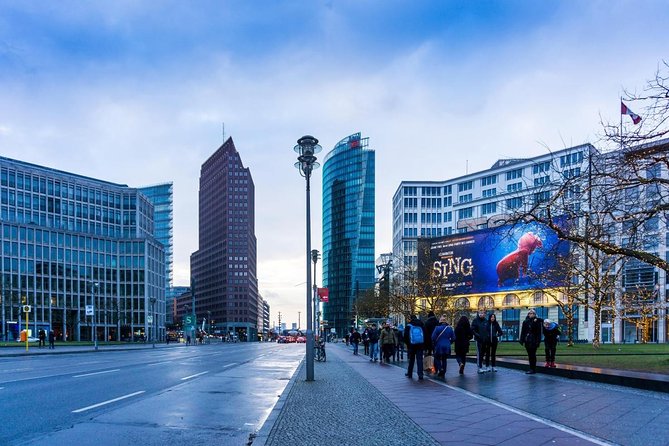
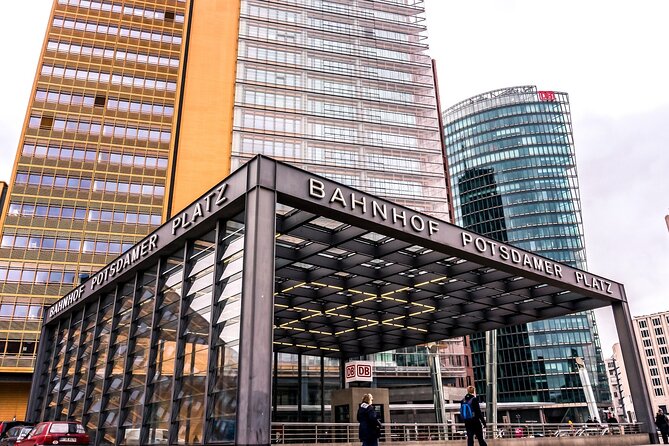
You begin at Potsdamer Platz, a square that has swung between major activity and major emptiness—and then back again. In Where are We Now?, Bowie includes it as part of the feeling of distance, memory, and change. Seeing it in person gives that lyric a sense of place, not just sound.
The practical value here is orientation. Potsdamer Platz is the kind of landmark you can use later to make sense of the city’s geography. Once you stand there, you’ll start to understand why West Berlin’s different districts felt like separate worlds.
This is a quick stop, around 15 minutes, but it’s the kind of first stop that sets your brain up for pattern-matching the rest of the route.
Kaufhaus des Westens (KaDeWe): the shopping stop with real attitude
Next is Kaufhaus des Westens, widely known as KaDeWe. Bowie references it as part of everyday life—places you’d visit for groceries and errands, not just grand sightseeing. The tour gives you a chance to connect the lyrics to a landmark that still anchors the area.
Why this is worth your time: KaDeWe works as a shortcut to West Berlin’s mindset. Department stores in a divided city weren’t only about products. They were about normal life, comfort, and consumer culture in a place that otherwise felt politically abnormal.
This stop is also about 15 minutes, so think of it as a visual anchor—check the building, take photos from the street, and let Martin’s context do the heavier lifting.





Zoo Station and the Christiane F connection
Then you shift toward Bahnhof Zoologischer Garten, commonly called Zoo Station. This stop brings in an unexpected extra layer: Martin connects it to Christiane F., who was a big David Bowie fan and spent time around the station. The tour also references how Bowie’s music shows up in the film adaptation connected to her story.
The point isn’t to turn Zoo Station into a museum. It’s to show you how Bowie’s presence threaded into West Berlin pop culture beyond just concert venues. Stations are where people pass through, but they also gather scenes—and this one holds a special place in Berlin storytelling.
If you like the idea of seeing how music attaches to real public spaces, this is one of the more emotionally clever stops.
Hansa Studios: the Berlin Trilogy recording window moment
One of the highlights is the stop at Hansa Studios. This is where Bowie recorded much of his Berlin Trilogy, and the tour makes it more than a name-drop.
You’ll get time to take photos of the iconic studio, and there’s even mention of a GIF-style animation of Bowie in one of the studio windows. Even if you’re not a hardcore film-and-music gear person, it’s a strong visual cue that this place still has personality.
This is also where the tour’s structure helps you. You’re not just walking past history—you’re moving into the zone where Bowie’s studio era happened, and it makes the rest of the city feel like part of the same chapter.
Dschungel site near Nürnberger Str. 53: nightlife memory without the club
Next comes Nürnberger Str. 53, the former location of the Dschungel. This was one of the places where Bowie could be found almost every night. The club itself no longer exists, but the spot does.
This stop is valuable because it teaches you how to read a city even when the original story has vanished. Martin helps you hold two ideas at once: the building might be gone, but the cultural pattern it represented still echoes through the area.
It’s a 15-minute stop, and it’s best if you’re ready to let the guide’s framing do the work. Think of it as a street-level time machine, not a preserved set.
Neues Ufer (Anderes Ufer): a nightcap bar stop you can actually imagine
Toward the end, you’ll get a look at Neues Ufer, formerly known as Anderes Ufer. This was a local gay bar where Bowie hung out a lot, often for a nightcap, and the bar was described as being open 24/7.
The tour gives you about 10 minutes at the location. Having a drink is optional, and many people choose to grab one after the walk. If you want a simple way to “complete the chapter,” it’s the most natural place to do that.
Even if you don’t drink, the stop helps you understand Bowie’s Berlin as lived-in nightlife culture, not just studio work and record-industry glamour.
Bowie’s former home at Hauptstraße 155: the closing moment for fans
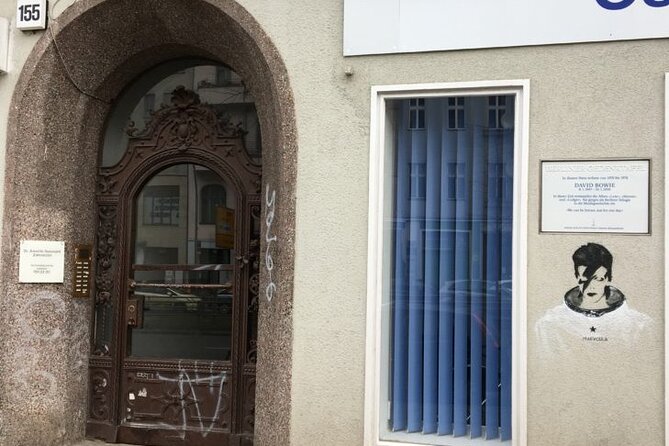
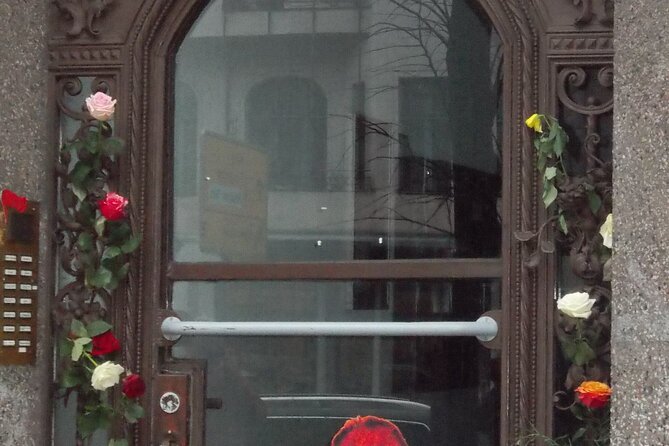
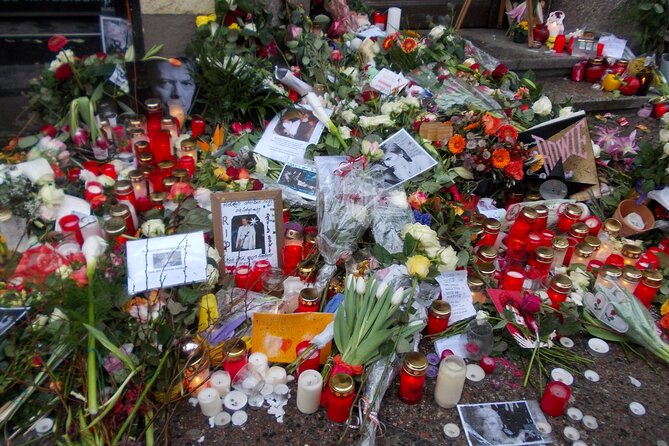
The tour ends at Hauptstraße 155, where Bowie lived between 1976 and 1978. This final stop is short—around 15 minutes—but it’s emotionally different from the earlier points.
You’ll likely notice flowers and candles left on a ledge that’s part of the building’s turn-of-the-century design. The detail matters. It makes the memorial feel integrated into the architecture rather than tacked on as an afterthought.
This is where the title of the song, Where are We Now?, stops feeling like an abstract idea. You’re standing at a real address tied to a specific slice of Bowie’s life, and the city is doing what cities do: layering memory onto stone.
Guide Martin: the difference between a tour and a learning session
The guide is a big part of why this experience earns top marks. In past outings, Martin has been praised for covering a variety of topics, not only Bowie references. People specifically noted that he connects Bowie with architecture and also touches on the Holocaust when it fits the context of the places on the route.
There’s also evidence of strong flexibility. One family got a tour adjusted to support a student’s GCSE History curriculum, and the results were described as inspiring enough to fuel serious progress. If you’re traveling with teenagers or you want something that has school-friendly structure, this is a good sign.
My practical advice: come with 2–3 questions. If you only ask Bowie trivia, you’ll get Bowie trivia. If you ask how the city design or historical changes shaped daily life, Martin has the material to make the stops land harder.
Price and value for a private group of up to 8
The price is $285.07 per group, for up to 8 people. That’s the headline number, but the real question is value.
For a private tour, you’re not paying per person; you’re paying for the guide time and the planned route. In a full group, that can come out to a fairly reasonable per-person cost, especially compared with booking multiple separate city walks. It’s also good value if you want a tour that’s not cookie-cutter—Martin’s ability to tailor topics (like the GCSE mention) is exactly the kind of thing you only get when the format is private.
Also, the tour includes guiding services only. You’re not paying for entry tickets to attractions as part of the package. Many of the stops are outdoor or street-level, and the itinerary notes free admission at each listed stop. Still, if you decide you want extra museum time during your day, you’ll handle that separately.
One more practical note: the tour is often booked about 59 days in advance. If you want a specific day, don’t wait too long.
What to expect at each stop, realistically
Here’s the overall pattern you should expect. Most stops are around 10–20 minutes, and you’ll be switching between areas with short train rides. That’s not a drawback if you like moving and learning through repetition. It’s just the trade-off: quick context beats long stays.
So plan your mindset like this:
- You’ll gather visual anchors you can remember later.
- You’ll get story context from Martin to interpret what you’re seeing.
- You’ll walk enough to feel like you’re doing a proper tour, but it’s not an all-day trek.
The tour also has a moderate physical fitness level requirement. It’s best for people comfortable with walking and standing during short stops. Since the route uses public transit, being able to follow directions and move through station areas matters.
Who this tour suits best
This experience is ideal if you’re:
- A David Bowie fan who wants West Berlin locations tied to lyrics, not just dates
- Someone who likes history that shows up in everyday spaces like department stores and train stations
- Traveling with a small group that wants private pacing instead of a crowded group format
- Interested in how city design and cultural life overlap, including heavier historical context when it fits
If you’re hoping for long museum visits at every stop, you may find the pacing too quick. But if your goal is to get your bearings fast and build a strong Bowie-and-Berlin mental map, this format fits really well.
Should you book this Private Tour of David Bowie’s West-Berlin?
Book it if you want a guided route that connects Bowie’s songs to real addresses and neighborhood feeling, with Martin bringing both city context and music fandom. The private group size makes it easier to ask questions, and the mix of studio, shopping landmarks, station culture, nightlife memory, and the final home address creates a satisfying arc.
Skip it if you’re only interested in deep museum-style admissions or you dislike short stops and frequent moving between areas. This tour is built for street-level seeing, quick context, and a clean end-to-end storyline.
If you’re on the fence, here’s the easiest deciding factor: if Where are We Now? makes you curious about the places behind the lyrics, you’ll likely enjoy how this tour makes those places feel tangible.
FAQ
How long is the private tour?
It lasts about 3 hours.
How much does the tour cost?
The price is $285.07 per group for up to 8 people.
Is this a private tour or a group tour?
It’s a private tour/activity, so only your group participates.
Where does the tour start and end?
It starts at Deutsche Kinemathek, Mauerstraße 79, 10117 Berlin and ends near Hauptstraße 155, 10827 Berlin.
Is the ticket delivered digitally?
Yes, you get a mobile ticket.
Are admission tickets included for the stops?
Guiding services are included, but tickets, etc. are not included. The tour notes free admission for the listed stops.
Can I bring a service animal?
Yes, service animals are allowed.
More Private in Berlin




More Tours in Berlin


More Tour Reviews in Berlin
Round out your days in Berlin
Private, compared.
 ★ 4.8Private Reichstag and Glass Dome TourFrom $2882,226 reviews
 ★ 5.0Berlin Private Complete History All Day Walking TourFrom $253474 reviews
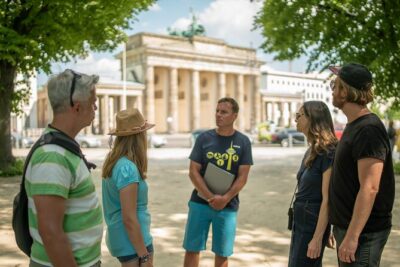 ★ 5.0Private Walking Tour Berlin Third Reich Hitler and World War IIFrom $192360 reviews
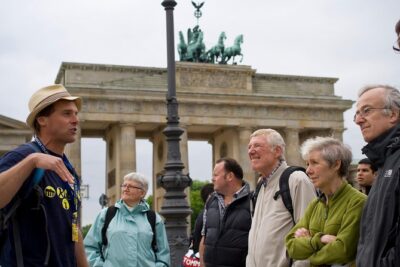 ★ 5.0Private Berlin: Iconic Sights and Hidden Gems Walking TourFrom $192292 reviews
 ★ 5.0Berlin Private Half-Day Walking Tour: Discover the German Capital’s HistoryFrom $180244 reviews
 ★ 5.0Private Walking Tour: World War 2 and Cold War Sites in BerlinFrom $192230 reviews
 ★ 5.0The History of Berlin: WWII PRIVATE Walking Tour With LocalsFrom $143209 reviews
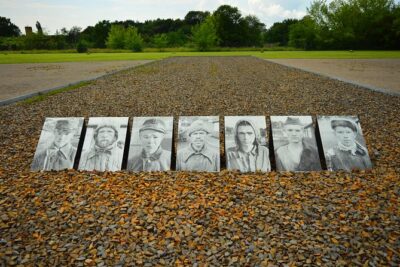 ★ 5.0Private Sachsenhausen Concentration Camp tour with trainFrom $338205 reviews