
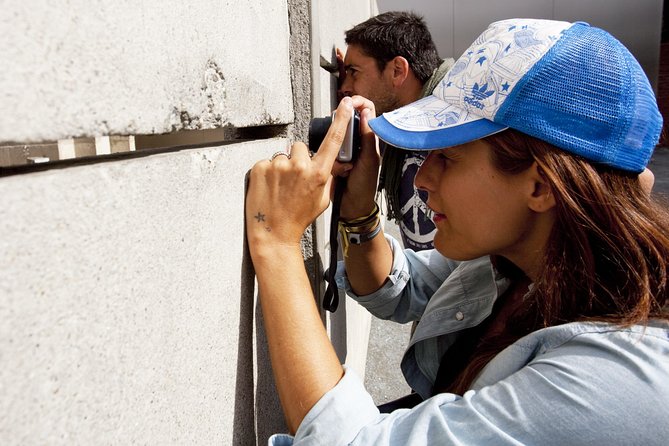
REVIEW · BERLIN WALL & COLD WAR
Wall Tour Berlin – Fates, Heroes & Love Stories
The Berlin Wall is hard to picture. This tour makes it real by tying the people to the places, from ghost stations to the final walk to Mauerpark. I especially liked how you get a clear, chronological feel for how the wall was created and how it fell, without getting lost in facts. One thing to consider: it’s a tightly timed, mostly outdoor walk, and there have been occasional reports of missed meetings, so keep your confirmation handy and arrive a bit early.
I also like that the guide doesn’t only talk about bricks and border lines. You hear about real fates at the wall—plus the softer thread of love stories, because both happened in the same shadow. The main drawback is emotional: some stops focus on death, fear, Stasi methods, and desperate jumps, so you should be ready for heavy material in a short span.
In This Review
- Wall Tour Berlin: Fates, Heroes & Love Stories in 2 hours
- Quick hits before you go
- Starting at Elisabeth-Schwarzhaupt-Platz and turning Nordbahnhof into a story
- The Berlin Wall Memorial stops that build the “how” before the “why”
- Bernauer Strasse: where the border strip becomes visible (and personal)
- Ackerstraße and the Church of Reconciliation: shared worship before closure
- Stasi propaganda tools: children, young people, and the loudspeaker war
- Kidnappings and brutal tactics you can’t un-hear
- Escape stories with real location markers: tunnels and Conrad Schumann
- The fall of the Wall lands at Mauerpark
- Price, group size, and how to judge the value
- Who this tour suits best (and who might want something else)
- Should you book this Wall Tour Berlin?
- FAQ
- How long is the Wall Tour Berlin – Fates, Heroes & Love Stories?
- What does it cost?
- Is there a mobile ticket?
- Where does the tour start and end?
- What is the group size limit?
- Are the memorial stops ticketed separately?
- What happens if the weather is poor?
- Can I cancel for free?
- When will I receive confirmation?
Wall Tour Berlin: Fates, Heroes & Love Stories in 2 hours
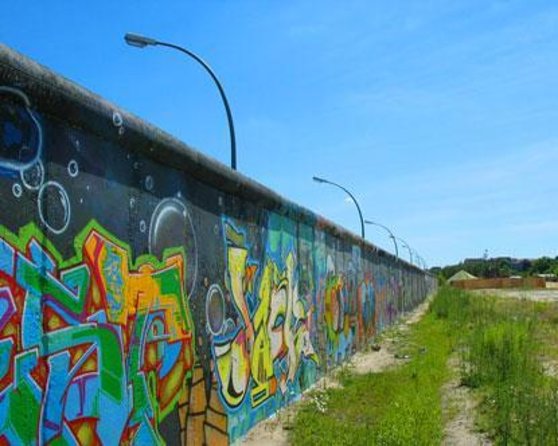
If you want Berlin Wall context fast, this is the kind of tour that can actually work on a busy trip. You spend about two hours walking a focused route tied to key parts of the former border—rather than doing a long, vague “someday we’ll see it” shuffle. The price is also reasonable for a guided, story-driven route: $19.66 per person, and it’s commonly booked about a month ahead.
What makes it memorable is the way the guide connects the visible city to what the border did to daily life. You’re not just looking at monuments; you’re shown how the border strip shaped movement, communication, and control. Even when you’re standing at a memorial window or a former residential line, you get a sense of what it must have felt like to live with escape routes and consequences.
The route includes multiple stops at the Berlin Wall Memorial area, a viewing platform on Bernauer Strasse, and an end near Mauerpark. Admission is listed as free for the memorial stops along the way, so you’re not paying extra to access what matters.
More of the Wall and the divided city
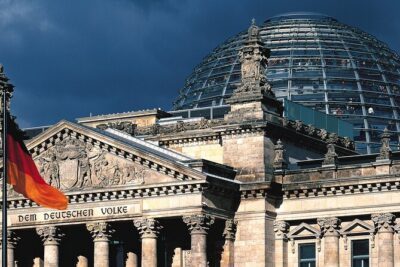
- Berlin’s Best: 2 Hour Walking Tour Third Reich and the Cold War★ 5.0 · 5,486 reviews
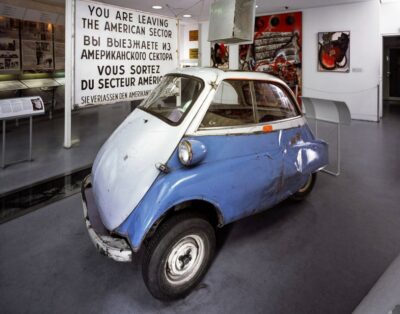
- Skip-the-Line: Berlin Wall Museum at Checkpoint Charlie★ 4.1 · 2,041 reviews
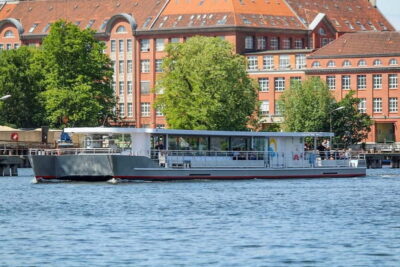
- Berlin: East Side Gallery Spree Cruise in a Solar Catamaran★ 4.1 · 1,086 reviews
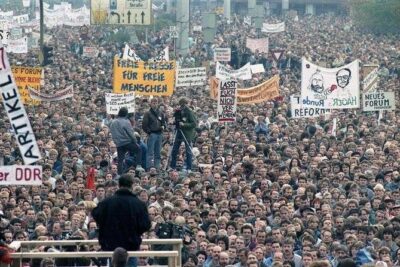
- Cold War, Berlin Wall, Spies and the East Side Gallery★ 5.0 · 1,024 reviews
Quick hits before you go
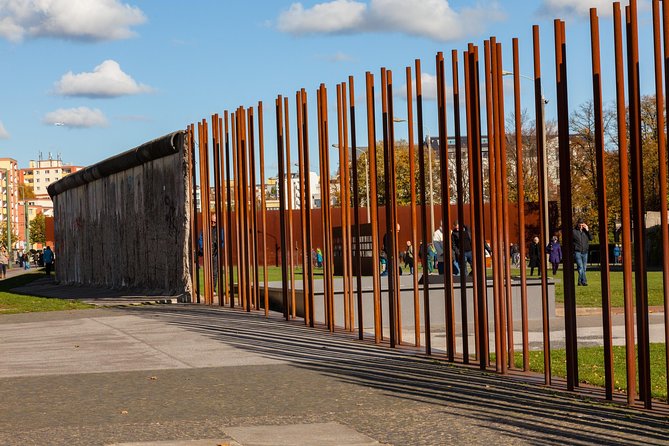
- Ghost stations and why trains felt like a trap: you start with the idea of so-called ghost stations and why that mattered.
- Ulbricht’s lie to a sealed border: you hear how a claim about no wall turned into a real construction push.
- Bernauer Strasse from a viewing platform: you get an overview of the border strip in one of the best viewing moments on the route.
- Ackerstraße and the church that stood in the border strip: you learn what happened to the Church of Reconciliation once the area was closed.
- Escape stories you can locate on foot: tunnel escapes, including a legendary nearby tunnel, plus the Conrad Schumann jump.
- Finish at Mauerpark: the walk ends where the fall of the Wall can feel close and real, right in the city.
Starting at Elisabeth-Schwarzhaupt-Platz and turning Nordbahnhof into a story
The tour begins at Elisabeth-Schwarzhaupt-Platz and ends near Bernauer Strasse and Oderberger Strasse, with the note that you can take the M10 tram toward the main train station. That’s handy because it means you can plan your day without needing a complicated transfer plan.
Your first meaningful stop is at the Nordbahnhof S-Bahn station on Gartenstrasse. This is where you start with the idea of ghost stations—places that existed in the border-era reality, but where ordinary people couldn’t just move freely through the way trains are meant for. The guide’s angle here is practical: it helps you understand that the wall wasn’t only a barrier at street level. It also affected transit, schedules, and the meaning of getting from one neighborhood to another.
One subtle win: you’re getting oriented early. Berlin can be confusing if you only look at maps, but standing at the station-area starting point gives you a reference point for everything that follows.
The Berlin Wall Memorial stops that build the “how” before the “why”
You make several stops at memorial points, each one designed to layer understanding. First, you get a brief overview of how a wall could have been built in the first place. It sounds basic, but it’s a powerful setup. Instead of jumping straight to emotion, you get the mechanism: what it took to create a border that didn’t behave like a normal line.
Then the tour hits a key historical moment. On June 15, 1961, W. Ulbricht brought a now-famous claim into the story—stating that nobody intended to build a wall. Less than two months later, on August 13, 1961, the border was sealed and the wall was built. That timeline matters because it shows how fast policies became physical reality. You’re not just hearing that a wall happened; you’re seeing how quickly a political decision can change the shape of a city.
At another memorial stop, the guide frames the wall’s human cost in a clear way: at least 140 people died between 1961 and 1989, and the exact number of victims is unknown. It’s the kind of fact that lands harder because you’re not reading it in a book. You’re hearing it while you stand at a place designed to hold those memories.
Bernauer Strasse: where the border strip becomes visible (and personal)
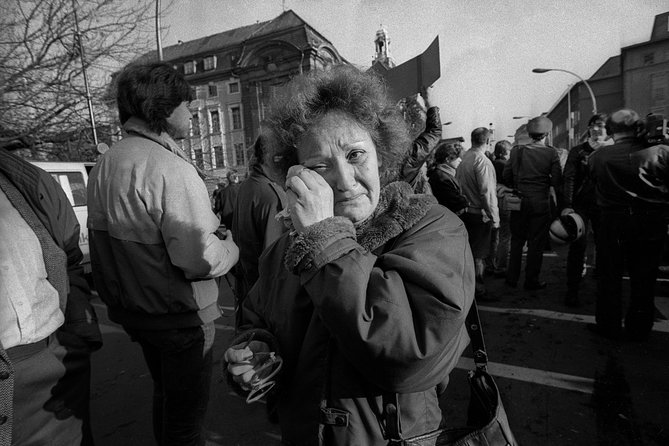
One of the best moments comes when your guide accompanies you to a viewing platform for an overview on Bernauer Strasse. This is where the tour helps you do something important: connect the city layout to the idea of the border strip.
Bernauer Strasse is also where the tour gets particularly specific about how the border worked against residents. Along this street, there used to be residential buildings with windows and exits to West Berlin, while the houses were on the GDR side. That mismatch created tragedies when people tried to escape from the very rooms where daily life was happening.
You also get time to look at pictures and videos at your own pace at one of the memorial stops—so the tour doesn’t force you to take everything in at full speed. It’s one of the few points where you can pause, process, and then move on.





Ackerstraße and the Church of Reconciliation: shared worship before closure
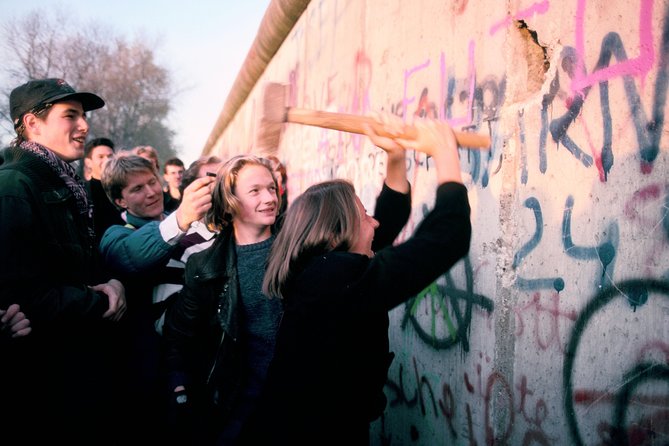
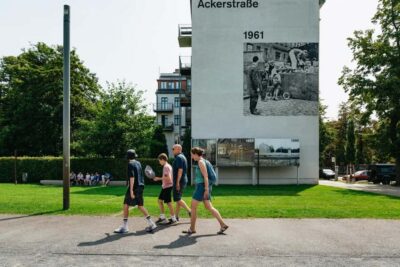
Not every stop is about the wall’s cruelty at the street edge. One moment shifts the focus toward community, at Ackerstraße, near the chapel of the Church of Reconciliation.
This is where the tour highlights a church that once stood in the middle of the border strip. The guide explains that people from East and West Berlin celebrated services together there. Then you learn what happened to the church after the border was closed.
That contrast is the lesson you’ll carry: the wall didn’t just divide land. It cut across everyday routines, including faith and public life. You end up thinking differently about what it means for a border to be more than a line on a map.
Stasi propaganda tools: children, young people, and the loudspeaker war
The tour spends real time on how control worked, and one of the most striking themes is propaganda and intimidation. You hear about the abuse of children and young people for the GDR’s purposes. There’s also a segment tied to what’s called the passenger agreements—agreements between the Senate of Berlin (West) and the GDR intended to make the wall more permeable.
That might sound like a “both sides acted” story, but the guide frames it as only one part of the power game. The GDR still used harsh methods, and the tour shows how the wall system and propaganda were connected. Another quick but memorable stop is about the Cold War in Berlin having an added layer: a massive loudspeaker war, where West and East tried to make each other’s lives hell.
If you want a Wall tour that actually explains the psychology of the system—how it worked on minds, not only bodies—this part delivers.
Kidnappings and brutal tactics you can’t un-hear
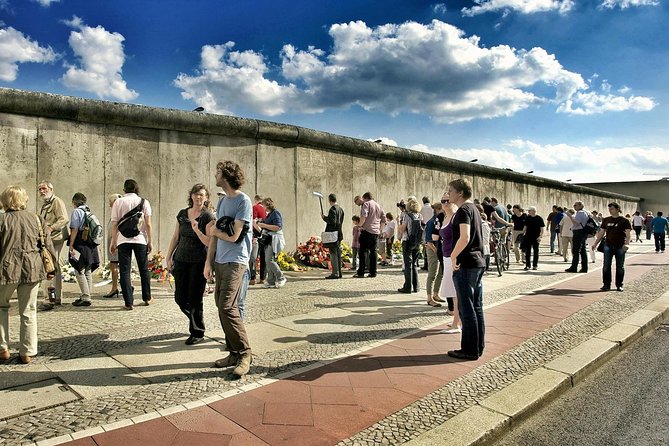
A darker section covers kidnappings as part of the GDR’s core business. The guide describes how criminal gangs, on the orders of the GDR, kidnapped former employees from the West back to the GDR. One kidnapping even ended in death, and the tour shares that outcome as part of the larger picture of fear and coercion.
This isn’t the kind of stop where you can skim. Even with a fast pace across a short route, the guide’s storytelling here is designed to make you understand what “border control” meant in practice.
For some people, this will be the hardest part of the tour. If you’re sensitive to topics involving violence and coercion, plan for it the way you’d plan for a heavy museum: bring emotional pacing into your day.
Escape stories with real location markers: tunnels and Conrad Schumann
One reason this tour can feel especially concrete is that it includes escape stories you can place in the city. The route references tunnel escapes from the 1960s, including one tunnel that’s become legendary and is located near a border house.
Then it covers the jump of border guard Conrad Schumann, one of the most famous escapes. The guide explains that Schumann was wanted until the fall of the GDR and shares his life as part of the story.
Even if you already know the name Conrad Schumann, the value here is spatial: you’re shown the kind of context that makes a dramatic decision feel like it came from real desperation, real danger, and real opportunity.
This is also where the tour earns its title—Heroes and Love Stories. You don’t just get tragedy. You get human choice under extreme pressure, and that’s what makes it stick.
The fall of the Wall lands at Mauerpark
The tour ends right at Mauerpark. It’s a fitting way to close, because the walk stops being about a controlled line and starts turning back into a normal Berlin public space—something you can reach, browse, and enjoy after learning what that area once meant.
Your guide ties it together: like the wall’s construction had a story, the wall’s fall did too. After spending time with so many moments of confinement and coercion, you’ll likely feel a bit of emotional whiplash—one of the most honest experiences Berlin can give you.
Price, group size, and how to judge the value
At $19.66 per person for about two hours, this is positioned as strong value compared with longer tours or those that add separate museum tickets. The memorial stops list free admission, so you’re mostly paying for the guide’s storytelling and the walking route that keeps the story anchored.
The group size is capped at 25 travelers, which matters. At this size, a good guide can keep momentum without losing control of the experience. It also means you won’t be alone in a big educational moment, which can be comforting when the content is heavy.
One practical note from the real-world pattern of travel: a couple of people have reported missed meetings or late replies when they tried to contact the organizer. I can’t predict what will happen for your specific date, but it’s smart to arrive early, double-check the meeting point, and keep your confirmation info accessible on your phone.
Who this tour suits best (and who might want something else)
This is a great fit if you want:
- A time-efficient Berlin Wall tour that gives you a sense of sequence and cause-and-effect.
- A route that hits major themes: construction, victims, Stasi propaganda, escape attempts, and the collapse.
- A guided experience that’s built around specific places rather than generalized history.
It might be less ideal if you:
- Prefer a lighter tone or only want high-level history.
- Don’t want to hear about death, fear, kidnappings, or the desperate jumps tied to residential buildings.
- Want a super flexible pace with lots of long museum time, since the structure is built around short stops and movement.
Should you book this Wall Tour Berlin?
Yes, I’d book it if your priority is understanding the Berlin Wall as a system—how it was built, how it controlled movement, and how people responded with escapes, resistance, and love in the middle of fear. The short duration helps, and the fact that many stops are at memorial points with free admission keeps the cost anchored to the guide’s value.
Just go in prepared: this is an emotionally heavy walk in a short window, and you should plan your day with enough time afterward to decompress. If you’re the type who gets frustrated by tight schedules, consider arriving early and keeping a backup plan for transit.
FAQ
How long is the Wall Tour Berlin – Fates, Heroes & Love Stories?
The tour lasts about 2 hours.
What does it cost?
The price is $19.66 per person.
Is there a mobile ticket?
Yes, the tour uses a mobile ticket.
Where does the tour start and end?
It starts at Elisabeth-Schwarzhaupt-Platz, 10115 Berlin. It ends near Bernauer Str./Ecke Oderberger Str. on Oderberger Straße, 10435 Berlin.
What is the group size limit?
The tour lists a maximum of 25 travelers.
Are the memorial stops ticketed separately?
The stops listed in the route show admission ticket free.
What happens if the weather is poor?
If the experience is canceled due to poor weather, you’ll be offered a different date or a full refund.
Can I cancel for free?
Yes. Free cancellation is available if you cancel up to 24 hours in advance for a full refund.
When will I receive confirmation?
You receive confirmation at the time of booking.
More Tours in Berlin


More Tour Reviews in Berlin
The Wall and the Cold-War City




Round out your days in Berlin
Berlin Wall & Cold War, compared.
 ★ 4.9Third Reich & Cold War Guided Walking TourFrom $238,378 reviews
 ★ 5.0Berlin’s Best: 2 Hour Walking Tour Third Reich and the Cold WarFrom $245,486 reviews
 ★ 4.1Skip-the-Line: Berlin Wall Museum at Checkpoint CharlieFrom $212,041 reviews
 ★ 4.1East Side Gallery Spree Cruise in a Solar CatamaranFrom $281,086 reviews
 ★ 5.0Cold War, Berlin Wall, Spies and the East Side GalleryFrom $181,024 reviews
 ★ 4.8Wall Tour – Fates, Love Stories, and HeroesFrom $282585 reviews
 ★ 4.5THE WALL: asisi Panorama Berlin TicketFrom $16580 reviews
 ★ 4.8The Wall and Third Reich Guided Bike TourFrom $41578 reviews
Browse the lists this tour appears in