
REVIEW · HISTORICAL TOURS
Where It All Began: Berlin’s Queer & Trans History Tour
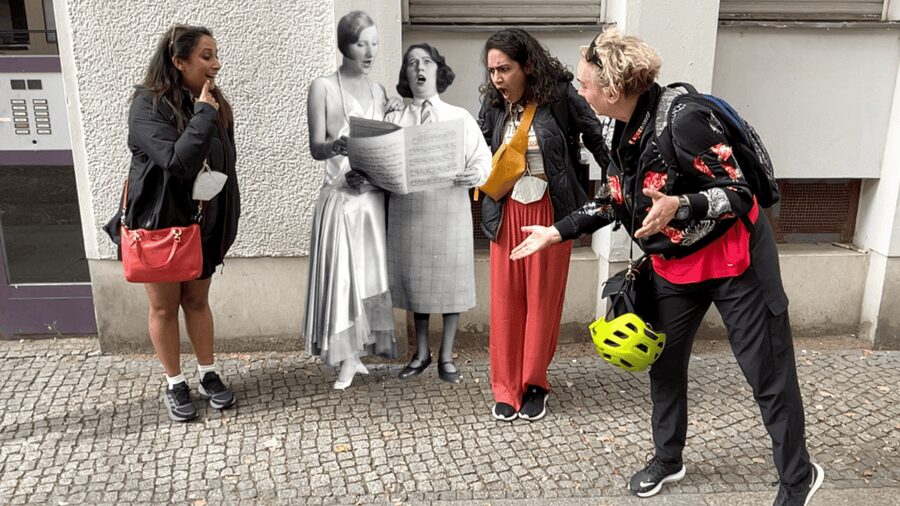
Berlin gets personal when you walk its queer past. This 3.5-hour, small-group (max 10) tour traces LGBTQIA+ life in Berlin from early activism through Nazi persecution, post-war organizing, the AIDS crisis, and today’s nightlife and activism. It also uses augmented reality so the street you’re standing on links directly to what happened there.
I especially love the practical tech: you get an iPad for AR, plus Mixies for fun, personalized photos with AR effects, so memories stick beyond the walk. I also like that the stories are led by Jeff, a queer activist and gender scholar—people are talking, laughing, and then suddenly it gets very real.
One thing to plan for: this is a walking-focused outing that runs in good weather only. Bring comfy shoes and a light layer, and know coffee or tea is not included.
In This Review
- Key things that make this tour worth your time
- What you’re really signing up for: a walking timeline of queer Berlin
- Meeting at Else-Lasker-Schüler-Straße, then stepping into AR history
- Stop-by-stop: the 10 places that trace LGBTQIA+ Berlin
- Stop 1: Karl-Heinrich-Ulrichs-Straße 1 and the idea of early gay rights
- Stop 2: Nollendorfplatz and persecution under Nazi rule
- Stop 3: Schwerinstraße 13 and lesbian life through music, bars, and defiance
- Stop 4: Nollendorfstraße 17 and queer inspiration behind Cabaret
- Stop 5: Magnus-Apotheke and Hirschfeld’s fight for rights and gender-affirming care
- Stop 6: Denns BioMarkt and drag history at Eldorado
- Stop 7: Prinz Eisenherz and post-war activism plus a trans archive keeper
- Stop 8: Connection and trans-led nightlife in West Berlin
- Stop 9: Internationale Stele GEGEN DAS VERGESSEN and AIDS crisis organizing
- Stop 10: Metropol, Pride, and the fight against gentrification
- AR, Mixies, and why the tech is more than a gimmick
- How to make the most of the 2:00 pm start and 3.5-hour pace
- Price and value: what $83.13 buys you in Berlin
- Who this tour suits best (and who might not love it)
- Should you book this Berlin LGBTQIA+ history tour?
- FAQ
- How long is the Where It All Began: Berlin’s Queer & Trans History Tour?
- How much does the tour cost?
- What group size is this tour capped at?
- Is the tour offered in English?
- What’s included besides the guided walking tour?
- Where does the tour start and end?
- Is it suitable if I don’t speak German?
Key things that make this tour worth your time
- Small group size (10 max) keeps the conversation moving and lets you ask real questions.
- iPad AR on-site shows historical images in the exact locations you’re standing.
- Mixies AR photos turn the tour into something you can keep.
- 200+ rare archival photos, videos, and materials support the stories as you go.
- A guided route with 10 specific stops covers queer life under Nazis, during the post-war split, and in modern Berlin.
- Ends at Metropol, putting you close to nightlife if you want to keep the evening going.
More of Berlin's long history, guided
- Berlin: Natural History Museum Entrance Ticket★ 4.6 · 3,382 reviews
- Berlin: 3-Hour World Heritage Cruise to Potsdam★ 4.5 · 1,569 reviews
- Berlin: History of the Third Reich Guided Walking Tour★ 4.7 · 791 reviews
- Berlin: Berlin Charité Guided History Tour★ 4.4 · 660 reviews
What you’re really signing up for: a walking timeline of queer Berlin
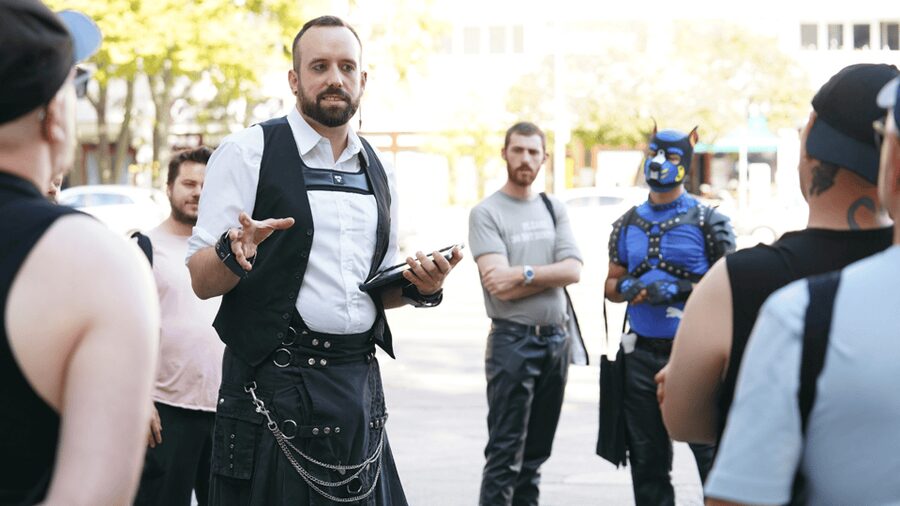
This isn’t a generic facts tour. It’s built around places—actual street corners and landmarks—where queer people pushed for rights, survived violent crackdowns, built community spaces, and kept showing up anyway. You’ll move through eras that are usually separated into history books, and instead you’ll see how each chapter sits right next to the next one.
The value here is the way the tour connects past and present in a grounded way. You’re not just learning dates. You’re learning why certain names and neighborhoods matter, and how Berlin’s queer spaces evolved from bars and clubs to organized activism.
And because it’s a small group led by Jeff, the tone tends to balance: thoughtful without being preachy, and human without sanding down the hard parts. That matters on a subject where the details can hit heavy.
Meeting at Else-Lasker-Schüler-Straße, then stepping into AR history
The tour starts at 2:00 pm at Alnatura Super Natur Markt on Else-Lasker-Schüler-Straße 18 (10783 Berlin). It ends at Metropol on Nollendorfpl. 5 (10777). You’ll want to show up a few minutes early so you can settle before the first stop.
You’ll travel on foot between stops, with short guided segments built into the route. Along the way, the tour provides the iPad AR setup so you can see historical visuals overlaid onto the street scene in front of you. You also get access to a bunch of rare archival content (200+ photos, videos, and materials) that adds context as you move.
A smart detail: it’s described as having a mobile ticket, which keeps things simple. And it’s offered in English, so you can follow without needing German to stay oriented.
Stop-by-stop: the 10 places that trace LGBTQIA+ Berlin
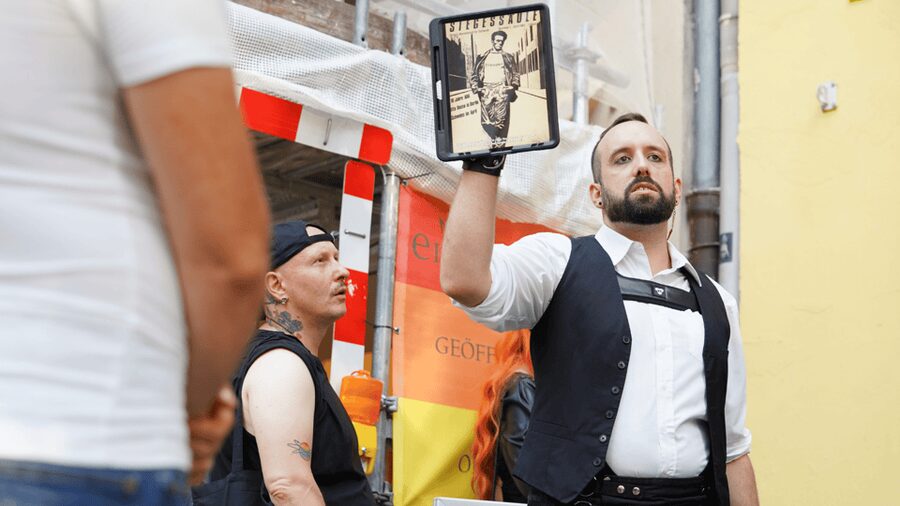
Here’s the route as it’s paced, what you’ll learn at each place, and what to watch for when you’re standing there.
Stop 1: Karl-Heinrich-Ulrichs-Straße 1 and the idea of early gay rights
You begin at Karl-Heinrich-Ulrichs-Straße 1, named after Karl Heinrich Ulrichs, who’s often called the world’s first gay rights activist. The focus here is not on modern labels, but on how early advocates framed same-sex love and argued for decriminalization when the language we use today barely existed.
This first stop is a good mental warm-up. You set the tone for the rest of the tour: Berlin’s queer story isn’t just about oppression. It’s also about early organizing and early vocabulary—people trying to name themselves and defend their right to exist.

Stop 2: Nollendorfplatz and persecution under Nazi rule
At Nollendorfplatz, the tour moves into the darker and more complicated era of Nazi persecution. You’ll hear about Adolf Brand and right-wing gay activists, plus how figures like Ernst Röhm fit into the story—there’s nuance here, including how openly gay Nazis could exist while the regime later shifted into mass persecution.
You’ll also connect Hitler’s stance on homosexuality to what followed: the Night of the Long Knives, the execution of Röhm and others, and the harsh reality of LGBTQIA+ victims inside concentration camps, including the forced use of the pink triangle. It’s intense, and the tour’s structure helps you absorb it instead of getting hit all at once.
A quick consideration: on a stop this heavy, you may want to pace yourself mentally and physically. Stand still when prompted, and let the guide do the speaking. It’s easier to take it in.
Stop 3: Schwerinstraße 13 and lesbian life through music, bars, and defiance
This stop centers on lesbian life in 1920s Berlin, a part of queer history that gets overlooked in many city walks. You’ll visit the site of Toppkeller, a famous lesbian bar, and learn how places like this created community and safety for queer women.
The tour also highlights Claire Waldoff, a lesbian cabaret singer whose songs became anthems of defiance. Josephine Baker is also part of the story here—bisexual, gender-crossing in public image, and a sex symbol for all genders. That mix matters: you’re seeing how queer identity expressed itself through nightlife and performance, not only through politics.
Stop 4: Nollendorfstraße 17 and queer inspiration behind Cabaret
At Nollendorfstraße 17, the tour turns to a surprising thread: the homosexual department of the Berlin police force. It’s striking because it shows surveillance and control within state institutions.
Then the focus shifts to gay male life in 1920s Berlin through Christopher Isherwood. His Berlin writings influenced the famous Cabaret musical and film, and the tour adds the human detail of his relationship with Heinz Neddermeyer. You’ll also hear about their escape from Nazi Germany as queer refugees.
This stop is useful if you like culture and context. You get the bridge between what shows up later in art and what people experienced first-hand on these streets.
Stop 5: Magnus-Apotheke and Hirschfeld’s fight for rights and gender-affirming care
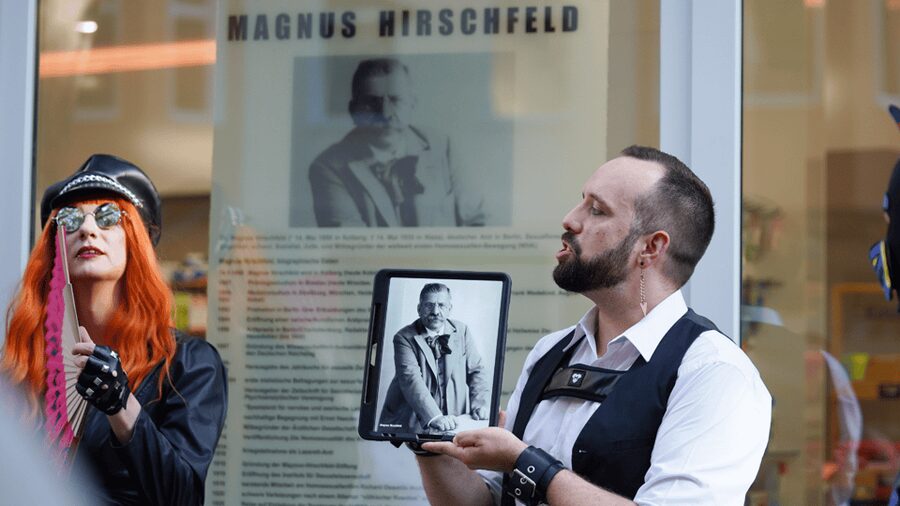
Magnus-Apotheke is where the tour really puts a spotlight on Magnus Hirschfeld and the beginnings of organized LGBTQIA+ activism tied to science, rights, and gender studies.
You’ll learn about Hirschfeld’s Institute for Sexual Science and the Scientific-Humanitarian Committee, described as the world’s first organization dedicated to queer rights and gender studies. The tour also covers Hirschfeld’s theories, including the concept of Berlin’s third gender and the history of early gender-affirming surgeries performed on people such as Dora Richter, Lili Elbe, and Karl M. Baer.
And then it doesn’t shy away from the backlash: you’ll discuss the fight against Paragraph 175, the law that criminalized homosexuality, and the destruction of the Institute by the Nazis. This stop lands because it shows both progress and brutality in the same timeline.
Stop 6: Denns BioMarkt and drag history at Eldorado
Next you’ll go to Denns BioMarkt, a former site of Eldorado, one of Berlin’s famous drag bars in the 1920s. This is where the tour broadens beyond labels into gender expression and nightlife.
Eldorado is described as a hotspot for gender-nonconforming people and queer performers. You’ll also hear a complicated detail: even high-profile Nazis like Ernst Röhm reportedly frequented the club while later participating in a regime that persecuted LGBTQIA+ people.
That contradiction is not glossed over. It’s part of what makes Berlin’s queer past messy in an educational way—humans, politics, and power shifting under the same roof.
Stop 7: Prinz Eisenherz and post-war activism plus a trans archive keeper
At Prinz Eisenherz, the tour shifts to post-war queer activism. You’ll learn about Homosexuelle Aktion West-Berlin, one of the first queer rights organizations after WWII. The guide also covers the founding of SchwuZ, a queer club that became a landmark in Berlin nightlife.
Then there’s Charlotte von Mahlsdorf, highlighted as a trans woman who preserved Berlin’s queer history and created safe spaces in East Berlin. That’s an important angle: not only activism and clubs, but preservation—keeping memory alive when it could easily have been erased.
Stop 8: Connection and trans-led nightlife in West Berlin
Stop 8 looks at West Berlin’s trans community in the 1970s and 1980s. You’ll hear about Chez Romy Haag, described as a legendary trans-led nightclub that helped revolutionize Berlin nightlife.
This stop is about more than a venue name. It’s about space—when gender-diverse people could exist freely, and when nightlife became a real social structure, not just entertainment. That thread connects directly to Berlin’s reputation today, without pretending today is automatically fixed.
Stop 9: Internationale Stele GEGEN DAS VERGESSEN and AIDS crisis organizing
Here the tour steps into the AIDS crisis in Berlin and how it shaped a divided city. You’ll see how queer community organizing became a matter of survival, with the tour connecting activism efforts including the role of Rita Süssmuth, noted as one of the politicians advocating for AIDS awareness.
The Berlin Wall is referenced with a striking metaphor: the wall described as the condom of the GDR. The point is to show how East and West handled the crisis differently, and how that affected real lives and public messaging.
If you tend to get emotional with stories, this stop is likely to do it. Give yourself a few seconds before you move on, and let the information land.
Stop 10: Metropol, Pride, and the fight against gentrification
The final stop brings you into today’s queer nightlife and activism. At Metropol, you’ll learn about its role in early gay community and the techno scene, plus its connection to today’s world-famous Berghain and Lab.Oratory.
The tour also points out other landmark nightlife and events, including SO36, Folsom Europe (described as Europe’s biggest fetish festival), Kreuzberg Pride, the Dyke March, and current fights for an affordable city connected to the radical Tuntenhaus squat.
This ending feels intentional. You finish where the present keeps happening, not just where the past ended.
AR, Mixies, and why the tech is more than a gimmick
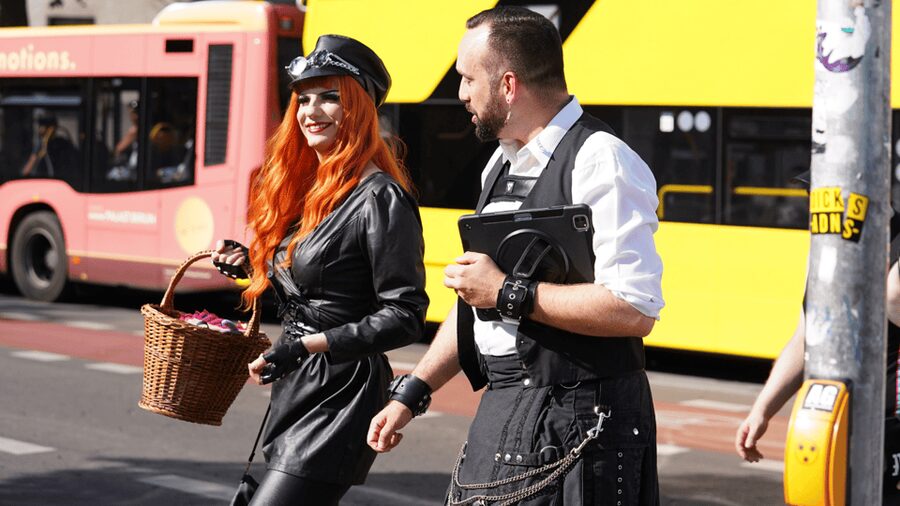
The AR element works because it turns the city into a timeline you can physically walk. Instead of guessing what a place looked like in the past, you see historical photographs blended with where you are right now. That alone helps your brain hold onto details.
Then there’s Mixies: personalized AR photos that can function like a souvenir you actually remember. The tour also includes 200+ rare historical photos, videos, and archival materials, which is a big deal if you like reading later or want to compare what you saw on the street with what the visuals show.
If you’re the type who forgets the names after the walk, this approach helps. You’re more likely to keep the context because you’ll have a visual anchor.
How to make the most of the 2:00 pm start and 3.5-hour pace
The tour runs about 3 hours 30 minutes with frequent short stops (from roughly 5 minutes at the first site to around 20 minutes at several key locations). That means you’ll be moving, stopping, and listening in a steady rhythm.
To enjoy it, I’d plan your day around it:
- Eat before you go, since coffee and tea are not included.
- Wear shoes that handle uneven sidewalk and frequent starts and stops.
- Bring a light jacket if weather is changeable. The tour needs good weather.
Also, it’s described as near public transportation. That helps if you want to keep the day flexible—start at 2:00 pm, then head out after you finish at Metropol.
Price and value: what $83.13 buys you in Berlin
$83.13 per person for about 3.5 hours can feel high at first glance, especially for a walking tour. The value shows up in the extras that are actually included: small group size (max 10), an iPad-based AR component, Mixies AR photos, and access to 200+ archival photos/videos/materials.
You’re not only paying for a route. You’re paying for guided storytelling with equipment and media support that keeps the history tied to place. If you’ve ever done city walks where you get facts but no help holding onto them, this approach is built to solve that.
Who this tour suits best (and who might not love it)
This works well if you want:
- A structured route with specific, named locations tied to LGBTQIA+ life across decades.
- A guide approach that balances humor with serious material.
- A more grounded way to understand queer Berlin through both culture and activism.
You might want to think twice if you dislike heavy topics. The tour covers persecution under Nazi rule, concentration camp reality (including the pink triangle), and the AIDS crisis. If that’s tough for you, consider bringing your energy down a notch and keeping an exit plan for yourself.
Should you book this Berlin LGBTQIA+ history tour?
I think it’s a strong book if you care about Berlin beyond the postcard version. The route is focused, the group size is small, and the AR plus Mixies gives you a way to remember what you learned instead of only feeling it in the moment.
Book it if you want a walking timeline that includes Ulrichs, Hirschfeld, Paragraph 175, the pink triangle, trans-led nightlife like Chez Romy Haag, AIDS crisis organizing, and modern places like Metropol. Skip it only if you know you’re not up for long walking in good weather or you want a lighter, party-only approach.
If you want Berlin’s queer and trans story told with precision and heart, this is the kind of tour that makes the city feel newly mapped.
FAQ
How long is the Where It All Began: Berlin’s Queer & Trans History Tour?
It lasts about 3 hours 30 minutes.
How much does the tour cost?
The price is listed as $83.13 per person.
What group size is this tour capped at?
The tour has a maximum of 10 travelers.
Is the tour offered in English?
Yes, it’s offered in English.
What’s included besides the guided walking tour?
You’ll get augmented reality elements (iPad provided), Mixies AR photos, 200+ rare historical photos/videos/archival materials, and insider tips on modern queer nightlife and events.
Where does the tour start and end?
It starts at Alnatura Super Natur Markt, Else-Lasker-Schüler-Straße 18, 10783 Berlin, and ends at Metropol, Nollendorfpl. 5, 10777 Berlin.
Is it suitable if I don’t speak German?
Most travelers can participate, and the tour is in English, so you should be able to follow without needing German.
More Berlin History
More Tours in Berlin

More Tour Reviews in Berlin
Round out your days in Berlin
Historical Tours, compared.
 ★ 4.6Natural History Museum Entrance TicketFrom $123,382 reviews
 ★ 4.53-Hour World Heritage Cruise to PotsdamFrom $251,569 reviews
 ★ 4.7History of the Third Reich Guided Walking TourFrom $30791 reviews
 ★ 4.4Berlin Charité Guided History TourFrom $28660 reviews
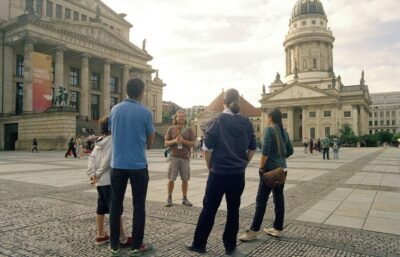 ★ 4.9Berlin Historical Highlights Walking TourFrom $389657 reviews
 ★ 5.0Berlin Private Complete History All Day Walking TourFrom $253474 reviews
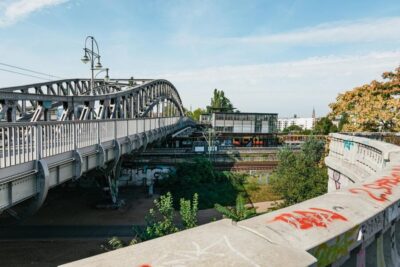 ★ 4.8Cold War & Berlin Wall History Guided Bike TourFrom $41422 reviews
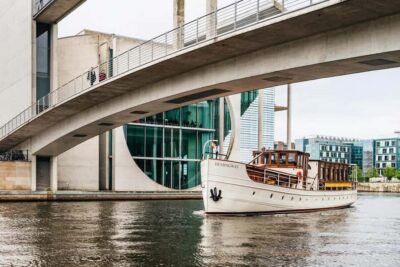 ★ 4.5Historic Boat Sightseeing City Center TourFrom $33415 reviews
Browse the lists this tour appears in