
REVIEW · KREUZBERG & ALTERNATIVE DISTRICTS
Berlin: 2.5-Hour Neighborhood Tour of Neukölln
Berlin has a serious side in Neukölln. This 2.5-hour neighborhood walk makes Neukölln feel personal fast, pairing architecture with stories that explain how the area changed over time.
I especially like how the tour connects big-city landmarks to everyday life: you’ll pass the old district court and the former prison, then shift to civic pride at the town hall. Another strong point is the neighborhood history of Rixdorf and its Bohemian Exulanten (Protestant refugees), including how the area became Neukölln in 1912.
One consideration: this is a straight walking tour and it’s urban. If you need frequent pauses or long snack breaks, plan accordingly since food and drinks aren’t included.
In This Review
- Key Things You’ll Appreciate on This Neukölln Walk
- Why Neukölln Matters More Than You Think
- The First Contrast: Court, Prison, and a City’s Tough Edges
- Rathaus Neukölln: When Town Hall Looks Like a Statement
- Rollberg’s Proletarian Residence District: Housing as a Life System
- Innstraße Housing Complex: Architecture You Can Still Use
- Stadtbad Pool Façade and Saalbau Neukölln: Local Culture in Built Form
- Karl-Marx-Straße Arcade: Small Details That Tell Big Stories
- Bohemian Rixdorf and Richardplatz: Village-Like Streets in the Middle of Berlin
- Bethlehem Church on Richardplatz: Faith, Community, and the Streetscape
- What I Think Makes the Guide Matter (Tobias Factor)
- Price and Value: Is $23 Worth 2.5 Hours?
- Who This Tour Suits Best (And Who Should Skip It)
- Should You Book This Neukölln Neighborhood Tour?
- FAQ
- How long is the Neukölln neighborhood tour?
- How much does it cost?
- What is included in the price?
- What languages are available for the live guide?
- Where do we meet for the tour?
- Can the meeting point, date, or time be arranged for a group?
- Is the tour wheelchair accessible?
- Is food or drinks included?
Key Things You’ll Appreciate on This Neukölln Walk
- Old district court and former prison views that make the neighborhood’s past feel real
- Rathaus Neukölln (town hall) architecture you can actually look at up close
- Rollberg history tied to the proletarian residence district and specific housing styles
- Innstraße apartment architecture that’s worth slowing down for
- Karl-Marx-Straße arcade details you might miss on your own
- Richardplatz and Bethlehem Church in the older village-like core of former Rixdorf
Deeper into Kreuzberg and the eastern districts
- Berlin: Kreuzberg Guided Walking Evening Tour★ 4.7 · 555 reviews
- Berlin: Alternative Bike Tour of Kreuzberg & Friedrichshain★ 4.7 · 548 reviews
- Berlin: 2.5-Hour Walking Tour through Kreuzberg 61★ 4.9 · 525 reviews
- Berlin Off-the-Beaten-Path Walking Tour: Kreuzberg, Mitte and Friedrichshain★ 5.0 · 412 reviews
Why Neukölln Matters More Than You Think
Neukölln can look like just another patch of Berlin at first glance. But on this tour, the neighborhood becomes a timeline you can walk—starting with older roots in Rixdorf and moving toward the modern, multicultural Berlin you know today.
What I like most is the way the guide links place to purpose. You’re not just collecting photos of facades; you’re learning why the area’s buildings, institutions, and street patterns ended up where they did.
This is also a tour that respects your time. In 2.5 hours, you’ll hit major architectural moments—plus smaller details that explain the bigger changes, from 18th-century refugee settlement to 20th-century urban life.
The First Contrast: Court, Prison, and a City’s Tough Edges
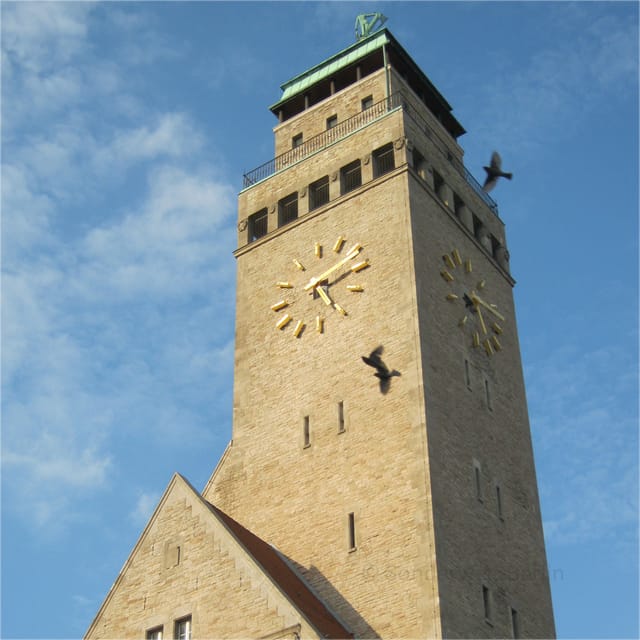
The walking start leans into the neighborhood’s more serious history: you’ll see the old district court and the former prison in Neukölln. Those stops are useful because they anchor the story in institutions—places that shape lives, not just scenery.
There’s a practical Berlin lesson here. Once you’ve looked at how justice and confinement physically show up in a neighborhood, you start noticing how later developments respond to older systems—sometimes by changing use, sometimes by reshaping public space around them.
If you’re the type who likes context (and who doesn’t just want “this is old”), this opening sets the tone nicely. It’s also a good time to get oriented because the tour naturally moves from these heavier sites toward civic buildings and housing.
Rathaus Neukölln: When Town Hall Looks Like a Statement
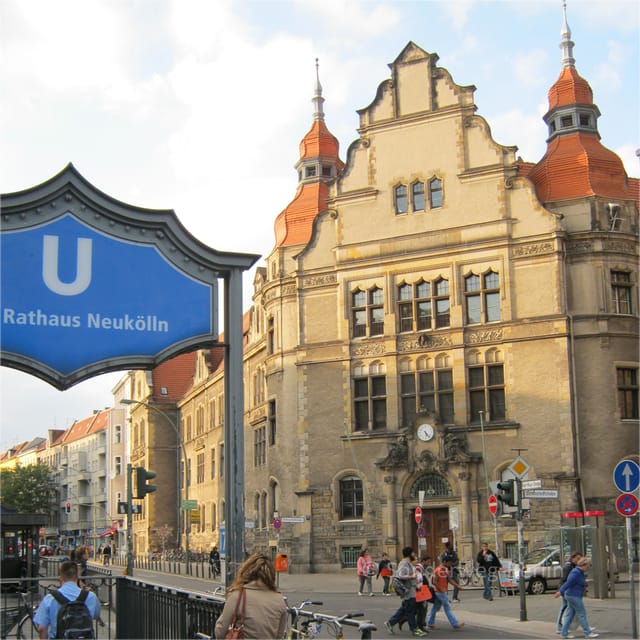
Next comes the architecture of the town hall—described as magnificent for a reason. This isn’t a stop where you just glance and move on. You’ll have time to look at the façade and talk through why civic architecture matters in a neighborhood’s identity.
A town hall isn’t only where paperwork happens. It’s a message about who the community thinks it is and how it wants to present itself. In a place like Neukölln, that message carries extra weight because the neighborhood’s reputation shifted over time.
And that leads into the tour’s name-story: Rixdorf was renamed Neukölln in 1912 with approval from Wilhelm II. The stated reason was an image problem—this southern part of Berlin was viewed as epitomizing frivolous entertainment—so the renaming aimed to change how the city south of Berlin was perceived.
Rollberg’s Proletarian Residence District: Housing as a Life System
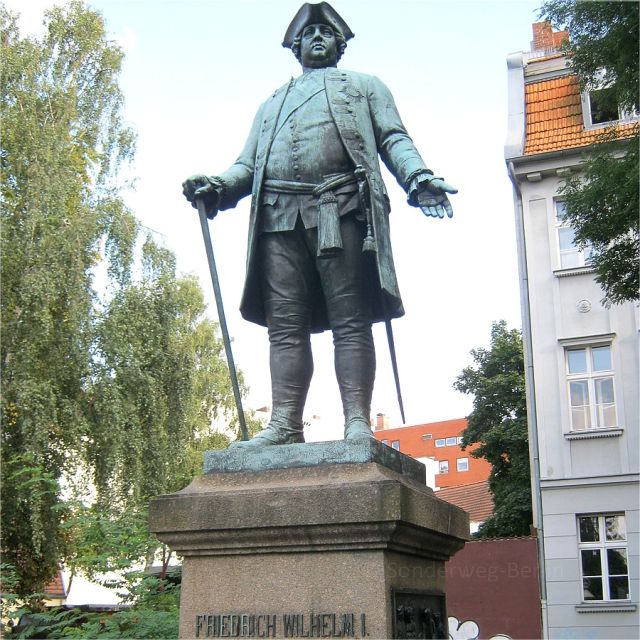
Then the tour steps into Rollberg history: the area developed into a proletarian residence district, and you’ll hear what that meant for daily life. You’re not only learning dates—you’re learning how people lived, worked, and built community in mass housing eras.
On the Rollberg portion, I like that the tour doesn’t treat housing as generic. You’ll specifically be taken to standout architecture on this theme, including atrium houses on Rollberg and the former brewhouse space connected to the Brauerei Kindle (Brauraum). Even if you’ve seen lots of Berlin apartment blocks before, these stops give you a fresh angle: design choices tied to how people move, light enters, and courtyards function.
This section is also a good reminder that neighborhoods grow through policy and economics as much as through culture. If you’ve ever wondered why one street feels ordered and another feels chaotic, housing patterns are often the answer—and Rollberg is a clear case.



Innstraße Housing Complex: Architecture You Can Still Use
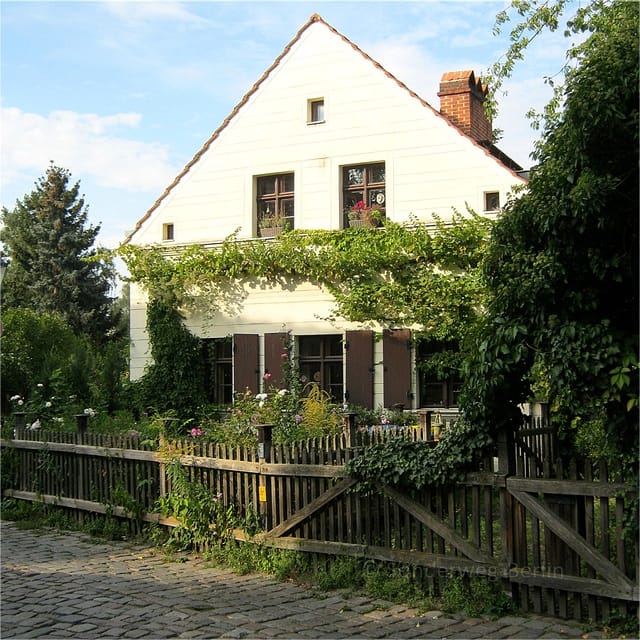
The walk takes you to outstanding architecture of a housing complex on Innstraße. This is where the tour becomes especially satisfying for anyone who likes “look closely” travel.
Berlin housing can be beautiful, practical, and politically meaningful all at once. On this stop, you’ll get the logic behind the style and why it’s remembered—more than just calling it pretty.
There’s also a nice reality check here: you’re looking at buildings that still relate to modern life. You’re not studying abandoned structures. You’re seeing how the city’s housing evolution lives on in what people still pass every day.
If you’re visiting with someone who wants modern Berlin photos, this section also works because it’s still visually strong. You just get the added benefit of knowing what you’re looking at and why it exists.
Stadtbad Pool Façade and Saalbau Neukölln: Local Culture in Built Form
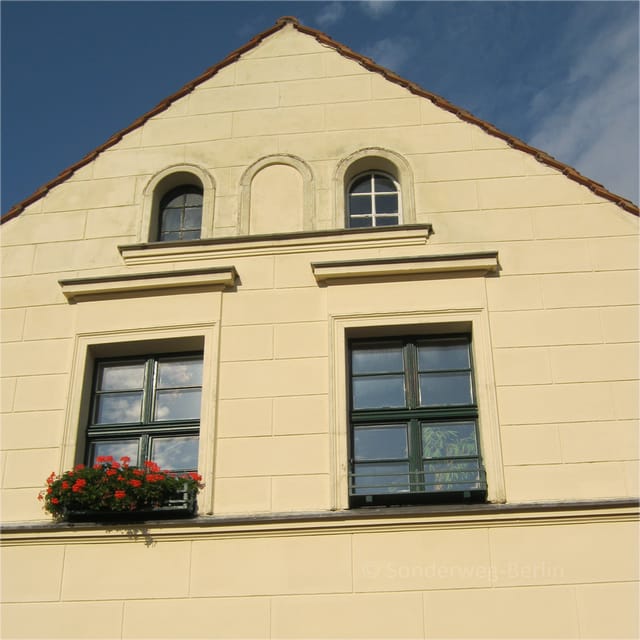
After the residential focus, the tour shifts to public and cultural buildings. You’ll admire the façade of the old Neukölln public pool, then visit Saalbau Neukölln.
These stops matter because they show Berlin wasn’t only building homes. It was also building spaces for health, leisure, and culture—things that shape how a neighborhood feels week after week.
Pools are easy to underestimate until you learn what “public” meant in the context of earlier decades: access, routines, and community life. The façade is the outward clue, but the story makes it clearer why the building held social value.
Saalbau Neukölln adds another angle. It’s about performance space and collective life. If you like Berlin neighborhoods where you can see both everyday needs and cultural identity, this part of the route hits the mark.
Karl-Marx-Straße Arcade: Small Details That Tell Big Stories
On Karl-Marx-Straße, you’ll explore the arcade. This is one of those stops that’s worth slowing down for because arcades are more than a passageway—they’re social space in miniature.
Arcades often reflect how people shop, linger, and connect without stepping directly into the street. In a neighborhood with layers of changing residents and reputations, these in-between spaces help explain how commerce and community interact.
This is also a good moment to step back mentally. After courts, housing, and cultural venues, the arcade shows how urban life organizes around movement and shelter—how people experience the city minute to minute.
Bohemian Rixdorf and Richardplatz: Village-Like Streets in the Middle of Berlin
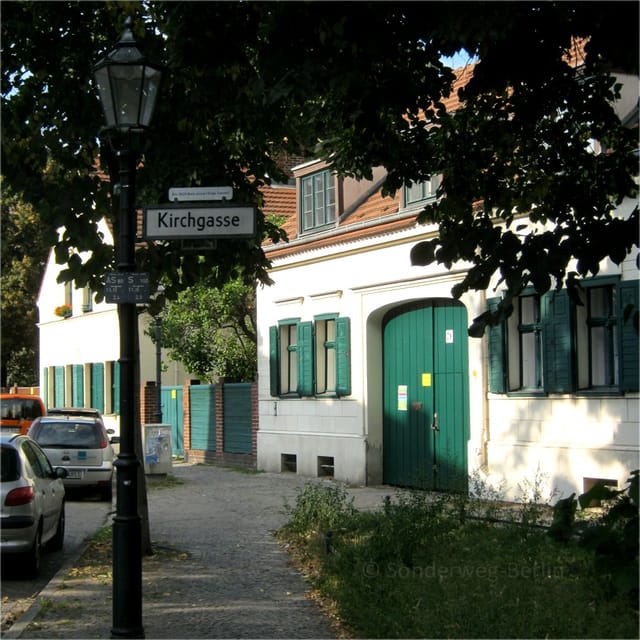
The tour’s later segment shifts back in time with Bohemian Rixdorf and the heart around Richardplatz. Here you’ll discover exile houses and learn about the Bohemian Exulanten, Protestant refugees, who settled in the area alongside the German population as early as the 18th century.
One detail I’m glad is included: the sense that Richardplatz still radiates a village-like atmosphere today. That’s important because it tells you something about continuity. Even when a city grows, certain street patterns and community cores remain powerful.
Rixdorf also connects back to the renaming story in 1912—another reminder that “Neukölln” wasn’t always the name, and the neighborhood’s identity got reshaped by reputation management from above.
If you’re trying to understand why parts of Berlin feel like real neighborhoods rather than themed districts, this is the section that helps it click.
Bethlehem Church on Richardplatz: Faith, Community, and the Streetscape
You’ll also visit the Bethlehem Church on Richardplatz. This stop fits perfectly with the Bohemian Exulanten context, because it ties faith to place and helps explain why religion and daily life were intertwined for earlier residents.
Churches in old neighborhood cores often act like anchors. Even if you aren’t religious yourself, you can still appreciate what the building signaled socially: shared identity, community structure, and continuity across generations.
It’s also a good visual break in a route full of civic and residential architecture. You’ll have a moment to reset your eyes and slow down—then the tour naturally ties everything back into how the modern multicultural Neukölln came to be.
What I Think Makes the Guide Matter (Tobias Factor)
The biggest difference between a standard walking tour and a really good one is how the guide explains what you see. In the best experiences of this tour, the guide is described as personal, relaxed, and packed with factual detail—so the neighborhood doesn’t feel like a list of sites.
One name that stands out from real bookings is Tobias. People describe him as bringing history to life with an eye-wink, turning facts like the town crest background and the logic of city development into something you can actually remember.
That matters because Neukölln’s story can get messy if you try to assemble it alone. With a guide, you get a line you can follow: Rixdorf roots → refugee settlement → reputation and renaming → housing development → today’s multicultural neighborhood.
Price and Value: Is $23 Worth 2.5 Hours?
At $23 per person for a 2.5-hour guided walk, this is good value if you care about architecture and historical context. You’re paying for an expert guide plus a route that hits major, teachable stops—court/prison, town hall, Rollberg housing, cultural sites, and the Rixdorf/Richardplatz core.
If you were to try this on your own, you’d likely spend more time figuring out what’s worth stopping for. Here, you get that sorting done for you in a compact schedule.
The real value shows up if you want to understand the neighborhood instead of just photographing it. If you’re the type who loves details—like why a renaming happened in 1912, or how housing styles connect to daily life—this price feels like a fair trade for the clarity you get.
Who This Tour Suits Best (And Who Should Skip It)
This tour is ideal for you if you want Berlin that goes beyond postcards. It’s built for people who like history that’s tied to buildings and streets, plus architectural moments you can see without a museum ticket detour.
It’s also a solid pick if you’re visiting with someone who normally says they don’t like tours. A good guide can make a neighborhood feel like a story you’re part of, and this one leans hard into explaining the “why” behind what you see.
You might want to choose something else if you want minimal walking or lots of long museum time. This route is about seeing and understanding specific places, not sitting around.
Should You Book This Neukölln Neighborhood Tour?
Yes, I’d book it if your goal is to understand Neukölln as more than a name. The route covers exactly the kinds of stops that explain how the area shifted from older Rixdorf roots—shaped by the Bohemian Exulanten—to a renamed Neukölln and then into today’s multicultural hub.
Also, the guide quality is a big part of why this tour works. When a guide like Tobias keeps facts engaging and personal, you end up with a better Berlin memory than just a camera roll.
If you’re curious, go for a date when you can slow your pace and pay attention at each stop. Then you’ll leave with a clear sense of how buildings, reputation, housing, and faith all helped build this neighborhood.
FAQ
How long is the Neukölln neighborhood tour?
The tour lasts 2.5 hours.
How much does it cost?
It costs $23 per person.
What is included in the price?
The price includes an expert tour guide.
What languages are available for the live guide?
The live tour guide is available in German and English.
Where do we meet for the tour?
The meeting point may vary depending on the option booked.
Can the meeting point, date, or time be arranged for a group?
Yes. A meeting point, date, and time can be arranged for you and your group upon request when booking.
Is the tour wheelchair accessible?
Yes, the tour is wheelchair accessible.
Is food or drinks included?
No. Food and drinks are not included.
More Tours in Berlin

More Tour Reviews in Berlin
Kreuzberg and the Eastern Districts


Round out your days in Berlin
Kreuzberg & Alternative Districts, compared.
 ★ 4.5Kreuzberg: Culinary Food TourFrom $589770 reviews
 ★ 4.7Kreuzberg Guided Walking Evening TourFrom $27555 reviews
 ★ 4.7Alternative Bike Tour of Kreuzberg & FriedrichshainFrom $41548 reviews
 ★ 4.92.5-Hour Walking Tour through Kreuzberg 61From $23525 reviews
 ★ 5.0Berlin Off-the-Beaten-Path Walking Tour: Kreuzberg, Mitte and FriedrichshainFrom $30412 reviews
 ★ 4.8Experience the Alternative Kreuzberg on a Bike TourFrom $41395 reviews
 ★ 4.9Prenzlauer Berg District Guided Walking TourFrom $23316 reviews
 ★ 4.8Gay Berlin Out in Schöneberg Walking TourFrom $23281 reviews
Browse the lists this tour appears in