
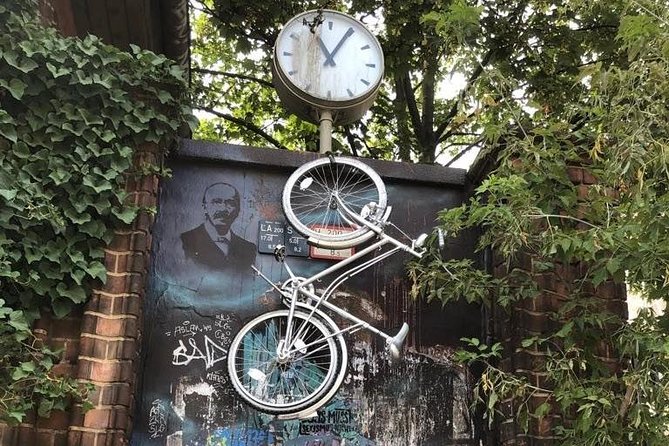
REVIEW · STREET ART & ALTERNATIVE BERLIN
Berlin Off-the-Beaten-Path Walking Tour: Kreuzberg, Mitte and Friedrichshain
Berlin has another side worth walking. This route through Kreuzberg, Mitte and Friedrichshain shows why Berlin keeps reinventing itself. I love the small-group feel and the guides, like Lee or Reese, who make you feel free to ask anything. I also love the street art and counterculture timeline stops, but the outdoor pace means you should plan layers if the weather turns.
You start near Alex at Vapiano am Alex and finish at Yaam Beach on Stralauer Allee, with some tram or train legs that stretch your view of the city. Along the way, you get practical food culture context like currywurst and doner kebab, plus a stop at Prater Garten, Berlin’s oldest beer garden.
In This Review
- Key things I’d plan around
- Why this Kreuzberg–Mitte–Friedrichshain walk feels different
- Starting at Vapiano am Alex, ending at Yaam Beach
- Kreuzberg: Turkish community, Jewish quarter, and the city’s garden rebellion
- The food culture stops: currywurst, doner kebab, and one classic beer garden
- Counterculture timeline: protests, Baader-Meinhof, punk, and May 1 riots
- Prenzlauer Berg and Friedrichshain: why the walk includes both “then” and “now”
- Music, art, and Yaam Beach: the creative payoff
- Price and value: what $30.25 actually gets you
- Practical logistics: tickets, transit legs, and how to stay comfortable
- Guides make or break this kind of tour
- Should you book this off-the-beaten-path Berlin walk?
- FAQ
- How long is the walking tour?
- How much does it cost?
- Is the tour guide English-speaking?
- Where do I meet, and where does it end?
- Do I need a transport ticket?
- What’s included in the price?
Key things I’d plan around
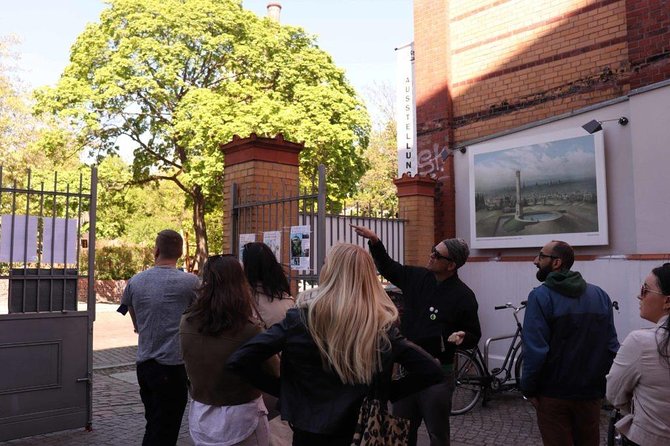
- Small-group pacing (max 20), so you can actually talk with your guide, not just listen.
- Neighborhood contrast across Kreuzberg, Friedrichshain, Prenzlauer Berg, and Mitte, without hopping on and off buses.
- Street art with context, tied to protest movements, punk energy, and electronic music culture.
- Food culture moments, including currywurst and doner kebab, plus a classic beer garden stop.
- A creative endpoint at Yaam Beach, where music and community shape the final impression.
Deeper into Kreuzberg and the eastern districts
- Berlin: Kreuzberg Guided Walking Evening Tour★ 4.7 · 555 reviews
- Berlin: Alternative Bike Tour of Kreuzberg & Friedrichshain★ 4.7 · 548 reviews
- Berlin: 2.5-Hour Walking Tour through Kreuzberg 61★ 4.9 · 525 reviews
- Berlin Off-the-Beaten-Path Walking Tour: Kreuzberg, Mitte and Friedrichshain★ 5.0 · 412 reviews
Why this Kreuzberg–Mitte–Friedrichshain walk feels different
This is the kind of Berlin tour that helps you read the city instead of just ticking off sights. You’re moving through neighborhoods that look ordinary at first glance, then your guide points out the details: what people built, what people fought for, and how art and music found space after major upheaval.
I like that it’s not only about old political history. The walk connects street life now—community food, murals, alternative art spaces—to the counterculture movements that shaped Berlin’s identity. Guides such as Lee and Reese come across as locals first, storytellers second, and that matters because Berlin changes fast. You want the explanation that matches what you’re seeing in front of you.
One more thing: you cover more ground than you could on your own in one afternoon. Even with plenty of walking, the route mixes in public transport legs so you don’t spend the whole day in transit or stuck in one small pocket of the city.
Starting at Vapiano am Alex, ending at Yaam Beach
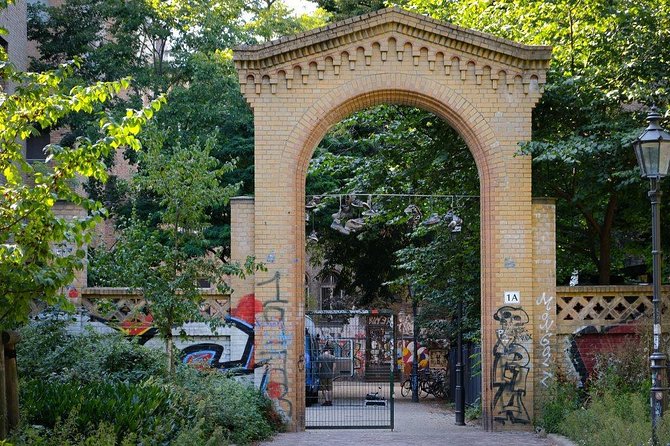
You meet at Vapiano am Alex (Rathausstraße 6). From there, the tour moves outward from central Berlin and then gradually works its way toward the east-side creative scene.
The finish matters. Ending at Yaam Beach (Stralauer Allee 34) gives the walk a feeling of arrival, not just a stop-and-dump moment. Yaam Beach is tied to Berlin’s music culture in the tour narrative—reggae, hip-hop, and rasta fans are part of the story here—so the last stretch lands as a real payoff for people who care about art and community, not only architecture.
Also, plan your afternoon like a human, not like a robot. Some routes can run slightly long or shift the exact endpoint within the general area, so if you have a firm appointment right after, leave a buffer.
Kreuzberg: Turkish community, Jewish quarter, and the city’s garden rebellion
Kreuzberg is the heart of this experience. You’ll get a look at the thriving Turkish community and also visit parts of the area associated with Berlin’s Jewish quarter. That mix is one of Berlin’s defining features: layers of culture stacked in the same streets, lived in daily, not preserved behind glass.
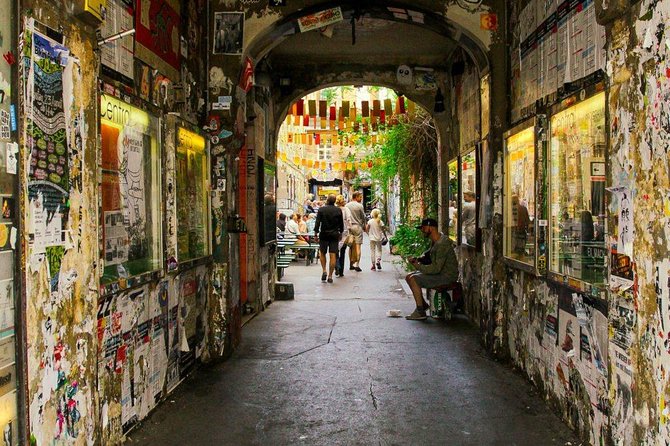
Then the tour turns to the things tourists often miss because they look small or temporary. You’ll pass by urban farms, guerrilla gardens, alternative art galleries, and organic markets. These aren’t just cute background details. They’re signs that people are using neglected space and making it useful—food, plants, community meeting points—sometimes with local permission, sometimes with the city learning to catch up.
In this part of the walk, you’ll likely also get a sense of how the neighborhoods grew in popularity. That’s where the guide’s storytelling style helps. When someone like Lee talks about the local neighborhood in Kreusberg with pride, you stop treating it like a theme park set and start noticing the human scale: small storefronts, side streets, and community energy.
The food culture stops: currywurst, doner kebab, and one classic beer garden
This tour doesn’t pretend you’re on a food crawl. Food and drinks are not included. Still, you get meaningful culinary context, plus an easy chance to try something classic.
You’ll have the option to taste currywurst (own expense). It’s described as a fried German sausage with curry-flavored ketchup, and the point of mentioning it isn’t the recipe—it’s how Berlin adopted and transformed street-food culture into its own daily ritual.
You’ll also hear how doner kebab became popular in Berlin, framed as Turkish-style gyros. In practice, this helps you understand why Kreuzberg works so well as a cultural crossroads. The food isn’t a museum artifact. It’s an everyday bridge.
And then there’s a stop at Prater Garten, known as Berlin’s oldest beer garden. This is a nice counterpoint to the alternative street scene. You get a traditional anchor in the middle of the tour, which makes the rest of the story feel more grounded, not overly trendy or underground-only.
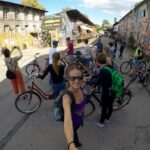
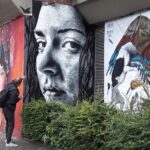
More murals and back-street Berlin


Counterculture timeline: protests, Baader-Meinhof, punk, and May 1 riots
A lot of Berlin tours cover World War II and the Wall, then speed toward present-day with a few photos. This one keeps working on the idea that Berlin’s identity is tied to resistance and invention.
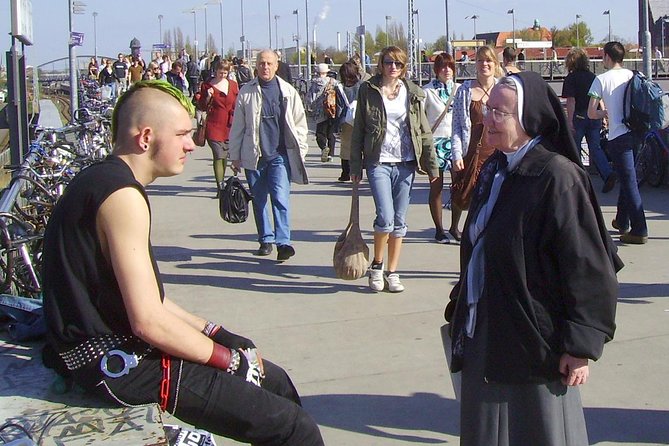
You’ll hear about the 1960s student protest movement, then the rise of the Baader-Meinhof group in the 1970s, and later the growth of punk and the May 1 riots in the 1980s. The value here is not memorizing dates. It’s learning how the political mood shaped the street-level culture: who felt unheard, what kinds of music and art gained momentum, and why certain neighborhoods became magnets for alternative life.
A guide with energy helps a lot. Many of the strongest comments on this tour revolve around guides who can tie history to real places you can point at while you walk. When you hear those stories in front of the walls and alleys where creative life happens, the timeline becomes more than a lecture.
Prenzlauer Berg and Friedrichshain: why the walk includes both “then” and “now”
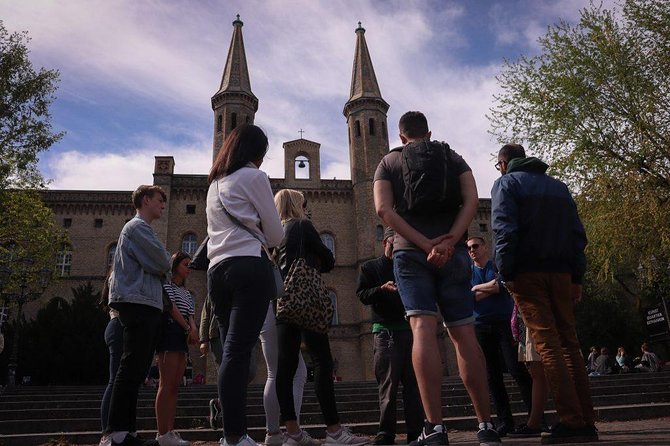
The route isn’t only about Kreuzberg. It also brings you into emerging and changing areas like Friedrichshain and Prenzlauer Berg, plus nearby parts of Mitte.
That matters because Berlin’s story isn’t one straight line. Some areas show how alternative communities grew and then aged. Others show how East and West Berlin’s different development paths still show up in street life, music scenes, and who uses public space.
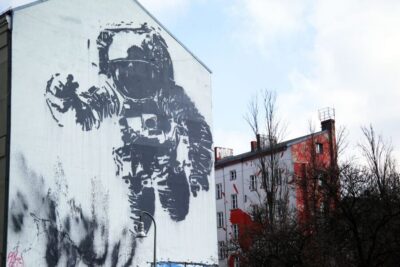
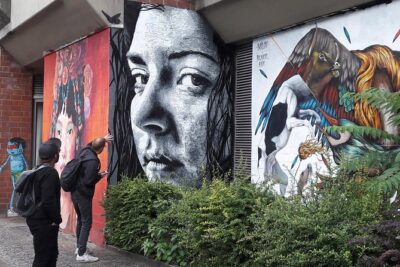
You’ll also see street art throughout the neighborhoods. The tour frames it as part of the city’s conversation, not random decoration. When you connect murals and graffiti to the broader counterculture narrative you heard earlier, you start to notice patterns: bold messages, political themes, humor, and the way art claims space when other systems feel out of reach.
Music, art, and Yaam Beach: the creative payoff
The tour’s music thread is one of its best “final images.” You’ll hear about the Love Parade, described as a famous electronic dance music festival, and then the story shifts toward Yaam Beach and its community: reggae, hip-hop, and rasta fans.
This isn’t random fun added at the end. It’s consistent with the counterculture arc. Berlin’s creative scenes often function as social networks—people finding each other through music, shared values, and late-night energy. Ending at Yaam Beach helps you leave with a clearer picture of how Berlin stays creative even when the city is under pressure to become more mainstream.
If you like street art, live music, and the idea that neighborhoods carry identity, you’ll appreciate the way this tour keeps steering you back to art and people.
Price and value: what $30.25 actually gets you
At $30.25 per person for about 4 hours 30 minutes (approx.), the price is reasonable for a guided walk that covers multiple neighborhoods and includes an English-speaking local guide only.
What you should expect to pay extra for:
- Public transport tickets (an AB transport ticket is required; a day pass is recommended)
- Food and drinks (not included)
- Any optional purchases you make along the way, like currywurst
What you get for the money:
- A guide who handles the context for street art and counterculture history, while you’re actually seeing the neighborhoods
- A route that takes you beyond the most obvious tourist corridors
- A capped group size (maximum 20), which tends to improve the back-and-forth quality of the experience
When a tour is rated 4.8 with a strong recommendation rate, it usually means the guiding and the pacing work. In this case, the comments repeatedly point to guides who are funny, engaged, and genuinely invested in showing their neighborhood perspective—not just reading facts.
Practical logistics: tickets, transit legs, and how to stay comfortable
Expect a real walking experience. Even though the duration is around 4.5 hours, the route also includes public transport legs (tram and train) for broader coverage. That’s why you should plan the transport ticket up front.
Bring an AB day pass if you can. The tour requires AB public transport tickets, and reviews note that those tram/U-bahn segments are part of what keeps the itinerary from being stuck in one zone. If you show up without the right ticket, you’ll spend your afternoon dealing with machines instead of murals.
Shoes matter. You’ll want good walking shoes because this is a city-neighborhood stroll with enough steps that comfort becomes part of the enjoyment.
Finally, dress for the weather. One of the clear cautions from the experience comments is that it can be very uncomfortable in cold conditions because the tour runs outdoors for long stretches. Layers, a hat, and a light rain layer are smart moves in Berlin.
Guides make or break this kind of tour
This tour leans heavily on storytelling and interpretation. That’s why guide choice shows up so much in the feedback you’ll hear: people named guides like Lee, Reese, Antonio, Arnie, Jake, and Jason as the reason the walk felt fun, personal, and easy to follow.
Even if you don’t care about Berlin’s political history, a great guide can make it feel human: explaining why a street scene looks the way it does and why certain communities shaped the neighborhoods you’re standing in today.
Should you book this off-the-beaten-path Berlin walk?
Book it if you want Berlin with texture—street art with meaning, counterculture told in place, and neighborhoods that feel lived-in rather than staged. It’s also a good pick if you’re the type who likes to wander but hates wasting time guessing which side streets are worth your energy.
Skip it (or consider a shorter, more museum-heavy plan) if you’re dealing with mobility limits or if you strongly prefer indoor, low-walking sightseeing. The tour is designed for outside walking, and it works best when you come prepared.
If you want one afternoon that helps you understand modern Berlin as a city of communities, protests, music scenes, and creative space-making, this is a strong bet.
FAQ
How long is the walking tour?
The tour is approximately 4 hours 30 minutes.
How much does it cost?
It costs $30.25 per person.
Is the tour guide English-speaking?
Yes. The local guide is English speaking (English offered).
Where do I meet, and where does it end?
You start at Vapiano am Alex, Rathausstraße 6, 10178 Berlin. The tour ends at Stralauer Allee 34, 10245 Berlin, at Yaam Beach.
Do I need a transport ticket?
Yes. An AB transport ticket is required for the tour, and a day pass is recommended.
What’s included in the price?
A local guide (English speaking). Food and drinks are not included, and hotel pickup and drop-off are not included.
More Tour Reviews in Berlin





Street Art and Alternative Berlin
Kreuzberg and the Eastern Districts


Round out your days in Berlin
Street Art & Alternative Berlin, compared.
 ★ 4.6Alternative Berlin Walking TourFrom $291,204 reviews
 ★ 4.8City Street Art Guided Walking TourFrom $231,051 reviews
 ★ 4.73-Hour Street Art TourFrom $23778 reviews
 ★ 4.7Alternative Bike Tour of Kreuzberg & FriedrichshainFrom $41548 reviews
 ★ 4.8Experience the Alternative Kreuzberg on a Bike TourFrom $41395 reviews
 ★ 5.0Berlin Street Art Walking Tour – Off The GridFrom $24270 reviews
 ★ 5.0East Meets West: Berlin Food Culture & Street ArtFrom $169157 reviews
 ★ 5.0Kreuzberg Berlin: Off the Beaten Track PRIVATE Walking TourFrom $123128 reviews
Browse the lists this tour appears in