

REVIEW · LGBTQ-FRIENDLY
Berlin: BKA Theater “Operetta for two gay tenors”
Two tenors, one funny-tender story. I love the world-first queer operetta concept and the cozy theater vibe with gastronomy, and it delivers big laughs without losing the ache underneath. One thing to consider: double-check the actual start time so you do not walk in late and miss the opening portion.
You’ll watch graphic designer Tobi and nurse Jan build an idyllic life in the countryside—fruit trees, homemade jam, and neighborly warmth included. Then the tone keeps flipping in the best way: Tobi dreams of a peaceful escape, while Jan, who never left home, struggles with the whole idea of country life. Add catchy new operetta hits and schmaltzy waltzes with song titles like Champagner von Aldi, and you get a modern love story that also pokes at pride, self-doubt, love, and sex.
In This Review
- Key Points Worth Marking on Your Berlin Plan
- Why a Queer Operetta Belongs on Your Berlin Night Out
- Meeting Tobi and Jan: The Love Story in Song Form
- The Songs Do the Work: Catchy Hits and Schmaltz Waltzes
- Berlin Operetta Reborn: 1920s Roots, Today’s Voices
- Inside BKA Theater: A Cozy Evening You Can Actually Enjoy
- Timing and Tickets: The One Detail That Can Break Your Night
- Awards and Credibility: When It’s More Than a Trend
- Who Should Book This Show (and Who Might Skip It)
- A Simple Plan for Your Evening at BKA Theater
- Booking Decision: Should You Go for Operetta for Two Gay Tenors?
- FAQ
- What is Operetta for two gay tenors about?
- How long is the show?
- Where does the show take place?
- Is the theater wheelchair accessible?
- Is free cancellation available?
- Can I reserve now and pay later?
- Who created the music and lyrics?
Key Points Worth Marking on Your Berlin Plan
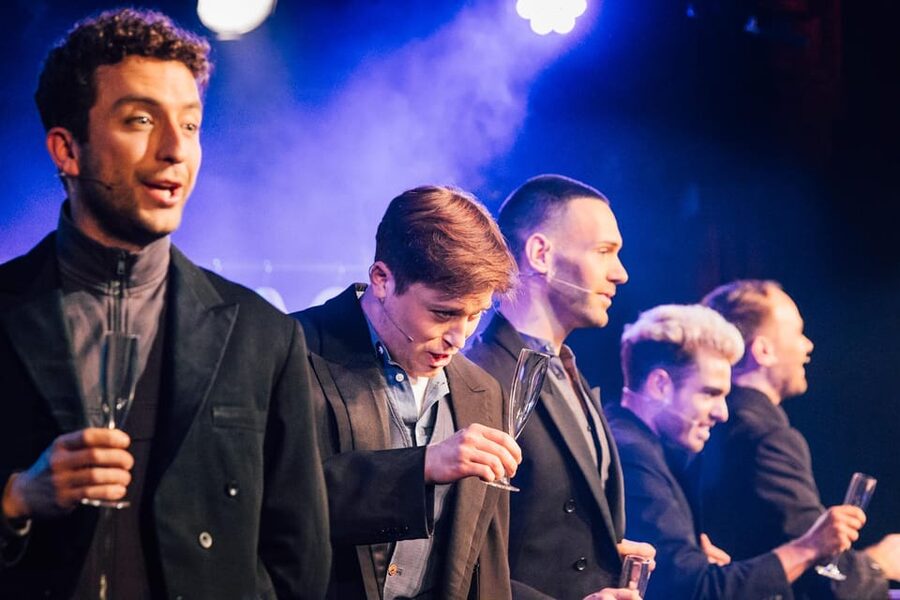
- World-first queer operetta that continues the tradition of Berlin operetta from the 1920s
- Two main characters, Tobi and Jan, whose “idyll” turns into a real emotional comedy
- Song highlights like Champagner von Aldi, Mein Fetisch ist die Operette, and Ich steh total auf Jens Riewa
- Cozy staging at BKA Theater, designed for an up-close night out
- Gastronomy service that lets you stay seated and enjoy the evening beyond the singing
More Berlin tours to line up side by side
- Berlin: Gay Berlin Out in Schöneberg Walking Tour★ 4.8 · 281 reviews
- Berlin’s Gay, Lesbian, and Queer Scene Small-Group Walking Tour★ 4.5 · 66 reviews
- Queer Berlin Tour: Birthplace of LGBTQ+ Movements★ 5.0 · 6 reviews
- Berlin: BKA Theater “Operetta for two gay tenors”★ 4.0 · 4 reviews
Why a Queer Operetta Belongs on Your Berlin Night Out
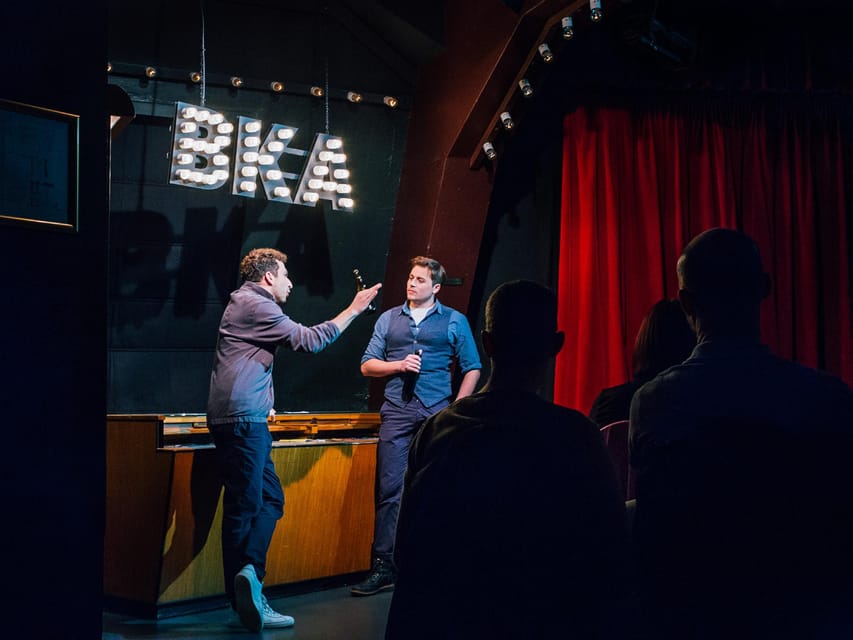
Berlin has no shortage of shows that look polished, loud, and impressive. What I like about Operetta for two gay tenors is that it aims for something more personal: the laughs feel close to the characters, and the music does not just entertain—it comments on the awkward parts of being human.
This is a show built around the idea of a queer operetta, and it treats that as both playful and serious. The story comes with lively, catchy tunes and hearty schmaltz waltzes, but it never turns queer life into a one-note joke. It stays modern, uproariously funny, and still touching—especially when the comedy points back at real insecurities.
There is also a cultural layer you might not expect from something this entertaining. The show celebrates a rebirth of Berlin operetta, a genre that once wrestled with strong expectations while also celebrating diversity in the 1920s. One hundred years later, it keeps that spirit—wit and passion included.
Meeting Tobi and Jan: The Love Story in Song Form
The plot is built like a relationship story you could hear between friends, but told through operetta jokes and big musical emotion.
Tobi is a graphic designer who turned his back on Berlin and the gay scene there to live his dream of an idyllic countryside life. Jan is a nurse, and he is the one who has barely left his home—meaning the “dream village” is not automatically Jan’s dream. They met at an annual shooting festival, and that detail matters because it frames their early connection as something slightly outside the usual romantic pathway.
Once the two of them are together in their countryside home, you see the image they want: a small house with a garden, fruit trees, and homemade jam for breakfast. Even the neighbors feel welcoming in that gentle village way. But the show keeps asking the uncomfortable question: what happens when one person romanticizes a place, and the other person never asked to leave?
That tension—between country idyll and the big city scene—drives the best comedy beats. You get love, pride, self-doubt, desire, and the push-pull of figuring out how to live with someone else’s needs. The tone can bounce from cheeky to tender without warning, which is exactly why it lands.
The Songs Do the Work: Catchy Hits and Schmaltz Waltzes
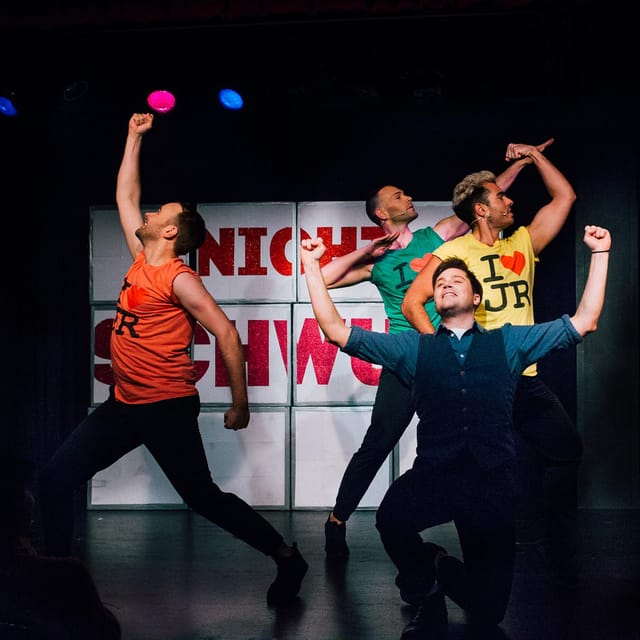
If you like songs that stick after the curtain call, this is the right kind of show for you. The music mixes new operetta-style numbers with classic-seeming waltz energy. The result is a sound that feels old-school in form but updated in attitude.
I especially like how the show uses humor through titles and lyric themes—then lets the same musical style carry the emotional weight. The song list alone gives you a sense of the range:
- Champagner von Aldi
- Mein Fetisch ist die Operette
- Ich steh total auf Jens Riewa
Those are playful, yes, but they also signal that the lyrics are not pretending real life is glamorous all the time. They treat identity, attraction, and even awkward crush moments as material worth laughing at—and worth singing about.
There is also a practical reason this kind of score works on stage. Catchy tunes help you track the story quickly, especially if you do not know anything about operetta conventions. If you only catch half the dialogue in any theater production, music tends to bridge the gap. Here, it is part of the design.
Berlin Operetta Reborn: 1920s Roots, Today’s Voices
This show is not just a one-off comedy. It sits in a longer tradition.
Operetta in the 1920s often came with complicated social expectations—roles, rules, and narrow ideas of what people should be. At the same time, that era also celebrated diversity with relish. In other words: operetta historically had both pressure and permission inside it.
Operetta for two gay tenors continues that thread with a modern approach, and it is explicit about what it wants to celebrate. It is a queer operetta that keeps the form, keeps the music language, and updates the perspective. The payoff is a show that feels like it belongs in Berlin, not like it is importing an idea from somewhere else.
If you care about representation in the arts, this is one of those rare evenings where the message does not come from speeches. It comes from jokes, love scenes handled with warmth, and songs that treat queer life as ordinary—then unforgettable—because the characters are fully drawn.





Inside BKA Theater: A Cozy Evening You Can Actually Enjoy
A big reason people return to this show is the atmosphere. The staging at BKA Theater is described as cozy, and you can feel that in how the experience is meant to land: you are not watching from a distance where emotion turns into spectacle. You are close enough that the laughs and the quieter moments register.
There is also gastronomy involved, and that matters more than it sounds. A musical evening can sometimes feel like two separate events—food first, show later. Here, the offer is built around pampering you during the night. It helps you stay in vacation mode the whole time, not in planning mode.
What I’d do as you plan your evening: arrive earlier than you think you need. Theater nights move fast once you get inside, and settling in matters when you are about to spend the next couple hours with story and song doing the heavy lifting.
Timing and Tickets: The One Detail That Can Break Your Night
This is a 2.5-hour show, which is a comfortable length. You can plan it as a true evening activity—dinner nearby, a relaxed arrival, then the performance.
Still, I want to flag a real risk: show-time mismatches. In at least one reported situation, a start time shown in the booking flow did not match when the curtain actually went up, and someone ended up missing close to half the show. That is the kind of problem that ruins the fun and turns an enjoyable night into a frustrating one.
So here is the practical advice:
- Check the confirmed start time right before you leave.
- Give yourself a cushion so you are seated before the first big musical moments begin.
Do not assume you can sprint in and recover the plot. In this kind of story—where songs carry a lot of meaning—missing the opening portion changes the whole experience.
Awards and Credibility: When It’s More Than a Trend
Sometimes queer productions get hyped and then disappear. This one has staying power.
Since its premiere in October 2021 at BKA Theater, Operetta for two gay tenors has been celebrated by audiences and the press alike. It has also become a perennial favorite. On the awards side, it won the German Musical Theater Prize in 2022 in the Best Lyrics category. It was also nominated in the Best Book category.
Why that matters for you as a ticket buyer: it suggests the writing is not just clever on the surface. The lyrics earned recognition, and that usually means the rhymes, wordplay, and emotional pacing are working—not just the jokes.
The show is also credited to Florian Ludewig (music) and Johannes Kram (lyrics). When you see a production with named creative teams and awards behind the writing, you can feel more confident you are not walking into a random novelty.
Who Should Book This Show (and Who Might Skip It)
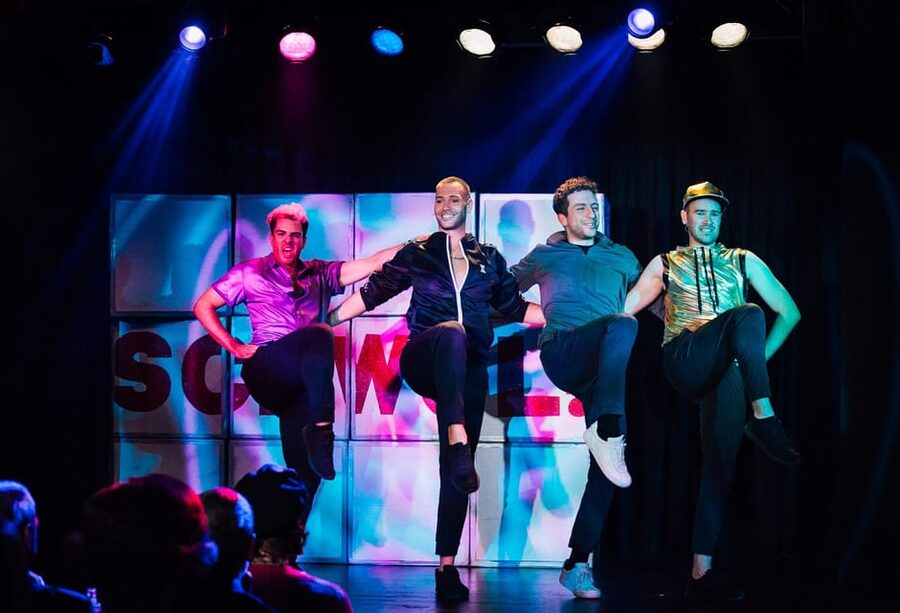
You’ll probably love this if you want:
- a fun, modern queer story told through operetta structure
- lots of song energy, including catchy tunes and waltz-style numbers
- an evening where laughs and tenderness share the same stage
It is also a good pick if you like theater that takes identity seriously without wrapping everything in heavy seriousness. The balance is part of the design: love and sex, pride and self-doubt—handled with humor, not with coldness.
You might think twice if you dislike productions where the comedy can pivot to vulnerability without warning. This show swings emotions, and it does not sugarcoat the discomfort of figuring out where you fit in a relationship or in a place.
Also consider your comfort level with a music-driven story. Even if you do not know operetta conventions, the show’s songs do a lot of storytelling work.
A Simple Plan for Your Evening at BKA Theater
Because the experience is the show itself, your “itinerary” is really about pacing your arrival and staying present.
1) Before you go
- Decide on a meal near the theater so you are not rushing across town right at start time.
- Check the confirmed show start time, again, shortly before you depart.
2) Arrive, settle in, and get into the mood
- Aim to be seated early enough that you can catch the first numbers.
- If the theater’s gastronomy is part of the experience, take advantage so you stay comfortable for the full 2.5 hours.
3) During the show
- Watch for how the story builds the countryside idyll, then tests it.
- Listen for the way songs reflect character shifts—Tobi’s idealism versus Jan’s resistance.
4) After
- Take a few minutes to let the last emotional note land. These productions can stick with you more than you expect because the jokes are wrapped around real feelings.
Booking Decision: Should You Go for Operetta for Two Gay Tenors?
I think you should book it if you want a Berlin night that mixes music, comedy, and genuine heart, and if you appreciate representation that feels integrated—not pasted on. The combination of a queer operetta framework, award-winning lyrics, and a cozy theater atmosphere with gastronomy makes it a strong value for a couple hours of theater fun.
If you are the kind of person who absolutely hates any chance of missing the beginning, treat the start time check as non-negotiable. Give yourself cushion time, confirm details on the day, and you will protect the best part of the experience: seeing the story start exactly where it wants to.
Go for it when you want to be entertained, but also when you want the laughs to mean something.
FAQ
What is Operetta for two gay tenors about?
It follows Tobi, a graphic designer, and Jan, a nurse, as they build a life together in the countryside with fruit trees, homemade jam, and welcoming neighbors—then face tension between Tobi’s romantic dream of the village and Jan’s discomfort with leaving what he knows.
How long is the show?
The performance lasts about 2.5 hours.
Where does the show take place?
It takes place in Berlin at BKA Theater.
Is the theater wheelchair accessible?
Yes, wheelchair accessibility is listed.
Is free cancellation available?
Yes. You can cancel up to 24 hours in advance for a full refund.
Can I reserve now and pay later?
Yes. The option is listed as reserve now & pay later.
Who created the music and lyrics?
The music is by Florian Ludewig, and the lyrics are by Johannes Kram.
More LGBTQ-Friendly in Berlin



More Tour Reviews in Berlin

Round out your days in Berlin

LGBTQ-Friendly, compared.
 ★ 4.8Gay Berlin Out in Schöneberg Walking TourFrom $23281 reviews
 ★ 4.5Berlin’s Gay, Lesbian, and Queer Scene Small-Group Walking TourFrom $2466 reviews
 ★ 4.8Historyof the Trans, Queer & Gay communities of Berlin tourFrom $5817 reviews
 ★ 5.0Queer Berlin Tour: Birthplace of LGBTQ+ MovementsFrom $1536 reviews
Browse the lists this tour appears in