
REVIEW · BERLIN WALL & COLD WAR
Berlin: Cold War History and Berlin Wall Guided Walking Tour
Berlin’s Cold War story starts at eye level. This walking tour ties together the division of the city and the people who lived under it, using major sites like Checkpoint Charlie and the Berlin Wall Memorial. I like that it’s led by a local historian style guide (you may meet names like Eugen, Cieran, Paul, or Cairan, based on past departures), and the best part is how the guide connects politics to real escape stories, not just dates. One thing to plan for: street noise can make it harder to hear in spots with heavy traffic, so position matters.
It’s also a good length for a first-time Berlin visit. You cover multiple landmarks tied to the uneasy post–World War II years and the building of the Wall, then end with the memorial’s guided focus. The only drawback is that you’re on your feet for about 3 hours, so comfortable shoes and weather clothing are non-negotiable.
In This Review
- Quick Takeaways
- Where You Start: Hopfingerbräu by Brandenburg Gate (Ebertstraße 24)
- Brandenburg Gate: More Than a Photo Stop
- The Berlin Wall Remnants and a 200-Meter Stretch You Can Feel
- Topography of Terror: Understanding the Backstory Before the Wall
- Potsdamer Platz: Watching the City’s Layout Tell the Divide Story
- Checkpoint Charlie: The Famous Crossing, Explained Slowly and Clearly
- Berlin Wall Memorial: Where the Tour Turns Moving (and Stays Focused)
- What the Guides Add: Storytelling, Photos, and Lots of Q&A
- Price and Value: Why $31 for 3 Hours Can Be a Smart Use of Time
- Practical Tips: Hearing the Story in the Street and Dressing for Berlin Weather
- Who This Tour Suits Best (and Who Might Skip It)
- Should You Book This Cold War Berlin Wall Walking Tour?
- FAQ
- Where is the meeting point for the tour?
- How long is the Berlin Cold War history walking tour?
- How much does the tour cost?
- What stops and sights are included during the walk?
- Is this tour guided, and what languages are offered?
- Is the tour wheelchair accessible?
- What should I bring?
- Is it possible to cancel if plans change?
Quick Takeaways
- Ebertstraße meeting point near the Brandenburg Gate makes the tour feel connected to the city you came to see
- Checkpoint Charlie gets special attention as the most famous East–West crossing
- A 200-meter stretch of the former Wall along Niederkirchnerstrasse helps you see what “nearby history” actually looks like
- Berlin Wall Memorial time is the heart of the walk, focused on division and lives lost
- Guides bring the era to life with bravery and escape stories plus plenty of Q&A
- It’s 3 hours on foot, so you’ll want to dress for cold and wind
More of the Wall and the divided city
- Berlin’s Best: 2 Hour Walking Tour Third Reich and the Cold War★ 5.0 · 5,486 reviews
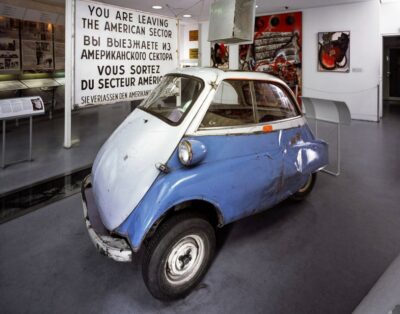
- Skip-the-Line: Berlin Wall Museum at Checkpoint Charlie★ 4.1 · 2,041 reviews
- Berlin: East Side Gallery Spree Cruise in a Solar Catamaran★ 4.1 · 1,086 reviews
- Cold War, Berlin Wall, Spies and the East Side Gallery★ 5.0 · 1,024 reviews
Where You Start: Hopfingerbräu by Brandenburg Gate (Ebertstraße 24)
The tour kicks off at Ebertstraße 24, meeting outside Hopfingerbräu next to the Brandenburg Gate. That location is smart because it anchors everything you’ll hear afterward. You’re not just learning about the Cold War in theory; you’re looking at modern Berlin’s landmark while the guide reframes it through division-era eyes.
Because it’s a walking tour, the first few minutes set the rhythm. Expect a guide to quickly get your bearings and explain how the story moves from the post–World War II period into the Wall era, then toward what led to the Wall’s fall. This is also where it pays to pick a spot where you can actually hear. One past participant noted that traffic noise can interfere, so standing so you face the guide is a practical move.
Brandenburg Gate: More Than a Photo Stop
You start with a stop at the Brandenburg Gate for about 15 minutes. On its own, it’s an iconic Berlin scene. With a historian guiding you, it becomes a way to talk about how the city’s center changed meaning once Berlin was divided.
This part works for two reasons. First, it’s early enough in the walk that your brain is still forming the story structure. Second, it’s close to the tour’s later sites, so the guide can connect what you see right now with what the city looked like during the Cold War.
If you’re short on time in Berlin, this is a good way to make the Gate “useful.” You don’t have to turn it into a history lecture in your head; the guide does that for you, step by step.
The Berlin Wall Remnants and a 200-Meter Stretch You Can Feel
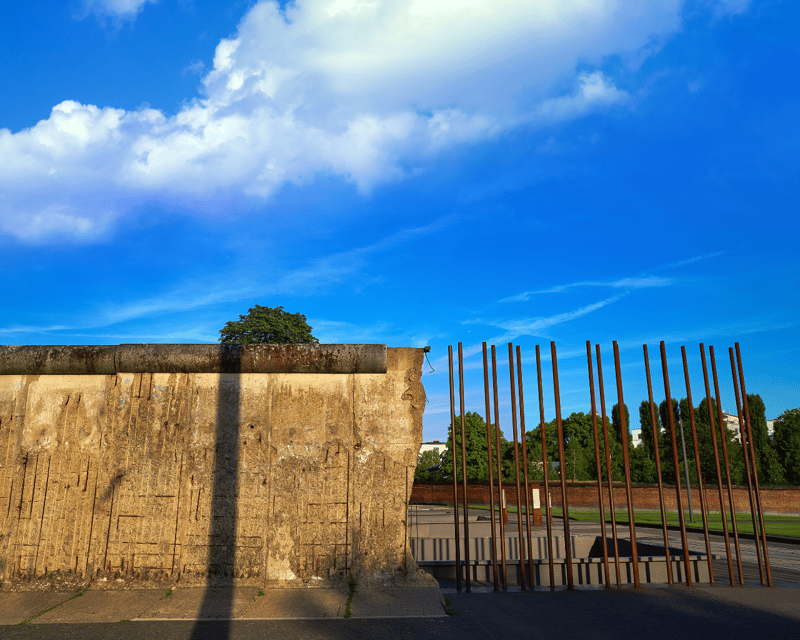
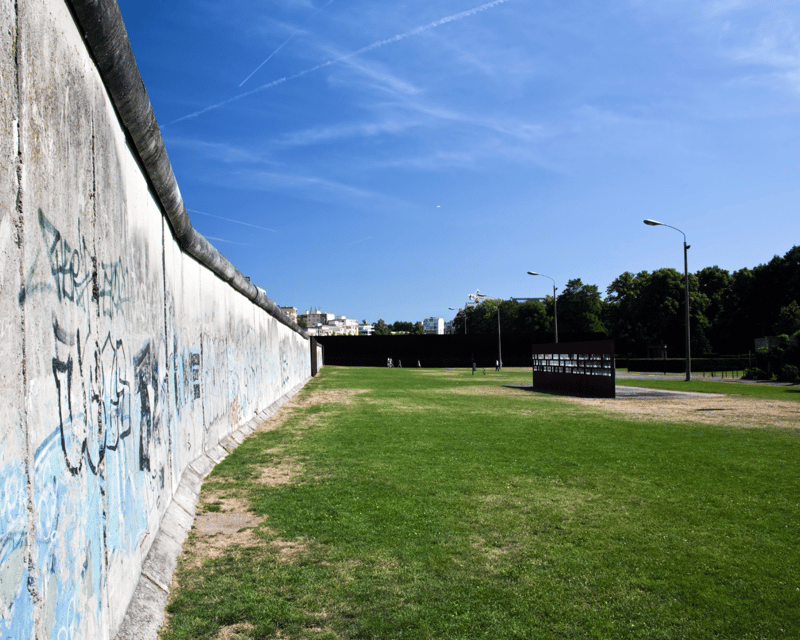
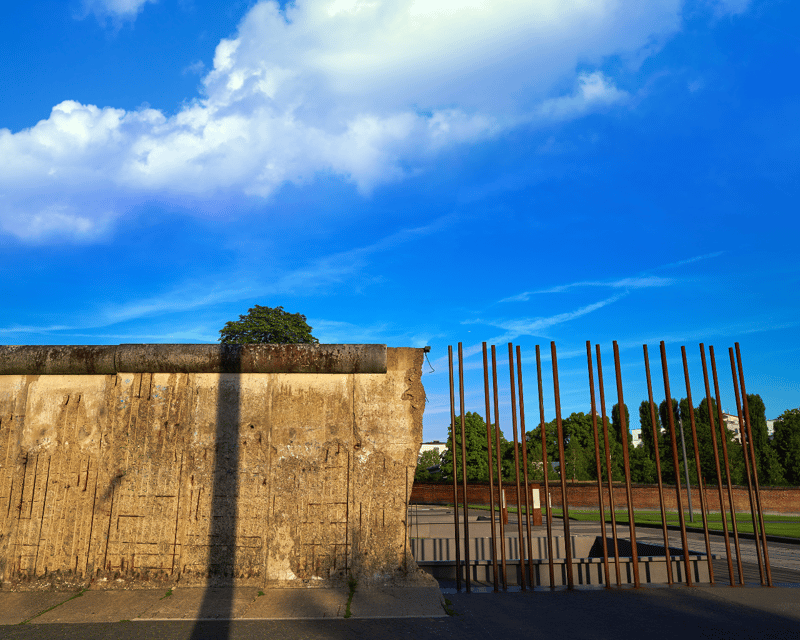
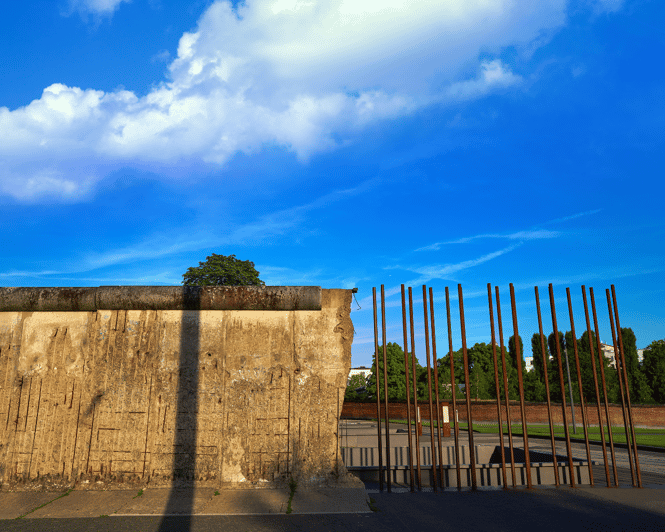
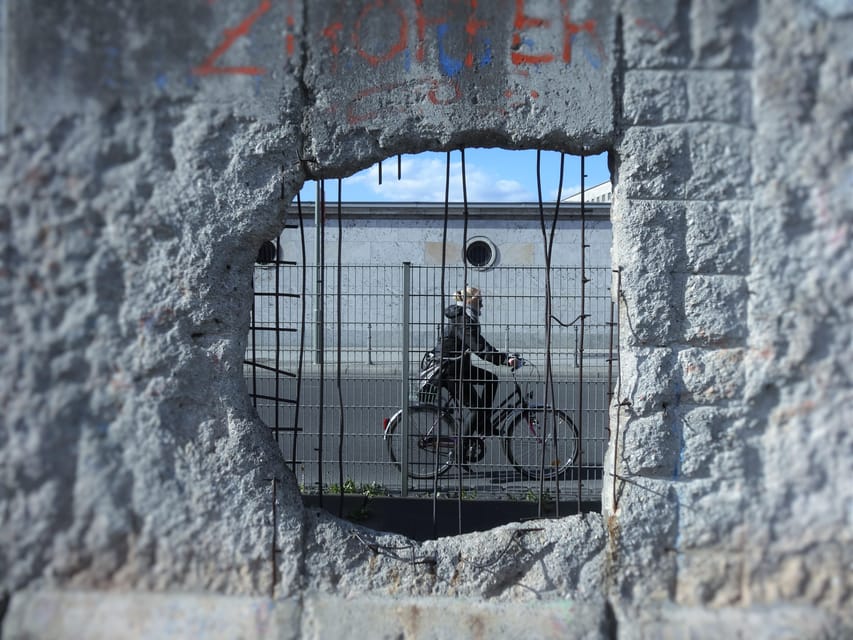
Next comes the section focused on the Wall itself, with roughly 25 minutes in the area. This is where the tour promises more than abstract history. You get to see a 200-meter stretch of the former Berlin Wall along Niederkirchnerstrasse, plus reminders of how border control and surveillance shaped daily life.
There’s a particular kind of power in seeing a real trace of a barrier that once decided who could move freely and who couldn’t. The guide’s job here is to help you read the physical space: what’s left, what it meant, and how the Wall wasn’t just concrete. It was enforced separation, made concrete through the systems around it.
The tour also points out the presence of an East German (DDR) security apparatus, including a former DDR watchtower. Even if you’ve seen Berlin Wall photos before, a guide’s framing can change how you interpret what you’re looking at. It’s not just a structure; it’s part of an engineered environment of control.
Topography of Terror: Understanding the Backstory Before the Wall
You’ll then pause at Topography of Terror for about 15 minutes. Even without getting lost in details, this stop helps place Berlin’s Cold War era in sequence. The tour keeps the timeline moving from the Second World War, through the breaking down of the uneasy alliance, and toward why the Wall was eventually constructed.
This is useful if you came to Berlin with a general idea of the Cold War but not the “how did we get here” chain. The guide’s approach is to show how political fractures hardened into separate spheres, and how those tensions produced physical barriers and human consequences. You don’t leave this stop feeling like you skipped context.
One practical note: since this is a short stop, focus on absorbing the big connections the guide points out rather than trying to read everything yourself. Your historian guide is doing the synthesis for you.
More of Berlin on foot



Potsdamer Platz: Watching the City’s Layout Tell the Divide Story
From there, the group heads to Potsdamer Platz for around 15 minutes. This stop often feels like the “back to the present” moment—because Potsdamer Platz is modern, busy, and visually different from the sites that scream Cold War.
But that contrast is exactly why it’s useful. A guided walk uses the city’s layers like a timeline you can see. When your guide explains how division-era decisions shaped neighborhoods and movement, even a modern square becomes part of the story rather than a distraction.
If you like urban history (how the built environment reflects power), this brief stop helps you connect the Wall era to the Berlin you’re standing in today.
Checkpoint Charlie: The Famous Crossing, Explained Slowly and Clearly
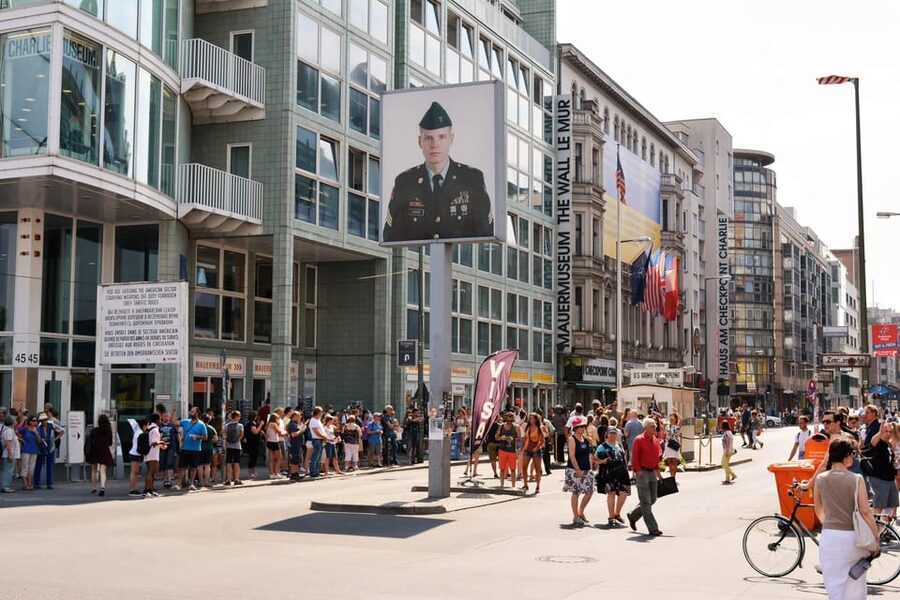
The tour’s most recognizable border-crossing stop is Checkpoint Charlie, with about 25 minutes of guided time. The tour specifically frames it as the most famous crossing between East and West Berlin, which is exactly why it works even if you’ve seen it in movies or photos.
Here, the guide’s biggest contribution is turning the site from a symbol into a human reality. You’ll hear how border rules played out in practice, and you’ll also learn about the era between the end of WWII and the time when the Wall changed everything. That timeline context matters because it explains why a place like Checkpoint Charlie became so charged.
What I like most about this stop is the balance. It’s dramatic without being theatrical. The guide keeps it grounded in real choices people had to make—especially around escape attempts and the risks involved.
And yes, you’ll likely get time for questions here. More than one guide (including Eugen and Paul in past departures) has been praised for answering questions with tact and kindness, which makes this stop feel less like a lecture and more like a conversation.
Berlin Wall Memorial: Where the Tour Turns Moving (and Stays Focused)
The heart of the experience is the Berlin Wall Memorial, where you spend about 75 minutes on guided focus. This isn’t just “see the Wall” time. The tour frames the memorial as a place that commemorates the division of the city and the lives lost because of it.
That extra time pays off. It gives the guide space to slow down and explain the why behind the wall’s construction and the forces that led to its eventual fall. You also get the chance to absorb the emotional weight of the site instead of rushing through it like another stop on a checklist.
If you care about the human side of history, this section is where it lands. Stories of bravery and escape show up again, but the memorial setting makes the tone more reflective. It’s the kind of visit that stays with you after you walk away, because it reminds you that geopolitical shifts became personal outcomes.
What the Guides Add: Storytelling, Photos, and Lots of Q&A
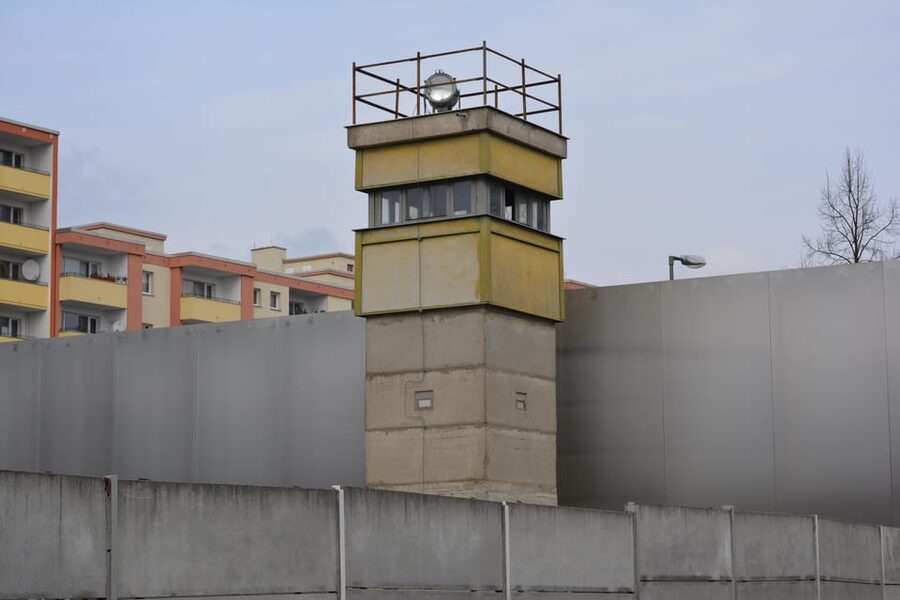
One consistent theme across past departures: the guides don’t just hand you dates. They explain political context and then connect it to people and choices.
Several guides have been singled out for their approach. Eugen has been praised for in-depth knowledge and for bringing history to life with personal insights and meaningful details. Cieran has been noted for using photos connected to family experiences with the Wall, which makes the story feel less like a lecture and more like lived memory. Paul and Cairan have also been credited for staying energetic and keeping the flow moving even in tough weather.
That last detail matters. This tour is weather-exposed, and the guide’s ability to maintain focus and energy in cold conditions makes the walk far more enjoyable. The route also includes outdoor stops where you’ll want to stay attentive even when your hands are cold.
Price and Value: Why $31 for 3 Hours Can Be a Smart Use of Time
At $31 per person for about 3 hours, the value is in what you cover and how the guide frames it. You’re not paying for a single landmark. You’re paying for a historian-style walk that connects multiple Cold War sites into one coherent story arc—from the post-WWII breakdown of alliances, to the Wall era, to why the Wall fell.
The time split also helps justify the price. Most of your focus is on the Wall and memorial areas, not just quick photos. About an hour-plus is devoted to the Berlin Wall Memorial, and Checkpoint Charlie gets a full guided segment too. That’s where the deeper explanation happens.
If you’re the type of person who likes to understand what you’re seeing (even when you already know the headlines), this is the kind of tour where you tend to feel you got your money’s worth.
Practical Tips: Hearing the Story in the Street and Dressing for Berlin Weather
A walking tour can be easy to over-plan. This one is straightforward, but you still need to think about two practical things: shoes and weather.
Bring comfortable shoes and weather-appropriate clothing, especially if you’re visiting in cooler months. You’ll be outside for multiple stops, and one past participant described the tour continuing with energy even during heavy snow and cold.
Also, help your ears. At least one past participant specifically warned that traffic noise can disturb the guide’s storytelling. My advice is simple: when the group stops, choose a position where you’re facing the guide. Don’t be stuck at the back where you hear wind and cars instead of the story.
Who This Tour Suits Best (and Who Might Skip It)
This tour is a great fit if you want a structured Cold War orientation without spending your day jumping between museums on your own. It’s especially good for first-time Berlin visitors who already see the Brandenburg Gate and want the meaning behind the city’s division.
It also suits anyone who likes human-scale history: escape stories, bravery, and the consequences of political decisions. If that’s your style, the Berlin Wall Memorial portion will likely be the standout.
If you want a completely casual stroll with minimal talking, this may feel too history-heavy. The tour’s whole point is guided interpretation, so plan to listen.
Should You Book This Cold War Berlin Wall Walking Tour?
I’d book it if you want the Cold War story tied to real places—Checkpoint Charlie, Wall remnants with a measurable stretch (200 meters), and a guided visit at the Berlin Wall Memorial. For $31 and about 3 hours, it’s a strong way to turn scattered Berlin landmarks into one connected understanding.
I’d think twice only if you’re dealing with mobility limits that make three hours of walking tough. The tour is wheelchair accessible, but it’s still a walking format with outdoor time.
If you like clear guidance, thoughtful pacing, and a historian who explains both politics and personal impact, this is an excellent use of your Berlin time.
FAQ
Where is the meeting point for the tour?
Meet your guide outside Hopfingerbräu next to the Brandenburg Gate, at Ebertstraße 24.
How long is the Berlin Cold War history walking tour?
The tour lasts about 3 hours.
How much does the tour cost?
The price is listed at $31 per person.
What stops and sights are included during the walk?
You visit the Brandenburg Gate, Berlin Wall area remnants, Topography of Terror, Potsdamer Platz, Checkpoint Charlie, and the Berlin Wall Memorial.
Is this tour guided, and what languages are offered?
Yes, it’s a walking tour with a local guide. Languages offered are German and English.
Is the tour wheelchair accessible?
Yes, the tour is wheelchair accessible.
What should I bring?
Bring comfortable shoes and weather-appropriate clothing.
Is it possible to cancel if plans change?
Free cancellation is available up to 24 hours in advance for a full refund.
More Tours in Berlin





More Tour Reviews in Berlin

The Wall and the Cold-War City

Round out your days in Berlin

Berlin Wall & Cold War, compared.
 ★ 4.9Third Reich & Cold War Guided Walking TourFrom $238,378 reviews
 ★ 5.0Berlin’s Best: 2 Hour Walking Tour Third Reich and the Cold WarFrom $245,486 reviews
 ★ 4.1Skip-the-Line: Berlin Wall Museum at Checkpoint CharlieFrom $212,041 reviews
 ★ 4.1East Side Gallery Spree Cruise in a Solar CatamaranFrom $281,086 reviews
 ★ 5.0Cold War, Berlin Wall, Spies and the East Side GalleryFrom $181,024 reviews
 ★ 4.8Wall Tour – Fates, Love Stories, and HeroesFrom $282585 reviews
 ★ 4.5THE WALL: asisi Panorama Berlin TicketFrom $16580 reviews
 ★ 4.8The Wall and Third Reich Guided Bike TourFrom $41578 reviews
Browse the lists this tour appears in