
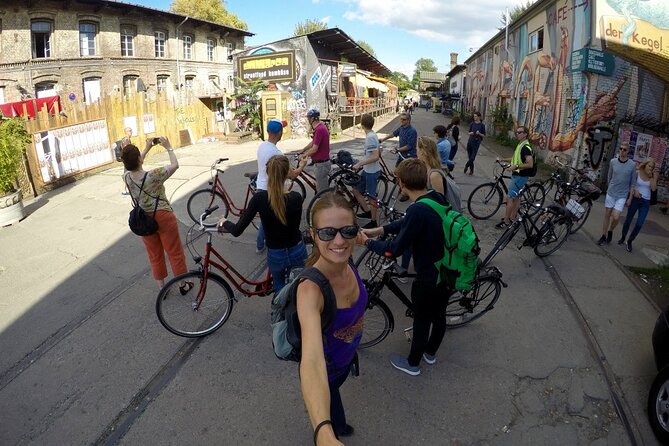
REVIEW · STREET ART & ALTERNATIVE BERLIN
Berlin: Experience the Alternative Kreuzberg on a Bike Tour
Berlin has another side, and it moves fast. This 3-hour alternative Kreuzberg bike tour takes you beyond the usual sights and into neighborhoods shaped by the Wall, migration, and street-level creativity.
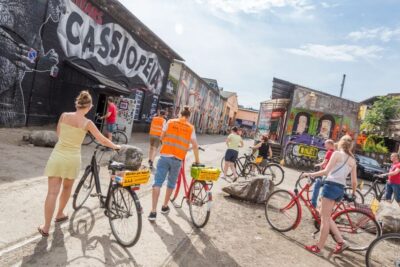
I love how it’s guided, not scripted. You’re not just riding past landmarks; you’re getting context and human stories, with guides like Rico, Rufus, Bjorn, Jake, Karl, and Vincent mentioned across past tours. A small-group feel helps too, but keep one thing in mind: you’ll stop often for explanations, and in some parts you may get a bit of bike-chain dirt if you dress in the wrong kind of trousers.
In This Review
- Key things you’ll notice on this Kreuzberg bike tour
- Why this Kreuzberg bike tour is the smart way to see “real Berlin”
- Price and time: what $42.33 gets you (and what it doesn’t)
- Getting started: where you meet, what you’re given, and how the ride begins
- Nikolaiviertel to Kreuzberg: the tour’s smart shift from old Berlin to lived Berlin
- Engelbecken: the pause you didn’t expect
- Das Baumhaus by the Wall: treehouse energy with a political backstory
- East Side Gallery and the bridges: where Berlin’s border story turns into art and movement
- Osthafen and the creative borderlands: learning the GDR obsession with restriction
- A few more architecture-and-life stops that keep the story human
- Liegnitzer Straße and the car loft: when capitalism is weirdly specific
- Waterfront culture, Turkish markets, and a bohemian breather
- Admiralbrücke and Kottbusser Tor: choosing between sunset calm and city friction
- YAAM and the East-Meets-West views you’ll remember
- What it feels like on the bike: comfort, safety, and the pace
- Is this tour worth it for you? (A straight answer)
- FAQ
- Is the bike tour about three hours long?
- What is the price per person?
- Does the tour include the bicycle and helmet?
- What language is the tour offered in?
- Does the tour run in bad weather?
- Is food included?
Key things you’ll notice on this Kreuzberg bike tour
- Small-group format (4–15 riders, max 15) for easier questions and a more personal pace
- Bike + helmet included, so you don’t have to hunt for gear on arrival
- A route that changes by guide through the “Free-Berlin Concept,” so it’s not cookie-cutter
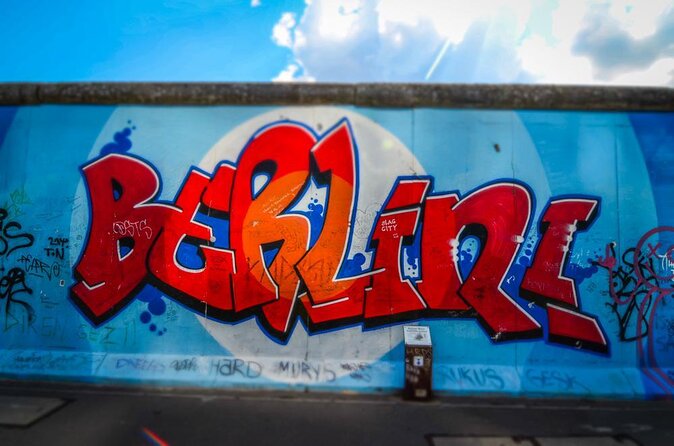
- Wall-connected stops like the East Side Gallery and borderland areas around Osthafen
- Neighborhood variety from Nikolaiviertel to Kottbusser Tor, with plenty of everyday Berlin mixed in
- Weather-ready operation, since it runs in all conditions, so bring real rain gear if needed
Deeper into Kreuzberg and the eastern districts
- Berlin: Kreuzberg Guided Walking Evening Tour★ 4.7 · 555 reviews
- Berlin: Alternative Bike Tour of Kreuzberg & Friedrichshain★ 4.7 · 548 reviews
- Berlin: 2.5-Hour Walking Tour through Kreuzberg 61★ 4.9 · 525 reviews
- Berlin Off-the-Beaten-Path Walking Tour: Kreuzberg, Mitte and Friedrichshain★ 5.0 · 412 reviews
Why this Kreuzberg bike tour is the smart way to see “real Berlin”
Berlin can feel split in two: the postcard parts and the lived-in parts. This tour leans hard into the lived-in side, focusing on Kreuzberg and the surrounding energy that never really stopped changing.
You’ll start with a historic anchor (Nikolaiviertel), then pivot quickly to neighborhoods where you’ll see how Berlin works day to day. That shift matters. It turns the Wall from a distant event into something you can still read in the city’s layout, architecture, and street culture.
And the best part is the tone. The stops feel like short conversations, not museum lectures. If you want Berlin with context you can actually walk and bike through, this style fits.
Price and time: what $42.33 gets you (and what it doesn’t)
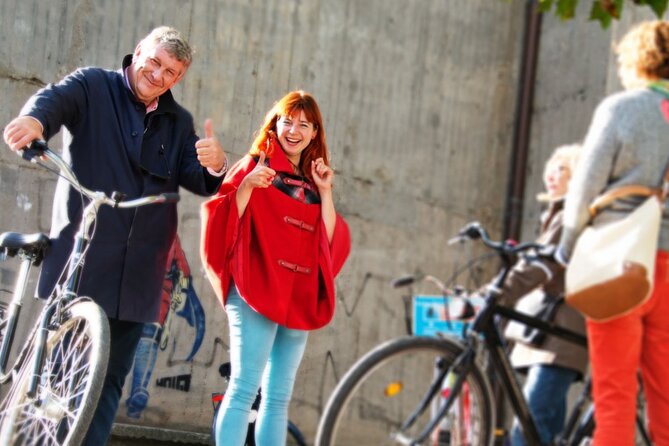
The price is listed at $42.33 per person for about 3 hours, and that includes the essentials: a bicycle and helmet plus a professional guide. For a city like Berlin, that’s good value because you’re paying for local routing, timing, and interpretation—things you’d otherwise recreate yourself with more time and less confidence.
What’s not included is food and drinks (unless something specific is added). So think of this as a sightseeing and storytelling tour, with a couple of stops that let you pause and absorb the city—not a meal plan.
Also note the guide-led format: since the group is small and the tour includes many short stops, it isn’t a “race across town” kind of bike ride. If you love constant motion, you might feel there’s more talking than biking. If you want meaning behind the street scenes, you’ll likely enjoy the pace.
Getting started: where you meet, what you’re given, and how the ride begins
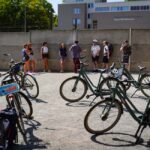
You’ll meet at Free Berlin Bike Tours & Rental, Poststraße 11, 10178 Berlin. The start time shown is 2:24 pm, and the tour loops back to the meeting point.
Because the tour is offered in English (and German depending on the option), you can plan your day around it without worrying about language. You’ll also get the basic comfort items right away: bike and helmet use are included.
One practical tip: dress for Berlin street life, not just the weather forecast. In the reviews, people specifically mention tight trousers can get dirty from the bike chain. That tells you something important about the real mechanics of riding in a city: if you want clean pants, bring clothing that can handle a little contact.
Nikolaiviertel to Kreuzberg: the tour’s smart shift from old Berlin to lived Berlin
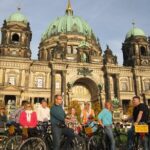
The tour begins in Nikolaiviertel, and the feeling here is like the last breath of an established, tidy Berlin. It’s a gentle opener, a way to get bearings before the ride turns more “real city.”
From there, you move into Kreuzberg itself, which is often described as a melting pot—and the tour treats it like more than a slogan. You’ll be shown how stories layer on top of each other: daily life, architecture that reflects different eras, and the neighborhood’s reputation for activism and alternative culture.
This is where the tour stops being about what things are and starts being about why they became that way. You’ll likely come away with a clearer mental map of Kreuzberg as a place people built, contested, and reshaped over decades.
More of Berlin by bike


Engelbecken: the pause you didn’t expect
At Engelbecken, you get an unexpected pocket of calm between pre-fab-style buildings, older architecture, and newer modern construction. The practical value here is simple: it helps you understand how Berlin mixes time periods in the same street picture.
It also gives you a breather. Short stops like this matter on a bike tour because they prevent fatigue and keep attention sharp for what comes next.
Das Baumhaus by the Wall: treehouse energy with a political backstory
Next is Das Baumhaus, described as a treehouse by the Wall. This stop isn’t just about a cool structure. The story is tied to a guest worker’s adaptation to the Kreuzberg mentality, turning a garden-style build into something bold and territorially “marked” with the kind of guerrilla spirit the district became known for.
Whether you’re into architecture, social history, or street art, this is the kind of stop that makes you see the Wall’s legacy differently. It’s not only memorial plaques. It’s also how people responded when space and borders were imposed.
East Side Gallery and the bridges: where Berlin’s border story turns into art and movement
The Wall story gets louder at East Side Gallery, the longest remaining stretch filled with major murals. This stop is short, but it’s designed for impact: you’re right there where Berlin’s history became public art.
Then comes Oberbaumbrücke, a landmark that’s all about crossing—physically and symbolically. The tour uses it as a quick lesson in borders: how they were enforced, how people tried to cross anyway, and how the bridges became a literal connector in a city that once divided.
These stops work especially well if you’ve already seen a few Wall-related sights but feel like you still don’t understand the feeling of restriction. Bridges and continuous stretches of the Wall help your brain connect history to geography.
Osthafen and the creative borderlands: learning the GDR obsession with restriction
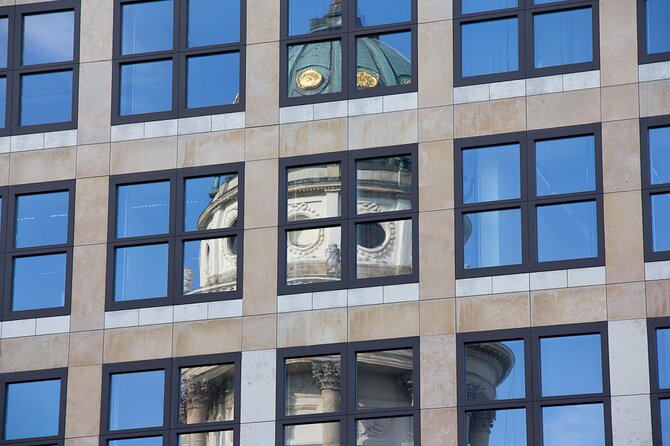
At Osthafen, the tour shifts to a former restricted borderland that’s now a zone for younger urban creatives. It’s an important contrast: same river area, completely different function.
You’ll get an explanation of the GDR’s obsession with the Wall, borderland, and the heavy restriction around freedom. The practical takeaway is that you’ll start reading today’s urban patterns as leftovers of policies and barriers that once controlled everyday life.
If you’re someone who likes “show me why this is where it is,” this is one of the most useful stops.
A few more architecture-and-life stops that keep the story human
From Osthafen, the tour moves through additional scenes meant to sharpen your Berlin instincts:
- A unique sculpture that led to multiple interpretations. Even with quick commentary, you get a sense of how Berlin loves ambiguity and debate.
- Falckensteinstraße, framed as a chance to see Kreuzberg’s diversity in buildings and people, with a mix of big-city realism and a kind of escapism built into the street scene.
- Görlitzer Park, described as a former train station turned park. The point isn’t nostalgia; it’s the idea of the thin line between alternative life and anarchy, shown through how a space changes after restrictions fade.
These stops aren’t about checking boxes. They help you understand the city’s habit of repurposing space—again, which is the whole theme of alternative Berlin.
Liegnitzer Straße and the car loft: when capitalism is weirdly specific
One of the most “only-in-Berlin” stops is Liegnitzer Straße, where an inconspicuous building is described as a peak of capitalism—right in the heart of the neighborhood mix.
The car loft setup is the headline: it’s a building where you can take a car up to your balcony. Even if you don’t have a car, this detail sticks because it shows Berlin’s ability to layer systems: the alternative reputation and the very real commercial mechanics living side by side.
This stop can also help if you’re worried the tour will be one-note. Kreuzberg is not just one identity, and the route keeps testing that idea.
Waterfront culture, Turkish markets, and a bohemian breather
One of the later stops is a waterfront “Dolce Vita” vibe area that includes a Turkish market on Tuesdays and Fridays. If you’re in Berlin on one of those days, this is the kind of bonus that makes the tour more than just history—it becomes sensory and real.
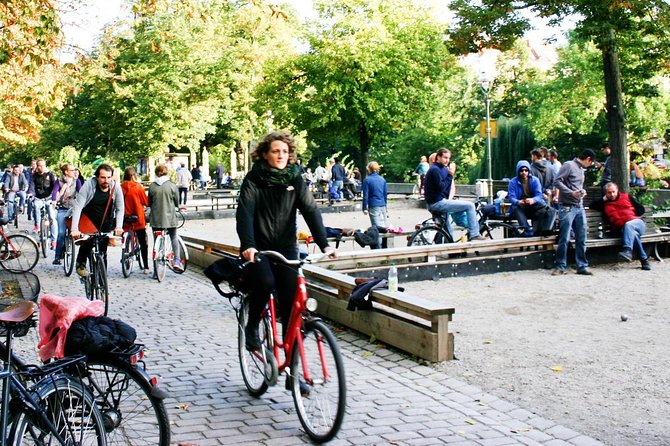
After that, you get a short break in a bohemian neighborhood feel, with time described as a chance to live the good life, including playing boule. Even if you don’t join in, you’ll understand the point: Berlin doesn’t just do theory. People also do leisure, community, and informal games.
There’s also a thematic moment that challenges the simplistic story that Kreuzberg is only anarchists, slobs, and survival artists. The tour treats it as more complicated than the stereotype, which is exactly what you want if you’ve ever heard a single sweeping description of a real neighborhood.
Admiralbrücke and Kottbusser Tor: choosing between sunset calm and city friction
As the ride continues, Admiralbrücke offers a classic Berlin choice: you can start your night in a bar, or you can watch a summer sunset right there with hundreds of strangers. This is one of those stops that feels social even if you keep moving. It’s a reminder that public space is part of Berlin’s identity.
Then comes Kottbusser Tor, and it’s a sharp contrast. You’ll see brutal 1970s architecture, plus a lively street reality described as heavy traffic and a drug scene. It’s not presented as shock value; it’s used as an example of how different parts of Berlin carry different kinds of intensity.
This pairing—Admiralbrücke one moment, Kottbusser Tor the next—can be jarring in the best way. It stops you from treating Berlin as one mood.
YAAM and the East-Meets-West views you’ll remember
One of the most memorable parts of the tour is the moment near YAAM, where the club is described as incredible, but the view from the area is even more striking.
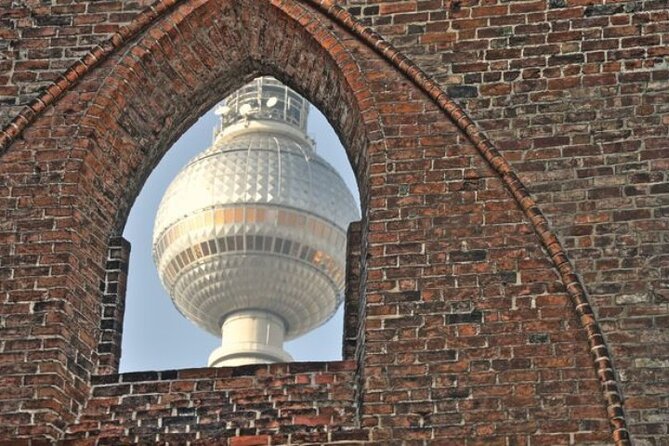
From here, you can see the TV Tower, the Holzmarkt, the Oberbaumbridge, and the river Spree. The value isn’t only the skyline. It’s the way those landmarks let you understand orientation: Wall-era geography, modern city identity, and the river corridor all in one glance.
If you like tours that give you at least one view that makes you sit up and reframe the city, don’t skip this stop.
What it feels like on the bike: comfort, safety, and the pace
This tour is built for most people. The reviews highlight that it’s well planned and safe, with guides bringing humor and clear explanations. You’ll also notice a repeated theme: guides share personal stories and answer questions, and they don’t just recite facts.
As for physical effort, it’s not described as a hardcore cycling workout. One review even notes the tour isn’t too sporty, and that you stop often to listen. Translation: it’s more about moving through neighborhoods with context than burning through miles.
Still, the “wear tight trousers” advice exists for a reason. Bike tours on city streets can be messy. If you want a cleaner experience, wear pants that won’t easily drag into chain zones, and bring a light layer if rain starts.
Is this tour worth it for you? (A straight answer)
Book this Berlin bike tour if you want:
- Kreuzberg and nearby districts through a guided lens, not just a list of sights
- Wall-era context that connects monuments to the present-day city
- A small-group ride where your guide can explain details and you can ask questions
- Included equipment so you can show up and go
Skip it (or consider another style) if:
- You mainly want uninterrupted riding with minimal stops
- You’re uncomfortable with neighborhood realities discussed as part of the city story
- You want a purely “official” history tour with no alternative-culture perspective
FAQ
Is the bike tour about three hours long?
Yes. The duration is listed as about 3 hours, and the experience ends back at the meeting point.
What is the price per person?
The tour price is listed as $42.33 per person.
Does the tour include the bicycle and helmet?
Yes. Bicycle use and helmet use are included, along with a professional guide.
What language is the tour offered in?
It’s offered in English (and German depending on the selected option).
Does the tour run in bad weather?
Yes. The tour operates in all weather conditions, so dress appropriately.
Is food included?
No. Food and drinks are not included unless specified.
Should you book? If you want a guided bike tour that turns Kreuzberg’s street scenes into a coherent story—Wall history, repurposed spaces, and today’s cultural mix—this is a strong pick. It’s also one of the more efficient ways to see more than the usual core sights in a single afternoon, without needing to figure out the route yourself.
Street Art and Alternative Berlin

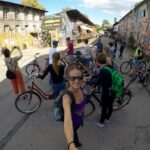
Berlin by Bike
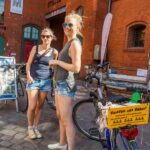
Kreuzberg and the Eastern Districts

Round out your days in Berlin
Street Art & Alternative Berlin, compared.
 ★ 4.6Alternative Berlin Walking TourFrom $291,204 reviews
 ★ 4.8City Street Art Guided Walking TourFrom $231,051 reviews
 ★ 4.73-Hour Street Art TourFrom $23778 reviews
 ★ 4.7Alternative Bike Tour of Kreuzberg & FriedrichshainFrom $41548 reviews
 ★ 5.0Berlin Off-the-Beaten-Path Walking Tour: Kreuzberg, Mitte and FriedrichshainFrom $30412 reviews
 ★ 4.8Experience the Alternative Kreuzberg on a Bike TourFrom $41395 reviews
 ★ 5.0Berlin Street Art Walking Tour – Off The GridFrom $24270 reviews
 ★ 5.0East Meets West: Berlin Food Culture & Street ArtFrom $169157 reviews
Browse the lists this tour appears in