
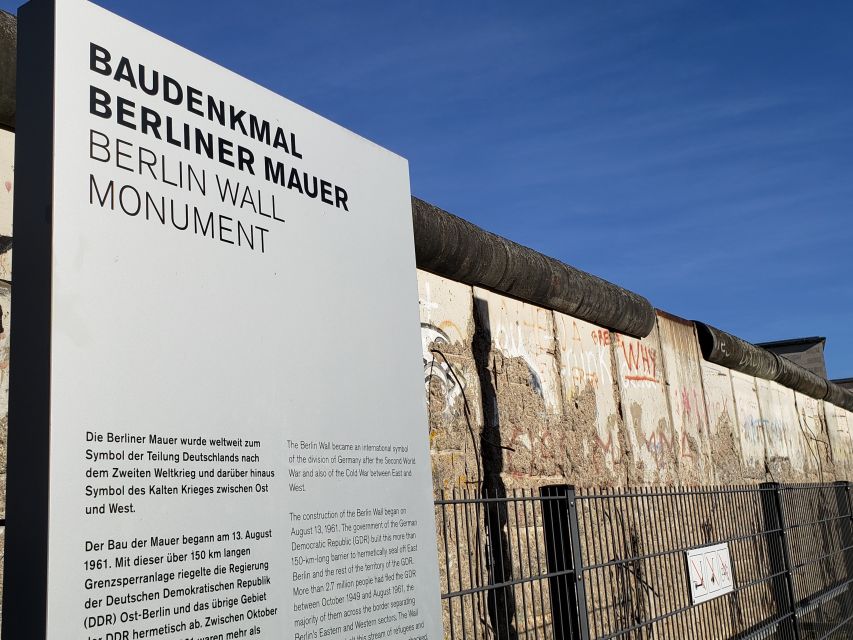
REVIEW · BERLIN WALL & COLD WAR
Berlin: The Wall and Cold War – a Private Walking Tour
Berlin’s border story feels close. This private walking tour takes you along the routes where East and West Berliners lived with constant separation, and it ties the Berlin Wall to real, everyday decisions. I especially like the mix of major sites and human-scale stories, and I also like that the guide approach can be adjusted for different group needs, including families.
Two things I really appreciate: you get a clear sense of how the wall was built and what still remains, and you see landmark border places like the Palace of Tears and Checkpoint Charlie while a local guide explains why they mattered. One possible drawback: you may or may not be able to access the viewing platform for the death strip, depending on whether it’s open that day.
Key takeaways at a glance
- Bernauer Straße start: begin where the border is documented in an open-air museum setting
- Cold War daily life: understand separation through real stories, not just dates
- Tränenpalast stop: visit an original border crossing station with a strong emotional weight
- Death strip viewing platform: you may see the area designed to prevent escape attempts, if open
- Checkpoint Charlie finish: end at a former border station that became a global symbol
In This Review
- Entering The Border Story at Bernauer Straße
- Walking the Former Line: Daily Life Under Cold War Division
- Tränenpalast: Tracing an Original Crossing Station
- Learning What Was Left Behind (and What the Wall Tried to Prevent)
- The Death Strip Viewing Platform: What You Can See If It’s Open
- Checkpoint Charlie Finish: A Border Symbol With Real Weight
- Private Tour Pace: Two Hours, Two Languages, and Real Storytelling
- Price and Value: What $22 Buys for Your Berlin Time
- What I’d Choose This For (and Who It Suits Best)
- If You’re Hesitant: When Another Plan Might Be Better
- Should You Book This Tour?
- FAQ
- Where is the meeting point?
- Where does the tour end?
- How long is the tour?
- How much does it cost?
- Is this a private tour?
- What languages are available?
- What sights are included?
- Will I see the death strip?
- Is the tour wheelchair accessible?
- Is there a flexible cancellation or pay-later option?
Entering The Border Story at Bernauer Straße
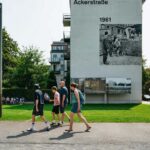
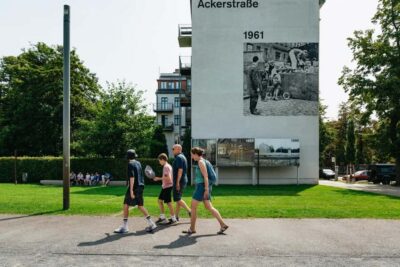
Your tour starts at U Bernauer Straße, with the meeting point upstairs at the exit marked Bernauer Straße. The location matters because Bernauer Straße is now tied to an open-air documentation museum, so you’re stepping into the border era right away instead of hearing it all secondhand.
Once you meet your guide (they carry a sign with your name), you’ll follow the former border through central Berlin. This is where the tour’s tone clicks: you’re not just moving from one photo-worthy stop to the next. You’re learning how the border changed daily routines—where people could go, how movement was controlled, and why Berlin became a living lesson in Cold War politics.
I like that the starting point sets context fast. You get your bearings quickly, and then the story builds as you walk.
More of the Wall and the divided city
- Berlin’s Best: 2 Hour Walking Tour Third Reich and the Cold War★ 5.0 · 5,486 reviews
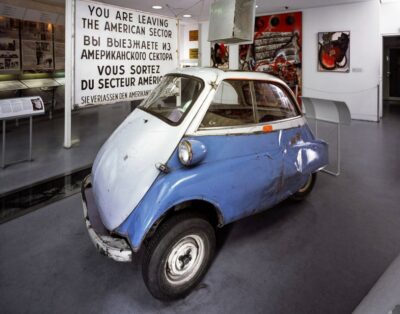
- Skip-the-Line: Berlin Wall Museum at Checkpoint Charlie★ 4.1 · 2,041 reviews
- Berlin: East Side Gallery Spree Cruise in a Solar Catamaran★ 4.1 · 1,086 reviews
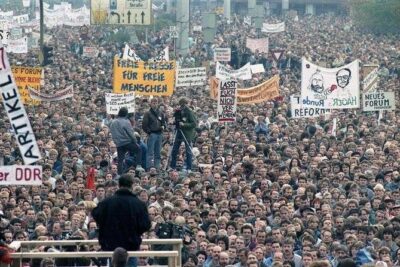
- Cold War, Berlin Wall, Spies and the East Side Gallery★ 5.0 · 1,024 reviews
Walking the Former Line: Daily Life Under Cold War Division
As you go, your local guide keeps pointing out what life looked like in a divided city. The tour aims to help you understand the Cold War in a practical way: not as an abstract standoff, but as something Berliners had to navigate day after day.
You’ll also hear about the wall’s construction—how it took shape, and what the system was designed to do once it was in place. That detail is important because it explains why “crossing” was not a simple act. It was a high-risk decision shaped by surveillance, barriers, and the constant pressure of propaganda from both sides.
A helpful part of this walking route is how it connects daily life to escape attempts. You’ll discover places tied to how people tried to get out, and your guide will connect those stories to the reality of the city’s physical layout. This is the kind of information that stays with you after the tour ends, because it turns street-level geography into meaning.
Tränenpalast: Tracing an Original Crossing Station
One of the tour’s anchor stops is the Tränenpalast, also known as the Palace of Tears. Here, you get a guided visit to an original border crossing station, not a generic memorial stop.
What makes this stop valuable is the balance between public history and personal experience. Border crossings sound administrative until someone has to face the reality of separation, paperwork, delays, and outcomes they can’t control. This is the emotional reason people keep returning to the story of Berlin’s divisions.
Practically, you’ll get the chance to connect what you’ve been hearing on the walk to a real location where crossings happened. If your goal is to understand the wall era beyond just monuments, this is the kind of stop that helps.
Learning What Was Left Behind (and What the Wall Tried to Prevent)
A big promise of this tour is seeing what remains of the wall and learning what it was designed to accomplish. As you continue, your guide shows wall remnants and explains how the system restricted movement and limited escape opportunities.
This is where the tour gets especially vivid: you start to see the wall era as a combination of architecture, policy, and constant intimidation. The physical structures weren’t only about separation; they were part of an engineered attempt to stop people from succeeding.
Then there’s the star visual concept: the death strip. Your route includes the chance to view that area from a platform if access is open.
The Death Strip Viewing Platform: What You Can See If It’s Open
The tour includes a viewing moment aimed at the death strip, the area built to prevent escape attempts. If the viewing platform is open, your guide will take you up so you can see the space and understand why it was so dangerous.
This part is worth planning for mentally, even if you can’t get the platform view. The key idea you’re learning is how the design punished movement. It’s not just a concept from history books; it’s a way to picture how Berlin’s division was reinforced through physical geography.
The one caveat: since the platform access depends on whether it’s open, don’t treat this as guaranteed. If it’s closed, you’ll still cover the main border story through other sites, but the death strip view may be limited.
More of Berlin on foot



Checkpoint Charlie Finish: A Border Symbol With Real Weight
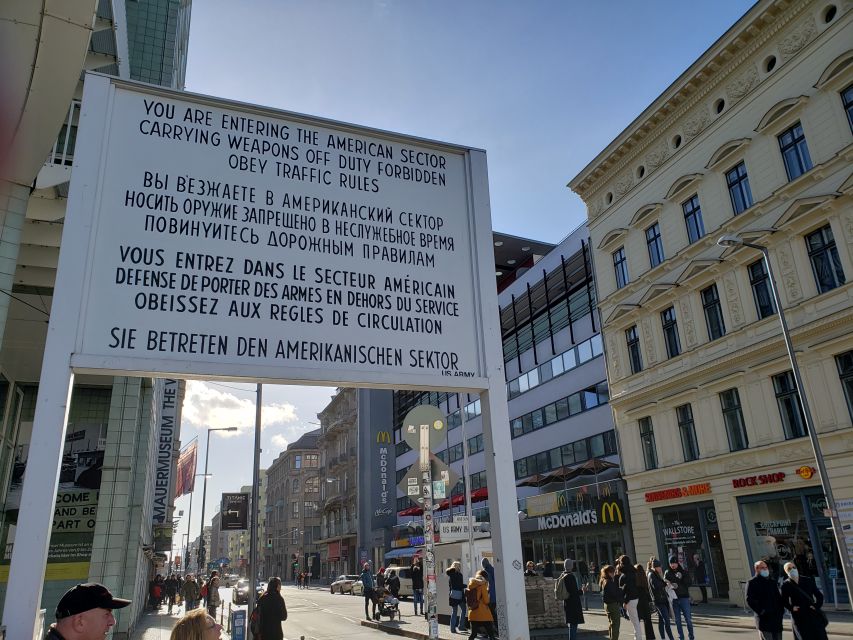
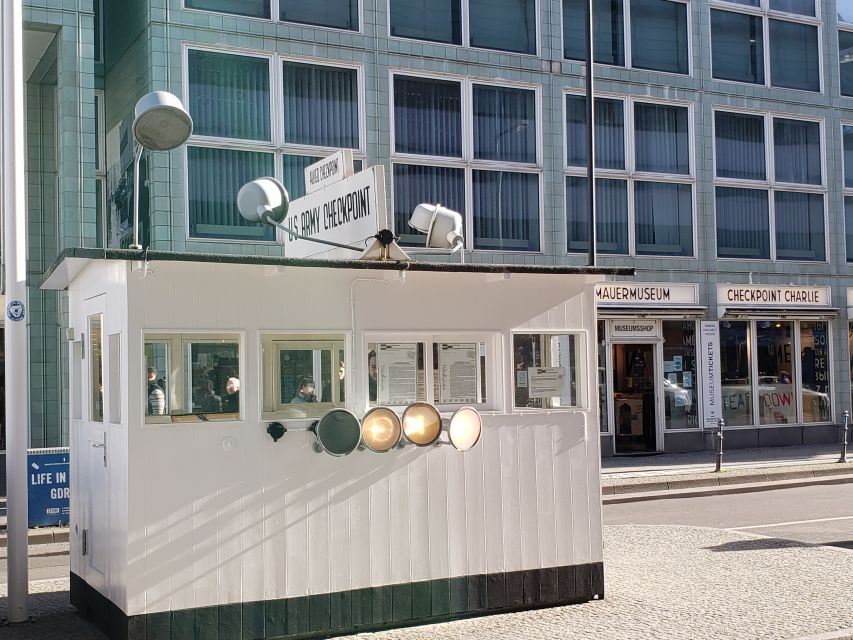
Your tour ends at Checkpoint Charlie, another former border station. Even if you’ve seen the name in guidebooks, ending here has a specific purpose: it’s where Berlin’s Cold War image became worldwide.
Checkpoint Charlie works well as a finish because it gives you a contrast to earlier parts of the walk. Along the route, you’re absorbing the division as a daily system. At the end, the story turns into a symbol—one the world recognized, but that Berliners lived with up close.
By the time you reach the finish, you should feel like you understand both sides of the equation: the politics and the human impact, the barriers and the attempts to get around them. That’s what makes a border tour more than a history lecture.
Private Tour Pace: Two Hours, Two Languages, and Real Storytelling
This experience is scheduled for 2 hours, and it’s set up as a private walking tour. That matters because a private format usually means the guide can adapt to your group’s interests and energy level without worrying about keeping a large class in sync.
Languages are German and English. If you’re traveling with a mixed-language group, this is a strong point of flexibility. In particular, guides have been praised for switching between English and German in ways that keep families engaged, including kids.
Wheelchair access is listed as available, which is a practical plus if mobility is part of your planning.
And the storytelling style is a core part of the value. Named guides like Stephanie and Stefan have been highlighted for authentic, friendly narration and for connecting the Cold War to what it meant for the divided city. The goal is to make the era feel lived-in rather than distant.
Price and Value: What $22 Buys for Your Berlin Time
At $22 per person for a 2-hour private guided walk, this strikes me as solid value—especially because the route targets major border landmarks. You’re not only hearing theory; you’re walking through the places where those decisions played out, including the Palace of Tears and Checkpoint Charlie.
Where the value really comes from is the combination of:
- a local guide
- a structured route through multiple key sites
- explanation tied to daily life and escape attempts
For short trips to Berlin, time is often the limiting factor. This tour gives you a concentrated, high-impact version of the wall story without requiring you to stitch together everything on your own.
What I’d Choose This For (and Who It Suits Best)
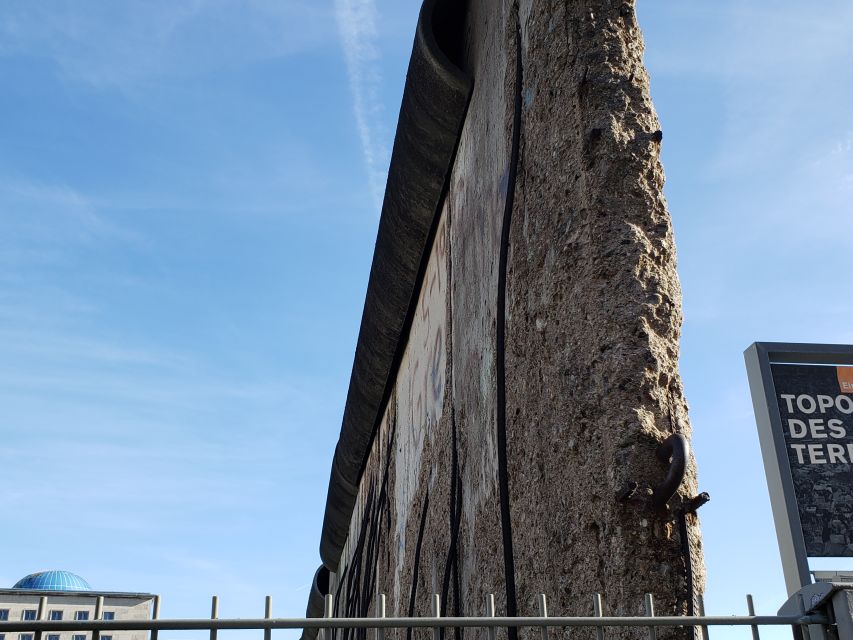
If you’re the kind of traveler who wants the Cold War explained through actual streets and real locations, this tour fits well. It also works nicely for first-time Berlin visitors because it gives you a guided framework for understanding division and escape across the city center.
It’s a good match for families, too, partly because the guides can handle group language needs. One reason that matters: kids often do best when the guide can explain clearly without losing the story’s emotional truth.
If you’re a hardcore Berlin wall scholar, you might eventually want extra time in museums or deeper independent reading. But as an overview that connects the Wall, the crossing stations, and the mechanisms of escape, this is a strong starting layer.
If You’re Hesitant: When Another Plan Might Be Better
This may feel less ideal if you’re expecting a fully museum-based experience. The tour is a walking route with stops, and the time on each location may feel limited if you prefer long, quiet, self-paced exhibits.
Also, if seeing the death strip from the viewing platform is your top priority, keep in mind that access depends on whether it’s open.
Finally, if you want a purely celebratory or purely dramatic tour, the subject is heavier than that. The emotional weight is part of the point, and your guide will frame it as real history.
Should You Book This Tour?
Yes, if you want an efficient, guided way to understand the Wall and the Cold War in Berlin’s most meaningful places. For the price, the mix of Bernauer Straße, Tränenpalast, and Checkpoint Charlie is exactly the kind of route that gives you a coherent story instead of disconnected landmarks.
Book it especially if you like story-driven history and want a local guide who can explain why the border shaped everyday life. If you can be flexible about the death strip viewing platform access, you’ll get a strong overall experience either way.
FAQ
Where is the meeting point?
Meet your guide at the underground station Bernauer Straße, upstairs at the exit marked Bernauer Straße. The guide will have a sign with your name written on it.
Where does the tour end?
The tour finishes at Checkpoint Charlie.
How long is the tour?
The duration is 2 hours.
How much does it cost?
The price is $22 per person.
Is this a private tour?
Yes. It’s listed as a private group/private walking tour.
What languages are available?
The live tour guide offers German and English.
What sights are included?
You’ll visit Tränenpalast (Palace of Tears), see the Palace of Tears as an original border crossing station, and also see Checkpoint Charlie. You’ll also follow the former borderline through the center of Berlin and see what remains of the Berlin Wall.
Will I see the death strip?
You’ll be taken to a viewing platform to view the death strip if it’s open.
Is the tour wheelchair accessible?
Wheelchair accessibility is listed as available.
Is there a flexible cancellation or pay-later option?
Free cancellation is available up to 24 hours in advance for a full refund, and you can reserve now and pay later.
More Tours in Berlin





More Tour Reviews in Berlin

The Wall and the Cold-War City


Round out your days in Berlin
Berlin Wall & Cold War, compared.
 ★ 4.9Third Reich & Cold War Guided Walking TourFrom $238,378 reviews
 ★ 5.0Berlin’s Best: 2 Hour Walking Tour Third Reich and the Cold WarFrom $245,486 reviews
 ★ 4.1Skip-the-Line: Berlin Wall Museum at Checkpoint CharlieFrom $212,041 reviews
 ★ 4.1East Side Gallery Spree Cruise in a Solar CatamaranFrom $281,086 reviews
 ★ 5.0Cold War, Berlin Wall, Spies and the East Side GalleryFrom $181,024 reviews
 ★ 4.8Wall Tour – Fates, Love Stories, and HeroesFrom $282585 reviews
 ★ 4.5THE WALL: asisi Panorama Berlin TicketFrom $16580 reviews
 ★ 4.8The Wall and Third Reich Guided Bike TourFrom $41578 reviews
Browse the lists this tour appears in