
REVIEW · KREUZBERG & ALTERNATIVE DISTRICTS
Gastro Tour with Klaus though the Wrangelkiez, Kreuzberg
Berlin’s boundaries are still visible.
A Gastro Tour with Klaus turns Kreuzberg and the Wrangelkiez into a walkable story, pairing landmark stops like the Oberbaumbrücke with snack tastings at international food spots. I love how the pacing stays light—short stops, then food—so you get context without feeling stuck in a lecture. I also like that Klaus keeps pointing you toward the local “why,” from the former border zone mindset to today’s neighborhood food scene. One thing to consider: drinks are not included, so if you’re a slow sipper, you’ll want to budget extra before you start.
This is a solid value if you want food + place in one go. You’re paying for a guide, a small group size (up to 15), and tastings at five Gastro Partners, including street-food-style bites. The only drawback for some people: because it ends near public transit and includes multiple short walking segments, it’s not the best fit if you want long indoor breaks or a super-relaxed, sightseeing-only pace.
In This Review
- Key takeaways before you go
- Kreuzberg’s food tour, really: history you can taste
- Oberbaumbrücke: the East-West connection you’ll recognize
- Lohmühleninsel: a small island with a big backstory
- The GDR watchtower: border-zone realism in a preserved relic
- Görlitzer Park: recreation, plus the reason for the bad reputation
- Falckensteinstraße: the international food density, solved by a guide
- Wrangelstraße and the Romanesque-style church: name, style, neighborhood identity
- What the 3-hour format feels like in real life
- Tastings, snacks, and your best strategy for the night
- Price and value: what your $83.08 is buying
- Practical details that make or break your planning
- Should you book this Klaus gastro tour?
- FAQ
- How long is the Gastro Tour with Klaus?
- How much does the tour cost?
- Is the tour offered in English?
- Where does the tour start and end?
- How many tastings or food stops are included?
- Are drinks included in the price?
- What’s the group size limit?
- Do I need a paper ticket?
- What is the cancellation policy?
Key takeaways before you go
- Klaus blends food and Berlin’s border-area stories so Kreuzberg makes more sense fast
- Five tastings from multiple international partners means you’re not stuck eating just one cuisine
- Landmark stops are short and practical, not museum-style time sinks
- Görlitzer Park gets real context—including why it has a bad reputation today
- You finish by metro at Schlesisches Tor, and the subway is not underground there
Deeper into Kreuzberg and the eastern districts
- Berlin: Kreuzberg Guided Walking Evening Tour★ 4.7 · 555 reviews
- Berlin: Alternative Bike Tour of Kreuzberg & Friedrichshain★ 4.7 · 548 reviews
- Berlin: 2.5-Hour Walking Tour through Kreuzberg 61★ 4.9 · 525 reviews
- Berlin Off-the-Beaten-Path Walking Tour: Kreuzberg, Mitte and Friedrichshain★ 5.0 · 412 reviews
Kreuzberg’s food tour, really: history you can taste
Kreuzberg is the kind of Berlin neighborhood where “what happened here” shows up in the streets. This tour leans into that. You’re not just tasting food; you’re learning why the area feels the way it does—especially around the former East-West divide and the border zone effect on nearby communities.
I like that the tour keeps you moving through different angles of the same place. You start at a major landmark and work your way through lesser-known bits of the city, then land in the food-heavy parts of the Kiez where the choices are usually overwhelming on your own. The guide experience here matters because Klaus is steering you away from guesswork.
If your ideal Berlin evening is: walk a bit, learn a bit, eat a lot of small things, and end near transit—this fits. If you want a quiet food crawl with no history, or you’re only into one type of cuisine, you might find the mix less satisfying.
Oberbaumbrücke: the East-West connection you’ll recognize
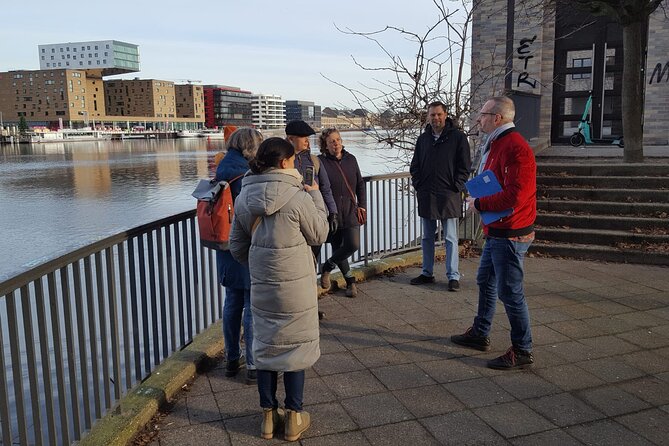
The tour’s first stop is Oberbaumbrücke, one of Berlin’s best known landmarks. The big idea is simple: this bridge is famous partly because it physically connected East and West, and that connection came with local impact. Klaus explains the bridge’s history in a way that makes it more than just a photo spot.
This is a smart first move. You get an anchor point early, so the rest of the walk has a frame. Even if you don’t know Berlin history, you’ll understand what the guide means when the story shifts later to border-area effects.
Time is tight here—think about 10 minutes—so don’t expect a slow, detailed photo session. But it works as a “set your bearings” moment.
Lohmühleninsel: a small island with a big backstory
From the bridge you head to Lohmühleninsel, a small parcel of land with an eventful history and architectural monuments that most visitors never notice. This stop is about learning to look differently.
The best value at places like this is not the length—it’s the guidance. You’re being shown what’s worth seeing in an area many people only pass through quickly. The stop is also short (around 10 minutes), so you’ll want your phone camera ready, but keep your attention on what Klaus points out.
If you love architecture details and city layers, this part feels rewarding. If you only want food immediately, it might feel like a warm-up.
The GDR watchtower: border-zone realism in a preserved relic
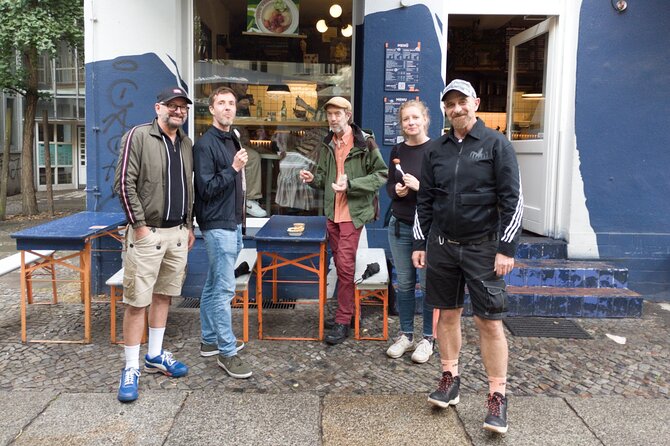
Next comes a sharper historical note: the GDR Watch Tower. In the former border area, the Wall made parts of Berlin feel peripheral—Kreuzberg and Alt-Treptow became “edge areas” rather than central ones. The preserved watchtower is the physical reminder that the border wasn’t abstract; it shaped daily movement and local life.
This stop is brief—about 5 minutes—but it lands. Short guide stops like this are efficient: you get the meaning without spending half your evening on one location.
A practical tip: give yourself a moment to look around before you move on. Even in a short stop, you’ll understand more if you take in the surroundings instead of just listening while walking.


Görlitzer Park: recreation, plus the reason for the bad reputation
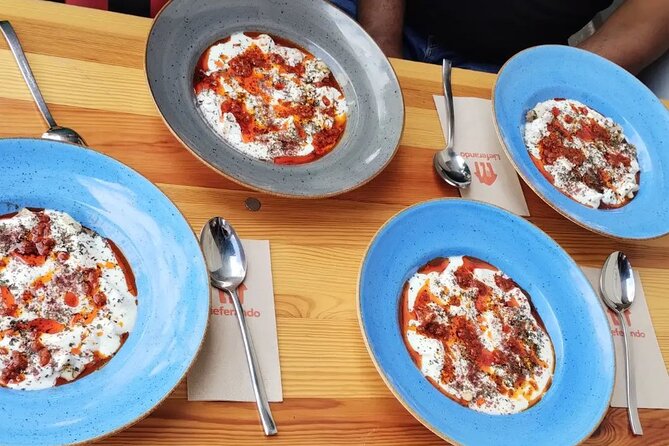
Then you arrive at Görlitzer Park, a recreational area for the neighborhood. Klaus shares anecdotes about its history and why it has a bad reputation today.
This is one of the more human-feeling parts of the tour because it addresses how places change over time. A park isn’t just greenery; it becomes a reflection of social dynamics, city policy, and how the neighborhood is perceived. You leave this stop with context, so you’re less likely to judge based on one headline or one passing impression.
This stop is about 10 minutes. Don’t expect a full lecture on modern Berlin challenges, but do expect a clear explanation of how today’s reputation formed.
Falckensteinstraße: the international food density, solved by a guide
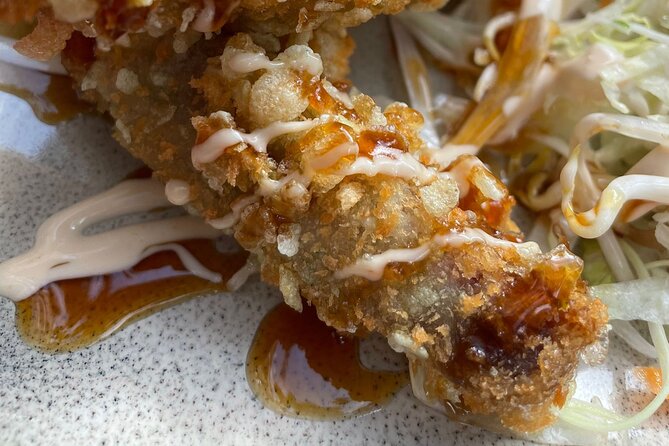
Now you shift from landmarks to the Kiez’s food engine: Falckensteinstraße. This is where the tour really earns its name. There’s an extraordinary density of international gastro options, and the reality is that if you arrive hungry and undecided, you can spend ages comparing menus.
Klaus solves that with a personal selection of tested highlights. You’ll spend around 30 minutes in this stretch, and that time is where the tour becomes a meal you don’t have to plan.
Here’s what I’d expect based on the format: tastings at Gastro Partners, and some of them can be street-food-style stalls. The point isn’t to chase a single signature dish; it’s to sample variety so you learn the neighborhood’s range. This is also where the crowd control matters—your group stays small (max 15), and Klaus keeps the flow moving between stops.
One consideration: street-food-style tastings mean you’ll want to pace yourself. Don’t come in so full that you can’t enjoy the later bites.
Wrangelstraße and the Romanesque-style church: name, style, neighborhood identity
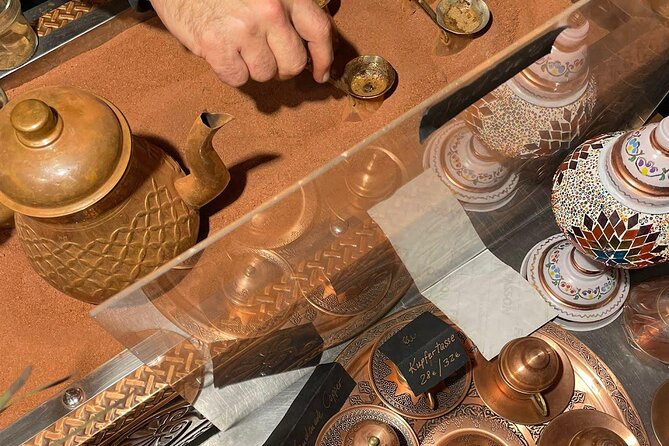
After Falckensteinstraße, you continue to Wrangelstraße, named as the neighborhood’s identity marker. This part of the walk keeps the food momentum going while also tying the street name to place and architecture.
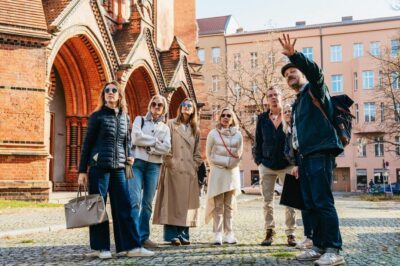
Klaus shows you a church built in the style of a Romanesque monastery—an architectural clue that tells you the neighborhood isn’t just modern food culture. It’s layered, with older design language showing up alongside contemporary life.
The tour keeps going until you reach the area near Schlesisches Tor. You also get a final option: rest in a Kiez pub or continue to Schlesisches Tor, where the subway is not underground. That ending structure is practical. You’re not stranded on a quiet side street far from transit.
What the 3-hour format feels like in real life
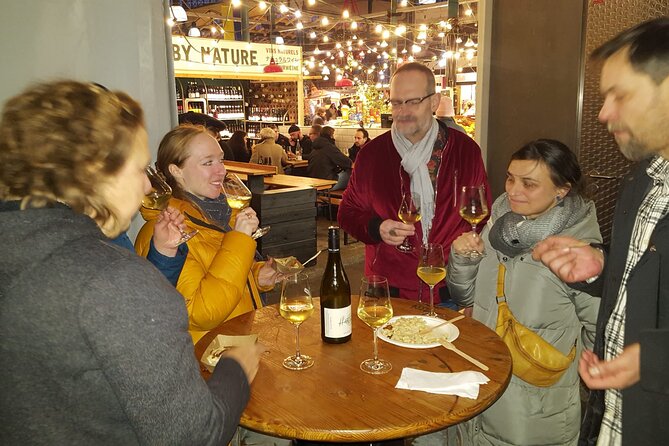
The tour runs about 3 hours and is designed around short landmark segments and snack stops. You’re not stuck doing one long event; you’re getting a sequence that builds like a story—bridge, island, border relic, park reputation, then food-heavy streets.
This matters because Berlin evenings can turn into long waits and slow decision-making. Here, the guide keeps the schedule tight enough that you’ll likely finish feeling full, informed, and ready to continue on your own.
Also, it’s in English and capped at 15 people, which usually helps the experience stay personal. If you like asking questions but don’t want a big group situation, this is the right size.
Tastings, snacks, and your best strategy for the night
Food tours can fail when they’re all hype and no actual eating. This one is built around snacks and selected tasting portions at five Gastro Partners. Because some tastings can be street-food stalls, you get variety in format too, not just in cuisine type.
Important planning detail: drinks are not included. That doesn’t ruin the value, but it changes how you budget. If you want beer, wine, or soda with tastings, plan to purchase separately.
What I’d do: bring cash or a payment method you’re comfortable using for quick purchases, and consider ordering only when you find something you truly want. Tastings are meant to be a full arc, so you’ll probably feel best if you keep drink choices simple.
Finally, this is a walk-and-snack tour that ends near metro. So you don’t want to plan a second long activity immediately afterward unless you’re sure you can eat slowly and still make time.
Price and value: what your $83.08 is buying
At $83.08 per person, you’re paying for three things: a local guide, a structured route away from the worst tourist foot traffic, and multiple tastings that create a real food experience.
For value, the key is that it’s not just “walk and learn.” You get tastings at five stops, with at least some likely to be street-food style. That changes the math compared to a generic walking tour with one sample bite. Add in that the tour lasts about 3 hours and keeps a small group size, and the price lands in a reasonable range for a guided food evening in Berlin.
Where you might spend extra: drinks, because they’re not included. If you’re paying for alcohol on top, your total evening cost rises. If you’re happy with water or soft drinks purchased separately, the price keeps its value.
Practical details that make or break your planning
A few nuts-and-bolts points are worth noting:
- You start at Cuvrystraße 2, 10997 Berlin and the tour ends near Schlesisches Tor.
- The ending point can shift to different Gastro Partners depending on the season, but it stays near the metro area.
- You get a mobile ticket, and the tour is near public transportation.
- You can participate if you’re generally able to walk short segments; the format is designed for most people.
One more planning note: confirmation is expected within 48 hours, subject to availability. If you’re booking late for a tight schedule, plan for that timing.
Should you book this Klaus gastro tour?
Book it if you want the practical combo: food tastings plus neighborhood context in a compact, guided walk. It’s a strong choice for first-time visitors who want to understand why Kreuzberg feels like it does, and for repeat visitors who want a less standard route that still ends in an easy transit hub.
Skip it if you’re only in Berlin for one hour and want a single quick bite, or if you dislike walking between short stops. Also skip if you’re set on drinks being part of the package, because drinks aren’t included and you’ll need to pay separately.
If your goal is to leave Kreuzberg knowing where to eat on your own later—rather than just collecting bridge photos—this is a great bet.
FAQ
How long is the Gastro Tour with Klaus?
It runs for about 3 hours.
How much does the tour cost?
The price is $83.08 per person.
Is the tour offered in English?
Yes, it’s offered in English.
Where does the tour start and end?
It starts at Cuvrystraße 2, 10997 Berlin, and ends near Schlesisches Tor. The exact end near food partners can vary by season.
How many tastings or food stops are included?
The tour includes stops at five Gastro Partners for selected tastings.
Are drinks included in the price?
No. Drinks are not included.
What’s the group size limit?
The tour has a maximum of 15 travelers.
Do I need a paper ticket?
No. You get a mobile ticket.
What is the cancellation policy?
You can cancel for free up to 24 hours before the experience’s start time for a full refund.
More Tours in Berlin
More Tour Reviews in Berlin
Kreuzberg and the Eastern Districts

Round out your days in Berlin
Kreuzberg & Alternative Districts, compared.
 ★ 4.5Kreuzberg: Culinary Food TourFrom $589770 reviews
 ★ 4.7Kreuzberg Guided Walking Evening TourFrom $27555 reviews
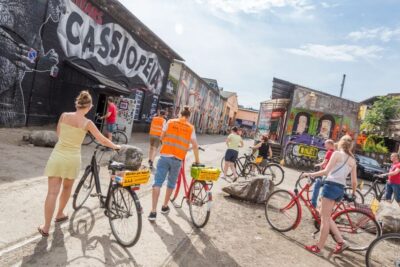 ★ 4.7Alternative Bike Tour of Kreuzberg & FriedrichshainFrom $41548 reviews
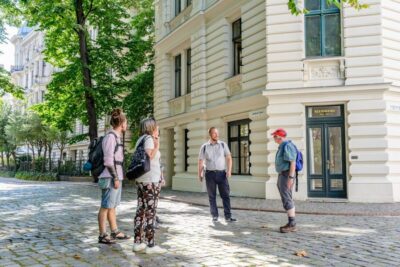 ★ 4.92.5-Hour Walking Tour through Kreuzberg 61From $23525 reviews
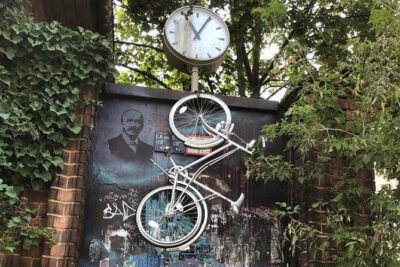 ★ 5.0Berlin Off-the-Beaten-Path Walking Tour: Kreuzberg, Mitte and FriedrichshainFrom $30412 reviews
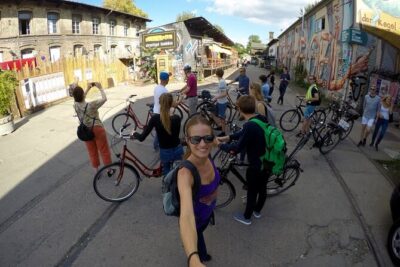 ★ 4.8Experience the Alternative Kreuzberg on a Bike TourFrom $41395 reviews
 ★ 4.9Prenzlauer Berg District Guided Walking TourFrom $23316 reviews
 ★ 4.8Gay Berlin Out in Schöneberg Walking TourFrom $23281 reviews
Browse the lists this tour appears in