
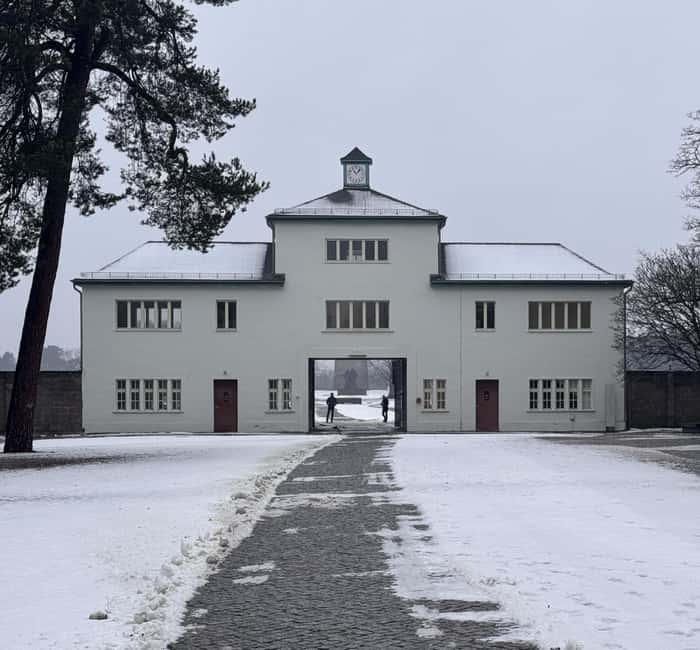
REVIEW · SACHSENHAUSEN MEMORIAL
Intense visit – Sachsenhausen concentration camp
Hit your brakes for history. This Sachsenhausen Memorial visit is guided, focused, and heavy in the way only a real place of suffering can be. I like how the tour connects the wider rise of the Nazi system to the specific workings of Sachsenhausen, and I especially like the way guide Jörg Rupert Schöpfel (often called Joerg) turns locations like the gate, roll-call square, infirmary, and Station Z into clear, understandable stories you can ask questions about.
One drawback: it’s emotionally intense and mostly outdoors, so if you’re looking for a light sightseeing day, this is not it. Also, you’ll walk a lot on a large site, so plan for steady pace and downtime.
In This Review
- Key things that make this tour worth your time
- Meeting by Berlin’s Old Synagogue: the story starts before the camp
- The train ride to Oranienburg and the town walk that matches the forced route
- Entering Sachsenhausen: the gate, roll-call square, and the camp’s operating logic
- Barracks, infirmary, and medical cruelty you can’t treat like “just history”
- Station Z and the crematorium: mass murder and the mechanics of erasure
- Walking the line between perpetrators, victims, and the question of justice
- The 6-hour rhythm: what the timing really means for your day
- Price and value: how $17 stacks up with what you actually get
- What to bring (and what to avoid) for a smoother, safer visit
- Who this tour is best for
- Should you book the Sachsenhausen Memorial tour with Jörg Rupert Schöpfel?
- FAQ
- How long is the Sachsenhausen Memorial tour?
- What’s included in the price?
- Do I need a train ticket for the trip?
- Is food available at the memorial?
- Is the tour mostly indoors or outdoors?
- Is the tour wheelchair accessible?
Key things that make this tour worth your time
- A Berlin-to-Oranienburg train + walk route that follows the path prisoners were forced to take
- The whole camp system explained fast, including Sachsenhausen’s special role in a network of more than 1,000 camps
- Original Sachsenhausen sites in a logical order, from roll-call square to the crematorium
- Station Z plus the crematorium, including the scale of burning more than 50,000 bodies
- Psychology of perpetrators and victims, not just dates and uniforms
- A guide who stays open to questions, with clear English and German delivery
More memorial and remembrance tours from Berlin
- Berlin: Sachsenhausen Concentration Camp Tour in English★ 5.0 · 5,711 reviews
- Berlin: Sachsenhausen Concentration Camp Memorial Tour★ 4.7 · 3,716 reviews
- Berlin: Sachsenhausen Concentration Camp Tour in English★ 4.8 · 1,889 reviews
- Sachsenhausen Concentration Camp Memorial Tour (Max. 15 Guests)★ 5.0 · 1,516 reviews
Meeting by Berlin’s Old Synagogue: the story starts before the camp
This day begins in Berlin near the New Synagogue, once a center of Jewish life in the 19th and early 20th centuries. Before you even reach Sachsenhausen, the guide sets the emotional and historical tone: you’ll connect the 1938 November pogroms to the first steps toward mass murder. That matters, because it prevents the camp visit from becoming a standalone horror movie set.
From there, you get a quick but intense sweep of German history. The intro covers the period from the end of World War I through Germany’s division during the Cold War, which gives you a framework for why Nazi power took the shape it did. It’s only about 15 minutes, but it’s the kind of fast setup that helps your brain stop treating everything as random facts.
If you like tours where you understand how events link together (rather than just checking boxes on a map), this framing is a big plus.
The train ride to Oranienburg and the town walk that matches the forced route
After the Berlin start, you head to Oranienburg by train. There’s enough time during the ride for the guide to outline Hitler’s rise to power, so when you arrive, you’re not suddenly dropped into 1930s detail without context.
Then you walk through town toward the camp, using the same general route prisoners were once forced to take. That’s one of the most unsettling parts of the experience, but also one of the most educational. Your body learns what “distance” means in a place built for coercion: it’s not just what happened inside the camp walls, it’s also how people were transported and processed on the way in.
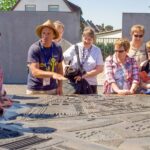
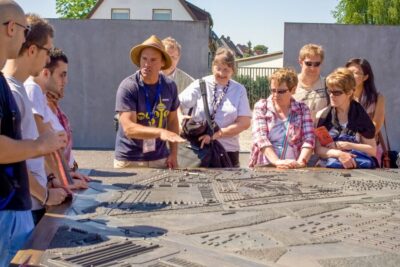
Along the walk, you’ll also see the remaining building of the Inspectorate of Concentration Camps. You’ll talk about why Sachsenhausen mattered within a larger machine that expanded rapidly, including an overview map that shows the camp network’s growth in just nine years.
Tip for your comfort: wear shoes that you trust on uneven ground. You’re going to keep walking.
Entering Sachsenhausen: the gate, roll-call square, and the camp’s operating logic
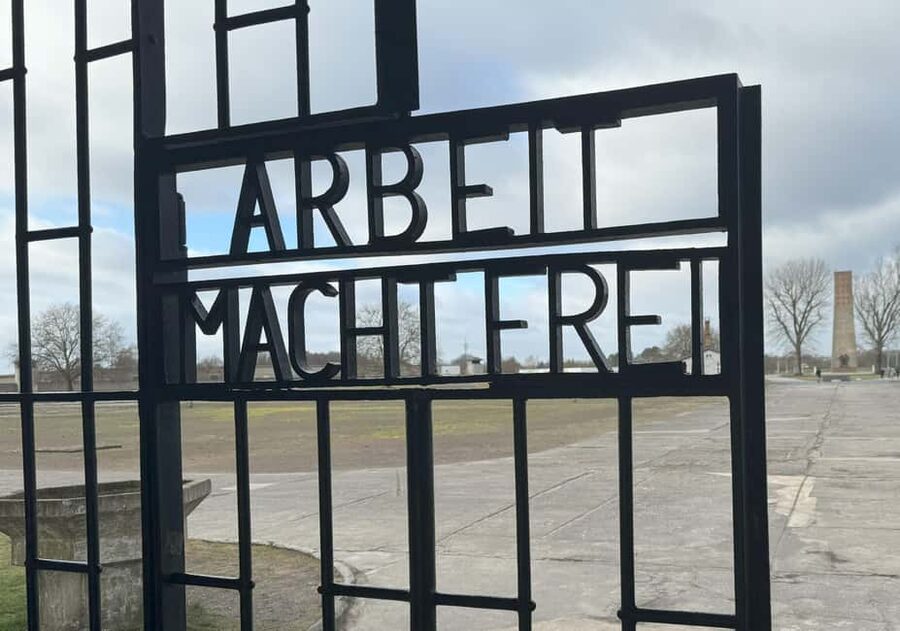
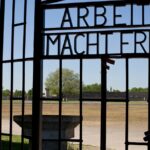
Once you reach the memorial, you enter through the infamous Arbeit macht frei gate. It’s cynical. It’s performative. And the guide uses it as a starting point for explaining how the Nazis built a system that ran like an institution, not a chaotic mob.
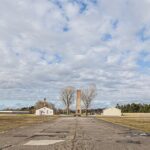
From the gate, the tour moves toward the roll-call square. Standing there helps you grasp scale—not just numbers, but the logic of control. Roll-call was a daily mechanism: visibility for the guards, discipline for prisoners, and a routine that made terror predictable.
You’ll then pass through several core sites that explain everyday life and terror inside the camp. The shoe-testing track comes up early, and it’s hard to forget. The point isn’t shock for shock’s sake; it’s that the camp’s cruelty often worked through procedures that looked “technical” while producing suffering.
You’ll also see the prison that held Hitler’s personal detainees. It’s another reminder that Sachsenhausen wasn’t some distant backwater. It was connected directly to the center of Nazi power.
Then come the original barracks and places tied to day-to-day operations and punishment. The tour keeps a steady pace: enough time at each stop to understand what you’re looking at, without turning it into a free-for-all where you never truly absorb anything.
If you’re the type who likes asking questions, you’ll probably appreciate the way the guide stays open and responsive.
Barracks, infirmary, and medical cruelty you can’t treat like “just history”
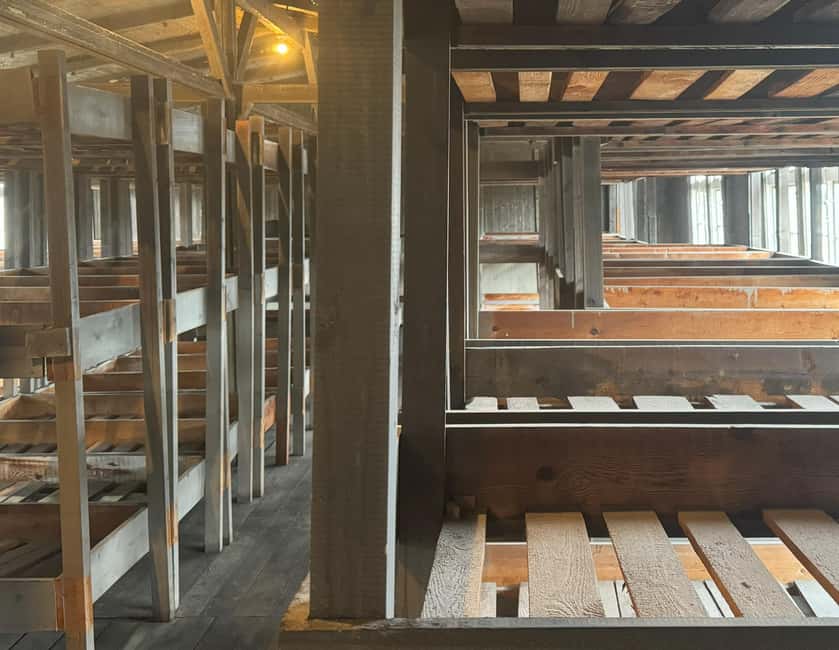
Original barracks are part of the heart of Sachsenhausen. They help you picture cramped living conditions and the way space was used as control. The guide doesn’t just point; they connect what you see to what prisoners endured.
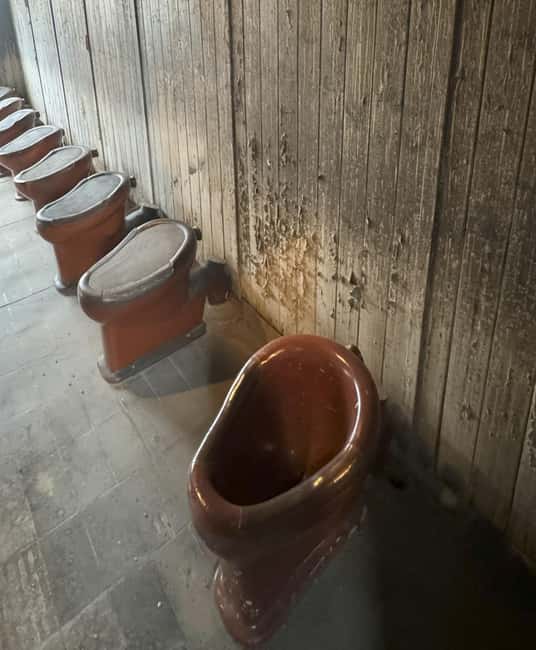
One stop you should mentally prepare for is the infirmary, described as a site of cruel medical experiments. This is where the tour stops feeling like a museum and starts feeling like a record of harm. Even though you’re visiting the memorial today, you’re still standing in a place that functioned inside a system designed to dehumanize.
The tour also includes a prison-within-the-prison type area, plus other structures associated with confinement and punishment. One of the more unusual stops—handled with sensitivity—is the inmates’ brothel. It’s not there for spectacle. The guide uses it to explain the Nazi camp’s manipulation of power and control over prisoners’ bodies and choices.
These are difficult stops, but they’re valuable because they show how broad the system’s reach was. The cruelty wasn’t only physical labor or beatings—it was also engineered through institutions that claimed authority.



Station Z and the crematorium: mass murder and the mechanics of erasure
If you’re looking for the moment when the tour becomes most unforgettable, it’s when you reach Station Z. This is presented as the site of unimaginable mass murder. Seeing this part of the camp is emotionally heavy, and it’s the kind of location where you’ll likely feel your attention narrow. That’s normal.
From Station Z, the tour moves to the crematorium area, including the information that more than 50,000 bodies were burned there. The guide frames it in the context of how the Nazi system tried to make death scalable and hideable—an awful “workflow” that reduced human beings to numbers.
This portion of the visit also includes the shooting trench. Again, the guide’s approach is structured: you learn what the site was, then you connect it to the broader camp system’s role.
I appreciate that the tour doesn’t rush past these stops. You’re not just told that mass murder happened. You’re helped to understand the system that made it routine, and why the memorial keeps insisting that remembrance isn’t optional.
Walking the line between perpetrators, victims, and the question of justice
After you’ve seen the major physical sites, the tour shifts gears toward meaning. You’ll spend time on how remembrance culture developed over three generations and why people worldwide remain obsessed with the question of how this could happen.
The guide also discusses psychological research about how so many individuals participated willingly in these crimes. That part is uncomfortable, but it’s also one of the most important elements of this tour for me. History doesn’t just repeat because of a single villain. It repeats because ordinary people can be pulled into systems that reward cruelty and silence.
Toward the end, you’ll take time to reflect on the development of public awareness and memory. One of the practical details that helps: after about 2.5 hours on site, there’s time before heading back. Based on what I’ve heard about the pacing, you may find quiet space at the cafeteria area for a moment of breathing before you return to Berlin together.
The 6-hour rhythm: what the timing really means for your day
This is a 6-hour tour, but the day doesn’t feel “busy” the way some city tours do. It’s more like a structured corridor: Berlin context → train ride context → town walk → camp sites in sequence → remembrance and psychology → return trip.
- On-site time is about 3 hours for the memorial portion, with roughly 2.5 hours described as the core time on site before the return.
- There are transport segments (train out, train back) that keep the day moving without scrambling.
- The camp visit is a lot of walking, on a site that’s large and spread out.
This matters for value because you’re paying for a curated route, not just a ticket and a map. Even at a short duration, you get a coherent order: you don’t have to build your own “what to see first” plan while also dealing with emotional strain.
Price and value: how $17 stacks up with what you actually get
At $17 per person, this is very affordable for a guided Sachsenhausen Memorial visit. The entrance is included, but the local train ticket (an ABC ticket, with a 24h ticket often being a good option) is not. So your real total cost will be entrance + your transit ticket.
Still, you’re getting a lot for that money:
- A guided Berlin-to-Oranienburg travel day by public transit
- A curated, structured camp visit that hits key locations like the gate, roll-call square, infirmary, Station Z, and the crematorium
- A focused approach to psychology and memory—so you leave understanding more than just what happened
If you hate paying extra for guides in general, this one feels like a good deal. If you already have transit figured out, your main prep is simply being ready for a long, emotionally intense walking day.
What to bring (and what to avoid) for a smoother, safer visit
The tour asks you to come prepared, and honestly, that’s smart for a memorial day.
Bring:
- Water (the supply on site is poor)
- A sandwich or your own food
- Weather-appropriate clothing, because most of the tour is outdoors
Avoid:
- Alcohol and drugs
- Party groups
- Pets (assistance dogs allowed)
- Nudity
- Fireworks
One practical note from a winter-season experience: if the weather is rainy, bring a way to stay dry and keep your feet warm. Even if you don’t think of it as “historic comfort,” your body will help you stay present for the tour when you’re not distracted by cold and wet shoes.
Who this tour is best for
This experience fits best if you:
- Want a guided route through Sachsenhausen Memorial rather than planning it alone
- Prefer explanations that connect places to systems (how it worked, who participated, why people complied)
- Like asking questions and getting honest answers
It may be tiring for younger children, and the subject matter is difficult. If your group is sensitive to heavy themes, go in with that expectation and consider bringing a plan for decompression after.
Should you book the Sachsenhausen Memorial tour with Jörg Rupert Schöpfel?
If you want a Sachsenhausen visit that’s structured, question-friendly, and grounded in both sites and the psychology behind the crimes, this tour is a strong yes. The guide’s approach—turning locations into understandable stories without losing respect for the dead—makes the visit more than a checklist.
Book it if:
- You’re ready for an intense, meaningful day
- You want the tour to do the hard work of sequencing and context
- You can bring water/food and dress for weather
Skip it or rethink if:
- You want a casual “light history” outing
- You struggle with emotionally heavy material
- You’re not prepared for substantial outdoor walking
In short: this is one of those tours where the value isn’t in entertainment. It’s in clarity, context, and the disciplined way you’re guided through a place that still demands attention.
FAQ
How long is the Sachsenhausen Memorial tour?
The tour duration is 6 hours, with about 3 hours at the Sachsenhausen Memorial and then time to return to Berlin by train.
What’s included in the price?
The entrance to the site is included.
Do I need a train ticket for the trip?
Yes. You need an ABC ticket by the local train company, and for many people an ABC 24h ticket is a good option. The ticket is not included in the tour price.
Is food available at the memorial?
There isn’t adequate food supply on site, so it’s recommended to bring water and a sandwich.
Is the tour mostly indoors or outdoors?
Most of the tour is outdoors, so dress for the weather and plan for walking.
Is the tour wheelchair accessible?
Yes, the tour is wheelchair accessible. If you need a wheelchair on site, you should let the organizer know.
More Tour Reviews in Berlin

Sachsenhausen and Remembrance
Round out your days in Berlin
Sachsenhausen Memorial, compared.
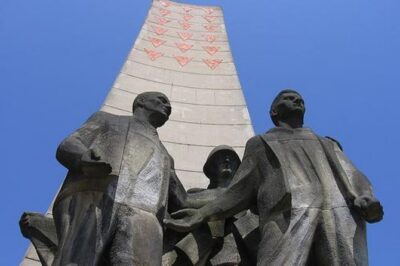 ★ 5.0Sachsenhausen Concentration Camp Tour in EnglishFrom $365,711 reviews
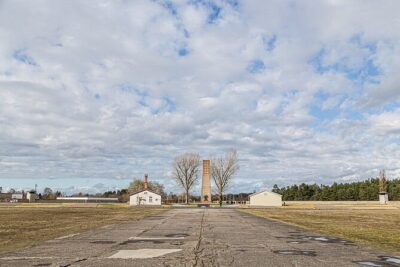 ★ 4.7Sachsenhausen Concentration Camp Memorial TourFrom $213,716 reviews
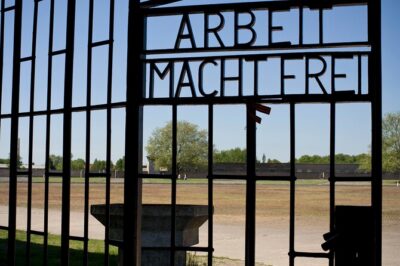 ★ 5.0Sachsenhausen Concentration Camp Bus Tour in English from BerlinFrom $681,962 reviews
★ 4.8Sachsenhausen Concentration Camp Tour in EnglishFrom $221,889 reviews
★ 5.0Sachsenhausen Concentration Camp Bus Tour in English from BerlinFrom $681,962 reviews
★ 4.8Sachsenhausen Concentration Camp Tour in EnglishFrom $221,889 reviews
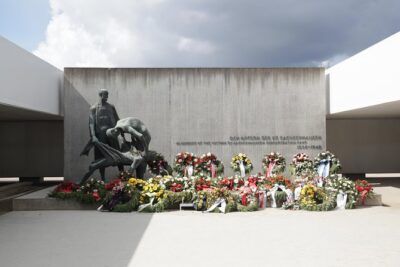 ★ 5.0Sachsenhausen Concentration Camp Memorial Tour (Max. 15 Guests)From $351,516 reviews
 ★ 4.9English Bus Tour to Sachsenhausen Concentration CampFrom $551,380 reviews
 ★ 4.6Sachsenhausen Concentration Camp and Potsdam TourFrom $651,334 reviews
 ★ 5.0Sachsenhausen concentration camp.From $341,189 reviews
Browse the lists this tour appears in