
REVIEW · SACHSENHAUSEN MEMORIAL
Never Again Sachsenhausen Concentration Camp
Sachsenhausen hits fast. This 4-hour visit pairs on-site structure with a guided, human way of making the camp’s purpose clear, from Nazi control to later Soviet use and eventual propaganda. I like the mix of museum explanation and free walking through key camp areas, and I especially like how guide Siobhán frames the story with a feminist, progressive lens that connects past abuse to today’s far-right threats without turning the tour into a lecture. The main catch: this is a heavy topic, and if you strongly prefer a purely neutral, non-political approach, the emphasis may not feel like your style.
In practice, you’ll start at Potsdamer Platz and end right back there, which keeps logistics simple. You get a mobile ticket, English interpretation, and a small group size (max 15), which matters when you’re standing in places designed for coercion and silence. One consideration is practical rather than emotional: you should plan for no snacks or bottled water being included, and the walking plus the museum work is easier with moderate fitness.
In This Review
- Key points I’d plan around
- Sachsenhausen: the value of context before you walk the grounds
- Meeting point and timing: simple plan, real walking time
- Price and what you get for $31.29
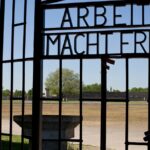
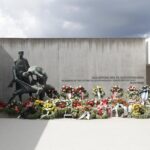
- The first stop: Memorial and Museum Sachsenhausen
- What you’ll learn as you move
- Prisoner barracks and the camp kitchen: why autonomous time helps
- A practical note on how to do this well
- The infirmary stop: the tour’s focus on racism and eugenics
- The guide matters: Siobhán’s tone and how it affects your experience
- Who this tour is best for
- Logistics that make the day easier
- Getting the most out of Sachsenhausen without burning out
- Should you book this Sachsenhausen tour?
- FAQ
- How long is the Sachsenhausen tour?
- Is admission to the memorial and museum included?
- What language is the tour offered in?
- Is this a mobile-ticket experience?
- What about public transport tickets?
- How big is the group?
- Can I cancel for a refund?
Key points I’d plan around
- Small group, 15 max: more room to ask questions and keep the tone respectful.
- Admission is included: you don’t have to hunt for ticket lines once you arrive.
- A guided start plus autonomous exploring: you get context first, then space to look.
- History that spans eras: Nazi camp, Soviet period, and later propaganda use are part of the explanation.
- Connection to today: the tour discusses contemporary far-right currents, including the rise of the AfD.
- Respectful but not lifeless: the guide keeps care for the subject while still keeping the group steady.
More memorial and remembrance tours from Berlin
- Berlin: Sachsenhausen Concentration Camp Tour in English★ 5.0 · 5,711 reviews
- Berlin: Sachsenhausen Concentration Camp Memorial Tour★ 4.7 · 3,716 reviews
- Berlin: Sachsenhausen Concentration Camp Tour in English★ 4.8 · 1,889 reviews
- Sachsenhausen Concentration Camp Memorial Tour (Max. 15 Guests)★ 5.0 · 1,516 reviews
Sachsenhausen: the value of context before you walk the grounds
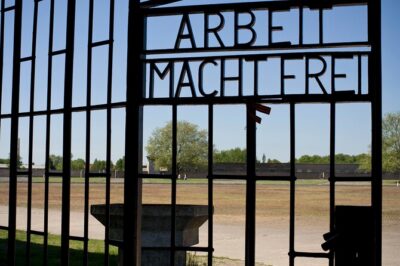
Sachsenhausen isn’t the kind of place where you can safely wing it with a generic audio track. The camp was designed for control, humiliation, and domination, so you’ll get more out of your visit if you understand the layout and the logic behind it first. This experience gives you that grounding early, then lets you move through parts of the site at your own pace.
What I appreciate is the way the story is framed across different periods. You’re not only hearing about the Nazi “model” concentration camp, then the Soviet “special” camp, and finally a later pro-communist, anti-fascist propaganda tool. That timeline matters because it helps you see that the machinery of power didn’t disappear with the end of one regime; it was reused, repackaged, and weaponized again.
Meeting point and timing: simple plan, real walking time
The tour meets at Potsdamer Platz 10, 10785 Berlin, and it ends back at the same point. That “start and finish in one place” setup is a small win in Berlin, where you can otherwise lose time to transfers and finding the right entrance.
You’re looking at about 4 hours on-site, including the museum and the walking through areas of the grounds. That’s long enough to take in the key spaces, but short enough that you’re not spending the whole day under a heavy emotional weight. The tour also fits best if you have moderate physical fitness, since you’ll be walking between parts of the complex.
Price and what you get for $31.29
At $31.29 per person, this is priced like an entry-friendly guided visit, and it’s made more reasonable by what’s included. Admission to the memorial and museum is included, and there’s also a donation for the memorial built into the offering.
Here’s how I’d think about value for your money:
- You’re paying for interpretation in English plus museum entry, not just a transfer.
- You’re getting a small-group experience (max 15), which tends to make a big difference when the topic is difficult and people need space to ask questions.
- You’ll still want to budget for practical items since snacks and bottled water aren’t included, and the public transport ticket isn’t included.
Also note the transport detail that often catches people: there’s no included ticket for public transit in the ABC zone. If you’re using public transport, plan to have your own valid ticket before you head out.
The first stop: Memorial and Museum Sachsenhausen
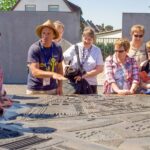
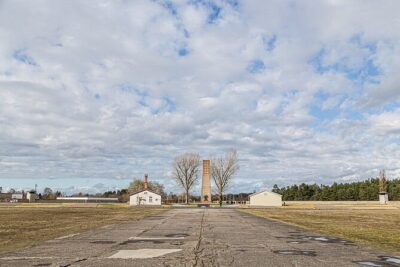
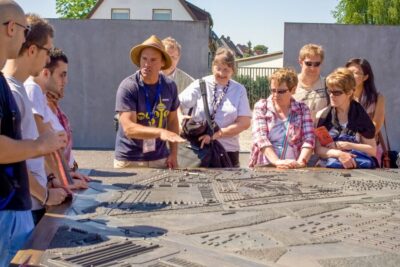
The tour begins at the visitors’ area, where you get models and explanations that map the physical structures of the camp. This part is important because camp architecture is not random. The spaces are laid out to enforce superiority over prisoners, with control baked into walls, routes, and routines.
You’ll also hear about how the site changed hands over time, including the unsettling transformation of the former SS training camp into a today’s Brandenburg police academy. That shift can feel like a cruel magic trick at first: one institution replaces another, but the ground remembers what the place was built to do. Understanding that continuity helps you interpret what you see next.





What you’ll learn as you move
This section isn’t described as a dense, scripted academic lecture, but it does explain what’s uniquely grim about Sachsenhausen. You’ll be guided toward key ideas: control systems, the logic of dehumanization, and how later regimes used the site for their own messaging and purposes.
There’s also a connection-to-today angle here. You’ll encounter mentions of ongoing denial and attacks tied to neo-Nazi narratives, plus discussion of contemporary far-right politics, including the rise of the AfD. This isn’t just name-dropping; it’s included to show that the attempt to rewrite or flatten history still has consequences.
Prisoner barracks and the camp kitchen: why autonomous time helps
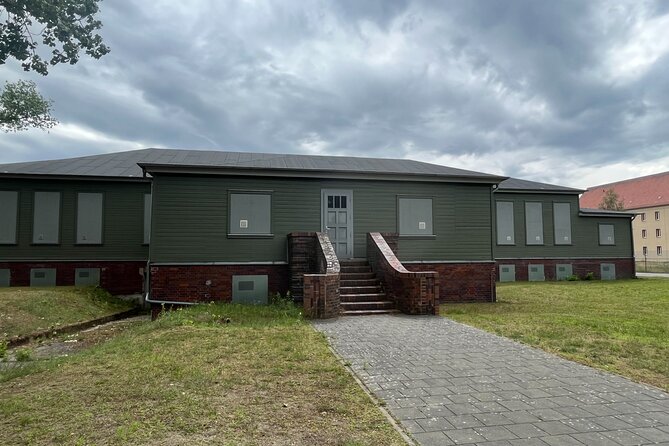
After the initial context, you move into an autonomous exploration of parts of the camp, including the prisoners’ barracks and the camp kitchen. I like this structure because it gives your eyes time to work without you being pushed through every square meter at breakneck speed. In a place like this, your brain needs moments to register what you’re seeing.
Autonomous time also helps you follow your own emotional pacing. Some people process by reading labels slowly; others need to stand back and take in the scale of what remains. Either way, you’re not stuck listening nonstop.
A practical note on how to do this well
When you’re exploring on your own, don’t treat it like a checklist. If you can, pick one or two details to study carefully: a layout feature, a doorway, a sign, or a specific room arrangement. You’ll remember those anchors more than just the broad storyline.
The infirmary stop: the tour’s focus on racism and eugenics
The final major section is the infirmary, and it’s described as one of the hardest parts. You’ll learn about racism, control over women’s bodies, eugenics, and the way prisoners were treated as test subjects. The point isn’t just horror for its own sake; it’s explaining the system that made those abuses look acceptable to the people running it.
This is where the tour’s emphasis on connecting past and present becomes very real. The same attitudes that enabled Nazi-era dehumanization show up in different uniforms later: in attempts to rank human value, to control who belongs, and to justify cruelty as policy. If you’ve ever wondered why propaganda and ideology are so dangerous, the infirmary section is where the tour gives you a direct answer.
The guide matters: Siobhán’s tone and how it affects your experience
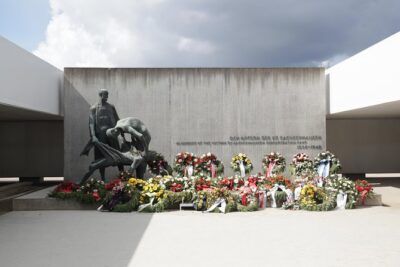
Guide Siobhán is repeatedly highlighted for making the experience both serious and steady. That balance is not easy to pull off in a memorial setting. The key is sensitivity: the guide is described as respectful toward the brutality, suffering, and loss of life, including the feelings that visitors bring with them.
At the same time, there’s mention of an appropriate level of levity. Not jokes about tragedy. More like small moments that help a group keep functioning and not shut down completely. That matters because it helps you leave feeling educated and clear-headed rather than wrecked.
The other big theme is framing through a progressive feminist lens. In practice, that can mean you’ll hear more attention to gendered violence and how control over women’s bodies was part of the broader ideology. If that emphasis fits your worldview, you’ll probably find the tour more resonant. If it doesn’t, you may feel the political thread is too direct.
Who this tour is best for
This is a strong fit if you want:
- A guided explanation plus time to look around yourself.
- A smaller group setting, so the tone stays careful.
- An English guide who connects the past to current far-right threats in Germany.
It may be less ideal if you:
- Prefer a strictly non-political delivery style.
- Get uncomfortable with history being tied to modern ideology and elections.
- Want a lighter, purely “informational” museum day. This is not that kind of experience.
For families: the review context includes groups that included teens and adults, and the guide was described as adapting to questions. Still, since the content includes racism, eugenics, and abuse, you should judge suitability based on your own group’s maturity level.
Logistics that make the day easier
A few small details make a real difference:
- Mobile ticket: you won’t be scrambling for paper.
- Service animals allowed.
- Near public transportation.
- Confirmation is received at booking time.
- Maximum of 15 travelers.
Also plan for basics: bring a layer for the day, and bring your own water or plan to buy it nearby, since snacks and bottled water aren’t included.
Getting the most out of Sachsenhausen without burning out
If you’re doing this as part of a Berlin trip, I’d treat it like a main event, not a side stop. Pair it with lighter activities afterward. Your brain will need time to process the connection between ideology and physical space.
When you walk the grounds, slow down at transitions: after the museum context, before the autonomous areas, and especially before the infirmary section. Those mental pauses help you absorb the story in the right order.
And if you feel overwhelmed, that’s normal. This kind of place can make even experienced museum-goers go quiet. A good tour helps you stay present instead of speeding past the meaning.
Should you book this Sachsenhausen tour?
I think you should book if you want a small-group English visit that explains the camp’s design and purpose, then gives you the freedom to look without being rushed. The price feels fair given that admission and a memorial donation are included, and the guide’s tone (respectful, attentive, and not robotic) makes a hard subject more bearable to face.
I’d skip it if you’re looking for a light, purely neutral sightseeing experience, or if you would strongly dislike a feminist and progressive lens connecting past ideology to today’s far-right movements.
FAQ
How long is the Sachsenhausen tour?
It runs for about 4 hours.
Is admission to the memorial and museum included?
Yes. Admission is included in the experience.
What language is the tour offered in?
The tour is offered in English.
Is this a mobile-ticket experience?
Yes, you’ll receive a mobile ticket.
What about public transport tickets?
A public transport ticket for the ABC zone is not included, so you’ll need your own if you use transit.
How big is the group?
The tour has a maximum of 15 travelers.
Can I cancel for a refund?
Yes. You can cancel up to 24 hours in advance for a full refund.
More Tour Reviews in Berlin

Sachsenhausen and Remembrance

Round out your days in Berlin
Sachsenhausen Memorial, compared.
 ★ 5.0Sachsenhausen Concentration Camp Tour in EnglishFrom $365,711 reviews
 ★ 4.7Sachsenhausen Concentration Camp Memorial TourFrom $213,716 reviews
 ★ 5.0Sachsenhausen Concentration Camp Bus Tour in English from BerlinFrom $681,962 reviews
★ 4.8Sachsenhausen Concentration Camp Tour in EnglishFrom $221,889 reviews
★ 5.0Sachsenhausen Concentration Camp Bus Tour in English from BerlinFrom $681,962 reviews
★ 4.8Sachsenhausen Concentration Camp Tour in EnglishFrom $221,889 reviews
 ★ 5.0Sachsenhausen Concentration Camp Memorial Tour (Max. 15 Guests)From $351,516 reviews
 ★ 4.9English Bus Tour to Sachsenhausen Concentration CampFrom $551,380 reviews
 ★ 4.6Sachsenhausen Concentration Camp and Potsdam TourFrom $651,334 reviews
 ★ 5.0Sachsenhausen concentration camp.From $341,189 reviews
Browse the lists this tour appears in