
Berlin’s history moves fast on a bicycle. This Prenzlauer Berg tour threads the Berlin Wall story from Bornholmer Straße to Bernauer Straße, then keeps rolling past spots like Mauerpark and the Kulturbrauerei.
I love the small-group setup (up to 8), which makes it easier to ask questions and pause for photos without feeling rushed. I also like that the live guide brings real local know-how—people specifically praise guides such as Steffen and Ferrenz for clear, well-informed explanations.
One consideration: the tour is German only, so you’ll get more out of it if you can follow conversation and key place names while you ride.
In This Review
- Key things that make this Prenzlauer Berg bike tour worth your time
- Why Prenzlauer Berg pairs so well with a bike
- Bornholmer Straße and the Wall’s end-point you can actually picture
- Mauerpark: where a Wall story meets weekend Berlin
- Bernauer Straße: divided street history you can read at street level
- The brewery era: pedals past the old industrial core turned cultural center
- Kollwitzplatz and Heinrich Zille: the neighborhood behind the façades
- Dicker Hermann (Fat Hermann): a water tower with real staying power
- Märchenbrunnen: fairy-tale fountain design in neo-Baroque clothing
- Velodrom and the Europasportpark swimming facilities
- Ernst Thälmann Park and the Zeiss Major Planetarium in one arc
- The Palm: Berlin’s 1886 social building now housing thousands
- Price and value: what you’re really paying for
- Logistics that matter on a bike tour day
- Who should book this Prenzlauer Berg bike tour?
- Should you book it?
- FAQ
- Where does the bike tour start?
- How long is the Prenzlauer Berg bicycle tour?
- Is this tour private, and what is the group size?
- What language is the guide?
- What’s included in the price?
- What should I bring, and what can’t I bring?
Key things that make this Prenzlauer Berg bike tour worth your time
- Bornholmer Straße and the 9 November 1989 moment: you learn why this place still matters.
- A practical bike route through wall history: you connect the dots from the former border crossing to Bernauer Straße.
- Mauerpark energy on Sundays: flea markets and live street fun can appear depending on the day.
- Breweries to culture: you pedal through the brewery-world that shaped the neighborhood.
- Iconic landmarks in one loop: from the Dicker Hermann water tower to the Zeiss Major Planetarium.
Deeper into Kreuzberg and the eastern districts
- Berlin: Kreuzberg Guided Walking Evening Tour★ 4.7 · 555 reviews
- Berlin: Alternative Bike Tour of Kreuzberg & Friedrichshain★ 4.7 · 548 reviews
- Berlin: 2.5-Hour Walking Tour through Kreuzberg 61★ 4.9 · 525 reviews
- Berlin Off-the-Beaten-Path Walking Tour: Kreuzberg, Mitte and Friedrichshain★ 5.0 · 412 reviews
Why Prenzlauer Berg pairs so well with a bike
Prenzlauer Berg is the kind of Berlin neighborhood where walking is fine, but biking is better. On a bike you cover ground fast enough to link together big story points—the Wall line, the former East-West divide, and the later neighborhood “reinvention”—without spending your whole trip in transit.
This is also a good match for people who like sights that explain themselves when you’re there. You’re not just looking at monuments; you’re moving along the same streets and squares that shaped daily life. Expect a guide who points out why a building matters, what changed over time, and what you can still see today. The group stays small (max 8), so questions don’t get swallowed.
And yes, it’s a history tour that still feels like a real ride. You’ll roll through parks, residential streets, and cultural hubs—so the day has variety instead of turning into one long lecture.
Bornholmer Straße and the Wall’s end-point you can actually picture
You start near Bornholmer Straße 75. From the beginning, the tour sets up a clear theme: Berlin’s political turning points are not abstract. They happened in specific places, and those places still shape the city.
The key early stop is the area connected to 9 November 1989, when the former border crossing first opened. Today, the Platz des 9 November 1989 marks that watershed moment. What I like about this start is that it gives you context before the route starts branching into other sights. Once you understand why this location mattered, the rest of the ride clicks into place.
Then you continue following the former course of the Wall. This part works because the route itself guides your attention. You don’t just hear that neighborhoods were separated—you see how the streets and urban layout still reflect the divide. It turns geography into memory.
Mauerpark: where a Wall story meets weekend Berlin
After the Wall-side scenes, you cycle into Mauerpark, known for what happens there now—especially on Sundays. Depending on the day, you might catch flea markets, karaoke, and musical improvisations. Even if you don’t see all of that, the park is a reminder that Berlin doesn’t freeze in time. It reuses space.
This stop matters because it contrasts sharply with the earlier moments. One moment you’re focused on division and borders; the next you’re in a public place that belongs to everyone. That shift is the whole Prenzlauer Berg story in miniature: from a working, split district to a neighborhood people seek out for its atmosphere.
For your planning, keep in mind this is a bike tour, not a long museum-style break. You’ll want to have your camera ready, but also be prepared to move on quickly when the group rolls out.
Bernauer Straße: divided street history you can read at street level
The tour continues toward Bernauer Straße, a street that was divided from 1961 to 1989. This is one of those Berlin locations where the meaning is in the details—how people lived, where access ended, and what it felt like when a street couldn’t be simply crossed.
I like how the route connects the earlier border crossing with Bernauer Straße. It helps you build a timeline using the city itself. You start at the “how it changed” point, then you move toward the “what the division looked like” point.
If you care about the Wall beyond the headlines, this section is a strong reason to book. It’s not only about a single monument; it’s about the idea that a neighborhood can carry a political story for decades, then have to re-learn itself after reunification.
The brewery era: pedals past the old industrial core turned cultural center
After the Wall story, the tour shifts gears—still with history, but now the focus becomes daily life and industry. You cycle along the “global capital of breweries” that grew in the area in the late 19th century.
You’ll pass the neighborhood’s former brewery powerhouse: Kulturbrauerei, once described as the largest brewery in Germany. Today it’s a cultural center, and that’s the point. Industrial spaces can become public ones. A place built for production now hosts performances, events, and people just hanging out.
This brewery stretch works well because it keeps the ride grounded. You’re moving from the emotional high of Wall history into the practical realities that built the city. It also sets you up for the next residential section where the neighborhood’s look and feel start to matter as much as the politics.
Kollwitzplatz and Heinrich Zille: the neighborhood behind the façades
Then you reach Kollwitzplatz, and the tour leans into the residential character of Prenzlauer Berg. Here, you see the tenements and streets that helped define the neighborhood’s “everyday Berlin” identity.
A neat detail you’ll hear about is how these scenes were illustrated by Heinrich Zille. If you’re the type who likes seeing how artists captured city life, this is a meaningful connection. It’s one thing to look at buildings; it’s another to understand that someone documented the spirit of the streets long enough for those images to become part of the cultural record.
This stop is a good “slow down” moment. Even if the tour keeps moving at a steady pace, you’ll be in a part of Berlin where you can visually sense the layers: older housing, later artistic attention, and modern neighborhood life.
Dicker Hermann (Fat Hermann): a water tower with real staying power
From Kollwitzplatz, you cycle toward Dicker Hermann, Berlin’s oldest water tower, completed in 1877. The name is playful, but the building itself is all practical history—an example of how infrastructure shaped everyday routines long before modern plumbing became taken for granted.
Why this stop is worth your time: it broadens the story beyond politics and culture. A water tower reminds you that cities are built to function. It’s also a nice visual break during a day packed with major landmark names.
Don’t expect this to feel like a typical “wow” viewpoint. The value is in noticing how the neighborhood was engineered for growth—and still lives with those choices today.
Märchenbrunnen: fairy-tale fountain design in neo-Baroque clothing
Next up is the Märchenbrunnen, or Fountain of Fairy Tales, in the eastern part of Bötzowviertel. You’re looking at a large-scale fountain complex designed by Ludwig Hoffmann in a neo-Baroque style.
The size detail matters because it helps you understand why this isn’t just a decorative corner. It’s big enough to shape the space around it—something you’ll feel when you stop and look, not just something you can glance at.
This part of the tour is also a nice contrast to the Wall-related stops. After heavy themes, a fountain brings a lighter visual rhythm. If you like architectural design and public art, you’ll probably enjoy taking a few extra seconds here just to look at the overall composition before the group moves on.
Velodrom and the Europasportpark swimming facilities
From Märchenbrunnen, the route heads toward Velodrom, a track cycling arena and also one of Berlin’s bigger concert venues. The day keeps balancing history and modern city use: venues that once had a specific sporting purpose can also become major event spaces.
You then pass by the Schwimm- und Sprunghalle im Europasportpark, an indoor swimming pool. These stops might not seem connected at first, but they’re part of a broader Berlin pattern: the city invests in big public infrastructure, and those sites often survive political change and still serve residents and events.
For many people, this is where the ride becomes extra fun because the landmarks start feeling less like “stop, read, repeat” and more like you’re moving through a real functioning city.
Ernst Thälmann Park and the Zeiss Major Planetarium in one arc
The tour reaches Ernst Thälmann Park and the related Ernst Thälmann Monument. This is GDR-era context, and it’s handled in a way that fits the day. You’re not just seeing a statue; you’re seeing how ideology, public space, and neighborhood identity were intertwined.
Then you cycle to the Zeiss Major Planetarium, a prestigious building associated with GDR times. Planetariums are science-themed, but in this case the building itself is part of the story. It signals ambition: public education, public imagination, and state-supported culture.
If you’re thinking about reunification-era Berlin as more than politics—more like an architectural and cultural rewrite—these stops do a good job.
The Palm: Berlin’s 1886 social building now housing thousands
Finally, you end up cycling past The Palm, Berlin’s largest social building complex built in 1886. The name comes from a palm tree that was once in an anteroom. That detail is charming, and it’s also a clue that this building was designed with a certain idea of public life in mind.
Today, The Palm functions as a homeless shelter. The numbers are significant: it has 5,000 sleeping places across 40 dormitories. This last stretch changes the tone of the tour again. You started with Wall crossings, moved through neighborhood life, industrial history, public architecture, and now you land on the social reality of Berlin today.
It’s not a “happy ending” stop, but it’s a relevant one. It keeps the day honest: places can be rebuilt and repurposed, but they still reflect the pressures a city faces.
Price and value: what you’re really paying for
At $224 per group (up to 5 people), this tour can be a good value if you’re booking as a small group. Since the tour includes bike rental fees, the guide, and VAT, you’re not stuck adding separate charges for equipment. Rain capes are included too, which is a bigger deal than it sounds in Berlin weather.
The biggest “value lever” for you is group size. If you have 3–5 people, you’re effectively spreading the cost across several riders while still keeping the tour private. If you’re just one or two people, you may feel the cost more—because the structure is built for a small group experience rather than solo bargain shopping.
Also note what’s not included: food. That’s normal for bike tours, but it means you should plan a snack or a light meal before you meet—or be ready to grab something afterward. Bring water if you’re the type who gets thirsty mid-ride.
Logistics that matter on a bike tour day
This is a 210-minute experience (about 3.5 hours). That length is long enough to cover a meaningful route, but not so long that you’ll feel like you’re stuck in the saddle all afternoon.
You’ll also want to remember:
- The tour is a private group with a maximum of 8 persons.
- Luggage or large bags are not allowed, so pack light and think like you’re going on a focused city outing.
- You’ll ride with rain capes available for emergencies, but you should still dress for Berlin weather and sun.
For what to bring, use the checklist: passport or ID card, sunglasses, sun hat, and a camera. Those items are practical, not touristy extras—Berlin lighting can be strong, and the stops are photo-worthy.
Who should book this Prenzlauer Berg bike tour?
You’ll probably love it if you want:
- A history-focused Berlin experience that still feels mobile and outdoorsy.
- A way to connect Wall history to the neighborhood you can actually walk through later.
- A small-group tour with a guide who explains what you’re seeing in context.
It’s also a smart choice if you’re traveling with friends or family who have different interests, because the route moves between Wall history, architecture, public spaces, and major buildings.
The main reason you might skip it is language. Since the tour is in German, you’ll get the most from it if you’re comfortable following conversation or you’re happy focusing on the visuals and place names.
Should you book it?
If you’re choosing between generic sightseeing and a focused story route, I’d lean toward this bike tour. The combination of Bornholmer Straße, Bernauer Straße, and landmarks like Kulturbrauerei, Dicker Hermann, Märchenbrunnen, and the Zeiss Major Planetarium gives you a strong “Berlin in one neighborhood” arc.
Book it if you like your history placed into real streets and if you’re comfortable riding for a few hours with a small group. Skip it if German-only tours feel stressful; you’ll spend energy translating instead of enjoying the day.
FAQ
Where does the bike tour start?
It starts at Bornholmer Straße 75, 10439 Berlin-Prenzlauer Berg.
How long is the Prenzlauer Berg bicycle tour?
The duration is 210 minutes.
Is this tour private, and what is the group size?
It’s a private group tour, with a maximum of 8 persons.
What language is the guide?
The live tour guide speaks German.
What’s included in the price?
The tour includes bicycle rental fees, a guide, VAT, and rain capes for emergencies. Food at stops is not included.
What should I bring, and what can’t I bring?
Bring passport or ID card, sunglasses, a sun hat, and a camera. Luggage or large bags are not allowed.
More Tours in Berlin
More Tour Reviews in Berlin
Kreuzberg and the Eastern Districts

Round out your days in Berlin
Kreuzberg & Alternative Districts, compared.
 ★ 4.5Kreuzberg: Culinary Food TourFrom $589770 reviews
 ★ 4.7Kreuzberg Guided Walking Evening TourFrom $27555 reviews
 ★ 4.7Alternative Bike Tour of Kreuzberg & FriedrichshainFrom $41548 reviews
 ★ 4.92.5-Hour Walking Tour through Kreuzberg 61From $23525 reviews
 ★ 5.0Berlin Off-the-Beaten-Path Walking Tour: Kreuzberg, Mitte and FriedrichshainFrom $30412 reviews
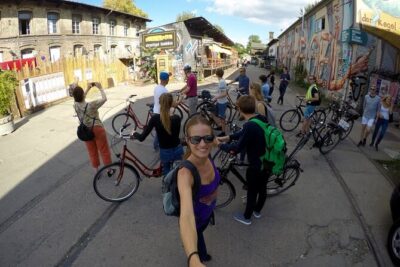 ★ 4.8Experience the Alternative Kreuzberg on a Bike TourFrom $41395 reviews
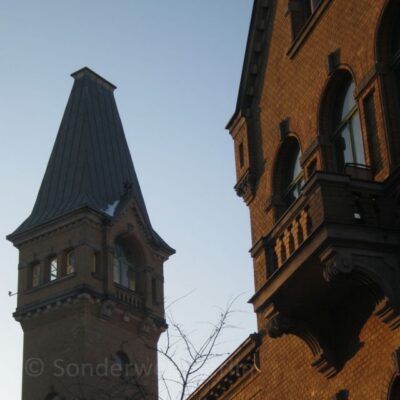 ★ 4.9Prenzlauer Berg District Guided Walking TourFrom $23316 reviews
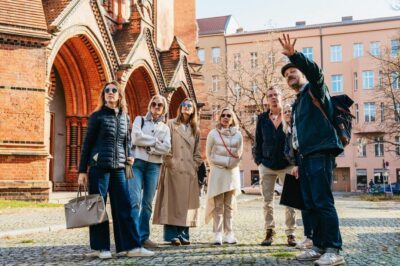 ★ 4.8Gay Berlin Out in Schöneberg Walking TourFrom $23281 reviews
Browse the lists this tour appears in