
REVIEW · SACHSENHAUSEN MEMORIAL
Visita en español al campo de concentración Sachsenhausen
Sachsenhausen is one stop you won’t forget. A Spanish-language visit to the Sachsenhausen Memorial & Museum turns the camp layout into a clear story, with guide-led context you can actually follow. You’ll move through major parts of the site where the Nazi system was designed to control, punish, and dehumanize.
I especially like the Spanish narration, which makes the history easier to process without fighting language. I also like that this isn’t a quick sketch of one area: you cover a full range of spaces, including the execution area, barracks, and headquarters zones, so the day-to-day machinery of the camp feels more real.
One possible drawback: the tour is about 5 hours total, so the schedule can feel tight. If you need slower pacing or extra time to absorb, you’ll want to mentally prepare for a structured visit rather than lingering.
In This Review
- Key things that make this tour worth your time
- Why a Spanish guided visit changes everything here
- Getting from Berlin: Pariser Platz to Sachsenhausen without stress
- Your main stop: Gedenkstatte und Museum Sachsenhausen (about 3 hours on site)
- Key places you’ll walk past, and why each one matters
- Armory and the entrance zones
- The casino and commandant/headquarters areas
- The tower area
- The execution area
- Barracks and kitchen spaces
- How the guides turn buildings into understanding
- Pacing, timing, and the reality of a structured route
- Price and value: what you get for around $34.58
- When this tour is a great fit (and when it might not be)
- Should you book the Spanish Sachsenhausen visit?
- FAQ
- Is the tour offered in Spanish?
- How long is the Sachsenhausen visit?
- What does the tour include?
- Do I need to bring a transport card?
- Where does the tour start in Berlin?
- Where does the tour end?
- Is food included?
- What’s the group size limit?
- Does it run in bad weather?
- Can I cancel for free?
Key things that make this tour worth your time
- Spanish-language guide you can ask questions in
Names that come up in feedback include Alberto, Vicent, Ivan, Micaela, Francisco, Edu, and Jorge, all praised for clarity and respectful storytelling.
- A broad memorial route, not just one highlight
You pass through areas such as the armory, entrance, casino, commandant/headquarters buildings, tower area, execution area, barracks, and kitchen.
- Round-trip access from Berlin
The itinerary is built to pull you from the city and bring you back, which is a big deal when you want less logistics and more time on site.
- Small group size (max 30)
That matters at a place like this. It helps the guide manage the flow and keep the experience thoughtful.
- Works in all weather
Plan on being outside for parts of the route. Dress like it will be cold or windy, because the grounds don’t care about your schedule.
- Mobile ticket for day-of convenience
Easy check-in style, so you spend less energy figuring out paperwork.
More memorial and remembrance tours from Berlin
- Berlin: Sachsenhausen Concentration Camp Tour in English★ 5.0 · 5,711 reviews
- Berlin: Sachsenhausen Concentration Camp Memorial Tour★ 4.7 · 3,716 reviews
- Berlin: Sachsenhausen Concentration Camp Tour in English★ 4.8 · 1,889 reviews
- Sachsenhausen Concentration Camp Memorial Tour (Max. 15 Guests)★ 5.0 · 1,516 reviews
Why a Spanish guided visit changes everything here
History at a concentration camp is heavy. And language matters because you need accuracy, not vague impressions. This visit is designed for Spanish speakers, with guides explaining what you’re seeing in a way that helps the meaning land.
I like that the tour doesn’t treat the site like a set of random ruins. You’ll get the “what” and the “why” tied to the buildings and spaces in front of you. When you understand the story, the memorial stops being abstract and becomes painfully specific.
You’ll also notice the tone is guided and respectful. Feedback repeatedly flags guides who stay focused on explanation, not spectacle. That’s what you want here: a calm, clear route through difficult material, with room to ask questions when you need them.
If you’re coming from Berlin, this setup also helps. You’re not trying to translate signs while also learning the larger structure of the camp. The guide carries that load so you can concentrate on the meaning.
Getting from Berlin: Pariser Platz to Sachsenhausen without stress
The tour starts at Pariser Platz 4, 10117 Berlin, with a morning start time of 9:00 am. That’s useful because it’s a well-known area and easy to orient around before you move.
You’re traveling to Oranienburg for the memorial visit. The big value isn’t just transportation. It’s that you’re removed from the “how do we get there” problem. At a place like Sachsenhausen, that’s a real gift: you can show up mentally ready, not scrambled.
There’s one practical item you should take seriously: you’re asked to bring your ABC transport card already purchased. It’s listed as not included, so plan for it before departure. If you forget it, you’ll lose time and possibly get stuck sorting it out on the day.
The endpoint is Sachsenhausen Memorial & Museum, Str. d. Nationen 22, 16515 Oranienburg. That means you’re not turning around mid-route or hopping around Berlin neighborhoods. You go, you learn, and you finish at the memorial site.
Your main stop: Gedenkstatte und Museum Sachsenhausen (about 3 hours on site)
The core of the experience is a guided visit at Gedenkstatte und Museum Sachsenhausen, focusing on the interior and exterior of the former camp facilities. Plan on roughly 3 hours at the memorial itself, which fits with the overall 5-hour tour length.
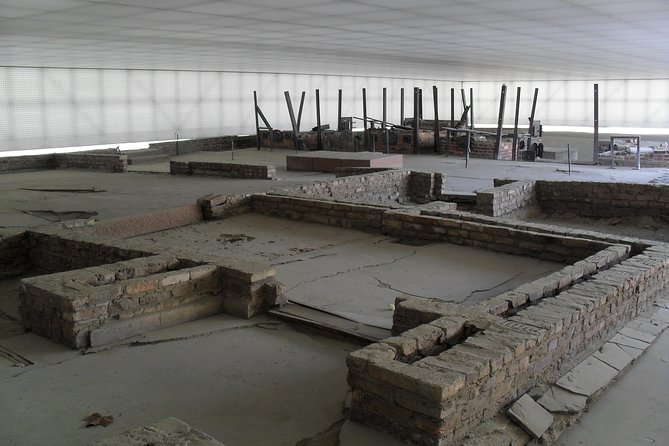
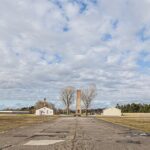
You’ll see more than the “big photo spot.” The route includes the armory, entrance, casino, headquarters/commandant area, a tower area, the execution area, barracks, and the kitchen, among other camp-related spaces.
That list matters because Sachsenhausen isn’t only about one type of suffering. The camp functioned like a system with different roles: security, administration, punishment, and daily logistics. When you move through multiple types of spaces, you get a more complete picture of how the Nazi apparatus ran.
One consideration: the site can feel “spare” compared to typical tourist attractions. There’s meaning in that. But it can also make you feel like you’re walking through places that don’t look dramatic at a glance. That’s exactly why the guide’s explanations matter. With context, even a simple building footprint turns into something far more unsettling.
Key places you’ll walk past, and why each one matters
This isn’t a tour where you just check off landmarks. Each stop is meant to connect the physical space to how the camp was structured and operated. Here’s what you can expect from the specific areas named for the visit, and what to focus on as you move.



Armory and the entrance zones
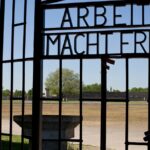
You’ll visit the armory and the entrance area. Look at these spaces as part of control and access. The entrance is where a system begins: movement, authority, and the point where victims are forced into the camp’s rules. The armory signals preparation and the presence of force as an everyday factor, not an occasional event.
The casino and commandant/headquarters areas
The casino and headquarters/commandant spaces bring you into the administrative and power side of the camp’s structure. This is where it helps to listen carefully: the guide’s job is to explain how authority was organized and how decisions were made. If you want the story to make sense, these zones are where the system’s logic becomes clearer.
The tower area
You’ll also cover a tower area. Try to picture what a watch position means in a closed system. Even if the building itself doesn’t look like much, the tower concept is about observation and control at scale.
The execution area
This is one of the hardest parts of the visit, and it’s included for a reason. You’ll see the execution area as part of understanding the reality of terror and punishment. When it feels overwhelming, it’s okay to slow down mentally. A good guide helps you stay grounded in explanation rather than letting the scene race ahead of you emotionally.
Barracks and kitchen spaces
The barracks and kitchen areas shift from punishment-and-power to daily camp logistics. This is where you learn how routine and deprivation worked together. The barracks explain the enforced living conditions. The kitchen area helps show how resources, labor, and hunger were part of the system.
Throughout, I’d recommend keeping your questions simple: what was the purpose of this space, and how did it connect to camp rules? Guides like Alberto, Vicent, Ivan, and Francisco are praised for clarity and patience, so you’re not stuck guessing.
How the guides turn buildings into understanding
A concentration camp tour lives or dies on explanation. This one is explicitly set up for Spanish speakers, and the guide quality shows up in feedback again and again.
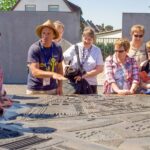
You’ll notice a pattern: guides are praised for telling the story in a way that feels like a structured lesson, not a random timeline. Several guides named in feedback include Vicent and Ivan for making the explanation feel like you’re inside the historical context. Micaela gets credit for being attentive and knowing the material well. Francisco and Jorge are mentioned for clarity and knowledge.
What you should take from that, even before you arrive: the guide isn’t just repeating dates. They connect the named areas into an overall picture of how the camp functioned.
And you’ll likely feel the difference if you’ve ever tried to learn from a guidebook alone. A book gives you facts. A good guide gives you order, and order helps your brain process trauma without shutting down.
That said, some feedback mentions timing pressure and strict pacing. The tour is planned, and the guide may manage minutes closely. So go in expecting structure. If you can handle that, you’ll probably appreciate how smoothly the route flows.
Pacing, timing, and the reality of a structured route
The total tour length is about 5 hours, and the memorial visit itself is around 3 hours. That’s not a full day. It’s also not a short loop.
At a place like Sachsenhausen, you may think you’ll want to linger. You might. But the route has to cover multiple zones. That’s why some people feel the schedule can be intense.
If you’re traveling with kids, this is an important consideration. One note in feedback points out that children may move at a different rhythm, and the schedule doesn’t always stretch for that. If your group includes younger visitors, you might want to set expectations early: this is a guided historical route, and it may not slow down just because the site feels heavy.
If you’re someone who reads slowly or absorbs by standing still, plan to take breaks in your head. You don’t need to rush to understand, but you do need to stay present while moving.
Group size helps, too. With a maximum of 30 travelers, you’re less likely to feel like you’re stuck behind a giant crowd. Still, remember you’re walking through a memorial route where the focus is safety and respectful flow.
Price and value: what you get for around $34.58
At $34.58 per person, this tour is priced in a way that often surprises people because it includes real value.
Here’s what you’re getting that matters:
- A professional guide and a local guide
- A guided visit inside and outside the memorial grounds
- The admission ticket included for the memorial
- A structured visit that covers multiple camp areas
- A round-trip connection from Berlin (built into the experience)
What’s not included is also clear: food and drinks are not part of the package, unless your guide mentions optional value-add offers in the moment. The tour also flags the ABC transport card as something you must bring already purchased.
So the value equation is pretty straightforward. You’re paying for transportation convenience plus guided access plus the memorial admission. If you tried to plan it yourself, the cost can creep upward once you price in travel time, tickets, and the type of explanation you’ll want on site.
Also, the Spanish language component isn’t a small perk. If you don’t speak German well, you could lose a lot of meaning on your own. Getting it in Spanish for this price often feels like good practical sense.
When this tour is a great fit (and when it might not be)
This experience is a good match if you:
- Want a Spanish-language guide so you can follow details without guessing
- Prefer a route that covers several parts of the camp, including the execution area
- Like structured history delivered in a respectful, guided way
- Want round-trip support from Berlin so you can focus on the memorial itself
It may feel less perfect if you:
- Need long stretches of free time with no schedule pressure
- Want a more flexible pace for heavy emotional processing
- Are bringing very young children and need a tour designed around slower movement (this one is guided and planned)
One more tip: dress for cold or wind if you’re going in winter. The memorial grounds are outdoors for portions of the walk. Feedback explicitly calls out needing warm layers, and that’s exactly the kind of practical advice that saves your day.
Should you book the Spanish Sachsenhausen visit?
I’d book it if you want a respectful, Spanish-guided route that doesn’t skip the hardest, most meaningful parts of the site. The full camp coverage helps you connect the story across different types of spaces, from administrative areas to barracks and the execution area. And with guides praised for clarity and patience, you’re more likely to leave with understanding instead of confusion.
I’d think twice only if you’re looking for lots of unstructured time on site or you strongly need a slow, flexible pace. This tour is guided, timed, and structured for a reason.
If you can handle that, this is a serious, practical way to experience Sachsenhausen from Berlin while keeping language and logistics under control.
FAQ
Is the tour offered in Spanish?
Yes. The experience is designed specifically for Spanish speakers.
How long is the Sachsenhausen visit?
The total tour time is about 5 hours, with around 3 hours spent at the memorial.
What does the tour include?
It includes a professional guide and a local guide. Admission for the memorial is included in the main stop.
Do I need to bring a transport card?
Yes. You need the Tarjeta de transporte ABC, and it must be brought purchased.
Where does the tour start in Berlin?
The meeting point is Pariser Platz 4, 10117 Berlin, Germany, with a start time of 9:00 am.
Where does the tour end?
The tour ends at Sachsenhausen Memorial & Museum, Str. d. Nationen 22, 16515 Oranienburg.
Is food included?
No. Food and drinks are not included, other than any value-added offers specified by your guide.
What’s the group size limit?
The tour has a maximum of 30 travelers.
Does it run in bad weather?
Yes. It operates in all weather conditions, so you should dress appropriately.
Can I cancel for free?
Free cancellation is available. You can cancel up to 24 hours in advance for a full refund. If you cancel less than 24 hours before the start, the amount paid isn’t refunded.
More Tour Reviews in Berlin

Sachsenhausen and Remembrance
Round out your days in Berlin
Sachsenhausen Memorial, compared.
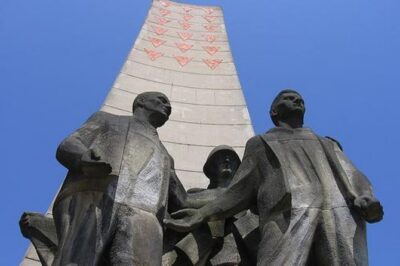 ★ 5.0Sachsenhausen Concentration Camp Tour in EnglishFrom $365,711 reviews
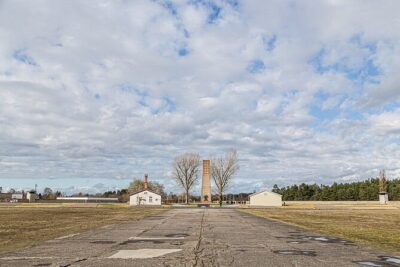 ★ 4.7Sachsenhausen Concentration Camp Memorial TourFrom $213,716 reviews
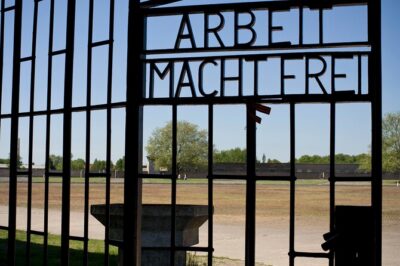 ★ 5.0Sachsenhausen Concentration Camp Bus Tour in English from BerlinFrom $681,962 reviews
★ 4.8Sachsenhausen Concentration Camp Tour in EnglishFrom $221,889 reviews
★ 5.0Sachsenhausen Concentration Camp Bus Tour in English from BerlinFrom $681,962 reviews
★ 4.8Sachsenhausen Concentration Camp Tour in EnglishFrom $221,889 reviews
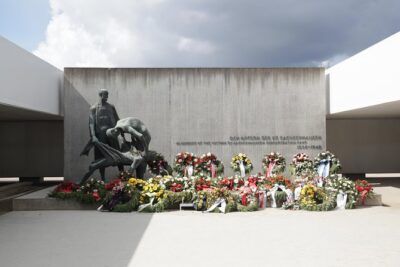 ★ 5.0Sachsenhausen Concentration Camp Memorial Tour (Max. 15 Guests)From $351,516 reviews
 ★ 4.9English Bus Tour to Sachsenhausen Concentration CampFrom $551,380 reviews
 ★ 4.6Sachsenhausen Concentration Camp and Potsdam TourFrom $651,334 reviews
 ★ 5.0Sachsenhausen concentration camp.From $341,189 reviews
Browse the lists this tour appears in