
REVIEW · WALKING TOURS
An Introduction to Berlin Private Walking Tour
Berlin makes sense on foot. I love the private setup with a scholar-guide, because you get real dialogue instead of a scripted drive-by. I also like how the route links big moments like the Reichstag dome and the Holocaust Memorial to what Berliners see every day now. The main drawback to plan for: it’s a brisk, “hit the highlights” walk with a few short public-transport hops.
In about three hours, you’ll cover major anchors in Berlin’s story: Potsdamer Platz, Brandenburg Gate, Alexanderplatz (as part of the broader route), the Berlin Wall area, and Checkpoint Charlie themes, plus central streets like Unter den Linden. The tour runs in English, uses a mobile ticket, and is designed so you can ask questions without feeling rushed.
One more thing I’d flag: food and drinks aren’t included. If you’re the type who likes to stop for a snack every hour, bring water and keep expectations realistic for a tight timeline.
In This Review
- Key takeaways before you go
- Private walking tour, scholar-guide energy: what makes this one work
- Meeting at Unter den Linden 42: your timing, pickup, and transit reality
- Reichstag Building: where modern Germany’s democracy shows up in glass
- Brandenburg Gate: the monument that keeps collecting history
- Museum Island and Potsdamer Platz: culture first, then reinvention after the Wall
- Unter den Linden and Tiergarten: Berlin’s big boulevard and the park break you need
- Holocaust Memorial to Hackescher Markt: reflection, then pre-war courtyards
- Price and value: what $520.73 per group buys you
- Should you book this Berlin private walking tour?
- FAQ
- What’s the duration of the Berlin private walking tour?
- Is this tour private or small-group?
- Do I need public transportation during the tour?
- Where do I meet the guide?
- What language is the tour offered in?
- Is the tour ticket free entry at the stops?
Key takeaways before you go
- Private historian-guide time for questions and personal explanations, not just landmark photos
- 3 hours, many eras from modern democracy to Cold War divisions and memorial history
- Frequent landmark “parking spots” with listed free admission, so you’re not constantly paying entry fees
- A practical mix of walking + transit, with help for transit purchases if needed
- A tour built around context so the sights add up instead of feeling like a checklist
More of Berlin on foot
- Discover Berlin Half-Day Walking Tour★ 5.0 · 9,624 reviews
- Berlin City walk Government District and Places of Democracy★ 4.7 · 8,467 reviews
- Berlin: Third Reich & Cold War Guided Walking Tour★ 4.9 · 8,378 reviews
- Berlin: Discover Berlin Walking Tour★ 4.9 · 5,998 reviews
Private walking tour, scholar-guide energy: what makes this one work
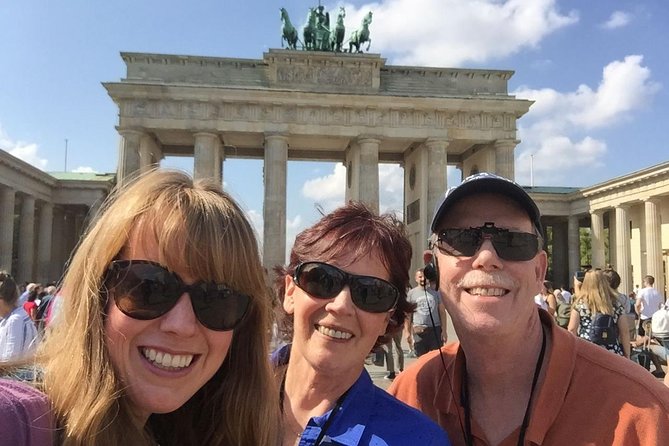
This Berlin private walking tour is built for your first meaningful grasp of the city. Instead of just pointing out buildings, the guide connects each stop to the politics, fears, and ideals that shaped Berlin—then ties it back to what you can still see today.
The private part matters more than you might think. In a small group, you can ask follow-ups in plain language. In a private setting, you can also steer the conversation a bit—so if WWII history is your focus (or if you want more on the Cold War), you’re not stuck listening to a one-size-fits-all script.
From the feedback, one guide named Jakob really impressed me with how personally he framed the topic of the Holocaust. His family connection as the grandchild of a Holocaust survivor shaped the tone—serious, careful, and still guided toward understanding. He also reportedly offered restaurant recommendations, which is a nice bonus when you’re trying to turn a history walk into a good evening plan.
The tour is also structured to keep you oriented fast. You start in a power-and-government zone, move through the symbolism of Berlin’s city center, and end on a reflective note before you swing back toward the texture of old pre-war streets.
Meeting at Unter den Linden 42: your timing, pickup, and transit reality
You meet at Unter den Linden 42, 10117 Berlin, with the default starting point at Café Einstein at that address. Plan to show up 15 minutes early if hotel pickup hasn’t been arranged—this matters because you’ll start promptly and you don’t want to be the person slowing the group.
Pickup is offered, but only if you’ve arranged it ahead of time. If you don’t have pickup, don’t worry—you’re meeting near public transport, so getting there is usually straightforward.
You’ll also use public transport a few times because some of the key sites are too far to walk nonstop. If you don’t already have a multi-day visitor pass, the tour suggests getting a day metro pass (or purchasing a ticket at the first metro station during the tour if needed). That’s a practical touch: it helps prevent the most common Berlin walking-tour headache, which is getting your feet moving while the transit logistics lag behind.
Finally, the tour uses a mobile ticket, and it’s offered in English. That’s the kind of small detail that reduces friction on a first day in a foreign city—less fumbling, more watching.
Reichstag Building: where modern Germany’s democracy shows up in glass
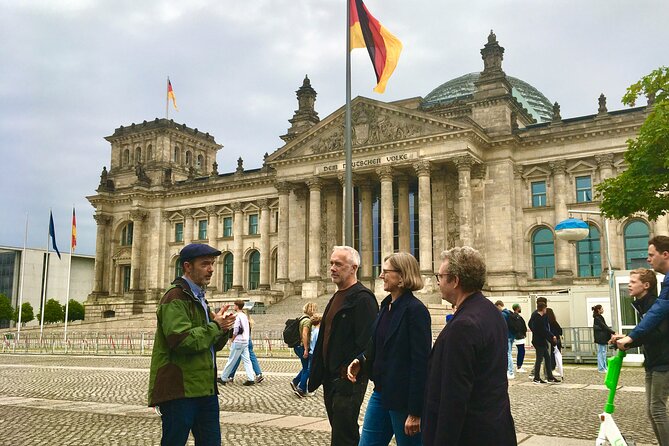
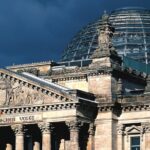
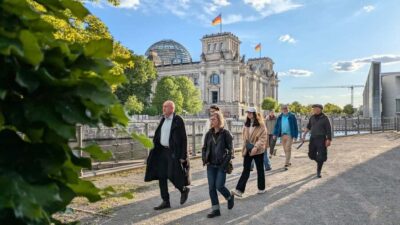
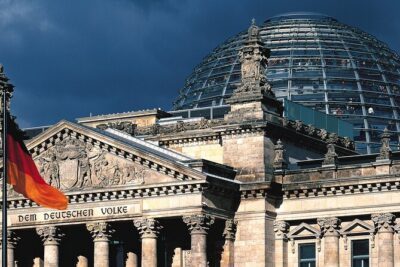
The Reichstag stop is where the tour earns its credibility. You’re looking at the seat of Germany’s national legislature, and the glass dome added in the 1990s becomes a visible symbol of something Berlin tried hard to rebuild: transparency and democratic legitimacy.
Even if you only get a short time at the building, your guide can help you read what you’re seeing. The key is the contrast: this is a landmark tied to national power, but the architecture itself signals a postwar attitude—government that’s meant to be seen, checked, and understood.
Because the itinerary lists admission ticket free for this stop, it’s usually one of those moments where you can focus on interpretation rather than worrying about extra costs. Still, be realistic about time. You’re in a busy area, and three hours total means you won’t linger long enough for a deep architectural study. Instead, you get the big picture fast—and you can always come back later if you want a longer look.
If you like asking questions, this is a good place to do it. You can usually get answers that connect modern governance to the older currents behind Berlin’s “capital of culture and tension” reputation.
Brandenburg Gate: the monument that keeps collecting history
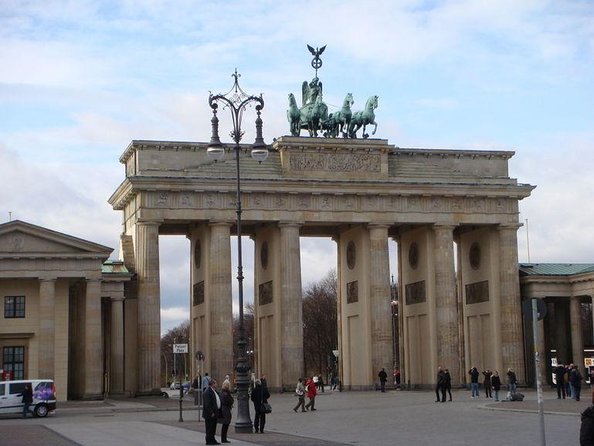
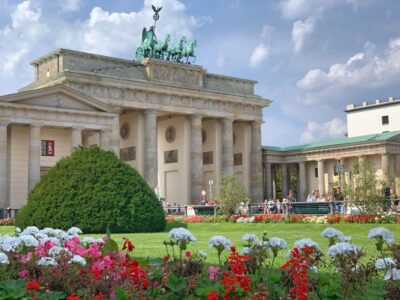
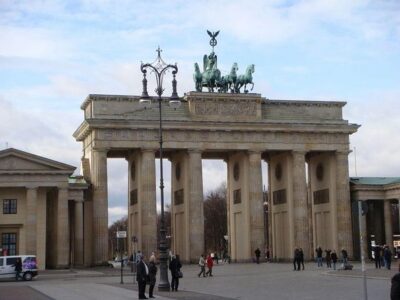
Next comes the Brandenburg Gate, an 18th-century neoclassical monument tied to Prussian power. The guide’s job here is to show you that the Gate isn’t just a pretty photo stop. It’s a stage where different eras projected their meaning.
You’ll hear about major historical moments that played out here, from Napoleon’s entrance to Ronald Reagan’s Cold War speech. The practical value of a guide at this stop is that you’ll learn what the Gate signaled in each moment—and why the same stone structure could mean different things across centuries.
The itinerary lists this stop as admission ticket free, which helps you keep your budget tight. Time here is about 20 minutes, so you’ll want to treat it like a briefing: look, listen, and ask one or two targeted questions rather than trying to memorize every detail. If you’re sensitive to crowds, this is still a central, high-traffic area—so expect some bustle even during a “quiet” moment.
More private tours of Berlin



Museum Island and Potsdamer Platz: culture first, then reinvention after the Wall
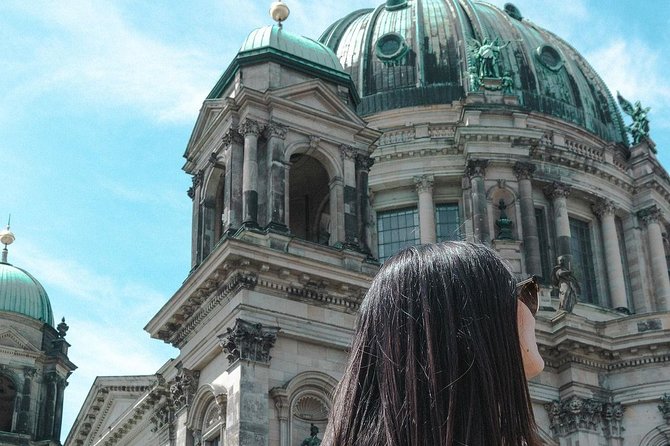
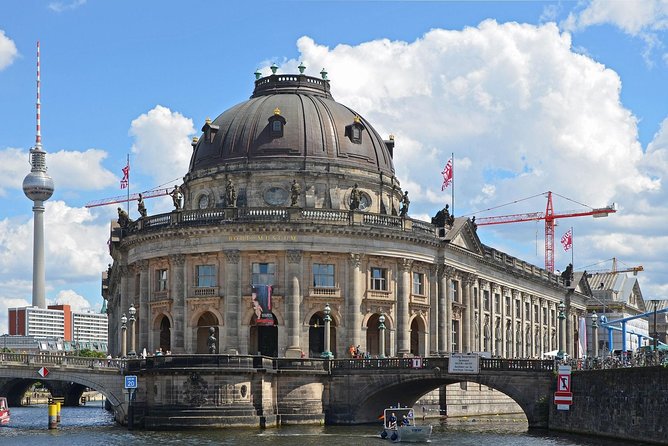
After the symbolism of power, the tour shifts toward Berlin’s cultural backbone at Museum Island. It’s an ensemble on Spreeinsel with major institutions built under the Prussian rulers, including the Pergamon Museum, Neues Museum, and Alte Nationalgalerie. Even with short time, the “why” matters here: Berlin used institutions like these to project seriousness and national identity.
The time at each site is limited (listed as 20 minutes at Museum Island), so don’t plan to absorb everything in one go. Instead, use the stop to understand the geographic and historical logic of the area. Your guide can help you see how a museum cluster became part of the city’s self-image, not just a place to store art.
Then you head to Potsdamer Platz, described as a square reborn since the fall of the Berlin Wall. This part is useful because it keeps the story moving forward. You’re not stuck in the past—you’re seeing how Berlin rebuilt itself into a modern center of entertainment, restaurants, and shops.
The key consideration here is pacing. Museum Island rewards slow looking; Potsdamer Platz rewards quick orientation. In a short tour, you’ll get a “first look” at both, not a full experience. If you’re the type who wants to go inside museums, you’ll likely want to schedule a separate day for that afterward.
Unter den Linden and Tiergarten: Berlin’s big boulevard and the park break you need
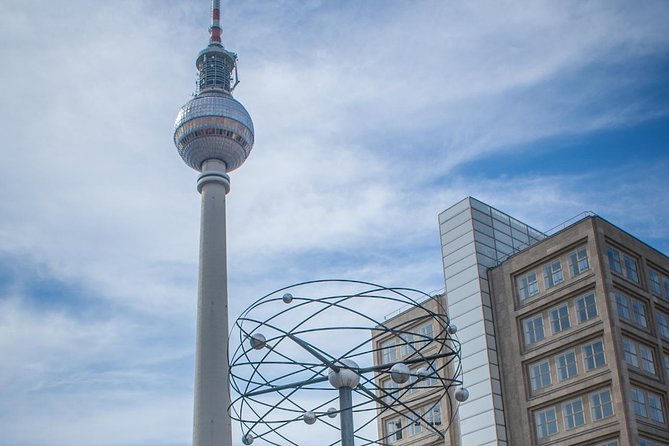
At Unter den Linden, you get the city’s grand boulevard: an axis running from the City Palace to the Brandenburg Gate, named for the linden trees lining the street. If Berlin had to answer Paris’s Champs-Élysées, this is the “serious and stately” version—wide views, landmark pacing, and a strong sense of city planning.
The tour allots 30 minutes here, which is just enough time to walk the idea of the boulevard rather than just stand at the curb. You’ll also appreciate this stop if you like understanding how a city’s physical layout reflects political structure. Long straight streets can feel boring if you’re only hunting for photos. On a history-focused walk, they start to make sense fast.
Then you head to Tiergarten, Berlin’s most famous inner-city park. It’s listed for 10 minutes, so think of it as a reset more than a deep park stroll. That’s actually a plus: you get greenery and space after heavy political stops, and you don’t waste your total time wandering without context.
The practical tip: wear shoes you can walk in. These stops are short, but you still cover ground, and Berlin weather can shift quickly. If you’re heading out after the tour, take the Tiergarten moment to decide whether you’ll come back for a longer relaxed stroll.
Holocaust Memorial to Hackescher Markt: reflection, then pre-war courtyards
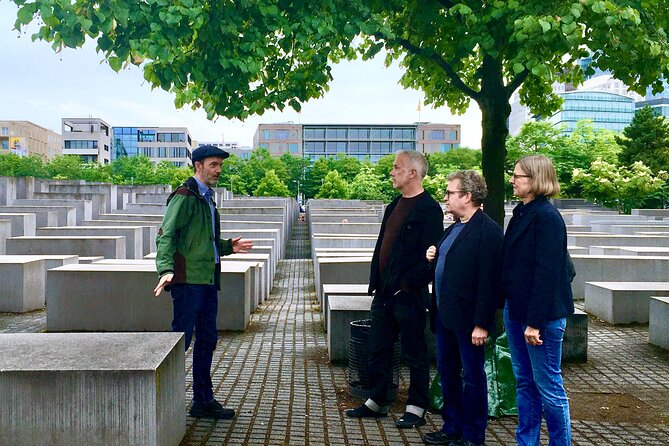
The most important stop on this route is the Memorial to the Murdered Jews of Europe. It was designed by Peter Eisenman and opened in 2005, and it’s made of 2711 concrete slabs of different heights. The structure lets you enter a somber labyrinth-like space, which is the opposite of a simple viewpoint.
This is where a good guide really matters. A short visit can still be powerful if the explanations focus on meaning and respectful context. The listed time is 15 minutes, so you won’t “solve” the memorial in one walk. Instead, you get a sense of scale and the feeling of being drawn into a space designed for reflection.
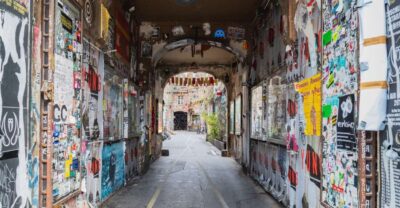
After that, the itinerary shifts to Hackescher Markt, a lively square with preserved Art Nouveau courtyards from pre-war Berlin. It’s a different tone, and it’s smart. The tour doesn’t leave you only with the weight of 20th-century tragedy. It also gives you a glimpse of what Berlin looked like when it was building everyday beauty and urban character.
Time here is brief (10 minutes), so treat it as an orientation to a neighborhood feel rather than a full exploration. If you want to linger, you’ll know where to return.
Price and value: what $520.73 per group buys you
This tour costs $520.73 per group, up to 10 people, and it lasts about 3 hours with a historian-guide. The price isn’t cheap if you’re traveling solo or as a couple. But the value changes fast depending on how many people share the group cost.
At the full 10-person cap, you’re looking at roughly $52 per person for a private historian-guided walking tour. If it’s just 2 or 3 of you, your per-person cost can jump closer to $170–$260. That’s when you decide whether you want a private guide’s attention enough to pay for it.
Here’s the honest value equation I’d use: you’re paying for (1) a focused route in limited time, (2) a guide who can answer questions in a way that connects the sights, and (3) reduced stress from transit planning and route design. If you’re the type who learns best by talking and asking follow-ups, this price can make sense even for smaller parties. If you just want a loose walk and don’t care about interpretation, you could likely build a cheaper self-guided day.
Also, remember food and drinks aren’t included. Bring water. Plan to turn the end of the tour into a short meal stop nearby.
Should you book this Berlin private walking tour?
If you’re in Berlin for a short visit and want a first pass that actually explains what you’re seeing, I’d lean yes—especially if you want a private guide. This tour is a good fit when you’re curious about how Berlin moved from imperial power to postwar rebuilding, from division to unification, and from memorial reflection to everyday city life.
Book it if:
- you want a structured route that hits major anchors efficiently
- you like asking questions and getting tailored context
- you’re traveling with others who can share the group cost
Skip or rethink it if:
- you’re hoping for lots of museum interior time (this is a walk with short stops)
- you prefer long unbroken strolls with no transit hops
- you’re traveling solo and won’t get the group-value math to work in your favor
FAQ
What’s the duration of the Berlin private walking tour?
It runs for about 3 hours. The itinerary uses short time blocks at each stop, so you get a fast but guided overview of several major landmarks.
Is this tour private or small-group?
It’s a private tour/activity. Only your group participates, up to 10 people.
Do I need public transportation during the tour?
Yes. The route includes some distances that are too far to walk, so you’ll use public transport a few times. The tour suggests getting a day metro pass if you don’t already have one, or your guide can help you buy a ticket at the first metro station.
Where do I meet the guide?
If hotel pickup isn’t arranged, meet 15 minutes early at Café Einstein, Unter den Linden 42. The tour start is at Unter den Linden 42, 10117 Berlin.
What language is the tour offered in?
The tour is offered in English.
Is the tour ticket free entry at the stops?
The itinerary lists admission ticket free at multiple stops. You should still be prepared for normal crowding and short time windows, since the schedule is built for quick orientation rather than long museum visits.
More of Berlin on Foot


More Tours in Berlin





More Tour Reviews in Berlin
Round out your days in Berlin
Walking Tours, compared.
 ★ 4.7Berlin City walk Government District and Places of DemocracyFrom $2948,467 reviews
 ★ 4.9Third Reich & Cold War Guided Walking TourFrom $238,378 reviews
 ★ 4.9Discover Berlin Walking TourFrom $235,998 reviews
 ★ 5.0Berlin’s Best: 2 Hour Walking Tour Third Reich and the Cold WarFrom $245,486 reviews
 ★ 4.8Hidden Backyards Guided Walking TourFrom $235,360 reviews
 ★ 5.0Third Reich Berlin: Hitler and WWII Walking TourFrom $243,301 reviews
 ★ 4.9Third Reich, Hitler, and WWII Walking TourFrom $191,757 reviews
 ★ 4.6Alternative Berlin Walking TourFrom $291,204 reviews
Browse the lists this tour appears in