
REVIEW · THIRD REICH & WWII HISTORY
Berlin and National Socialism: Berlin under Nazism
Berlin’s darkest corners get explained in plain words. This 4-hour Berlin under Nazism tour strings together major Third Reich-era buildings and memorials, from the Topography of Terror to the Fuhrerbunker area. I love the Spanish guide format (with detailed teaching styles noted for guides like Júlia, Julia, Helena, and Celia), and I love that admission tickets are included for the big stops. One consideration: the tour does not include an AB transport ticket, so you’ll want to plan your rides.
You start near the Berlin TV Tower (10:00 am) and finish at the Memorial to the Murdered Jews of Europe. It’s a small group size (max 25), and you’ll use a mobile ticket. Expect a route that mixes indoor museum time with outdoor memorial spaces—so it’s worth dressing for standing and moving between locations.
In This Review
- Key points before you go
- Berlin under Nazism: what this route really helps you do
- Your morning start: Berlin TV Tower to a thoughtful finish
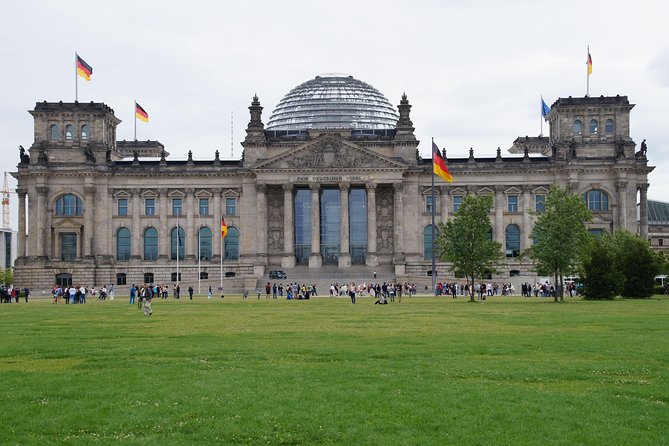
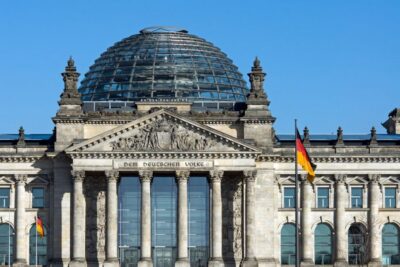
- The Bundestag stop: ruins, reunification, and a rebuilt political center
- Memorial to the Sinti and Roma victims: Porraimos is part of the story
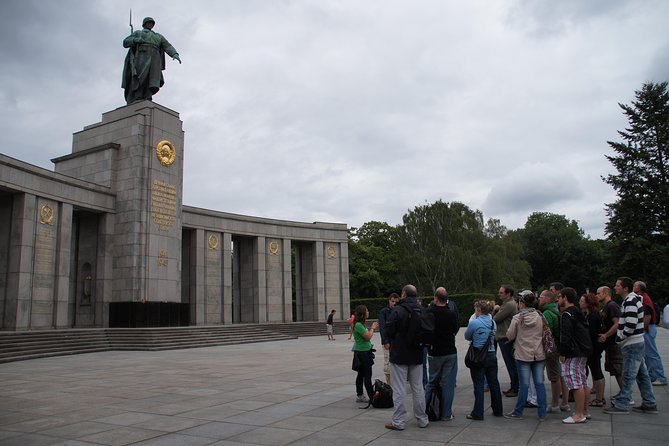
- Soviet Memorial Tiergarten: war dead, April–May 1945, and a second viewpoint
- Tempelhof Airport: a major European hub before and during turbulent times
- Topography of Terror: the museum that turns streets into evidence
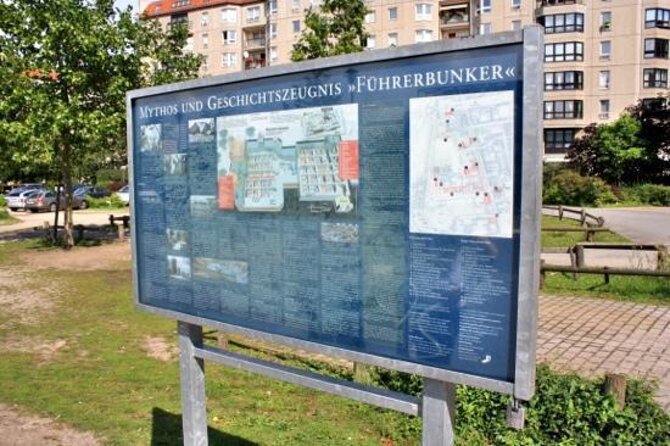
- Fuhrerbunker area: Hitler’s final refuge zone
- Ending at the Memorial to the Murdered Jews of Europe: closure through remembrance
- Price and value: $25.54 for a structured, admission-included route
- Who should book this tour (and who might want something else)
- Should you book Berlin and National Socialism: Berlin under Nazism?
- FAQ
- How long is the Berlin under Nazism tour?
- What language is the guide?
- Is the admission ticket included?
- Does the tour include an AB transport ticket?
- What is the meeting point and start time?
- Where does the tour end?
- How many people are in the group?
- What are the cancellation rules?
- Is the tour accessible for most people?
Key points before you go
- A tight 4-hour span that covers multiple Nazi-era sites and memorials in one go
- Admission tickets included for the stops that require them
- Sinti and Roma remembrance at a dedicated monument, not just the usual Holocaust focus
- Topography of Terror paired with exterior context around Berlin’s wartime machinery
- Bundestag reconstruction story that shows Germany rebuilding its public life after dictatorship
- Small-group pacing (max 25) with a Spanish guide who answers questions
More walks through Berlin's wartime history
- Berlin: Third Reich & Cold War Guided Walking Tour★ 4.9 · 8,378 reviews
- Berlin’s Best: 2 Hour Walking Tour Third Reich and the Cold War★ 5.0 · 5,486 reviews
- Third Reich Berlin: Hitler and WWII Walking Tour★ 5.0 · 3,301 reviews
- Berlin: Third Reich, Hitler, and WWII Walking Tour★ 4.9 · 1,757 reviews
Berlin under Nazism: what this route really helps you do
If Berlin has a superpower, it’s making you see history in layers: ruined structures, new buildings, memorials that force you to look again, and institutions that promise something new after something terrible. This tour helps you connect those layers to one specific period—the Third Reich—so the city stops feeling like a random list of sites.
The best part is how the stops talk to each other. You’re not only visiting famous places; you’re learning what they meant at the time and what they mean now, when Germany is actively remembering and restructuring public life. In a single morning, you get the basics you’ll need to navigate the rest of Berlin with clearer context.
One reason this works for many people: the guide approach. The Spanish-led format is praised for being didactic and respectful, with explanations that place you inside the historical moment. There’s also a note in the feedback about guides using photos and videos during explanations, which can make abstract events feel less foggy.
Your morning start: Berlin TV Tower to a thoughtful finish
You meet by the Berlin TV Tower, at Panoramastraße 1A, and the tour starts at 10:00 am. That timing matters because it sets you up to see a long line of sights without rushing, and you end at the Memorial to the Murdered Jews of Europe rather than back at your first stop.
Finishing there is not a random choice. It gives your tour a moral and historical endpoint—one tied directly to the genocide victims the memorial honors—so the earlier stops don’t feel detached. You’ll likely walk away with a clearer mental map of where suffering fits into the city’s physical layout.
Practical note: since the AB transport ticket isn’t included, check how you’ll reach the start point and get yourself home afterward. The tour is described as near public transportation, but you still need to handle your own ticket.
The Bundestag stop: ruins, reunification, and a rebuilt political center
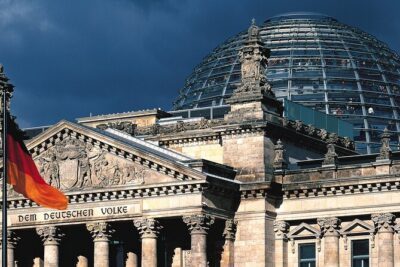
The route begins at the Bundestag area, not because it’s just “a cool building,” but because it’s a strong symbol of what Germany did after the Third Reich. The building had been ruined, protected from the elements and partially renovated in the 1960s. Full restoration didn’t really start until after reunification, on 3 October 1990, when reconstruction was led by architect Norman Foster, completing in 1999—when it returned as the meeting place of Germany’s parliament.
This stop is valuable because it forces you to notice how physical spaces change meaning. The “where” matters: the tour uses the arc from damage to repair to show how the state rebuilt itself after dictatorship rather than pretending the past didn’t happen.
A possible drawback for some: you only have about 20 minutes there. That’s enough for orientation and key context, but it’s not the length you’d want if you were planning to read every panel and take extra photos.
Memorial to the Sinti and Roma victims: Porraimos is part of the story
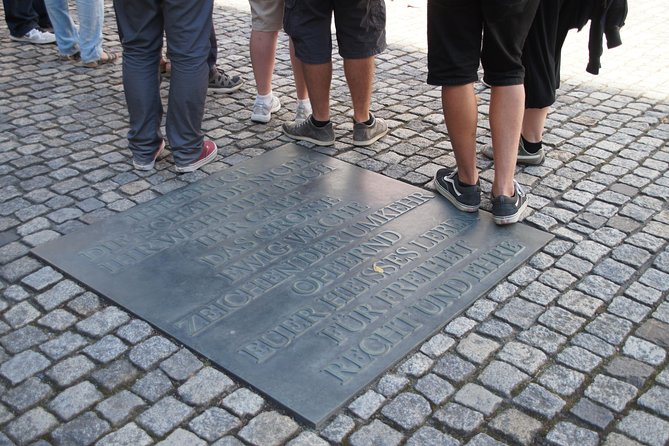
Next you visit the Memorial to the Sinti and Roma Victims of National Socialism. This monument is dedicated to the memory of between 220,000 and 500,000 people murdered in the Porraimos, within the Nazi genocide of the European Sinti and Roma peoples.
I like this stop because it expands the mental checklist many people bring to Berlin. If your previous learning has mostly centered on the best-known narratives, this memorial gives you a different missing chapter—and it does so in a direct, dedicated way, not as a footnote.
The tour keeps the pace tight here (about 5 minutes), so don’t expect a long on-site interpretation. Instead, think of it as a moment to anchor the topic of genocide broadly, then carry that understanding into the next stops.
Soviet Memorial Tiergarten: war dead, April–May 1945, and a second viewpoint
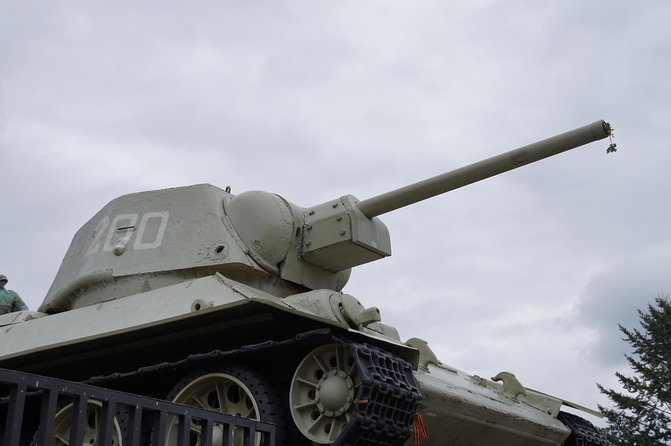
Then you head to the Soviet Memorial Tiergarten. The memorial was erected by the Soviet Union to commemorate its war dead, especially the 80,000 soldiers of the Soviet Armed Forces who died during the Battle of Berlin in April and May of 1945.
This is one of those moments where Berlin refuses to be simple. The fall of the Third Reich is usually told from the perspective of Nazi Germany’s collapse, but here you’re pushed to also confront the human cost for the attacking forces. It helps you understand why “victory” and “survival” were not clean categories for the people living through those days.
You’ll have around 15 minutes at this memorial area. That’s enough time to take in the purpose of the site and the date range, and still have energy for the more museum-heavy sections later.
Tempelhof Airport: a major European hub before and during turbulent times
At Tempelhof, you’ll see the airport grounds tied to early 20th-century aviation importance. In 1926, Tempelhof had ten flights daily and was the largest airport in Europe.
This stop matters because it connects the Third Reich period to everyday infrastructure and power—how cities run, how people move, and how “modern systems” can be repurposed in different political climates. Even if you’re not focused on aviation history, the point is that public spaces carry practical roles, long before and long after the propaganda era.
The tour gives about 25 minutes here, which is a fair window for orientation and explanation. If weather is bad, this type of outdoor stop can feel long, but the guided pacing helps keep it meaningful.
Topography of Terror: the museum that turns streets into evidence
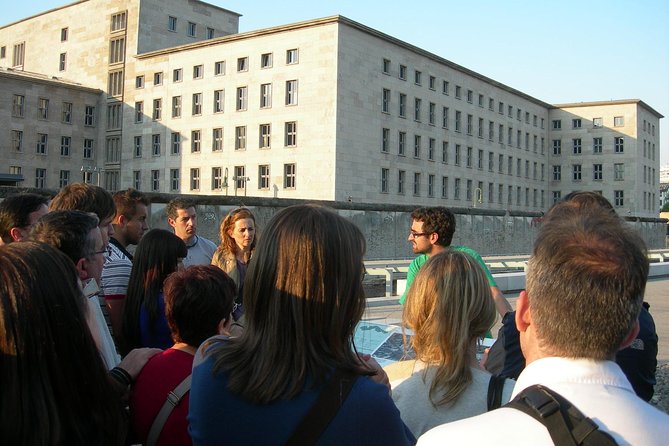
Topography of Terror is a museum in Berlin with indoor and outdoor history sections, and it’s one of the included admission stops. You’ll have about 15 minutes here, which is short—but focused—so you’ll want to let your guide steer what to notice rather than trying to read everything.
The real value of Topography of Terror on a Nazi-era route is how it turns locations into context. Berlin’s streets can look calm; a museum like this gives you the machinery behind the calm, making it easier to connect what you see outside with what happened inside the system.
Because it includes admission, you also avoid the common annoyance of deciding whether to pay for another ticket that day. That practical benefit is real: the tour bundles the major “learning stops” so you can spend your brainpower on understanding, not logistics.
Fuhrerbunker area: Hitler’s final refuge zone
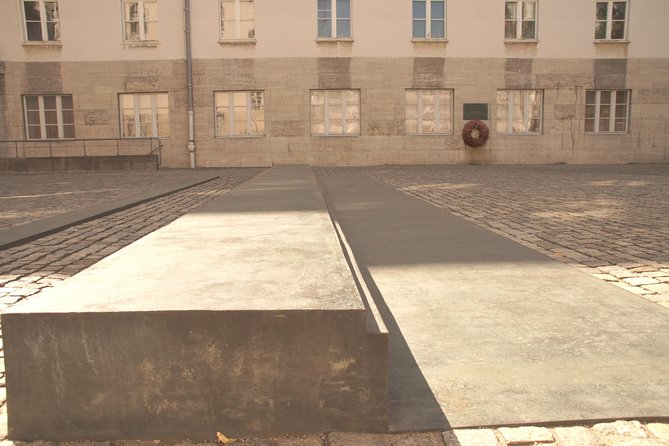
The next stop is the Fuhrerbunker area, where the guide will show you the location linked to Hitler’s refuge during his last hours alive. You’ll have roughly 15 minutes for this part of the route.
This is heavy subject matter, and the reason a guided explanation helps is that these sites often demand careful framing. Without context, you can end up treating it like a dark sightseeing highlight. With context, it becomes something else: an understanding of collapse, decision-making, and the end of a regime built on terror.
It’s also a good contrast to the Bundestag stop earlier in the day. One place represents how a state rebuilds democratic institutions after the worst outcome imaginable; the other represents the physical space tied to the dictator’s last moments. Seeing them back-to-back can help you grasp how quickly political life can invert.
Ending at the Memorial to the Murdered Jews of Europe: closure through remembrance
Your tour ends at the Memorial to the Murdered Jews of Europe. Even though you won’t have an extended sit-down here on the tour itself, finishing there gives your morning a clear ethical anchor.
That matters if you’re trying to understand Berlin beyond a checklist. The city’s Nazi-era sites can sometimes feel like “architecture and facts.” Ending at a remembrance space keeps the focus where it belongs: on those who were murdered and on the responsibility to remember.
If you want to stay in that headspace after the tour, plan a little extra time right after you finish so you’re not immediately distracted by lunch plans or transit stress.
Price and value: $25.54 for a structured, admission-included route
At $25.54 per person, this tour isn’t trying to be a bargain based on the fact that it’s short. It’s priced like a guided education experience: Spanish-language guiding, a small group (max 25), and included admissions at the key stops that require them.
Here’s the value logic that makes sense for your day. You’re not only seeing outdoor sites; you’re also getting admission-included access to places like Topography of Terror and memorial areas where the tour notes admission is included. If you tried to assemble that yourself, you’d likely spend more time juggling tickets and deciding what’s worth the cost.
It’s also described as being booked about 36 days in advance on average. That’s often a sign that people plan ahead for Berlin’s most popular guided routes, so if you’re traveling in peak season, earlier booking can help you avoid sold-out times.
Who should book this tour (and who might want something else)
This is a strong choice if you want a guided route through Berlin’s Third Reich sites without turning your day into a research project. You’ll get a clear spine for understanding Nazi-era spaces: political reconstruction at the Bundestag, genocide remembrance at the Sinti and Roma memorial, wartime framing at the Soviet Memorial Tiergarten, and system-context at Topography of Terror.
It also suits people who prefer a structured morning. The 4-hour length, capped group size (max 25), and the Spanish guide format are designed to keep the pace manageable while still covering multiple locations.
It may not be ideal if you want long stays at museums or lots of free time. The stops with included admissions are meaningful, but the time windows are tight. In that case, you’d pair this with slower, independent time later in your trip.
Should you book Berlin and National Socialism: Berlin under Nazism?
Yes—if you want a single, guided morning that helps you understand how Berlin remembers the Third Reich, not just where the sites are. The strongest reason to book is the combination of Spanish-language teaching, included admissions, and a route that covers both the political storyline and the memorial responsibilities (including the Sinti and Roma genocide).
Book it especially if you’re the kind of traveler who likes to leave a day with a clearer mental map, not just photos. If you’re more of a slow museum reader, consider using this as your backbone tour, then come back later for extra time where you feel you need more.
FAQ
How long is the Berlin under Nazism tour?
It lasts about 4 hours.
What language is the guide?
The guide is Spanish speaking.
Is the admission ticket included?
Yes. Admission tickets are included for the stops that require them, and the tour lists which parts are included.
Does the tour include an AB transport ticket?
No. An AB transport ticket is not included.
What is the meeting point and start time?
The meeting point is near the Berlin TV Tower (Panoramastraße 1A, 10178 Berlin) and the start time is 10:00 am.
Where does the tour end?
It ends at the Memorial to the Murdered Jews of Europe (Cora-Berliner-Straße 1, 10117 Berlin).
How many people are in the group?
The tour has a maximum of 25 travelers.
What are the cancellation rules?
Free cancellation is available up to 24 hours in advance for a full refund.
Is the tour accessible for most people?
The tour notes that most travelers can participate.
More Tour Reviews in Berlin

Berlin's Wartime History
Round out your days in Berlin

Third Reich & WWII History, compared.
 ★ 4.9Third Reich & Cold War Guided Walking TourFrom $238,378 reviews
 ★ 5.0Berlin’s Best: 2 Hour Walking Tour Third Reich and the Cold WarFrom $245,486 reviews
 ★ 5.0Third Reich Berlin: Hitler and WWII Walking TourFrom $243,301 reviews
 ★ 4.9Third Reich, Hitler, and WWII Walking TourFrom $191,757 reviews
 ★ 5.0Berlin Third Reich Sites: Half-Day Walking TourFrom $21835 reviews
 ★ 4.7History of the Third Reich Guided Walking TourFrom $30791 reviews
 ★ 4.8The Wall and Third Reich Guided Bike TourFrom $41578 reviews
 ★ 4.8Hitler’s Germany: Berlin During the Third Reich & WWIIFrom $23476 reviews
Browse the lists this tour appears in