
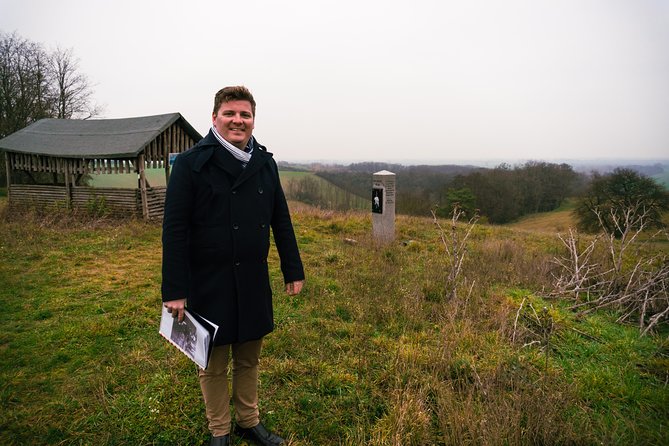
REVIEW · THIRD REICH & WWII HISTORY
Clash of Titans: Battle for Seelow Heights WW2 tour
War turns into real dirt here. This WW2 battlefield tour around Seelow Heights helps you understand how the Soviet advance slammed into German defenses in 1945. You get context, then you walk where key commanders stood, so the story stops being abstract.
I especially love the small group size (up to 7). That means you can ask questions and get answers on the spot, without the usual herding-bus feeling. I also love the way the day mixes museum explanations with on-the-ground remnants, including the 3D bunker and trench network topic early on, then seeing related features outside.
One consideration: it’s a war-focused day that can feel heavy, and there’s some walking on uneven ground. Bring sturdy boots, and plan for that emotional weight. And since lunch isn’t included, you’ll want to budget time and money for food.
In This Review
- Key things that make this tour work
- Seelow Heights: the hinge between the Oder and Berlin
- Getting there from Alexanderplatz, with a max of 7
- Gedenkstaette Seelower Hoehen: where the battle starts to click
- Reitwein and Am Reitweiner Sporn: scale, then the forest walk
- Dolgelin Railway station: Colonel Scheunemann’s defensive edge
- Lietzen: the field cemetery, new graves, and a medieval detour
- Jahnsfelde: the red-cross hospital hit and an artillery battalion’s last stand
- Price and logistics: what $167.74 buys you in real terms
- Who should book this tour, and who might skip it
- My booking call: book it if you want Seelow Heights to feel real
- FAQ
- How long is the Clash of Titans: Battle for Seelow Heights WW2 tour?
- Where does the tour start, and what time does it begin?
- Is the tour offered in English?
- What’s included in the price?
- Is lunch included?
- How big is the group?
- What should I wear or bring for the battlefield walking?
- What happens if the weather is bad?
- Is free cancellation available?
Key things that make this tour work
- You get the core Seelow Heights sites in about 7 hours, not a scattered, rushed checklist
- Museum intro + trench walking turns scale into something you can actually picture
- Huge battle numbers are explained in plain terms, including the size of the Soviet assault
- A max of 7 people keeps the pace human and the questions welcome
- Transport, museum entry, WiFi, and bottled water are included, so the day runs smoothly
- Guides like Steve and Matt are praised for maps, timelines, and keeping the day engaging
More walks through Berlin's wartime history
- Berlin: Third Reich & Cold War Guided Walking Tour★ 4.9 · 8,378 reviews
- Berlin’s Best: 2 Hour Walking Tour Third Reich and the Cold War★ 5.0 · 5,486 reviews
- Third Reich Berlin: Hitler and WWII Walking Tour★ 5.0 · 3,301 reviews
- Berlin: Third Reich, Hitler, and WWII Walking Tour★ 4.9 · 1,757 reviews
Seelow Heights: the hinge between the Oder and Berlin
Seelow Heights sits right where the story of 1945 gets brutal fast. This area matters because the Soviets pushed hard toward Berlin, and the Germans fought to slow that push along key defensive positions. When you visit, it’s not just “another battlefield.” It’s the kind of place where you start to see why commanders on both sides made desperate choices under pressure.
What makes this tour feel grounded is that you’re not only shown memorials. You’re given an explanation of what was happening, then guided toward the terrain that shaped the fighting. At several points in the day, the guide ties the geography to the battle timeline, so hill defenses, trenches, and command points stop being trivia and start being part of the logic.
Getting there from Alexanderplatz, with a max of 7
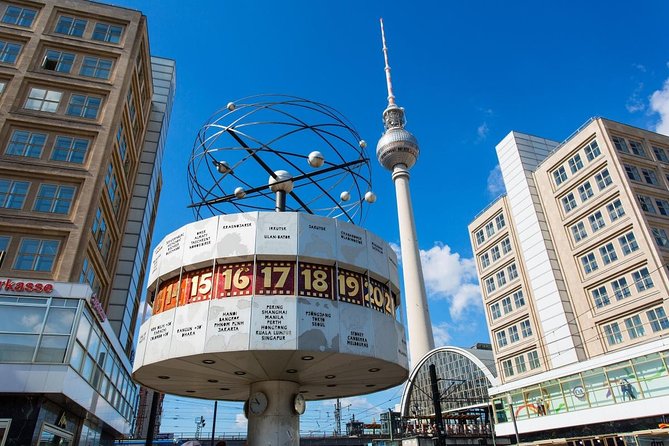
The tour starts at 9:15am from Alexanderplatz (Dircksenstraße 2). You’ll spend roughly 7 hours in total, then head back toward your starting area. The day runs by comfortable vehicle, and you get that practical two-way transfer feeling that matters when sights are spread out.
The maximum of 7 travelers is a real advantage here. It affects how the guide can pace the group, handle questions, and adjust for slower walkers when terrain gets tricky. Several visitors also highlight that the guide builds in time for practical needs like bathroom stops and flexibility for food, which can turn a “history tour” into a day you actually enjoy from start to finish.
Also note: the tour is offered in English, and you get a mobile ticket plus WiFi and a small bottle of water. That’s small comfort, but on a day with several stops, it helps.
Gedenkstaette Seelower Hoehen: where the battle starts to click
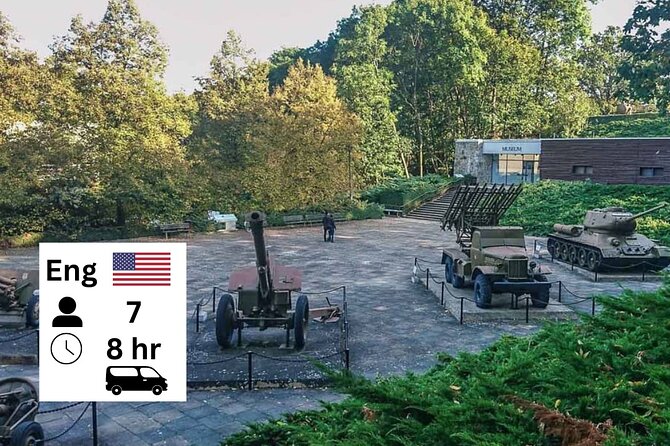
The first major stop is the Gedenkstaette Seelower Hoehen memorial site and museum. You’ll get about 40 minutes here, with a guided introduction before you explore on your own.
This is where the tour gives you the mental framework. The guide points out the Berlin–Seelow offensive operation and walks you through key exhibitions. A standout is a 3D model showing the Soviet 1st Belorussian Front bunker and trench network (the tour later connects that idea to what you can see outside). If you tend to learn well by structure and visuals, this museum time is a big part of the value.
After the intro, you’re not forced to rush through everything. You can look at displays at your own pace, which helps if you’re the type who likes to read the signs or connect what you saw to what comes next.
Practical note: museum time is guided, then self-paced. If you’re hoping for a lot of extra reading time, arriving at a calm pace helps. If you hate museums, this stop might be the most “sit-and-read” part of the day.
Reitwein and Am Reitweiner Sporn: scale, then the forest walk
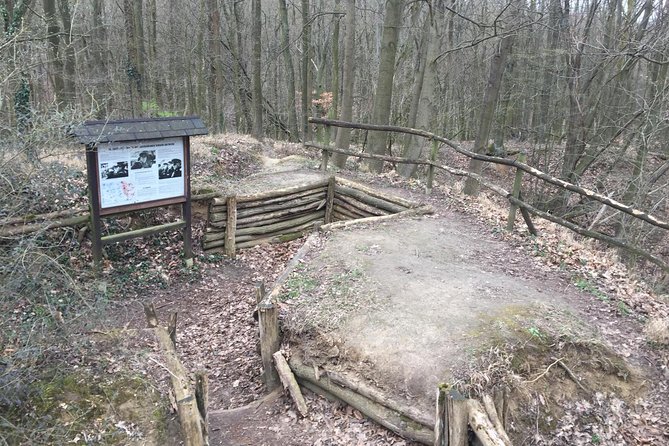
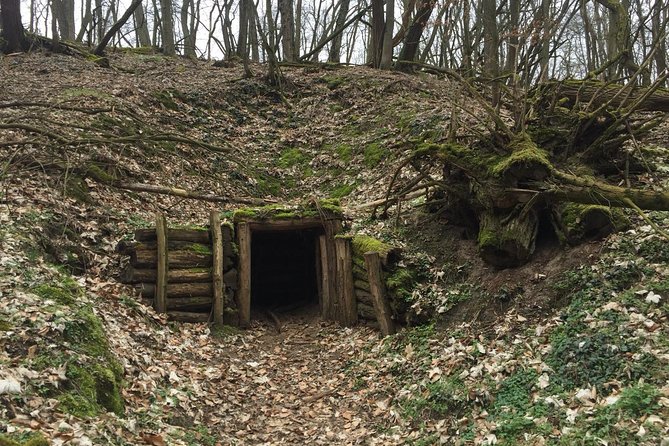
From the museum, you head to Reitwein and the area known as Am Reitweiner Sporn. You get a short drive and then a walk through the forest toward bunker and trench remnants. This is one of the most affecting parts of the tour because it takes the battle story and puts you next to what’s left of it.
Here’s where the guide brings out the scale. The assault is described with numbers that are hard to absorb at arm’s length: 768,000 infantry (including 78,556 soldiers of the Polish 1st Army), 3,059 tanks, 16,934 artillery and mortars, and 3,279 combat aircraft. Hearing those figures while standing near the terrain is a different experience than reading them in a book.
The walk is short, but meaningful. You’re looking at remnants you can still see today, including Marshal Zhukov’s command bunker and an observation point where he directed the battle. That detail makes the day feel “named and located,” not just general and foggy. It’s also why this tour gets strong recommendations from people who’ve read about Seelow but want it anchored to real ground.
One more consideration: forest walking and old battlefield areas can be uneven. Even if the distances are not huge, you’ll be glad you brought boots with real grip.





Dolgelin Railway station: Colonel Scheunemann’s defensive edge
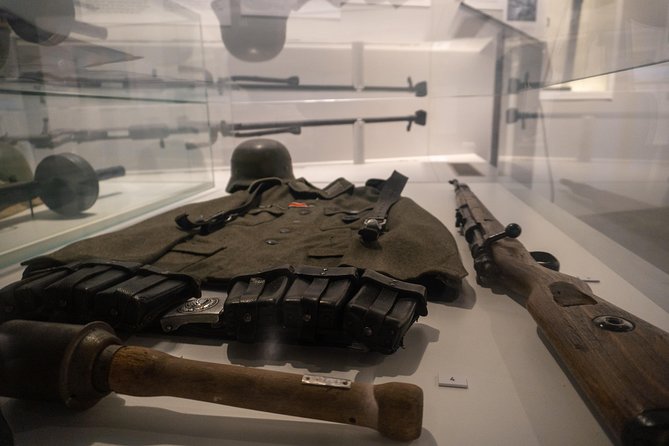
Next comes Dolgelin Railway station, with time devoted to understanding the German defensive positions. The tour looks at how the defenders tried to hold the heights and how hard it was for attackers to cross exposed areas.
A key figure here is Colonel Scheunemann, commander of the 303rd Infantry Division, who set up his command post in the defense of the heights. Linking an actual person and unit to terrain helps you picture decision-making in real time: who was where, what they could see, and what they could command.
The tour also uses the idea of a shooting gallery to explain the nightmare for troops moving across these areas. You’ll hear about the difficulty the Russian and Polish troops faced in crossing the approaches under heavy fire. Whether you’re a military history fan or a first-timer, the guide’s job is to translate “positions on a map” into “what the move cost.”
If you’re sensitive to graphic war details, this part may feel intense, but it’s also where the day does the best job of connecting human experience to battlefield geometry.
Lietzen: the field cemetery, new graves, and a medieval detour
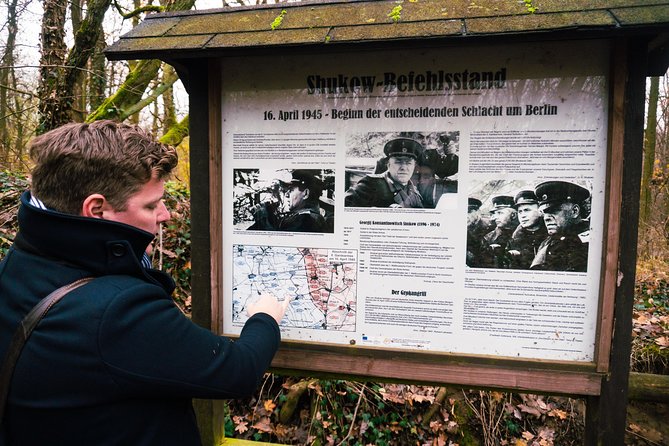
On the return toward Berlin, you pass through Lietzen with a brief stop at a German field cemetery. This stop has emotional weight without turning into a doom parade. The cemetery is described as having been significantly extended since unification, and the important point for visitors is that remains are still added to wartime graves.
That living history detail matters: it reminds you that the war’s consequences weren’t neatly wrapped up in 1945. Even now, recovery work continues, and memorial spaces keep changing to reflect that.
The stop also includes a fascinating side note: Lietzen hosts what’s said to be Germany’s oldest barn, plus a manor house built by the Knights Templar dating back to 1252. It’s a quick reset from WW2 intensity, and it gives you a sense of how old some of these towns are, layered under 20th-century events.
Jahnsfelde: the red-cross hospital hit and an artillery battalion’s last stand
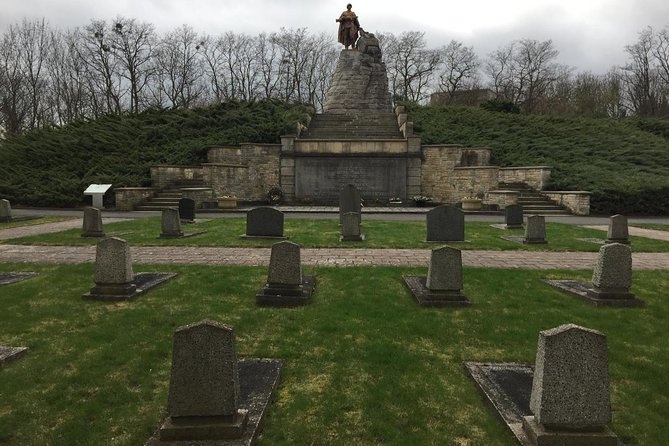
The final battlefield stop is in Jahnsfelde, at Schlosskirche Jahnsfelde. This is where the day gets especially desperate, because the site is tied to real acts of brutality and close-range chaos.
You’ll see a sports field and learn it was once the site of a German field hospital. The tour explains that Soviet aircraft attacked the hospital, targeting red cross markings—a detail that cuts through the usual sanitized war storytelling. It’s hard information, but it helps explain why the battle felt lawless and terrifying for people on the ground.
The stop also covers the last stand of the 3rd Battalion of Artillery Regiment 18. As the forces withdrew, the battalion set up defensive positions at a crossroads and is described as destroying an estimated 100 tanks. The cost is given in hard numbers: 8 officers, 163 killed, over two-thirds of the battalion wounded, and all guns lost.
This stop is only about 20 minutes, but it lands like the closing paragraph of the day. You leave with a clear sense that Seelow Heights wasn’t only about strategy. It was also about people trying to survive long enough to do one more thing.
Price and logistics: what $167.74 buys you in real terms
At $167.74 per person, this tour isn’t “cheap,” but it also isn’t paying for a generic bus ride. You’re buying a structured WW2 experience with several concrete inclusions: air-conditioned vehicle, museum entrance, WiFi, and a small bottle of water.
The big part of the value is what you’re not paying extra for: the guide-led museum time plus transportation between multiple sites. Since the battlefield features are spread out, that transfer time would be inconvenient to manage on your own. And because the group is small, the guide can focus on the details that make the day meaningful, like the commander points (Zhukov) and the defensive command post (Scheunemann).
Two practical budget notes:
- Lunch isn’t included, so plan on spending extra. Many people suggest treating lunch as part of the trip rhythm rather than squeezing it in fast.
- The tour needs good weather. If it’s canceled for weather, you’ll be offered a different date or a full refund.
My other practical tip is simple: pack for comfort. You’ll be walking off the beaten path in places, so good footwear matters more than fashion.
Who should book this tour, and who might skip it
If you like battlefield history where terrain matters, you’ll enjoy this. It fits people who want more than names and dates. The day is built around placing you near key points—museum, trenches, command posts, cemeteries—so the battle has shape.
This also works well for first-timers to WWII sites. The guide approach is designed to explain scale, timeline, and context in a way that doesn’t assume you already know the subject. That’s why the tour gets such strong praise for being engaging even for people who didn’t start as hardcore historians.
Skip it or think twice if:
- you dislike walking on uneven ground,
- you want a light, casual city tour instead of a heavy war-focused day,
- or you’d rather spend your time in Berlin with more upbeat, everyday sightseeing.
My booking call: book it if you want Seelow Heights to feel real
If your goal is to understand the Battle for Seelow Heights in a hands-on way, this tour is a strong match. The combination of museum context, trench remnants, and named command points gives you a “this is where it happened” experience that many larger tours can’t deliver.
I’d book it if you can do short walks, handle emotional WWII subject matter, and want a small-group guide who uses maps and a timeline approach to keep the story clear. If you want only broad strokes, this day may feel too specific. But for most history-minded visitors, Clash of Titans is one of the more direct ways to connect Berlin’s final battle chapter to the ground where it unfolded.
FAQ
How long is the Clash of Titans: Battle for Seelow Heights WW2 tour?
It runs for about 7 hours.
Where does the tour start, and what time does it begin?
It starts at Alexanderplatz, Dircksenstraße 2, 10179 Berlin, with a start time of 9:15am.
Is the tour offered in English?
Yes, it’s offered in English.
What’s included in the price?
The tour includes an air-conditioned vehicle, museum entrance, WiFi, and a small bottle of water.
Is lunch included?
No, lunch is not included.
How big is the group?
The tour has a maximum of 7 travelers.
What should I wear or bring for the battlefield walking?
You should plan for off-the-beaten-path walking in battlefield areas, and sturdy footwear is strongly recommended.
What happens if the weather is bad?
The experience requires good weather. If it’s canceled due to poor weather, you’ll be offered a different date or a full refund.
Is free cancellation available?
Yes. You can cancel for a full refund if you cancel at least 24 hours before the experience start time.
More Tours in Berlin


More Tour Reviews in Berlin
Berlin's Wartime History




Round out your days in Berlin

Third Reich & WWII History, compared.
 ★ 4.9Third Reich & Cold War Guided Walking TourFrom $238,378 reviews
 ★ 5.0Berlin’s Best: 2 Hour Walking Tour Third Reich and the Cold WarFrom $245,486 reviews
 ★ 5.0Third Reich Berlin: Hitler and WWII Walking TourFrom $243,301 reviews
 ★ 4.9Third Reich, Hitler, and WWII Walking TourFrom $191,757 reviews
 ★ 5.0Berlin Third Reich Sites: Half-Day Walking TourFrom $21835 reviews
 ★ 4.7History of the Third Reich Guided Walking TourFrom $30791 reviews
 ★ 4.8The Wall and Third Reich Guided Bike TourFrom $41578 reviews
 ★ 4.8Hitler’s Germany: Berlin During the Third Reich & WWIIFrom $23476 reviews
Browse the lists this tour appears in