
REVIEW · THIRD REICH & WWII HISTORY
Hitler’s Berlin – the rise and fall (Small Group)
Berlin tells a brutal story. In this small-group walk, you connect the political rise of the Nazis to the human cost shown in major memorials. I especially like the way the tour uses Then & Now photos and historic maps to help you see what the past looks like in today’s city.
You’ll also get a guide who can explain how this system spread and why it collapsed, without rushing you through the heavy parts. The one drawback to flag up front is the topic is dark, and the walking is real, so come ready for a serious, sometimes emotional 2.5 hours and plan your pace.
In This Review
- 6 things you’ll get from this Hitler’s Berlin tour
- Why this 2.5-hour walk feels more focused than a typical Berlin history day
- Starting at Brandenburg Gate: getting oriented before the story turns dark
- Stop 1: Memorial to Sinti and Roma Victims of National Socialism
- Stop 2: The Reichstag and the mechanics of Nazi power
- Stop 3: Soviet Memorial Tiergarten and how Berlin remembered the war
- Stop 4: The Holocaust Memorial for the Murdered Jews of Europe
- Stop 5: The Monument to Homosexuals Persecuted Under the National Socialist Regime
- Stop 6: Führerbunker and the final days of Hitler
- Stop 7: Johann Georg Elser and the attempt to stop Hitler
- Stop 8: The Aviation Ministry building and how power was housed
- Stop 9: Topography of Terror to close the story with clarity
- How the guide format improves what you take away
- Price and value: what you’re really paying for at $54.44
- Who should book this tour, and who should skip it
- Final verdict: should you book Hitler’s Berlin (Small Group)?
- FAQ
- How long is the Hitler’s Berlin small-group tour?
- Where does the tour start and where does it end?
- Is the tour only in English?
- Do I need to buy admission tickets for the stops?
- Is food included?
- How big is the group?
- What if the weather is bad or I need to cancel?
6 things you’ll get from this Hitler’s Berlin tour
- Small group size (max 15) means more Q&A and fewer people blocking your view
- Free entry at every listed memorial and major stop saves time and money
- Then & Now photos and maps help you connect former power spaces to present-day Berlin
- Multiple victim memorials show how the Nazi state targeted different groups for destruction
- Hitler’s last-days sites and the Georg Elser story add context beyond the headlines
- Topography of Terror ends with a clear sense of how the regime functioned day to day
More walks through Berlin's wartime history
- Berlin: Third Reich & Cold War Guided Walking Tour★ 4.9 · 8,378 reviews
- Berlin’s Best: 2 Hour Walking Tour Third Reich and the Cold War★ 5.0 · 5,486 reviews
- Third Reich Berlin: Hitler and WWII Walking Tour★ 5.0 · 3,301 reviews
- Berlin: Third Reich, Hitler, and WWII Walking Tour★ 4.9 · 1,757 reviews
Why this 2.5-hour walk feels more focused than a typical Berlin history day
Berlin is huge, and Nazi-era history can feel scattered. This tour keeps it tight: a short walking route that moves chronologically and thematically, from ideology and persecution to power, war, and collapse. You’re not just ticking off famous buildings. You’re building a mental map of how the Nazi project worked, who it crushed, and how it ended.
The time length also matters. At about 2 hours 30 minutes, you’ll cover a lot without drifting into the long, tiring territory where you stop absorbing details. Your guide brings structure, and you’ll pause often enough to reflect and ask questions. That rhythm is a big reason the tour is consistently rated so highly.
And yes, it’s heavy. But it’s handled in a way that aims for clarity, not shock value. If you want to understand what happened and why it happened, this format is one of the most efficient ways to do it in Berlin.
Starting at Brandenburg Gate: getting oriented before the story turns dark
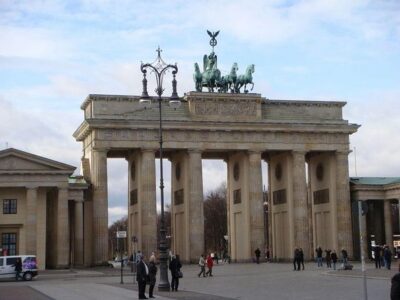
You begin at the Brandenburg Gate area, right at Pariser Platz. It’s a practical choice: it puts you near a major Berlin landmark, so you can orient quickly before stepping into the Nazi-era material.
From the start, the guide frames the walk as more than a list of sites. You’ll hear how Nazi power didn’t appear out of nowhere, and how the regime used propaganda, institutions, and bureaucratic control to turn ideology into policy. That context becomes your lens for everything you see afterward.
A small-group setup helps here. You can ask follow-ups while the story is fresh, rather than saving questions for the end when memory and attention start to slip. If you’re the type who reads signs slowly, you’ll appreciate the pacing more than you might expect.
Dress for the weather. The tour runs in all conditions, so you’ll want layers and comfortable shoes for mixed city surfaces.
Stop 1: Memorial to Sinti and Roma Victims of National Socialism
Your first stop is a memorial dedicated to the Sinti and Roma victims of National Socialism. This is where the tour lays down an important foundation: how Nazi social philosophies treated certain groups as less than human, and how those ideas fed into the Holocaust.
This memorial isn’t just about remembering people. It explains the logic that made persecution feel normal to the regime and its supporters. That matters because it keeps the tour from becoming only a story of top leaders and battles. It’s also a story of targeted communities and state-sponsored dehumanization.
Time on site is brief, about 10 minutes. That’s enough to grasp the purpose of the memorial, but not so long that you fall behind the flow of the day. If you’re sensitive to heavy topics, this is a good early moment to mentally slow down and get ready for the rest.
Stop 2: The Reichstag and the mechanics of Nazi power
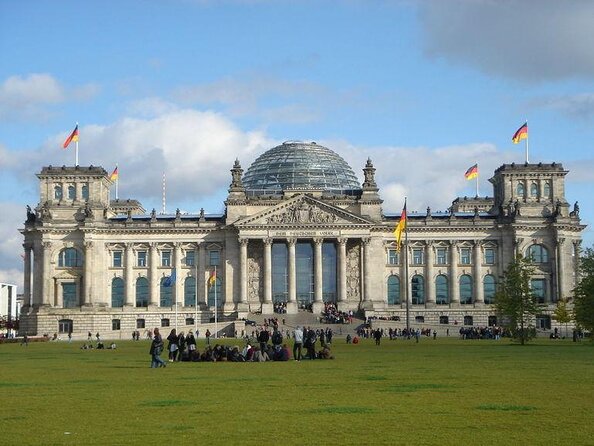
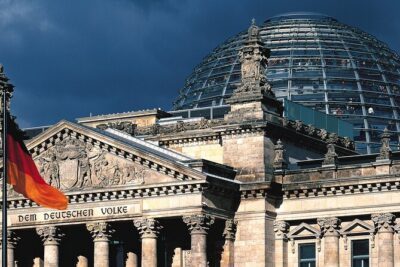
Next you move to the Reichstag building, Germany’s parliament. This stop is short (around 15 minutes), but it’s packed with meaning.
Here, you focus on how the Nazi Party gained power and how Hitler became Führer. The point isn’t to debate politics in the abstract. It’s to show you the path from election and influence to dictatorship. You’ll see how democratic structures can be exploited, and how quickly a system can shift when institutions fail to stop the wrong people from taking control.
If you’re used to thinking of Nazism as purely a wartime phenomenon, this stop corrects that. It turns the spotlight back to pre-war decisions, the politics of power, and the way propaganda lined up with real-world gains.




Stop 3: Soviet Memorial Tiergarten and how Berlin remembered the war
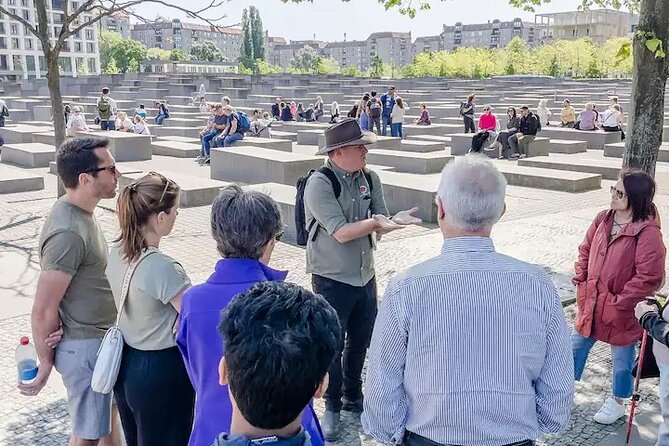
From Nazi power and political rise, you shift to war remembrance with the Soviet Memorial Tiergarten. You’ll spend about 15 minutes here.
This stop covers the Battle of Berlin and explains its brutal scale. It’s also an important reminder that Berlin’s story isn’t only told through Nazi victims and Nazi leaders. After the war, different nations shaped how the conflict was remembered, and those remembrance choices still echo in the city’s memorial landscape today.
You’ll also connect the wartime fighting to the long shadow it left behind. The tour keeps this focused: what happened, why it was so destructive, and how memory is built once the guns stop.
Stop 4: The Holocaust Memorial for the Murdered Jews of Europe
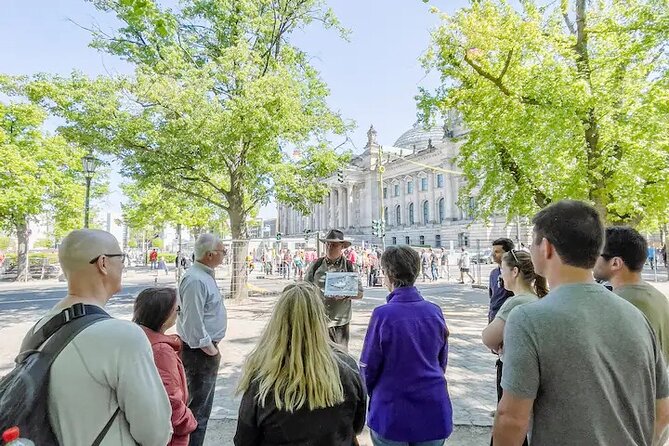
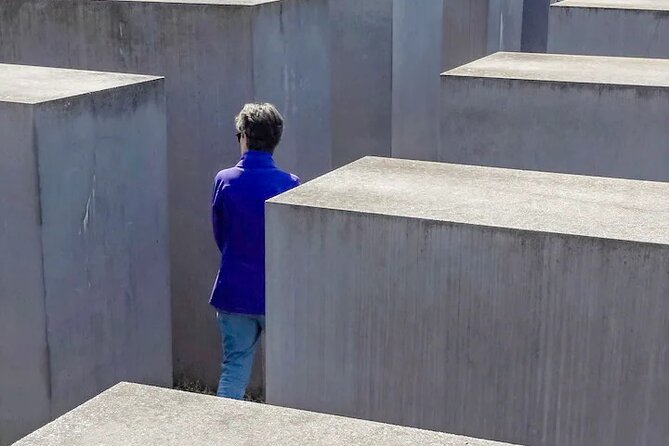
The Holocaust Memorial is one of the emotional centers of the walk, with about 15 minutes allotted. You’ll be there to experience the memorial for Jewish victims of the Third Reich, and you’ll talk about what the memorial means.
This isn’t a quick photo stop. Your guide helps you understand why this site is designed the way it is, and you’ll get time for reflection and discussion. You can ask questions about interpretation and symbolism, not just facts.
One reason this stop lands so well for many people is that it’s not treated like a single event in the past. It’s presented as the result of deliberate policy and systematic destruction. Once you’ve seen earlier memorials and political context, the Holocaust memorial becomes less abstract and more painfully concrete.
You’ll leave with a clearer sense of scale, but also of intention: how targeted persecution became a state project.
Stop 5: The Monument to Homosexuals Persecuted Under the National Socialist Regime
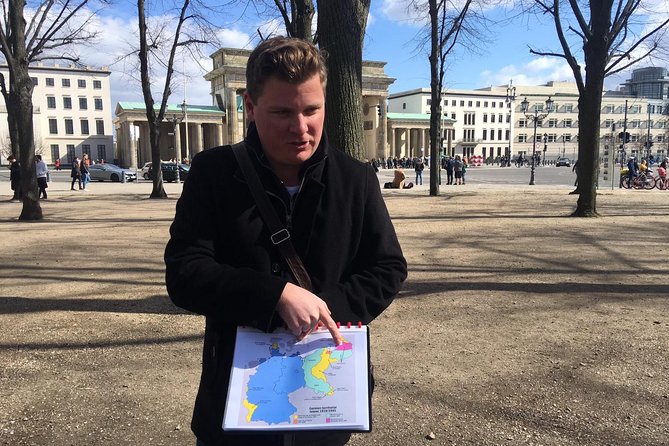
Then you move to the monument commemorating homosexuals persecuted under the Nazi regime. The time here is short, around 5 minutes, but it fills an essential gap.
Nazi persecution didn’t only focus on groups we usually hear about first. This stop shows that the regime targeted multiple communities and used repression to reshape society. By including it in the route, the tour refuses to narrow the story into a single category.
Think of it as a reminder to look at the regime as a whole system of control, not a one-issue tragedy.
Stop 6: Führerbunker and the final days of Hitler
Next is the Führerbunker, where Hitler spent his final days. You’ll have about 15 minutes here.
This stop changes the tempo. You’re no longer only moving through earlier phases of rise and persecution. You’re looking at the endgame, when the regime had already caused enormous death and destruction and still clung to power.
Your guide connects what you’ve learned so far to this ending. It helps you understand that collapse wasn’t sudden magic. It was the result of military failure, internal strain, and the inevitable consequences of a system built on coercion and violence.
If you want the Hitler story to feel less like mythology and more like history, this is the moment it starts to click.
Stop 7: Johann Georg Elser and the attempt to stop Hitler
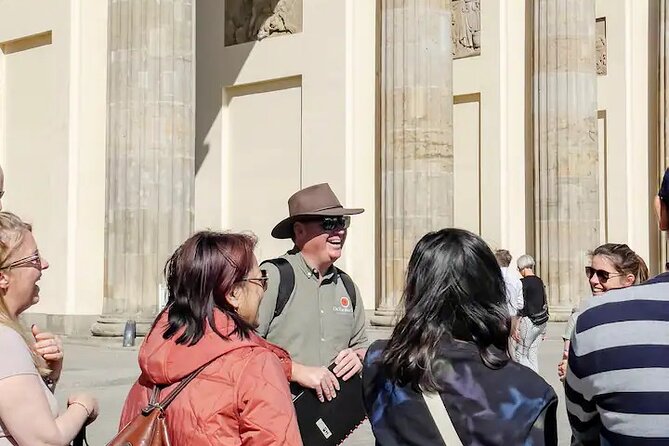
After the bunker story, you go to the memorial for Johann Georg Elser. The stop takes about 15 minutes.
Elser’s story adds something powerful and practical: the existence of resistance. Instead of focusing only on how the regime rose and how it ended, you get a reminder that some people tried to oppose it, including through direct action.
This stop gives you perspective on agency. It also adds balance. When history is only framed as inevitability, it can feel hopeless. Elser’s story pushes back against that.
Stop 8: The Aviation Ministry building and how power was housed
You then pass the Aviation Ministry of Berlin, built in 1936. The tour spends about 5 minutes here, but it’s a quick hit of “how the machine worked.”
At the time, it was the largest office building in Europe, and it housed the German Ministry of Aviation (Reichsluftfahrtministerium), headed by Hermann Göring. Even in a short visit, this spot helps you see how regimes create physical space for bureaucracy and command.
It’s easy to think of Nazi power as only ideological or military. This stop nudges you to see the administrative side too: offices, reporting chains, and institutions that made violence possible on a working level.
Stop 9: Topography of Terror to close the story with clarity
The final stop is Topography of Terror, about 20 minutes. This is both a site and a decompression moment: you’ll have a break for tea or coffee and access to restrooms before you keep your bearings for the next part of your day.
Topography of Terror marks the location where the Gestapo headquarters once stood. That detail is key because it grounds the tour in enforcement. The Nazis didn’t just have beliefs; they had systems to monitor, intimidate, detain, and control.
Ending here also gives the tour a satisfying arc. Earlier stops cover memorials, power, and persecution. The closing stop shows the machinery behind it.
Before you walk off, your guide will also point you to the best connection options for where you’re headed next. That’s a small thing that saves real time at the end of a walk.
How the guide format improves what you take away
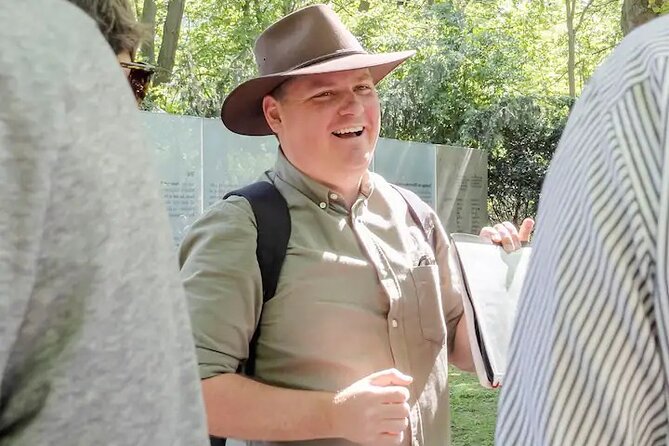
The tour includes an expert local guide with an academic background in WWII history, plus small-group handling, structured explanations, and “Then & Now” materials plus historic maps. For many people, that’s where the value really lives.
Academic background matters because you’ll get answers that stick. You’re not just hearing a dramatic story. You’re getting a coherent one: rise, ideology, targeting, wartime damage, and the end of the regime. The guide also supports Q&A and reflection, so if you feel stuck on a detail, you can ask instead of guessing.
Group size also changes the experience. With a maximum of 15, you’re not constantly fighting for position or waiting for a crowd to shuffle forward. One person asked questions, and the guide can pivot without losing everyone. That makes the tour feel more like a conversation than a lecture.
A small caution: some participants note that hearing can be a challenge when there’s background noise. If you know you struggle with audio in outdoor crowds, position yourself well near the guide and be ready to ask for a repeat if needed.
Price and value: what you’re really paying for at $54.44
At around $54.44 per person, you’re paying for focused time, not museum entry fees. Every major stop listed is marked as free admission, so the cost mostly covers the guide, the materials, and the route design that keeps everything coherent.
You’re also getting a lot of high-impact sites packed into 2.5 hours without feeling rushed. That’s not just convenience. It’s value, because Nazi-era Berlin is dense. If you try to stitch it together alone, you’ll likely waste time figuring out what connects to what.
If your goal is to understand how Nazism rose and fell, this tour turns a chaotic subject into a workable storyline. That kind of structure is hard to replicate on your own without doing a lot of homework.
Who should book this tour, and who should skip it
This tour is a great fit if:
- You want a guided, chronological walk through Nazi-era power and collapse
- You’re interested in memorials and the way Berlin explains them in context
- You like asking questions and getting direct answers
- You want free entry sites handled for you, with a clear end point
You might want to choose something else if:
- You’re looking for light, casual sightseeing
- You don’t handle heavy historical topics well
- You prefer long breaks and lots of sitting time
The walking is moderate, but it’s still walking. Comfortable shoes are non-negotiable.
Final verdict: should you book Hitler’s Berlin (Small Group)?
Book it if you want one of the most efficient ways to understand Nazi Germany in Berlin, without losing the human scale. The combination of small-group attention, free entry at major sites, and the guide’s ability to connect ideology to real places is strong value at this price.
Skip it if you need a cheerful history outing. This route deals with persecution, genocide, and wartime brutality, and it expects you to take it seriously.
If you come prepared for an honest, structured walk, you’ll leave with a sharper story in your head and a better sense of how today’s Berlin holds those memories in plain sight.
FAQ
How long is the Hitler’s Berlin small-group tour?
It runs about 2 hours 30 minutes.
Where does the tour start and where does it end?
It starts at Brandenburg Gate, Pariser Platz 10117 Berlin, and ends at Topography of Terror at Niederkirchnerstraße 8, 10963 Berlin.
Is the tour only in English?
Yes, it is offered in English.
Do I need to buy admission tickets for the stops?
The listed stops are marked as free admission, so you won’t need tickets for those points.
Is food included?
No. Food and drinks are not included.
How big is the group?
It’s a small group with a maximum of 15 travelers.
What if the weather is bad or I need to cancel?
It operates in all weather conditions, and it has free cancellation. You can cancel up to 24 hours in advance for a full refund, and cancellations less than 24 hours before the start aren’t refunded. If it’s canceled due to poor weather, you’ll be offered a different date or a full refund.
More Tour Reviews in Berlin

Berlin's Wartime History

Round out your days in Berlin

Third Reich & WWII History, compared.
 ★ 4.9Third Reich & Cold War Guided Walking TourFrom $238,378 reviews
 ★ 5.0Berlin’s Best: 2 Hour Walking Tour Third Reich and the Cold WarFrom $245,486 reviews
 ★ 5.0Third Reich Berlin: Hitler and WWII Walking TourFrom $243,301 reviews
 ★ 4.9Third Reich, Hitler, and WWII Walking TourFrom $191,757 reviews
 ★ 5.0Berlin Third Reich Sites: Half-Day Walking TourFrom $21835 reviews
 ★ 4.7History of the Third Reich Guided Walking TourFrom $30791 reviews
 ★ 4.8The Wall and Third Reich Guided Bike TourFrom $41578 reviews
 ★ 4.8Hitler’s Germany: Berlin During the Third Reich & WWIIFrom $23476 reviews
Browse the lists this tour appears in