
REVIEW · WALKING TOURS
Modern Berlin Private Walking Tour: Diverse, Vibrant and Exciting German Capital
Berlin can feel big and confusing. This private walk helps you connect the dots fast—across multiple neighborhoods built by Germans after 1990. The big win is the local guide who puts today’s scenes into Wall-era context, so you understand what you’re seeing instead of just collecting photos.
I especially love the way the route covers several key areas in just a few hours—Mitte, East Side Gallery, Prenzlauer Berg, Kreuzberg, and Friedrichshain—so you get a clear sense of how the city changed after reunification. A second standout is the pacing: I’ve heard guides like Joerg who balance intellectual stops with enough physical rhythm for real sightseeing.
One thing to plan for: food and drinks aren’t included, and you’ll be walking in all weather. Wear shoes that can handle Berlin pavement, and consider bringing water or a small snack so you don’t spend the tour hunting.
In This Review
- Key things that make this modern Berlin walk worth it
- What a private modern Berlin walking tour gives you
- Mitte: from Wall scar to Berlin’s modern center
- East Side Gallery murals: history you can walk through
- Prenzlauer Berg: restored buildings, older attitudes still present
- Kreuzberg: immigrant energy, activism roots, and the street-level mix
- Friedrichshain: street art, music scenes, and community energy
- The walk itself: pacing, weather, and what to bring
- Price and value: is $179.84 per person reasonable?
- Should you book this modern Berlin private walking tour?
- FAQ
- How long is the tour?
- What neighborhoods are included?
- Is the tour offered in English?
- Do we need to buy tickets for the stops?
- Is hotel pickup included?
- Is this a private tour?
- Does the tour include food and drinks?
- What should I wear?
- Is a mobile ticket used?
- Is free cancellation available?
Key things that make this modern Berlin walk worth it
- Private group time with only your party, not a crowd shuffle
- Hotel pickup available, or meet centrally if it’s easier
- East Berlin to West Berlin change in one route, not a scattered list of landmarks
- East Side Gallery murals along the longest remaining Wall stretch (1.3 km)
- Five neighborhoods, limited time, so you learn more per hour
- Stops with free admission, so your money goes to the guide, not tickets
More of Berlin on foot
- Discover Berlin Half-Day Walking Tour★ 5.0 · 9,624 reviews
- Berlin City walk Government District and Places of Democracy★ 4.7 · 8,467 reviews
- Berlin: Third Reich & Cold War Guided Walking Tour★ 4.9 · 8,378 reviews
- Berlin: Discover Berlin Walking Tour★ 4.9 · 5,998 reviews
What a private modern Berlin walking tour gives you
Berlin after 1990 isn’t one story. It’s lots of overlapping stories—politics, immigration, art, money, and everyday life—playing out street by street. That’s why I like this format: you’re not just seeing sights. You’re getting help turning them into meaning.
With a private tour, you also get flexibility that’s hard to recreate on a group bus or a rushed hop-on route. You’ll walk through different districts with a local, professional guide, and you’ll hear context you usually won’t get from a standard guidebook. Guides have been praised for strong explanations and good conversation, including Josh, who managed to keep commentary lively enough that even a 15-year-old found it impressive.
You’re not locked into a huge loop either. It’s around 3 to 4 hours, and the tour ends back at the meeting point. That matters because Berlin can eat your day with transit time, and this keeps you focused on moving through neighborhoods while you’re still fresh.
The practical bonus: pickup is possible from your accommodation (or you can meet in central Berlin). Either way, the tour is designed to reduce friction so you can start learning sooner.
Mitte: from Wall scar to Berlin’s modern center
Mitte is where Berlin likes to show its “before and after.” Since 1990, it’s transformed from a symbol of division into the city core you recognize today. You’ll spend about 30 minutes here, and the point isn’t just to tick off major landmarks—it’s to understand what reunification changed in how the area functions.
Expect the tour to connect big iconic backdrops like the Brandenburg Gate and Museum Island with the everyday feel of the district: galleries, cafes, and boutiques moving in alongside historic significance. You’ll also hear how gentrification reshaped the neighborhood—bringing creative businesses and startups, but also sparking questions about identity and change.
What I like about Mitte on a walking tour is that it compresses contradictions. It can look polished and tourist-friendly, but it still carries scars of the city’s division. A good guide helps you read those layers.
Possible drawback: Mitte can feel busy, and 30 minutes can fly. If you prefer slower, deeper time in just one area, you might wish the Mitte portion had more minutes. Still, for this tour’s purpose—getting you oriented fast—it works.
East Side Gallery murals: history you can walk through
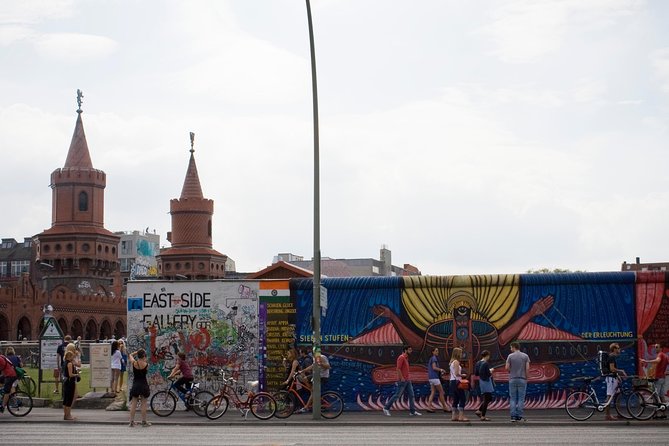
Then you shift to the open-air emotional punch: the East Side Gallery. It runs for about 1.3 kilometers along the former Berlin Wall, and it’s the longest remaining section. Your stop here is around 20 minutes, and that time is often just enough to take in the scale and absorb what the murals are doing.
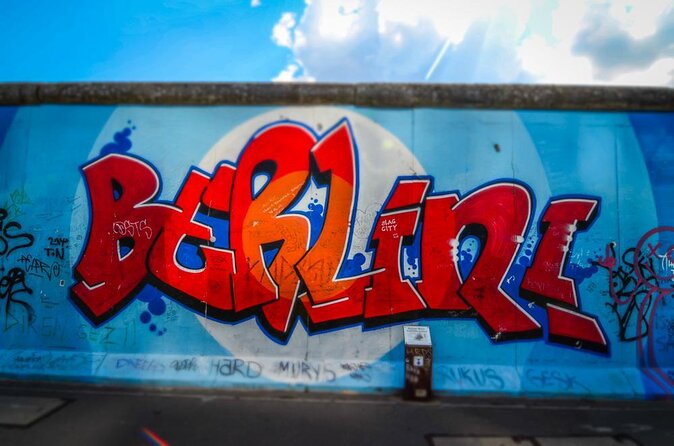
The East Side Gallery started in 1990 with artists creating murals along the Wall. Today it functions like an outdoor gallery of messages—hope, peace, and change—with artwork reflecting both the pain of division and the triumph of reunification. It’s also a reminder that Berlin’s identity doesn’t sit only in official monuments. It lives in street-level art.
Why this stop is valuable in a “modern Berlin” tour: it reminds you that modern doesn’t mean new meaning. Sometimes it means old wounds turned into something people can stand in front of and talk about.
Because the gallery is free and outdoors, you can also use your eyes without worrying about ticket logistics. Just be aware that this is a walking experience, and photos can tempt you to linger longer than planned. If you do, your guide can help you keep pace for the rest of the route.
Prenzlauer Berg: restored buildings, older attitudes still present
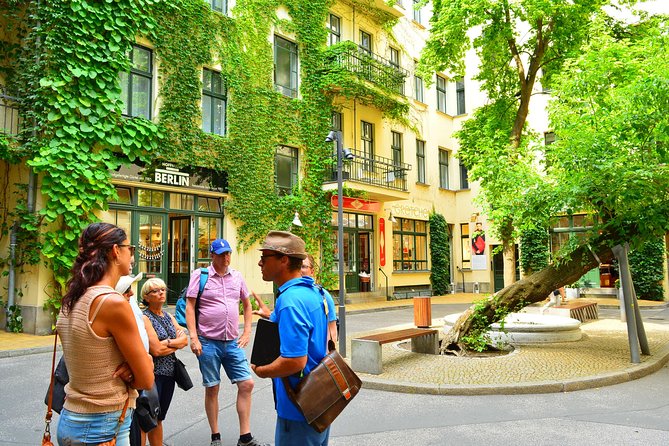
Next comes Prenzlauer Berg, usually described as one of Berlin’s most desirable areas today. The tour frames it as a real shift since 1990: it went from a bohemian stronghold in East Berlin—full of artists and students—to a neighborhood with restored historic buildings, chic cafes, boutique shops, and restaurants.
You’ll spend about 40 minutes here, which is a good length for noticing changes without feeling like you’re sprinting through storefronts. You’ll also get the “but” that matters: despite the polished new look, traces of the rebellious and creative past remain in local galleries, cultural spaces, and community areas.
I like this stop because it makes gentrification less abstract. You can see it in building restoration, in who shops on the street, and in how the neighborhood atmosphere changes block by block. And you can hear the conversation around it—how renewal can feel like progress to some people and displacement to others.
One consideration: Prenzlauer Berg can feel more curated than some of the other districts on this route. If you’re chasing raw street energy only, you may find this stop a little more polished. But that’s exactly why it belongs on a “modern Berlin” overview.
More private tours of Berlin



Kreuzberg: immigrant energy, activism roots, and the street-level mix
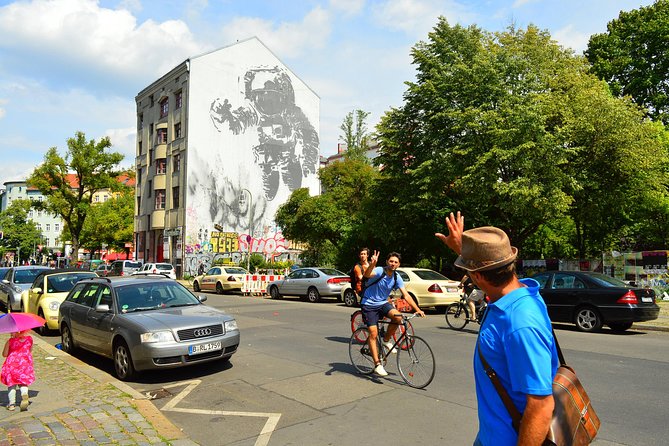
Then you hit Kreuzberg, the district where Berlin’s independent streak shows up loudest. Since 1990, Kreuzberg has evolved from a gritty, alternative edge of West Berlin into one of the city’s most culturally rich neighborhoods. It’s strongly linked with immigrants, artists, and activists—and the tour keeps highlighting that backbone.
You’ll have about 35 minutes here. Expect the walk to touch on how gentrification changed the setting: industrial spaces and older buildings now host trendy cafes, art galleries, and international eateries. At the same time, the tour’s message is clear—Kreuzberg still functions as a melting pot where alternative culture and creative expression keep shaping the streets.
A detail I appreciate: the tour connects culture to food. One stop includes Hasir, brought up as the place where the story of the kebab is associated. That kind of moment makes the neighborhood feel human, not museum-like.
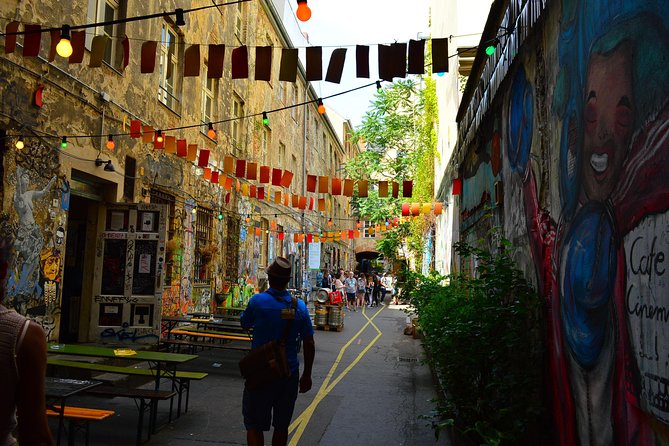
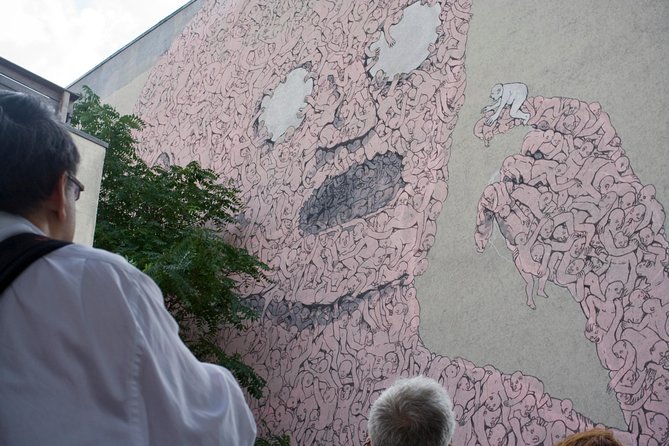
What to watch for while you’re there: street art and multicultural details. Even if you’ve seen Berlin murals before, Kreuzberg’s mix tends to feel less curated and more lived-in. The guide’s job is to help you see patterns—what’s changing, what’s staying, and why.
Potential drawback: because Kreuzberg is a busy, layered district, it can be easy to lose focus if you wander ahead. Let your guide set the rhythm, and you’ll get more meaning out of the time.
Friedrichshain: street art, music scenes, and community energy
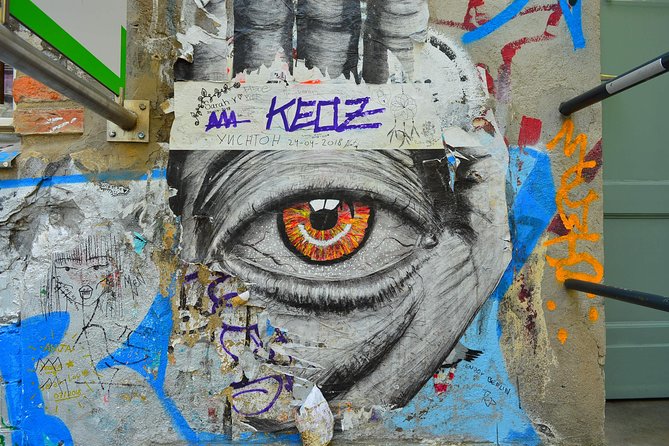
Finally, the route turns toward Friedrichshain for about 35 minutes. The tour frames this area as another place where Berlin’s counterculture never fully disappeared. It’s presented as a creative and culturally diverse neighborhood with street art, multicultural influences, and a strong community feel.
You can expect the guide to connect what you see now with the district’s history since 1990, including how trends like gentrification brought more cafes and shops into older industrial spaces. Even with those changes, the tour’s focus stays on the street-level identity: festivals, music scenes, and activism that keep showing up in everyday life.
I like Friedrichshain as a tour finale because it feels like Berlin’s present tense. By the time you reach this stop, you’ve already traveled from the Wall’s message (East Side Gallery) into the city’s renewed centers and the neighborhoods where change is debated in real time. Friedrichshain closes the loop by showing a Berlin that keeps remixing itself.
If you’re the type who gets tired mid-walk, you may want to pace yourself early. The tour stays around 3 to 4 hours total, but Friedrichshain can feel energetic enough to slow you down with photos, so listen for your guide’s timing.
The walk itself: pacing, weather, and what to bring
This experience is designed to work in all weather. That’s great for planning, but it also means you need to show up prepared. Dress appropriately, and think about Berlin’s mix of sidewalks, cobbles, and street crossings.
Because it’s a private tour, the guide can adjust to your group’s rhythm. I’ve seen examples of Joerg being praised for understanding the balance between intellectual and physical needs. That matters because neighborhood context is heavy on information, and you still want comfort while you’re walking.
Also, remember the practical side: food and drinks aren’t included. Berlin is full of good breaks, but the best tours don’t turn into a long lunch by default. Bring water and plan your meal before or after so you don’t end up waiting around while everyone searches for a place to eat.
A simple tip: if you tend to get cold or sore, pack a small layer and choose shoes with grip. That way, you stay focused on what the guide is pointing out instead of thinking about your feet.
Price and value: is $179.84 per person reasonable?
At $179.84 per person, this is not a cheap casual stroll. But it’s a private tour with a local guide and pickup options, and the route is built to cover multiple neighborhoods in a short window. You’re paying for time, interpretation, and efficiency.
Here’s how I think about value with this kind of tour:
- You’re buying context. The guide’s job is to explain what reunification and later change did to each district, so you don’t have to research every stop yourself.
- You’re buying time saved. Seeing five neighborhoods with a coherent story beats spending half a day piecing together transit and separate sightseeing plans.
- You’re buying comfort and focus. Hotel pickup can reduce your stress at the start, and the end returns to the meeting point.
Where it might not be the best fit: if you only want a list of landmarks and don’t care about the “why,” a self-guided route could cost less. But if your goal is modern Berlin—what changed and what debates still run beneath the surface—this price starts to make more sense.
It also sounds like families can do well with it. One highlight from the guide feedback was that Josh managed to keep a teen engaged without turning it into a kids’ lecture. If you’re traveling with older kids who like understanding how cities work, this can be a good match.
Should you book this modern Berlin private walking tour?
Book it if you want a modern Berlin overview with real context, and you like learning while you walk. The route is strong for first-timers who don’t just want icons, but want to understand how reunification reshaped neighborhoods—and how gentrification, art, and migration all show up in daily life.
Skip it (or consider a shorter, landmark-only plan) if you prefer slow museum-style pacing in one district. This tour trades depth in one area for coverage across five neighborhoods, so you’ll get breadth and meaning, not hours of one single street.
My practical take: if you’ve only got a few hours and want the city to make sense fast, this private format is a smart way to do it. You’ll leave with a clearer mental map of where Berlin’s post-1990 story shows up in real places.
FAQ
How long is the tour?
It runs about 3 to 4 hours.
What neighborhoods are included?
The walk includes stops in Mitte, East Side Gallery, Prenzlauer Berg, Kreuzberg, and Friedrichshain.
Is the tour offered in English?
Yes, it’s offered in English.
Do we need to buy tickets for the stops?
The listed stops show admission ticket free.
Is hotel pickup included?
Hotel pickup is included, and you can also meet somewhere central.
Is this a private tour?
Yes. Only your group participates.
Does the tour include food and drinks?
No. Food and drinks aren’t included.
What should I wear?
The tour operates in all weather conditions, so dress appropriately and wear comfortable walking shoes.
Is a mobile ticket used?
Yes, a mobile ticket is provided.
Is free cancellation available?
Yes. You can cancel up to 24 hours in advance for a full refund.
More of Berlin on Foot


More Tours in Berlin





More Tour Reviews in Berlin

Round out your days in Berlin
Walking Tours, compared.
 ★ 4.7Berlin City walk Government District and Places of DemocracyFrom $2948,467 reviews
 ★ 4.9Third Reich & Cold War Guided Walking TourFrom $238,378 reviews
 ★ 4.9Discover Berlin Walking TourFrom $235,998 reviews
 ★ 5.0Berlin’s Best: 2 Hour Walking Tour Third Reich and the Cold WarFrom $245,486 reviews
 ★ 4.8Hidden Backyards Guided Walking TourFrom $235,360 reviews
 ★ 5.0Third Reich Berlin: Hitler and WWII Walking TourFrom $243,301 reviews
 ★ 4.9Third Reich, Hitler, and WWII Walking TourFrom $191,757 reviews
 ★ 4.6Alternative Berlin Walking TourFrom $291,204 reviews
Browse the lists this tour appears in