
REVIEW · THIRD REICH & WWII HISTORY
Path of Resistance: Berlin’s Hidden Holocaust Stories
Berlin has a way of keeping receipts. This walking tour follows Berlin’s hidden Holocaust stories and Nazi-era resistance through real sites, from synagogues to memorial sculptures. I like how the route stitches together people, places, and dates without getting lost in grand speeches.
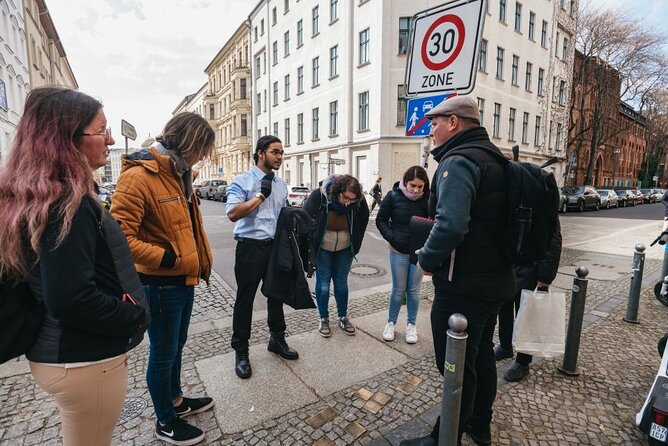
You’ll also appreciate the small-group feel and the “then & now” photos and maps that help you see how the same streets changed under Nazi rule. One watch-out: it’s a mostly on-foot experience with plenty of standing, so comfortable shoes matter.
In This Review
- Key Things You’ll Notice on This Walk
- What Makes This Berlin Resistance Tour Different From the Usual Sights
- Getting There: Oranienburger Straße Start to Friedrichstraße Finish
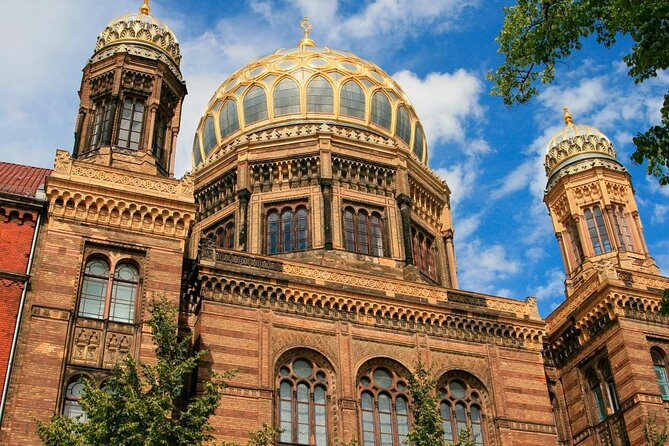
- Neue Synagoge Berlin: From a Thriving Jewish Center to Forced Silence
- Jüdisches Gymnasium Moses Mendelssohn: When a School Became a Transit Trap
- The Jewish Cemetery and Holocaust Memorial: Destruction, Then Burial Again
- Otto Weidt’s Workshop: Resistance You Can Find in a Courtyard
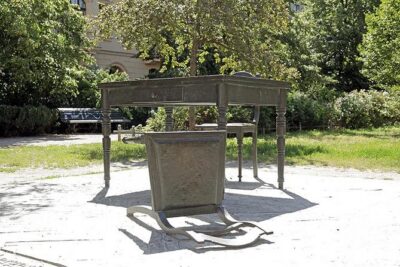
- Rosenstraße Denkmal: A Protest That Forced a Release
- Lustgarten: The Same Public Space, Rewritten by Propaganda
- Zeughaus: Gersdorff’s Plot at an Artillery Arsenal
- Neue Wache: A Central Memorial in the Middle of Traffic
- Bebelplatz Book Burning Memorial: Attacking Ideas, Not Just People
- Trains to Life, Trains to Death: Kindertransport and Deportation in One Sculpture
- How a 2.5-Hour Small Group Format Helps You Keep Up
- Practical Value: What $48.01 Buys You in Berlin
- Who Should Book This Walk (And Who Might Think Twice)
- Final Call: Should You Book This Berlin Path of Resistance Walk?
- FAQ
- How long is the tour?
- How many people are in the group?
- What language is the tour offered in?
- Are admission tickets included?
- Is food or drinks included?
- What if the weather is bad?
Key Things You’ll Notice on This Walk
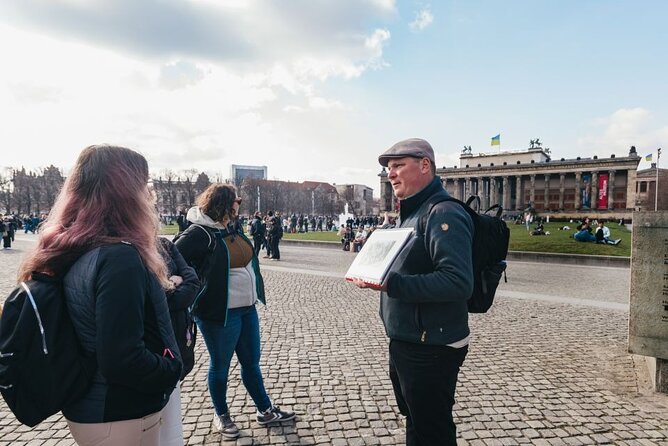
- Small group size (max 15) for tighter questions and a calmer pace
- Then & now photos and maps that make history feel concrete
- A resistance focus, from protests to quiet survival efforts
- Multiple landmark stops tied to Jewish life, deportation, and Nazi propaganda
- All stops listed as admission free, so your cost stays predictable
More walks through Berlin's wartime history
- Berlin: Third Reich & Cold War Guided Walking Tour★ 4.9 · 8,378 reviews
- Berlin’s Best: 2 Hour Walking Tour Third Reich and the Cold War★ 5.0 · 5,486 reviews
- Third Reich Berlin: Hitler and WWII Walking Tour★ 5.0 · 3,301 reviews
- Berlin: Third Reich, Hitler, and WWII Walking Tour★ 4.9 · 1,757 reviews
What Makes This Berlin Resistance Tour Different From the Usual Sights
Berlin’s big Holocaust sites are essential. But this tour takes a sharper angle: it centers on what people did—especially those who resisted, protested, hid, bribed, and tried to keep others alive. The theme matters. It shifts your attention from only what was taken, to what was fought for.
It also helps that the tour is built for walking. You cover key wartime landmarks while your guide gives you context you can actually stand in. And since you’ll be moving block to block, the story doesn’t feel like a museum script. It feels like you’re reading the city in time order.
You’ll get a mobile ticket, and the tour is offered in English. Most people can participate, and the tour is marked as accessible—though, again, plan for standing and moving on foot.
Getting There: Oranienburger Straße Start to Friedrichstraße Finish
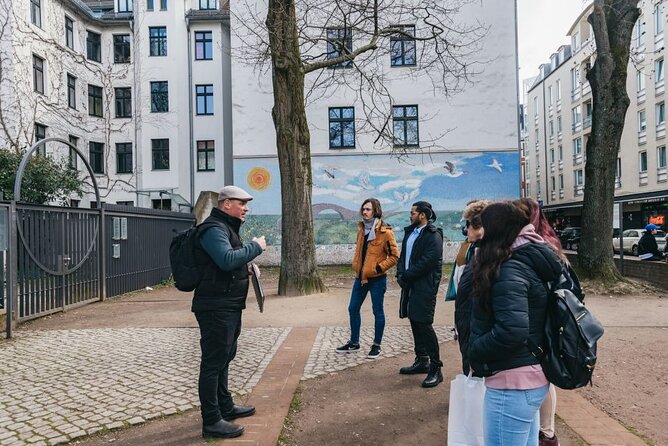
You start at Oranienburger Str. 36 (10117 Berlin). The end is at Friedrichstraße / Georgenstraße 14/17, with the tour finishing at S+U Friedrichstraße, a major train hub.
That ending is practical. It’s one of those Berlin stations that makes it easy to keep going—whether you’re heading to a museum, dinner, or your hotel. If your plans include another neighborhood after the tour, this drop-off keeps you from losing time backtracking.
Public transportation is nearby at both ends, so you won’t need a complicated route plan to join or leave.
Neue Synagoge Berlin: From a Thriving Jewish Center to Forced Silence
The tour begins at Stiftung Neue Synagoge Berlin – Centrum Judaicum, the Neue Synagogue area. This building story alone sets the emotional tone.
Here’s what you’ll learn: the synagogue was constructed in 1866 and was described as the largest and most magnificent in Berlin—basically a physical symbol of the city’s large Jewish community. It remained in use until 1940, when it was confiscated and used to store military uniforms. In November 1943, it was severely damaged in an allied bombing raid, and later major changes followed, including partial rebuilding in 1988 and an official reopening in 1995.
Two details stand out. First, the synagogue survived long enough to show a fuller picture of Jewish life before the Nazi era swallowed it. Second, the building’s repurposing under Nazi control shows how “ordinary” community spaces were turned into instruments of the war machine.
This stop is listed as 10 minutes and admission free, which makes the start feel low-friction and easy to absorb.
Jüdisches Gymnasium Moses Mendelssohn: When a School Became a Transit Trap
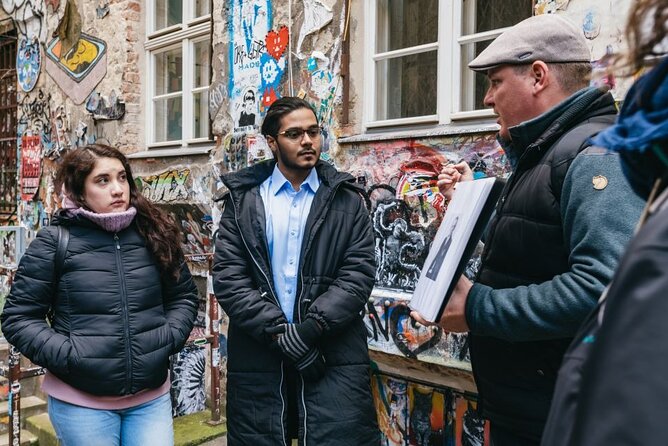
Next comes Jüdisches Gymnasium Moses Mendelssohn. You’ll be looking at a school building with a long pre-war identity, which makes what happens here feel even harsher.
The school was founded in 1779 and was the first Jewish school in Germany without fees. Even though it was Jewish, it was open to all faiths and promoted liberal Jewishness. There’s also a progressive note: it accepted female students in 1931.
Then the Nazi system tightens. In the fall of 1941, deportations of Jews to newly conquered territories to the east led to banning Jewish schools. By 1942, the SS’s Reich Main Security Office turned the building into a transit camp. Windows were barred and people were crammed inside while waiting for deportation.
This stop is a grim reminder of how quickly the Nazi regime moved from oppression to machinery. A school meant education; here, it became a holding room for deportation.


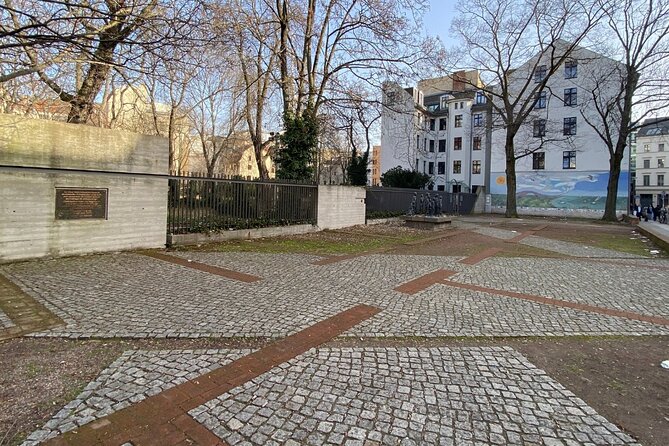
The Jewish Cemetery and Holocaust Memorial: Destruction, Then Burial Again
The tour moves to a Jewish cemetery and Holocaust memorial. This is one of the most devastating stops, but it’s also historically specific.
Between 1672 and 1827, around 12,000 Jewish community members were buried here. In 1943, on orders of the Gestapo, the SS destroyed the cemetery—smashing thousands of gravestones and throwing away remains. The information given also includes the shocking detail of SS members playing football with skulls. That isn’t offered as spectacle. It’s offered as evidence of contempt and dehumanization.
Then April 1945 brings a brutal form of closure: burials took place again, including mass graves for about 2,500 German soldiers and Berlin civilians killed in the fighting or executed by the SS for hanging white flags from their windows.
If you’re someone who likes “why this matters” history, this stop gives you that. It ties the Nazi regime’s violence to real places: first to vandalism of the dead, then to killing during the final months of war.
Otto Weidt’s Workshop: Resistance You Can Find in a Courtyard
A highlight of the tour for many people is Museum Blindenwerkstatt Otto Weidt, hidden in a courtyard. The setting matters. It feels quiet and out of the way, which fits the way this kind of resistance often worked: small acts, away from the spotlight.
You’ll learn about Otto Weidt and his wife Else, who employed more than 30 blind and deaf Jewish workers between 1940 and 1945. As danger increased, Weidt tried to protect his employees from persecution and deportation—bribing Gestapo officers and falsifying documents. Even more striking: the story includes that he traveled to Auschwitz to try to break one employee out.
That’s the “resistance” angle in its purest form: practical, risky help. Not speeches. Not revenge. Survival built on tactics and personal courage.
This stop is listed as 10 minutes and admission free, which is a good length for a site that carries heavy weight.
Rosenstraße Denkmal: A Protest That Forced a Release
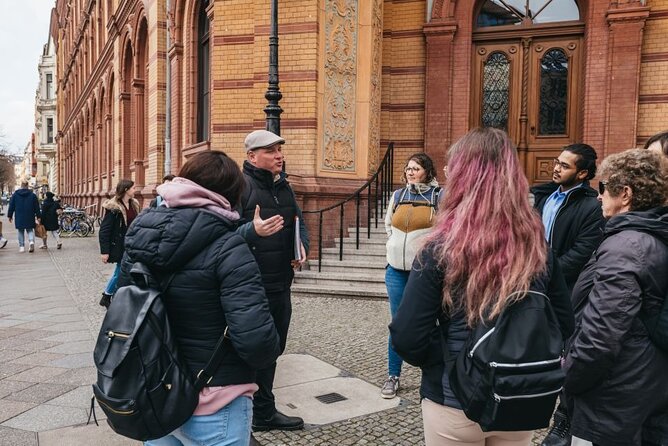
Next you’ll visit Denkmal Rosenstraße, tied to an extraordinary moment in early 1943.
On February 27, 1943, Gestapo, Waffen-SS, and Berlin police arrested 2,000 Jewish men who were married to non-Jewish German women. The resistance here wasn’t a weapon. It was collective pressure: the wives gathered and protested. Hundreds showed up, and even after threats of being shot if women didn’t disperse, many scattered briefly and returned in larger numbers.
As pressure mounted, Goebbels authorized the prisoners’ release. That last line is why Rosenstraße resonates. It shows how Nazi control could be interrupted—rarely, and at enormous risk—but still interrupted.
This stop is listed as 10 minutes and admission free, and it lands well after Weidt’s story. One is covert rescue effort; the other is loud public defiance.
Lustgarten: The Same Public Space, Rewritten by Propaganda
At Lustgarten, you’re back in the open air, framed by the Berlin Cathedral, the Altes Museum, and the Zeughaus. This stop is useful because it explains how Nazi rule changed public life.
Before the Nazis, the Lustgarten was a favorite location for protests and speeches. One week after Hitler was appointed chancellor, 200,000 Berliners protested. After that, strict regulations restricted Germans’ right to protest, with heavy fines and arrests making public dissent dangerous.
By 1934, the space was paved over to make room for Nazi propaganda rallies, swearing-in ceremonies, and military parades.
What I like about this stop is that it turns the city into a lesson. You can see how the same square shifted from civic speech to controlled spectacle. Even if you don’t agree with everything in politics, the pattern is easy to grasp on the ground.
Zeughaus: Gersdorff’s Plot at an Artillery Arsenal
The tour then goes to the Zeughaus. The building itself is a clue: it’s the oldest along Unter den Linden, constructed in 1730 as an artillery arsenal.
During the war, it became part of the Nazi presentation machine. On March 21, 1943, the Zeughaus was chosen to exhibit captured Soviet weapons. And that’s where the resistance story clicks in.
The guide explains how Major General Rudolf Christoph Freiherr von Gersdorff—described here as part of the Wehrmacht resistance—was selected to lead the exhibit. The tour also gives context that despite 27 failed assassination attempts against Hitler, Gersdorff agreed to plan one more, using concealed British clam mines meant to create a death embrace.
The key is how the story is framed: not as a superhero plot, but as a methodical coup d’état that came with a plan already in place. You’ll be told what happens next as part of the tour, which is the right way to handle it—let the ending land in your head when you’re standing in the same kind of space where the plan unfolded.
Neue Wache: A Central Memorial in the Middle of Traffic
Then you stop at Neue Wache. The tour describes it as Germany’s central memorial for victims of war and tyranny.
This one works differently. Instead of a narrow story, it’s an atmospheric pause inside an active city center. It’s the kind of place where the details you learned earlier can settle in, and where the scale of what happened feels bigger than one incident.
It’s listed as 10 minutes and admission free, and I’d treat it as a moment to slow down. Even a quick stop can matter when you’ve spent the last hour absorbing intent, cruelty, and courage.
Bebelplatz Book Burning Memorial: Attacking Ideas, Not Just People
At Bebelplatz, you’ll find the book burning memorial connected to May 10, 1933. The Nazi German Student Union and professors gathered here at nearby Humboldt University, carrying out a nationwide action against the un-German spirit.
The tour notes that students burned upwards of 25,000 volumes. That number matters. It’s not symbolic in the thin sense. It’s mass suppression, aimed at controlling thought.
I also like that this stop sits next to the idea of a university and education. It forces you to notice what regimes do when they fear ideas: they try to remove the objects of thought and replace them with permission.
Trains to Life, Trains to Death: Kindertransport and Deportation in One Sculpture
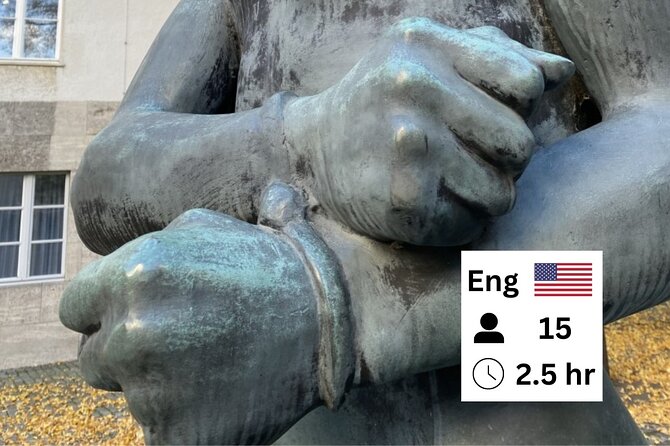
The last stop is Trains to Life – Trains to Death, an almost life-size sculpture by Frank Meisle. You’ll see two groups of Jewish children facing opposite directions—one group representing children whose lives were saved by the Kindertransport to England, and the other representing those who suffered after deportation to concentration camps.
A particularly powerful detail here is that Frank Meisle was himself among those rescued by the Kindertransports, traveling from here to England in 1939. That turns the memorial from an abstract monument into something tied directly to lived identity.
This is listed as 10 minutes and admission free. It’s a fitting wrap-up because it gives you a contrast: escape through rescue systems on one side, and terror through state machinery on the other.
How a 2.5-Hour Small Group Format Helps You Keep Up
This is a small-group walk with a maximum of 15 people. That matters because the topics are intense and details matter. With a bigger crowd, guides often rush. With this group size, you’re more likely to hear answers to the specific questions that pop up as you process each stop.
From the tour feedback, guides including Scott, Benjamin, Johan, Jochen, and Jörg are repeatedly praised for strong command of the material. I also appreciate when a guide can keep it clear and structured without sounding like a textbook.
Also, since the tour is on foot for about 2 hours 30 minutes, pace becomes real. If you’re the type who likes to read the plaques and look at photos carefully, this format usually gives you room to do that without everyone sprinting ahead.
Practical Value: What $48.01 Buys You in Berlin
The price is $48.01 per person for about 2 hours 30 minutes. For Berlin, that can be fair—especially when the route stacks multiple landmark sites into one story-driven walk.
Here’s the value logic:
- The tour covers many significant points in one continuous experience.
- The stops listed are admission free, so you’re not budgeting extra entry fees for each segment.
- You get a guided context that you probably won’t get if you just wander around on your own.
One more note: the tour is commonly booked around a month in advance (on average 37 days). If your schedule is fixed, it’s smart to book early rather than treating it as optional.
Not included: food and drinks, and no hotel pickup or drop-off. Plan to grab a snack after. Also, since you’re standing and walking, bringing water is a good idea.
Who Should Book This Walk (And Who Might Think Twice)
This tour fits best if you:
- want a guided path through Berlin’s WWII-era Jewish sites and memorials
- like history that follows a theme (resistance and protest), not just isolated facts
- prefer walking between landmarks instead of hopping between far-flung museums
It may be less ideal if you:
- strongly dislike standing for long stretches
- expect a “sit-down” experience. This is an on-foot route, and the memorial weight is real even when time at each stop is short.
Still, it’s marked accessible, and you’ll be near public transport throughout. If you’re unsure, it’s worth thinking about your comfort level with the walking portion more than the length of any single stop.
Final Call: Should You Book This Berlin Path of Resistance Walk?
I’d book it if you want Berlin to tell you stories that are easy to miss on your own. The route connects Jewish life, Nazi terror, and resistance acts—ranging from Otto Weidt’s survival work to Rosenstraße’s protest pressure to Gersdorff’s assassination planning—without losing you in theory.
Two practical reasons to say yes:
- the small group size helps you keep up on complex material
- the route hits a dense set of major locations in a short time, with admission listed as free at stops
If you’re sensitive to violent historical details, pace yourself and plan a quieter rest of the day afterward. Then go in with the mindset that you’re witnessing both tragedy and resistance—the parts of history that deserve to be seen in the same place where they unfolded.
FAQ
How long is the tour?
It runs for about 2 hours 30 minutes.
How many people are in the group?
The maximum group size is 15.
What language is the tour offered in?
The tour is offered in English.
Are admission tickets included?
The stops listed on the route are marked as admission free.
Is food or drinks included?
No, food and drinks are not included.
What if the weather is bad?
The tour requires good weather. If it’s canceled due to poor weather, you’ll be offered a different date or a full refund.
More Tour Reviews in Berlin

Berlin's Wartime History

Round out your days in Berlin

Third Reich & WWII History, compared.
 ★ 4.9Third Reich & Cold War Guided Walking TourFrom $238,378 reviews
 ★ 5.0Berlin’s Best: 2 Hour Walking Tour Third Reich and the Cold WarFrom $245,486 reviews
 ★ 5.0Third Reich Berlin: Hitler and WWII Walking TourFrom $243,301 reviews
 ★ 4.9Third Reich, Hitler, and WWII Walking TourFrom $191,757 reviews
 ★ 5.0Berlin Third Reich Sites: Half-Day Walking TourFrom $21835 reviews
 ★ 4.7History of the Third Reich Guided Walking TourFrom $30791 reviews
 ★ 4.8The Wall and Third Reich Guided Bike TourFrom $41578 reviews
 ★ 4.8Hitler’s Germany: Berlin During the Third Reich & WWIIFrom $23476 reviews
Browse the lists this tour appears in