
REVIEW · THIRD REICH & WWII HISTORY
Path of Resistance: Berlin’s Hidden Holocaust Stories
A dark walk through the Jewish quarter, with hope. This resistance-focused tour connects major Nazi-era events to the lived reality of Berliners, including the Rosenstraße Protest and the infamous 1933 book burning at Bebelplatz. I like how the route threads courage into the timeline, not just dates and uniforms, and I love that the pacing stays human and story-led. One consideration: this is intense subject matter, so it helps to come prepared for emotional stops and serious conversations.
What makes this one stand out is the way it’s guided by WWII specialists and told through specific places—quiet courtyards, memorial stones, and workshops where people acted when they could have looked away. You’ll also hear rescue stories that go beyond the usual headlines, including the rescue work linked to Nicholas Winton, often called the British Schindler, plus the small-but-powerful example of Otto Weidt’s workshop. The possible drawback is that, since it runs in all weather and is a true walking tour, you’ll want solid shoes and a rain plan.
If you’re hoping for a quick photo tour, this isn’t that. If you want Berlin’s Holocaust history explained through real people and real decisions—plus practical guidance for what to explore next—this is a strong use of your time and money.
In This Review
- Key points worth knowing
- Why this Berlin resistance walk hits differently
- Meeting at the Former Imperial Post Office: get oriented fast
- New Synagogue Berlin and Moses Mendelssohn: places with a past you can feel
- Grosse Hamburger Strasse Cemetery: why silence is part of the lesson
- Otto Weidt’s workshop: practical courage with real-world impact
- Women’s resistance in Berlin: Rosenstraße and the Block of Women
- Museum Island and Neue Wache: contextual stops that shape how you see the city
- Bebelplatz and the May 10, 1933 book burning: censorship as a first strike
- Stolpersteine and hidden Jewish memorials: learning where the city remembers
- Trains to Life – Trains to Death: when the route turns to deportation reality
- Finishing at Berlin Friedrichstraße: practical closure to keep your day moving
- Price and value: is $57 for 150 minutes a fair deal?
- Who this tour is best for (and who should think twice)
- Tips to make the most of it
- Should you book this resistance-focused Holocaust stories tour?
- FAQ
- How long is the tour?
- How much does the tour cost?
- What language is the tour guide?
- How big is the group?
- Where do we meet?
- Is the tour wheelchair accessible?
- What should I bring?
- Does the tour run in bad weather?
- What’s included and what’s not?
Key points worth knowing
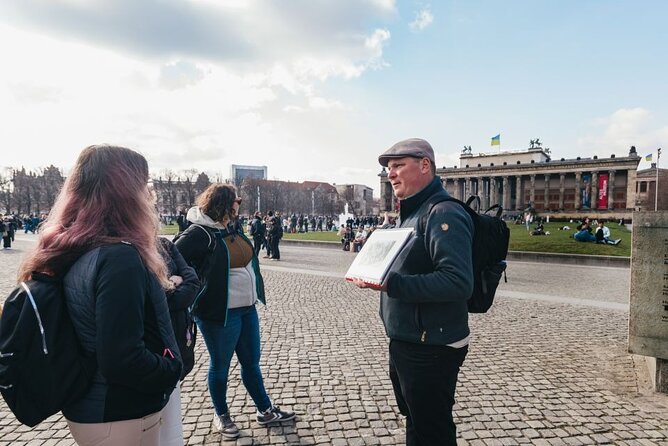
- Small group (max 15 / limited to 10 participants) for an intimate, respectful pace
- WWII historian guide who frames the story through resistance, not only persecution
- Stops at major moral flashpoints like Bebelplatz (1933 book burning) and deportation-related sites
- Personal stories of help and defiance, including Otto Weidt’s workshop
- Includes lesser-seen elements like Stolpersteine memorials and hidden memorial spaces
- You finish at Berlin Friedrichstraße, making it easy to keep exploring after the walk
More walks through Berlin's wartime history
- Berlin: Third Reich & Cold War Guided Walking Tour★ 4.9 · 8,378 reviews
- Berlin’s Best: 2 Hour Walking Tour Third Reich and the Cold War★ 5.0 · 5,486 reviews
- Third Reich Berlin: Hitler and WWII Walking Tour★ 5.0 · 3,301 reviews
- Berlin: Third Reich, Hitler, and WWII Walking Tour★ 4.9 · 1,757 reviews
Why this Berlin resistance walk hits differently
Berlin has no shortage of Holocaust memorials. But this tour takes a sharper angle: instead of only showing what the Nazis did, it puts attention on what ordinary people tried to do against it. That shift matters, because it changes the feeling from distant tragedy to real choices—fearful ones, brave ones, and sometimes both at once.
I like that the tour makes room for more than one form of resistance. You’ll hear about people who resisted quietly, people who resisted publicly, and people who helped victims through survival work. You also get context for how Nazi ideology was built—especially the brutal logic behind the regime’s so-called racial hierarchy.
One more reason I think this works for first-timers: it gives you a guided lens for the places you’ll otherwise pass without fully understanding. The cobblestones, plaques, and courtyards become part of a story you can actually follow.
Meeting at the Former Imperial Post Office: get oriented fast
The walk starts at the former Imperial Post Office. The guide meets you at the main entrance holding a blue umbrella, and they ask you to arrive about 10 minutes early so you’re not rushing into the first explanation.
This opening is more than a logistics moment. It’s your chance to settle into the right mindset for what comes next: the history isn’t just shown; it’s discussed. You’ll get a framework for how Berlin’s Jewish community, Nazi power, and resistance networks fit together across different neighborhoods and institutions.
The pacing is also friendly to your day. You’re booked for about 150 minutes, and public transport tickets aren’t required for the walk, which keeps the logistics simple.
New Synagogue Berlin and Moses Mendelssohn: places with a past you can feel
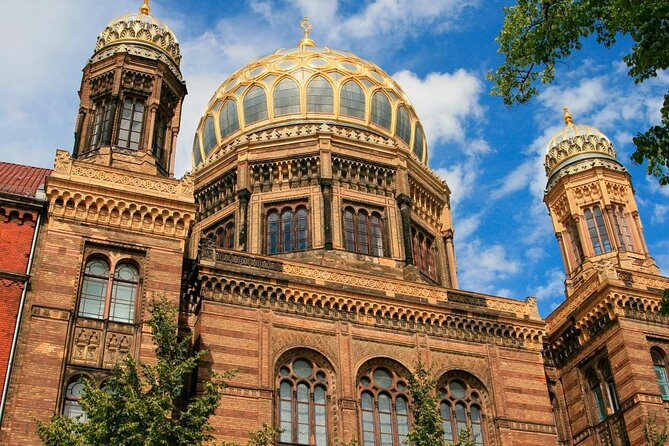
Early on, you’ll visit the New Synagogue Berlin – Jewish Centre. Right away, the tour pushes you to see this area as more than a trauma map. The point is to remember that a community was living here—building institutions, routines, and culture—long before persecution reached full force.
Next comes the Jüdisches Gymnasium Moses Mendelssohn stop. A school building might sound like a detour if you’re expecting only the harshest sites. But this is precisely how the tour builds its argument: Nazi antisemitism didn’t appear from nowhere. It targeted real people with real lives, and the history includes what existed before the state-sponsored violence.
If you want the most out of these first stops, listen for the way your guide explains why the Nazi worldview needed enemies. That connects directly to later moments—like censorship, public intimidation, and deportation machinery.
Grosse Hamburger Strasse Cemetery: why silence is part of the lesson
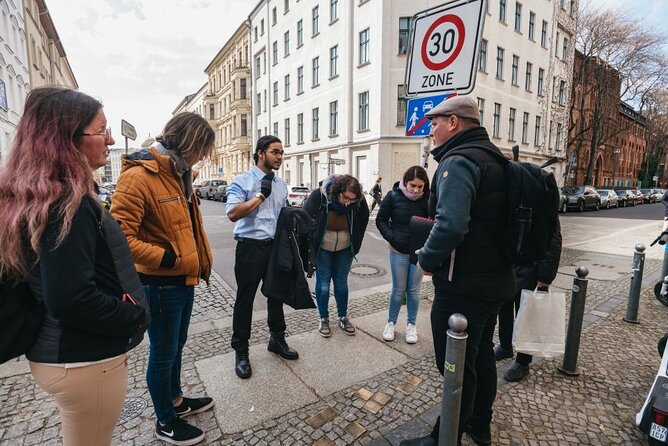
You’ll also spend time at the Grosse Hamburger Strasse Cemetery. A cemetery stop can feel heavy in any city, but here it serves a specific role. It reinforces that the story isn’t only about what happened during the Nazis’ brief reign—it’s about long-term loss and the way communities were erased.
This is a good point to slow down your own pace and stop treating the tour like a checklist. The tour encourages reflection at memorials to those who vanished, and a cemetery is where that reflection lands best.
If you’re the type who likes facts and dates, you’ll still get them. But the tour’s tone becomes calmer here, and the guide’s explanation shifts toward meaning and memory.



Otto Weidt’s workshop: practical courage with real-world impact
One of the strongest stops is Otto Weidt’s Workshop for the Blind. This is the kind of story that makes you rethink the word resistance. It’s not always grand speeches or battlefield heroics. Sometimes resistance looks like a workshop owner choosing to protect vulnerable workers when the risk is obvious.
The tour frames Otto Weidt’s work as shielding blind and deaf Jewish workers from persecution. Even if you’ve heard the name before, visiting the site is different from reading a paragraph. It turns a “did you know” into a place where you can picture the daily decisions that kept people alive.
This stop also helps you understand something crucial: Nazi oppression didn’t run only through camps and armies. It ran through workplaces, access, and paperwork. So the act of protecting workers was a direct challenge to the regime’s control.
Women’s resistance in Berlin: Rosenstraße and the Block of Women
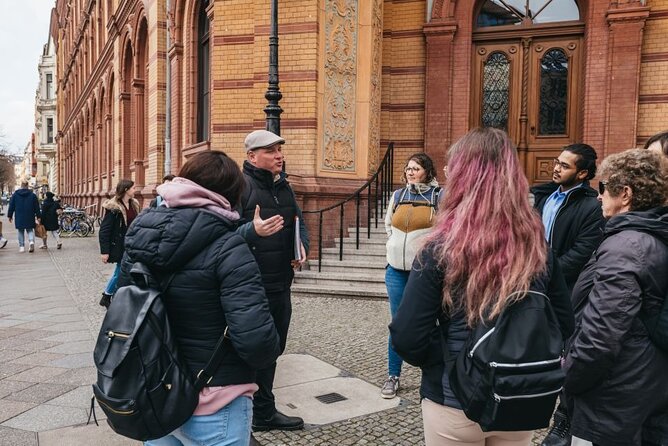
A highlight of the tour is the story of the Rosenstraße Protest, sometimes referred to in the route as the Block of Women stop. This is where you see collective action forced into a public space—women demanding the release of their Jewish husbands.
What I like about this part is the balance in the narrative. It doesn’t treat resistance as a single personality or single event. It shows how pressure from ordinary people could become a real threat to Nazi plans, even if outcomes were not simple or guaranteed.
If you’re curious about how resistance worked in the middle of a terror state, this stop gives you a tangible answer: sometimes the most dangerous act is insisting that family members stay human in the eyes of the world.
Museum Island and Neue Wache: contextual stops that shape how you see the city
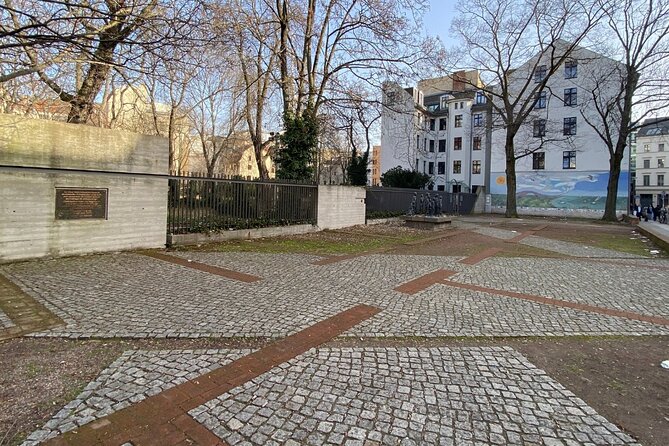
The tour passes through Museum Island and then visits Neue Wache. These aren’t the only theme stops on the route, but they matter because they help you connect Berlin’s broader memory culture to the specific Holocaust-era sites you’ve been learning about.
Think of these as “context anchors.” After confronting deportation and censorship, it helps to see how memorial traditions and public spaces are used to carry meaning over time. Your guide uses discussion and Q&A to keep the story coherent, so these stops don’t feel like filler.
If you’re sensitive to heavy topics, this is a good place to take a breath. The group stays focused, but the tour tone gives your brain a minute to process what you’ve already learned.
Bebelplatz and the May 10, 1933 book burning: censorship as a first strike
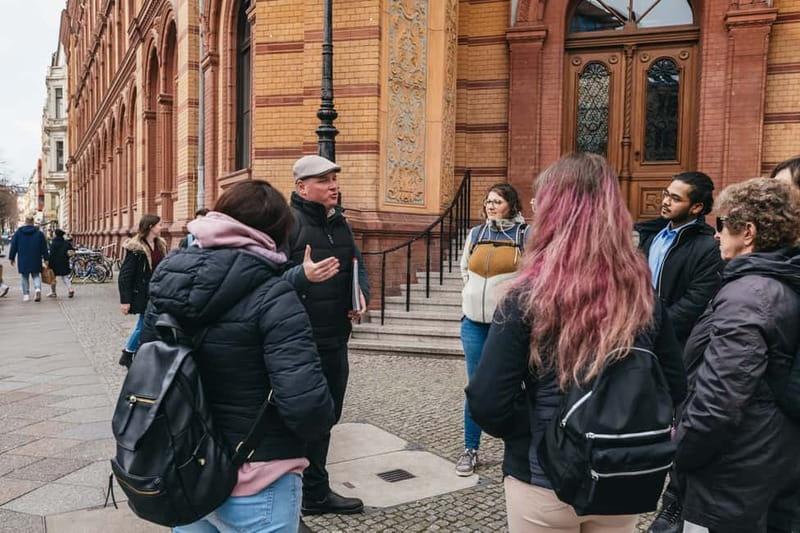
Walking to the Memorial to May 10, 1933 Nazi Book Burning (at Bebelplatz) is one of the tour’s most striking moments. The Nazis didn’t start by arresting everyone. They started by controlling ideas and punishing free thought.
Your guide connects the book burning to the regime’s ideology, including the Nazis’ belief system built around Aryan superiority and their violent concept of “Sub-Races.” This is where the tour makes the link between propaganda and genocide feel logical, not random.
I recommend standing still for a moment here, even if your instinct is to keep moving. The site is short on spectacle and heavy on meaning, and the tour encourages you to let that land.
Stolpersteine and hidden Jewish memorials: learning where the city remembers
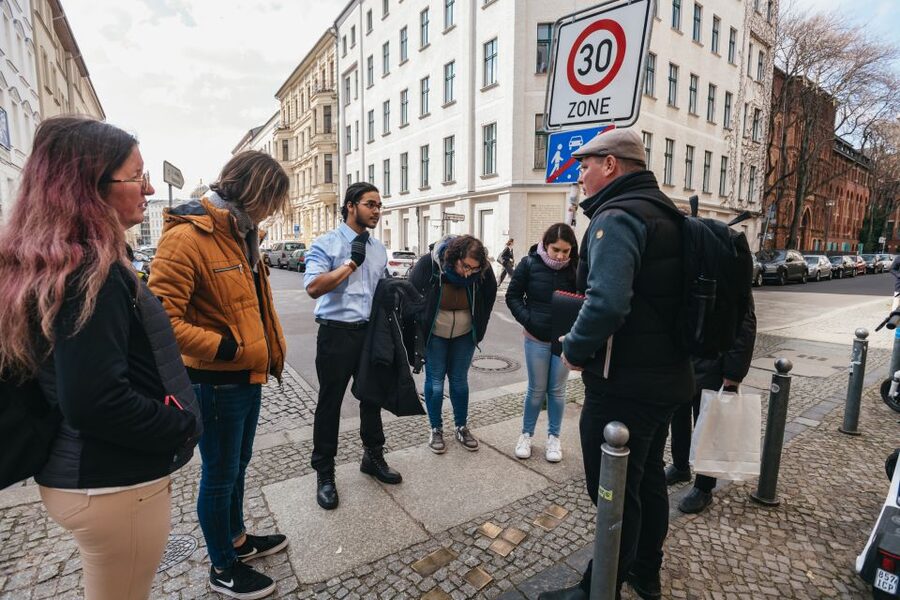
One of the most “Berlin” parts of this experience is how it treats memory as something built into ordinary streets. The tour includes Stolpersteine memorials and explores hidden Jewish memorials in Berlin’s old quarter.
These aren’t always the grand monuments that catch your eye from across the street. They’re small, easy to miss, and that’s part of why they work. Your guide points out what to look for, so you start seeing the city as a map of remembrance rather than a collection of attractions.
This section also helps you understand that history isn’t just in museums. It sits in plaques, names, and marks that connect to the people removed from their homes and deported.
Trains to Life – Trains to Death: when the route turns to deportation reality
The tour includes a stop called Trains to Life – Trains to Death. It’s here that the story tightens around the machinery of Nazi oppression, including deportation. The tour also references the concept of a former deportation centre, and the emotional tone shifts accordingly.
This is the part where you see how the regime converted cruelty into a system. It’s not just hatred—it’s logistics. It’s schedules, trains, and the way human lives were processed like cargo.
If you want to get the most out of this stop, pay attention to the guide’s explanation of how antisemitism became state-sponsored genocide. The tour doesn’t treat the Holocaust as a sudden eruption. It explains how ideology turned into action, and how Berlin’s infrastructure became part of that process.
Finishing at Berlin Friedrichstraße: practical closure to keep your day moving
You finish at Berlin Friedrichstraße station. That matters more than it sounds. After a tour this emotionally heavy, you need an exit plan that’s simple. Ending at a major transport hub helps you avoid getting stuck, lost, or rushed into the next thing before your brain is ready.
It’s also a good time to consider what you want to see next. The tour includes insider recommendations for further exploration, which can help you keep your momentum without repeating history-focused stops blindly.
Price and value: is $57 for 150 minutes a fair deal?
At $57 per person for about 150 minutes, this is priced in the range of a serious guided experience, not a budget stroll. I think it’s good value if you care about interpretation—not just locations.
You’re paying for several things that cost money to do well: a WWII specialist guide, a small group, entry to museums and memorials, and guided discussion with maps and photographs. Since the group stays small, you also get a better chance to ask questions rather than listening from the back of a crowd.
Another value point: the tour includes locations and perspectives that many mainstream Berlin history walks don’t prioritize. That matters if you’ve already seen the usual “big hits” and want something more focused on resistance and human stories.
If you’re short on time or your comfort zone doesn’t handle grief, then you might decide this is too intense. But for the right traveler, the cost feels aligned with the effort and the depth.
Who this tour is best for (and who should think twice)
This works especially well for you if:
- You want a Berlin Holocaust history walk that centers resistance and human choices
- You prefer a guided narrative with discussion and Q&A
- You’re okay walking 150 minutes and stepping into emotionally serious places
- You like learning the “why,” not only the “what”
You might want to think twice if:
- You’re looking for something light or entertainment-focused
- You struggle with emotionally heavy historical topics without breaks
- Weather affects you badly and you’re not willing to bring rain or sun protection
Tips to make the most of it
Bring comfortable shoes and an umbrella—the tour runs in all weather. Pack water, too. You’re on your feet for a long enough stretch that small comforts matter.
Also, plan your day with a little buffer afterward. Ending at Friedrichstraße gives you convenience, but your mind might still be processing what you saw and heard.
Your guide will not allow alcohol or drugs, which helps keep the tone appropriate for the sites.
Should you book this resistance-focused Holocaust stories tour?
I’d book it if you want Berlin history that feels specific and morally engaged. The mix of sites—New Synagogue area, Otto Weidt’s workshop, Rosenstraße women’s protest, Bebelplatz book burning, and deportation-related memorials—creates a story you can carry beyond the walk.
It’s also a smart choice if you’re done with generic “see the sights” tours. This one spends time where most people either rush through or never notice at all, including quieter memorial spaces and street-level reminders.
If you handle intense topics responsibly and you’re ready to learn through stories of courage and survival, this is a standout use of a Berlin half-day.
FAQ
How long is the tour?
The tour runs for 150 minutes.
How much does the tour cost?
The price is listed as $57 per person.
What language is the tour guide?
The tour is guided in English.
How big is the group?
It’s described as a small group, limited to 10 participants, and also listed as max 15 people. It’s best to confirm the exact limit when you book.
Where do we meet?
The meeting point is the former Imperial Post Office. The guide will be standing at the main entrance holding a blue umbrella.
Is the tour wheelchair accessible?
Yes, the tour is listed as wheelchair accessible.
What should I bring?
Bring comfortable shoes, an umbrella, and water.
Does the tour run in bad weather?
Yes. It runs in all weather conditions, so dress for the conditions and bring rain or sun protection.
What’s included and what’s not?
Included: expert local historian guide, entry to museums and memorials, small group size, then & now photographs and historical maps, interactive discussion and Q&A, and insider recommendations. Not included: public transport tickets and food or drinks.
More Tour Reviews in Berlin

Berlin's Wartime History

Round out your days in Berlin

Third Reich & WWII History, compared.
 ★ 4.9Third Reich & Cold War Guided Walking TourFrom $238,378 reviews
 ★ 5.0Berlin’s Best: 2 Hour Walking Tour Third Reich and the Cold WarFrom $245,486 reviews
 ★ 5.0Third Reich Berlin: Hitler and WWII Walking TourFrom $243,301 reviews
 ★ 4.9Third Reich, Hitler, and WWII Walking TourFrom $191,757 reviews
 ★ 5.0Berlin Third Reich Sites: Half-Day Walking TourFrom $21835 reviews
 ★ 4.7History of the Third Reich Guided Walking TourFrom $30791 reviews
 ★ 4.8The Wall and Third Reich Guided Bike TourFrom $41578 reviews
 ★ 4.8Hitler’s Germany: Berlin During the Third Reich & WWIIFrom $23476 reviews
Browse the lists this tour appears in