
REVIEW · WALKING TOURS
Private Berlin Walking Tour
Berlin can feel huge. This tour keeps it readable. In about 2.5 hours, you walk between the city’s biggest turning points, with an expert guide translating monuments into a clear story of division, dictatorship, and recovery. The private setup also means you can ask follow-up questions instead of shouting over strangers.
Two things I like a lot: the route is built around high-impact sites that are free to visit (at least at the stops listed), and the pacing gives you time to actually look, not just speed-pose for photos. One possible drawback: there’s no hotel pick-up or drop-off, so you’ll want to plan your arrival on your own—walking comfort matters too.
In This Review
- Key highlights worth planning around
- Why This Private Berlin Walk Works So Well in 2.5 Hours
- Meeting at Hotel Adlon Kempinski and Finishing at Bebelplatz
- Brandenburg Gate: More Than a Landmark
- Holocaust Memorial: How to Look Without Turning Away
- Memorial of the Berlin Wall: The Wall as a City, Not a Ruin
- Fuhrerbunker: The Anti-Drama of a Parking Lot
- Aviation Ministry of Berlin: Nazi Architecture’s Afterlife
- Checkpoint Charlie: Cold War History in a Tourist-Saturated Zone
- Gendarmenmarkt: Architecture and Atmosphere in One Square
- Bebelplatz Book Burning Memorial: The Emptiness You Can See
- Price and Value: Is $285.09 Worth a Private 2.5-Hour Walk?
- Who This Tour Suits Best (and Who Might Prefer Something Else)
- Quick Tips to Make the Most of Your Walk
- Should You Book This Private Berlin Walking Tour?
- FAQ
- How long is the private Berlin walking tour?
- Where does the tour start and end?
- Is the tour private or shared with other groups?
- Is the tour offered in English?
- Are any admissions included for the stops?
- Is hotel pick-up or drop-off included?
Key highlights worth planning around
- Private format means you only move with your group, not a crowd
- Free-entry stops at the listed sights keep value strong
- Expert guidance in English helps you understand what you’re seeing
- Mobile ticket use keeps things straightforward on the day
- Route threads WWII and Cold War into one connected walk
More of Berlin on foot
- Discover Berlin Half-Day Walking Tour★ 5.0 · 9,624 reviews
- Berlin City walk Government District and Places of Democracy★ 4.7 · 8,467 reviews
- Berlin: Third Reich & Cold War Guided Walking Tour★ 4.9 · 8,378 reviews
- Berlin: Discover Berlin Walking Tour★ 4.9 · 5,998 reviews
Why This Private Berlin Walk Works So Well in 2.5 Hours
Berlin history isn’t short. But this format is. You get a tight loop of landmarks tied to the same big question: what happens when a nation is split by force, then tries to rebuild.
The best part is the guide’s job. Monuments in Berlin can be impressive and still feel confusing if you don’t know what to notice. In particular, guides named Marc and Jenny are praised for bringing structure to the story—like explaining how postwar Germany was divided using a simple map. That kind of explanation makes the rest of the walk click fast.
Also, the timing is smart. Each stop gets a small block of time (often around 15–20 minutes). That’s enough to look carefully and hear context without turning the day into a slow slog.
Meeting at Hotel Adlon Kempinski and Finishing at Bebelplatz
You start at Hotel Adlon Kempinski Berlin on Unter den Linden (77, 10117 Berlin) and end at Bebelplatz. That end point is practical. After the tour, you’re in an area with services, and it’s easy to keep your day going with food, coffee, and more sightseeing.
Because there’s no hotel pick-up or drop-off, I’d treat this as a “show up ready” tour. Arrive a few minutes early, confirm where your guide is meeting you, and take care of any bathroom needs before you start walking.
Good news for logistics: the tour is near public transportation, so if you’re using transit, you can likely plan an easy route in and out.
If you’re traveling with a service animal, it’s allowed.
Brandenburg Gate: More Than a Landmark
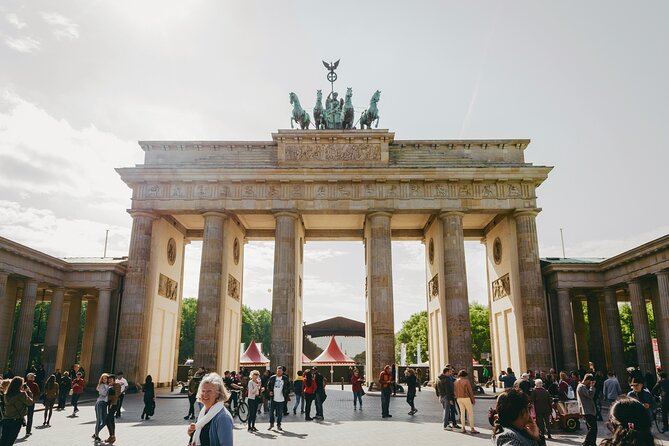
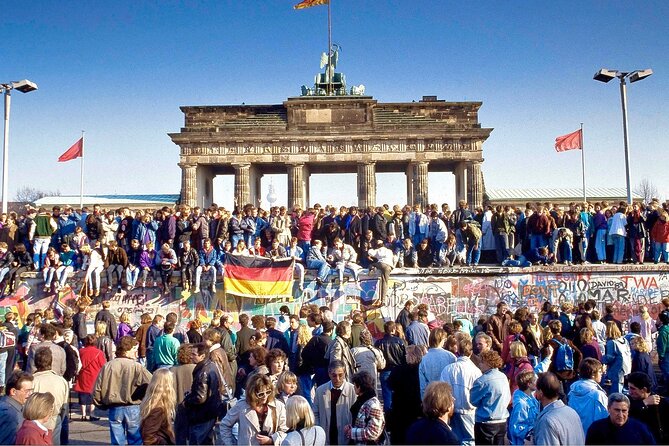
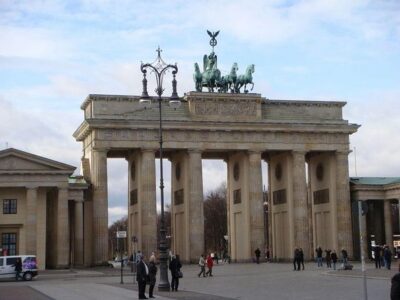
The Brandenburg Gate is the poster child of Berlin. But the real value here is what it represents over time. Built as a neoclassical triumphal arch in the 18th century, it also became a witness to later drama—especially the fall of the Berlin Wall and the meaning of unity afterward.
Why it matters on a walking tour: at the Gate, you can quickly get oriented. It’s a clean anchor point. When your guide connects it to the later stops, you start to see how Berlin’s physical layout and its politics overlap.
Practical note: it’s an outdoor stop. You’ll be at the mercy of the weather, and this area can be active. If the crowd energy feels intense, rely on your guide to point out what to focus on so you’re not stuck only looking at people.
Holocaust Memorial: How to Look Without Turning Away
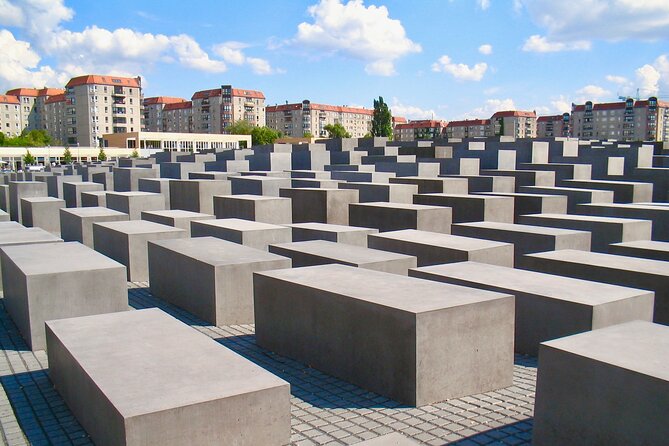
The Memorial to the Murdered Jews of Europe (the Holocaust Memorial) is not designed for casual strolling. It’s made of 2,711 concrete slabs arranged in a grid on a sloping field. That abstract design is the point: it forces you to slow down and feel disorientation instead of consuming it like a sight.
On a guided walk, I find this kind of stop works best when someone tells you what to do with your attention. You don’t need a script, but you do need a framework: the symbolism of structure, spacing, and movement across the ground.
Drawback to consider: this is emotionally heavy. If you’re looking for light and funny sightseeing the whole time, this stop will remind you to change gear.
More private tours of Berlin



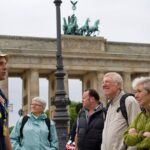

Memorial of the Berlin Wall: The Wall as a City, Not a Ruin
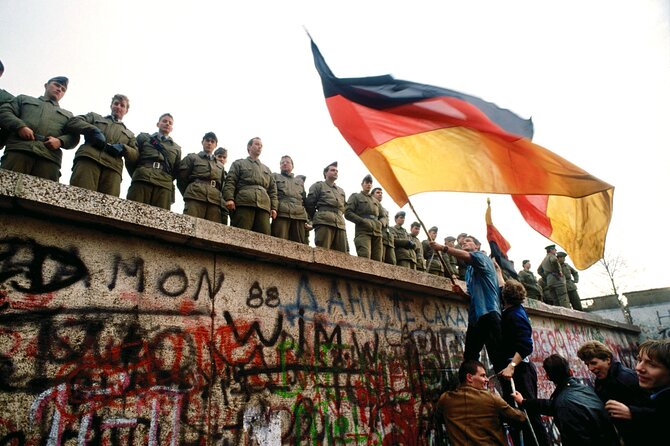
Berlin’s wall story isn’t confined to one location. Remnants are preserved around the city, and that changes how you perceive it. At the Berlin Wall Memorial, the guide helps you understand the transition from a symbol of Cold War division to a reminder of hope.
One clever thing about stopping here on foot: you can connect the concept to the city’s streets. You’re not just reading history on a plaque. You’re seeing how the wall shaped where people could go.
Also, you’ll likely hear about the East Side Gallery—the section known for its outdoor murals—because it shows how Berlin re-used the wall’s presence instead of pretending it didn’t exist. Just be ready: it’s art, but it’s also a memory machine.
Fuhrerbunker: The Anti-Drama of a Parking Lot
At Fuhrerbunker, you’re at the site of Hitler’s bunker—his final days during WWII. Today, it’s described as an unremarkable parking lot, and that contrast is part of the message. The physical setting doesn’t shout. The information boards do.
This is one of the stops where a guide really matters. Without context, you might look at the area and think, okay, where’s the historical impact? With context, the site becomes a quiet reminder of what power looked like at the end—and what it led to.
If you dislike stark contrasts, consider that this one may feel strange. But if you like understanding how history survives in everyday spaces, you’ll get a lot from it.
Aviation Ministry of Berlin: Nazi Architecture’s Afterlife
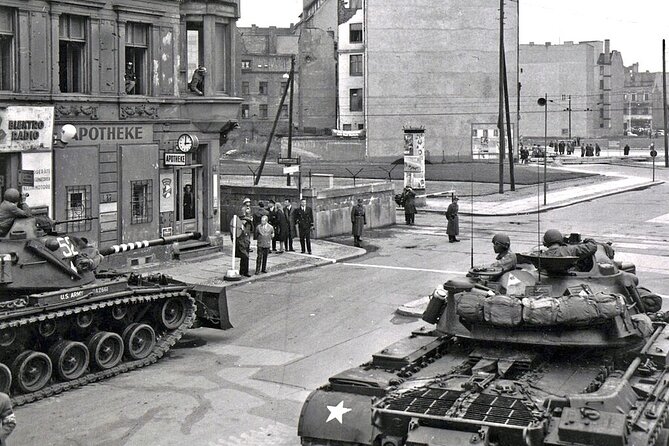
Next is the Aviation Ministry of Berlin, formerly the headquarters building for the Nazi Air Force (Luftwaffe). Today, the building houses the German Finance Ministry.
This stop works because you can see how regimes leave behind more than laws. They leave behind massive architecture and institutional shells. That makes the building a perfect bridge from WWII into the modern city you’re standing in now.
What you’ll likely take away: buildings can be repurposed without fully erasing what they were. Berlin forces that kind of thinking in a practical way.
Checkpoint Charlie: Cold War History in a Tourist-Saturated Zone
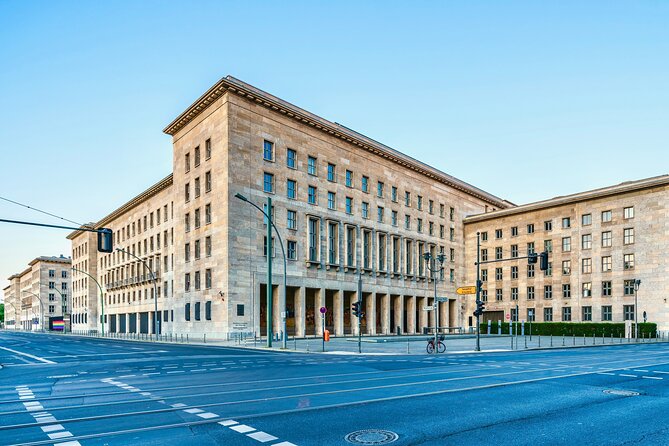
Checkpoint Charlie was a major crossing point between East and West Berlin during the Cold War. Here, the reality is both historical and modern. The area includes a replica guardhouse and an informative museum that documents escape attempts and Cold War history.
The value of a guided stop is cutting through the tourist layer. If you only wander on your own, this place can become a checklist. With a guide, it turns into a human story about fear, risk, and the lengths people went to for freedom.
Possible drawback: because it’s a famous name, it can feel more commercial than the more reflective memorial sites. I’d still plan to lean into the story elements your guide highlights.
Gendarmenmarkt: Architecture and Atmosphere in One Square
Then you shift gears—still historical, but more beautiful. Gendarmenmarkt is one of Berlin’s most elegant squares, framed by the French and German Cathedrals and the concert house.
I like this stop because it gives your brain a reset. After heavy WWII and Holocaust sites, stepping into an open, architectural space is a smart pacing move. The guide’s explanation helps you see the symmetry and design choices rather than treating it as just a nice background for pictures.
Also, the square is used for markets and cultural events at different times of the year. That means even if your day doesn’t match a major event, you still get a sense of how Berlin keeps life moving.
Bebelplatz Book Burning Memorial: The Emptiness You Can See
At Bebelplatz, the highlight is the somber Book Burning Memorial. The concept is simple and haunting: a transparent pane set into the cobblestones reveals empty bookshelves below, symbolizing the lost works after the Nazi book burnings in 1933.
This is the kind of stop that benefits from quiet attention. It’s not trying to entertain you. It’s asking you to notice absence.
If you’re the type who likes history that leaves a mark, you’ll probably remember this one long after you’ve forgotten the details of other stops. If you hate emotional heaviness, you might find it draining—but that’s also why it lands.
Price and Value: Is $285.09 Worth a Private 2.5-Hour Walk?
At $285.09 per person, this is not a budget stroll. But it’s also not trying to be one. The main value is that it’s private and led by a certified expert guide, so you’re paying for translation, context, and a focused route.
For me, the value equation looks like this:
- You get a guided explanation at major landmarks that can otherwise feel disconnected.
- The stops listed are free admission, which reduces the temptation to “just keep moving” when you’re trying to make the most of your money.
- You’re not stuck waiting for a big group. You can ask for clarification and steer the conversation slightly, which helps when history is dense.
If you’re traveling as a small group, this kind of private format can feel more reasonable because everyone benefits from the guide’s time. If you’re traveling solo and used to cheaper walking tours, this price may feel high. Still, for WWII and Cold War content, I think the guide-driven context justifies paying for clarity.
Who This Tour Suits Best (and Who Might Prefer Something Else)
This tour is a strong match if you want:
- a structured way to understand Berlin’s WWII and Cold War timeline
- meaningful stops rather than a “see everything in Berlin” approach
- an English-speaking guide who can explain the big picture, not just name places
It’s also a good option if you care about pacing. You’ll see a lot without feeling like your legs are doing a second job.
Who might skip it? If you hate memorial settings, or you’re in a mood for lighter sightseeing only, you may find parts of the route emotionally heavy. Also, because it ends at Bebelplatz and starts at the Hotel Adlon area, it’s best if you don’t require a hotel doorstep service.
Quick Tips to Make the Most of Your Walk
- Wear comfortable shoes. This is a walking tour, and you’ll be standing at multiple landmarks.
- Bring a layer. Berlin weather can change fast, and you’ll be outside for several stops.
- If something hits hard (and it may), slow down. This tour is built for reflection as much as facts.
- Use the guide’s explanations. Ask questions like how one site connects to another. That’s where the whole story starts to make sense.
Should You Book This Private Berlin Walking Tour?
I’d book it if you want a private, expert-led Berlin history walk that keeps the story tight across WWII and the Cold War. The mix of major sites and free-entry stops makes it easier to justify the price, and the guide quality (including praised communication from guides like Marc and Jenny) seems to be the difference-maker.
Skip it if you want a casual, entertainment-first tour, or if you really need hotel pick-up and drop-off. Otherwise, this is a solid way to get your bearings fast and leave with a clearer understanding of how Berlin’s darkest chapters shaped the city you see today.
FAQ
How long is the private Berlin walking tour?
It lasts about 2 hours 30 minutes.
Where does the tour start and end?
The tour starts at Hotel Adlon Kempinski Berlin (Unter den Linden 77, 10117 Berlin) and ends at Bebelplatz (10117 Berlin).
Is the tour private or shared with other groups?
It’s private, meaning only your group participates.
Is the tour offered in English?
Yes. It’s offered in English.
Are any admissions included for the stops?
The listed stops show free admission ticket for each location on the itinerary.
Is hotel pick-up or drop-off included?
No. The tour does not include hotel pick-up or drop-off.
More of Berlin on Foot



More Tours in Berlin





More Tour Reviews in Berlin

Round out your days in Berlin

Walking Tours, compared.
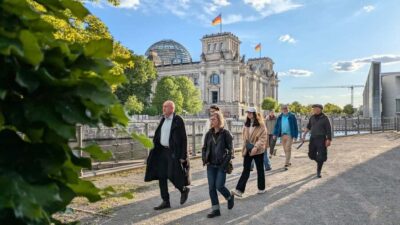 ★ 4.7Berlin City walk Government District and Places of DemocracyFrom $2948,467 reviews
 ★ 4.9Third Reich & Cold War Guided Walking TourFrom $238,378 reviews
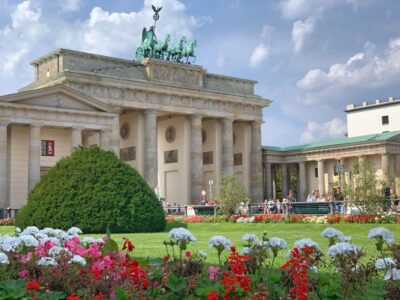 ★ 4.9Discover Berlin Walking TourFrom $235,998 reviews
 ★ 5.0Berlin’s Best: 2 Hour Walking Tour Third Reich and the Cold WarFrom $245,486 reviews
 ★ 4.8Hidden Backyards Guided Walking TourFrom $235,360 reviews
 ★ 5.0Third Reich Berlin: Hitler and WWII Walking TourFrom $243,301 reviews
 ★ 4.9Third Reich, Hitler, and WWII Walking TourFrom $191,757 reviews
 ★ 4.6Alternative Berlin Walking TourFrom $291,204 reviews
Browse the lists this tour appears in