
REVIEW · HISTORICAL TOURS
Private Taxi Tour City East & West History and Architecture 3-4h
Berlin flips from East to West in one ride. This private taxi tour of Berlin’s East and West packs famous landmarks and telling side details into a tight 3–4 hour loop, so the city’s history clicks fast. You’ll move between West’s grand boulevards and East’s political landmarks, with plenty of stops to look up, not just through glass.
I especially liked two things. First, the guide is Gunter Bauer-style responsive: he checks your interests ahead of time, stays flexible if plans shift, and keeps the day moving without turning it into a checklist. Second, the taxi comfort matters more than you’d think in Berlin, with a warm or air-conditioned ride plus a pace that gives you real sightseeing breaks.
One drawback to consider: time is short. With so many stops in 3–4 hours, you’ll get great context and impressive views, but you won’t have museum-level wandering at every location.
In This Review
- Key highlights at a glance
- Entering Berlin’s East and West by Taxi, Not Bus
- Meet Your Guide: Gunter Bauer’s Tone Makes the Day
- West Berlin Essentials: Memorial Church, Zoo, and the Ku’damm Mood
- KaDeWe: A West Berlin Luxury Stop That Still Feels Human
- The Bundestag Complex: Architecture as Politics
- East Berlin Classics: Unter den Linden, Brandenburg Gate, and Soviet-Style Scale
- Gendarmenmarkt: German and French Domes That Aren’t What You Think
- Humboldt Forum: A Palace Shadow, Rebuilt for Today
- Old Berlin Around the Spree: Nikolaiviertel and Knoblauchhaus
- Museum Island Adjacent and Beyond: Potsdamer Platz to Kulturforum
- Waterways and Government Power: The Landwehr Canal Angle
- Embassies, Cold War Edges, and Topography of Terror
- Final Stops That Add Texture: Hackesche Höfe and DomAquarée
- Price and Value: What $150.18 Buys You
- Should You Book This East-West Taxi Tour?
- FAQ
- How long is the Private Taxi Tour City East & West History and Architecture?
- What is the price per person?
- Is the tour private, or do I join other groups?
- What language is the tour offered in?
- Does the tour include pickup?
- Are any entry tickets included?
- Does the tour include lunch?
Key highlights at a glance
- Private taxi comfort with WiFi on board and an air-conditioned vehicle
- Gunter Bauer’s prep and flexibility, including adapting to your interests
- East-West contrast in one arc, from Ku’damm shopping energy to Bundestag-era architecture
- Architecture details you’ll actually notice, like the preserved Kaiser Wilhelm Memorial Church tower and the new church’s soundproof design
- Smart stop mix, including spots with free entry moments and an included ticket stop at the Humboldt Forum
- Photo support after the tour, since the guide takes pictures and shares them afterward
More Berlin tours to line up side by side
- Berlin: 1-Hour City Tour by Boat with Guaranteed Seating★ 4.3 · 16,993 reviews
- Berlin City walk Government District and Places of Democracy★ 4.7 · 8,467 reviews
- Berlin: City Sightseeing Hop-On Hop-Off Bus Tour★ 4.1 · 4,233 reviews
- Berlin: 1-Hour City Sightseeing Cruise★ 4.4 · 2,210 reviews
Entering Berlin’s East and West by Taxi, Not Bus

Doing Berlin with public transit is totally workable, but it’s not the fastest way to connect the big ideas. This tour works because Berlin’s main “storylines” are spread out: you need the city’s scale explained, and you need time to see the buildings close enough to understand what they were built to project.
In a taxi, I love that you’re not wrestling with transfers or timing. You’re sitting back while the guide points out what matters and when something is out of place. Berlin’s architecture often makes more sense when you hear the political or social reason it ended up that way.
You also get more “real Berlin” energy than you would on a slow walking day. You’ll pause where the streets are most alive, and you’ll watch traffic and crowds shape how a square feels—then the guide gives you the history behind that same space.
Meet Your Guide: Gunter Bauer’s Tone Makes the Day
The biggest reason this tour earns a near-perfect rating is simple: Gunter Bauer knows how to be both informative and human. You’re not just getting dates and names. You’re getting context, plus little perspective shifts that make the next stop easier to follow.
From the reviews, his approach stands out in two ways. He often emails ahead to ask what you want to see, and he’ll adjust if something derails your schedule. More than once, the guide was flexible when people hit travel delays, then reworked the timing so the day still felt complete.
He also takes photos during the tour and sends them afterward. That’s a surprisingly practical perk in Berlin, where many landmarks are best shot in the exact moment the angle makes sense—especially at places like the Brandenburg Gate or the Kaiser Wilhelm Memorial Church viewpoints.
West Berlin Essentials: Memorial Church, Zoo, and the Ku’damm Mood
West Berlin isn’t just one neighborhood—it’s a mindset shaped by rebuilding, consumer culture, and grand urban planning. Your West stretch typically starts with the Kaiser Wilhelm Memorial Church area, where Berlin keeps both trauma and resilience in view.
You’ll see the church’s preserved war-damaged parts—especially the tower and the west portal—then you’ll also see the modern building. The famous “lipstick and powder compact” nickname isn’t just a joke. It captures the feeling of the new silhouette beside the battered old tower. Inside, the modern church uses thousands of specially made glass stones that create a blue glow, and it’s surprisingly quiet because there’s a double wall with soundproofing air.
Next, you’re in Berlin Zoo territory, and this isn’t a casual photo stop. Berlin Zoo traces back to King Friedrich Wilhelm IV, when the animals moved near Berlin to support royal interests. Today it’s one of Germany’s biggest animal collections: about 16,000 animals across 1,600 species. The guide also points out how many buildings are styled around where the animals come from, which still reads well even after wartime damage.
Then comes the West’s classic theater-and-shopping zone. The Theater des Westens gives you a taste of early 20th-century ambition: build out toward the greener west because the dense city center felt too tight and noisy. From there, you roll into Kantstraße and the stretch that most people mean when they say Ku’damm.
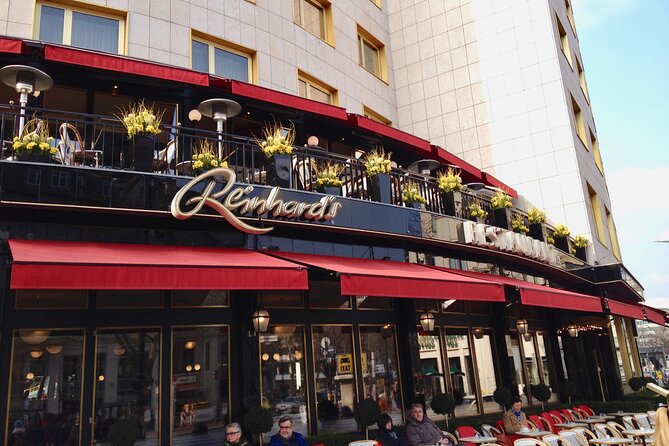
On the Kurfürstendamm (Ku’damm) run, it helps to understand what you’re really looking at. It started as a grand boulevard modeled in spirit after Paris’s Champs-Élysées after Bismarck’s victory over France, right down to the candelabra influence. Today it’s more “shopfronts and flagship stores,” including the kind of stores you notice even if you don’t buy anything. At night, the boulevard can feel oddly empty compared with the daytime scene, which is a useful detail when you’re thinking about how the city’s social patterns shifted.
KaDeWe: A West Berlin Luxury Stop That Still Feels Human
One of the most fun parts of this tour is KaDeWe, the famous department store on the Tauentzien. Even if you’re not a luxury shopper, it’s worth it as a cultural artifact: a West Berlin statement about abundance.
The KaDeWe experience is easy to understand in two layers. First, it’s massive—around 60,000 m². Second, it’s sensory: the gourmet floor is basically a show of food as status, from champagne to oysters, plus endless bread and cheese options. If you like people-watching, you’ll get plenty of that too.
The practical upside: you’re not forced into hours here. The stop is structured so you can enjoy the atmosphere, eat something if you want, and still keep moving with the tour’s bigger storyline.
More private tours of Berlin


The Bundestag Complex: Architecture as Politics
East Berlin politics can feel heavy. That’s why this portion is smart: the guide ties the buildings to how decisions are made and who is supposed to “look in.”
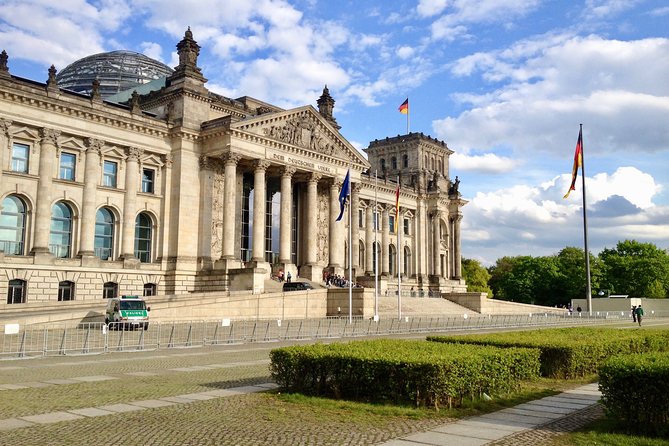
As you reach the modern parliamentary zone, you’ll see the Reichstag area and then move to the buildings that support how the system actually runs.
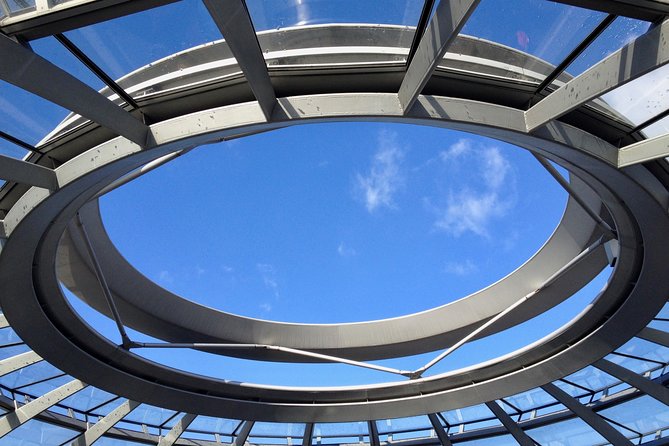
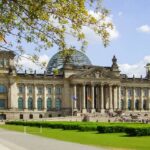
A key moment is the Reichstag itself—damaged by war, later rebuilt, and wrapped into a new identity with the famous dome concept. The dome isn’t just a cool viewpoint; it signals transparency and modern governance, and the redesign story helps you understand why Berlin wanted a new center of gravity after reunification.
Then you’ll look at the “engine” of parliament: the large glass structure where much of the real committee work happens. From inside, it’s built for visibility and structure; from outside, it still reads like an intentional political machine—long, glassy, and designed for public presence.
You’ll also see the German Chancellery complex. The big-window style is meant to show official power in a modern way. The guide points out how accredited journalists observe the government from a designated area and how the blue wall reflects into the façade. It’s a small detail, but it makes the building feel less abstract: you’re seeing how the political spotlight works.
Finally, you get a sense of how Berlin’s “top floor power” is both real and symbolic. Even if you never step inside every office space, the scale (and the planning logic) becomes clear.
East Berlin Classics: Unter den Linden, Brandenburg Gate, and Soviet-Style Scale
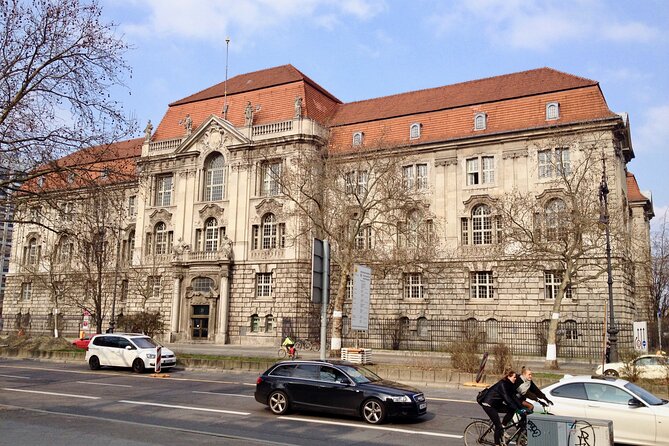
The East-side arc often starts with the grand, ceremonial vibe of Unter den Linden. This boulevard began as a quieter bridle path connecting the palace area to the hunting grounds that became the zoo. Over time, it became a showcase line for major buildings: universities, libraries, and state institutions.
Standing along it feels different from Ku’damm. The street reads more formal, because it was planned for long sightlines and power projection. The guide helps you “read the street” like an architectural document, not just a way to get from A to B.
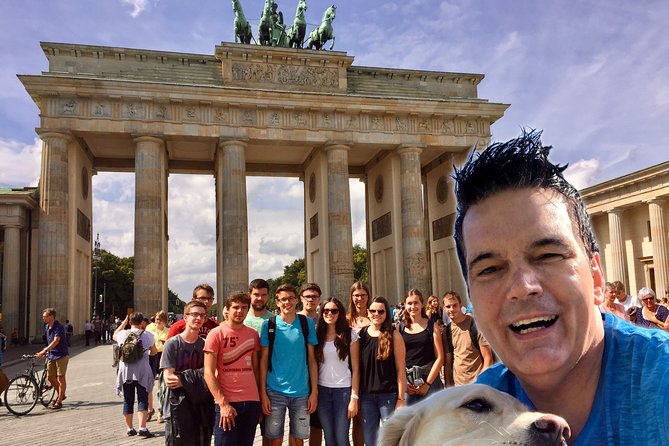
Then comes the Brandenburg Gate, Berlin’s most photogenic “living room” space. You’ll learn why so much around it used to be erased, leaving the gate as the anchor after war and demolition. Even the wall logic around it mattered: the gate ended up as an almost isolated object between a thick western wall and an eastern separation fence.
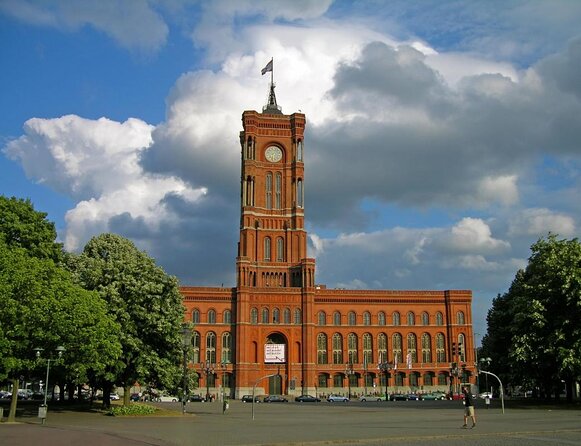
From there, the tour pulls you into the broader story of Soviet-era construction in the center of Berlin. You’ll see the kind of palace-scale presence built by the USSR to document authority in the middle of a city where other embassy structures were in ruins. The guide’s explanation helps you see that these buildings were never just offices. They were messages.
Gendarmenmarkt: German and French Domes That Aren’t What You Think
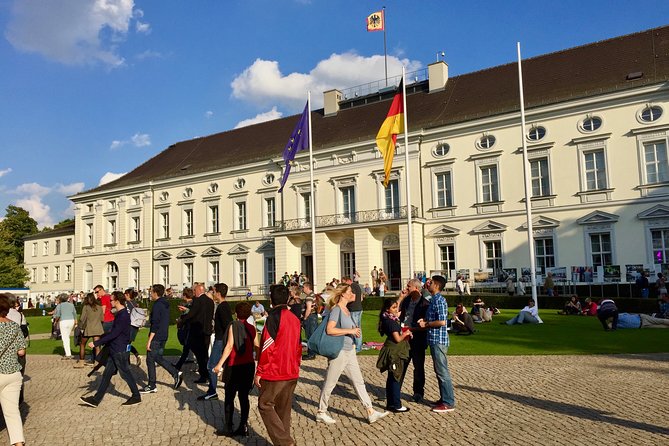
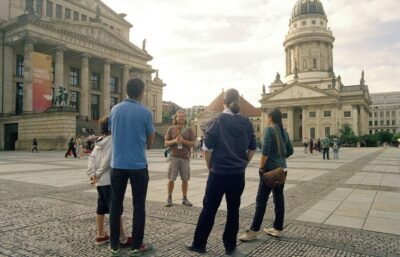
Gendarmenmarkt is one of those squares where you instantly understand why people call it the most beautiful. You’ll see the two cathedral-like domes framing the square—yet they weren’t meant as bishop seats in the way many people assume. They’re meetinghouse towers inspired by Frederick the Great’s sense of grandeur.
The guide also connects the space to refugee history. A big point here is the French Protestant Huguenot community, whose church was rebuilt in GDR times. That angle turns the square from “pretty postcard” into “a place where Berlin’s religious politics show up in stone.”
It’s also an easy stop to enjoy because it’s made for lingering. Even if you’re moving on soon, the scale of the square gives you time to absorb it.
Humboldt Forum: A Palace Shadow, Rebuilt for Today
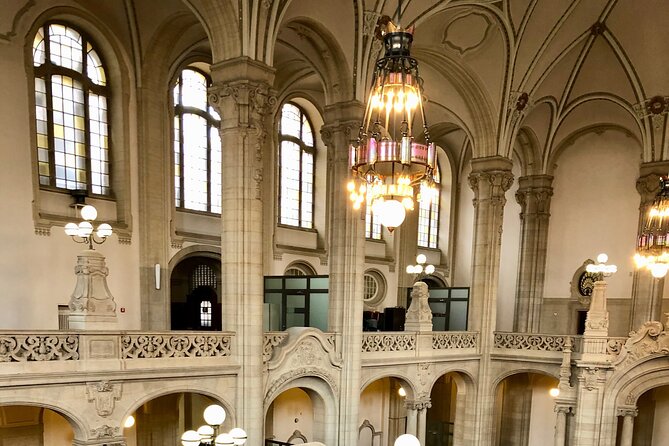
The Humboldt Forum stop is included by ticket on this tour, and it’s one of the strongest “why Berlin is Berlin” experiences. For decades, the site was empty, even used for parking and temporary activity. That void mattered symbolically, because the palace silhouette had remained even when the interior was destroyed.
After reunification, the choice was made to rebuild the palace exterior and reconstruct key courtyard parts—so what you see isn’t just modern museum space. It’s Berlin arguing with its own past, then moving forward with a new function.
Inside, your guide focuses on the blend of collections and architecture. You’re in the modern concrete structure, but the rebuilt palace elements show how the city wanted to reconnect to older forms while adding contemporary public meaning.
If you like to understand how museums are built to communicate, this stop will click. It’s not just what’s displayed; it’s why the building exists.
Old Berlin Around the Spree: Nikolaiviertel and Knoblauchhaus
If Berlin’s political story is heavy, Nikolaiviertel is the relief break. The guide brings you through reconstructed older streets and the Nikolaikirche area, where the city intentionally recreated a sense of old Berlin during the 1980s reconstruction push.
The guide’s explanation here helps you be a smarter observer. You’ll see the older-feeling architecture as part of Berlin’s postwar effort to “remember” itself, not as untouched medieval reality. That distinction changes how you interpret details: it becomes about how Berlin chooses cultural presentation.
Nearby, the Knoblauchhaus is typically the kind of stop that feels small but satisfying. The focus is on Biedermeier interiors and the family life of a cloth maker. Even without turning it into a long museum session, it gives you a grounded look at everyday life—right next to the water and restaurants.
Museum Island Adjacent and Beyond: Potsdamer Platz to Kulturforum
As the tour swings through central Berlin again, it often includes the “modern Berlin” landmarks people associate with the postwar and post-reunification rebuild phase.
You’ll likely pass through areas around Leipziger Platz and then connect to the story of Potsdamer Platz as a once-busy intersection that became a symbol of disruption and return. The tour frames why it was built up with new commercial energy—then why it never fully became the lively original fantasy.
From there, the plan can shift to the Kulturforum area: institutions built as a counterpart to Museum Island, including the Philharmonie and major gallery spaces. If you like art, this part helps you see how Berlin’s cultural planning moved westward and how architecture itself was treated like an identity statement.
If you don’t love art museums, you can still enjoy this segment because you’re learning the city’s planning logic: where culture got placed, why those choices mattered, and how the new buildings relate to older cores.
Waterways and Government Power: The Landwehr Canal Angle
One of the most satisfying “aha” moments on this kind of tour is realizing Berlin is engineered around water. The guide can point out how the city has been drained, dammed, and channelled for centuries, with Dutch experts helping shape parts of the system.
A key thread here is the Landwehr Canal, which ties into transportation and drainage history and helps you understand why waterways were treated like infrastructure, not scenery. The guide also points out that many sights look different from water-level perspective, which is useful if you’re considering a boat trip on your own.
This also connects nicely to how modern government buildings are placed near strategic city lines, so the tour doesn’t become purely architectural trivia. It becomes a map of how decisions and geography overlap.
Embassies, Cold War Edges, and Topography of Terror
Berlin’s “East-West tension” isn’t just in memorials. It’s built into the city layout. You’ll often see embassy rows near key transport lines, and the guide connects the design choices to political alignment.
One memorable stop is Topography of Terror, which the tour treats as a quick but meaningful history stack. You’ll see layers that cover Imperial/Prussian-era buildings, then Nazi-era administrative structures, then the exposed remnants of torture cells uncovered during later excavations. The guide also connects this to how Berlin chose to document Nazi terror after reunification.
The pacing here works. Even if you only spend a short time, you’ll get enough structure to understand what you’re looking at and why it’s preserved in the way it is.
You may also reach Checkpoint Charlie for a photo stop. The guide explains what you’re seeing: the replica checkpoint look is a stand-in, and even the famous sign is not the original. But this matters because the entire point is the Cold War confrontation story, including the tank standoff in October 1961. In other words: don’t treat it like history you found. Treat it like history you’re being guided to.
Final Stops That Add Texture: Hackesche Höfe and DomAquarée
Toward the end, the tour often shifts into neighborhoods that feel more like day-to-day Berlin.
Hackesche Höfe is one of the best examples of a courtyard ensemble restored after the Wall fell. You’ll see Art Nouveau charm, green atria, and the way old workshop space turned into shops. It’s a good stop for a quick reset because it feels human-scaled, even when Berlin gets huge.
You might also get a train-station pass or a central transit moment, and the guide uses it to talk about how Berlin restructured rail connections after separation. That sort of urban planning context makes the city’s layout feel less random.
Then, some tours include DomAquarée, where the experience is built around motion. You can walk under aquatic animals and end in a South Sea area, and the hotel lift runs through the aquarium space. It’s a strange but fun ending, especially if you want something visually different from politics and architecture.
Price and Value: What $150.18 Buys You
At about $150.18 per person for a 3–4 hour private taxi format, the key value isn’t just the driving. It’s the combination of private transport and a guide who can compress Berlin’s story into a manageable day.
This price also makes more sense because it’s not a “ride around with no stops” situation. The tour includes pickup within the S-Bahn ring, a taxi ride and city tour time with VAT included, WiFi on board, and air-conditioned comfort. Group discounts are also offered, which can lower the per-person cost if you’re traveling with others.
If you’re the type of traveler who wants to hit both major sightseeing zones without losing half your day to transit, this is a smart use of time. If you want only one museum and long entry lines, you might feel this tour is a bit too scheduled.
Should You Book This East-West Taxi Tour?
Book it if you want structure. If Berlin feels overwhelming right now, this tour gives you a map of meaning: how West and East planning shaped architecture, squares, and the political message buildings sent.
Skip it if your dream day is purely slow. You like wandering without a schedule, or you want hours inside museums. In that case, you’d probably be happier with a museum-focused plan plus separate walking tours.
If you’re traveling in winter or you just want a comfortable day with high information density, this tour’s taxi format is a big win. And if you care about photography and personal attention, the way Gunter Bauer communicates and sends pictures afterward makes the whole day feel more like a tailored Berlin briefing than a generic city drive.
FAQ
How long is the Private Taxi Tour City East & West History and Architecture?
It runs about 3 to 4 hours.
What is the price per person?
The tour price is listed as $150.18 per person.
Is the tour private, or do I join other groups?
It’s a private tour/activity, meaning only your group participates.
What language is the tour offered in?
The tour is offered in English.
Does the tour include pickup?
Pickup within the S-Bahn ring is included. Pickup outside the ring is not included and may cost extra.
Are any entry tickets included?
Some stops include admission or are noted as free entry, including an included ticket at the Humboldt Forum in the tour details.
Does the tour include lunch?
No, lunch isn’t included.
More City Tours in Berlin

More Tours in Berlin

More Tour Reviews in Berlin
Round out your days in Berlin
Historical Tours, compared.
 ★ 4.6Natural History Museum Entrance TicketFrom $123,382 reviews
 ★ 4.53-Hour World Heritage Cruise to PotsdamFrom $251,569 reviews
 ★ 4.7History of the Third Reich Guided Walking TourFrom $30791 reviews
 ★ 4.4Berlin Charité Guided History TourFrom $28660 reviews
 ★ 4.9Berlin Historical Highlights Walking TourFrom $389657 reviews
 ★ 5.0Berlin Private Complete History All Day Walking TourFrom $253474 reviews
 ★ 4.8Cold War & Berlin Wall History Guided Bike TourFrom $41422 reviews
 ★ 4.5Historic Boat Sightseeing City Center TourFrom $33415 reviews
Browse the lists this tour appears in