
REVIEW · THIRD REICH & WWII HISTORY
“The Jewish Berlin”
A city can feel like a living archive, and Berlin is exactly that—especially on this private Jewish history route. I love the way it moves from daily life and community roots to the brutal reality of persecution, with stops like the Holocaust Memorial and the Track 17 site. I also like the small-group format (up to 6), because it gives you real time to ask questions and make sense of what you’re seeing. One possible drawback: at the synagogue stop, you should expect an extra admission fee for the exhibition, and there may be optional paid add-ons that some people find frustrating, plus one review flagged basic restroom conditions.
If you want a simple checklist tour, this isn’t that. You’re walking through places where history is visible, but the meaning is not automatic—you’ll get help reading it. The company running it is Nirit Ben-Joseph Tours, and reviews frequently single out guides such as Nirit and Sharon for making the story clear and human, not just dates on a wall.
You’ll start at 10:00 am with pickup from all accommodations, and you’ll be done in about 4 hours. That timing matters because these stops include heavy subject matter, plus a lot of standing and absorbing. Plan on comfortable shoes, and bring a curious mindset.
In This Review
- Key things to know before you go
- Jewish Berlin in one focused route (and why it works)
- Pickup at 10:00 am and the small-group advantage
- Stop 1: Stiftung Neue Synagoge Berlin and the story inside the remains
- Holocaust Memorial: how to see the stelae field without getting lost
- Bebelplatz book burning memorial: censorship you can stand on
- Alter Jüdischer Friedhof (Old Jewish Cemetery): names that hold centuries
- Gleis 17 (Track 17) memorial at Grunewald station
- Guide impact: what you’ll feel in the Q&A
- Price and value for a private group up to 6
- Who should book this Jewish Berlin tour
- Should you book The Jewish Berlin tour?
- FAQ
- How long is The Jewish Berlin tour?
- What time does the tour start?
- Do you offer pickup from my accommodation?
- Is the tour private?
- What language is the tour offered in?
- Are entrance tickets included?
- What sites will we visit?
- What is the cancellation policy?
- Are service animals allowed?
Key things to know before you go
- Private pacing, lots of Q&A: This is only for your group, so you can ask follow-ups instead of waiting your turn.
- Major sites in one tight route: You’ll hit the Holocaust Memorial, the book burning location at Bebelplatz, an old Jewish cemetery, and Track 17.
- Synagogue stop includes an exhibition fee: The centerpiece synagogue remains include a story-driven exhibition, but admission is not included.
- Strong guide quality shows up in reviews: Guides named Nirit and Sharon are described as especially skilled at explaining both Jewish and Berlin history.
- Most stops are free to enter: Memorial to the Murdered Jews of Europe, Bebelplatz, Alter Jüdischer Friedhof, and Gleis 17 are free.
- Clear meeting and pickup setup: Pickup is offered from all accommodations, and it starts at 10:00 am.
More walks through Berlin's wartime history
- Berlin: Third Reich & Cold War Guided Walking Tour★ 4.9 · 8,378 reviews
- Berlin’s Best: 2 Hour Walking Tour Third Reich and the Cold War★ 5.0 · 5,486 reviews
- Third Reich Berlin: Hitler and WWII Walking Tour★ 5.0 · 3,301 reviews
- Berlin: Third Reich, Hitler, and WWII Walking Tour★ 4.9 · 1,757 reviews
Jewish Berlin in one focused route (and why it works)

This tour is built for people who want depth without spending half the day in research mode. You’re in Berlin, and you could read up on Jewish history before you go—but it’s hard to translate paper facts into what you see on the street. This route does that translation for you.
The day is short enough to stay energy-efficient, but varied enough to avoid the common problem of touring only “big monuments.” You move between a synagogue complex with an exhibition in the remains of the original, a large city memorial field, a spot tied to Nazi-era propaganda and censorship, a cemetery connected to the long arc of Jewish life in Berlin, and a train-related memorial at a working station.
It’s also private, so you’re not stuck with a rigid script. The whole point is that questions are welcome. If you care about a specific topic—like how Jewish life changed in Berlin over centuries, or how persecution was carried out—you can push the guide for clarity on the connections.
Pickup at 10:00 am and the small-group advantage
Berlin is not a small-city stroll. Distances, transit transfers, and finding exact entrances can eat time. That’s why pickup matters here. The tour includes pickup from all accommodations, and it starts at 10:00 am, so you’re not solving logistics before you even begin.
It’s also a small group, up to 6 people. In practice, that usually means you can slow down at the moments that need it. It helps at sites where you’ll want context, because a guide’s job is not just to point out what’s there—it’s to help you understand why it matters.
You’ll also benefit from the fact that the meeting point is set and the tour is designed to be near public transportation. If you choose not to use pickup in some cases, you still have a plan for getting to where you need to be, and that reduces stress.
Stop 1: Stiftung Neue Synagoge Berlin and the story inside the remains
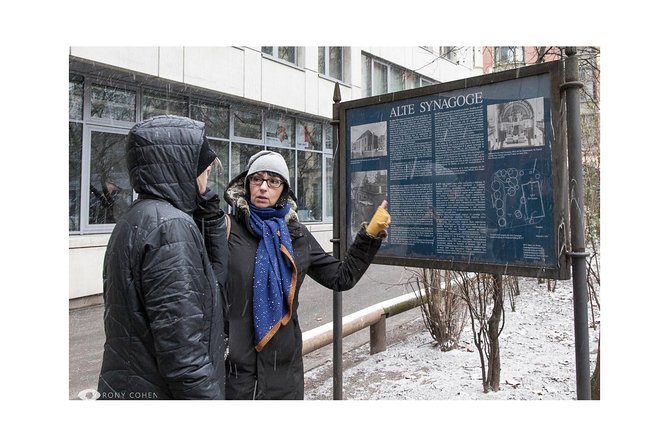
Your first major stop is Stiftung Neue Synagoge Berlin – Centrum Judaicum. This is not just a synagogue building on a map; it’s a place carrying a long story. The route highlights the synagogue’s scale—3200 seats—and then focuses on how the remains and the onsite exhibition explain the Jewish community’s arc and its catastrophic ending.
Why this stop is a strong opener: it anchors the rest of the day. The later memorials can feel like they float in emotional space unless you’ve already connected them to the reality of community life—institutions, culture, and people building a world before it was destroyed.
The exhibition time on the schedule is about 30 minutes. The key practical point: admission ticket is not included. That means you should plan to pay for entry here, even though most other stops are free.
A caution from real-world experience: one review complained about the synagogue site feeling neglected and partly ruined, and also criticized the relationship between the admission fee and extra paid audio. Another review did not focus on that, and overall the guide quality seems to be the tour’s main strength. My advice is simple: go in expecting a serious museum-style experience at an emotionally heavy site, and if you care about audio options, check what’s included versus what costs extra once you’re there.
Holocaust Memorial: how to see the stelae field without getting lost
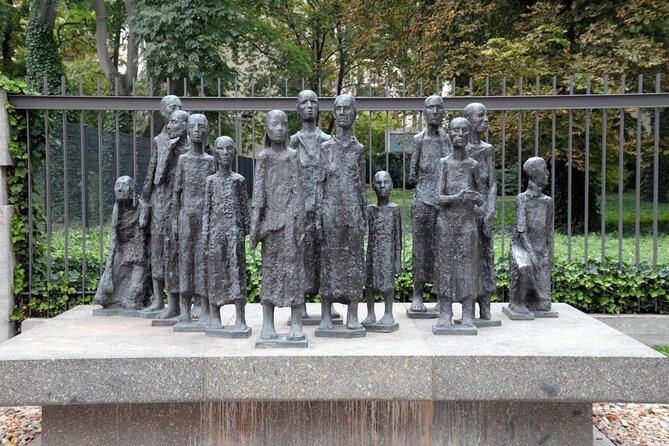
Next up is the Memorial to the Murdered Jews of Europe, often called the Holocaust Memorial. The experience here is visual and stark: a huge field of stelae in the middle of Berlin. The schedule gives you about 20 minutes at the memorial.
Twenty minutes is enough to look carefully, but not enough to “figure it out” alone if you haven’t been given context. That’s where the private guiding helps. You’re not just staring at stone; you’re learning how to interpret the layout and how the site is meant to hold memory in public space.
This is also one of the stops where the “why this tour” factor shows. Without guidance, it’s easy to default to general emotions and miss the structure and intention behind the memorial. With guidance, you get a clearer sense of how Berlin built a permanent reminder and what it represents.
Good news: admission ticket is free. So your only real cost here is time and attention. If you’re the type who likes to take a few photos and then actually process what you saw, this stop fits that style.





Bebelplatz book burning memorial: censorship you can stand on
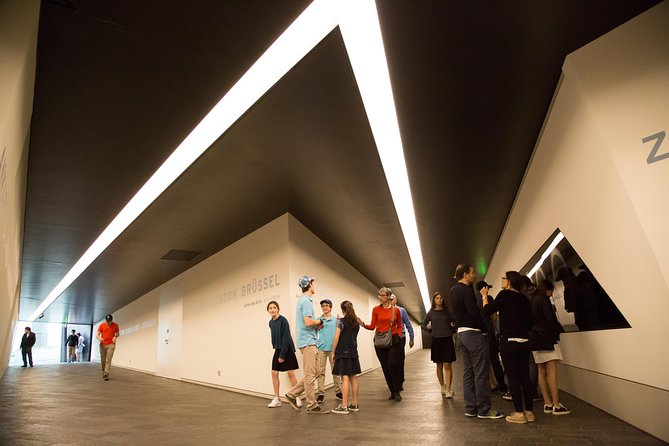
After the Holocaust Memorial, you visit the Book Burning Memorial at Bebelplatz. This is tied to a specific event: May 10, 1933, when books were burned in a public act of ideological control.
You’ll spend about 15 minutes here, and the stop is free. The value isn’t only historical. It’s the physical reminder that censorship was not hidden. It was performed in public, with an audience and a goal.
For me, this stop is a useful hinge between the earlier and later chapters of the day. You see how violence doesn’t always start with guns. It can start with propaganda, exclusion, and the removal of ideas. That theme helps you connect the Jewish history you’re being shown to the broader machinery of Nazi power.
Alter Jüdischer Friedhof (Old Jewish Cemetery): names that hold centuries
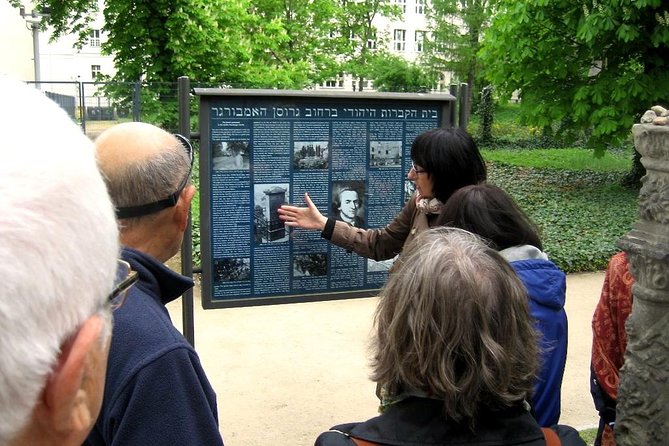
Then you head to the Alter Jüdischer Friedhof, the old Jewish cemetery. This stop is scheduled for about 10 minutes, and it’s free to enter.
Even in a short time, the setting does heavy work. The cemetery is described as the burial place for members of the Jewish community from 1672, with mention of Moses Mendelssohn, the philosopher associated with the Enlightenment. It also points to the interruption and destruction inflicted by the Gestapo in 1943.
Why this matters on a tight tour: most visitors go to Berlin and remember the most extreme events first. This cemetery stop forces a different perspective. It puts Jewish presence on the timeline, not just as a victimhood narrative but as a long-standing part of the city—then it shows where that continuity was violently cut.
Short timing means you’ll want the guide’s explanation. Ten minutes isn’t long for wandering among stones; it’s enough for framing, learning what you’re looking at, and understanding why Mendelssohn’s name is highlighted in this context.
Gleis 17 (Track 17) memorial at Grunewald station
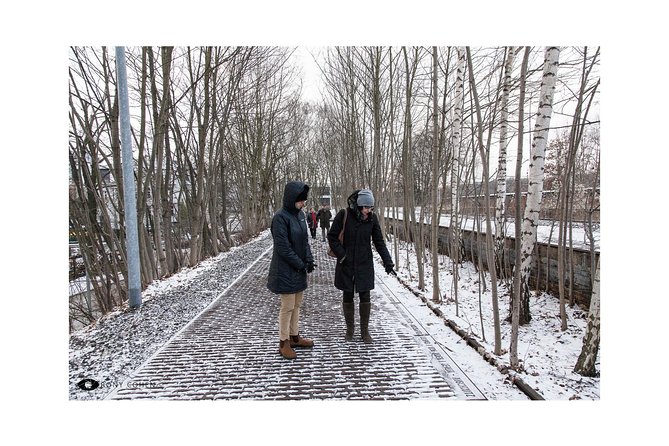
Your final major stop is Gleis 17 Memorial at Grunewald Train Station, connected to the memorial known as Track 17. You get about 30 minutes here, and it’s free.
This is one of those stops that can land differently for people. A cemetery is quiet, a memorial field is contemplative—but a train station is functional, lived-in, and noisy. That tension matters. It helps you see how deportation was not just an abstract concept; it happened through ordinary logistics, using real infrastructure.
Track 17 is often emotionally difficult because it collapses distance. You’re in a place meant for movement, and you’re learning about a history of forced movement. The guide helps you keep the focus on what the site represents, so you don’t just experience it as a generic transit location.
Guide impact: what you’ll feel in the Q&A
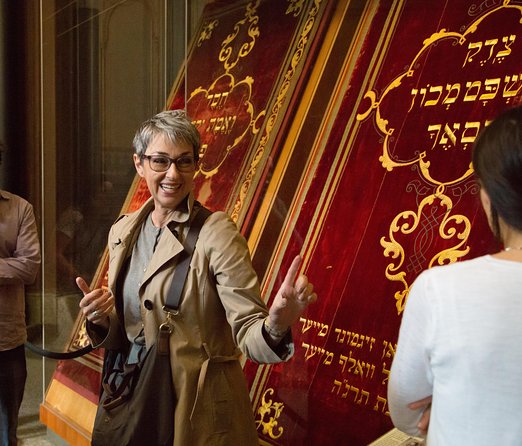
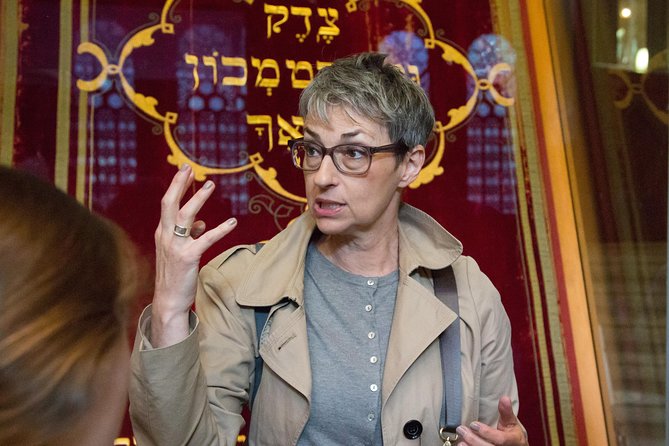
This is where the reviews’ strongest message shows up. Many comments praise guides by name—especially Nirit—for making history clear and organized, not just recited. One review describes Sharon guiding people through Jewish life from the 1600s into the early 20th century, with patient explanations and room for questions. Another review praises Nirit’s experience and notes she’s worked for a long time guiding Jewish and general Berlin history.
The pattern I’d bet on, based on those accounts: you’ll get structure plus human tone. That combination is crucial on a Jewish history tour, because the story includes daily life, community institutions, cultural change, and then sudden destruction. A strong guide connects those parts so the day feels like a coherent narrative rather than disconnected stops.
There’s also a practical side: if you ask about a specific family connection or a city detail you’ve been reading about, the guide’s job is to help you understand what’s possible to learn and what you can infer. One review even describes a tailor-made approach for people with European roots, with the guide helping track down available information. Whether or not you need that level of personal digging, it signals how invested the guide can be.
You should also know this isn’t just verbal lecturing. One review describes the guide using a laptop with maps to explain Germany’s history in context. Even if every tour doesn’t include the same visual aids, it’s a good sign that the guide knows how to teach people who need more than dates.
Price and value for a private group up to 6
The price is $648.86 per group, up to 6 people, for about 4 hours. That’s not cheap, but private tours often aren’t.
Here’s how I’d judge value. First, you’re paying for the guide’s time and the private nature of the day. Second, you’re getting pickup from all accommodations, which can otherwise cost time and planning. Third, the tour covers multiple top-tier sites that would each take effort to research and route efficiently.
Now the cost trade-off: the synagogue exhibition admission isn’t included. That means your final out-of-pocket cost can rise a bit on the first stop. Most of the other stops are free, which balances that out. Also, one review complained about extra paid audio at the synagogue stop not feeling worth it. That doesn’t mean every add-on is overpriced, but it does tell you to be careful about what you choose to pay for once you’re there.
If you compare this to hiring a guide for just one or two major sites, the overall mix is the value story. You’re not only visiting big memorials; you’re also seeing a cemetery and a censorship memorial, which makes the day more complete than many single-purpose tours.
Who should book this Jewish Berlin tour
This works best if you want:
- A private format with time for questions
- A short route that still covers major Jewish-history touchpoints in Berlin
- A guide who can connect Jewish life across centuries to the Holocaust era and its aftermath
- Comfort with a day that includes heavy themes, because the itinerary clearly includes Holocaust-related memorials and deportation-related remembrance
It may be less ideal if:
- You want a purely “light and visual” sightseeing day
- You strongly dislike paying extra entry fees at stops (the synagogue exhibition is not included)
- Restroom basics matter a lot to you, since one review flagged the cleanliness at that synagogue stop
Should you book The Jewish Berlin tour?
If your goal is to understand Berlin’s Jewish story in a way that actually clicks, I’d say yes—especially if you like asking questions and you want a guided narrative across several meaningful sites. The route is compact, but it covers multiple angles: community life, state violence, public censorship, and remembrance anchored to specific locations.
Book it if you can handle the emotional weight and you appreciate context. If you’d rather wander quietly without guidance, you might prefer an audio guide and some independent walking—but you’ll likely miss the connective tissue that makes the day feel coherent.
My final advice: show up at 10:00 am, wear comfortable shoes, and come ready to ask the “why” behind what you’re seeing. That’s where this tour earns its price.
FAQ
How long is The Jewish Berlin tour?
It lasts about 4 hours.
What time does the tour start?
The start time is 10:00 am.
Do you offer pickup from my accommodation?
Yes. Pickup is offered from all accommodations.
Is the tour private?
Yes. It’s a private tour/activity, and only your group participates.
What language is the tour offered in?
It’s offered in English.
Are entrance tickets included?
No for the synagogue exhibition: at Stiftung Neue Synagoge Berlin – Centrum Judaicum, admission tickets are not included. The other listed memorial stops are free.
What sites will we visit?
The route includes Stiftung Neue Synagoge Berlin – Centrum Judaicum, the Holocaust Memorial to the Murdered Jews of Europe, the Book Burning Memorial at Bebelplatz, the Alter Jüdischer Friedhof, and the Gleis 17 Memorial (Track 17).
What is the cancellation policy?
You can cancel for a full refund if you cancel at least 24 hours before the experience’s start time. If you cancel less than 24 hours before, the amount paid isn’t refunded. The experience can also be canceled if a minimum number of travelers isn’t met, in which case you’ll be offered another date or a full refund.
Are service animals allowed?
Yes. Service animals are allowed.
More Tour Reviews in Berlin

Berlin's Wartime History



Round out your days in Berlin

Third Reich & WWII History, compared.
 ★ 4.9Third Reich & Cold War Guided Walking TourFrom $238,378 reviews
 ★ 5.0Berlin’s Best: 2 Hour Walking Tour Third Reich and the Cold WarFrom $245,486 reviews
 ★ 5.0Third Reich Berlin: Hitler and WWII Walking TourFrom $243,301 reviews
 ★ 4.9Third Reich, Hitler, and WWII Walking TourFrom $191,757 reviews
 ★ 5.0Berlin Third Reich Sites: Half-Day Walking TourFrom $21835 reviews
 ★ 4.7History of the Third Reich Guided Walking TourFrom $30791 reviews
 ★ 4.8The Wall and Third Reich Guided Bike TourFrom $41578 reviews
 ★ 4.8Hitler’s Germany: Berlin During the Third Reich & WWIIFrom $23476 reviews
Browse the lists this tour appears in