
REVIEW · THIRD REICH & WWII HISTORY
Third Reich Quest Experience in Berlin
Berlin can be heavy. This game keeps it human.
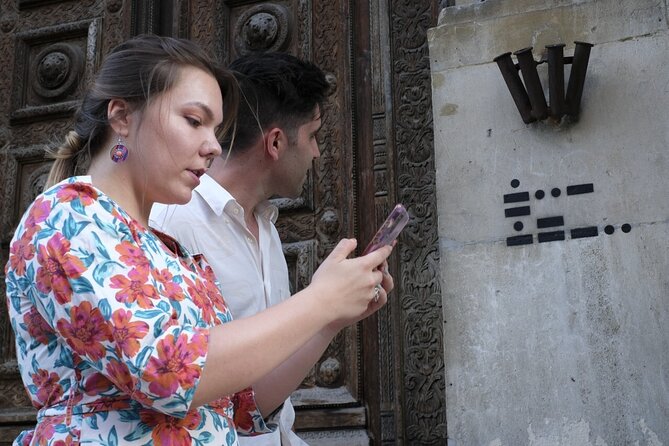
What makes the Third Reich Quest Experience interesting is that it trades a predictable walking script for a World War II-themed puzzle route, with you calling the shots. I like two big things right away: it’s offline-friendly (so no data worries while you hunt clues), and it feels like learning by doing, not listening. One drawback to plan for: the setup can be a bit fiddly, and during play your phone needs to stay on and working, or you may be sent back to the last point.
You’ll start at Hausvogteiplatz and work your way through a string of classic central-Berlin stops—church, squares, university buildings, and museum area—plus a final wrap-up clue. The whole experience runs about 1 hour, but the best part is that you can pause, stop, and resume without chasing a group. It’s a private activity too, meaning no human guide to coordinate and generally fewer crowd headaches.
In This Review
- Key things to know before you start
- Why this WWII clue route beats standard sightseeing
- Price and value: $7.20 for an offline, self-paced hour
- How the game works: clues, pauses, and no fixed schedule
- Hausvogteiplatz: the first step where you get your bearings
- Friedrichswerdersche Church: Gothic architecture without the museum ticket mood
- Bebelplatz: learning through puzzles, not just plaques
- Humboldt University: where the story meets education
- An extra clue stop: where the game gives the next instructions
- Museum Island: extra time where you decide how much you want
- Bode-Museum: when admission is on you
- Monbijou Park: the breathing space at the end
- Practical tips so the phone stays your guide
- Who should book this quest (and who should skip)
- Should you book this Third Reich Quest in Berlin?
- FAQ
- How much does the Third Reich Quest Experience in Berlin cost?
- How long is the experience?
- Is it offered in English?
- Do I need internet to play?
- Can I start at any time?
- Where does the experience start and end?
- Are the stops admission-free?
- Is this a guided tour with a live person?
- Is it only for my group or shared with other people?
- Is free cancellation available?
Key things to know before you start

- A WWII-themed clue trail: you solve puzzles to reach each place, instead of just following signage
- Offline play: download doesn’t have to turn into a data bill while you walk
- Flexible timing: you can start any hour and take breaks whenever you want
- Mostly free stop-offs: several stops list free admission, while at least one museum is not included
- Private, no guide: the game does the work, not a person in your face
- Phone matters: if your phone doesn’t stay active during play, you could have trouble continuing
More walks through Berlin's wartime history
- Berlin: Third Reich & Cold War Guided Walking Tour★ 4.9 · 8,378 reviews
- Berlin’s Best: 2 Hour Walking Tour Third Reich and the Cold War★ 5.0 · 5,486 reviews
- Third Reich Berlin: Hitler and WWII Walking Tour★ 5.0 · 3,301 reviews
- Berlin: Third Reich, Hitler, and WWII Walking Tour★ 4.9 · 1,757 reviews
Why this WWII clue route beats standard sightseeing
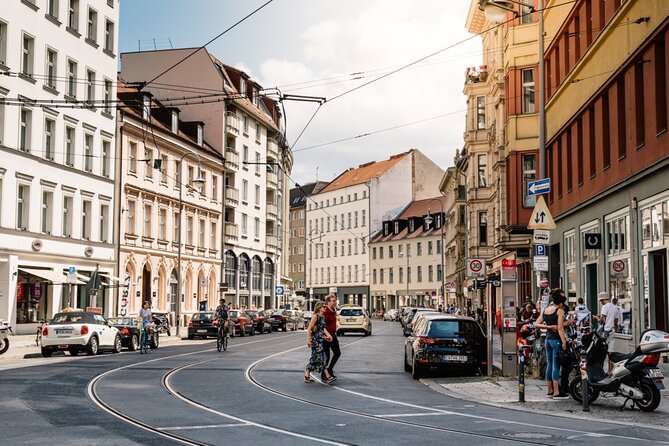
Berlin’s major WWII and Nazi-era sites can feel like they come with a built-in lecture. This format flips that. You’re not just reading plaques. You’re piecing together the route through clues and puzzles, and that small challenge makes the place names stick.
I like that you get a mix of settings rather than a single-note march. You’ll pass from public squares to a Gothic church, then to the university and museum district. That variety matters because it shows how World War II-era stories weren’t only in one location—they touched education, culture, and public life.
There’s also a practical mental shift: instead of counting minutes until the next stop, you’re counting clues. That can make the walk feel shorter, even when the route takes you through familiar central areas.
Price and value: $7.20 for an offline, self-paced hour
At $7.20 per person, this is priced like a low-stress add-on to your Berlin days—not a premium guided tour. The value is in what you’re buying: flexibility plus an interactive format, without needing a live guide.
You’re also buying something that can be harder to cost out: fewer crowd delays. Since it’s private and you’re not tied to a guide’s timing, you can pause when you want a photo, read a sign closely, or just step aside for a moment.
One thing to watch for is that not all locations are included for admission. The game includes the experience of getting to places and spending time there, but the Bode-Museum ticket is not included. If you plan to go inside, factor in a separate museum entry.
Booked about 32 days in advance on average, it’s not a rare release. Still, if you’re traveling in a busy stretch, I’d reserve ahead so you can pick your preferred start time window.
How the game works: clues, pauses, and no fixed schedule

This is not a guided walk with a set departure time and a set end time. You can start and stop when you like, then resume later. That matters because Berlin days often include transit gaps, museum line decisions, and meal timing.
The format is straightforward:
- You move to the next location by following a clue.
- At each stop, you spend time on your own.
- Then you start solving the next puzzle to continue.
The offline angle is the real money-saver for many people. If you arrive in Berlin and forget to buy data, you can still play. That means less stress, less scrambling for Wi-Fi, and fewer “my map died” moments while you’re trying to solve the next clue.
Just don’t treat your phone like a disposable ticket. Keep it charged and working, because the one negative experience tied to this kind of setup is when the phone can’t stay active during play.
Hausvogteiplatz: the first step where you get your bearings
Your starting point is Hausvogteiplatz. It’s a popular square, and the game begins here with an easy warm-up. I like this kind of start because it prevents that awkward first-five-minutes feeling—where you’re still trying to figure out how the app works and where you are.
Since the stop is listed as around 10 minutes, you should use it as orientation time: check your battery, confirm you’re ready to solve, and take a quick glance at the surrounding streets so your later directions make sense.
Practical tip: plan to arrive with your phone already awake and ready to go. This experience leans on you not letting the device fall asleep or crash during puzzles.





Friedrichswerdersche Church: Gothic architecture without the museum ticket mood
Next is Friedrichswerdersche Church. This is one of those places where the building itself does a lot of storytelling. The game’s approach makes it feel less like you’re rushing through a sight and more like you’re noticing details at a controlled pace.
The stop is also about 10 minutes and has free admission listed. That’s a helpful combo: you get a solid architectural moment without adding another cost layer.
Drawback to consider: if you’re looking for deep, inside-the-building time, the game’s time allotment might feel tight. In that case, treat it as a look-around stop, then if you want more, you can always come back later on your own.
Bebelplatz: learning through puzzles, not just plaques
Then you reach Bebelplatz. The game gets you there by clue-following and puzzle-solving, which makes the square feel like a destination instead of a random intersection.
This is another 10-minute stop, and admission is free. That’s good value because it keeps the experience moving while letting you take in the place for as long as you want before moving to the next clue.
This is also a good place to slow down for reading. You’ll likely notice how squares in Berlin operate as outdoor rooms—places where speeches, ceremonies, and public messages would have mattered. The puzzle format helps you arrive with a purpose, and then you can actually spend your time absorbing what’s in front of you.
Humboldt University: where the story meets education

After Bebelplatz, the clue route leads you to Humboldt University (Humboldt Universität). Universities are often where ideology, power, and policy intersect, and the game uses that idea without turning it into a lecture.
You’ll spend about 10 minutes here. Again, admission is listed as free, and you can spend as much time as you want once you arrive until it’s time to continue the next clue.
One consideration: the game time is shorter than a full campus wander. If you’re a fan of architecture or want to read more deeply on your own, use the game as the anchor point, then add extra time if your day allows.
An extra clue stop: where the game gives the next instructions

The itinerary includes another stop after Humboldt University where you follow a clue and solve a puzzle, then get indications on how to continue. That stop also includes learning about the place you’ve discovered.
Because the location name isn’t specified in the info you have, I’d treat this as the game’s “gear shift” moment—when it transitions you from one cluster of points to the next. Plan to stay alert here. It’s the moment where you could be tempted to rush because you’re close to the museum district.
Also, keep your phone stable at this point. If the device freezes, you’ll lose momentum.
Museum Island: extra time where you decide how much you want
You then get to Museum Island. The game doesn’t force a museum ticket here; it pushes you into the area and gives you time to take in the setting.
This stop is listed at 20 minutes, which is longer than most. I think that’s smart: Museum Island is visually dense, and even if you never buy a ticket, you’ll likely want more than ten minutes to read the space.
The drawback: Museum Island can tempt you to walk into one museum after another, and then your hour-long quest turns into a full afternoon. If you’re doing this as a stand-alone plan, keep your expectations tied to the quest timing. If you’re pairing it with other sites, treat Museum Island like the main breakpoint.
Bode-Museum: when admission is on you
Next is Bode-Museum. You get there through a clue, solve a puzzle, and then you can spend time there until you’re ready for the next clue.
The key detail: admission is not included for the museum. So if your plan is to just stand outside and take in what you can, you’re fine. If you want to go inside, you’ll want to budget for an entry ticket separately.
This is also a place where your style matters. If you love fine art and sculpture, you might want more than the game’s 10-minute stop time. If you prefer fast cultural hits, ten minutes is enough to absorb the building presence and move on.
Monbijou Park: the breathing space at the end
Finally, the route reaches Monbijou Park, another 10-minute stop with free admission listed. This is a nice contrast point. After the intensity of WWII-related themes and museum architecture, a park gives your brain somewhere to rest.
The game keeps you on a structured path, but you still get to choose how long you linger at the stop before continuing the final steps.
The activity ends at Oranienburger Str. 67. Even if you don’t think of that as a “site,” it’s a useful endpoint: you finish near a central address so it’s easier to continue with dinner, a tram ride, or another museum without trying to reverse-engineer your directions.
Practical tips so the phone stays your guide
Most people will treat this like a mobile ticket and a walking companion. That works, but you’ll have a smoother time if you plan for three things:
- Battery and screen behavior
Keep the phone charged and actively running. One common failure mode for this kind of puzzle game is when the device goes dark or stops responding mid-quest, forcing you to re-do earlier steps.
- Avoid starting late in the day if you hate time pressure
The listed hours for the area run from 5:00 AM to 10:00 PM. Start somewhere that fits your energy, because it’s still a one-hour experience on average.
- Use the offline promise, but still be smart
The game can be played offline, which protects you from data overages. Still, you should check that the app is ready to go before you step out into the streets. A quick test at your start point can save stress.
Finally, do yourself a favor and bring a small charger if you’re doing multiple app-based activities in Berlin the same day. Berlin walking adds up fast.
Who should book this quest (and who should skip)
I think this is a great fit if you want:
- a fun, unusual way to discover World War II stories without joining a traditional group tour
- a private activity with no human guide to coordinate
- a self-guided format where you can pause, take photos, or rest without asking anyone
It’s also a good option if you’re traveling with someone who likes puzzles. Even if only one person solves, the route is still engaging because the places themselves are visually distinct.
You might skip it if:
- you hate phone-based experiences and want zero interaction with an app
- your battery life is unpredictable and you don’t want to manage charging
- you want a guided explanation at each stop, word-for-word
The negative feedback tied to this experience wasn’t about the concept. It was about the setup being inconvenient and the game requiring your phone to stay active during play. If that sounds like your style, you’ll probably enjoy this.
Should you book this Third Reich Quest in Berlin?
My take: yes, if you want an interactive, offline-friendly way to see central Berlin through a World War II-themed story path. At $7.20, you’re paying for flexibility, not for a pricey guide.
I’d book it when you want a smart contrast to classic guided tours—something that makes you slow down in the right spots without turning your day into a rigid schedule. And if Museum Island and the surrounding area are already on your list, this quest can be a fun way to give that area a narrative thread.
Just go in prepared: keep your phone awake, charge it, and don’t expect it to function like a museum audio guide. It’s a clue game first. If you like that style, you’ll likely have a genuinely memorable walk.
FAQ
How much does the Third Reich Quest Experience in Berlin cost?
It costs $7.20 per person.
How long is the experience?
It lasts about 1 hour on average.
Is it offered in English?
Yes, it is offered in English.
Do I need internet to play?
No. The game can be played offline.
Can I start at any time?
Yes. You can start and stop whenever you like, and booking is available 24/7 every day.
Where does the experience start and end?
It starts at Hausvogteiplatz (Hausvogteipl., 10117 Berlin) and ends at Oranienburger Str. 67, 10117 Berlin.
Are the stops admission-free?
Many stops list admission as free, but Bode-Museum is listed as admission ticket not included.
Is this a guided tour with a live person?
No. It is a private activity with no human contact.
Is it only for my group or shared with other people?
It is private, so only your group participates.
Is free cancellation available?
Yes. You can cancel up to 24 hours in advance for a full refund.
More Tour Reviews in Berlin

Berlin's Wartime History




Round out your days in Berlin


Third Reich & WWII History, compared.
 ★ 4.9Third Reich & Cold War Guided Walking TourFrom $238,378 reviews
 ★ 5.0Berlin’s Best: 2 Hour Walking Tour Third Reich and the Cold WarFrom $245,486 reviews
 ★ 5.0Third Reich Berlin: Hitler and WWII Walking TourFrom $243,301 reviews
 ★ 4.9Third Reich, Hitler, and WWII Walking TourFrom $191,757 reviews
 ★ 5.0Berlin Third Reich Sites: Half-Day Walking TourFrom $21835 reviews
 ★ 4.7History of the Third Reich Guided Walking TourFrom $30791 reviews
 ★ 4.8The Wall and Third Reich Guided Bike TourFrom $41578 reviews
 ★ 4.8Hitler’s Germany: Berlin During the Third Reich & WWIIFrom $23476 reviews
Browse the lists this tour appears in