
REVIEW · BERLIN WALL & COLD WAR
Berlin: Guided Bike tour of the Berlin Wall and Third Reich
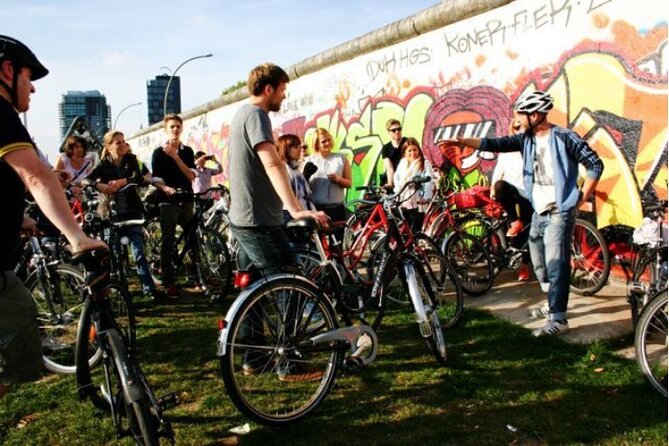
Berlin can feel like a living textbook. On this bike tour, you ride from the old center of the city to haunting Cold War sites and major Holocaust memorial areas, all with an on-the-ground guide. The route is designed for understanding, not just sightseeing.
I especially like the focused history stops paired with easy, flat cycling, so you keep moving without feeling rushed on a bus. I also like that you get a real local route style through the Free Berlin concept, meaning your guide can adjust the exact mix of places while staying on the theme.
One consideration: because the guide can design the route, you should expect an overview rather than a guaranteed checklist where you’ll spend equal time at every single named spot.
In This Review
- Key things I’d circle before you book
- A Two-Wheeled Route Through Berlin’s Wall and Nazi Germany
- Price and value: why $42.34 can make sense for 3 hours
- Meeting Point and what the ride feels like in real life
- Stop-by-stop: Nikolaiviertel to Checkpoint Charlie
- 1) Nikolaiviertel: Berlin’s old-town starting point (and a reality check)
- 2) Stiftung Neue Synagoge / Centrum Judaicum: courage told through saved architecture
- 3) A GDR-era memorial for deportation and Holocaust victims: powerful, and less flashy
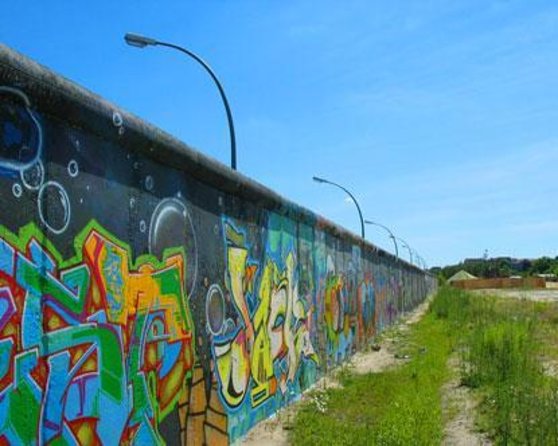
- 4) Memorial of the Berlin Wall: the Wall you can really understand
- 5) Mauerpark: from a “tortured” city to free expression
- 6) Humboldthain Flak Tower: Nazi architecture plus a strong viewpoint
- 7) Gunter Litfin Memorial: the Wall as a human story, not a symbol
- 8) Invalidenfriedhof: a cemetery sliced by the Wall
- 9) Spreebogenpark: governing district views and Albert Speer’s Great Hall idea
- 10) Reichstag Building (outside): dictatorship, then democracy
- 11) Another memorial for major Holocaust victim groups: part of a broader set
- 12) The Holocaust Memorial: the biggest genocide memorial in the world
- 13) Fuhrerbunker: the site is now just a parking lot
- 14) Checkpoint Charlie: Cold War tension, included only in English option
- What makes the tour work: the guide factor and the pacing
- Pros and cons in plain terms
- What you’ll like
- What you should watch for
- Who should book this Wall and Third Reich bike tour
- Should you book it?
- FAQ
- How long is the Berlin bike tour?
- How much does it cost?
- What’s included with the tour?
- Are the stops free to enter?
- Is the tour offered in English?
- Is food included?
- Is it family-friendly?
- What’s the meeting point?
- What group size should I expect?
- Does it run in bad weather?
- Are there bike-ride safety instructions or guidance?
- Can I cancel for a full refund?
Key things I’d circle before you book
- Comfort included: city bike plus a helmet, so you can concentrate on the story and the streets.
- Short, meaningful stops: many stops are around 5–10 minutes, designed to give context quickly.
- Family-friendly pacing: kids are welcome, with infant seats available on request.
- Memorials and viewpoints on the same loop: from the Wall memorial to Humboldthain’s Flak Tower views.
- Guides bring it to life: I’m seeing strong guide praise tied to clear explanations and personal perspectives (examples include guides like Juliette, Yonis, Paul, Theo, Simon, Simone, Constantine, Jacob, and Peter).
- Route flexibility: the Free Berlin concept means your exact stops may vary, even though the theme stays the same.
More of the Wall and the divided city
- Berlin’s Best: 2 Hour Walking Tour Third Reich and the Cold War★ 5.0 · 5,486 reviews
- Skip-the-Line: Berlin Wall Museum at Checkpoint Charlie★ 4.1 · 2,041 reviews
- Berlin: East Side Gallery Spree Cruise in a Solar Catamaran★ 4.1 · 1,086 reviews
- Cold War, Berlin Wall, Spies and the East Side Gallery★ 5.0 · 1,024 reviews
A Two-Wheeled Route Through Berlin’s Wall and Nazi Germany
This is the kind of Berlin tour that makes the city feel connected. You’re not only seeing landmarks. You’re seeing how the Wall shaped movement, how Nazi power left physical traces, and how Berlin now marks victims in places that are sometimes less famous than the big postcard stops.
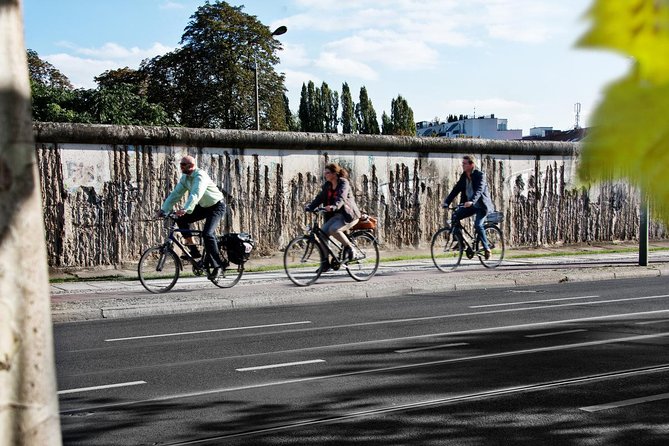
The ride itself is part of the point. Berlin is famously bike-friendly, and on two wheels you can feel transitions fast: old city fabric, dense neighborhood streets, park edges, and then sudden memorial gravity. Even the locations that look ordinary at first become loaded once your guide frames what happened there.
Price and value: why $42.34 can make sense for 3 hours
At about $42.34 per person for roughly 3 hours, this price is mostly “buying your time” and “buying a route with context.” You’re not just paying for a bike and motion. You’re paying for a guide who can connect each stop—what you see now—to what Berlin lived through then.
What makes it feel like value is what’s included:
- Bicycle + helmet
- Professional guide
- Free entry tickets at the listed stops (so you’re not scrambling for admissions fees)
- Mobile ticket for smooth check-in
Food isn’t included, so plan on grabbing a snack or drink before or after. That’s typical for a 3-hour ride, but it matters if you’re biking with kids.
Meeting Point and what the ride feels like in real life
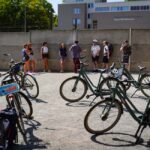
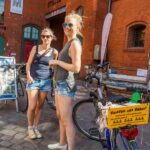
You meet at Free Berlin Bike Tours & Rental, Poststraße 11, 10178 Berlin, and the tour ends back at the same meeting spot. That back-to-start format is handy when you’re building the rest of your day.
This runs in all weather, so wear rain gear if the forecast looks shaky. The tour is in English (and German on other options), and you can usually join if you’re comfortable cycling. Helmets are included, and the group size is kept small, with a stated maximum of 15 travelers.
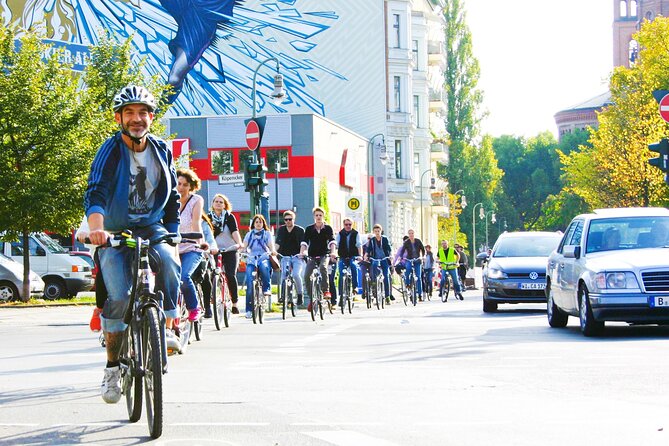
A practical tip: Berlin traffic can feel busy, even when there are bike lanes. One recurring theme in guide feedback is that good guides actively manage pacing, follow the group closely, and give clear instruction on busy stretches. If you’re nervous about riding in city traffic, I’d still consider this. Just be ready to take cues from your guide and ride as a unit.
Stop-by-stop: Nikolaiviertel to Checkpoint Charlie
Below is the storyline you should expect, with the purpose behind each stop. Times are brief on purpose—think “focused snapshots,” not museum-length visits.
More walks through Berlin's wartime history
1) Nikolaiviertel: Berlin’s old-town starting point (and a reality check)
You start in Nikolaiviertel, often called Berlin’s old town. It’s a smart opening because it forces a key question right away: how does a city rebuild after devastation, including the kind of bombing Berlin endured?
Even if the area looks restored, your guide will use it to frame how history layers over itself. That gives you a foundation before the tour shifts into Cold War and Third Reich connections.
2) Stiftung Neue Synagoge / Centrum Judaicum: courage told through saved architecture
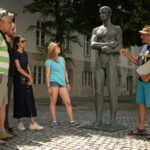
Next is Stiftung Neue Synagoge Berlin – Centrum Judaicum. The story here centers on civil courage—specifically how a police officer protected the building during the night of broken glass.
This stop works well because it’s not only about tragedy. It highlights the idea that some people chose to resist, even when violence spread.
3) A GDR-era memorial for deportation and Holocaust victims: powerful, and less flashy
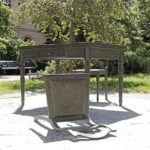
There’s also a memorial stop tied to GDR-era remembrance for deportation and Holocaust victims. It’s described as intentionally stark and in contrast to the more widely known memorial near Brandenburg Gate.
This matters because Berlin’s memorial landscape is not one-size-fits-all. Different eras and governments chose different ways to acknowledge victims. Standing here briefly (with context) can help you notice those differences across the city.
4) Memorial of the Berlin Wall: the Wall you can really understand
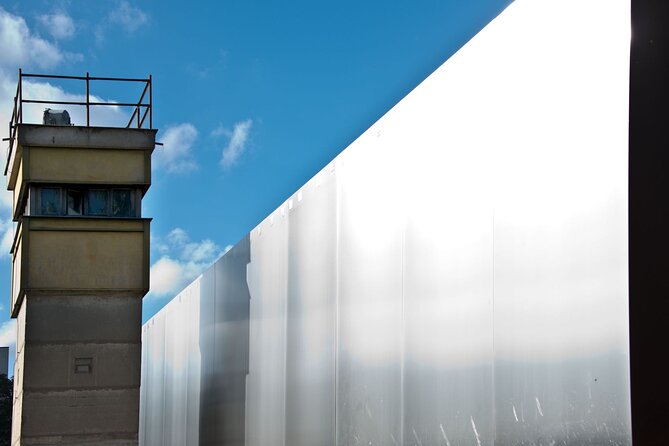
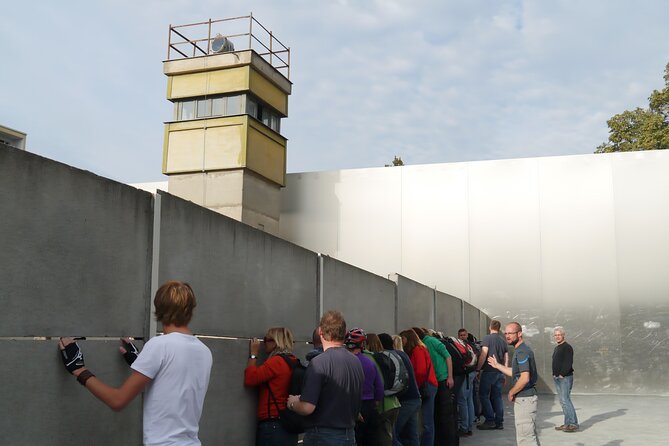
Then you hit the Memorial of the Berlin Wall, a spot where the Wall is described as still alive in a way that helps you understand what it meant in daily life.
Short stop times here are normal, but the value is in orientation. Your guide should point out how the Wall wasn’t just a line on a map—it changed movement, safety, and options for escape.
5) Mauerpark: from a “tortured” city to free expression
At Mauerpark, you’re given a contrast between what the area became and what it survived. Today it’s known for the Sunday flea market, but your guide connects that calm street-life feeling to how the city lived under the Wall for 28 years.
I like this stop because it shows Berlin isn’t frozen in one mood. It shows how people transformed restricted space into public life.
6) Humboldthain Flak Tower: Nazi architecture plus a strong viewpoint
You then visit Humboldthain Flak Tower, once used as a major air-raid shelter. Even if you don’t go inside, the tower is a visual lesson in architecture built for war—followed by a panoramic perspective from the area.
A viewpoint like this helps your brain map the city. It also gives your guide a place to explain how Nazi-era planning looked in physical form.
7) Gunter Litfin Memorial: the Wall as a human story, not a symbol
The Günter Litfin Memorial uses an preserved original watchtower to remember the first person shot at the Wall.
This stop hits hardest when the guide keeps it specific: not just when something happened, but who the person was and what the Wall did to ordinary lives trying to cross.
8) Invalidenfriedhof: a cemetery sliced by the Wall
At Invalidenfriedhof, the Wall cut through a burial ground. The focus is on escape stories and how the cemetery sat close to former checkpoints and a canal that served as a natural border between East and West Berlin.
This is one of the tour’s strongest “place-based” moments because you can see how borders can split communities down to the ground.
9) Spreebogenpark: governing district views and Albert Speer’s Great Hall idea
Spreebogenpark is framed as a place to overview the governing district. Your guide also discusses Albert Speer’s vision to build a Great Hall that was planned to fit about 180,000 people.
Even for people who don’t know Speer’s name, the point lands: grand building plans were part of power and propaganda. When you’re standing in the present-day scene, your guide can help you connect planning fantasies to political reality.
10) Reichstag Building (outside): dictatorship, then democracy
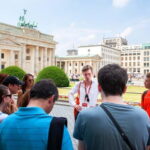
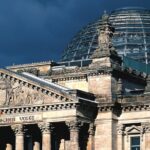
You stop near the Reichstag Building to discuss Hitler’s grab for power and Germany’s democratic history. The tour doesn’t emphasize going inside, so the focus stays on what you can see from the outside and how your guide explains the political arc.
If you want inside access later, you can add it on your own day. For this tour, the outdoor context is the right tempo.
11) Another memorial for major Holocaust victim groups: part of a broader set
There’s an additional stop described as one of three memorials for the biggest Holocaust victim groups. Even though the stop time is short, it gives you a clearer sense that Berlin’s remembrance isn’t one single monument.
This helps you avoid the common mistake of treating the city like it has one “the” Holocaust memorial.
12) The Holocaust Memorial: the biggest genocide memorial in the world
The tour includes The Holocaust Memorial – Memorial to the Murdered Jews of Europe, described as the biggest genocide memorial in the world. It’s also framed as created by those responsible for the killing, which adds a disturbing layer to the site’s meaning.
This stop is often the emotional peak. The layout can feel repetitive and disorienting, and that effect is part of what the guide will help you interpret—without turning it into a simple script.
13) Fuhrerbunker: the site is now just a parking lot
At Fuhrerbunker, your guide explains that Hitler hid during the last weeks of war and committed suicide there. Today, what you see is basically a parking lot, so the stop becomes about how memory survives when physical structures vanish.
This can be a sobering moment, because the absence feels loud. The value is in explanation: why the place matters even when the sightlines don’t.
14) Checkpoint Charlie: Cold War tension, included only in English option
Finally, you reach Checkpoint Charlie. In the English version of the tour, it’s described as the most famous border station of the Cold War, with the key detail that it was the only shared one between the USA and USSR.
Your guide ties this location to how close the world came to catastrophe right in central Berlin. If you booked an English tour, you should expect this stop.
What makes the tour work: the guide factor and the pacing
A bike tour lives or dies on pacing. Here, it sounds like the better guides keep you safe, keep you together, and still answer questions without turning the route into a lecture.
Many guides named in feedback were praised for:
- Clear historical storytelling
- Enthusiasm and strong engagement
- Good safety management when biking on busier roads
- Personal stories that help you understand how the Wall affected East and West Berlin life
- Handling the time pressure of a 3-hour format without cutting the meaning
Examples from guide names in the feedback include Paul, who’s described as a native of West Berlin with a strong local perspective; Theo, praised for answering questions confidently; Yonis, praised for detailed stories; and Simon/Simone, praised for connecting memory to real understanding. You don’t need a specific guide name, but if your personality likes vivid storytelling, these accounts are encouraging.
Also, the ride itself is designed to feel manageable. The city is flat, and the cycling time is broken up with stops, so your legs don’t feel like they’re being used up to earn the history.
Pros and cons in plain terms
What you’ll like
- Bike plus helmet means fewer logistics worries.
- A guided overview helps you connect a lot of Berlin’s dark chapters in one morning or afternoon.
- Memorial variety: Wall, air-raid tower architecture, border points, and multiple Holocaust remembrance sites.
- Flexible route style within the theme, so you get a local-feeling flow.
What you should watch for
- Brief stop times mean you won’t get long reflection at every single site. This is a taste, not a sit-down day.
- Route flexibility can affect which exact named spots you see. If there are must-see locations, ask your guide at the start what’s possible on your specific departure.
Who should book this Wall and Third Reich bike tour
This tour is a strong match if you:
- Want a history-heavy Berlin experience without spending the whole day indoors
- Like biking and want an easy way to cover many areas in a few hours
- Are traveling with kids, since they’re welcome and infant seats can be provided on request
- Appreciate guides who add human perspective, not just dates and dates again
I’d be cautious if you:
- Want a long, slow visit at one or two memorials rather than a multi-stop overview
- Need a strict, unchanging checklist of every named site
- Don’t feel comfortable biking in city environments, even with a guide managing the group
Should you book it?
If you want an efficient, guided Berlin ride that links the Wall, Nazi-era remnants, and major remembrance sites into one coherent route, yes, this is a solid booking. The included bike and helmet, the short stop times with context, and the range of locations—from the Wall memorial to Humboldthain’s Flak Tower and the Holocaust Memorial—make it good value for a 3-hour window.
Just go in with the right expectation: you’re getting an overview with meaning, not a museum marathon. If that fits your style, you’ll likely feel like you left Berlin with its stories connected in your head, not scattered across separate days.
FAQ
How long is the Berlin bike tour?
It runs for about 3 hours (approx.).
How much does it cost?
The price is listed as $42.34 per person.
What’s included with the tour?
You get a bicycle and helmet, plus a professional guide.
Are the stops free to enter?
The tour notes free admission tickets for the listed stops.
Is the tour offered in English?
Yes. The tour is offered in English, and there’s also a German option depending on what you select.
Is food included?
No. Food and drinks are not included unless specified.
Is it family-friendly?
Yes. Children are welcome, and infant seats can be provided on request.
What’s the meeting point?
The start is Free Berlin Bike Tours & Rental, Poststraße 11, 10178 Berlin, Germany, and you return there at the end.
What group size should I expect?
The tour operates with a minimum of 4 and a maximum of 15 travelers.
Does it run in bad weather?
Yes, it operates in all weather conditions, so you should dress appropriately.
Are there bike-ride safety instructions or guidance?
The tour includes a professional guide, and the guide navigates you safely through the city while biking.
Can I cancel for a full refund?
Yes, free cancellation is available. You can cancel up to 24 hours in advance for a full refund, based on the experience’s local time.
Berlin by Bike


Berlin's Wartime History
The Wall and the Cold-War City
Round out your days in Berlin
Berlin Wall & Cold War, compared.
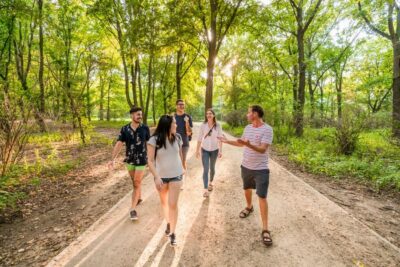 ★ 4.9Third Reich & Cold War Guided Walking TourFrom $238,378 reviews
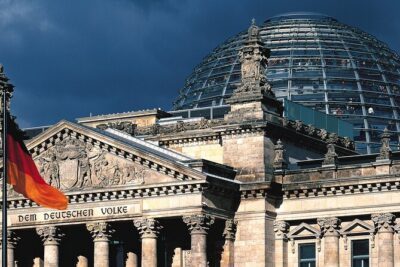 ★ 5.0Berlin’s Best: 2 Hour Walking Tour Third Reich and the Cold WarFrom $245,486 reviews
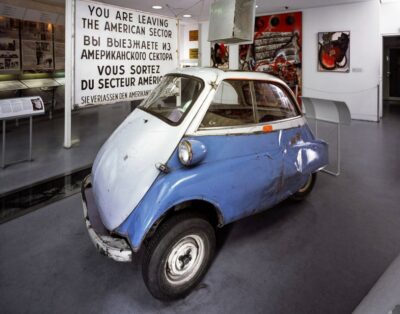 ★ 4.1Skip-the-Line: Berlin Wall Museum at Checkpoint CharlieFrom $212,041 reviews
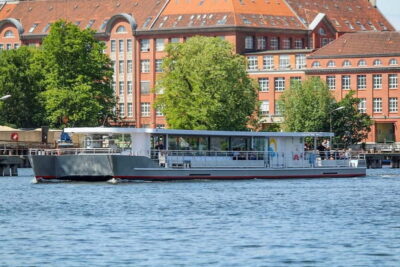 ★ 4.1East Side Gallery Spree Cruise in a Solar CatamaranFrom $281,086 reviews
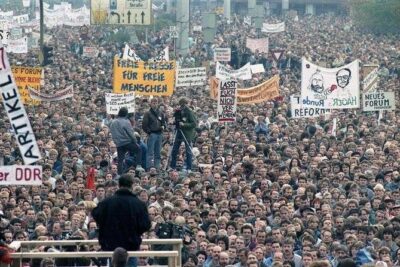 ★ 5.0Cold War, Berlin Wall, Spies and the East Side GalleryFrom $181,024 reviews
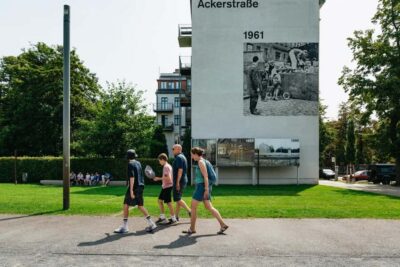 ★ 4.8Wall Tour – Fates, Love Stories, and HeroesFrom $282585 reviews
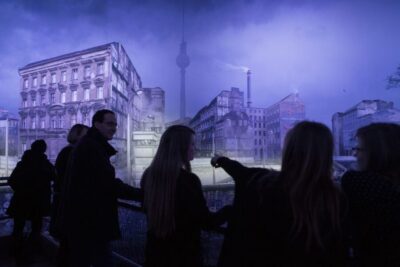 ★ 4.5THE WALL: asisi Panorama Berlin TicketFrom $16580 reviews
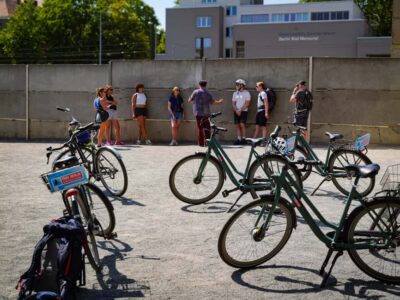 ★ 4.8The Wall and Third Reich Guided Bike TourFrom $41578 reviews
Browse the lists this tour appears in