
REVIEW · THIRD REICH & WWII HISTORY
Berlin: Historic Jewish walking tour through the city center
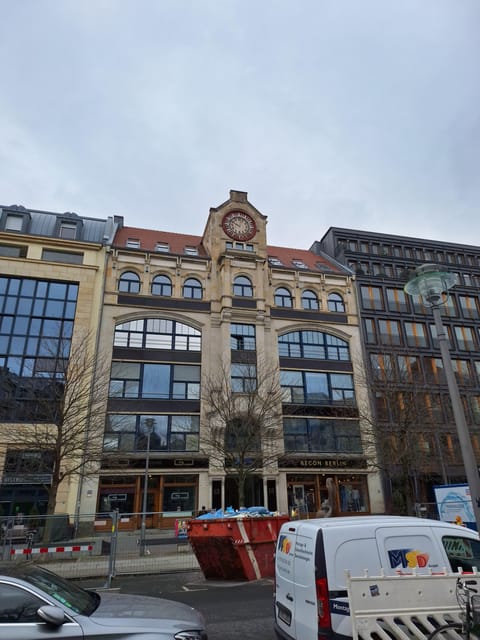
Berlin changes fast, and this tour shows why. You’ll walk through the area that once powered Berlin’s Jewish economic life, with stops that connect the Prussian Empire, the Roaring Twenties, and the city after the wall fall. I like how the story isn’t abstract; it stays grounded in what people did for work, including the lost Konfektion tailoring industry.
I also like the focus on both beauty and consequences: historic streets and scenic areas, paired with how political extremism can crush an entire business world. One thing to consider is that this is a history-heavy walk with a learning-first pace, so if you want a mostly casual sightseeing stroll, you may want to pair it with a slower, self-guided hour afterward.
In This Review
- Key highlights at a glance
- Why this Historic Jewish walk hits harder than standard sightseeing
- Getting oriented at Hausvogteiplatz (and why this start works)
- Stop by stop: what to expect in the 1-hour city-center loop
- Hausvogteiplatz: the story-setting 30 minutes
- Werderscher Markt: a 15-minute visit that changes your perspective
- Jägerstraße: 15 minutes, and the tailoring theme comes to the front
- Berlin’s eras, stitched together: Prussia, the 1920s, and the wall fall
- The Konfektion tailoring story: why this theme is worth your hour
- What the tour includes (and what it doesn’t)
- Price and value: what $1.70 really means for a 1-hour guided walk
- Logistics that matter on a short Berlin walk
- Who should book this tour (and who might want a different style)
- Should you book this Historic Jewish walking tour?
- FAQ
- Where does the tour start and end?
- How long is the tour?
- What language is the tour in?
- What stops are included during the walk?
- Is the tour wheelchair accessible?
- Is it suitable for children?
- What is the cancellation policy?
Key highlights at a glance
- Hausvogteiplatz start point: easy to find near the U2 station and the water fountain
- Konfektion tailoring story: Berlin’s clothing industry through changing eras
- Prussian Empire to Roaring Twenties: you’ll connect the dots across time, not just buildings
- Focused city-center stops: Werderscher Markt and Jägerstraße, then back to where you began
- English live guide: clear narration throughout the walk
- Wheelchair accessible: the route is designed to be workable for wheelchair users
More walks through Berlin's wartime history
- Berlin: Third Reich & Cold War Guided Walking Tour★ 4.9 · 8,378 reviews
- Berlin’s Best: 2 Hour Walking Tour Third Reich and the Cold War★ 5.0 · 5,486 reviews
- Third Reich Berlin: Hitler and WWII Walking Tour★ 5.0 · 3,301 reviews
- Berlin: Third Reich, Hitler, and WWII Walking Tour★ 4.9 · 1,757 reviews
Why this Historic Jewish walk hits harder than standard sightseeing
This isn’t a “look, pretty street, next street” kind of tour. It’s built around a specific idea: political extremism can completely transform an industry, and Berlin’s Jewish economic center is a powerful lens for that story.
You’ll also get more than one time period at once. The way the guide links the Prussian Empire, the Roaring Twenties, and the post–wall fall city helps you understand why Berlin doesn’t feel like one continuous story. It feels like chapters that were interrupted, rewritten, and sometimes rebuilt.
And even with the heavy themes, you’re not stuck staring at doom. You’re walking through historic and scenic areas in the city center, so the setting stays real. You’re learning while you move, not just reading signs.
Getting oriented at Hausvogteiplatz (and why this start works)
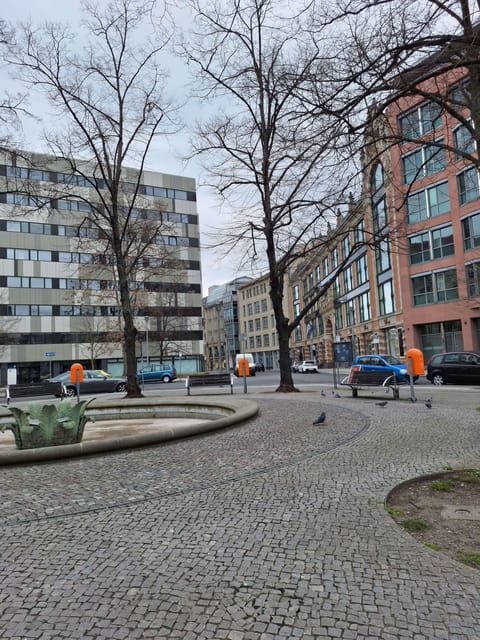
The tour begins at Hausvogteiplatz, in the square near the water fountain close to the U2 train station. The guide will be easy to spot with a white side bag, which matters because meeting points can get chaotic in Berlin.
The first block of time is spent at Hausvogteiplatz itself, with a guided portion of about 30 minutes. That’s a smart design: you get context before you walk too far, so the rest of the route feels connected instead of random.
Practical tip: arrive a little early. The tour mentions the need for verification of arrival by email or phone (calls, messages, or WhatsApp), so showing up on time helps things run smoothly.
Stop by stop: what to expect in the 1-hour city-center loop
This walk is short on purpose. In about an hour, you cover three named areas and keep moving through Berlin’s center without turning it into a marathon.
Hausvogteiplatz: the story-setting 30 minutes
At the start, you’ll get the main framework: Berlin’s former economic Jewish center district and how it evolved through different political and social eras. You’ll also hear how the local Jewish population developed, thrived, and in some lucky cases survived, with the darker turning points made clear.
This kind of opening is useful because it gives you a mental map. Even if you don’t know Berlin’s history, you’ll understand what you’re looking at and why those streets matter economically, not just aesthetically.
More of Berlin on foot


Werderscher Markt: a 15-minute visit that changes your perspective
Next comes Werderscher Markt, where you’ll have about 15 minutes. The value here is the shift from “where the story begins” to “how the city space reflects the story.”
You’ll be looking at a city-center area through a specific filter: not only who lived here, but what kinds of work and commerce made Berlin’s Jewish community economically significant. The tour keeps the discussion anchored to historic buildings and areas, so you’re not left guessing what you should notice.
A small consideration: because it’s a quick stop, don’t expect deep detours into architecture here. This is a guided walk with a tight schedule, so the guide focuses on the big connections.
Jägerstraße: 15 minutes, and the tailoring theme comes to the front
Then you’ll head to Jägerstraße for another 15-minute visit. This is where the tour’s signature theme—Berlin’s Jewish tailoring industry—comes into sharper focus.
The Konfektion industry isn’t just a job description; it’s a window into fashion, trade, and the kind of urban glamour that showed up in the Roaring Twenties. Seeing the streets through that lens helps you imagine how people moved through daily life: markets, shops, and the social world that built around them.
If you enjoy stories that tie culture to work—how fashion connects to economics and politics—this stop is likely the one you’ll remember.
Berlin’s eras, stitched together: Prussia, the 1920s, and the wall fall
One reason this tour is compelling is the way it moves through time. It doesn’t treat Berlin’s past like a museum timeline with neat labels. It treats it like cause-and-effect.
You start with the Prussian Empire era, then you jump into the Roaring Twenties, where you can feel the contrast between economic life, ambition, and public style. Then the narrative turns toward the consequences of political extremism and how regimes hit Berlin’s economy—and the Jewish community—hard.
After that comes the post–wall fall Berlin angle. The tour is designed to help you see how the area progressed after those breaks. That matters because Berlin today can look like it has always been modern, and this walk gives you the context for why that isn’t true.
The Konfektion tailoring story: why this theme is worth your hour
Many Berlin tours focus on famous monuments. This one focuses on work—specifically the lost Jewish tailoring industry. That’s not a small choice, and it changes how you experience the city.
Here’s what makes the Konfektion theme practical for you as a visitor: it gives a concrete way to understand economic history. You’re not just learning dates. You’re learning how an industry can grow when a community has room to live and work—and how it can collapse when politics turns hostile.
The tour also keeps things human. Even when the story gets brutal, it’s about people and their choices, their skills, and what survival meant in an environment shaped by regimes. That combination—industry details plus human stakes—is why the tour earns strong ratings and why many people take away new insights fast.
What the tour includes (and what it doesn’t)
You’ll get a walking tour around the city center with mentions of historic buildings and areas in Berlin. You’ll also receive a map and a list of activities in order, which is useful if you want to continue on your own afterward.
Because it’s an hour-long tour, there are limits. You won’t cover every Jewish-related site in Berlin in one go. Instead, the tour gives you a tight, focused route that makes one central story easier to hold onto.
Also, the language is English, and the guide is live throughout. That’s important here because the themes are complex, and it’s much easier to follow when you can ask questions or track the guide’s explanation in real time.
Price and value: what $1.70 really means for a 1-hour guided walk
The listed price is $1.70 per person, and the format is essentially a short, guided, English live city-center walk. That is a surprisingly low number for a guided experience, so it’s worth thinking about value in two ways:
First, the tour’s value is the focused narrative. In one hour, you’re getting the Prussian Empire through the Roaring Twenties and then into the post–wall fall story, tied to the Konfektion tailoring industry. For history tours, that kind of time compression is usually what you’re paying for.
Second, the provider also mentions the option of booking on a donation basis by reaching out. So if the price you see doesn’t feel like the right fit for you, you can contact the provider to ask about donation-style booking.
Either way, the best value move is the same: go in with a little curiosity about how economics and politics can collide. If you bring that, the tour gives you more than a route. It gives you a lens.
Logistics that matter on a short Berlin walk
This is designed to be easy to fit into a day. Duration is listed as 1 hour, with starting times based on availability.
Meeting point is Hausvogteiplatz square, near the water fountain, close to the U2 station. The tour ends back at the meeting point, so you don’t need to plan transport out of the area at the end.
One more practical note: the tour says there must be verification of arrival by email or phone (calls, messages, or WhatsApp) for booking. If you’re the type who likes everything confirmed in advance, you’ll feel comfortable here.
Who should book this tour (and who might want a different style)
This works best for you if you want a city-center history walk with a clear theme. I’d especially recommend it if you care about:
- Jewish economic life in Berlin and how it changed under different regimes
- The intersection of fashion, work, and politics
- Learning city history in a way you can see in street space
It may be less ideal if you’re traveling with very young kids. The tour isn’t suitable for children under 6 years old, and at 1 hour long, it also tends to be built for attentive listening rather than playground-style breaks.
It’s also a good option if you use a wheelchair, since it’s listed as wheelchair accessible.
Should you book this Historic Jewish walking tour?
Yes, consider booking if you want Berlin’s story explained through one focused slice: the former economic Jewish center and the Konfektion tailoring industry. This is a smart way to get context fast, and the short route means you can still do plenty of open-ended exploring afterward.
I’d especially book it if you like tours where the guide ties what you see today to what used to happen here—Prussian-era life, Roaring Twenties fashion energy, and the aftereffects of the wall fall.
If you’re after a relaxed, minimal-interpretation stroll, you may prefer a self-guided walk. But if you want meaning, structure, and an hour that changes how you read the streets afterward, this is the kind of tour that earns its recommendations.
FAQ
Where does the tour start and end?
It starts at Hausvogteiplatz square near the water fountain close to the U2 train station, and it ends back at the same meeting point.
How long is the tour?
The duration is 1 hour. Starting times depend on availability.
What language is the tour in?
The live tour guide speaks English.
What stops are included during the walk?
The stops listed are Hausvogteiplatz (guided time), Werderscher Markt (visit), and Jägerstraße (visit), with return to Hausvogteiplatz.
Is the tour wheelchair accessible?
Yes, the tour is listed as wheelchair accessible.
Is it suitable for children?
It is not suitable for children under 6 years.
What is the cancellation policy?
You can cancel up to 24 hours in advance for a full refund.
If you want, tell me what day you’re visiting Berlin and what you like most (architecture, fashion, Jewish history, or modern Berlin). I can suggest a simple way to pair this tour with nearby self-guided stops.
More Tours in Berlin





More Tour Reviews in Berlin

Berlin's Wartime History
Round out your days in Berlin
Third Reich & WWII History, compared.
 ★ 4.9Third Reich & Cold War Guided Walking TourFrom $238,378 reviews
 ★ 5.0Berlin’s Best: 2 Hour Walking Tour Third Reich and the Cold WarFrom $245,486 reviews
 ★ 5.0Third Reich Berlin: Hitler and WWII Walking TourFrom $243,301 reviews
 ★ 4.9Third Reich, Hitler, and WWII Walking TourFrom $191,757 reviews
 ★ 5.0Berlin Third Reich Sites: Half-Day Walking TourFrom $21835 reviews
 ★ 4.7History of the Third Reich Guided Walking TourFrom $30791 reviews
 ★ 4.8The Wall and Third Reich Guided Bike TourFrom $41578 reviews
 ★ 4.8Hitler’s Germany: Berlin During the Third Reich & WWIIFrom $23476 reviews
Browse the lists this tour appears in