
REVIEW · HISTORICAL TOURS
Berlin: Historical Walking Tour with Live Music
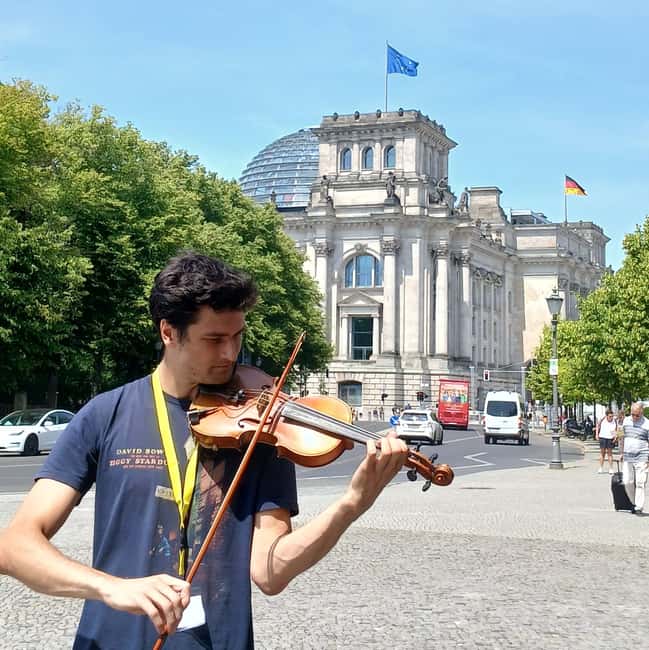
Berlin is loud in history, but this tour is loud in music. You’ll walk the center and hear live songs that tie directly to what you’re looking at. Live guitar, singing, and violin give you a fresh way to process Berlin’s past at famous sites like the Brandenburg Gate and the Berlin Wall.
The two things I like most are how Axel Glorvigen keeps the story pointed at the exact place in front of you, and how the music isn’t just decoration. The songs connect to themes like Nazi propaganda bands, David Bowie’s 1970s Berlin inspiration, and how East German songwriters used music as resistance.
The one thing to consider is simple: it’s a fully walking tour, so you’ll want good shoes and a weather game plan. If you hate walking for long stretches or you want total silence at memorials, this may not be your style.
In This Review
- Key highlights worth your time
- Pariser Platz start: finding the group and setting the mood
- Brandenburg Gate: 20 minutes of big symbolism with a musical tie-in
- Holocaust Memorial: visiting with care and a song that changes the pace
- Berlin Wall segment: hearing how songs can resist
- Checkpoint Charlie finish: Bowie-era Berlin through music
- Why this tour works better than a standard landmarks walk
- Price and value: how $12 gets you a lot in the center
- Timing, walking pace, and what to bring
- Who should book this live-music history walk
- Booking decision: should you do it?
- FAQ
- How long is the Berlin Historical Walking Tour with Live Music?
- What is the meeting point for the tour?
- Is transportation included?
- What languages is the live guide available in?
- What live music can I expect during the tour?
- Which major landmarks are included on the route?
- Is the tour wheelchair accessible?
- Do I need to bring anything?
- Is there a cancellation option?
Key highlights worth your time
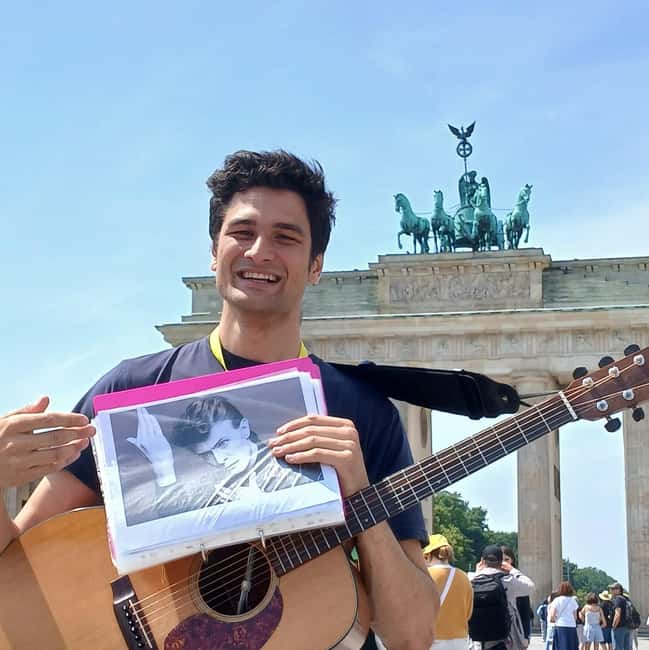
- Pariser Platz start right by a major landmark zone, with Axel carrying a guitar so you can spot the group fast
- Live music at major stops including the Brandenburg Gate, the Holocaust Memorial, the Berlin Wall, and Checkpoint Charlie
- History explained through melodies, with themes like propaganda music and musical defiance
- English live guide who pairs what you hear with what you see at each location
- Wheelchair accessible while still being a walking format
- No transport needed, since the tour stays fully on foot for the full 2.5 hours
More of Berlin on foot
- Discover Berlin Half-Day Walking Tour★ 5.0 · 9,624 reviews
- Berlin City walk Government District and Places of Democracy★ 4.7 · 8,467 reviews
- Berlin: Third Reich & Cold War Guided Walking Tour★ 4.9 · 8,378 reviews
- Berlin: Discover Berlin Walking Tour★ 4.9 · 5,998 reviews
Pariser Platz start: finding the group and setting the mood
The tour begins at Pariser Platz, in front of the Starbucks. Axel Glorvigen is the easy giveaway because he’ll be carrying a guitar. That small detail matters. It means you spend less time scanning crowds and more time getting into the rhythm of the walk.
From the start, the vibe is meant to be active. You’re not waiting around for a lecture. You’ll move from one key point to the next, and Axel’s music helps you connect each location to a specific chapter of Berlin’s story. Think of it as sightseeing with a soundtrack that changes as the city changes.
You’re also looking at a part of Berlin that feels like a hinge point between eras: grand public spaces, heavy political symbolism, and the sense that history is stacked rather than layered. A regular walking tour tells you what happened. This one tries to make you feel how it sounded.
Brandenburg Gate: 20 minutes of big symbolism with a musical tie-in
Your first major stop is the Brandenburg Gate, with about 20 minutes of sightseeing. This is one of those places where your brain already wants to fill in context. The tour’s job is to give you the context you might miss, and to do it with live performance rather than just facts.
Axel links the landmark to the way music has been used in Berlin’s political life. You’ll hear how Nazi propaganda bands fit into their broader messaging. The point isn’t to turn the music into a gimmick. It’s to show that sound can be a tool—used to persuade, to unify, or to control the story people tell themselves.
Practically, this stop is a good warm-up. You’ll get moving experience right away and learn the tour pattern: short sightseeing time, then a live song that answers the question of why this place matters.
Holocaust Memorial: visiting with care and a song that changes the pace
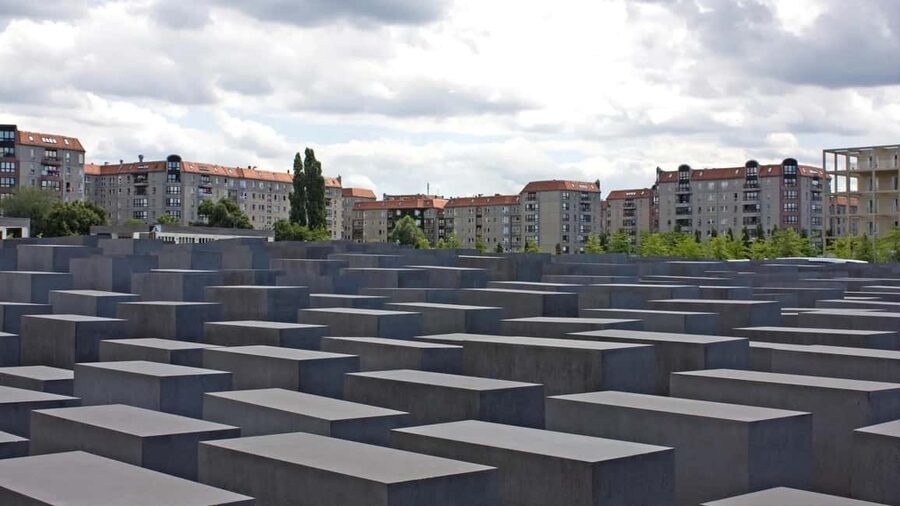
Next up is the Holocaust Memorial, where you’ll spend around 20 minutes. This is the stop where the tour earns its seriousness. You’re dealing with a site that already demands quiet attention, and the idea of live music here can sound risky if you expect a casual concert.
In practice, the tour approach is built around connection, not spectacle. Axel uses singing and guitar to bring the historical story into sharper focus, in a way that makes you slow down rather than rush past the meaning. The music works like punctuation. It marks transitions in the story so you’re not just walking through a history checkbox.
Because this stop is on foot and time is limited, it helps to go in with the right mindset: you won’t be there for a long museum-style visit. You’re there for a focused look and an emotional, story-driven framing that stays with you as you continue.
One more practical note: if you’re sensitive to sound or crowds, be mindful of where you stand. You’ll want a position where you can both see the memorial space and still hear the guide.
Berlin Wall segment: hearing how songs can resist
Then comes one of the most powerful parts of the route: the Berlin Wall segment, again with about 20 minutes of sightseeing. The Wall isn’t just a photo backdrop here. Axel ties what you’re seeing to the role of music under pressure.
A key theme you’ll hear is how East German songwriters resisted the regime through their work. Even if you know the broad Cold War story, the musical angle changes the texture. It turns resistance from an abstract political concept into something human: the idea that words and melodies can slip past the official narrative, even when the system tries to control culture.
This stop also benefits from Axel’s method of stopping in place. He doesn’t treat the route like a checklist. He uses the exact viewpoint you’re standing at to anchor the talk, which helps the Wall section feel less like a general overview and more like a place-based lesson.
If you like history that has cause-and-effect, this is where it clicks. The Wall section shows you that cultural expression wasn’t separate from politics. It was part of it.
More of Berlin's long history, guided





Checkpoint Charlie finish: Bowie-era Berlin through music
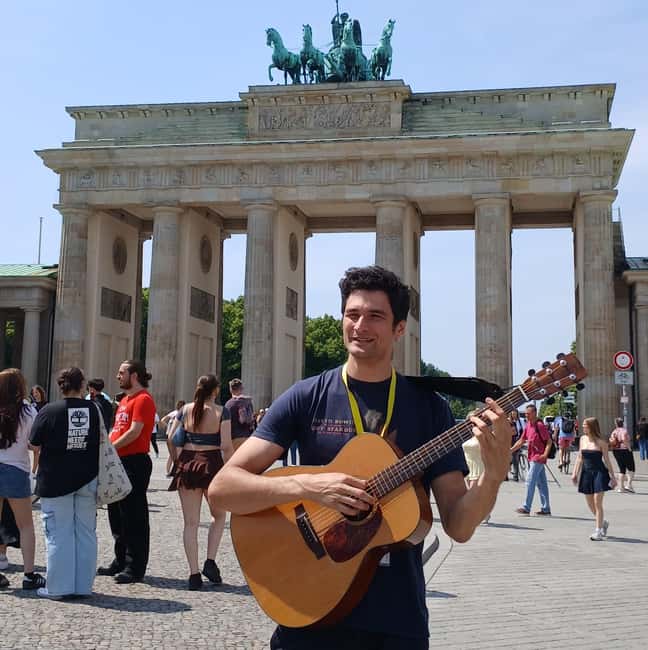
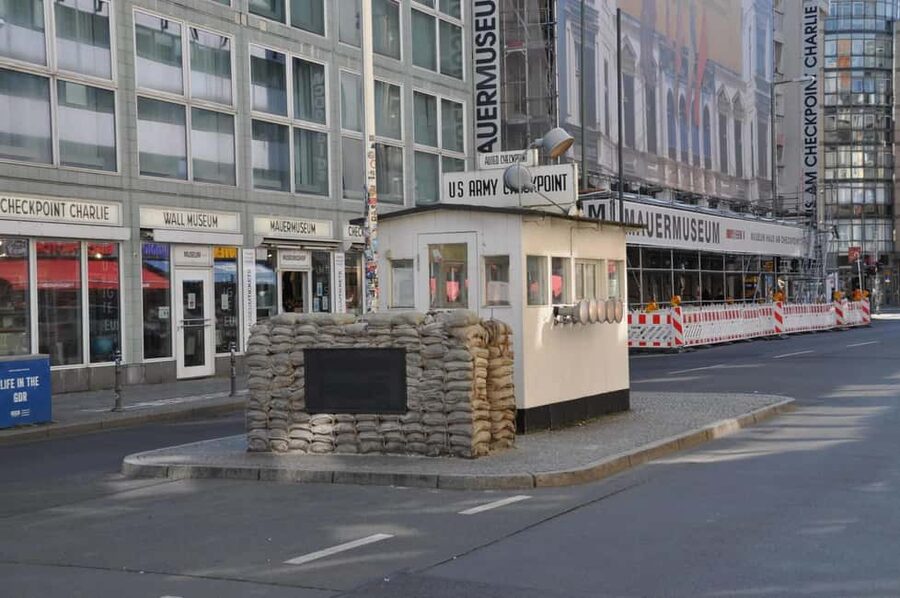
Your tour ends at Checkpoint Charlie. Expect it to be the closing payoff, and it’s a smart finish because Checkpoint Charlie is where the Cold War feels most cinematic and most immediate—at least at first glance.
Axel connects the ending to the idea of Berlin as an artistic magnet. You’ll hear about how David Bowie found inspiration in 1970s Berlin. That topic gives the tour a forward-looking shift. You’ve spent time with propaganda, terror, division, and repression. Bowie’s connection pulls the story toward how Berlin’s contradictions fueled creativity.
Even at the end, the live element stays present. You’re not leaving with only a final landmark photo. You’re leaving with a musical note that reframes the whole walk: Berlin didn’t just suffer and divide. It also produced art that responded to what was happening.
This is also a good place to regroup mentally. If you plan to keep exploring after the tour, you’ll have a clearer timeline in your head—WWII memory, Cold War division, then the cultural aftershock.
Why this tour works better than a standard landmarks walk
A lot of Berlin walking tours are similar: stop, hear facts, take a photo, repeat. This one feels different because music is part of the explanation rather than something added at the end.
Here’s what that means for you as a visitor:
- You don’t just learn about the past. You hear how sound can carry ideology, memory, and protest.
- Axel’s live performance keeps attention from wandering, especially during the tougher historical stops.
- The tour gives you a “memory hook” that standard tours don’t. When you recall the Wall or the memorial later, the song might come back first—which can be a useful way to remember what you learned.
The other big win is that Axel presents the story in a mix of verbal explanation and what you can see in front of you. The music helps the facts land emotionally, but the sightlines keep it grounded.
If you enjoy history but you sometimes find it dry, this format can be a relief. And if you like music but usually miss the political context, this tour gives you a route where the music actually has something to say.
Price and value: how $12 gets you a lot in the center
At $12 per person for 2.5 hours, the value is the main headline. Berlin can be expensive in the center, and many paid tours add up fast once you factor in transport or add-ons. Here, you walk the whole way, and everything is included. That means you’re not hunting for tickets or paying extra just to make the tour function.
You’re paying for two things:
1) Guided storytelling across four major sites
2) Live music performance built into each stop
In other words, you’re not just buying access to landmarks. You’re buying an experience that uses performance to connect those landmarks to specific themes: propaganda music, Bowie’s influence, and East German resistance through songwriting.
If you want a “starter” tour to orient yourself, this is an efficient choice. It gives you big-picture context while also giving you a distinctive experience that isn’t just another audio-guided stroll.
Timing, walking pace, and what to bring
The tour lasts 2.5 hours, and the sightseeing stops are roughly 20 minutes each at the major points along the route. That pacing is usually friendly for most visitors, but it does mean you should expect a steady rhythm rather than long lingering.
Because it’s a walking tour, bring good shoes. If your feet get cranky easily, Berlin’s sidewalks and curb edges can add up fast. Also check the weather beforehand, since the tour stays outdoors for the full duration.
If you’re someone who needs frequent breaks, plan for short pauses rather than long rests. The schedule is built around keeping momentum so the musical pieces connect smoothly from one location to the next.
One more practical tip: wear something you don’t mind adjusting. You’ll be stopping, standing, and listening, so comfortable layers make the experience easier.
Who should book this live-music history walk
This tour fits best if you like at least one of these:
- You want Berlin’s major WWII and Cold War landmarks with a creative approach
- You enjoy live music, especially with guitar and singing as part of the storytelling
- You learn better when facts come with a human element
It can also work well for people who have visited Berlin before and feel like they’ve “seen the photos” already. The Wall and memorials become more than images when a guide ties them to songs with specific themes.
The tour is listed as wheelchair accessible, which is great. Since it’s still a walking tour, you’ll want to be prepared for the practical side of mobility (uneven surfaces, curb cuts, time at stops).
On the flip side, it might feel like too much sound for anyone who wants a quiet, independent memorial visit. It’s not a museum audio experience; it’s a guided performance with history threaded through it.
Booking decision: should you do it?
I’d book this if you’re curious about how music intersects with power and resistance, and if you want a Berlin walk that feels like more than sightseeing. The low price helps, but the real value is the way live music turns familiar landmarks into story anchors you can remember later.
If you want maximum time at each site or you prefer a purely factual guide without performance elements, you might consider a different type of walking tour. But if you’re open to hearing Berlin’s past with guitar, singing, and violin as part of the lesson, this is a strong pick for an efficient afternoon.
FAQ
How long is the Berlin Historical Walking Tour with Live Music?
The tour lasts 2.5 hours.
What is the meeting point for the tour?
Meet at Pariser Platz in front of Starbucks. The guide will be carrying a guitar.
Is transportation included?
Yes. The tour is fully walked, so no transportation is needed.
What languages is the live guide available in?
The tour is in English.
What live music can I expect during the tour?
You’ll hear live music including guitar, singing, and violin at the major stops.
Which major landmarks are included on the route?
The tour includes the Brandenburg Gate, the Holocaust Memorial, the Berlin Wall, and it finishes at Checkpoint Charlie.
Is the tour wheelchair accessible?
Yes, the tour is listed as wheelchair accessible.
Do I need to bring anything?
You should bring good shoes and check the weather beforehand, since it’s a walking tour.
Is there a cancellation option?
There is free cancellation up to 24 hours in advance for a full refund.
More of Berlin on Foot





More Tours in Berlin





More Tour Reviews in Berlin

Round out your days in Berlin


Historical Tours, compared.
 ★ 4.6Natural History Museum Entrance TicketFrom $123,382 reviews
 ★ 4.53-Hour World Heritage Cruise to PotsdamFrom $251,569 reviews
 ★ 4.7History of the Third Reich Guided Walking TourFrom $30791 reviews
 ★ 4.4Berlin Charité Guided History TourFrom $28660 reviews
 ★ 4.9Berlin Historical Highlights Walking TourFrom $389657 reviews
 ★ 5.0Berlin Private Complete History All Day Walking TourFrom $253474 reviews
 ★ 4.8Cold War & Berlin Wall History Guided Bike TourFrom $41422 reviews
 ★ 4.5Historic Boat Sightseeing City Center TourFrom $33415 reviews
Browse the lists this tour appears in