
REVIEW · HISTORICAL TOURS
Berlin History Walking Tour with a French-Speaking Guide
Berlin tells its story in footsteps. This tour is a practical way to connect the darkest parts of WWII to the Cold War streets you can still see today. I especially liked the French-speaking guide and the included admissions that take you to the Holocaust Memorial and the Fuhrerbunker area without guessing how to line everything up.
One possible drawback to plan for: the tour does not mention audiophones, so you will rely on hearing the guide clearly outdoors. If you’re hard of hearing or you prefer extra audio support, pick a spot near the front and bring your best listening strategy.
In This Review
- Key Points You’ll Care About
- Why This Berlin History Walk Works (Even If You Know Some Dates)
- The Walk Setup: Timing, Group Size, and What It Means for You
- Stop-by-Stop: What You’ll See and Why Each Moment Matters
- 1) Potsdamer Platz: Modern Berlin Starts in Motion
- 2) Checkpoint Charlie: The Cold War in One Symbol
- 3) Fuhrerbunker (Hitler’s Bunker Area): The Place and the Meaning
- 4) Holocaust Memorial: Memory That Refuses to Be Abstract
- 5) Unter den Linden: Old Power, War Wounds, and Rebuilding
- 6) Bebelplatz: Book Burning, Then Education and Faith
- 7) Museum Island Area: Architecture as a Future Plan
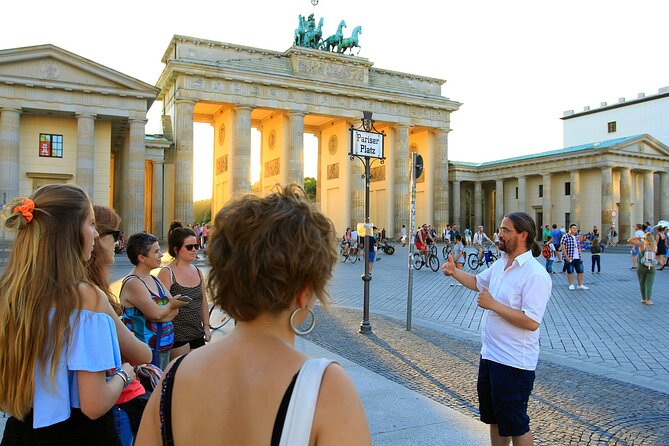
- 8) Brandenburger Tor: From King’s Strength to Reunification Symbol
- The Guide Experience: French Clarity, Strong Q&A, and a Sense of Humor
- Value Check: Is $27.81 a Good Deal?
- What to Bring (So the Weather and Distance Don’t Beat You)
- Best Fit: Who Should Book This Tour
- After the Tour: What Comes Next Near Museum Island
- Should You Book This Berlin History Walking Tour?
- FAQ
- How long is the Berlin History Walking Tour?
- What time does the tour start?
- Is the tour in French?
- How much does it cost?
- Where do I meet the guide?
- Where does the tour end?
- Is admission to major sites included?
- Is transportation and food included?
- Does it run in bad weather?
- What is the cancellation policy?
Key Points You’ll Care About
- French-speaking guide who keeps the story focused and answers questions
- Included entry for the Holocaust Memorial and the Fuhrerbunker stop
- Route logic for first-timers, from Potsdamer Platz through Cold War sites to reunification icons
- Small group size (max 25), which makes it easier to ask things as you walk
- Morning start (10:00 am) so you can finish in time for lunch
- All-weather operation, meaning you’ll dress for Berlin, not for an ideal forecast
More of Berlin on foot
- Discover Berlin Half-Day Walking Tour★ 5.0 · 9,624 reviews
- Berlin City walk Government District and Places of Democracy★ 4.7 · 8,467 reviews
- Berlin: Third Reich & Cold War Guided Walking Tour★ 4.9 · 8,378 reviews
- Berlin: Discover Berlin Walking Tour★ 4.9 · 5,998 reviews
Why This Berlin History Walk Works (Even If You Know Some Dates)
Berlin history can feel like a pile of names and dates. This tour turns that noise into a route you can walk and remember. In about three hours, you move through key settings that explain how Germany’s twentieth-century collapse and the Cold War split shaped the city’s streets, buildings, and public memory.
What makes it especially useful for first-time visitors is that it blends big monuments with places that carry emotional weight. You are not only sightseeing. You’re learning how Berlin chose to mark trauma, how Berlin rebuilt under pressure, and why some landmarks became symbols again and again.
And since it’s a French-speaking experience, the guide’s job is to translate the complicated parts of the story into something you can follow step by step. In the feedback, guides like Anouk, Martin, Paul, Céline, Arthur, and Jean-Charles were singled out for clear explanations and engaging delivery, from precise answers to occasional humor.
The Walk Setup: Timing, Group Size, and What It Means for You
This is a half-day morning walking tour starting at 10:00 am and lasting about three hours (it can run a bit longer depending on the group flow). It’s designed to end near Museum Island, so you’re set up to keep exploring or grab lunch nearby without rushing.
The meeting point is Potsdamer Platz 10, at the corner of Gabriele-Tergit-Promenade. Finish point is next to Museumsinsel / Museum Island. It’s a linear day plan: you don’t have to hunt for trams or buses between every stop.
Group size is capped at 25, which matters more than you might think. Big groups can turn “walking tour” into “standing still and listening to a megaphone.” A smaller group usually means the guide can check in, answer questions, and keep the pace humane.
A few practical notes that affect your comfort:
- You’ll walk most of the time, so wear shoes you trust.
- The tour operates in all weather, so bring a rain layer or umbrella if the forecast looks moody.
- It’s aimed at travelers with moderate physical fitness.
- Transportation to and from attractions isn’t included, but the route is near public transit.
- Tickets are handled via mobile ticket.
Stop-by-Stop: What You’ll See and Why Each Moment Matters
Below is the route logic in human terms. Each stop adds a different layer, so you start to see the city as a sequence instead of a list.
1) Potsdamer Platz: Modern Berlin Starts in Motion
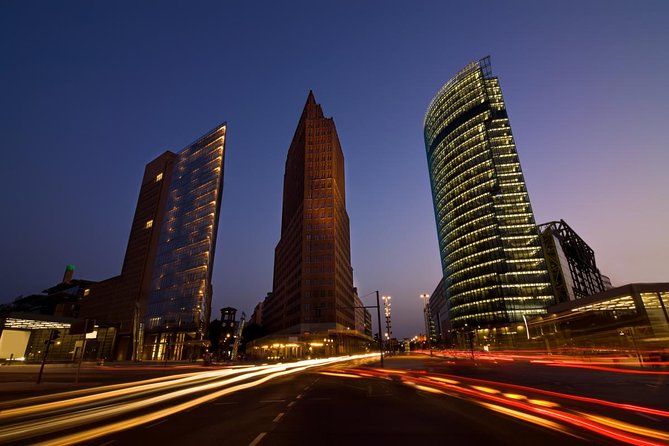
Your tour begins at Potsdamer Platz, a place that today feels like a crossroads of city life, but historically sits right at the edge of how Berlin was carved up. Starting here is smart because it pulls you into the city’s twentieth-century transformation early, before you head into the darker chapters.
This is also a calm place to get oriented. You’ll have a short stop here to set the context for what follows, with time and entry included.
More guided walks through Berlin




2) Checkpoint Charlie: The Cold War in One Symbol
Next comes Checkpoint Charlie, the most famousized symbol of the Cold War showdown between East and West. The guide’s job here is not just to point and describe; it’s to explain why this kind of border space became so loaded with meaning for decades.
You’ll spend a short time on-site, and admission is free here. Even with limited time, this stop gives you the “why” behind the tension: it wasn’t only politics. It was everyday fear, negotiation, and propaganda playing out in public space.
3) Fuhrerbunker (Hitler’s Bunker Area): The Place and the Meaning
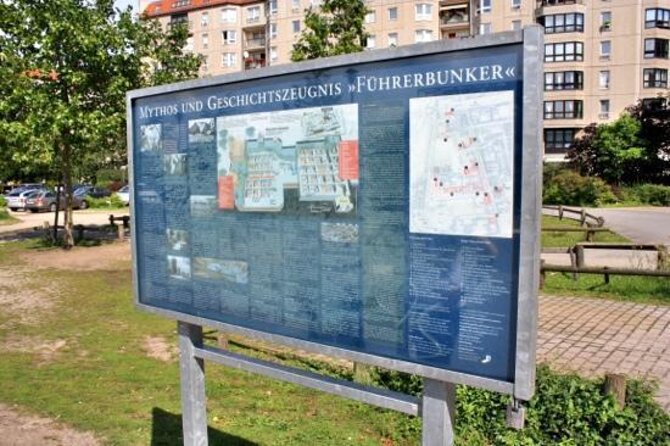
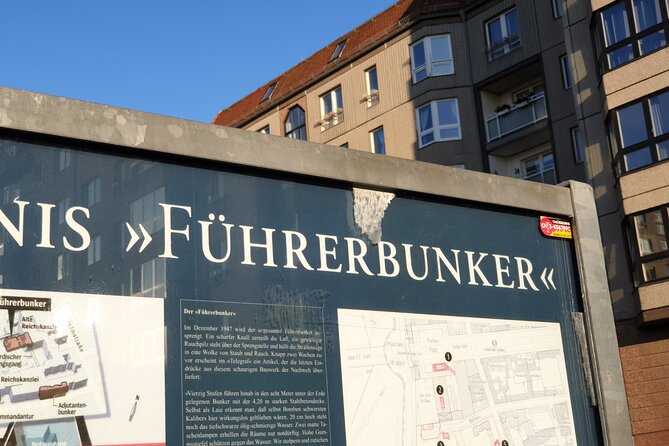
Then you move to the Fuhrerbunker stop. This is where Hitler spent his last days, and it’s a location people approach with very different feelings—curiosity, grief, anger, disbelief. The guide helps you interpret what you are seeing now and why the site exists as it does today.
This is one of the stops where the tour’s structure matters. If you rush, it turns into a quick photo moment. If you slow down, it becomes a lesson in how a city handles responsibility and remembrance.
Admission is included for this stop, so you avoid extra ticket friction.
4) Holocaust Memorial: Memory That Refuses to Be Abstract
After that emotional spike, you arrive at the Memorial to the Murdered Jews of Europe—often called the Holocaust Memorial. This is one of the most important moments on the walk. The space is designed to create discomfort and reflection, and the guide will walk you through what the site represents and why it has such a strong place in Berlin.
In the feedback, people repeatedly mentioned being moved by the storytelling here. That matters, because the best way to understand this memorial is not with a checklist. It’s with context: what happened, how state power enabled atrocity, and how memory became part of the city’s identity.
This stop includes admission and is allotted enough time to take it seriously rather than treat it as a quick photo stop.
5) Unter den Linden: Old Power, War Wounds, and Rebuilding
Next you’ll walk along Unter den Linden, the famous avenue associated with royal access in earlier eras. What I like about this segment is that it turns architecture into clues. You’re meant to look at the road and buildings and notice the various construction periods and the damage and scars left by the war.
This is where the tour starts to feel less like “WWII theme” and more like “Berlin as a living city.” The guide helps you recognize transitions over time, so you stop seeing the boulevard as scenery and start seeing it as history you can read.
This stop includes admission.
6) Bebelplatz: Book Burning, Then Education and Faith
At Bebelplatz, the tour brings you to a square tied to the burning of books during the Nazi dictatorship, while also pointing out the educational and religious landmarks around it, including the seat of Humboldt University and the Catholic Cathedral.
It’s a powerful contrast: censorship and destruction on one hand, and learning and belief on the other. This stop is short, but it lands because the guide frames it as more than one dark scene—it’s about what followed, and what Berlin chose to rebuild.
Admission is included here as well.
7) Museum Island Area: Architecture as a Future Plan
The tour concludes near Museum Island, finishing with a view toward major institutions and landmarks. This part of Berlin often feels like a promise of culture—yet it’s also built on a long memory of what the city lost and what it rebuilt.
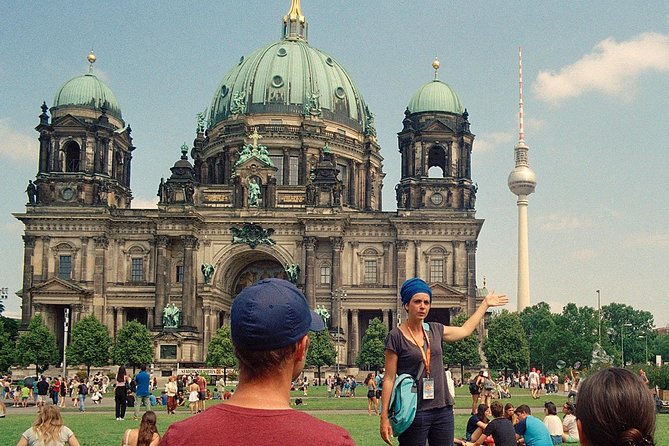
You’ll also be close to the Berliner Dom (Protestant Cathedral) and the reconstructed Humboldt Forum, giving you a sense of how architecture carries political and cultural messaging.
Admission is listed as free at the ending segment, and the timing is convenient: you can continue independently right after the tour without waiting around.
8) Brandenburger Tor: From King’s Strength to Reunification Symbol
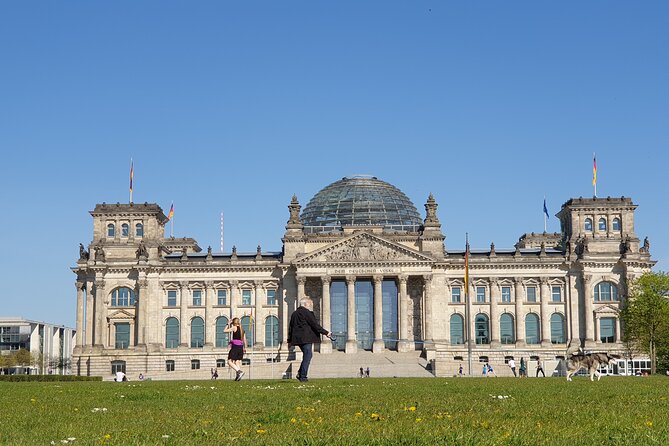
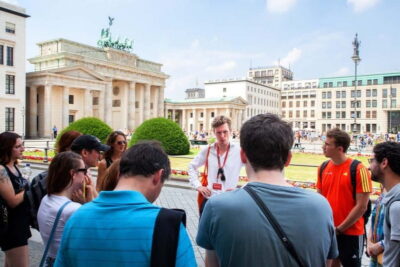
You’ll also see the Brandenburg Gate, Berlin’s best-known gateway and one of the most photographed city landmarks for a reason. The guide explains its changing role: from a symbol of authority (a king’s strength), through Cold War symbolism, to its later life as a marker of German reunification.
This stop is included and helps you finish the tour with a sense of how Berlin rebranded itself after division. It’s not a light ending. It’s a complicated one—which is exactly what Berlin does best.
The Guide Experience: French Clarity, Strong Q&A, and a Sense of Humor
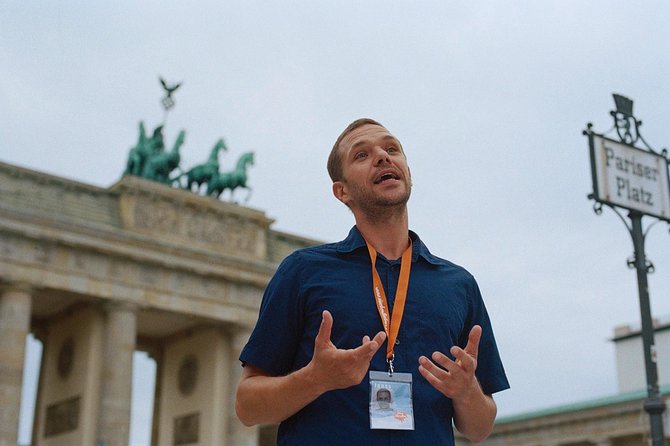
Because this is a French-operated tour, the guide’s communication style is the experience. From the feedback, the guides named across the reviews shared a few common strengths:
- They answered questions.
- They gave clear explanations rather than rushing through names.
- They offered practical sightseeing advice beyond the monuments.
Some guides were specifically praised for being articulate and well-prepared, while others (like Arthur) were noted for humor alongside strong narration. If you like tours where the guide can flex depending on the group, that’s a good sign.
That said, there is one caution worth taking seriously: if you’re a history stickler, you may occasionally find details that do not match what you later verify elsewhere. History facts can be debated in how they are framed. So if you want the last word, plan to do a little independent reading afterward.
Value Check: Is $27.81 a Good Deal?
At $27.81 per person, this tour is priced like a budget-friendly way to get oriented quickly, but it’s also not just “a stroll with vibes.” You get guided interpretation plus included admissions at major stops. That’s where the value comes from.
Also, it’s booked fairly far in advance on average (about 22 days), which suggests people find this format reliable for a first visit. With a small group size and a set finish near Museum Island, you’re spending your time efficiently.
If you’re doing Berlin on a schedule and you want one morning to give you a mental map, this price tends to make sense. If you already know the city deeply and you hate guided interpretation, you might prefer a slower self-walk. But for most first-time visitors, guided context is exactly what makes Berlin click.
What to Bring (So the Weather and Distance Don’t Beat You)
This tour runs in all weather, so bring gear for Berlin reality. A few smart items:
- Comfortable walking shoes with grip
- A light rain layer or umbrella
- A small bottle of water
- A phone charged for the mobile ticket
Because there’s no audiophone setup mentioned, you’ll also want to think about sound: wear a hat that won’t block your ears, stand where the guide can see you, and don’t hang back unless you’re okay with reduced audio.
Best Fit: Who Should Book This Tour
This tour is a strong fit if:
- You’re in Berlin for the first time and want a guided route connecting WWII and the Cold War
- You want major sites handled with included admissions
- You prefer morning plans that keep your day open afterward
- You’re comfortable walking for roughly three hours at a moderate pace
It may be less ideal if:
- You need audiophone-style hearing support (the tour does not advertise this)
- You only want lighter, entertainment-style sightseeing and not emotionally heavy sites
- You’re traveling with very strict timing constraints later in the day (it can run slightly longer)
After the Tour: What Comes Next Near Museum Island
Finishing near Museum Island is a practical advantage. You’re in an area where you can keep going—either toward museums, architectural sights, or a simple lunch break. Since food and drinks aren’t included, you’ll want to plan that yourself.
The biggest benefit is mental: by the time you reach the ending zone, you’ve already learned how Berlin’s past explains the present. That makes every nearby building and square feel less random.
Should You Book This Berlin History Walking Tour?
I’d book it if you want a guided orientation that actually connects Berlin’s WWII trauma to Cold War division and reunification symbolism, all on foot and in one morning. The French-speaking guide and the included admissions remove a lot of friction, and the route makes sense for first-timers.
I would hold off or plan extra support if you rely on audiophones, or if you need a strict, academic-level fact check before accepting details. For most people, it’s a solid deal at this price and a fast way to understand why Berlin looks the way it does today.
If you can handle a mix of heavy memorial moments and city-walk history, this tour gives you the kind of foundation that makes the rest of your Berlin trip easier.
FAQ
How long is the Berlin History Walking Tour?
It lasts about 3 hours.
What time does the tour start?
The tour starts at 10:00 am.
Is the tour in French?
Yes. The tour operates in French.
How much does it cost?
It costs $27.81 per person.
Where do I meet the guide?
The meeting point is Potsdamer Platz 10, 10785 Berlin, at the corner of Gabriele-Tergit-Promenade.
Where does the tour end?
The tour ends next to Museum Island (Museumsinsel 10178 Berlin).
Is admission to major sites included?
Yes. Admission is included for Hitler’s Bunker (Fuhrerbunker) and the Holocaust Memorial. Other stops are listed as included or free depending on the site.
Is transportation and food included?
No. Transportation to and from attractions is not included, and food and drinks are not included.
Does it run in bad weather?
Yes. It operates in all weather conditions, so dress appropriately.
What is the cancellation policy?
You can cancel for a full refund up to 24 hours before the experience starts.
More of Berlin on Foot

More Tours in Berlin




More Tour Reviews in Berlin

Round out your days in Berlin

Historical Tours, compared.
 ★ 4.6Natural History Museum Entrance TicketFrom $123,382 reviews
 ★ 4.53-Hour World Heritage Cruise to PotsdamFrom $251,569 reviews
 ★ 4.7History of the Third Reich Guided Walking TourFrom $30791 reviews
 ★ 4.4Berlin Charité Guided History TourFrom $28660 reviews
 ★ 4.9Berlin Historical Highlights Walking TourFrom $389657 reviews
 ★ 5.0Berlin Private Complete History All Day Walking TourFrom $253474 reviews
 ★ 4.8Cold War & Berlin Wall History Guided Bike TourFrom $41422 reviews
 ★ 4.5Historic Boat Sightseeing City Center TourFrom $33415 reviews
Browse the lists this tour appears in