
REVIEW · THIRD REICH & WWII HISTORY
Berlin: Hitler’s Berlin The Rise & Fall Guided Walking Tour
Berlin’s Nazi story is told block by block. This guided walk connects the big political turning points to the streets you can still see today, with stops that show how democracy was dismantled and terror took over. I especially like the clear storyline—the guide makes the timeline feel orderly, not overwhelming.
I also love how the tour treats memory with care. You’ll stand at multiple memorials, including the Holocaust Memorial, and you’ll get space for reflection and Q&A instead of a rush-through experience. One consideration: it’s outdoors and you’ll do a fair amount of walking, so comfy shoes and weather-ready clothing matter.
Guided by experts (and often by guides such as Scott or Hannah), the small-group format keeps the pace human and questions welcome. If you want Berlin history explained in a straight line—without fluff—this one is hard to beat.
In This Review
- Key things to know before you go
- Hitler’s Berlin, mapped in plain history on your feet
- Meeting at Brandenburg Gate and settling into the route
- Brandenburg Gate: democracy’s symbol before and after
- Memorial to the Sinti and Roma Victims: remembering who was targeted
- Reichstag: where democracy, dictatorship, and unity collide
- Tiergarten Soviet War Memorial: the cost of the Battle of Berlin
- The Holocaust Memorial: space for reflection with guided context
- Hitler’s bunker site: seeing the end of Europe’s war
- Johann Georg Elser memorial: resistance that changes the story
- German Finance Ministry: power, policy, and the machinery behind it
- Topography of Terror: repression made visible
- Then & Now photos and maps: why the story actually sticks
- Who this tour is best for (and who should pick something else)
- Price and value for a 150-minute expert-led route
- Should you book Hitler’s Berlin: The Rise & Fall walk?
- FAQ
- How long is the Berlin walking tour?
- Where do I meet the guide?
- Is the tour indoors or outdoors?
- What language is the guide?
- What’s included in the price?
- What should I bring with me?
- Is the tour wheelchair accessible?
- Is free cancellation available?
Key things to know before you go
- Then & Now photos and historic maps that help you picture how these places looked in Nazi-era Berlin
- A full arc of Nazi Germany (1933–1945) rather than a random list of landmarks
- Multiple memorial stops with time to slow down and think
- Topography of Terror for a direct sense of repression, not just abstract history
- Short, site-to-site pacing that keeps the walk moving while still allowing questions
More walks through Berlin's wartime history
- Berlin: Third Reich & Cold War Guided Walking Tour★ 4.9 · 8,378 reviews
- Berlin’s Best: 2 Hour Walking Tour Third Reich and the Cold War★ 5.0 · 5,486 reviews
- Third Reich Berlin: Hitler and WWII Walking Tour★ 5.0 · 3,301 reviews
- Berlin: Third Reich, Hitler, and WWII Walking Tour★ 4.9 · 1,757 reviews
Hitler’s Berlin, mapped in plain history on your feet
This is the kind of tour that makes you feel oriented fast. Berlin can be confusing if you just wander—too many buildings, too many layers, too many eras overlapping. Here, you get a structured route that traces the rise and collapse of Nazi Germany from the early grip on power to the end in 1945.
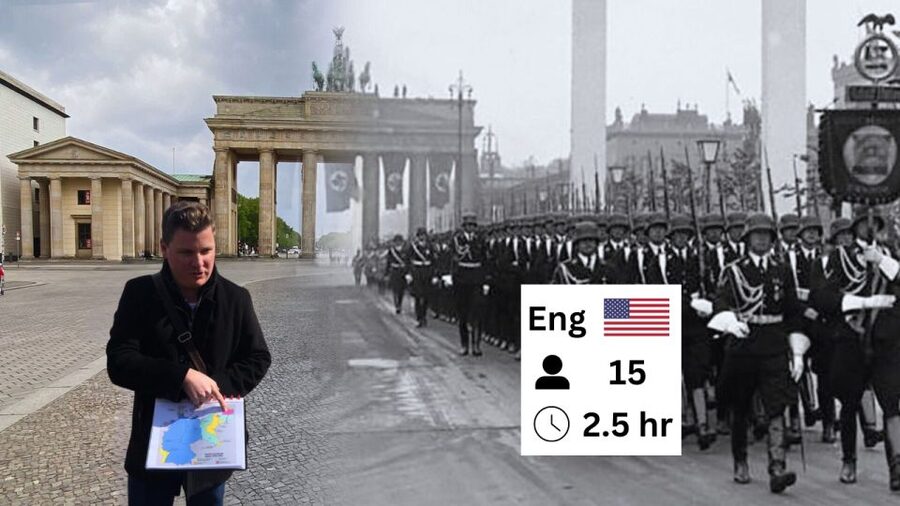
What makes it work is the approach: it’s not built like a lecture. The guide explains as you move, using “then and now” visuals and historic maps to keep the story anchored to specific streets. You’re not memorizing dates for the sake of it. You’re understanding the sequence—how propaganda and intimidation turned into a system, how that system targeted specific communities, and how Berlin’s role in the Third Reich ended in ruin.
And yes, the subject is heavy. The tour is designed to be accurate, but it also gives moments for reflection, especially at the memorial sites. If you’re hoping for cheerful sightseeing, this isn’t it. If you want meaningful context for what you’re seeing, it’s well matched.
Meeting at Brandenburg Gate and settling into the route
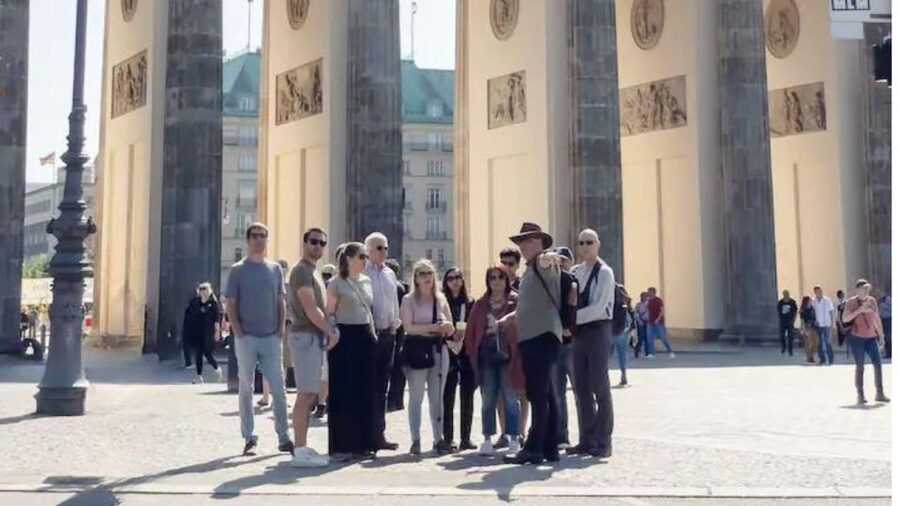
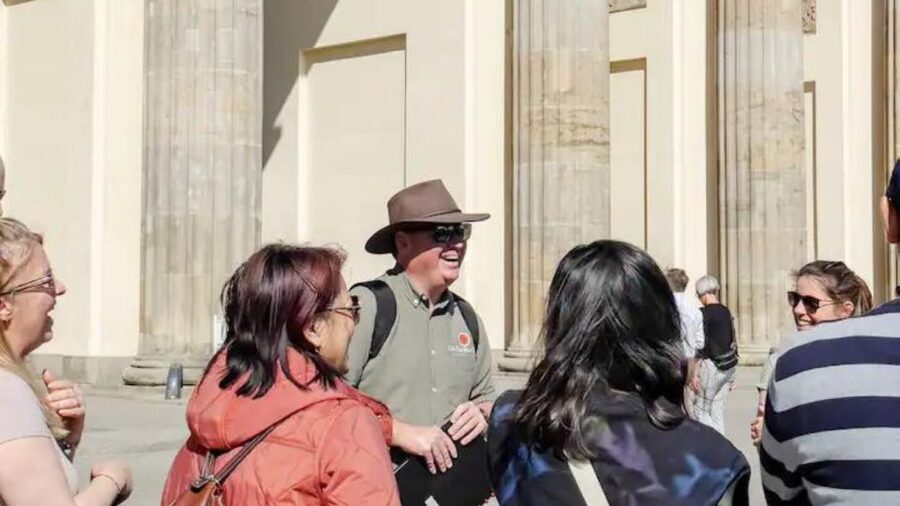
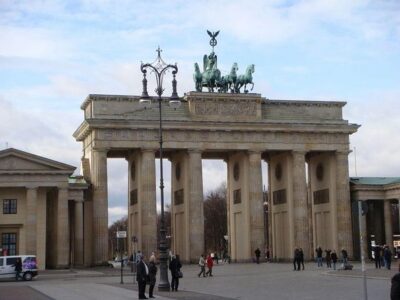
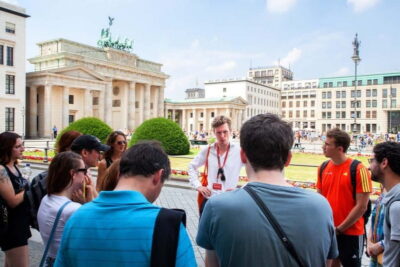
You meet at the Tourist Office at Brandenburg Gate, and you’re looking for a Blue Umbrella. Starting at the Brandenburg Gate makes sense: it’s a democracy-to-dictatorship-and-beyond type of location, and it gives you an immediate sense of scale and direction in the center of Berlin.
Right away, you’ll do a short photo stop at the Brandenburg Gate. The time isn’t just for pictures; it’s for setting the frame. You get scenic views on the way, then you move toward the later sites that carry the weight of what happened next.
For logistics, keep it simple: bring water, wear comfortable shoes, and dress for the weather. The tour is outdoors and the walking time adds up over the full 150 minutes.
Brandenburg Gate: democracy’s symbol before and after
Your first major anchor is the Brandenburg Gate, which the tour treats like a symbol you can read in layers. It’s the kind of place that looks grand on a postcard, but in Berlin it’s also a political marker—because the city’s history has repeatedly rewritten what its monuments mean.
On this walk, you don’t just look at the building. You hear why it matters, and how Berlin’s political story changed so dramatically. Even the short stop helps you understand that the tour isn’t randomly collecting famous sites; it’s building cause-and-effect.
Memorial to the Sinti and Roma Victims: remembering who was targeted

Next comes the Memorial to the Sinti and Roma Victims of National Socialism. This stop matters because it widens the focus beyond the most commonly discussed victim groups. You’ll get a guided explanation rather than a quick glance, and the short pause gives you a chance to actually take it in.
If you’re trying to grasp the Nazi regime as a system of repression, this memorial helps. It underlines that Nazi violence wasn’t one isolated atrocity. It was a policy, applied across different communities.
More of Berlin on foot

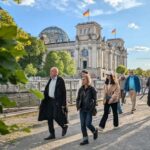



Reichstag: where democracy, dictatorship, and unity collide
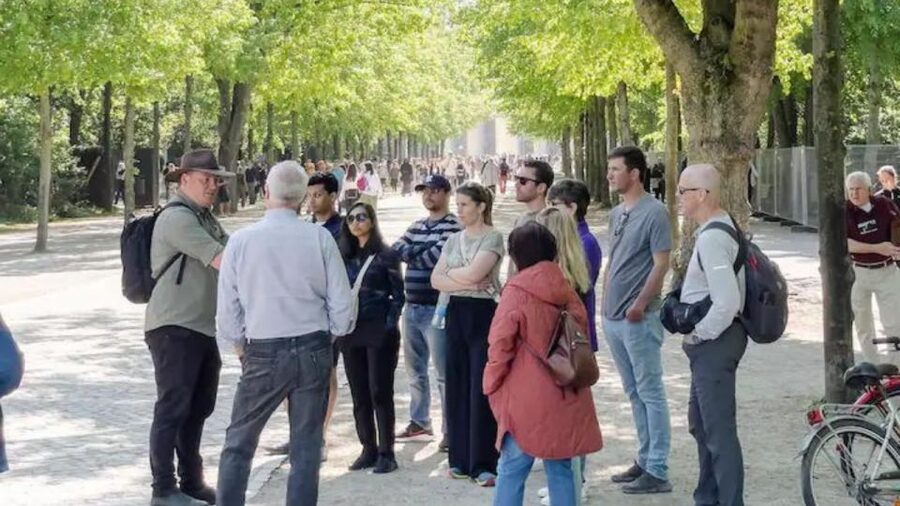
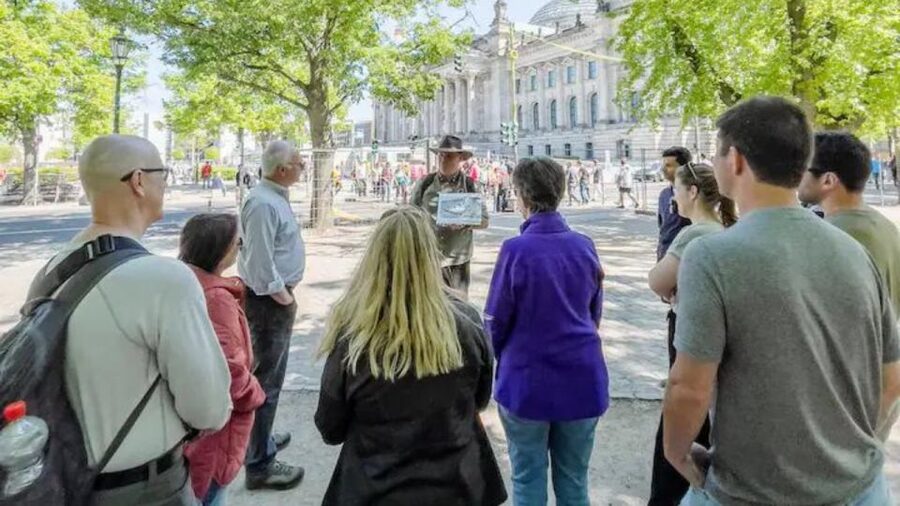
The Reichstag is a star stop on the route, with a guided visit and time to see it from multiple angles. The guide frames it as a symbol that can’t be separated from German political change—the push and pull between democratic ideals and dictatorship.
You also get a sense of how the story plays out in space. In Berlin, buildings don’t just sit there; they hold political memory. The Reichstag stop is where the tour’s tone becomes very concrete: you’re stepping into the heart of how power was claimed and how democratic structures were undermined.
Tiergarten Soviet War Memorial: the cost of the Battle of Berlin

From the Reichstag area, you head toward the Soviet War Memorial in the Tiergarten. The tour includes a photo stop plus guided elements, and it’s another moment where context matters.
This memorial isn’t only about commemoration. It’s also a reminder that Berlin’s end in 1945 wasn’t a clean escape into history books—it was a brutal battle. If you’ve only learned the European end of the war in broad strokes, this stop makes it feel more real.
The Holocaust Memorial: space for reflection with guided context
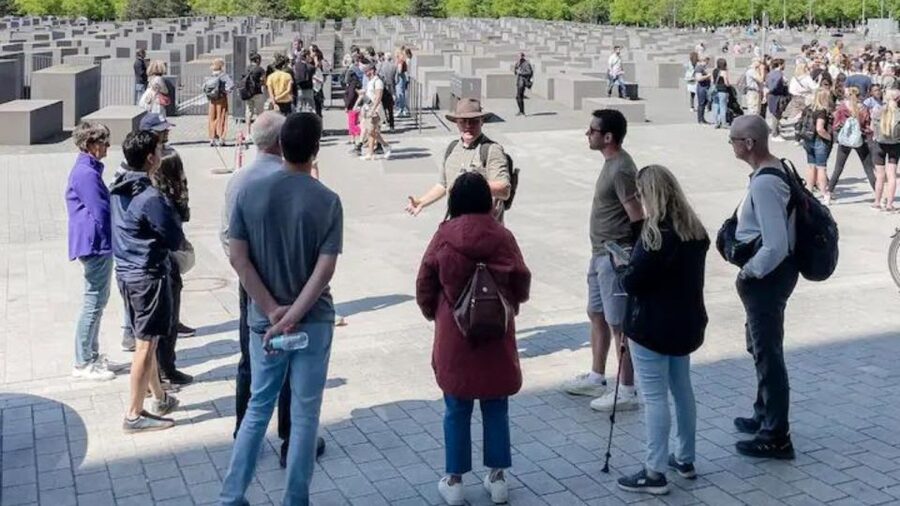
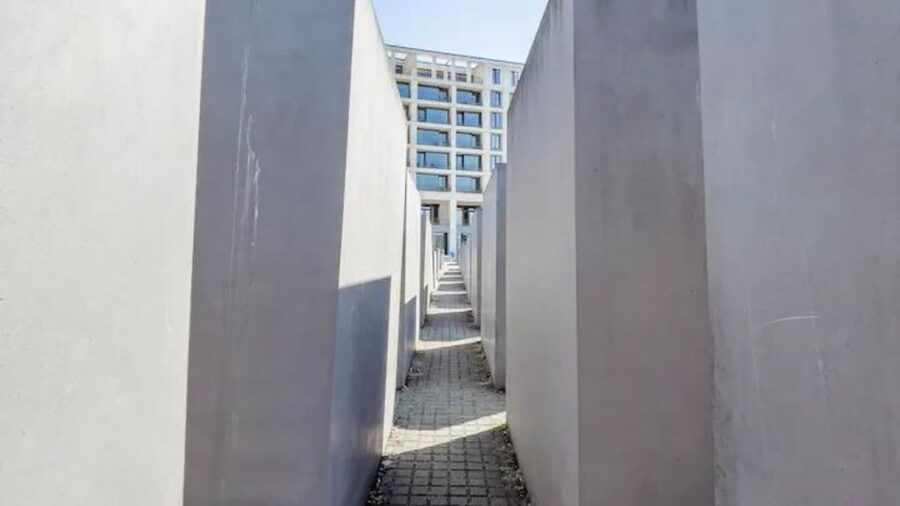
The Holocaust Memorial is one of the tour’s most important stops, and it’s also where the experience can feel most personal. You’ll have a guided visit and time for reflection, with room for Q&A afterward.
This is where I think the tour earns its balance. It doesn’t treat the memorial like a checkbox. It’s presented as a place to understand the meaning of what happened, and the guide helps you connect that meaning to the broader Nazi story you’ve been building up to this point.
If you’re the type of person who needs a quiet minute to absorb, you’ll likely appreciate this stop more than a faster sightseeing option.
Hitler’s bunker site: seeing the end of Europe’s war
Then you move to Hitler’s Bunker site. This is a photo stop with guided explanation, but it’s also emotionally clear in what it represents: the war in Europe coming to its final days in Berlin.
Even without seeing a preserved bunker complex, the stop hits hard because the story is specific. The guide ties it back to the earlier rise of the regime—power consolidated, fear enforced, propaganda maintained—so the collapse feels like an outcome, not a random historical snap.
Johann Georg Elser memorial: resistance that changes the story
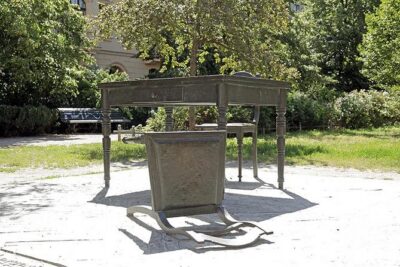
One of the more intriguing stops on the route is the Johann Georg Elser memorial. You get a guided visit and time to see it along the way.
What I like about including this is that it prevents the tour from becoming a single straight line of victimhood and violence. Nazi Germany is shown as a regime that faced opposition too. Elser’s story gives you another angle on the period—proof that not everyone accepted the system.
German Finance Ministry: power, policy, and the machinery behind it
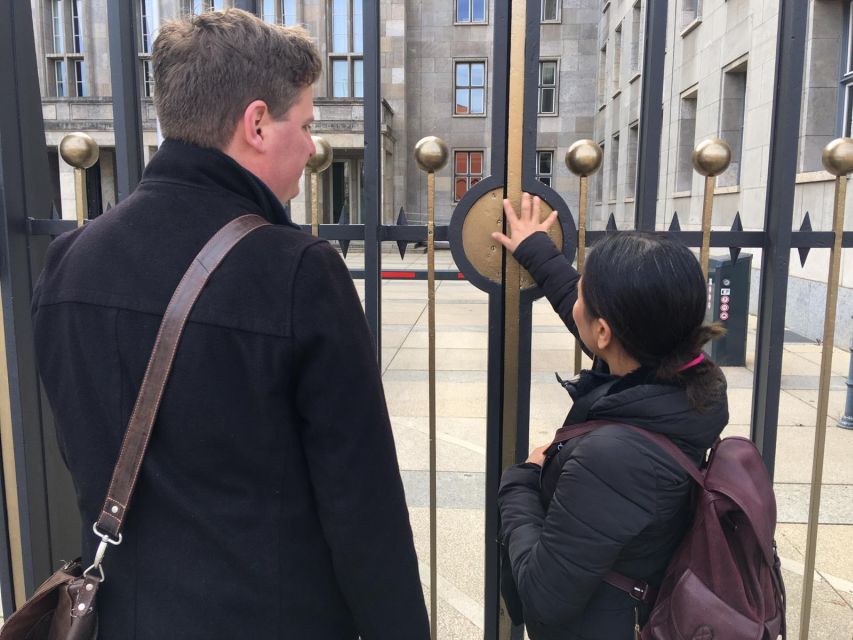
Another stop is the German Finance Ministry site, with time for a photo stop and guided explanation.
This is the kind of place that helps you understand a key idea: totalitarian regimes don’t run only on uniforms and slogans. They run on institutions—money, administration, and the ability to enforce decisions. Even a short stop here supports that bigger point.
Topography of Terror: repression made visible
The tour finishes at Topography of Terror, which is tied to the former Gestapo and SS headquarters. This is where the Nazi machinery becomes hardest to ignore. You’ll have guided elements and photo stops along the way, then end at the site itself for the concluding part of the walk.
If you want to understand what “terror and repression” means in real life, this is the best capstone. The guide doesn’t just name organizations; it explains the role they played in maintaining control. You leave with a clearer sense of how daily life under the regime could feel—because the system behind it is now visible to you.
If you’re the type who enjoys asking questions, this is a good moment. The guide’s Q&A style is often praised, and the atmosphere here tends to make people ask thoughtful questions.
Then & Now photos and maps: why the story actually sticks
A lot of history tours say they’re educational. This one has a practical trick: visual comparison. You’ll see Then & Now photographs and historic maps as you go. That matters because Berlin is all about layers—one era sits on top of another.
When the guide points to a map and then you look at a modern street, your brain does a better job of keeping the timeline straight. I also like that the tour aims to explain events in a “cause-and-effect” way: how the Nazis seized power, how the Jewish population was systematically targeted, how Berlin became the capital of the Third Reich, and how fear, propaganda, and repression maintained control.
You end up understanding the narrative, not just collecting facts.
Who this tour is best for (and who should pick something else)
This is a great fit if you:
- want a structured WWII walk that covers 1933 to 1945 in a clear order
- like guides who can answer detailed questions with confidence (many past guides—such as Scott and Hannah—are praised for engagement and Q&A)
- plan to see Berlin once and want the biggest Nazi-era landmarks covered thoughtfully
You might want a different tour if you:
- need a low-walking, minimal-site option
- prefer lighter, purely sightseeing experiences over heavy history
- get overwhelmed easily by memorial settings and discussions of persecution
Price and value for a 150-minute expert-led route
At $47 per person for about 150 minutes, the value comes from a few things working together: expert guidance, small-group interaction, and multiple guided memorial and historic-site stops. You’re not paying for a long bus ride or extra attractions. You’re paying for interpretation—history made understandable by an actual guide with academic background in WWII history.
It also helps that the format is built around your time in the city. Berlin’s major sites can be spread out, and you can easily lose hours trying to figure out what matters most. Here, you get a focused route so your time feels intentional.
If you’re trying to decide between a self-guided app route and a guided walking tour, this is the one where guidance pays off. The story is complex, and the tour is designed to make it clearer without turning it into oversimplified soundbites.
Should you book Hitler’s Berlin: The Rise & Fall walk?
I’d book it if you want Berlin’s Nazi-era story in a clear timeline, with expert interpretation at the most important sites and memorials. The small-group feel and the guide-led Q&A style are a big part of why this tour earns such consistently strong ratings.
Just go in prepared for what it is: an outdoor walk through some of the darkest chapters of modern history. If you wear good shoes, bring water, and arrive ready to learn and reflect, you’ll likely leave with a much better grasp of how the Third Reich worked—and how it fell.
FAQ
How long is the Berlin walking tour?
It runs for 150 minutes.
Where do I meet the guide?
Meet at the Tourist Office at Brandenburg Gate, and look for the Blue Umbrella.
Is the tour indoors or outdoors?
This is an outdoor walking tour, so indoor museum exhibitions are not included.
What language is the guide?
The tour is in English.
What’s included in the price?
Included items are an expert local guide with WWII academic background, a small-group experience, guided visits to key Nazi-era sites and memorials, and use of Then & Now photographs and historic maps, plus reflection and Q&A time.
What should I bring with me?
Wear comfortable shoes and dress for the weather. A water bottle is advised. You should also bring your own umbrella or walking sticks if needed, since they are not provided.
Is the tour wheelchair accessible?
Yes, it is listed as wheelchair accessible.
Is free cancellation available?
Yes. You can cancel up to 24 hours in advance for a full refund.
More Tours in Berlin





More Tour Reviews in Berlin

Berlin's Wartime History

Round out your days in Berlin

Third Reich & WWII History, compared.
 ★ 4.9Third Reich & Cold War Guided Walking TourFrom $238,378 reviews
 ★ 5.0Berlin’s Best: 2 Hour Walking Tour Third Reich and the Cold WarFrom $245,486 reviews
 ★ 5.0Third Reich Berlin: Hitler and WWII Walking TourFrom $243,301 reviews
 ★ 4.9Third Reich, Hitler, and WWII Walking TourFrom $191,757 reviews
 ★ 5.0Berlin Third Reich Sites: Half-Day Walking TourFrom $21835 reviews
 ★ 4.7History of the Third Reich Guided Walking TourFrom $30791 reviews
 ★ 4.8The Wall and Third Reich Guided Bike TourFrom $41578 reviews
 ★ 4.8Hitler’s Germany: Berlin During the Third Reich & WWIIFrom $23476 reviews
Browse the lists this tour appears in