
REVIEW · THIRD REICH & WWII HISTORY
Berlin: Nazi History Walking Tour
Berlin’s Nazi sites come at you fast. This walking tour connects the dots between how Hitler’s regime rose and how power was run, from propaganda to state violence. I like that you cover major landmarks like the Reich Chancellery and you end at Topographie des Terrors, where the story turns into real documentation and context.
Two things I especially like: you get a clear background on the political development of Hitler’s Reich, and the guide points out what each building was used for, not just what it looks like today. One thing to consider is the tone: it’s heavy material, and it moves quickly in just two hours, so if you’re sensitive to Nazi history, plan your pace.
Key Highlights Worth Planning For
- Reichskanzlei (Reich Chancellery): see the legendary center of Nazi government decision-making
- Goebbels’ Ministry of Propaganda: understand how messaging helped the regime control people
- Wilhelmstraße route: walk a core stretch where government institutions shaped daily life
- The site linked to where Hitler died: hear the final-days story in the exact Berlin context
- Finish at Topographie des Terrors: useful place to keep reading after the walk
- Small-time commitment: $21 for a focused 2-hour guided history route
In This Review
- Where You Meet and How the 2-Hour Walk Flows
- From Weimar’s Last Days to the Reichstag Fire
- Wilhelmstraße and the Reichskanzlei (Reich Chancellery)
- Goebbels and the Ministry of Propaganda’s Real Purpose
- Foreign Office, Aviation, and How the State Extended Its Reach
- The Area Linked to Where Hitler Died
- Ending at Topographie des Terrors and What to Do Next
- Price, Value, and Who This Walk Is For
- Should You Book This Nazi History Walking Tour?
- FAQ
- How long is the Berlin Nazi History Walking Tour?
- What is the price?
- Where do I meet the guide?
- Where does the tour start?
- Where does the tour end?
- What’s included in the price?
- Is hotel pickup or drop-off included?
- Are food and drinks provided?
- What language is the tour in?
- What’s the cancellation policy?
Where You Meet and How the 2-Hour Walk Flows
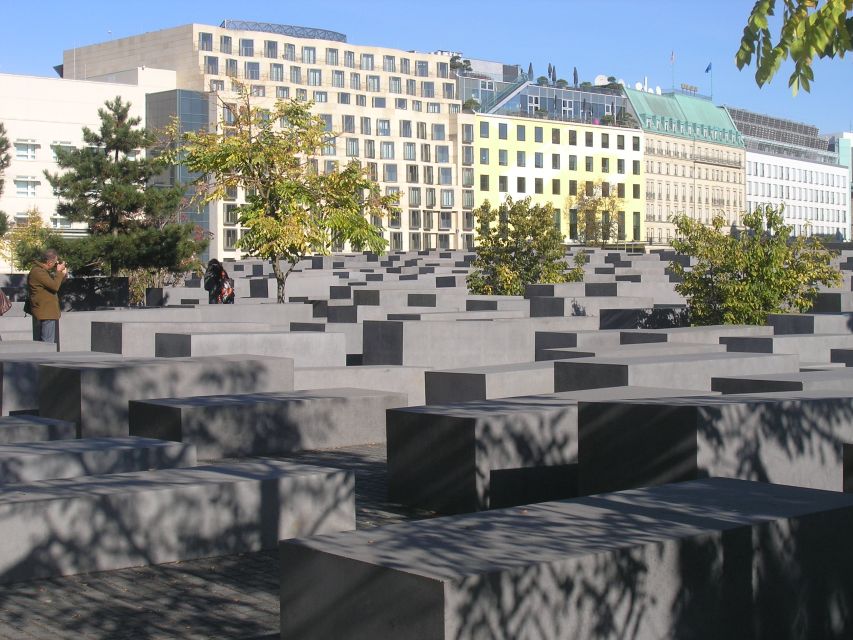
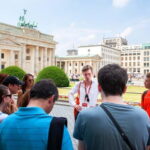
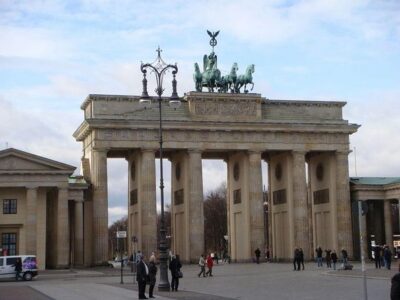
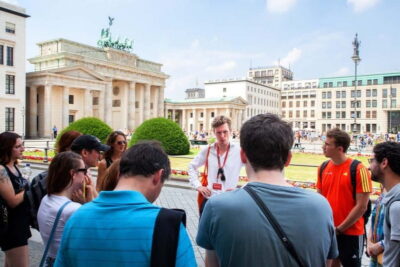
You’ll meet near Hotel Adlon, in front of the jeweler, on the corner where the British Embassy is located. From there, the walk starts at Paris Square next to the Brandenburg Gate, and then you move through central Berlin on foot.
The tour is 2 hours and costs $21 per person, with a live guide. The guide language is German, so if you don’t speak German, it’s worth thinking about whether you can follow enough to get value from the commentary. Still, you’ll be looking at the big-name sites the whole time, including the Reich Chancellery area and the locations tied to propaganda and state violence.
Also, it’s not a meal tour. Food and drinks aren’t included, so if you’re pairing this with a full day of sightseeing, I’d plan to eat before or after.
More walks through Berlin's wartime history
- Berlin: Third Reich & Cold War Guided Walking Tour★ 4.9 · 8,378 reviews
- Berlin’s Best: 2 Hour Walking Tour Third Reich and the Cold War★ 5.0 · 5,486 reviews
- Third Reich Berlin: Hitler and WWII Walking Tour★ 5.0 · 3,301 reviews
- Berlin: Third Reich, Hitler, and WWII Walking Tour★ 4.9 · 1,757 reviews
From Weimar’s Last Days to the Reichstag Fire
One of the most useful parts of this tour is that it doesn’t start with buildings. It starts with cause and timing. You hear about the last days of the first German Republic, and then the tour connects that instability to what came next.
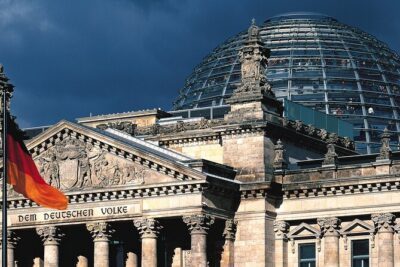
You also learn about the fire in the Reichstag—a turning point that the Nazi movement used to strengthen its position. The point here isn’t to memorize dates. It’s to see how political events set up the regime that then used the city’s institutions as tools.
If you like history that makes sense of the sequence, you’ll get that. The guide’s job is to give you a framework so each stop later doesn’t feel random, even if you’re seeing these places for the first time.
Wilhelmstraße and the Reichskanzlei (Reich Chancellery)
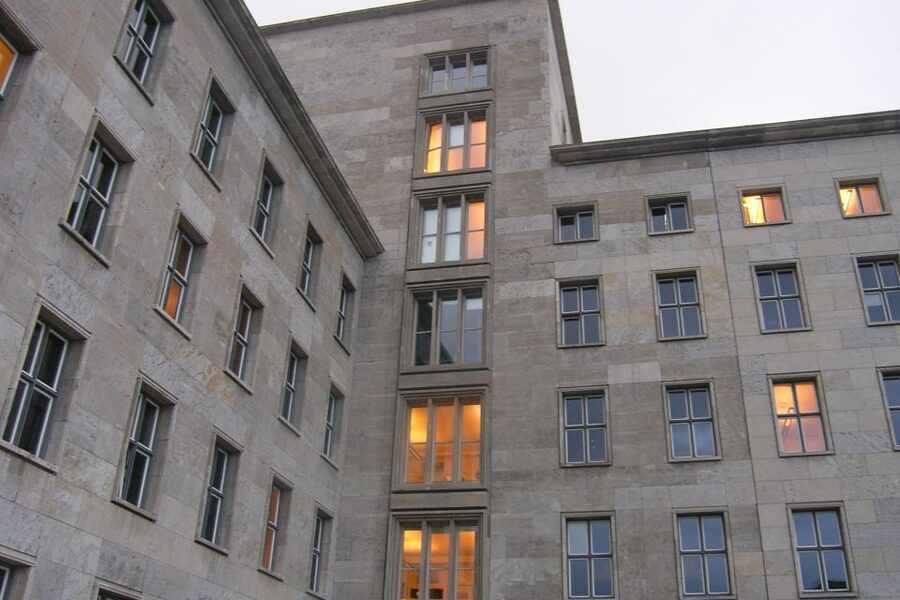
Then the tour moves into the heart of government Berlin. You stroll down Wilhelmstraße, the kind of street where power tends to leave a footprint. Here, you’ll see the Auswaertiges Amt (the former foreign office), the palace of the German President, and the Reichskanzlei—the Reich Chancellery.
The Reich Chancellery is a highlight for a reason. It’s described as the main office of the Nazi government, and that matters because it frames what the regime was doing at ground level: organizing authority, coordinating decisions, and turning policy into action. Even if you already know the broad story, seeing it as a real, physical site makes the history feel less like a textbook and more like something carried out by systems.
Practical note: this part of the walk can feel like a lot of big names in a short span. If you like taking photos, do it—but also leave room to listen. The guide will tie what you’re seeing to the political development of Hitler’s Reich, which is the real value.
Goebbels and the Ministry of Propaganda’s Real Purpose
Propaganda is one of those topics people discuss in theory. This tour helps it click into place.
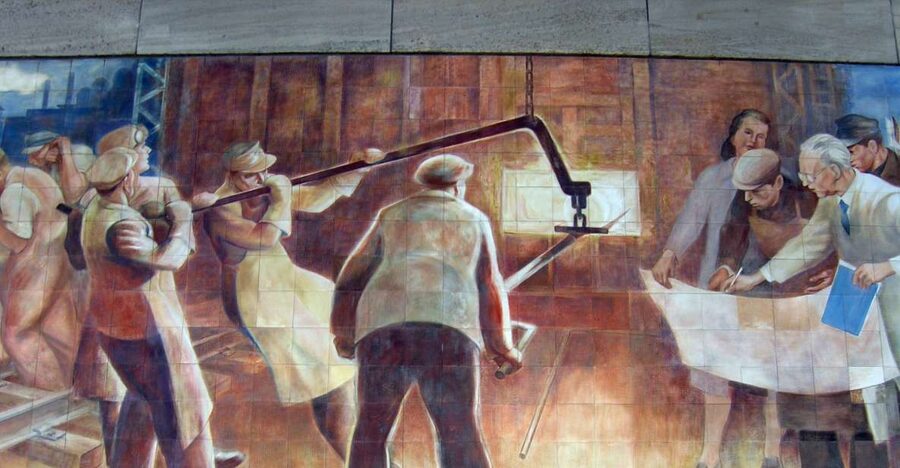
You’ll hear about Goebbels’ Ministry of Propaganda, and the guide explains what this meant in practice: not just speeches or posters, but a state-backed approach to shaping what people believed and how they interpreted reality. In a regime that relied on control, propaganda wasn’t a side project—it was part of the machinery.
What I like about this stop is that it connects to earlier context. After you’ve heard about political conditions and key moments like the Reichstag fire, the propaganda story doesn’t feel disconnected. It becomes part of the same chain: instability, consolidation, then control at scale.
This is also where the tour’s narrative style matters. A strong guide makes propaganda sound concrete rather than abstract. One guide name that has stood out is Stefan, who has been praised for sharing plenty of details and for telling the material in a way that was easy to follow.
Foreign Office, Aviation, and How the State Extended Its Reach
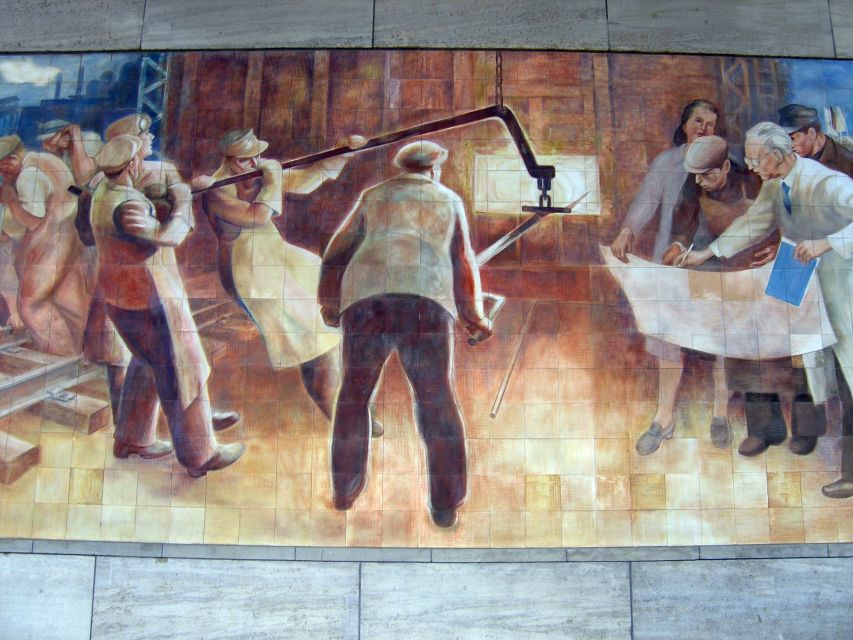
The walk doesn’t just stay focused on propaganda and top government offices. You also pass major institutional sites that help you understand how the regime built an entire system.
On this tour, you’ll see the former foreign office (Auswaertiges Amt). You’ll also visit the former Ministry of Aviation. Those stops are valuable because they broaden your view beyond “who was in charge” and into how the regime tried to influence the world and prepare for future power.
And you’ll also see the palace of the German President, which helps you notice how official spaces mattered during regime change. When governments take over, they don’t only change policies—they change who occupies the symbols and institutions of authority.
If you’re the type who likes big-picture political history with city-level specifics, these stops are a strong fit. They give you a more complete sense of the regime as a functioning state, not just a list of leaders.
More of Berlin on foot


The Area Linked to Where Hitler Died
One of the most emotionally intense parts of the tour is the stop at the site where Hitler died. The tour frames it as part of the last days, so you aren’t just looking at a location—you’re hearing how Berlin’s final phase played out.
This is not a sightseeing moment. It’s an endpoint to the arc you’ve been hearing since the early political shifts: rise, consolidation, and then collapse. I appreciate that the tour treats it seriously, which makes it easier to keep the history grounded.
Because it’s in a walking format, you don’t get a long time at any single point. That can be fine for most people—just know it’s not designed for slow museum-style reading. If you want to sit with details, you’ll have that chance at the final stop.
Ending at Topographie des Terrors and What to Do Next
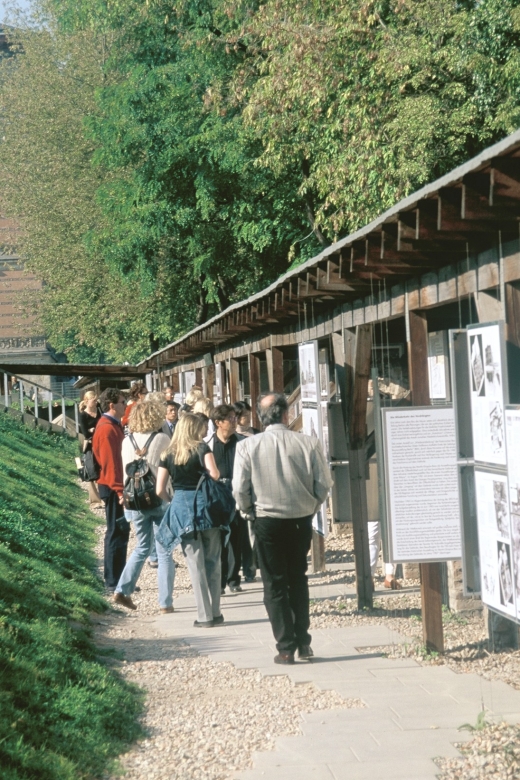
The tour finishes at Topographie des Terrors, an exhibition area where you can learn more about the system of violence in the Third Reich.
This ending works well because it shifts you from the street-level landmarks to a more focused learning environment. The tour gives you connections—political development, government offices, propaganda, and key moments—then Topographie des Terrors gives you a place to keep reading with more depth.
My advice: after the walk, don’t treat the exhibition as a quick photo stop. If you’re taking in the heavier parts of the story, give yourself at least some uninterrupted time. Even if you only skim a few sections, you’ll leave with clearer understanding of how violence was organized and sustained.
If you’re pairing the tour with other Berlin plans, schedule it early enough that you can still spend time afterward. It’s easier to absorb the final message when you’re not rushing immediately into the next activity.
Price, Value, and Who This Walk Is For
At $21 for 2 hours, this is good value if you want a guided, coherent route through major sites without spending half a day planning. You’re paying for context, not just distance. For Berlin, where transit and self-guided wandering can turn into a confusing set of stops, a structured walk helps you actually understand what you’re seeing.
You’ll also be guided by a live German-speaking professional. In one example, a guide named Stefan earned standout praise for being an excellent storyteller with a lot of information that people likely hadn’t heard before. That kind of guide quality is exactly what makes the price feel fair.
This tour is best for you if:
- you want a walkable central route focused on Nazi-era power structures
- you prefer narrative explanation rather than reading alone on street corners
- you’re okay with serious subject matter in a short time window
It may be a tougher fit if:
- you need a long, museum-style pace for heavy topics
- German isn’t a comfortable language for you and you’ll struggle to follow the guide’s explanation
Should You Book This Nazi History Walking Tour?
I’d book this tour if you want a concentrated Berlin route that connects the rise of Hitler’s Reich to the institutions that carried it out—then sends you to Topographie des Terrors to keep learning. The payoff is that you don’t just see famous names; you learn what they were for and how the regime worked across propaganda and government.
Skip it or choose something else if you’re looking for light sightseeing, or if you need English-only interpretation. The content is serious, and the tour runs fast. But for the right traveler, it’s a strong, cost-effective way to understand Nazi history through the city itself.
FAQ
How long is the Berlin Nazi History Walking Tour?
It lasts 2 hours.
What is the price?
The price is $21 per person.
Where do I meet the guide?
Meet near Hotel Adlon, in front of the jeweler, at the corner where the British Embassy is located.
Where does the tour start?
The tour begins at Paris Square next to the Brandenburg Gate.
Where does the tour end?
It ends at the Topographie des Terrors exhibition.
What’s included in the price?
A guide is included.
Is hotel pickup or drop-off included?
No, hotel pickup and drop-off are not included.
Are food and drinks provided?
No, food and drinks are not included.
What language is the tour in?
The live tour guide speaks German.
What’s the cancellation policy?
You can cancel up to 24 hours in advance for a full refund. There’s also a reserve now & pay later option.
More Tours in Berlin





More Tour Reviews in Berlin
Berlin's Wartime History
Round out your days in Berlin

Third Reich & WWII History, compared.
 ★ 4.9Third Reich & Cold War Guided Walking TourFrom $238,378 reviews
 ★ 5.0Berlin’s Best: 2 Hour Walking Tour Third Reich and the Cold WarFrom $245,486 reviews
 ★ 5.0Third Reich Berlin: Hitler and WWII Walking TourFrom $243,301 reviews
 ★ 4.9Third Reich, Hitler, and WWII Walking TourFrom $191,757 reviews
 ★ 5.0Berlin Third Reich Sites: Half-Day Walking TourFrom $21835 reviews
 ★ 4.7History of the Third Reich Guided Walking TourFrom $30791 reviews
 ★ 4.8The Wall and Third Reich Guided Bike TourFrom $41578 reviews
 ★ 4.8Hitler’s Germany: Berlin During the Third Reich & WWIIFrom $23476 reviews
Browse the lists this tour appears in