
REVIEW · BERLIN WALL & COLD WAR
Berlin: Private Bike Tour of the Berlin Wall and Third Reich
Bikes make Berlin Wall history click. This private ride connects Berlin Wall scars with Third Reich leftovers, using short stops where the story is right in front of you. I like that the route can be tailored to your interests, so you are not stuck with a one-size script.
Two standout perks for me are the fast way you can cover ground and still stop for context, and the clear English from a professional guide who keeps things moving without rushing the meaning. One thing to consider: the tour is about 3 hours with brief photo-and-explain stops, so if you want slow museum time, you’ll need to plan extra visits.
In This Review
- Key Things You’ll Notice on This Bike Tour
- Why a Private Bike Ride Works for the Berlin Wall and Third Reich
- What You Get Included (and What You Should Budget for)
- Meeting Point: Start at Free Berlin Bike Tours and Return There
- How the Route Moves: A 3-Hour Plan That Hits Cold War Tension and Nazi Plans
- Stop-by-Stop: From Old Town Survivors to Cold War Flashpoints
- Nikolaiviertel: Old Town Reality Check
- Stiftung Neue Synagoge Berlin – Centrum Judaicum: Civil Courage in Glass and Night
- A Memorial for Victims of Deportation and the Holocaust (GDR-Era Design)
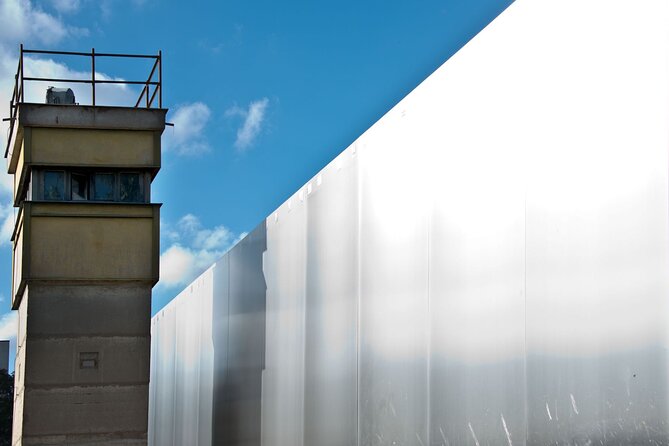
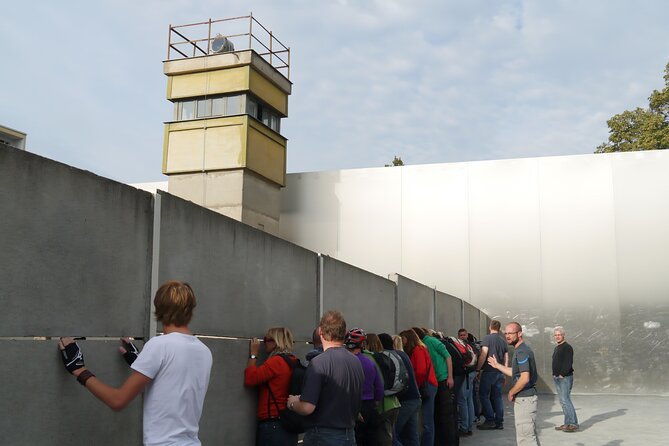
- Memorial of the Berlin Wall: The Wall You Can Actually Understand
- Mauerpark: Flea Market Energy on a Place Meant to Separate
- Humboldthain Flak Tower: Nazi Architecture with a Panoramic Payoff
- Gunter Litfin Memorial: The First Person Shot at the Wall
- Invalidenfriedhof: A Cemetery Split by the Wall
- Spreebogenpark: Hitler’s Architect and a Great Hall That Never Happened
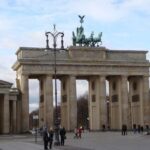
- Reichstag Building: Power, Seizure, and Democracy from the Outside
- Another Memorial for the Major Holocaust Victim Groups
- The Holocaust Memorial: Memorial to the Murdered Jews of Europe
- Fuhrerbunker: Today It’s a Parking Lot, but the Point Is the Meaning
- Checkpoint Charlie: The Cold War Risk Point in a Single Stop
- Who This Tour Fits Best (and Who Might Want Something Different)
- Value Check: Is $107.42 Worth It?
- Practical Tips So You Enjoy the Ride More
- Should You Book This Berlin Wall and Third Reich Bike Tour?
- FAQ
- How long is the Berlin Wall and Third Reich private bike tour?
- Is the tour offered in English?
- What’s included in the price?
- Where does the tour start and end?
- Can kids join the tour?
- What is the cancellation window?
Key Things You’ll Notice on This Bike Tour
- Private tour setup with only your group, so questions don’t get squeezed in at the end
- Helmet, bicycle, and guide included, which keeps the trip simple from start to finish
- Free-Berlin Concept routes where the guide designs the flow for a unique experience
- Wall-era and Nazi-era stops packed into one ride, including memorials and Cold War flashpoints
- Multiple departures throughout the day, which helps if you have tight sightseeing plans
- All-weather operation, so dressing for wind and rain matters more than you might think
More of the Wall and the divided city
- Berlin’s Best: 2 Hour Walking Tour Third Reich and the Cold War★ 5.0 · 5,486 reviews
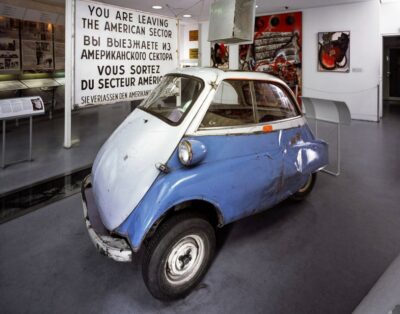
- Skip-the-Line: Berlin Wall Museum at Checkpoint Charlie★ 4.1 · 2,041 reviews
- Berlin: East Side Gallery Spree Cruise in a Solar Catamaran★ 4.1 · 1,086 reviews
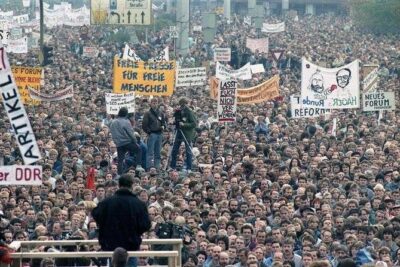
- Cold War, Berlin Wall, Spies and the East Side Gallery★ 5.0 · 1,024 reviews
Why a Private Bike Ride Works for the Berlin Wall and Third Reich
Berlin can feel like two cities at once: the polished, photographed parts, and the places where the past still bites. A bike tour is one of the best ways to connect those dots because you can move quickly between sites, then pause at the exact points where history explains itself.
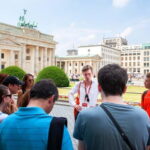
This is also a smart format for people who love details. You get guide-led context at real locations tied to deportation, genocide, Cold War tensions, and Nazi power-building ideas. And since it is private, you can steer the conversation—more on the Wall’s mechanics, more on Nazi architecture, or more on the memorial landscape—without holding up strangers.
The other practical win is logistics. If you tried to do this by foot, you’d spend a lot of your time walking between neighborhoods instead of looking at the places that matter.
What You Get Included (and What You Should Budget for)
You pay about $107.42 per person for a 3-hour private tour, which is a solid value if you care about making the route efficient. The big included pieces are: a professional guide, bicycle use, and a helmet. That means you are not hunting rentals on a tight schedule.
You also get the benefit of the tour’s concept: each guide designs their own route, which is useful in Berlin where streets, construction, and weather can change what is practical in a day. There are several departures, so you can pick a time that fits your energy level.
What is not included is food and drinks (unless specified). Bring water and a snack if you think you’ll need it. Also, hotel pickup and drop-off are not included, so you’ll want to be ready to start at the meeting point on your own.
Meeting Point: Start at Free Berlin Bike Tours and Return There
The tour starts and ends back at Free Berlin Bike Tours & Rental, Poststraße 11, 10178 Berlin. Plan to arrive a few minutes early so you can get settled and receive any bike or safety instructions without stress.
This “back to the same spot” setup is convenient. You don’t have to worry about catching transit afterward from a random endpoint. It also makes it easier to pair the tour with a later meal or museum visit nearby.
How the Route Moves: A 3-Hour Plan That Hits Cold War Tension and Nazi Plans
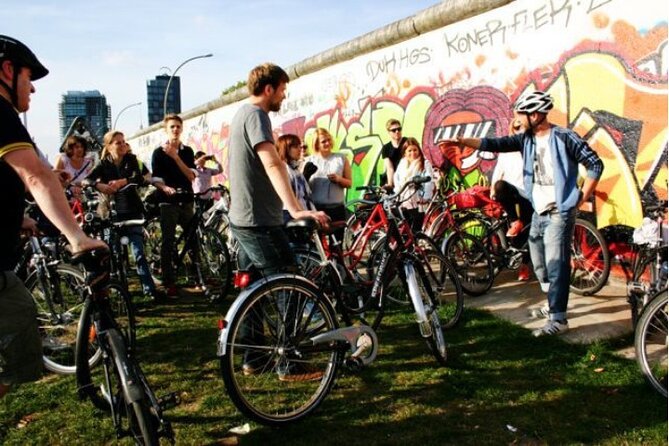
The pace is structured, with stops ranging from about 5 to 15 minutes. That may sound short, but it works because the guide uses each location to explain a specific piece of the story. You are not trying to absorb everything in one sitting; you’re building an accurate map in your head.
You’ll also notice a pattern: the itinerary moves from places that help you understand old Berlin and civil courage, to the Wall’s physical reality, and then into Nazi-era and Holocaust memorial ground. After that, it lands at Cold War pressure points—like the famous border station—before wrapping back up.
Now, here’s what to expect at each stop and why each one matters.
More walks through Berlin's wartime history

Stop-by-Stop: From Old Town Survivors to Cold War Flashpoints
Nikolaiviertel: Old Town Reality Check
You start at Nikolaiviertel, often described as Berlin’s “real” old town. It is a good first stop because it sets context before the heavy stuff starts. It also helps you orient yourself in a city where so much has been rebuilt.
At around 10 minutes, you will get enough to connect geography to later Wall-era locations—without turning the start into a history lecture marathon.
Stiftung Neue Synagoge Berlin – Centrum Judaicum: Civil Courage in Glass and Night
Next is Stiftung Neue Synagoge Berlin – Centrum Judaicum. The story here centers on civil courage—specifically how a police officer protected this building during the night of broken glass.
This stop is brief, but it lands emotionally because you’re seeing a physical structure tied to that specific moment, not just reading about it. It’s also a reminder that people in uniform weren’t always powerless.
A Memorial for Victims of Deportation and the Holocaust (GDR-Era Design)
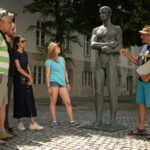
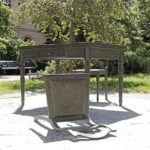
You then pause at a memorial created in GDR times, positioned in sharp contrast to the more famous memorial near Brandenburg Gate. I like this kind of detail because it shows how Germany’s history was framed differently depending on who held power and how the story was allowed to be told.
Expect a short stop—more “this is what it represents” than “stay and reflect for hours.” Still, it’s a meaningful segment if you care about how remembrance evolves.
Memorial of the Berlin Wall: The Wall You Can Actually Understand
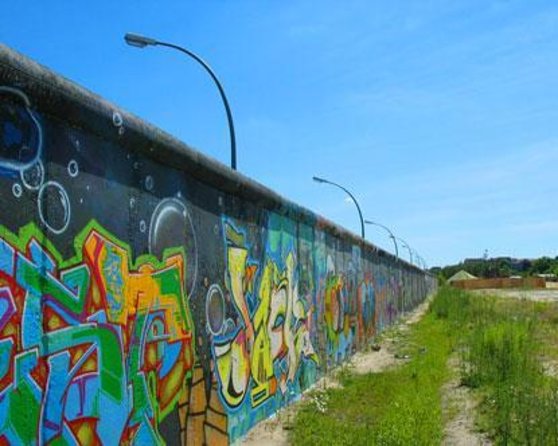
One of the most important stops is the Memorial of the Berlin Wall. This is one of the few places where the Wall still feels real enough that you can understand what it meant and did to Berlin.
This is where the tour’s educational style really earns its keep. The guide uses “edutainment” in the practical sense: clear explanations tied to what you can see, not a lecture that stays in the clouds. At about 10 minutes, it’s short, but it is designed to sharpen your focus.
Mauerpark: Flea Market Energy on a Place Meant to Separate
At Mauerpark, you’ll see a lively public space today—known for the Sunday flea market—sitting in an area shaped by the East German rulers’ attempts to create the perfect border.
This stop helps you understand something key: history isn’t frozen. Old barriers become new neighborhoods, and the city reclaims land. The trade-off is time—you only get about 10 minutes—so you’ll want to keep your eyes open for what feels “wrong” given how people behave here now.
Humboldthain Flak Tower: Nazi Architecture with a Panoramic Payoff
Next up is Humboldthain Flak Tower, once a major air-raid shelter and fortress. It’s also one of those places where you get both story and view: you can look out over Berlin and hear how the Nazi-built environment was planned to serve control and survival needs.
At about 10 minutes, the goal is clarity: connect the building to Nazi architecture ideas and what the city looked like in that mindset. If you hate heights or strong winds, dress for it—this is one of the stops where weather can matter.
Gunter Litfin Memorial: The First Person Shot at the Wall
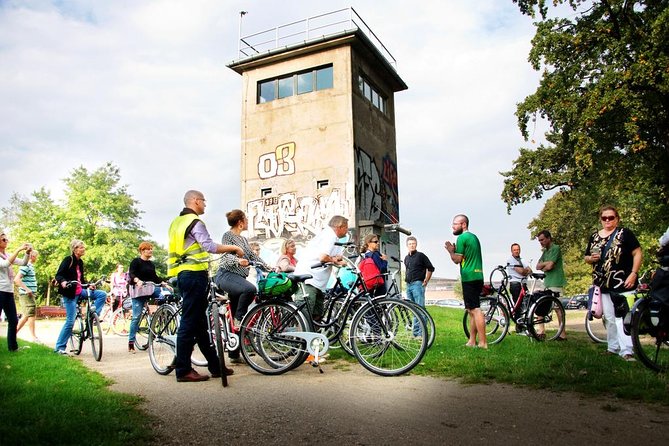
You’ll stop at the Günter Litfin memorial, centered on the preserved tower used to remember Günter Litfin, the first person shot at the Wall. This is one of the tour’s most direct reminders that the Wall wasn’t only a political symbol—it was lethal.
Because it is only about 10 minutes, I recommend taking a steady pace here. Let the guide finish the context before you start photographing, so you don’t miss the emotional logic of the site.
Invalidenfriedhof: A Cemetery Split by the Wall
At Invalidenfriedhof, the Wall cuts through the burial ground. It is a stark way to see how the border logic reached into even the places reserved for the dead.
The cemetery also brings a complicated historical tone. You’ll hear that it includes military “heroes”—and not all of them are straightforward to honor. This stop is brief (about 10 minutes), but it is one of the locations where the guide’s framing matters most.
Spreebogenpark: Hitler’s Architect and a Great Hall That Never Happened
In Spreebogenpark, you get one of the better overviews of Germany’s governing district. The guide also talks about Albert Speer and his plan for a Great Hall meant to hold around 180,000 people.
This stop is valuable because it turns architecture into politics. It’s not just what Nazis built, but the scale and psychology behind it. You’ll get around 15 minutes—enough to see the scope from the outside and understand why planners dreamed so big.
Reichstag Building: Power, Seizure, and Democracy from the Outside
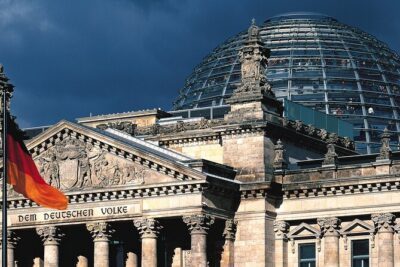
The tour pauses at the Reichstag Building to discuss Hitler’s grab of power and the democratic history that follows. You won’t go inside, so you’re working with exterior angles and the guide’s explanations.
At about 5 minutes, it’s quick. Still, it’s a good “hinge” stop between the Nazi power-building story and the memorial focus that comes next.
Another Memorial for the Major Holocaust Victim Groups
There are also stops at memorials for victim groups of the Holocaust. One of these is described as one of three memorials for the three biggest victim groups. Another segment focuses on victims of deportation and the Holocaust with a GDR-era design.
These pauses matter if you want more than one generic summary. You’ll get a clearer picture of how different victim categories were represented through different memorials and designs.
The Holocaust Memorial: Memorial to the Murdered Jews of Europe
The big one is the Holocaust Memorial – Memorial to the Murdered Jews of Europe. The guide frames it as the biggest genocide memorial in the world and notes its shocking origin: it was created by those responsible for the killing.
You get about 10 minutes. That’s not enough to process everything alone for long, but it is enough to understand why the scale hits, and why this is treated as a central anchor in Berlin’s remembrance landscape.
Fuhrerbunker: Today It’s a Parking Lot, but the Point Is the Meaning
Finally, you stop at the Fuhrerbunker area, where Hitler hid during the last weeks of war and died by suicide. Today, what you can see is essentially a parking lot—so the value here is explanation, not scenery.
At about 10 minutes, you should listen carefully. The guide’s job is to help you imagine a vanished place based on what is still known and what Berlin has kept (or erased).
Checkpoint Charlie: The Cold War Risk Point in a Single Stop
You finish the Cold War section at Checkpoint Charlie. This stop is only included in the English version of the tour. It’s framed as the most famous border station of the Cold War, including the detail that it was the only shared one between the USA and USSR.
The point is intensity: the guide explains how the confrontation here made a third world war seem uncomfortably close. You get about 10 minutes—enough to connect the drama to the actual location.
Who This Tour Fits Best (and Who Might Want Something Different)
This is best for history lovers who want a guided narrative without spending half a day in transit. It’s also a good fit if you like learning through place-based context, where the Wall isn’t just a concept but a physical structure you can track from stop to stop.
It’s also family-friendly in the practical way: children are welcome, and infant seats can be provided on request. That said, it still involves cycling and time outdoors, so parents will want to bring realistic expectations about attention spans.
If you want deep museum access or long documentary-style pauses, you may find the stops are too short. This is more about building a map and getting oriented quickly—then doing slower follow-up on your own.
Value Check: Is $107.42 Worth It?
For $107.42 per person, you are paying for three things that add up in Berlin: a private guide, bicycles with helmet, and a route built to move efficiently between major sites. If you tried to do this on your own with a bike rental, you’d still need to plan a coherent sequence and probably spend time figuring out what each stop actually meant.
Also, the private format helps. When you have a guide who can shift focus based on your interests—say, the Wall’s mechanics vs. Nazi architecture vs. memorial meaning—you get more payoff per stop than you would with a general walking tour.
The trade-off is time. It’s about 3 hours, so you’re not paying for unlimited linger time. Think of it as a high-quality orientation session that makes your later visits smarter.
Practical Tips So You Enjoy the Ride More
- Dress for all weather conditions; Berlin can feel windy even when rain holds off.
- Wear comfortable shoes you can walk in for short periods at each stop.
- If you care most about a topic—Wall history, Nazi power, Holocaust remembrance—tell the guide early so your questions match the route.
- Bring a water bottle. The tour includes plenty of stops, but no food is included.
Should You Book This Berlin Wall and Third Reich Bike Tour?
If you want a guided, efficient way to connect the Berlin Wall story with Third Reich and Holocaust sites, this tour is a strong booking. The private format, helmet-and-bike convenience, and the mix of physical Wall elements, memorial design differences, and major Cold War touchpoints make it feel like more than sightseeing—it feels like a guided understanding of how Berlin remembers.
Skip it if you need long indoor time, deep museum access, or you’re not comfortable cycling for the duration. In that case, you might prefer a walking-based museum plan or a slower tour with fewer stops.
FAQ
How long is the Berlin Wall and Third Reich private bike tour?
It lasts about 3 hours.
Is the tour offered in English?
Yes. English is available (and German too). Other languages like Dutch, French, and Spanish may be possible on request.
What’s included in the price?
The tour includes a professional guide, bicycle use, and a helmet, plus the private tour format.
Where does the tour start and end?
It starts at Free Berlin Bike Tours & Rental, Poststraße 11, 10178 Berlin, and it ends back at the same meeting point.
Can kids join the tour?
Yes. Children are welcome, and they must be accompanied by an adult. Infant seats can be provided on request.
What is the cancellation window?
You can cancel for free up to 24 hours before the experience’s start time for a full refund. If you cancel less than 24 hours before, the amount paid is not refunded.
Berlin by Bike


Berlin's Wartime History
The Wall and the Cold-War City
Round out your days in Berlin
Berlin Wall & Cold War, compared.
 ★ 4.9Third Reich & Cold War Guided Walking TourFrom $238,378 reviews
 ★ 5.0Berlin’s Best: 2 Hour Walking Tour Third Reich and the Cold WarFrom $245,486 reviews
 ★ 4.1Skip-the-Line: Berlin Wall Museum at Checkpoint CharlieFrom $212,041 reviews
 ★ 4.1East Side Gallery Spree Cruise in a Solar CatamaranFrom $281,086 reviews
 ★ 5.0Cold War, Berlin Wall, Spies and the East Side GalleryFrom $181,024 reviews
 ★ 4.8Wall Tour – Fates, Love Stories, and HeroesFrom $282585 reviews
 ★ 4.5THE WALL: asisi Panorama Berlin TicketFrom $16580 reviews
 ★ 4.8The Wall and Third Reich Guided Bike TourFrom $41578 reviews
Browse the lists this tour appears in