
REVIEW · THIRD REICH & WWII HISTORY
Berlin & The Third Reich Private Guided Tour
Berlin’s darkest story is just outside the hotel door.
This private Berlin and The Third Reich guided tour ties together the rise of Nazi power and the end of the war with a tight, street-level route. I like the private group format (up to 15, just your party) because it keeps questions coming, and I like how the stops connect into one clear timeline instead of feeling like random monuments.
The best part is the mix: big landmark hits like the Holocaust Memorial and Reichstag, plus places tied to Hitler’s final days. One possible drawback: you’re looking at very heavy material about genocide and wartime death, and the tour moves on foot for about four hours.
In This Review
- Key highlights at a glance
- Private Third Reich Tour: Why It’s Hard to DIY in Berlin
- Price and Value: $329.92 for Up to 15, Not Per Person
- Starting at Pariser Platz: The Most Official Way to Begin
- Reichstag Building: Fire, Control, and a Glass Dome Above It
- Brandenburg Gate: A Surviving Symbol of Division and Reunification
- Holocaust Memorial: Slow Down at the Memorial to the Murdered Jews of Europe
- Führerbunker: Hitler’s Final Days, Marked by a Simple Sign
- Potsdamer Platz: Berlin’s 1920s Crossroads to WWII Ruins to Modern Rebuild
- Checkpoint Charlie: Cold War Lines in a Real Place
- The Real Value: You Learn How Nazi Power Worked, Not Just Where It Happened
- Practical Tips for a 4-Hour Walk (With Heavy Content)
- Who This Tour Fits Best
- Should You Book It?
- FAQ
- FAQ
- How long is the Berlin and The Third Reich private guided tour?
- Where does the tour start and end?
- Is this a private tour?
- What’s the price?
- Are the main stops free to enter?
- Do you offer pickup?
- Is it near public transportation?
- Are service animals allowed?
- What is the cancellation policy?
Key highlights at a glance
- Private guide, private pace: your group sets the rhythm for breaks and questions
- Landmarks with free access: each listed stop has free admission tickets
- Clear timeline from rise to 1945: power, propaganda, war, collapse
- Major Berlin touchpoints in one loop: Pariser Platz, Reichstag, Brandenburg Gate, memorials, Cold War markers
- Common guide names you may get: Walid, Campbell, or Gregor (all praised for clarity)
- Simple starting point: meet at Brandenburg Gate (Pariser Platz)
More walks through Berlin's wartime history
- Berlin: Third Reich & Cold War Guided Walking Tour★ 4.9 · 8,378 reviews
- Berlin’s Best: 2 Hour Walking Tour Third Reich and the Cold War★ 5.0 · 5,486 reviews
- Third Reich Berlin: Hitler and WWII Walking Tour★ 5.0 · 3,301 reviews
- Berlin: Third Reich, Hitler, and WWII Walking Tour★ 4.9 · 1,757 reviews
Private Third Reich Tour: Why It’s Hard to DIY in Berlin
Berlin is full of places that carry old names, old decisions, and old violence. The problem is you can walk past those sites and still miss what connects them. This tour solves that by doing what good guides do: they give you the story between the stones and façades.
I love that it’s a private experience. That matters because Berlin’s political history is full of details, and you don’t always want to compete with a large group for the guide’s attention. With a group of up to 15, you get a real conversation feel—especially at moments where you’d otherwise be thinking, so what exactly happened here?
The route also keeps you grounded in scale. Some sites are visually obvious. Others are more subtle, like where history happened in an ordinary-looking location. The tour makes you notice both, without turning it into a scavenger hunt.
Price and Value: $329.92 for Up to 15, Not Per Person
The price is $329.92 per group for up to 15 people. That’s a big deal for value if you’re traveling with friends or family and can fill the group size. At the maximum group size, you’re effectively splitting the cost across many people. If it’s just two of you, it costs more per person—but you’re paying for the guide’s time and the private format.
A tour like this is also one you feel later. You remember the route because the guide connects the dots: how Nazi power took hold, how it was maintained, and what Berlin looked like at the war’s end. That’s hard to recreate on your own unless you’re willing to do serious pre-reading and then still risk missing context on-site.
Timing matters too. If this is booked around 12 days in advance on average, that tells you something: the schedule fills, and you’ll want to lock in your day so you don’t end up piecing together separate museum visits at the last minute.
Starting at Pariser Platz: The Most Official Way to Begin
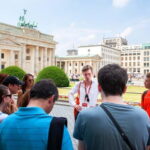
You begin at Pariser Platz, at the end of Unter den Linden and right by the Brandenburg Gate area. This is a strong opening because it puts you on the “front door” of central Berlin. You get bearings fast: grand buildings, straight lines, and a sense of ceremony that’s useful when you’re learning how power used spectacle to control people.
Even though the stop itself is short, the guide uses it to frame what you’ll see next: how the Nazis rose inside German political structures and public space. If you’ve ever visited Berlin and felt like the city is always “present,” this opening helps you shift gears into the past—without making you feel lost.
Tip: plan for standing time. This is an outdoor start point, and you’ll want comfortable shoes right away.
Reichstag Building: Fire, Control, and a Glass Dome Above It
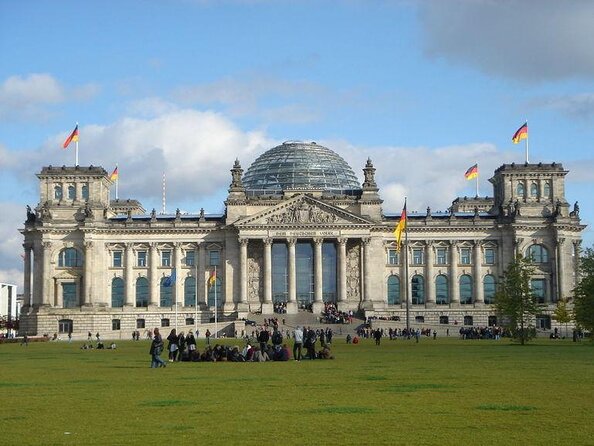
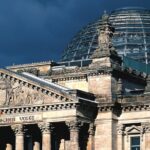
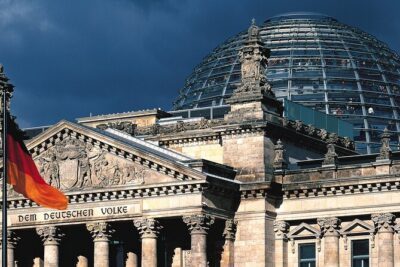
Next you go to the Reichstag Building, the German Parliament. It’s famous for the fire that enabled Hitler to take total control, and the building later became a battlefield during the Battle of Berlin between Germans and the Soviets.
Then comes a useful detail: the Reichstag is topped with a glass cupola designed by British architect Sir Norman Foster. That contrast is part of the lesson. You’re not only seeing a site tied to dictatorship; you’re also seeing how modern Berlin reworks iconic architecture into something transparent and public-facing.
This stop is brief, but it lands. You’ll likely come away with a better understanding of how political control can move quickly—from a crisis moment to long-term power—especially when leaders exploit fear and uncertainty.
One consideration: because this site is widely known, you may see lots of people around. A private guide helps you focus on what you came for, instead of getting pulled into unrelated viewing lines.
More guided walks through Berlin




Brandenburg Gate: A Surviving Symbol of Division and Reunification
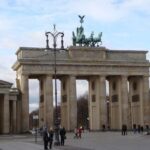
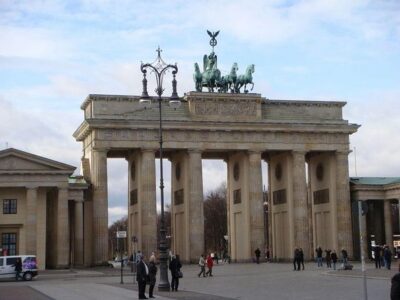
The Brandenburg Gate is more than a photo stop. It was the royal entrance for the Hohenzollern family, survived Napoleon and WWII, and then spent almost 30 years trapped in the Berlin Wall. That history turns the structure into a timeline you can read with your feet.
The tour helps you see the Gate in two layers at once: first as a historic monument, then as a Cold War artifact, then as a modern symbol of a reunified Germany. You get the idea that Berlin’s major landmarks didn’t just “exist” through the 20th century—they were used, divided by policy, and later claimed by people who wanted a different future.
If you want the biggest emotional payoff from the day, this is one of the places to slow down. Even with a short stop, you can take a moment to let the different eras hit.
Holocaust Memorial: Slow Down at the Memorial to the Murdered Jews of Europe
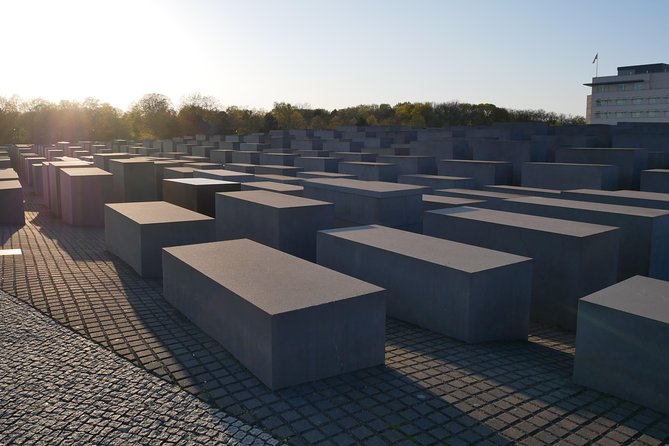
Then you reach the Memorial to the Murdered Jews of Europe—a massive field of stone stelae. This is the central Germany memorial for the Jewish victims of the Holocaust, and the experience is meant to feel heavy, not educational in a casual way.
This is one stop where I’d strongly recommend you don’t rush. The guide’s job here is important: to help you understand what you’re seeing and why the design matters, without turning it into a checklist. A good guide also helps you keep your focus respectful—especially because the memorial’s layout can pull your mind into thinking rather than sightseeing.
The stop is around 20 minutes, which is enough time to get a sense of the space and also step out of it without feeling like you’re done in a hurry.
Führerbunker: Hitler’s Final Days, Marked by a Simple Sign
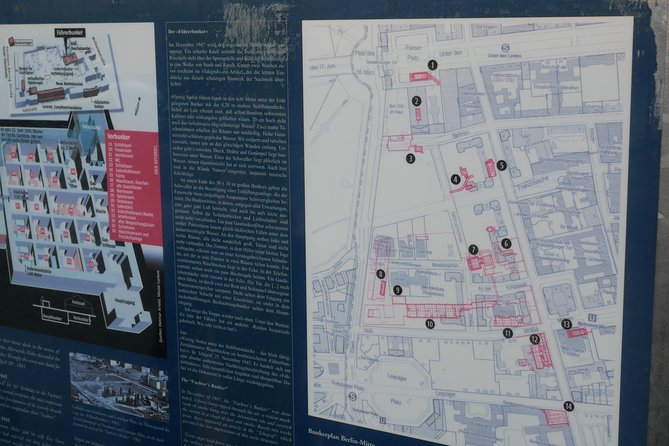
After the Holocaust Memorial, the tone shifts again at Fuhrerbunker. Today, it’s basically a parking lot, marked by a simple sign. But the place is tied to Hitler’s final days—his marriage during that period, and then his suicide during the final days of WWII in Europe.
This stop can feel eerie for a simple reason: history is sitting in plain sight. No grand museum doorway, no dramatic staging—just a quiet location that points to catastrophe.
The tour keeps it sensitive. The value here isn’t shock. It’s perspective: how close normal city life can sit to places where decisions led to mass death. The guide’s story helps you understand what’s being referenced by that small sign, and why it matters that the location is not turned into entertainment.
Potsdamer Platz: Berlin’s 1920s Crossroads to WWII Ruins to Modern Rebuild
Next comes Potsdamer Platz, one of the most important street intersections in Europe during the 1920s. WWII destroyed it almost completely, and then it was rebuilt as a modern precinct in the 1990s and early 2000s.
That “three-era” arc is a great teaching tool. You get to compare Berlin’s public life across decades: grand city energy, wartime devastation, and then the modern city that rose out of it. And because Potsdamer Platz is a current, active area, it also gives you a reality check. Berlin didn’t just preserve ruins—it rebuilt, rebranded, and re-used urban space.
If you want a short, guided reset after darker stops, this is it. The guide can connect what happened politically and militarily with what the city chose to build afterward.
Checkpoint Charlie: Cold War Lines in a Real Place
You finish with Checkpoint Charlie, the famous frontline and Allied checkpoint manned by the Americans and Soviets during the Cold War.
This stop is quick, but it adds another essential chapter. By this point in the tour, you’ve learned about Nazi power and WWII collapse. Checkpoint Charlie helps you see what came after: Berlin again becomes a city of borders, control, and competing narratives.
It’s also one of those places where your brain automatically wants to treat it as “just a famous location.” The guide makes you see how it reflected real tension between sides and how geography becomes policy.
Tip: if you’re taking photos, do it after you listen. The story lands better when you understand it first.
The Real Value: You Learn How Nazi Power Worked, Not Just Where It Happened
The route is built around a bigger message: how Nazi power began, how it was sustained, and how it eventually ended in 1945. You’re not only looking at monuments. You’re learning about the mechanisms—street conflict tied to the regime’s rise, intimidation used to steer politics, and the official structures that enforced the system.
You’ll also hear how Nazi leaders worked through public space and buildings tied to their command. Even when a site isn’t perfectly obvious at first glance, the guide ties it back to the overall narrative—so you don’t leave with a pile of names and no meaning.
One reason this tour earns such strong praise is the human delivery. In the past, guides including Walid, Campbell, and Gregor have been highlighted for making the walk feel like a conversation while still covering the big facts. That combination—friendly pacing plus firm context—is exactly what you want for a topic like this.
Practical Tips for a 4-Hour Walk (With Heavy Content)
This is about four hours total, and it’s mostly walking with short stops. That’s manageable, but the subject matter is intense, so plan for mental pacing.
- Wear comfortable shoes you can stand in for outdoor viewing.
- Bring water and take breaks when your guide offers them.
- Expect emotional weight at the Holocaust Memorial and Führerbunker area.
- Plan your day around it: don’t schedule a long museum sprint right before or after unless you’re sure you can handle it.
Pickup is offered, and there’s a mobile ticket option, which makes it easier to keep your logistics calm. Also, the meeting point is straightforward: Brandenburg Gate at Pariser Platz, and the tour ends back there. That makes it simple to continue your Berlin day with minimal hassle.
Who This Tour Fits Best
This tour is a strong match if you want:
- a guided route through major WWII-era Berlin sites,
- an explanation that connects power, war, and consequences,
- and a private format that supports questions.
It’s also a good fit if you’ve visited Berlin before and still feel like you missed the political storyline. This walk adds that missing layer quickly, in just a few hours.
If you’re extremely sensitive to content about genocide and dictatorship, you can still take it—but be honest with yourself about how you handle that kind of history. Consider taking a slower day after.
Should You Book It?
Yes, I’d book it if you want one focused, high-context walk that covers the key turning points of Berlin under the Nazis and through the end of WWII. It’s good value because the pricing is per group, the stops are mostly short, and the guided story is what turns landmarks into understanding.
Skip it if you only want light sightseeing, or if you’d rather process this topic through museums at your own pace. But if you want your time in Berlin to mean something—and to leave with a clearer timeline—you’ll likely feel satisfied after the walk.
FAQ
FAQ
How long is the Berlin and The Third Reich private guided tour?
It’s about 4 hours.
Where does the tour start and end?
It starts at Brandenburg Gate, Pariser Platz, 10117 Berlin, and it ends back at the meeting point.
Is this a private tour?
Yes. It’s private, and only your group participates.
What’s the price?
It costs $329.92 per group for up to 15 people.
Are the main stops free to enter?
The listed stops have free admission tickets.
Do you offer pickup?
Pickup is offered.
Is it near public transportation?
Yes, it’s near public transportation.
Are service animals allowed?
Yes, service animals are allowed.
What is the cancellation policy?
The experience is non-refundable and cannot be changed for any reason.
More Tours in Berlin



More Tour Reviews in Berlin
Berlin's Wartime History
Round out your days in Berlin
Third Reich & WWII History, compared.
 ★ 4.9Third Reich & Cold War Guided Walking TourFrom $238,378 reviews
 ★ 5.0Berlin’s Best: 2 Hour Walking Tour Third Reich and the Cold WarFrom $245,486 reviews
 ★ 5.0Third Reich Berlin: Hitler and WWII Walking TourFrom $243,301 reviews
 ★ 4.9Third Reich, Hitler, and WWII Walking TourFrom $191,757 reviews
 ★ 5.0Berlin Third Reich Sites: Half-Day Walking TourFrom $21835 reviews
 ★ 4.7History of the Third Reich Guided Walking TourFrom $30791 reviews
 ★ 4.8The Wall and Third Reich Guided Bike TourFrom $41578 reviews
 ★ 4.8Hitler’s Germany: Berlin During the Third Reich & WWIIFrom $23476 reviews
Browse the lists this tour appears in