
REVIEW · HISTORICAL TOURS
Charité Hospital Walking Tour: Exploring Berlin’s Medical History
Berlin’s medicine story starts outdoors, not in museums. This walking tour links Charité Hospital to the people and ideas that shaped public health, from early discoveries to darker chapters of medicine in Nazi Germany. You move between monuments and historic spaces, hearing how each one fits into a bigger timeline of what society knew, feared, and tried to fix.
Two things I like a lot: the small-group size keeps the pace friendly, and the guide’s storytelling makes the breakthroughs feel human instead of textbook-only. I also appreciate that you get a handle on medical history and how it connects to issues you can recognize today.
One consideration: this is not a hospital “walk-through,” and you won’t be visiting active clinical or university-operation areas. It’s also best with decent weather since it’s an on-the-ground walk with outdoor stops.
In This Review
- Key highlights to watch for
- Why Charité’s street-corner monuments matter
- Getting bearings fast at Robert-Koch-Platz
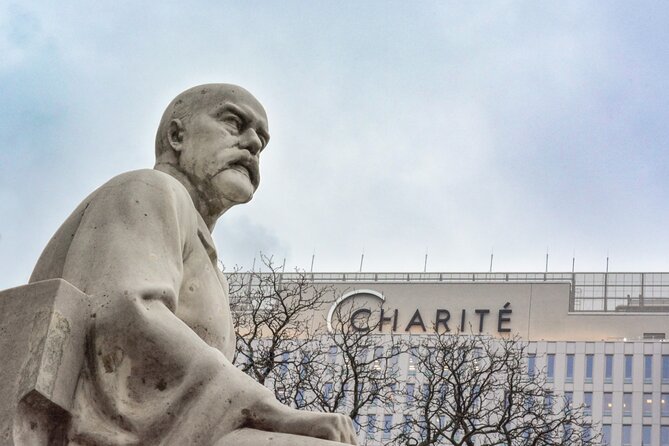
- Robert Koch Denkmal: tuberculosis, cholera, and the first pharmaceutical scandal
- Tieranatomisches Theater: where veterinarians studied diseases
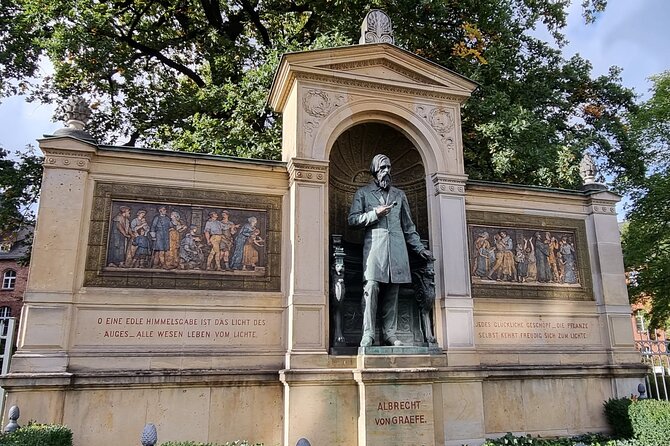
- Virchow and Graefe monuments: pathology and ophthalmology in the open air
- Charité Campus Mitte: red-brick beauty with ethical gravity
- Humboldthafen escape stories: Berlin Wall tension right outside the hospital
- Price and value: $30.12 for a focused, two-hour walk
- What’s included, what you won’t see, and how to prep
- Who this tour is perfect for (and who might not love it)
- Should you book the Charité Hospital Walking Tour?
- FAQ
- How long is the Charité Hospital Walking Tour?
- What does the tour cost?
- Is the tour offered in English?
- How big are the groups?
- Are we entering hospital or university operation buildings?
- What if the weather is bad?
Key highlights to watch for
- Robert-Koch Denkmal and why a tuberculosis breakthrough came with controversy in early pharma
- Tieranatomisches Theater, a rare academic space tied to animal-disease study before modern science
- Monuments to Virchow and Graefe, turning public health and pathology into real street landmarks
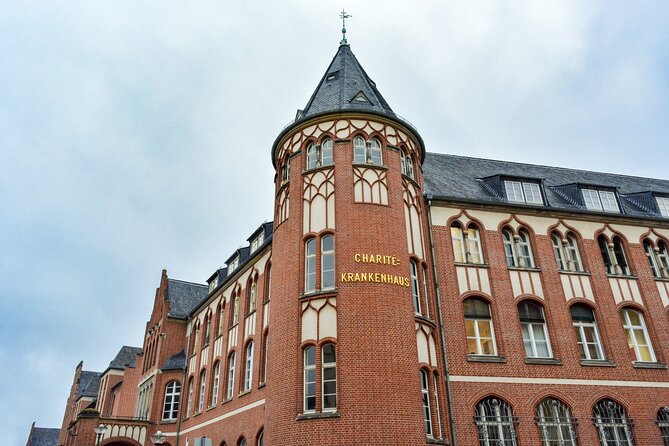
- Charité Campus Mitte’s red-brick architecture, with frank context about abuse and care during WWII
- Humboldthafen canal escape stories, adding a Berlin Wall-era layer right by Charité
More of Berlin on foot
- Discover Berlin Half-Day Walking Tour★ 5.0 · 9,624 reviews
- Berlin City walk Government District and Places of Democracy★ 4.7 · 8,467 reviews
- Berlin: Third Reich & Cold War Guided Walking Tour★ 4.9 · 8,378 reviews
- Berlin: Discover Berlin Walking Tour★ 4.9 · 5,998 reviews
Why Charité’s street-corner monuments matter
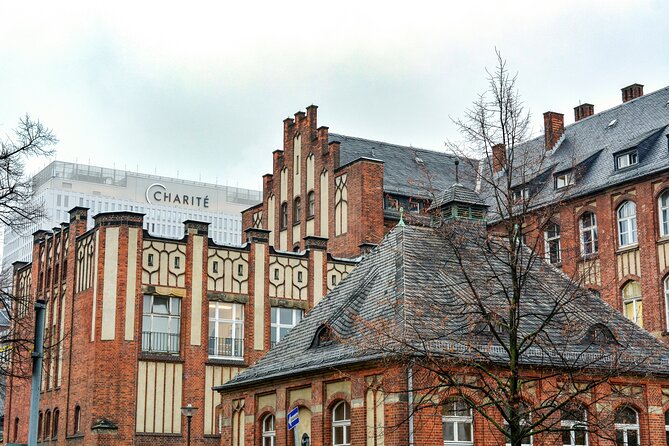
Charité isn’t just a big hospital in Berlin. It’s a place where medicine, politics, and ethics have collided for centuries. Walking past these monuments, you start to see how breakthroughs and failures didn’t happen in a vacuum. They came from labs, lecture halls, and public debates—then they changed what ordinary people could expect from health care.
This tour works because it treats the city like a living textbook. Instead of asking you to read plaques and guess connections, the guide gives you the thread. You’ll get names, dates, and what those discoveries actually changed in practice—plus where medicine went wrong when power got involved.
And yes, there’s a modern angle. One of the best parts is how the tour connects old medical ideas to questions you hear in today’s world: responsibility, evidence, and what happens when science gets used for the wrong reasons.
Getting bearings fast at Robert-Koch-Platz
You start at Robert-Koch-Platz (10115 Berlin). This is a good launch point because it immediately frames the tour around the scientist whose work helped steer major medical shifts. From the beginning, you’re not just going from one stop to another—you’re building a timeline in your head as you walk.
The route ends near Alexanderufer (10117 Berlin). That means you’re finishing in a part of central Berlin that’s easy to plug into after the tour, without feeling stuck far from everything.
If you’re coming from Berlin Central Station, you’re close to the Humboldthafen canal area—expect about a 10-minute walk. So it’s fairly easy to fit this into a busy day even if your Berlin schedule is already packed.
Robert Koch Denkmal: tuberculosis, cholera, and the first pharmaceutical scandal
The first stop is the Robert-Koch Denkmal, and it sets the tone for the whole experience. You’ll learn why the Charité hospital—described as the oldest in Berlin—was established back in the 18th century. That early context matters, because it explains why Charité grew into a major medical institution long before modern hospitals looked the way you expect today.
Then the guide brings in Robert Koch, who discovered the causes of diseases including tuberculosis, anthrax, and cholera. That list alone is enough to show why Koch became such a big deal. But the real value is the push beyond the headline. You’ll hear how discoveries translate into real-world control of disease—and also how shaky practices can follow when people chase results.
One of the most memorable details here is that Koch is also linked to what’s described as the first pharmaceutical scandal in medical history. It’s a strong reminder that even the best-known scientists could end up tangled in ethics, reputations, and the pressure to produce outcomes. That’s not just trivia. It helps you understand why trust in medicine is such a fragile thing—and why modern medicine still works hard to earn it.
This stop is roughly 20 minutes, and admission is free for the viewpoint/monument area.
Tieranatomisches Theater: where veterinarians studied diseases
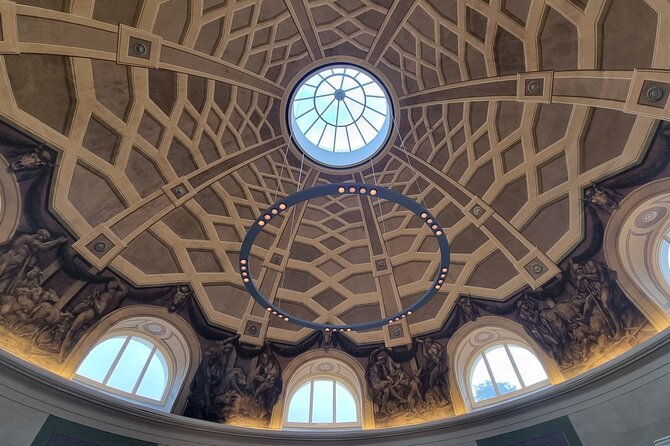
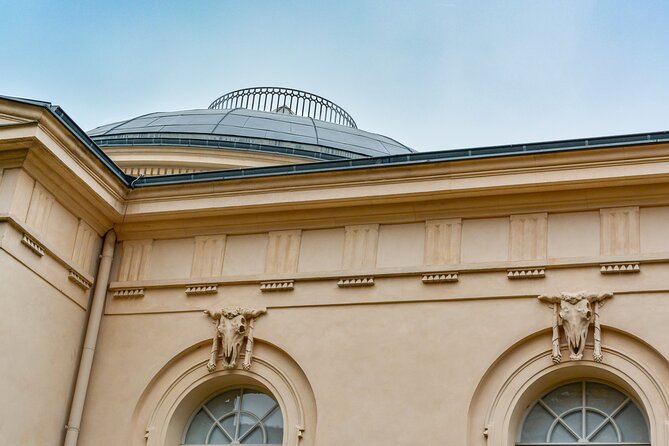
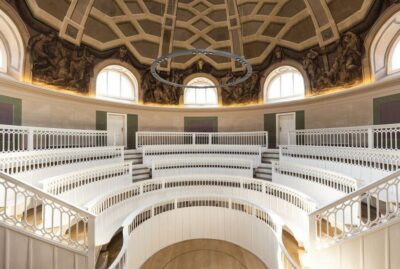
Next you’ll visit the Tieranatomisches Theater—often described as the oldest surviving academic building in Berlin. It looks like a neoclassical stage set, but its purpose was serious: it was a place where veterinarians studied animal diseases.
That matters more than you might think. Animal disease research has historically fed into human medicine. The guide’s angle here is practical: before science had the tools we take for granted today, people treated illness with whatever theories and observations they had. Studying animal disease was one path toward figuring out patterns—how contagion spreads, what symptoms correlate, and what treatment strategies might work.
The tour doesn’t pretend those early methods were perfect. Instead, it shows you how medical thinking evolved from observation toward evidence-based explanations. You’ll come away with a clearer sense of why “medicine in the past” wasn’t just guessing—it was a step-by-step climb with lots of dead ends along the way.
Like the first stop, plan around 20 minutes here, with free access for the outdoor/monument viewing context.
More of Berlin's long history, guided



Virchow and Graefe monuments: pathology and ophthalmology in the open air
Two more monument stops keep the momentum: Rudolf Virchow and Albrecht von Graefe.
At the Denkmal Rudolf Virchow, you’ll hear why Virchow is considered the father of modern pathology and also the founder of social medicine. That pairing is the key takeaway. Pathology is about what’s going on in the body. Social medicine is about what’s going on around the body—housing, work, nutrition, and the public systems that shape health outcomes.
In plain terms, this stop helps you see the bigger idea: illness isn’t only biological. It’s also social. Virchow’s influence still shows up today in how public health programs are designed.
Then you move to Denkmal Albrecht von Graefe, the first Berlin monument dedicated to a scientist. Graefe was a groundbreaking ophthalmologist, and the guide uses the monument to connect medical specialization to real impact. Eye care may sound narrow compared to plagues, but the ability to diagnose and treat vision problems changes daily life in huge ways—work, reading, mobility, independence.
Both stops are about 20 minutes each, free to see, and they work well back-to-back. By the time you’re done, you’ve covered discovery, disease theory, and specialized clinical progress without feeling like you’re stuck in one narrow lane.
Charité Campus Mitte: red-brick beauty with ethical gravity
Now you step into Charité Campus Mitte, with its neogothic red-brick look. Architecture here isn’t just pretty walls. It signals how Charité grew into a major medical center with dedicated space for learning and practice.
The tour’s tone becomes more serious at this stop. You’ll find context about the Third Reich era, when some doctors abused medicine. At the same time, you’ll also hear about doctors who helped people indiscriminately until the last days of WWII.
That’s a crucial balance. It avoids the easy version of history where everyone is reduced to villains or heroes. Instead, it shows the uncomfortable truth: within the same institutions and under the same regime pressures, different people made different choices. That’s exactly why Charité matters. It’s a case study in how medical institutions can be used for harm—or used to reduce harm—depending on human decisions.
This stop stays around 20 minutes and is free to view in the area the tour covers. Also, remember you still won’t be going into clinical or university-operational buildings. The point is to connect the public spaces you can access with the history the institution carried.
Humboldthafen escape stories: Berlin Wall tension right outside the hospital
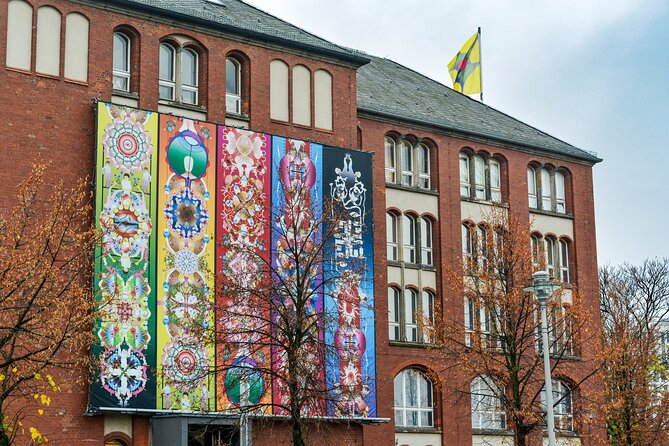
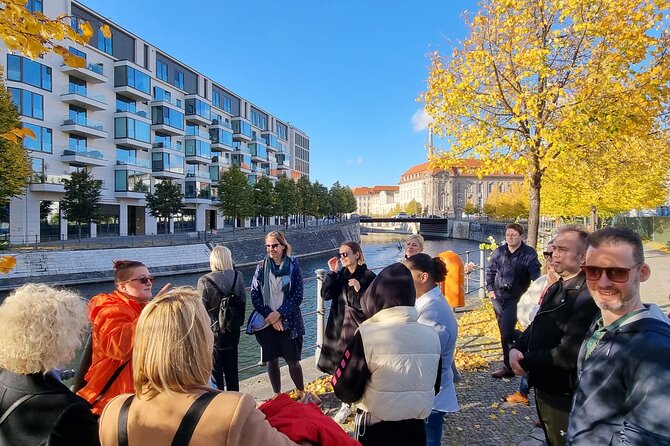
The last stop is at Design Offices Berlin Humboldthafen, and this is where Berlin history layers in fast. The guide points out the place where several East Berliners attempted to escape to the West by swimming across the city canal just outside the Charité campus.
That detail turns the tour from “medical history only” into something more like “medicine inside a divided city.” When a hospital sits near escape routes or political fault lines, it’s never just a building. It becomes part of what people live through.
You’ll hear stories of hospital life during the socialist era and after the fall of the Berlin Wall. Even without going into any active facilities, this angle gives you a feel for how health systems change when political systems change.
It’s about 20 minutes for this stop, and it ties the whole tour together: medicine isn’t separate from society’s pressures. It moves along with them.
Price and value: $30.12 for a focused, two-hour walk
At $30.12 per person for roughly 2 hours, this tour isn’t cheap in the way of a free street walk—but it also isn’t long or heavy. You’re paying for three things that are hard to DIY well:
- Context: you can read a monument, but you can’t easily connect Robert Koch’s work to later ethical questions without a guide explaining the through-line.
- A guided route that makes sense: the stops are chosen so your brain builds a medical timeline while you walk.
- Time efficiency: two hours is a friendly length if you’re juggling museums and meals.
It’s also structured for comfort. The group size is max 15 travelers, which usually means you get a bit more attention and less waiting around at each stop. And it’s in English, with a mobile ticket so you don’t have to mess with paper.
A smart tip: treat this as your “orientation” tour for Charité and Berlin medical history. If you plan to visit other medical or science sites later, you’ll understand the names faster and you’ll ask better questions.
What’s included, what you won’t see, and how to prep
What’s included is straightforward: a guide plus all fees and taxes. You’re not paying extra at each stop.
What you should know upfront is what’s not part of the tour: visiting buildings in which clinical or university operations take place. So you’re not touring hospital wards or active classrooms. Instead, you’re using monuments, historic academic spaces, and campus areas to learn the story around Charité.
This is also a good-weather experience. Since much of it is outdoors, bring shoes you can walk in comfortably and plan for Berlin weather swings. If rain shows up, the operator may switch dates or offer a refund.
Finally, if you prefer a relaxed pace, this one fits. It’s short enough to stay upbeat and not so long that you feel drained before dinner.
Who this tour is perfect for (and who might not love it)
This is ideal if you like Berlin beyond the postcard stops—especially if you enjoy science, public health, and the ethics side of medicine. It’s also good if you want a guided tour that explains why famous names matter and how their work affected society.
If you’re the type who loves standing in front of a monument and learning what it represents, you’ll likely enjoy this a lot. The combination of Robert Koch, Rudolf Virchow, and Albrecht von Graefe gives you several entry points, so even if one topic doesn’t hook you, another will.
If you’re hoping for an inside look at hospital operations or clinical spaces, you might want a different kind of tour. This one stays focused on the public-facing historic parts of the Charité story.
Should you book the Charité Hospital Walking Tour?
If you’re curious about how medical breakthroughs connect to society, I’d book it. This tour is well worth it for the small-group feel, the storytelling that keeps complex topics clear, and the way it uses Charité’s landmarks to show medicine as something shaped by people and politics—not only labs.
I also think it’s a smart value for time. Two hours is enough to build understanding without eating your whole day, and the free-access monument stops mean you’re not nickel-and-diming your schedule.
My final advice: if you can get a slot in your plans and the weather looks okay, this is one of the easiest “add-on” Berlin tours that still feels like you learned something meaningful.
FAQ
How long is the Charité Hospital Walking Tour?
It runs for about 2 hours.
What does the tour cost?
The price is $30.12 per person.
Is the tour offered in English?
Yes, it is offered in English.
How big are the groups?
The tour has a maximum of 15 travelers.
Are we entering hospital or university operation buildings?
No. The tour does not include visiting buildings where clinical or university operations take place.
What if the weather is bad?
This experience requires good weather. If it’s canceled due to poor weather, you’ll be offered a different date or a full refund.
More of Berlin on Foot






More Tours in Berlin





More Tour Reviews in Berlin

Round out your days in Berlin



Historical Tours, compared.
 ★ 4.6Natural History Museum Entrance TicketFrom $123,382 reviews
 ★ 4.53-Hour World Heritage Cruise to PotsdamFrom $251,569 reviews
 ★ 4.7History of the Third Reich Guided Walking TourFrom $30791 reviews
 ★ 4.4Berlin Charité Guided History TourFrom $28660 reviews
 ★ 4.9Berlin Historical Highlights Walking TourFrom $389657 reviews
 ★ 5.0Berlin Private Complete History All Day Walking TourFrom $253474 reviews
 ★ 4.8Cold War & Berlin Wall History Guided Bike TourFrom $41422 reviews
 ★ 4.5Historic Boat Sightseeing City Center TourFrom $33415 reviews
Browse the lists this tour appears in