
REVIEW · BERLIN WALL & COLD WAR
Cold War Berlin – Private Live Virtual Experience
Cold War Berlin can feel huge, so this makes it manageable. A 1-hour live virtual session brings you to iconic sights like the Trabi Museum and Checkpoint Charlie, with real-time chat so you can ask questions as you go. I especially like the interactive Q&A format and the way the route strings together the big themes of Berlin’s division. One thing to consider: you’re doing this through Zoom, and two of the stops require admission tickets you’ll need to pay separately.
The experience is built for a simple evening at home: join on your device, follow your guide’s pace, and watch and listen while you take in the story behind each location. It’s also a private setup, so only your group participates, which usually keeps questions flowing. At around an hour, it’s short enough to fit a Sunday plan, but it’s also not a slow, spend-all-afternoon museum crawl.
In This Review
- Key Highlights You’ll Care About
- A Sunday Evening Cold War Lesson From Your Sofa
- Price and Value: Is $23 a Smart Deal?
- Setup and Logistics: Zoom, Mobile Ticket, and a Private Group
- Stop 1: Martin-Gropius-Bau and the Bullet-Scarred Start
- Stop 2: Topography of Terror, SS/Gestapo Headquarters, and the Wall
- Stop 3: Trabi Museum and Why the Trabant Was So Symbolic
- Stop 4: Checkpoint Charlie and the Black Box Finale
- What the Live Q&A Really Adds
- Who This Tour Fits Best (and Who Might Skip It)
- Should You Book This Cold War Berlin Virtual Tour?
- FAQ
- FAQ
- How long is the Cold War Berlin virtual experience?
- What is the price?
- Is the tour in Berlin, or online?
- Do I need Zoom to participate?
- Is this tour private?
- What sites does the tour include?
- Which stops have admission fees included or not included?
- How and when do I get confirmation after booking?
- Are there any discounts?
- Can I get a refund if I cancel?
Key Highlights You’ll Care About
- Real-time Q&A on Zoom so you can ask questions while the guide moves through the story
- Four major Cold War stops linked in a smart order, from bullet-scarred buildings to the Wall
- Free admission at key sites like Topography of Terror and the Black Box exhibition
- Trabi Museum look at East German everyday life via the Trabant, the famous mass-produced car
- Checkpoint Charlie finale with Cold War tension context including a 1961 tank standoff scenario
More of the Wall and the divided city
- Berlin’s Best: 2 Hour Walking Tour Third Reich and the Cold War★ 5.0 · 5,486 reviews
- Skip-the-Line: Berlin Wall Museum at Checkpoint Charlie★ 4.1 · 2,041 reviews
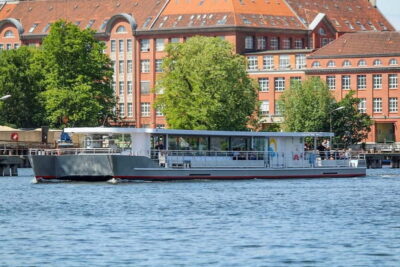
- Berlin: East Side Gallery Spree Cruise in a Solar Catamaran★ 4.1 · 1,086 reviews
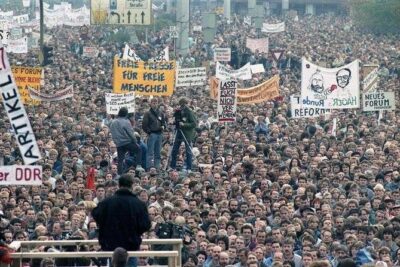
- Cold War, Berlin Wall, Spies and the East Side Gallery★ 5.0 · 1,024 reviews
A Sunday Evening Cold War Lesson From Your Sofa
If the Cold War feels like a school chapter you never fully mastered, this format is a good fix. Instead of reading and hoping it clicks, you get a guided, time-boxed route through Berlin’s divided-city landmarks. The guide keeps the flow moving, and because it’s happening in real time, you can ask questions instead of waiting until later.
I like that the tour focuses on places you’ve likely heard of, but it also treats them as story pieces, not just photo stops. One moment is about the Nazi regime’s footprint; the next ties into the Wall as a brutal Cold War symbol. That back-and-forth helps you see how different eras in Berlin overlap on the ground.
Price and Value: Is $23 a Smart Deal?
At about $23 for roughly 1 hour, this is one of those value-priced ways to get a guided interpretation of major sites without travel costs. You’re not paying for transportation or timed entry logistics, and you’re not paying for a full day’s commitment.
The main value trade-off is that some stops cost extra in person. Here, Gropius Bau and the Trabi Museum don’t have admission included, while Topography of Terror and the Black Box exhibition are free within the tour stops. So your total out-of-pocket is usually just what you choose to cover for the paid-admission segments, if any.
Also: the experience is private for your group, with group discounts available. That matters if you’re joining with family or friends rather than solo, because the per-person cost can drop.
Setup and Logistics: Zoom, Mobile Ticket, and a Private Group
You’ll need Zoom downloaded on your device to take part. Plan ahead for the basics: stable internet, a quiet room, and headphones if you want clearer audio. This is especially helpful because the tour is built around a guide speaking while you follow along.
You’ll also receive a mobile ticket, which is handy for keeping everything in one place. And even though it’s “virtual,” it’s still described as a private experience—only your group participates—so you won’t be stuck competing with a huge crowd’s questions.
One practical note: the experience requires good weather according to the cancellation details. That can sound odd for something on Zoom, but it still affects scheduling. If weather is poor, you’ll be offered a different date or a full refund.
Stop 1: Martin-Gropius-Bau and the Bullet-Scarred Start
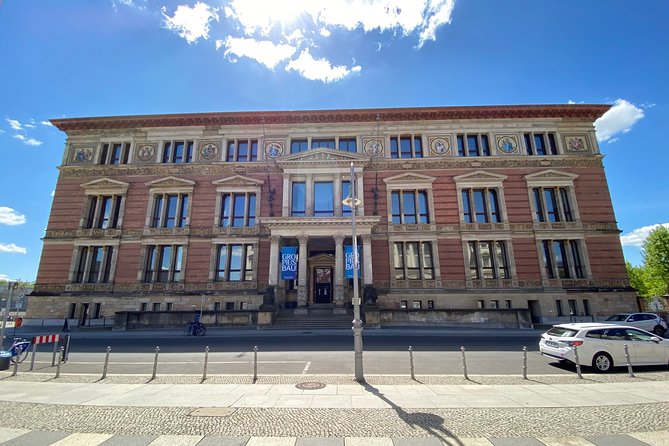
The tour begins at Martin-Gropius-Bau, described as one of Berlin’s premier art venues and still marked by bullet scars from World War II. Starting here matters, because it frames Berlin as a city where history isn’t behind glass. Even a gallery building can carry visible reminders of violent twentieth-century events.
What you’ll get in this opening segment is a strong first anchor: architecture and the physical scars of the past, before the tour leans into Nazi history and then into the Cold War. It’s also a smart pace choice—only about 5 minutes at the start—so you’ll likely come away with the big idea rather than needing to pause and rewatch everything.
Possible drawback: since it’s only about 5 minutes, you won’t have time to “museum browse” in the usual sense. If you’re the type who likes to read every panel, plan to save that for later and use this session as orientation.
More private tours of Berlin




Stop 2: Topography of Terror, SS/Gestapo Headquarters, and the Wall
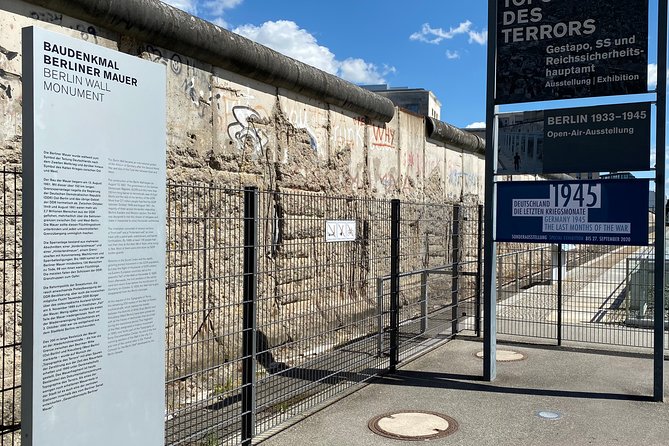
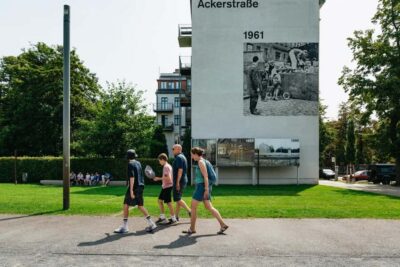
Next comes Topography of Terror, set in the former SS and Gestapo headquarters area. The tour then walks along one of the most brutal Cold War symbols: the Berlin Wall.
This stop is doing heavy lifting. You’re looking at Nazi-era power and repression, then shifting toward the Wall as another system of control—different actors, same idea of forcing separation. Even if you already know the names, the guided framing is what helps it stick.
This segment is about 15 minutes and is described as free. That combination—length plus free access—makes it a core part of the value. It’s also likely the most emotionally intense part of the route. If you prefer lighter travel storytelling, you might want to mentally brace for that shift, because the subject is not gentle.
A quick practical consideration: 15 minutes flies by in any format. If there’s a specific question you care about—how the Wall was used, who was involved, or how Berlin’s division evolved—save it for this stop while the guide can respond in real time.
Stop 3: Trabi Museum and Why the Trabant Was So Symbolic
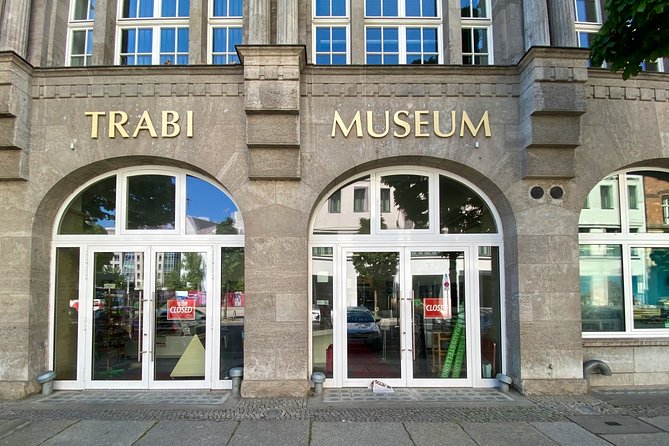
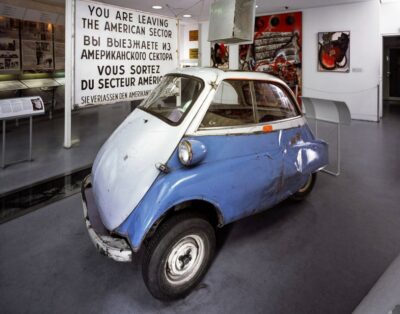
Then you head to the Trabi Museum for a look at a fleet of Trabants—East Germany’s mass-manufactured car often described as a kind of cardboard car. That nickname is funny, but the point isn’t. The Trabant represents daily life under a particular kind of system: standardization, scarcity pressures, and what people could realistically buy and repair.
This stop is another short one—about 5 minutes—and admission is not included. Still, it’s a nice balance after the darker, more political locations. The tour uses the Trabant to connect history to lived experience, not just ideology.
Possible drawback: if you were hoping for a deep car-nerd explanation, the time may feel brief. But as a quick, memorable “this is what ordinary people dealt with” moment, it’s well placed.
Stop 4: Checkpoint Charlie and the Black Box Finale
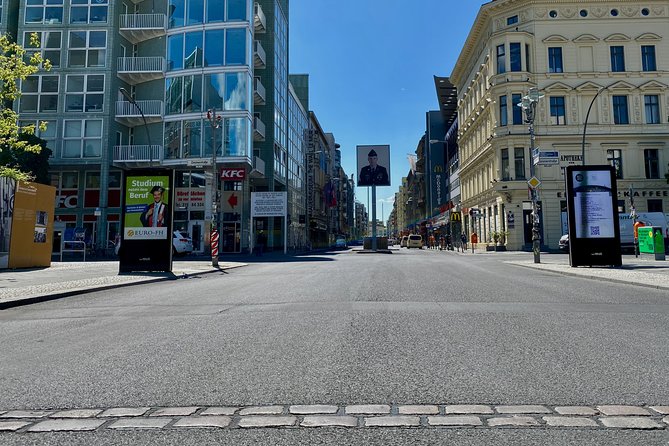
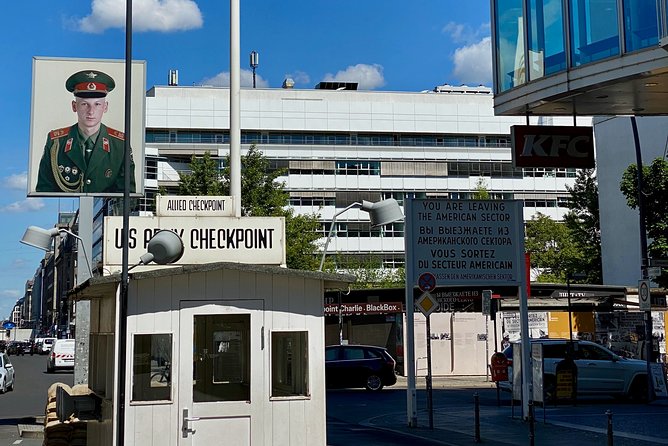
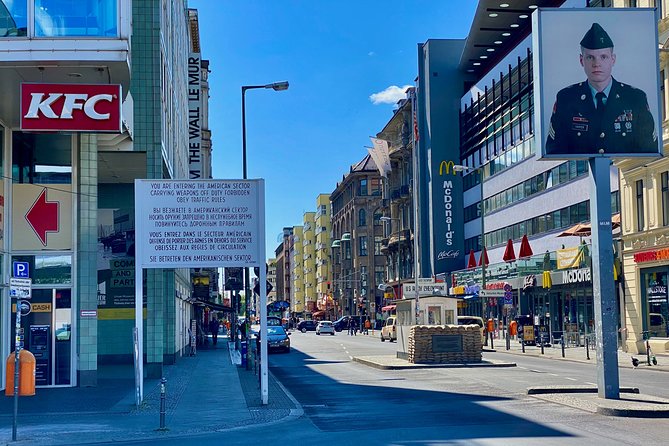
You finish at Checkpoint Charlie, the most famous crossing point over the Berlin Wall. The story here includes a famous 1961 scenario: a tank standoff that put the world on a nuclear knife-edge. That’s dramatic, but it explains why Berlin mattered so much. The city wasn’t just a local problem—it was a pressure point between superpowers.
This segment runs about 15 minutes and includes access to the Black Box exhibition, described as excellent. Importantly, it’s listed as free for the tour stop.
Why I think this ending works: it brings you to the moment where division becomes a high-stakes global headline. Then the Black Box wraps it up with an exhibition format that usually helps you make sense of competing narratives and propaganda styles. Ending here is a strong way to leave the tour with a clearer picture.
One consideration: if your brain tends to retain best when you can take time reading, you may want to follow up afterward with your own notes. The tour is short, so think of it as a guided starter kit you can expand later.
What the Live Q&A Really Adds

The headline feature is that you can ask questions as you explore. That changes the experience from passive watching into active learning. Instead of memorizing facts, you can clarify what you don’t understand: names, timeline confusion, or what certain symbols meant at the time.
It also makes the session more personal. If your interest is Berlin’s Cold War history in general, you’ll get a coherent tour arc. If your interest is more specific—like the Wall as a concept, or how the Trabant fits into East German life—the guide can tailor the responses based on your questions.
In the feedback I’ve seen, guides like Taylor and Sam were praised for being engaging and knowledgeable, with people feeling like they were actually traveling through the city’s story rather than watching a static slideshow. That kind of interactive pacing is exactly why this format works for a one-hour slot.
Who This Tour Fits Best (and Who Might Skip It)
This tour fits best if you want a guided, structured look at major Berlin Cold War sites without leaving home. It’s especially good for:
- A Sunday evening plan when you want something smarter than background TV
- Families or small groups who can share questions and make it interactive
- Anyone who knows Berlin’s names (Checkpoint Charlie, the Wall) but wants the meaning behind them
It might be less satisfying if:
- You only enjoy long, slow museum time, because some stops are quick
- You need hands-on learning rather than guided narration and viewing
- You don’t want to deal with Zoom setup and a device requirement
Should You Book This Cold War Berlin Virtual Tour?
I’d book it if you want a high-impact, guided overview that hits the big Cold War touchpoints in a single hour, with real-time Q&A. At $23, it’s a value move for anyone who’s curious about Berlin but doesn’t want to plan a full day of on-site logistics.
Skip or think twice if you’re expecting a full-length museum experience or if you know you’ll struggle with Zoom. Also, remember that Gropius Bau and the Trabi Museum don’t include admission, so you may spend a little extra if you decide to look deeper.
If you want a practical starting point that helps you decide what you’d want to see in person later, this is a solid way to get your bearings fast.
FAQ
FAQ
How long is the Cold War Berlin virtual experience?
It lasts about 1 hour.
What is the price?
The price is listed as $23.
Is the tour in Berlin, or online?
It’s an online, live virtual experience that you join from home.
Do I need Zoom to participate?
Yes. You need Zoom downloaded on a device to join the tour.
Is this tour private?
Yes. It’s described as private, and only your group will participate.
What sites does the tour include?
It includes stops at Martin-Gropius-Bau, Topography of Terror, the Trabi Museum, and Checkpoint Charlie, with a final stop at the Black Box exhibition.
Which stops have admission fees included or not included?
Admission is not included for Martin-Gropius-Bau and the Trabi Museum. Topography of Terror and the Black Box exhibition are listed as free for the tour stops.
How and when do I get confirmation after booking?
You should receive confirmation within 48 hours of booking, subject to availability.
Are there any discounts?
Group discounts are mentioned.
Can I get a refund if I cancel?
Yes, you can cancel for a full refund up to 24 hours before the experience’s start time. If you cancel within 24 hours of start time, the amount paid is not refunded. Weather-related cancellations also offer a different date or a full refund.
More Private in Berlin

More Tour Reviews in Berlin






The Wall and the Cold-War City





Round out your days in Berlin

Berlin Wall & Cold War, compared.
 ★ 4.9Third Reich & Cold War Guided Walking TourFrom $238,378 reviews
 ★ 5.0Berlin’s Best: 2 Hour Walking Tour Third Reich and the Cold WarFrom $245,486 reviews
 ★ 4.1Skip-the-Line: Berlin Wall Museum at Checkpoint CharlieFrom $212,041 reviews
 ★ 4.1East Side Gallery Spree Cruise in a Solar CatamaranFrom $281,086 reviews
 ★ 5.0Cold War, Berlin Wall, Spies and the East Side GalleryFrom $181,024 reviews
 ★ 4.8Wall Tour – Fates, Love Stories, and HeroesFrom $282585 reviews
 ★ 4.5THE WALL: asisi Panorama Berlin TicketFrom $16580 reviews
 ★ 4.8The Wall and Third Reich Guided Bike TourFrom $41578 reviews
Browse the lists this tour appears in