
REVIEW · BERLIN WALL & COLD WAR
East Berlin Food & History Tour with Eating Europe
Food is the fastest way to learn East Berlin. On this 3.5-hour East Berlin walk, I like how the tastings connect to the neighborhood’s immigrant mix and political story, with craft beer included and a small group capped at 12. One thing to consider: it’s a lot of walking and standing, so plan comfy shoes.
I also appreciate that you’re not paying extra for most tastings, which makes the whole outing feel like one clear package. You’ll hit classic Berlin street food at Warschauer Straße, then branch out into Turkish, Vietnamese, and Syrian flavors, all while your guide ties what you eat to what East Berlin was becoming in real time.
In This Review
- Key things you’ll notice on this tour
- East Berlin on a Plate: what this tour is really for
- Price and walking pace: budget like a local
- Where you meet and how the route flows
- Stop 1: Boxi Späti and Berliner Kindl beer origins
- Stop 2: Haroun and the street-food history of Turkey in Berlin
- Stop 3: NYOM’s neon Vietnamese food and TyTy Tacos
- Stop 4: RAW-Gelände—where rail repair, Soviet industry, and today’s arts collide
- Stop 5: Currywurst at Warschauer Straße—the Berlin street-food origin story
- Stop 6: Schnitzel Burger, Berliner Pilsner, and the end of East Berlin
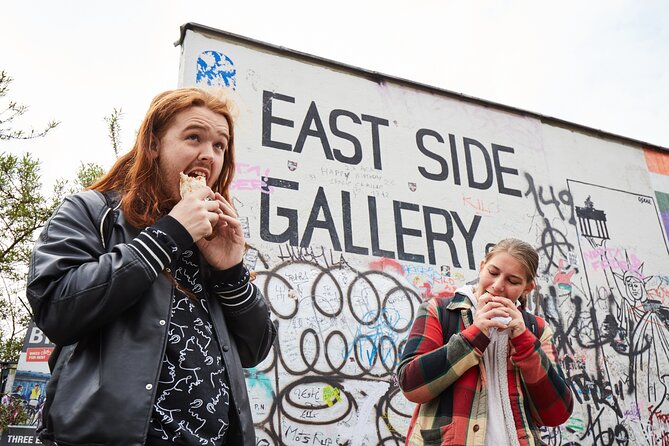
- Stop 7: East Side Gallery—Wall murals you can actually walk along
- Stop 8: Aleppo Supper Club and Syrian Levante mezze
- Stop 9: A remaining Berlin squat house and the alternative side of culture
- Guides, group size, and why the tone feels different
- Who this tour suits best (and who might skip it)
- Should you book this East Berlin Food & History Tour?
- FAQ
- How long is the East Berlin Food & History Tour?
- What’s included in the price at this tour?
- Do I pay for the tastings during the tour?
- Can this tour accommodate vegetarian or gluten-free diets?
- Is the tour suitable for severe food allergies?
- Where do we meet and where does the tour end?
- Is the tour OK for kids?
Key things you’ll notice on this tour
- Tastings are included, so you can budget once and relax
- Craft beer shows up more than once, including a Berliner Kindl stop early on
- Small group (max 12) keeps the walk chatty and personal
- East Berlin storylines go beyond museums, with stops tied to everyday food culture
- Longstanding street art meets fresh street snacks, especially around the East Side Gallery
- RAW-Gelände connects eras (imperial rail yard to Soviet factory to today’s arts and skate scene)
More of the Wall and the divided city
- Berlin’s Best: 2 Hour Walking Tour Third Reich and the Cold War★ 5.0 · 5,486 reviews
- Skip-the-Line: Berlin Wall Museum at Checkpoint Charlie★ 4.1 · 2,041 reviews
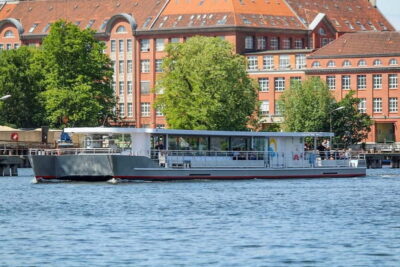
- Berlin: East Side Gallery Spree Cruise in a Solar Catamaran★ 4.1 · 1,086 reviews
- Cold War, Berlin Wall, Spies and the East Side Gallery★ 5.0 · 1,024 reviews
East Berlin on a Plate: what this tour is really for
This is the kind of tour that helps you get your bearings fast in East Berlin. Instead of treating history like a lecture, you’ll walk through a string of food stops and specific landmarks—Friedrichshain, Warschauer Straße, the East Side Gallery—where the city’s past still shows up in what people eat and how neighborhoods change.
The value angle is straightforward. You pay once (listed at $107.68 per person) and you’re guided through multiple tasting moments, including beer. That matters in a city where “food tours” can sometimes feel like you’re mostly browsing and buying extra. Here, you’re set up to eat.
You’ll also see a Berlin that’s not only about German classics. You’ll trade some traditional dishes for Turkish döner/shawarma, Vietnamese street food (including TyTy Tacos), and Syrian Levante mezze. For me, that mix is the point: East Berlin’s food culture grew in conversation with the people who moved there, worked there, opened shops, and kept feeding their traditions.
Price and walking pace: budget like a local
At 3 hours 30 minutes, this tour is long enough to taste properly, but not so long that you’ll feel dragged around. It’s still a hands-on route: you’ll stand at counters, walk between neighborhoods, and spend enough time at each stop to actually taste—not just take a bite for the photo.
Think of it as a “main event” afternoon. If you go in with a hungry stomach, the tastings make the time feel like it flies. If you want the best experience, plan for that. One of the most practical tips I can give you: arrive ready and skip a heavy breakfast (light is fine).
Extra drinks aren’t included, so if you’re a steady drinker, decide early how much you want to add beyond what’s already in the package. Alcohol is part of the experience—craft beer shows up—so it’s worth pacing yourself if you also plan to enjoy other drinks later in the day.
Where you meet and how the route flows
You start at Haroun (Neue Bahnhofstraße 28, 10245 Berlin). That’s a smart way to begin because the tour kicks off with food right away, not a distant pickup or a long transit shuffle.
The tour finishes near Mühlenstraße 78, 10243 Berlin. Your last steps include a look at one of Berlin’s remaining squat houses—an important, living piece of alternative culture where political and educational events and live concerts have been part of the scene for nearly a decade. In other words: you end with the kind of Berlin energy that doesn’t show up on every itinerary.
The small group size (maximum 12) also affects the pacing. It’s easier for your guide to slow down when you want to ask questions, and it’s easier for you to keep up without feeling rushed.
Stop 1: Boxi Späti and Berliner Kindl beer origins
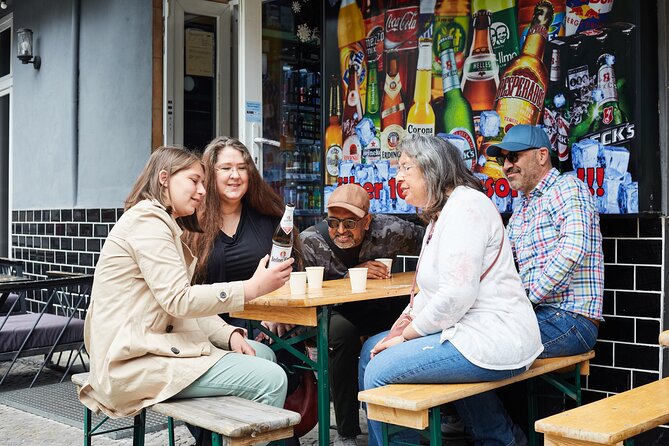
You begin at a small liquor store called Boxi Spatshop on Boxhagener Straße 76. It feels like one of those places locals use constantly: quick, unpretentious, and perfect for a first tasting.
The tasting here is Berliner Kindl (Light) beer. The experience isn’t only about drinking—it’s about learning the story behind the brand and how beer became part of Berlin’s everyday identity. It’s a good opener because it sets the tone: this tour treats food and drink as culture, not just fuel.
Possible drawback: if you’re not a beer person, this start might feel like a heavy kickoff. Still, the rest of the tour includes a wide range of flavors and foods, so the day doesn’t become beer-only.
More tastings around the city
Stop 2: Haroun and the street-food history of Turkey in Berlin
Next up is Haroun, a Shawarma Döner spot where you get a real taste of East Berlin’s street food story. The explanation here focuses on how Berlin street food links to Turkish and Middle-Eastern immigration—not as a side note, but as a core part of how the city’s “normal” food scene formed.
This is one of the most valuable stops if you like your travel stories grounded in everyday life. You’re not just learning names of neighborhoods; you’re learning why certain foods became common and how communities built places around their traditions.
The tasting itself is the point: shawarma/döner in a Berlin setting, with your guide connecting it to the larger migration history behind it.
Stop 3: NYOM’s neon Vietnamese food and TyTy Tacos
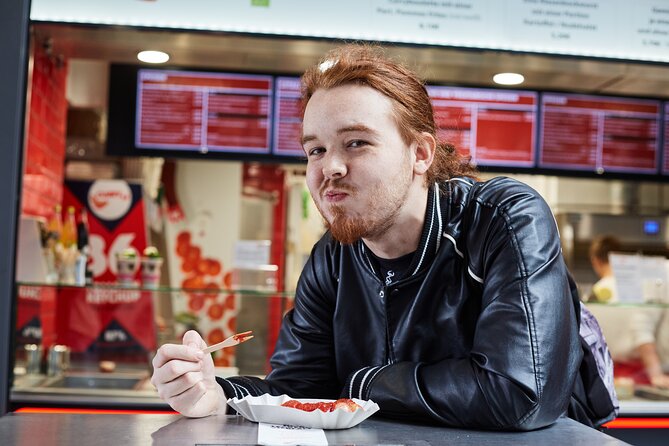
At NYOM Restaurant, the vibe shifts to a neon-lit Vietnamese setting. If you’re expecting the tour to stay locked into “Berlin classics,” this stop breaks that expectation in a good way.
You’ll try TyTy Tacos, described as innovative street food packed with flavor. The way your guide frames it matters: this isn’t just “here’s some tasty food.” It’s “here’s how Vietnamese flavors became part of Berlin’s wider street-food culture,” showing you the city as a living patchwork rather than a single national menu.
If you’re picky about textures or spice levels, this is the moment to pay attention to what you’re offered and ask how it’s made. You’ll likely have dietary options available later, but this stop is one of the more distinctive ones in the lineup.
Stop 4: RAW-Gelände—where rail repair, Soviet industry, and today’s arts collide
RAW-Gelände is one of those Berlin places where you understand history just by looking around. On the surface, it’s an art-and-nightlife zone—but the story goes deeper: it began as an imperial rail repair yard, then became a Soviet factory, and later functioned as a Deutsche Bahn warehouse.
Today, it’s home to art galleries, indie record companies, night clubs, beer gardens, a bouldering hall, and one of the biggest indoor skate parks in Berlin. That blend is part of why this tour works. You eat, then you walk into a space where multiple eras of the city’s identity still overlap.
A practical note: this stop doesn’t replace a museum. It adds atmosphere. If you like street-level Berlin culture—creative spaces, subcultures, weekend energy—you’ll get a lot from it.
Stop 5: Currywurst at Warschauer Straße—the Berlin street-food origin story
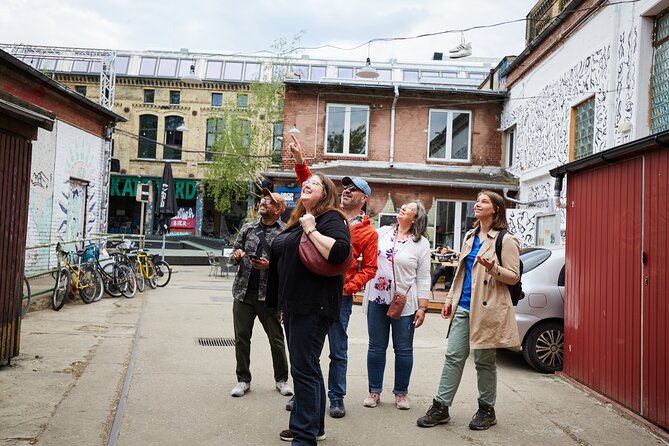
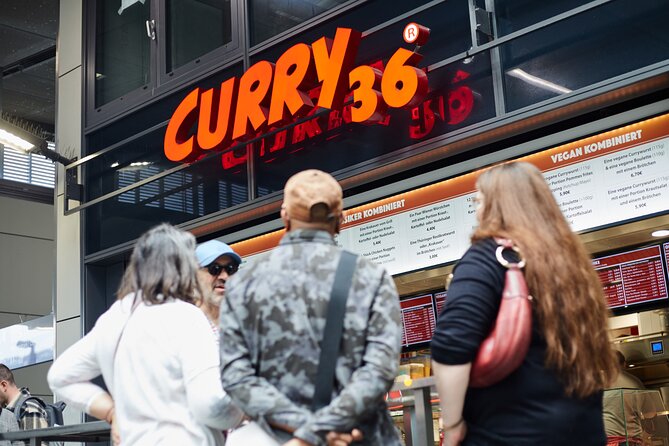
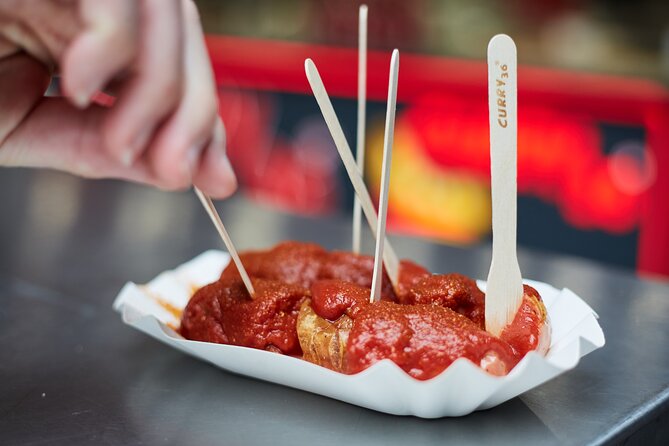
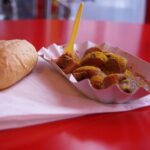
Now you swing back into true Berlin street-food territory at Warschauer Straße. This is where you try what’s described as the best and most famous currywurst in Berlin.
Even if you’ve had currywurst before, this stop is about the “why” behind the dish—your guide connects it to how the iconic Berlin street food was created. The point isn’t trivia for trivia’s sake. It’s to show you how a simple fast food became a symbol of a city with an identity built on reinvention.
One consideration: if currywurst isn’t your thing, this stop may feel like the most “classic Berlin” moment of the day. The tour compensates with international tastings before and after, though.
Stop 6: Schnitzel Burger, Berliner Pilsner, and the end of East Berlin
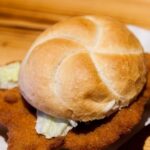
The next stop is also at Warschauer Straße, and the tasting combo is Schnitzel Burger + Berliner Pilsner beer. It’s a very Berlin idea: take a familiar dish shape (schnitzel), convert it into burger form, then serve it in a compact setting that blends food and nightlife energy.
This is also where your guide shifts the story toward the late East Berlin period—life toward the end of the GDR and the events leading up to the fall of the Berlin Wall. It’s one of the places where you get a timeline, but tied to what it would’ve felt like on the ground.
If you’ve been hoping for history that doesn’t feel like a textbook, this pairing is useful: you’re eating something modern and turning it into a lens for the past.
Stop 7: East Side Gallery—Wall murals you can actually walk along
You then head to the East Side Gallery, the longest surviving stretch of the Berlin Wall at about 1.3 miles. Here the focus is the murals—colorful, often political, and lasting in place for more than twenty years.
This stop works well after the food sections because it shifts your attention from what people ate to what people said. The East Side Gallery is a reminder that Berlin’s conflict and creativity didn’t vanish when the wall fell. It turned into art, and that art became part of everyday city life.
You’ll likely spend a short, focused window here—enough to orient yourself, not enough to turn it into a long museum detour.
Stop 8: Aleppo Supper Club and Syrian Levante mezze
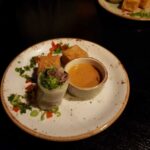
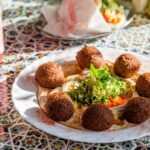
After the Wall art, you move into Aleppo Supper Club, described as a friendly restaurant serving Syrian and Levante cuisines. You try a traditional mezze dish, giving you a calmer, communal meal format compared with the fast-street pace of earlier stops.
This part of the tour is valuable because it shows how migration isn’t only about storefronts and street snacks. It also lives in sit-down food culture—shared plates, familiar flavors, and the everyday work of building belonging.
If you like variety across cultures, this is the “last act” flavor shift that keeps the day from becoming repetitive.
Stop 9: A remaining Berlin squat house and the alternative side of culture
Your final stop includes one of the last remaining Berlin squat houses. The scene here is described as hosting political and educational events and activities, plus live concerts for nearly a decade.
This matters because it ties back to everything you ate earlier. Food culture isn’t just about chefs and restaurants. It’s about spaces people use, where ideas gather, and how communities shape the local scene. A squat house is one of those places where alternative politics and real-life community energy are part of the infrastructure.
It’s a strong ending if you want Berlin to feel current. It’s less ideal if you prefer history only in official, ticketed settings.
Guides, group size, and why the tone feels different
The guides named across the experiences include Clara, Lily, Eden, Laura, Benjamin, Jed, and Led. The consistent thread is how the tour connects food to story—so you’re not just sampling; you’re building a picture of East Berlin.
Because the group stays small (max 12), you can ask follow-up questions without feeling like you’re interrupting a machine. That’s one of the reasons the overall rating stays so high: this format doesn’t treat you like a walking checklist.
If you want a big-bus overview, this tour won’t be that. But if you want a city feel—through food, neighborhoods, and specific landmarks—this is the right kind of tight.
Who this tour suits best (and who might skip it)
This is a great fit if you:
- want a food-first way to understand East Berlin
- enjoy international flavors as part of a city’s identity (Turkish, Vietnamese, Syrian/Levant)
- like your history tied to everyday places, not just plaques
It may be less ideal if you:
- hate beer or don’t want alcohol involved at all (craft beer is included in multiple places)
- need a fully seated, slow pace—this is a walking tour with standing time
- have severe or life-threatening food allergies, since the experience isn’t suitable for that category of risk
Should you book this East Berlin Food & History Tour?
I’d book it if you’re spending limited time in Berlin and want a route that teaches while you eat. The biggest win is the combination: multiple tastings with craft beer included, plus landmarks like RAW-Gelände and the East Side Gallery that turn history into something you can see on foot.
I’d think twice only if your goal is “only traditional German food” or you want a quiet, minimal-walking stroll. Otherwise, this tour hits a sweet spot: it gives you a meaningful East Berlin story without making you sit through it.
FAQ
How long is the East Berlin Food & History Tour?
It runs about 3 hours 30 minutes.
What’s included in the price at this tour?
The tour includes a local English-speaking guide and tastings at the listed stops, along with craft beer included at selected points. You’ll also get Food & the City insider tips.
Do I pay for the tastings during the tour?
No. The tastings described for the stops are included. The tour also notes that offerings can vary by day or season, but you should expect a selection of foods featured on the route.
Can this tour accommodate vegetarian or gluten-free diets?
You can request accommodations. The tour states that you should email or add a note at booking, and they’ll do their best to accommodate vegetarians, gluten-free guests, or other dietary needs.
Is the tour suitable for severe food allergies?
No. The tour is not suitable for those with severe or life-threatening food allergies to ingredients found on the tour.
Where do we meet and where does the tour end?
You meet at Haroun, Neue Bahnhofstraße 28, 10245 Berlin, and end at Mühlenstraße 78, 10243 Berlin.
Is the tour OK for kids?
Children under 4 can join for free, but food is not included for them. Paid tickets with food included are available for ages 4 and up.
More Tour Reviews in Berlin





Eating Your Way Through Berlin

The Wall and the Cold-War City






Round out your days in Berlin
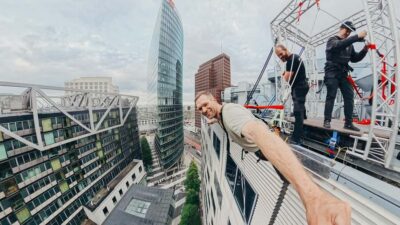
Berlin Wall & Cold War, compared.
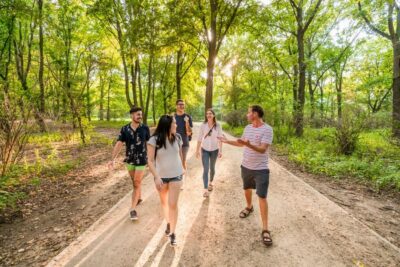 ★ 4.9Third Reich & Cold War Guided Walking TourFrom $238,378 reviews
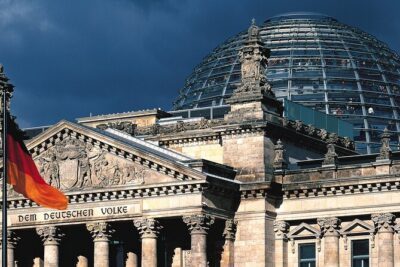 ★ 5.0Berlin’s Best: 2 Hour Walking Tour Third Reich and the Cold WarFrom $245,486 reviews
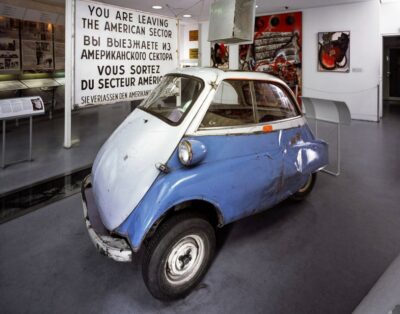 ★ 4.1Skip-the-Line: Berlin Wall Museum at Checkpoint CharlieFrom $212,041 reviews
 ★ 4.1East Side Gallery Spree Cruise in a Solar CatamaranFrom $281,086 reviews
 ★ 5.0Cold War, Berlin Wall, Spies and the East Side GalleryFrom $181,024 reviews
 ★ 4.8Wall Tour – Fates, Love Stories, and HeroesFrom $282585 reviews
 ★ 4.5THE WALL: asisi Panorama Berlin TicketFrom $16580 reviews
 ★ 4.8The Wall and Third Reich Guided Bike TourFrom $41578 reviews
Browse the lists this tour appears in